


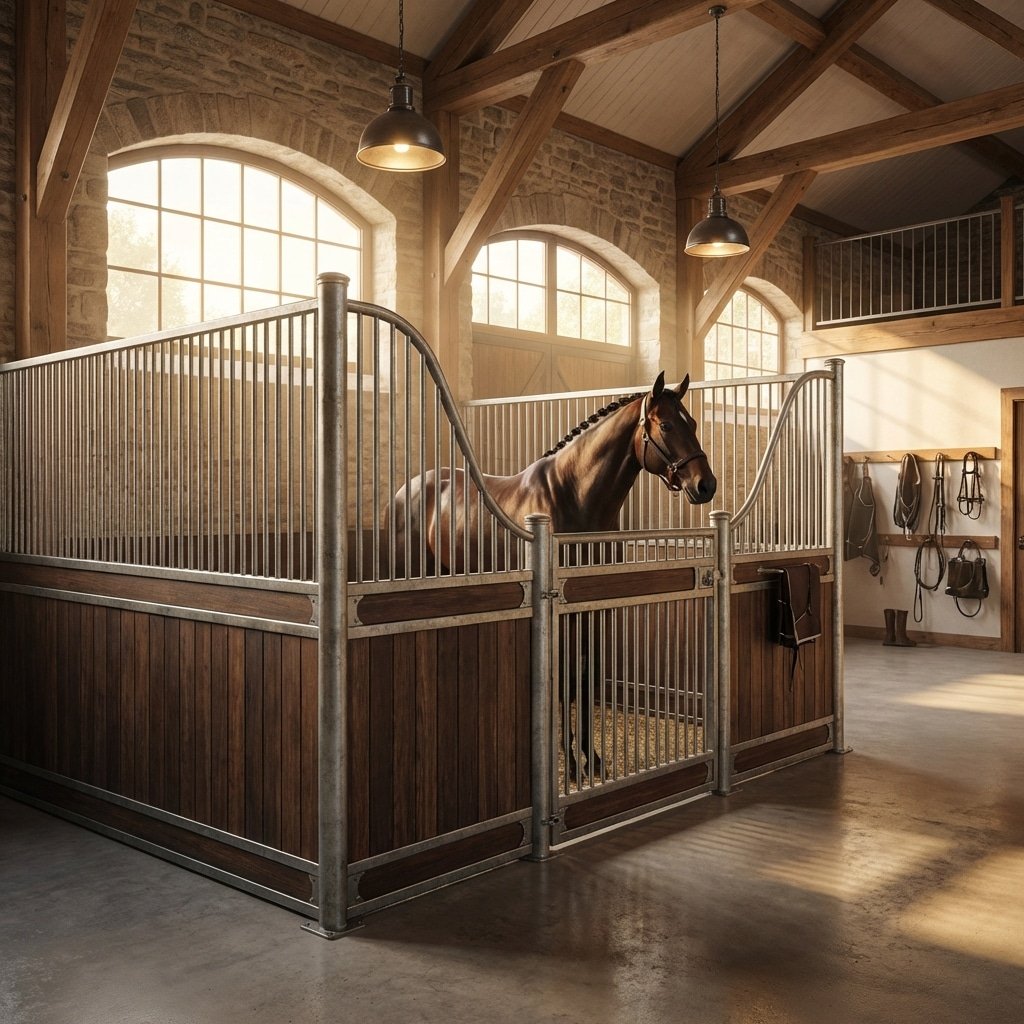
Global Export profitability for horse stalls relies on logistics density rather than just steel prices. Shipping fully welded frames forces importers to pay for empty space, destroying margins compared to high-density freight methods.
This report evaluates the DB Stable Flat-Pack system, which utilizes Q235B/Q345B modular components and ISO 1461 الجلفنة بالغمس الساخن. We demonstrate how steel pallet packaging increases container capacity to 45 sets, reducing freight overhead by 60% for international distributors.
The High Cost of Domestic Horse Stall Manufacturers
Domestic pricing is inflated by skilled labor shortages and the logistical inefficiency of shipping air. Shifting to flat-pack engineering allows distributors to bypass these labor premiums completely.
The primary economic disadvantage for domestic manufacturers isn’t the cost of steel; it is the cost of the hands working on it. Skilled fabrication labor in markets like Australia and the US commands a massive premium, directly driving up the cost per linear meter of any custom steel work. When a local workshop builds a “fully welded” stall front, they bill you for significant man-hours spent grinding, welding, and finishing—processes that are automated or scaled efficiently in our export-focused facility.
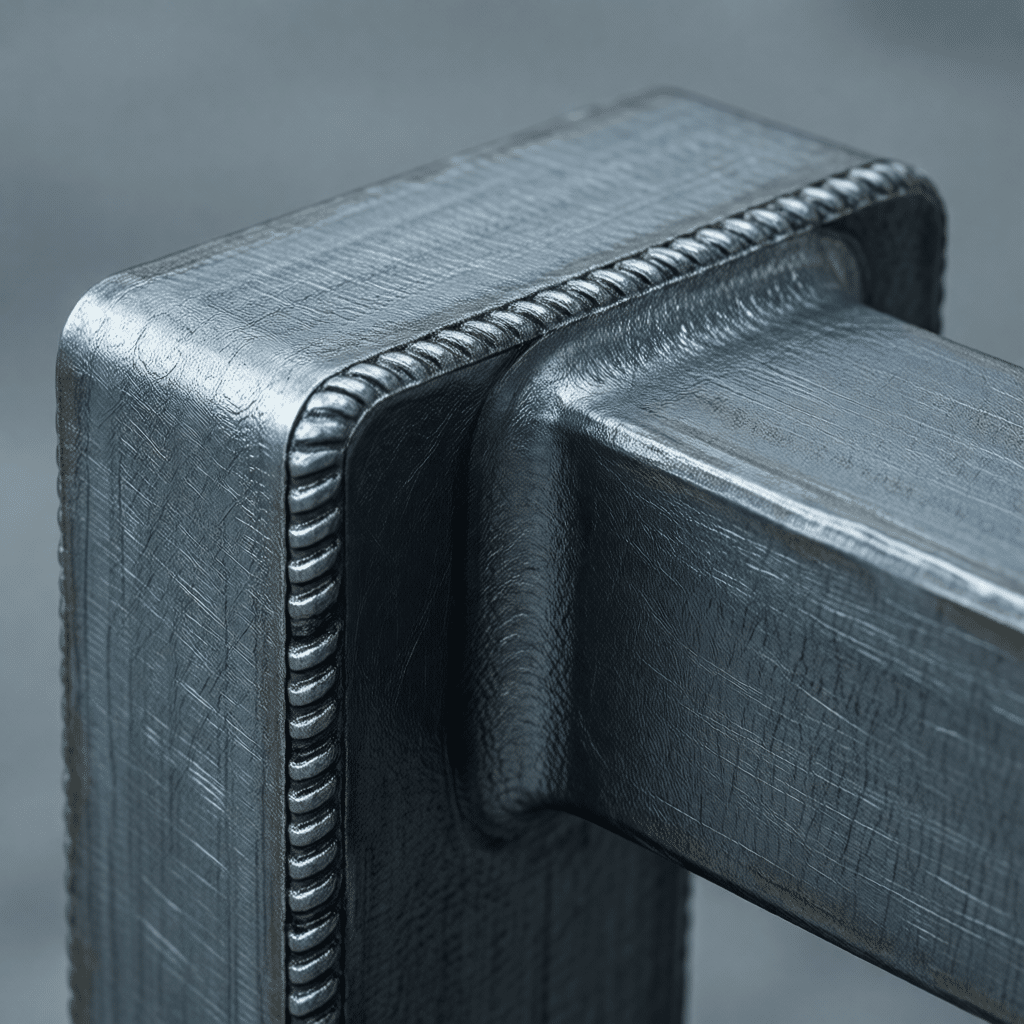
Environmental compliance further widens this gap. Western environmental regulations have made Hot-Dip Galvanizing services expensive and scarce locally. This forces many domestic fabricators to cut corners, often using pre-galvanized materials (black tube welded) that rust at the joints, simply because true Hot-Dip Galvanizing After Fabrication is too costly to execute in their local market.
How Flat-Pack Engineering Reduces Landed Cost
Traditional domestic shipping is remarkably inefficient because it involves transporting air rather than steel. Moving fully welded stall fronts limits a truck or container’s capacity by volume long before it hits its weight limit. This logistical bottleneck forces you to pay a higher freight cost per unit, eating directly into your margins.
- Volume Efficiency: DB Stable’s flat-pack design fits 30-45 sets per 40HQ container, versus only 12-15 sets for fully welded units.
- Margin Protection: Our Steel Pallet packaging system eliminates loose loading, preventing the transit damage that often plagues hastily packed domestic shipments.
- Freight Savings: By optimizing the pack density, we reduce the landed cost per stall by over 60% compared to shipping welded frames.
What is a Flat-Pack Horse Stall Kit?
A flat-pack kit is a modular, bolt-together system shipped on steel pallets. This design maximizes container density, reducing freight costs by over 60% compared to fully welded units.
The Modular Prefabricated Design Concept
Traditional stall manufacturing relies on shipping fully welded frames, which forces you to pay for the “air” inside the container. The flat-pack concept eliminates this inefficiency by utilizing a panel-based construction method. Instead of permanent welding, fronts and partitions connect via heavy-duty bolts. This allows for dense stacking on steel pallets, ensuring safe unloading and massive logistics savings.
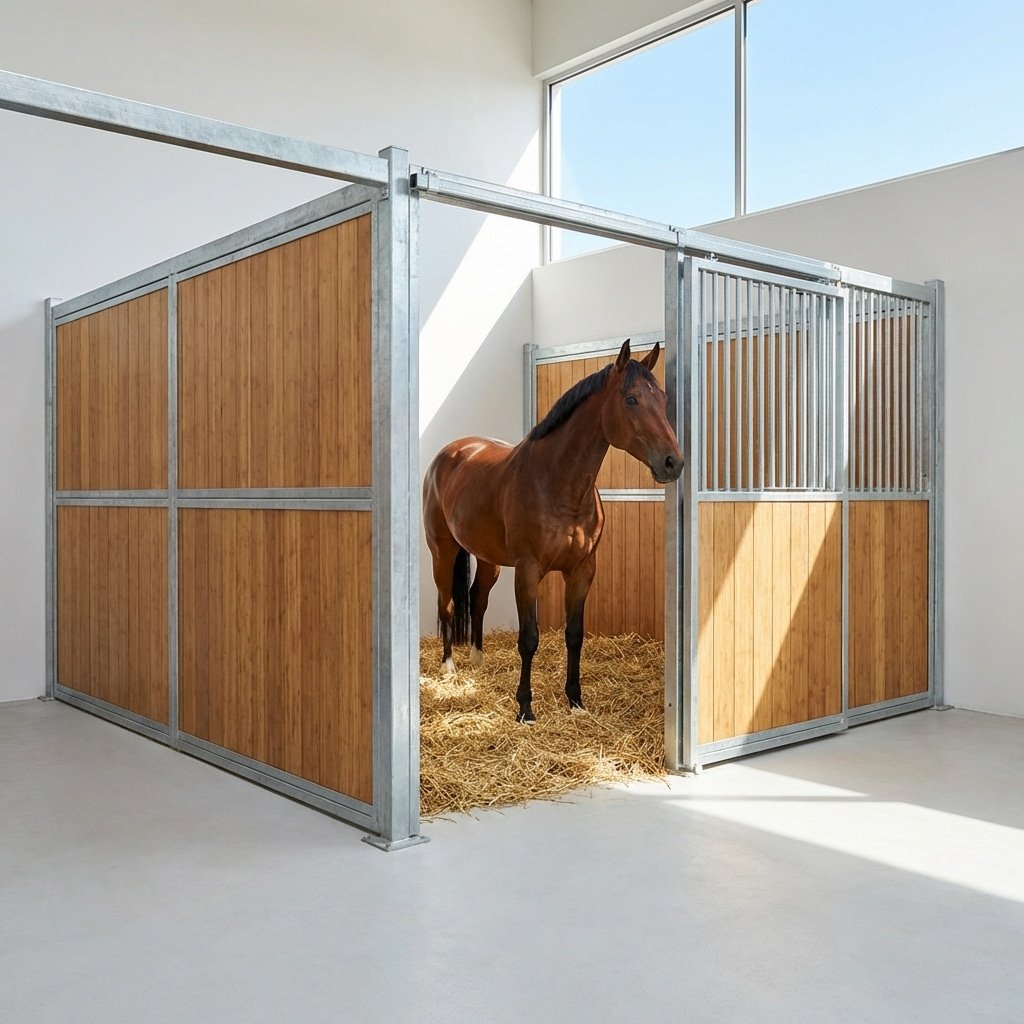
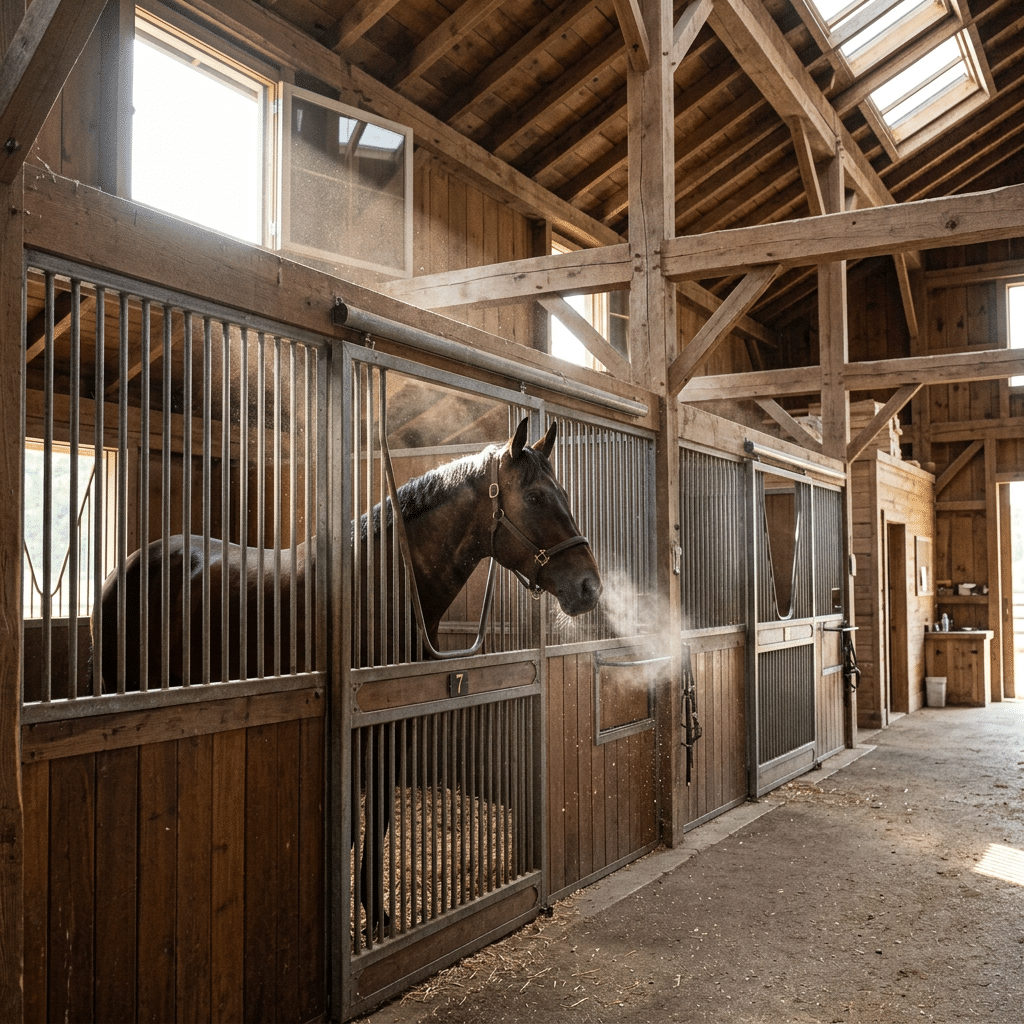
We engineer these frames using standard Q235B Structural Steel or Q345B Low Alloy High Strength Steel for cold climates. The layouts are reversible, meaning you can expand or reconfigure the barn layout later without cutting metal. The design also incorporates open grillwork to promote “Stack Effect Ventilation,” allowing heat to escape naturally without complex carpentry or mechanical systems.
Installation requires no specialized labor or heavy machinery. If your team can operate a wrench and a drill, they can assemble these stalls. This approach shifts the cost structure away from expensive on-site fabrication labor and puts the budget back into higher-quality materials like hot-dip galvanized steel.
Components of a Standard Installation Kit
A DB Stable shipment lands as a complete system, not just a pile of steel. We adhere to a strict packing list to ensure no trips to the hardware store are necessary during assembly. Every kit includes the following core components:
- Structural Panels: Each unit typically includes 1x Stable Front (with a sliding or hinged door) and 1x Partition Panel. These frames feature 14-Gauge (2.0mm – 2.5mm) wall thickness for kick-proof durability.
- Infill Material: We supply pre-cut planks ready to slide into the frame channels. Options include 28mm-32mm UV Stabilized HDPE for zero maintenance, or خيزران عالي الكثافة (Janka Hardness > 3000 lbf) for a traditional aesthetic.
- Hardware Pack: A complete set of anchors, connectors, and screws. We use exclusively فولاذ مقاوم للصدأ 304 to prevent rust streaks and corrosion at connection points.
- Maintenance Extras: Every shipment includes Cold Galvanizing Spray. This allows installers to immediately touch up any minor scratches incurred during the setup process, maintaining the integrity of the zinc coating.
Direct Factory Stables With 20-Year Rust Warranty

Container Logistics: Fitting 40 Stall Panels in a 40HQ
Fully welded frames waste space. DB Stable’s flat-pack system fits 30-45 sets per 40HQ container compared to 12-15 welded units, reducing freight costs by over 60%.
Maximizing Cubic Capacity in High-Cube Containers
Shipping bulky steel equipment comes down to simple physics: volume limits often hit before weight limits. A standard 40HQ container offers 76.4 cubic meters of internal volume with a maximum payload of approximately 28,560 kg. When manufacturers ship fully welded stall fronts, the rigid shapes create massive pockets of dead space. You essentially pay thousands of dollars to ship air across the ocean.
To maximize profitability, the goal is to increase density. The landed cost per unit drops significantly when you utilize the container’s full cubic capacity. B2B distributors cannot afford the inefficiency of welded frames, where a container fills up visually but remains underweight. The logistics math requires a system that separates the frame from the infill and nests components tightly.
| Logistics Metric | Traditional Welded Frames | DB Flat-Pack System |
|---|---|---|
| 40HQ Capacity | 12-15 Sets | 30-45 Sets |
| Space Utilization | Low (High “Dead Air” Volume) | High (Component Nesting) |
| Freight Cost Impact | Full Price for Minimal Stock | 60%+ Savings Per Unit |
| Unloading Safety | Difficult Manual Handling | Forklift Ready (Steel Pallets) |
The DB Flat-Pack Advantage: Achieving 30-45 Sets Per Load
DB Stable engineered the Steel Pallet Flat-Pack system specifically to solve the volume problem for wholesalers and project managers. Instead of shipping a fixed 12ft x 7ft rectangle, we disassemble the components—grillwork, U-channels, and frames—into a modular format. This allows us to stack high-density steel pallets that lock securely into the container.
- High-Density Loading: We consistently load 30-45 complete sets (fronts and partitions) into a single 40HQ, compared to the industry standard of 12-15 welded sets.
- Profit Protection: By tripling the volume per container, the shipping cost contribution per stall drops by over 60%, protecting your margin against fluctuating sea freight rates.
- Safe Unloading: Our Steel Pallet system eliminates loose loading. Forklifts can offload the entire container quickly without the risk of manual handling injuries or product damage.
- Distributor Edge: Lower landed costs allow distributors in Australia, Europe, and the USA to price competitively against local fabricators while maintaining healthy margins.
The Steel Pallet Advantage for Safe Unloading
Steel pallets eliminate timber collapse risks. Our 250kg-450kg flat-packs ensure mechanical unloading, preventing manual handling injuries and bypassing fumigation delays.
Structural Stability and Hazard Mitigation
Timber pallets are a liability when shipping heavy steel components. Under the weight of stable panels, wood flexes, cracks, and eventually splinters. This creates immediate safety hazards for dock workers and risks cargo collapse inside the container. We use steel pallets because they maintain structural integrity regardless of load weight or moisture levels during sea transit.
- Hazard Elimination: Steel removes the risk of cuts from wood splinters and significantly lowers fire load in storage areas compared to dry timber.
- سعة الحمولة: Unlike wood which can snap under point loads, steel pallets support the full density of the cargo without deformation.
- Biosecurity Compliance: Steel is immune to pests and mold. This grants ISPM 15 exemption, removing the need for toxic fumigation and speeding up customs clearance.
The DB Flat-Pack Loading Standard
We enforce a strict “No Loose Loading” policy. While loose loading might theoretically fit more units, it destroys your margin through excessive unloading labor and transit damage. Our packaging is engineered for mechanical handling, not manual lifting.
- Mechanical Unloading: Each flat-pack weighs between 250kg and 450kg, designed specifically for standard forklifts to unload quickly and safely.
- Surface Protection: The steel pallet system creates a rigid barrier that stops panels from grinding against each other, preserving the hot-dip galvanized finish.
- Logistics Security: All items are secured within the pack, preventing loose components from shifting and causing accidents when the container doors open.
How B2B Dealerships Profit from Factory-Direct Stalls
Profitability now hinges on logistics math: importing 30-45 flat-pack sets per container cuts freight costs by 60%, allowing dealers to capture margin through local availability and installation services.
Securing Revenue through Local Availability and Installation
Factory-direct models often scare dealers who rely on simple resale markups. But the smart money has moved to an agency model. You add value where the factory cannot: immediate access and labor. While a factory in China can offer the lowest unit price, they cannot pour concrete or deliver a stall tomorrow morning.
- Immediate Fulfillment: Manufacturers like DB Stable operate on a 35-45 day production cycle. Dealers bridge this gap by holding local stock—typically a “Project Order” (1x 20GP) or “Distributor Order” (1x 40HQ)—allowing you to capture urgent projects that cannot wait for ocean freight.
- Service Monetization: Stop just selling steel. Charge for the solution. Revenue shifts to site preparation and assembly services using our Standard Installation Kit, transforming a product sale into a high-margin turnkey project.
- After-Sales Support: Build long-term trust by providing local access to spare parts and essential maintenance items like Cold Galvanizing Touch-up Spray, which overseas factories cannot ship individually due to hazardous materials regulations.
The Distributor’s Edge: High-Density Container Economics
Margins are made in the logistics. If you import fully welded stalls, you are shipping mostly air. The difference between breaking even and high profitability often comes down to how many units fit in a 40HQ container.
- Volume vs. Freight: Traditional fully welded stalls are a logistics nightmare, limiting a 40HQ container to just 12-15 sets. This skyrockets your landed cost per unit, eating into margins before the product even arrives.
- The Flat-Pack Advantage: We engineered the DB Stable system for “Profit Protection.” By flat-packing components, we fit 30-45 sets per 40HQ container. This density reduces your ocean freight cost per stall by over 60%, giving you a massive pricing advantage over competitors importing welded units.
- Safe Unloading: Efficiency continues at the dock. We use a specialized “Steel Pallet Flat-Pack” system. This allows your team to unload high-volume shipments safely with standard forklifts, avoiding the need for expensive cranes or heavy rigging equipment often required for awkward welded frames.
الأسئلة المتداولة
What is the minimum order quantity (MOQ) for a factory-direct order?
We primarily serve distributors and large projects. You can place a trial order of 3-5 sets (LCL), but we recommend a minimum of one 20ft container (approx. 10-15 sets) to optimize shipping costs. A full 40HQ container holds 30-45 sets, offering the best profit margin for resellers.
How do I unload the stalls when the container arrives?
You need a forklift and a loading dock or ramp. We do not loose-load components; everything arrives on heavy-duty steel pallets. This packaging allows a forklift operator to unload a full container safely in under an hour without manual lifting.
Will these stalls rust in coastal or humid climates?
We engineer our stalls specifically for high-corrosion environments like Australia and Europe. We use Hot-Dip Galvanization *after* fabrication (ISO 1461), ensuring every weld is coated. With a zinc thickness averaging 70-85 microns, the steel resists rust far longer than pre-galvanized or painted alternatives.
What HS Code should I use for customs clearance?
We recommend using HS Code 7308.90 (Structures of Iron/Steel). This code accurately describes the structural components and typically helps importers avoid the higher tariffs or complex regulations often applied to ‘prefabricated buildings.’
How much does shipping add to the cost per stall?
Freight rates change weekly, but our flat-pack design stabilizes your landed cost. Because we fit 30-45 sets in a 40HQ container (compared to 12-15 sets for welded frames), the shipping cost per stall drops by approximately 60%, making import commercially viable.
الأفكار النهائية
Relying on domestic fabrication or shipping air-filled welded frames bleeds your profit margins dry. Shifting to DB Stable’s high-density flat-pack system secures a 60% reduction in landed costs while delivering superior Hot-Dip Galvanized durability. This logistics advantage allows you to undercut local competitors without sacrificing the structural quality your clients demand.
Stop leaving margin on the table and start optimizing your supply chain today. Request our Dealer Pricing Guide or schedule a consultation to configure a 20ft trial container tailored to your local market. We stand ready to engineer a private-label solution that defines your brand’s standard.

 Arabic
  English
  Spanish
  French
  German
0 تعليق