

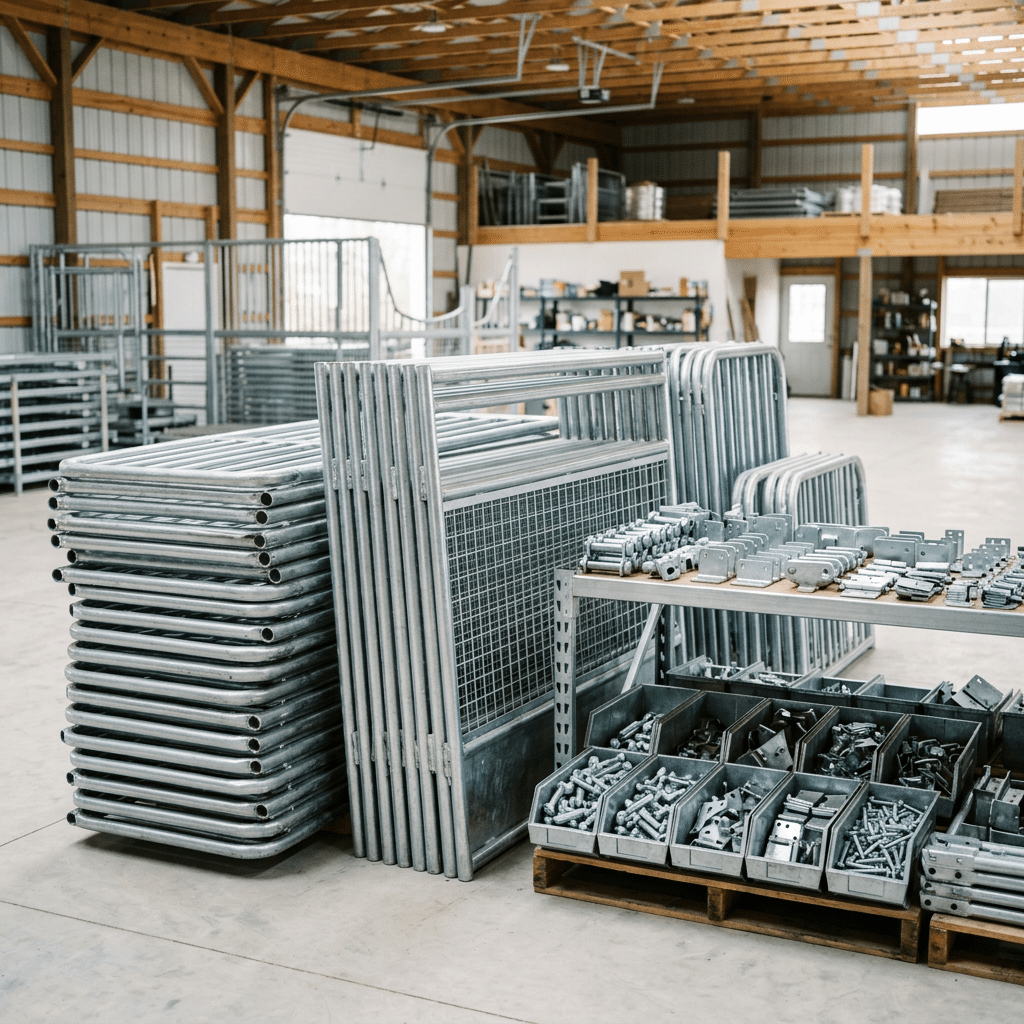
Therapeutic Riding equipment sourcing is a critical defense against ADA compliance failures and facility liability risks. Relying on standard swing doors or raised floor tracks creates immediate tripping hazards for wheelchair users, ultimately costing centers their safety certifications and draining budgets through mandatory rebuilds.
This analysis benchmarks top factories against the zero-threshold enclosed track standard. We evaluate suppliers on their integration of kick-proof Q345B steel and flat-pack container loading efficiency to help you secure a scalable B2B partnership.
تصميم الإسطبلات لتناسب الكراسي المتحركة (ADA)
مقارنة سريعة
| Feature Name | الأفضل لـ | الميزة الرئيسية | الحكم |
|---|---|---|---|
|
Accessible Routes & Pathways |
Safe and continuous access | Ensures continuous and smooth maneuverability while preventing slip and trip hazards. | Essential for primary facility navigation, though it requires significant space allocation during initial planning. |
|
Ramps & Elevation Changes |
Smooth elevation transitions | Allows safe navigation between different barn levels with critical extra stability from mandated handrails. | Crucial for multi-level accessibility; strict adherence to maximum slope requirements is required for safety. |
|
Clear Floor Spaces for Wheelchairs |
Stationary wheelchair accommodation | Provides dedicated safe zones away from active horse traffic that integrate seamlessly with main routes. | Ideal for creating safe rest stops, provided they are architecturally planned to avoid blocking main stable aisles. |
|
Seating & Rest Areas |
Fatigue prevention | Promotes comfort for therapeutic riders and their companions, aiding in pacing activities. | Highly beneficial for overall stamina management as long as seating does not obstruct the 36-inch minimum pathway clearance. |
Accessible Routes & Pathways
Properly designed pathways establish the baseline for accessibility by providing safe, continuous maneuverability throughout the entire equestrian facility.
Pathways form the foundation of accessible stable design. Builders must create routes at least 36 inches wide, keeping running slopes strictly at or below a 1:20 ratio.
Planners need to construct these surfaces to be stable, firm, and slip-resistant. Clearing all overhanging hazards protects riders and ensures the space remains fully navigable.
📊 لمحة سريعة:
- 📍الموقع: Design & Layout
- 🏭 القوة الأساسية: Safe and continuous access
- الأسواق الرئيسية: عالمي
لماذا اخترناهم:
| ✅ المكاسب | ⚠️ المبادلات ⚠️ |
|---|---|
|
|
Ramps & Elevation Changes
Incorporating strict ADA ramp standards ensures safe and seamless navigation across varying barn elevations.
Facility designers must install ramps for any elevation change exceeding half an inch. These pathways require a maximum 1:12 slope to maintain accessible wheelchair movement.
Adding continuous handrails on both sides gives riders critical extra stability during movement. This setup keeps transition areas secure for everyone navigating the stable environment.
📊 لمحة سريعة:
- 📍الموقع: Safety & Transition
- 🏭 القوة الأساسية: Smooth elevation transitions
- الأسواق الرئيسية: عالمي
لماذا اخترناهم:
| ✅ المكاسب | ⚠️ المبادلات ⚠️ |
|---|---|
|
|
Clear Floor Spaces for Wheelchairs
Dedicated floor spaces give wheelchair users safe, stationary zones without disrupting active barn traffic.
ADA guidelines require designers to allocate a minimum area of 30 by 48 inches for stationary wheelchairs. You must connect at least one side of this space directly to a main accessible route. This setup allows riders to navigate the facility independently and safely.
Strategic placement keeps users out of the main thoroughfares where horses and handlers operate. Barn architects often position these clear zones near grooming areas, tack rooms, and mounting blocks to maintain a smooth traffic flow across the stable.
📊 لمحة سريعة:
- 📍 Category: Space Planning
- 🎯 Primary Goal: Stationary wheelchair accommodation
- النطاق: عالمي
Feature Breakdown:
| ✅ المكاسب | ⚠️ المبادلات ⚠️ |
|---|---|
|
|
Seating & Rest Areas
Strategically positioned seating prevents fatigue and creates a supportive pacing environment for therapeutic riders.
Equestrian facilities require accessible seating at regular intervals to support visitors with limited stamina. These dedicated rest zones allow individuals to comfortably participate in stable activities without overexertion.
Architects integrate these spaces seamlessly along main routes to keep them accessible. Proper planning ensures these rest areas provide immediate relief while keeping primary traffic lanes completely clear.
📊 لمحة سريعة:
- 📍الموقع: Comfort & Accessibility
- 🏭 القوة الأساسية: Fatigue prevention
- الأسواق الرئيسية: عالمي
لماذا اخترناهم:
| ✅ المكاسب | ⚠️ المبادلات ⚠️ |
|---|---|
|
|
Premium Custom Stables Built For Long-Term Value
تصميم الإسطبلات لتناسب الكراسي المتحركة (ADA)
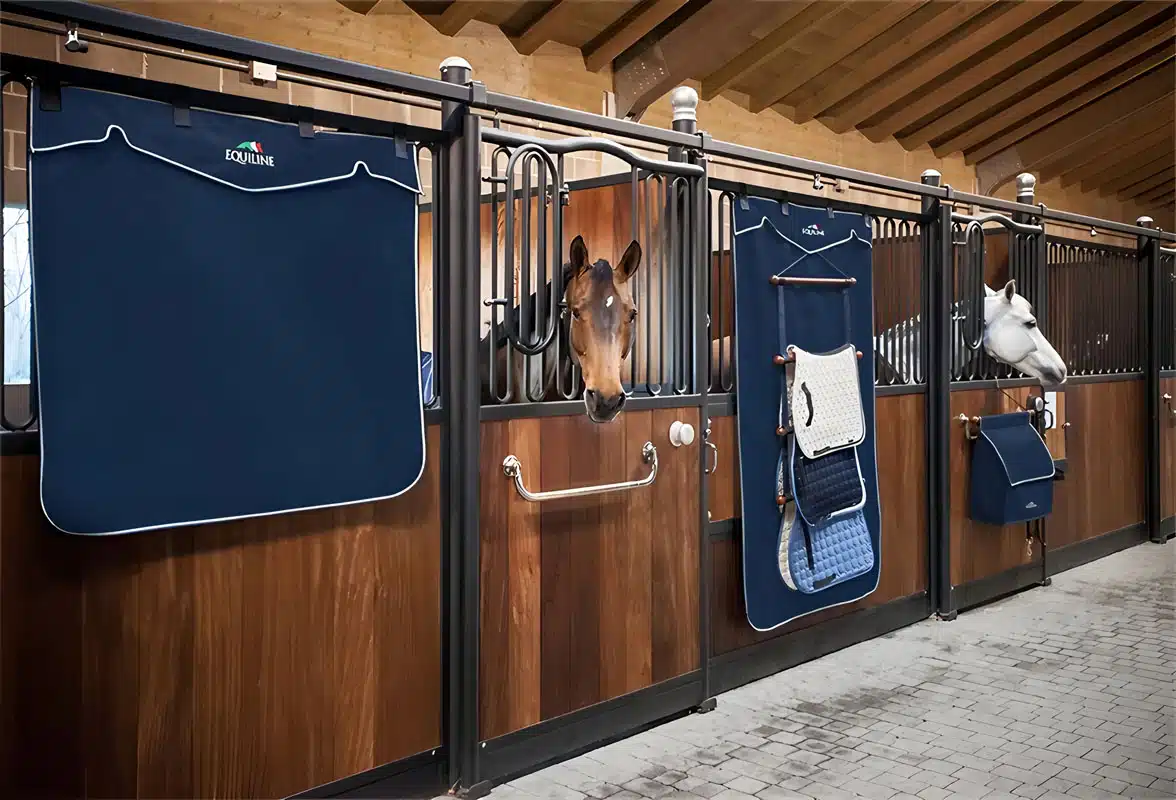
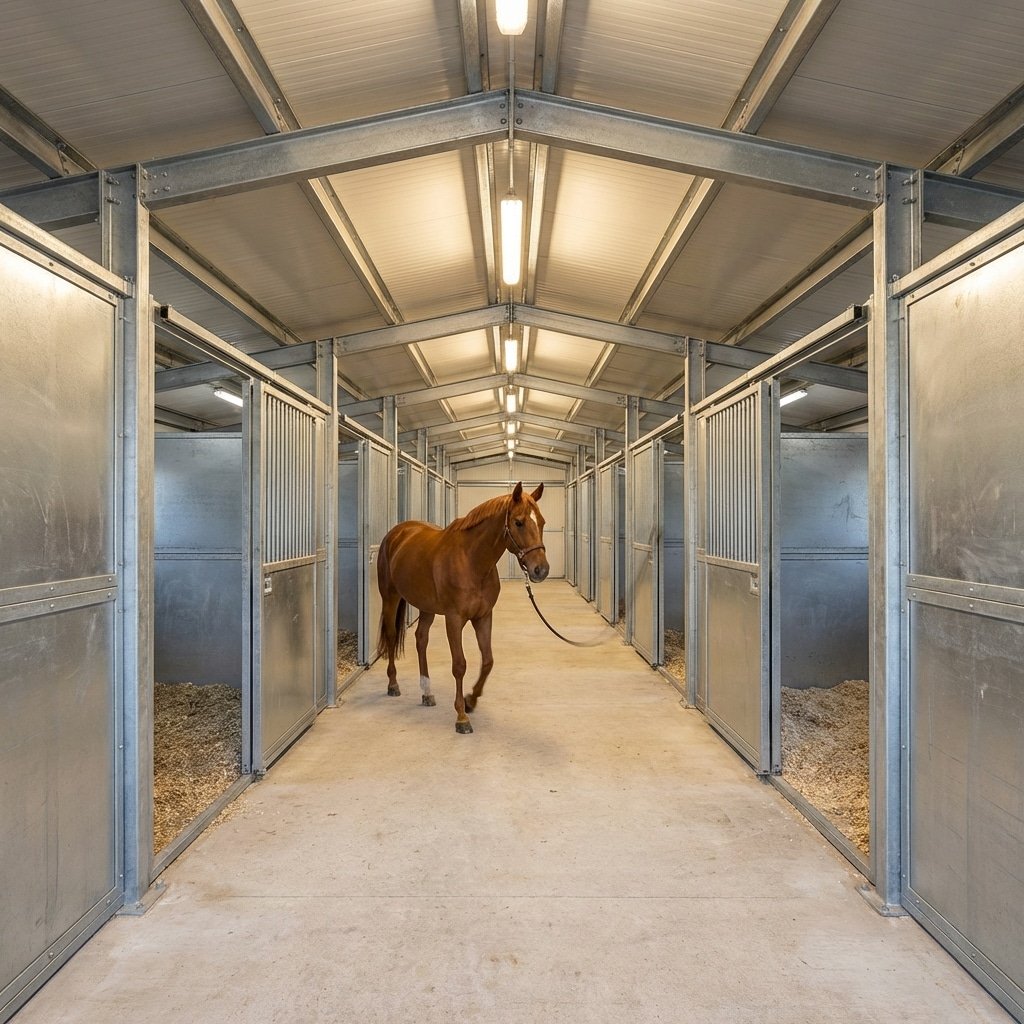
Designing an accessible stable requires continuous 36-inch minimum pathways, slip-resistant flooring, and strategic stall entry points. By utilizing flush thresholds and sliding stall doors, we create barrier-free environments that ensure safe, independent movement for wheelchair users and therapeutic riding support staff.
Aisle Clearances and Firm Pathways
When we map out accessible barn layouts, keeping aisles wide and unobstructed is the first priority. A minimum continuous pathway width of 36 inches gives riders and support teams the room they need to maneuver safely around the facility. We recommend maintaining level, slip-resistant floors with running slopes no steeper than 1:20. This allows smooth movement alongside the horses without the risk of wheelchairs getting stuck on uneven terrain or handlers tripping over raised thresholds.

Clear Floor Spaces and Stall Entry Mechanics
Riders need dedicated space to position their chairs safely near grooming bays and stall fronts. Allocating a minimum clear floor space of 30 by 48 inches accommodates stationary wheelchairs while giving handlers room to work with the horses. The type of stall door you choose directly impacts this usable space. Traditional swing doors create hazardous barriers that swing outward, instantly blocking your carefully planned pathways and making it difficult for wheelchair users to pass.
We equip our Professional Series stalls with smooth-gliding sliding doors to eliminate this aisle obstruction entirely. Because the door moves horizontally along a hidden track system, it stays flush against the stall front and preserves your aisle clearance. Built with our kick-proof Q345B structural steel and fully hot-dip galvanized after fabrication, our sliding mechanisms operate effortlessly with one hand and will not sag over time. This design choice removes swinging barriers, protects your investment from heavy daily use, and guarantees that stall access remains secure and fully accessible for everyone.
تجربة الممر: الأبواب المنزلقة العريضة مقابل الأبواب المتأرجحة
Sliding doors maximize valuable aisle space and prevent wind-related hazards in high-traffic facilities, while swing doors offer a classic European aesthetic for luxury estates. We engineer both options to ensure seamless daily operations and protect your long-term investment.
Space Efficiency and Aisle Navigation
Traditional swing doors require at least 48 inches of outward clearance to operate smoothly. This footprint demands wide aisles and often disrupts traffic flow during busy periods. Sliding doors eliminate this obstacle completely. They operate parallel to the stall wall, k
eeping pathways entirely unobstructed. We highly recommend sliding configurations for high-traffic environments like boarding facilities and riding schools, where handlers constantly move large equipment and utilize cross-ties. Beyond saving space, sliding doors improve overall barn visibility. Handlers can look straight down the aisle and monitor horses without open panels blocking their line of sight.
Operational Safety and Hardware Maintenance
Daily handling safety heavily depends on your door choice. Sliding doors naturally prevent wind gusts from catching the panel and startling horses. They also simplify leading, allowing handlers to guide horses in and out without maneuvering around an open door. Over time, heavy swing doors often experience hinge sagging and ground dragging due to immense mechanical stress. We solve this in our Professional Series by utilizing heavy-duty enclosed track systems for our sliding panels. This ensures perfect horizontal alignment and zero maintenance, eliminating the frequent adjustments traditional hinges demand.
Aesthetic Appeals and Security Applications
Visual appeal and horse behavior also dictate the best door selection for your project. Swing doors deliver a classic, European aesthetic that perfectly complements private estates utilizing our Royal Series. This traditional design adds an elegant touch to luxury stud farms. Sliding doors provide superior security against escape-prone horses. A highly active horse has a much harder time manipulating a heavy-duty sliding mechanism than a hinged latch. We build both styles using our standard Q235B or cold-climate Q345B steel, ensuring every door withstands massive impact while protecting your profit margins through our efficient flat-pack logistics.
الأرضيات ذات العتبة الصفرية: القضاء على مخاطر التعثر
Building a safe, accessible equestrian facility requires eliminating ground-level obstacles. By pairing perfectly flush floors with trackless, top-hung sliding doors, we remove tripping hazards to ensure smooth, secure navigation for horses, handlers, and individuals using mobility devices.
Seamless Doorway Transitions for Accessibility
Designing barn doorways with perfectly level surfaces removes physical barriers, ensuring full accessibility for participants in therapeutic riding programs. When you construct a facility that accommodates everyone, maintaining continuous, flush transitions between aisles, stalls, and exterior spaces becomes a baseline safety requirement.
If structural height differences exist, installing small, fixed ramps over these areas allows wheelchairs to navigate the facility safely. Keeping these slopes gradual maintains a secure environment and prevents sudden elevation changes that could startle a horse or impede a mobility device.
Flooring and Trackless Door Integration
A highly accessible aisle relies on smooth, level concrete floors throughout the main walkways. Keep these paths clear of loose rugs or thick, uneven mats that disrupt consistent traction for mobility devices and create unstable footing for heavy animals. A flat, unobstructed surface protects your operational efficiency and supports safe daily handling routines.
To maximize aisle safety, pair these flat floors with our top-hung sliding stable doors. Our Hot-Dip Galvanized doors operate entirely from an overhead track system, requiring zero bottom tracks that would otherwise create a dangerous tripping risk. We manufacture these frames using heavy-duty 14-gauge steel, hot-dip galvanized after fabrication to deliver a lifetime of structural integrity. This trackless design keeps your aisles completely clear, protecting your clients and your horses while ensuring zero maintenance.
نظام الجنزير المغلق السلس الانزلاقي السلس من DB
Our Smooth-Glide Enclosed Track System protects internal roller mechanisms from debris and guarantees effortless door operation. We pair this enclosed design with a zero-threshold entrance to maximize safety and accessibility in high-traffic equestrian facilities.
Engineering the Hidden Track for Reliable Access
We integrate the hidden track system directly into our Professional Series stables. This structural approach completely shields the roller mechanisms from dust, cobwebs, and daily barn debris that typically cause standard sliding doors to jam.
This enclosed design actively prevents the rollers from binding over years of heavy use. Stable staff and volunteers can effortlessly operate heavy sliding doors with minimal physical strain, protecting your team from fatigue and streamlining daily barn routines.
Hardware Durability and Hazard-Free
العملية
Our installation kits secure the smooth-glide system using high-grade 304 Stainless Steel hardware. This premium material effectively prevents corrosion and rust in high-moisture equestrian environments, ensuring your stable doors glide perfectly for decades.
The top-mounted track layout entirely eliminates the need for bottom floor guides. This creates a completely flush threshold that prevents wheelchair trips and seamlessly complements our safety designs for therapeutic riding centers and inclusive barns.
الأفكار النهائية
While generic stable builds offer lower upfront costs, integrating our hot-dip galvanized Q345B steel frames and enclosed track systems is the only way to safeguard your facility against hardware failures and ADA compliance liabilities. Relying on trackless, zero-threshold sliding doors eliminates dangerous tripping hazards and drastically reduces your ongoing maintenance requirements. Supplying your therapeutic center with these engineered standards guarantees safe, independent access for all riders while protecting your long-term operational budget.
Do not guess on accessibility and material quality—verify it directly. We recommend starting with a 3-to-5 stall trial order of our Professional Series to evaluate the smooth-glide mechanics and flush thresholds for your upcoming ADA projects. Contact our engineering team to review our flat-pack shipping logistics and align the exact structural specifications your inclusive facility requires.
الأسئلة المتداولة
كيف تصمم حظيرة خيول متوافقة مع معايير ADA؟
We design our horse stable systems to integrate seamlessly with ADA-compliant facilities by focusing on zero-threshold entryways and wide, clear aisles. Our Professional Series features a hidden track system that eliminates floor trip hazards, creating a safe path for wheelchairs. We also utilize cast-proof designs with a 50mm bottom gap and hot-dip galvanized Q345B steel frames to ensure a highly durable, accessible environment for therapeutic riding centers.
الحد الأدنى لعرض الباب للوصول إلى الكراسي المتحركة في الحظائر؟
The ADA requires a minimum clear opening of 32 inches for wheelchair access, but we engineer our stable doors significantly wider to safely accommodate both a wheelchair and a horse side-by-side. Our sliding stall doors provide ample clearance, ensuring smooth, unobstructed entry and exit. We use a flat-pack sliding door system that maximizes aisle space and guarantees easy, reliable operation for riders of all abilities.
أفضل أبواب الإسطبلات لمراكز ركوب الخيل العلاجية؟
The safest and most practical options for therapeutic centers are sliding doors equipped with an enclosed track system. We manufacture our Professional Series using heavy-duty Q345B steel frames and smooth-glide tracks, requiring minimal physical effort to open. Unlike swing doors, our sliding doors never protrude into the barn aisle, keeping pathways completely clear for wheelchair users and support staff while maintaining high animal welfare standards.
هل أبواب الأكشاك المنزلقة أسهل في الفتح؟
Yes, sliding stall doors are much easier to open, especially for individuals with limited mobility. Because they glide along an overhead enclosed track, you can operate them effortlessly with one hand. This design avoids the heavy pushing or pulling associated with traditional swing doors. Our hot-dip galvanized sliding doors maximize your aisle space and eliminate the risk of doors swinging shut in the wind, keeping both handlers and horses safe.
معايير السلامة في حظيرة "باث" الدولية؟
PATH Intl enforces strict safety standards to create hazard-free, accessible environments for therapeutic riding. We support these facility requirements by manufacturing stall fronts with kick-proof Q345B steel frames and impact-absorbing UV-stabilized HDPE infills. Our systems feature a cast-proof 50mm bottom gap to protect horses from getting their legs caught. With an average zinc coating of over 85 microns, our hot-dip galvanized panels deliver zero maintenance and maximum safety for certified therapeutic programs.

 Arabic
  English
  Spanish
  French
  German
0 تعليق