


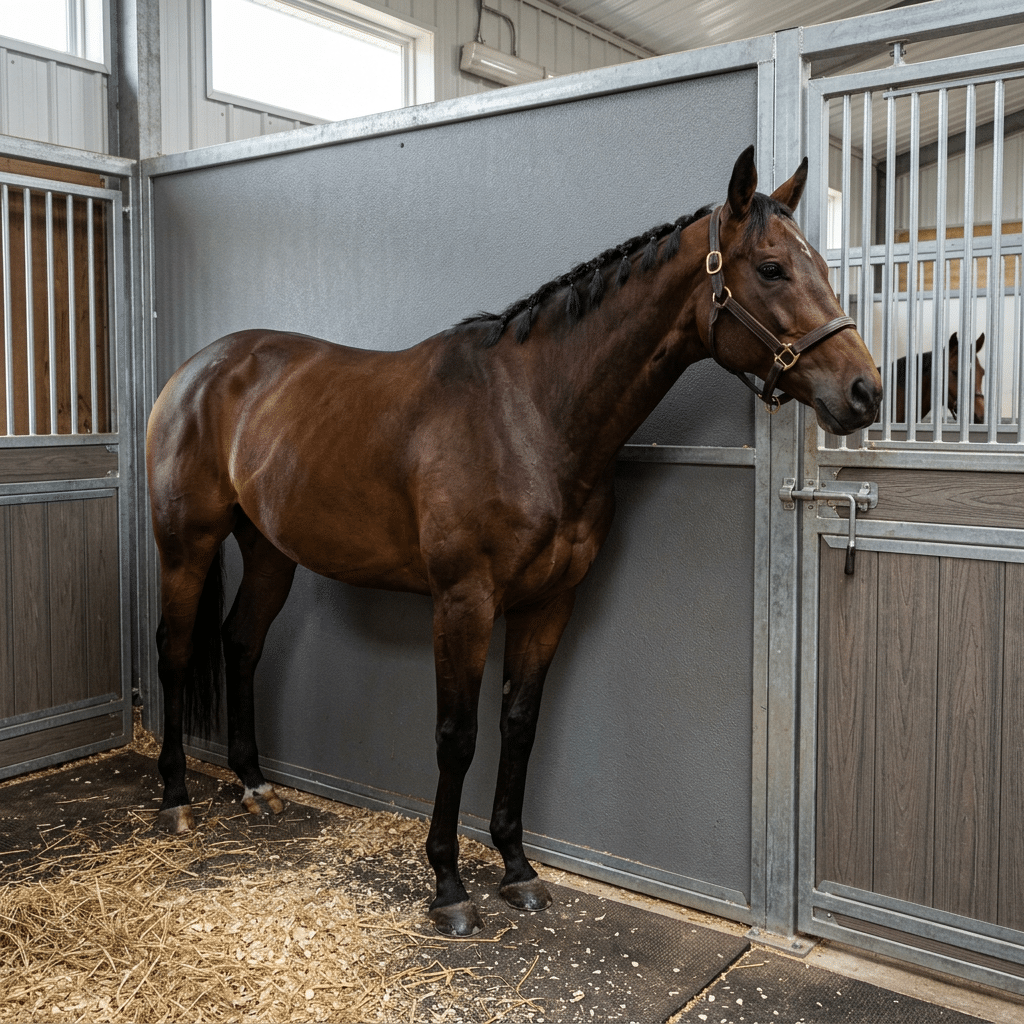
Selecting the correct paint finishes for steel horse stalls directly impacts long-term maintenance costs and asset value. A standard coating often fails within three years from kicks or moisture exposure, locking facility owners into a cycle of sanding and repainting that erodes profitability. For distributors, this failure leads directly to warranty claims and damaged client relationships.
This analysis compares wet paint, standard powder coating, and a dual-finish system based on bond strength and corrosion resistance. We evaluate each method against the ISO 1461 galvanizing standard to define a specification that withstands impact and harsh barn environments, protecting the initial investment and eliminating recurring maintenance liabilities.
Custom Stables Engineered for Any Climate.
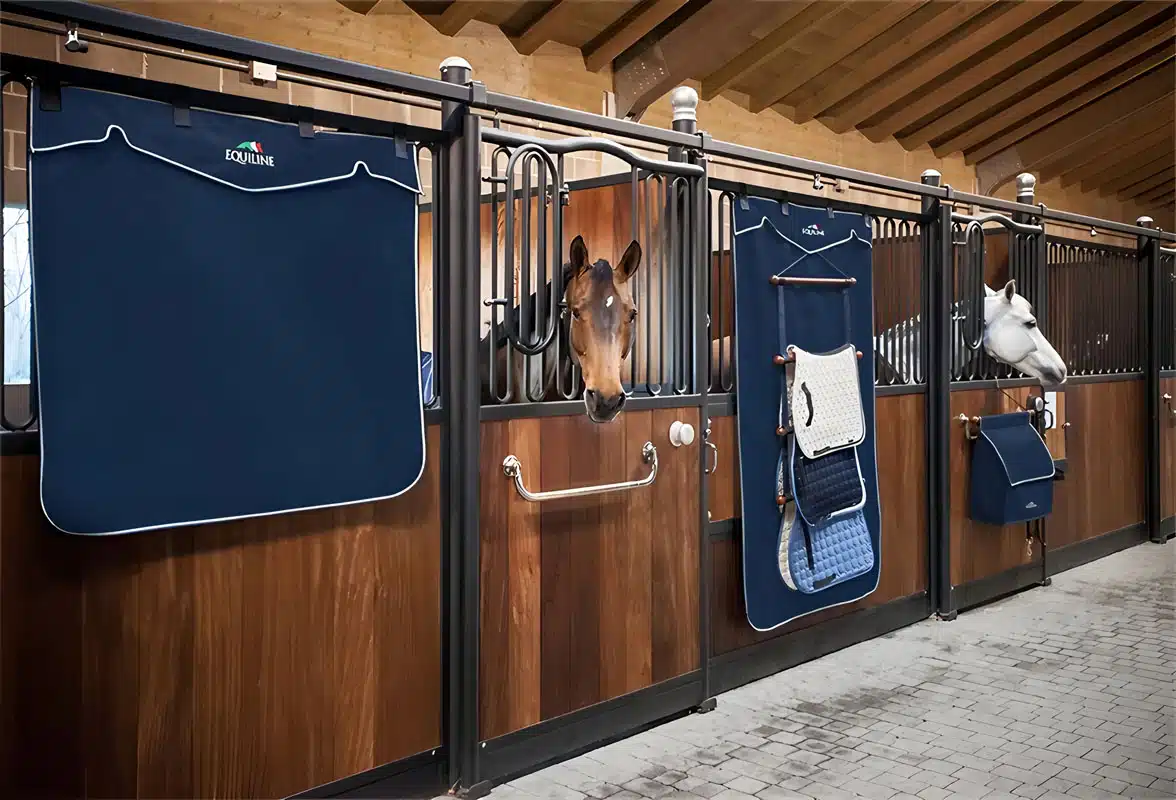
اختبار التأثير: حوافر الخيول مقابل الطلاءات الكيميائية
A coating’s surface hardness is secondary to its bond with the steel and the frame’s ability to resist impact. Standard paint or powder coatings on flexible frames can crack or chip from a horse’s kick, espe
cially in cold weather. This allows moisture underneath and starts the corrosion process. A truly durable system combines an impact-resistant steel foundation with a strongly bonded protective finish.
The Brittle Fracture Problem in Cold Climates
A horse’s kick delivers immense focused force. A standard paint or powder coating is a rigid, thin layer that cannot absorb this energy, leading to chipping and cracking upon impact. This creates an immediate entry point for moisture.
In colder environments, the problem gets worse. Steel becomes less ductile at low temperatures, and a kick is more likely to cause a brittle fracture in the coating. This instantly exposes the underlying steel to the elements and accelerates the formation of rust. Once rust begins under the coating, it spreads and causes the finish to bubble and peel away.
Why a Strong Bond Outperforms a Hard Surface
A finish is only as effective as its bond to the steel. If the stable frame flexes from a kick, a poorly bonded coating will delaminate and flake away, regardless of its surface hardness. This is a primary failure point for stables that use thin or low-grade steel.
Our systems are engineered to prevent this from happening. We utilize **Q345B structural steel** for its superior low-temperature impact toughness, especially for projects in colder climates. This material prevents the frame from flexing excessively, which protects the integrity of the finish and upholds our kick-proof guarantee. For our **Royal Series**, we offer a dual-protection finish of powder coating over our hot-dip galvanized frames. This creates a synergistic system where the galvanization provides lifetime rust protection and the powder coat adds a durable, aesthetic layer that is securely bonded to a non-flexing frame.
الطلاء المبلل: الخطأ السريع والقذر
Wet paint offers a superficial, temporary fix for steel horse stables. It chips easily from kicks and bites, exposing the steel to moisture and ammonia, which leads to rapid rusting. This creates a cycle of costly maintenance, operational downtime, and potential health hazards, making it a poor long-term investment for any professional equestrian facility.
Surface-Level Coverage Leads to Chipping and Rust
Unlike our hot-dip galvanization process that creates a metallurgical bond with the steel, wet paint is just a thin, topical layer. A single kick or bite can easily fracture this fragile barrier. When the paint chips, it exposes the Q235B structural steel directly to corrosive barn elements like moisture and ammonia. Rust begins almost immediately at these impact points and spreads unseen beneath the paint, silently compromising the stable’s structural integrity and aesthetic value.
The Hidden Costs of Constant Maintenance
The low initial cost of painting is deceptive. It locks facility owners into a recurring cycle of sanding, priming, and repainting that drives up long-term costs in both labor and materials. For our distributors, this means selling a product with a built-in maintenance liability. This constant repair work not only disrupts barn operations but also introduces paint fumes, which conflicts with the high animal welfare standards expected in today’s market. A one-time investment in a properly galvanized system eliminates these recurring expenses and operational headaches.
طلاء المسحوق القياسي: لماذا يتقشر في النهاية
Standard powder coating often fails because of what’s underneath. If the steel isn’t perfectly prepared—free of oils and properly textured—the coating can’t bond correctly. Over time, daily temperature changes, UV sunlight, and impacts from equipment or kicks create tiny cracks, letting moisture creep in and cause rust that pushes the coating off from below.
The Foundation Problem: Poor Surface Preparation
The most common failure happens when the steel surface isn’t perfectly clean. Oils from handling, factory dust, or other residue create a barrier that stops the coating from bonding correctly. This contamination eventually causes the finish to peel away. A slightly rough texture is also necessary for the coating to grip the steel. If the surface is too smooth, the finish lacks the mechanical adhesion needed to withstand years of use and impact.
Trapped moisture from an improper drying process can create steam blisters under the coating when it’s cured in the oven. These hidden weak spots are often the first places where flaking and failure begin, especially in humid environments.
Environmental Breakdown: How Stress and Sunlight Cause Peeling
Steel naturally expands and contracts with daily temperature changes, but a rigid powder coat cannot always stretch with it. This constant stress creates tiny, invisible cracks that let moisture seep in. Once water reaches the steel, rust forms underneath and pushes the coating off. This is a critical failure point in systems that lack a protective underlayer, like the hot-dip galvanization we use in our Royal Series.
Impacts from horse kicks or equipment create chips that expose the raw steel. This damage allows rust to start immediately. The corrosion then spreads under the paint, causing large flakes to peel away from the initial point of impact. Constant exposure to sunlight also degrades the coating, making it brittle and weak. This UV damage accelerates flaking, particularly for stalls with outdoor-facing components.
“التشطيب المزدوج” من DB: طلاء مسحوق الطلاء فوق الجلفنة بالغمس الساخن
Our Dual Finish system, the standard for the Royal Series, combines two powerful layers of protection. We first apply a thick, hot-dip galvanized zinc coating after fabrication for foundational corrosion proofing. A durable powder coat is then added on top. This synergistic process creates a finish that is far more resilient and aesthetically versatile than any single coating method, protecting your investment for decades.

The Synergistic Process: How Two Layers Work as One
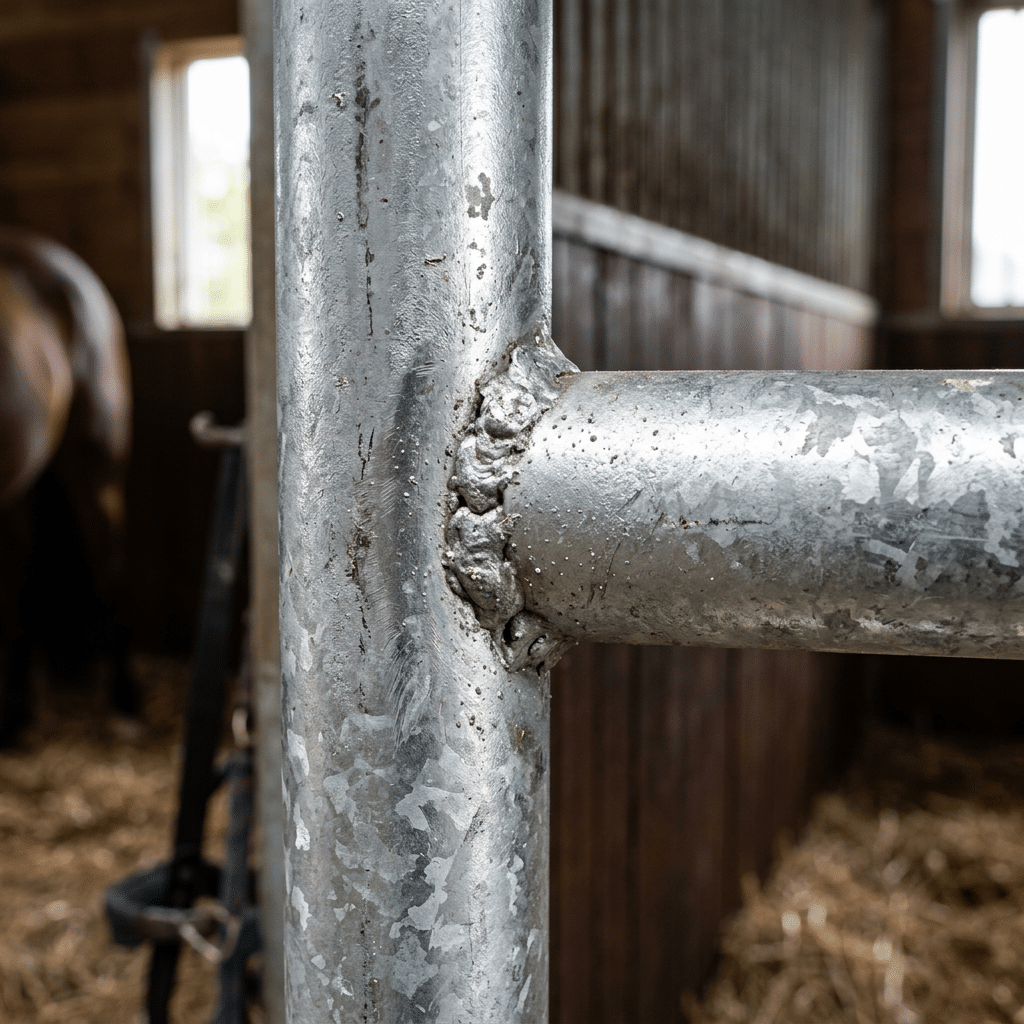
The process begins with a fully welded steel frame, which we then submerge entirely in molten zinc. This “Hot-Dip After Fabrication” method conforms to the ISO 1461 standard, ensuring every edge and weld is sealed against the elements.
This initial layer provides a robust, sacrificial zinc coating of over 70 microns thick. It acts as the primary defense, metallurgically bonding to the steel to prevent rust from ever taking hold, even in damp or corrosive environments.
After a specialized chemical pre-treatment prepares the surface for perfect adhesion, a durable powder coating is applied. This seamless top layer creates a beautiful, decorative finish that also shields the galvanization from abrasion, scratches, and UV degradation.
This duplex system delivers unmatched corrosion resistance, making it the standard for our Royal Series stalls. It is engineered for premier facilities located in high-salt or humid climates where long-term durability is critical to protecting the asset.
The powder coat provides a smooth, elegant finish available in a wide range of colors to match the specific aesthetics of a private estate or professional equestrian brand. This is a level of customization that galvanization alone cannot offer.
By combining the two methods, the finish resists chipping and flaking far better than simple paint or a standard single-layer powder coat. This ensures the stable maintains its pristine appearance with minimal maintenance, protecting the property’s value and reducing long-term upkeep costs for the owner.
مطابقة ألوان العقارات (رموز RAL)
We use the globally recognized RAL color system to provide precise color matching for our Royal Series stables. This allows project managers and distributors to perfectly align the stable’s appearance with an estate’s existing architectural elements, ensuring a cohesive and professional finish. Our dual-protection process combines a powder coat top layer with a hot-dip galvanized base for maximum durability and aesthetic control.
The RAL System: A Global Standard for Color Precision
The RAL system is a globally recognized standard for defining paint and powder coat colors. Originating in Germany, it has become the professional benchmark in construction and manufacturing. Each color has a unique four-digit code, which removes any ambiguity or guesswork in color specification when working with different suppliers or materials.
Using RAL codes ensures that the color of your stable fronts perfectly matches other architectural elements on a property, from fencing and gates to roofing. This ability to specify an exact shade creates a unified and professionally managed look, which is essential for high-end equestrian estates.
Customizing Your Royal Series Stables
Our Royal Series stables are designed for premier facilities and feature a “Powder Coat over Galvanized” finish. This dual-protection system combines the unmatched corrosion resistance of hot-dip galvanizing with a durable, aesthetic powder coat top layer. This process creates a finish that is far more resilient to chipping, scratching, and UV damage than standard paint.
Distributors and project managers can specify any RAL code during the order process. This capability allows us to deliver a product that aligns precisely with an estate’s branding or a specific design palette. You provide the code, and our factory produces a set of stables that integrates seamlessly into the project’s visual identity.
الأفكار النهائية
A lower upfront cost on standard finishes is a direct trade for higher long-term risk. Client complaints about chipping and rust will eventually erode your margins and reputation. Our Dual Finish system, built on the ISO 1461 galvanizing standard, is the only spec that truly eliminates these costly after-sale problems.
The technical data speaks for itself, but holding the product is the final proof. We suggest a trial order to validate our engineering and finish quality firsthand. Contact our team to configure your initial sets and discuss OEM options for your brand.
الأسئلة المتداولة
Can you powder coat horse stalls?
Yes, absolutely. For our Royal Series, we apply a durable powder coat finish. To ensure maximum longevity and prevent rust, we always apply it over a hot-dip galvanized steel base. This dual-finish process provides the best of both worlds: superior corrosion protection from the zinc layer and a high-end, colorful aesthetic from the powder coat.
Does powder coated steel rust?
Standard powder-coated steel can rust if the coating is deeply scratched or chipped, exposing the bare metal underneath. That is why our process involves powder coating only after the entire structure has been hot-dip galvanized. The underlying zinc layer provides robust protection, preventing rust even if the top coat is compromised.
Wet paint vs powder coat for barns?
For steel components like stall fronts, powder coating is far superior. It is thermally bonded to the metal, creating a much harder and more durable finish than wet paint. It resists chipping, scratching, and fading better, which is essential in a demanding barn environment with constant wear from horses and equipment.
What is dual finish galvanizing?
Our dual-finish system is a two-step protection process. First, we submerge the fully fabricated steel stall in molten zinc for hot-dip galvanization, conforming to ISO 1461 standards. After that, we apply a polyester powder coat on top. This provides a primary barrier against rust with a secondary aesthetic and protective layer.
Best paint for a luxury horse stable?
The best finish for a luxury stable isn’t a paint at all, but our dual-finish system. We use a high-quality powder coat over a hot-dip galvanized base. This provides the premium, uniform look of a painted finish with industrial-grade rust protection that liquid paint simply cannot match, ensuring the estate’s beauty lasts for decades.

 Arabic
  English
  Spanish
  French
  German
0 تعليق