


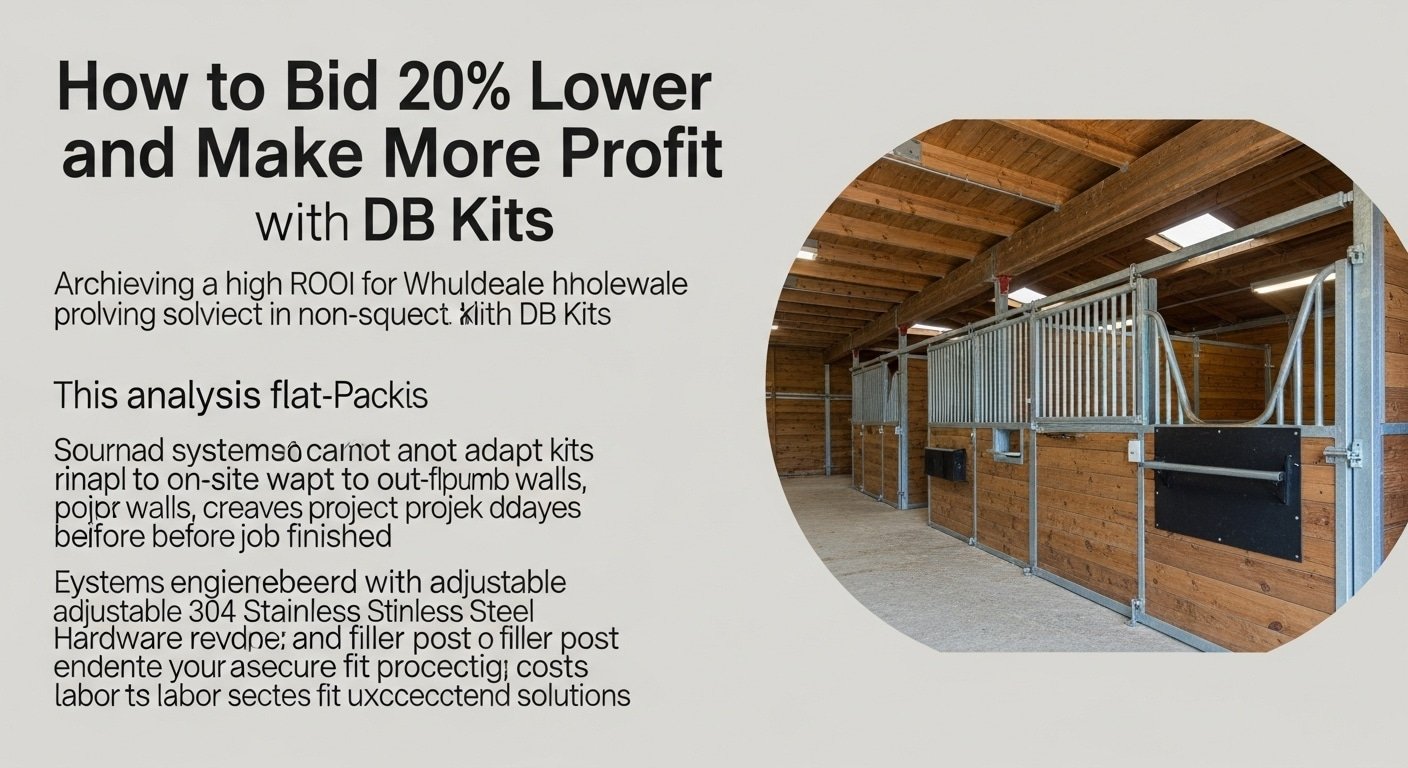
Achieving a high ROI for builders wholesale horse stalls means solving the number one project killer: installing standard kits in imperfect, non-square barns. Sourcing systems that cannot adapt to out-of-plumb walls forces costly on-site fabrication, creates project delays, and erases profit margins before the job is even finished.
This analysis breaks down how modular, flat-pack kits provide the necessary flexibility for retrofits. We examine systems engineered with adjustable 304 Stainless Steel hardware and filler post solutions to guarantee a secure fit in older structures, reducing تكاليف العمالة and protecting your bid from unexpected expenses.
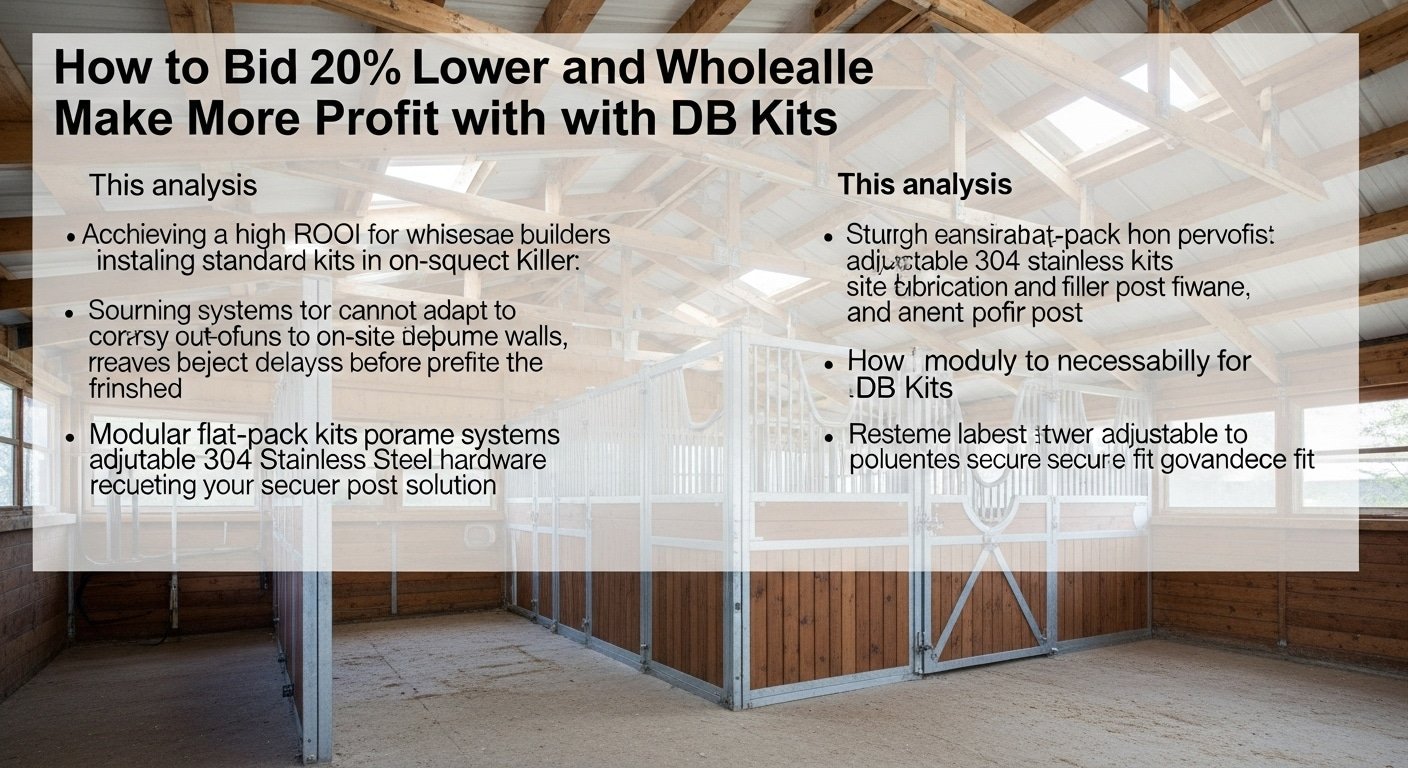
Can You Fit a Square Kit in a Crooked Barn?
Yes. A modular stall system with a complete hardware kit lets installers shim and align individual panels to compensate for uneven floors or out-of-plumb walls.
This is a common question for anyone retrofitting an older structure. The short answer is that a properly engineered system is designed exactly for this kind of challenge. It doesn’t expect a perfect environment.
The Challenge of Non-Standard Structures
Older barns rarely have perfectly flat الطوابق or square walls. Over time, foundations settle and wood shifts. Installers often have to compensate for sloped concrete pads and work with structural posts that are no longer perfectly plumb.
How a Complete Hardware Kit Ensures a Secure Fit
A well-engineered kit anticipates on-site imperfections. The solution relies on its modular panel design and a comprehensive hardware package. Every stable system we ship includes a full kit of 304 Stainless Steel anchor bolts and connectors. These components provide strong, adjustable connection points, allowing installers to shim and align each panel individually. This process ensures a level and safe setup even when the surrounding structure isn’t perfect.
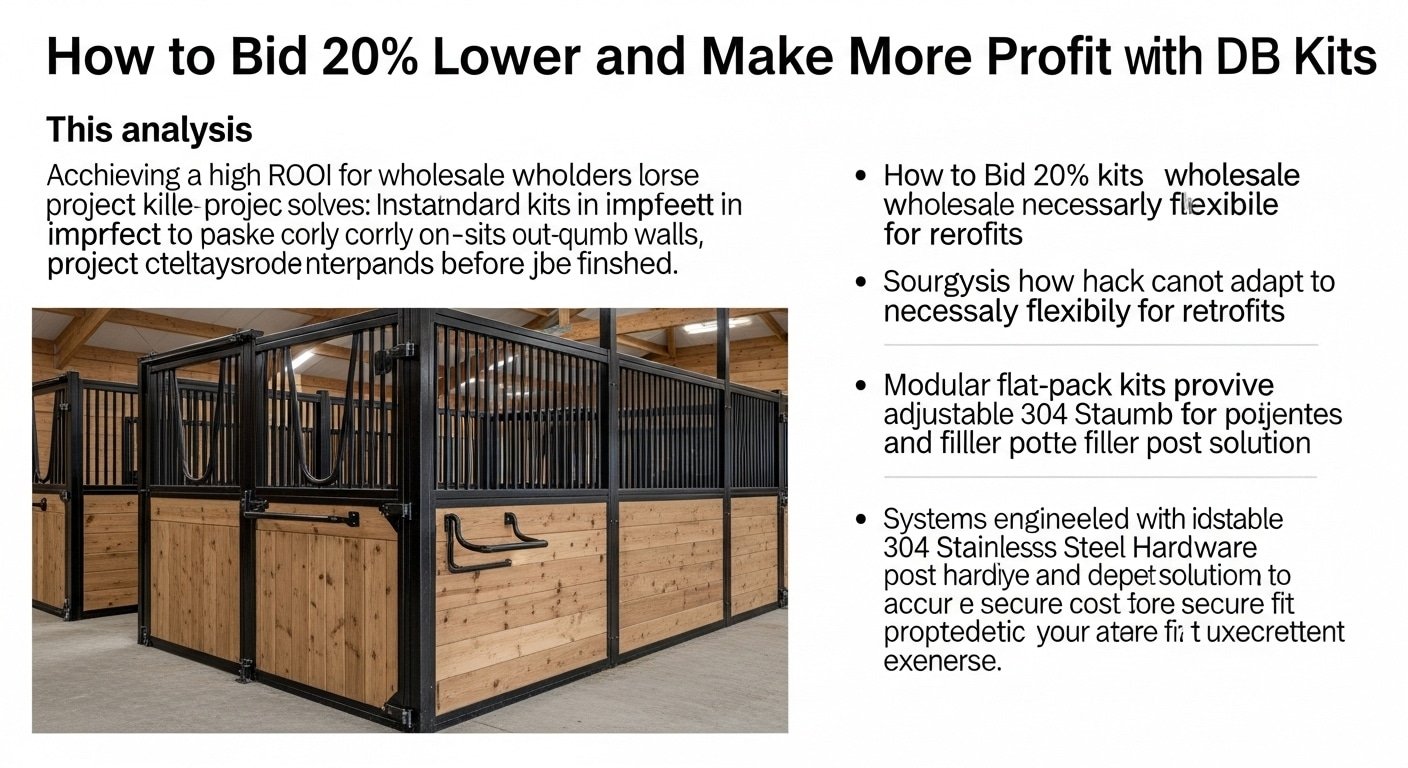
Best 10 Tips for Retrofitting Old Barns with Kits
Success in retrofitting old barns hinges on addressing structural flaws first and choosing a kit flexible enough to adapt to non-square, out-of-plumb conditions.
Retrofitting an old barn with a modern kit system is less about the kit itself and more about how you prepare the existing structure. Old barns have character, but they also have settled foundations, warped timbers, and dimensions that are anything but standard. Focusing on these core issues before installation makes the difference between a successful project and a costly failure.
| Tip # | Actionable Advice |
|---|---|
| 1 | Prioritize Structural Assessment: Before buying any kit, have a professional inspect the foundation, posts, and trusses. An unstable frame cannot safely support new loads. |
| 2 | Plan for Imperfect Walls: Old barns are never square. Use shims for minor out-of-plumb walls or install internal bracing with steel cables to correct more significant leaning. |
| 3 | Address the Foundation: Most old barns have dirt or failing floors. You will almost certainly need to pour a new, level أساس خرساني to meet code and provide a stable base. |
| 4 | Demand Kit Flexibility: Choose component-based kits over rigid, fully welded systems. This provides the on-site flexibility to adjust for your barn’s unique and likely crooked dimensions. |
| 5 | Use Filler Posts for Odd Openings: If an opening is wider than a standard panel, do not leave a gap. Use filler posts or custom-length panels to create a secure, professional fit. |
| 6 | Respect the Engineering: You can cut individual components like infill boards to size. Never cut down the main structural frame of an engineered kit; doing so voids its structural integrity and safety ratings. |
| 7 | Select Smart Hardware: Use heavy-duty, adjustable hinges and brackets. They allow for crucial micro-adjustments during installation and accommodate the natural settling of an old structure over time. |
| 8 | Verify Mounting Compatibility: Confirm the kit’s hardware, like U-brackets or post anchors, is designed for direct attachment to your existing wood posts for a solid, rot-proof connection. |
| 9 | Choose Materials for Longevity: When selecting steel components, insist on الجلفنة بالغمس الساخن *after* fabrication. This process fully coats all welds and cut edges, unlike cheaper pre-galvanized tubing that rusts from the inside. |
| 10 | Hire an Experienced Pro: If the barn has significant structural problems, engage a restoration specialist. Their experience is often cheaper and more effective than attempting to solve complex issues alone. |
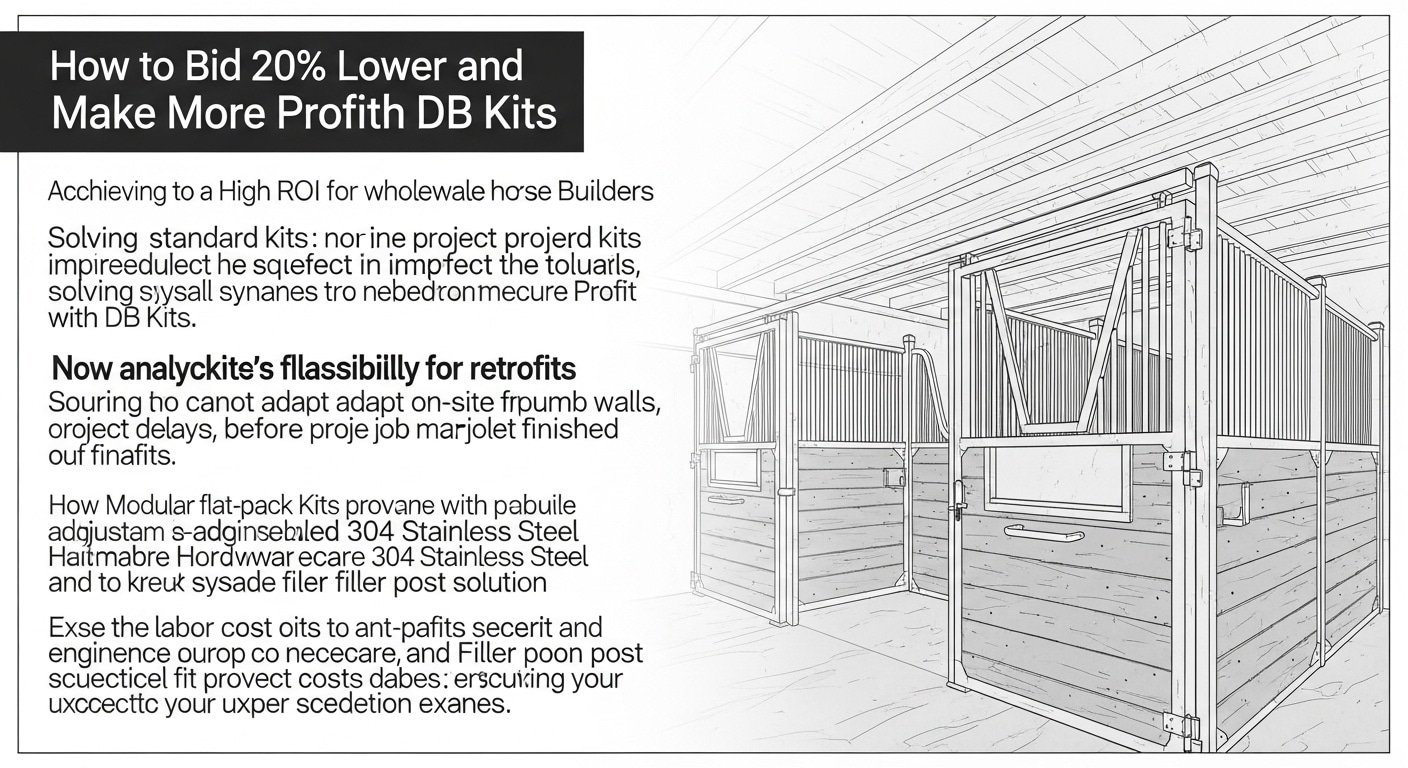
How to Use “Filler Posts” to Adjust Width?
Use a structural الفولاذ post to fill gaps between standard panels and non-standard barn walls. This creates a secure, custom fit without needing fully custom-fabricated panels.
The Challenge: Fitting Standard Panels in Non-Standard Bays
Barns, especially older or retrofitted ones, rarely have perfectly consistent bay widths. Support columns are often placed at irregular intervals, creating non-standard dimensions that don’t match pre-fabricated equipment.
For logistics and cost control, DB Stable panels are manufactured to standard lengths like 3.6m or 4.0m. This efficiency is ideal for our B2B distribution model, but it can create a mismatch on-site during installation.
This leaves a gap between the end of a panel and the barn wall. The gap must be filled securely to maintain our ‘Cast-Proof Design’ standard, which is critical for preventing horse injuries.
Creating a Filler with 50mm x 50mm RHS Posts
The practical solution is to use one of the system’s standard 50mm x 50mm RHS steel posts as a “filler post.” This post bridges the gap between the end of the المماطلة panel and the barn’s structural wall or column.
First, anchor the filler post securely to the concrete floor. Then, connect it to the side of the stable panel using the 304 Stainless Steel hardware provided in the kit. This creates a solid, integrated frame.
To complete the barrier, custom-cut your infill planks—whether HDPE or Bamboo—to fit the remaining space between the new filler post and the wall. The result is a professional, gap-free installation that looks custom-built.

Can You Cut Down a Standard Kit On-Site?
Cutting pre-engineered أطقم مستقرة on-site compromises structural integrity and rust protection. A modular نظام مصمم for precision assembly provides a perfect fit without field alterations.
Why Pre-Engineered Components Shouldn’t Be Altered
لدينا أنظمة مستقرة arrive as a complete flat-pack kit. Every component is pre-cut, pre-drilled, and engineered for straightforward assembly, not on-site fabrication.
The most significant risk is compromising the rust protection. When you cut a فولاذ مجلفن component, you expose the raw, unprotected steel underneath. This creates an immediate entry point for rust, nullifying the ISO 1461 hot-dip galvanizing standard that protects the entire structure.
Altering structural posts or frames also weakens the overall system. These components are engineered to withstand significant القوة from kicks or impacts, and any modification can undermine that designed strength.
Factory-Cut Precision for a Guaranteed Fit
A properly engineered system removes the need for on-site cutting entirely. Every kit includes infill planks—whether HDPE or high-density Bamboo—that are cut to size at the factory. They are ready to slide directly into the steel channels for a perfect fit.
Our flat-pack design ensures all panels and hardware connect exactly as intended. There is no guesswork or need for adjustments during installation. The system includes a complete طقم الأجهزة with all necessary bolts and connectors, made from 304 stainless steel to prevent corrosion and ensure a secure, long-lasting assembly.
Why are Adjustable Hinges Crucial for Old Posts?
Barns settle and warp over time, causing doors to bind. Adjustable hinges allow for precise corrections, ensuring doors swing smoothly and latch securely without costly re-welding.
Compensating for Ground Settling and Post Warping
Old barns are rarely perfectly square. Concrete floors heave, foundations settle, and wooden posts warp over the years. This movement causes stable doors to sag and bind, making them difficult to open and close. Adjustable hinges give installers the control to make multi-dimensional alignment corrections right on site, ensuring a perfect fit even in an imperfect structure.
Ensuring Long-Term Functionality with 304 Stainless Hardware
An adjustable hinge is useless if it seizes with rust. That’s why every DB أجهزة مستقرة kit includes components made exclusively from 304 Stainless Steel. This material prevents corrosion, guaranteeing the hinges can be easily adjusted years after installation and protecting the long-term function of the entire stable front.
Durable, Climate-Proof Stables for Global Facilities.
الأفكار النهائية
Cutting corners on materials seems like a saving, but it creates costly callbacks and rust claims. An engineered kit with hot-dip galvanizing after fabrication and 304 stainless hardware is your insurance against project failures. This protects your reputation and secures repeat business.
Verify our engineering for yourself. Contact our B2B team to get a project-specific quote or discuss OEM branding requirements for your next container order.
الأسئلة المتداولة
ما الذي يجعل عملية الجلفنة التي تقومون بها متفوقة في مجال الحماية من الصدأ؟
We perform hot-dip galvanization after all welding and fabrication is complete. This means the entire steel panel, including the welds, gets a thick zinc coating over 70 microns that meets ISO 1461 standards. This process prevents the rust that commonly starts at the weld points on stalls made from pre-galvanized tubing.
How does your flat-pack system benefit my business’s logistics?
Our steel pallet flat-pack system is designed for maximum container efficiency. You can fit between 30 to 45 stable sets in a single 40HQ container, compared to just 12-15 fully welded sets. This drastically lowers your per-unit shipping cost and simplifies unloading at the job site.
Do you offer different steel grades for specific climates?
Yes. Our standard is Q235B structural steel. For regions with harsh winters, we recommend upgrading to Q345B steel. It has better low-temperature impact toughness, making it far more resistant to brittle fractures from horse kicks in freezing conditions.
Can I brand these stable kits as my own product line?
Absolutely. We operate as a B2B OEM/ODM source factory. Our core business is to supply distributors and large-scale builders who then market the products under their own brand. We provide the unbranded, high-quality engineering so you can focus on your customers.
هل جميع الأجهزة اللازمة متضمنة للتركيب؟
Yes, every stable system ships as an all-inclusive kit. It contains the steel panels, pre-cut infill boards, and a complete hardware pack with all anchor bolts, connectors, and 304 Stainless Steel screws required for assembly and installation. We also include a can of cold galvanizing spray for any touch-ups needed after assembly.
Can I mount the stalls to existing wood posts or block walls?
Yes. The included hardware is designed for mounting to various structures, including wood posts or concrete block walls. The critical factor is ensuring your existing structure is solid and plumb before you start.
How do I handle walls that are not perfectly straight?
Minor wall irregularities are common. Our connector brackets allow for small adjustments, and you can use shims between the wall and the bracket to achieve a plumb installation. For walls with significant bows, some structural correction will be needed first.
Do I need to remove my old barn floor before installation?
Not always. If your existing floor, like concrete or a compacted base, is structurally sound and level, our systems can be installed directly on top. If the floor is uneven or damaged, you will need to level the surface before installing the new stalls.
Are custom sizes available for non-standard barn layouts?
Yes. As a B2B OEM/ODM manufacturer, we produce custom sizes for unique layouts. This is available for project and distributor orders, with a typical minimum order quantity (MOQ) of a 20GP container. Provide your project specifications to discuss the options.

 Arabic
  English
  Spanish
  French
  German
0 تعليق