



The horse corral vs stall decision for events directly impacts safety and liability. Budget-grade panels made from thin steel and pre-galvanized tubing frequently fail at the welds, creating immediate injury risks that lead to insurance claims and lasting reputational damage for organizers.
This analysis benchmarks containment options against critical engineering standards, including post-weld hot-dip galvanization (ISO 1461) and a minimum 14-gauge (2.0mm) steel thickness. We evaluate how these material specifications directly impact long-term structural integrity and user safety.

Why Should You Avoid Cheap Portable Panels?
رخيصة اللوحات fail from thin steel and poor rust protection, creating safety hazards. Panels engineered with post-weld الجلفنة بالغمس الساخن offer genuine durability and long-term value.
The Dangers of Thin Steel and Weak Welds
The most immediate risk in budget panels comes from the material itself. Many use steel tubing thinner than the 2.0mm industry standard, making them vulnerable to bending or breaking from a horse’s kick. Inferior welding compounds the problem, creating weak points that can fail under stress and pose a direct injury risk. Often, the low-quality connectors and pins are the first components to fail, compromising the entire enclosure’s integrity.
How Post-Weld Galvanizing Prevents Rapid Rust
The difference in rust protection between cheap panels and properly engineered systems comes down to one critical manufacturing step.
- Cheap Method (Pre-Galvanized): Panels are made from pre-galvanized tubes that are cut and welded *after* the coating is applied. This leaves every weld seam exposed and vulnerable to immediate rust.
- Correct Method (Hot-Dip After Fabrication): The entire panel is welded first from raw steel, then dipped in molten zinc. This process completely seals every edge, corner, and weld seam.
This superior method provides a thick طلاء الزنك (over 70 microns) that conforms to ISO 1461 standards. It guarantees long-term protection against corrosion, even in harsh climates, and is the only process that ensures structural longevity.

Top 10 Features to Look for in Portable Stalls
Prioritize durable materials like hot-dip galvanized steel, horse safety features like kick-proof walls, and smart design that simplifies transport and setup for long-term value.
| الميزة | الميزة الرئيسية | Why It Matters (Technical Details) |
|---|---|---|
| Hot-Dip Galvanized Frame | Lifetime rust protection and structural integrity. | The entire welded panel should be dipped *after* fabrication (to ISO 1461 standards). This process coats welds and edges, preventing rust. Pre-galvanized tubing rusts at the welds. |
| Kick-Proof Infill Panels | Prevents injury from kicks and eliminates splinters. | Choose 28mm+ UV-stabilized HDPE for zero maintenance or high-density bamboo for superior strength. Avoid plywood, which absorbs moisture, rots, and splinters. |
| 14-Gauge (2.0mm) Steel Tubing | Resists dents and bending from animal impact. | Thinner 16-gauge (1.5mm) steel is common in cheaper stalls but dents easily and compromises safety. Insist on a minimum 2.0mm wall thickness for all frame components. |
| Smooth, Nail-Free Construction | Eliminates sharp edges and snag points. | Surfaces should be free of protruding bolts or rough welds. Post-weld galvanizing naturally creates a smoother, safer finish compared to painted or pre-galvanized steel. |
| مناسب تصميم التهوية | Maintains جودة الهواء and reduces respiratory issues. | Look for open-top grills or نير designs that promote vertical airflow (the “stack effect”), pulling stale air up and out while drawing fresh air in from below. |
| Secure Locking & Door Systems | Ensures reliable containment and handler safety. | Doors should feature strong steel hinges or hidden track systems with secure latches like kick-over bolt locks that can’t be manipulated by a horse. |
| Cast-Proof Bottom Gaps | Prevents horses from getting legs stuck when rolling. | The gap between the bottom of the stall wall and the ground should be minimal (approx. 50mm or 2 inches) to stop a hoof from sliding underneath. |
| High-Quality Connectors | Provides structural stability and rigidity. | Connectors and anchor bolts should be heavy-duty and made from 304 Stainless Steel to prevent rust from compromising the stall’s connection points. |
| Transport-Friendly Design | Reduces freight costs and simplifies logistics. | A flat-pack system with interlocking panels is far more efficient than fully-welded stalls, allowing 2-3 times more units to fit in a الشحن container. |
| Modular Configuration | Allows flexible layouts and future expansion. | The system should support various connector types (2-way, 3-way, 4-way) to build back-to-back rows or custom barn layouts without needing custom fabrication. |
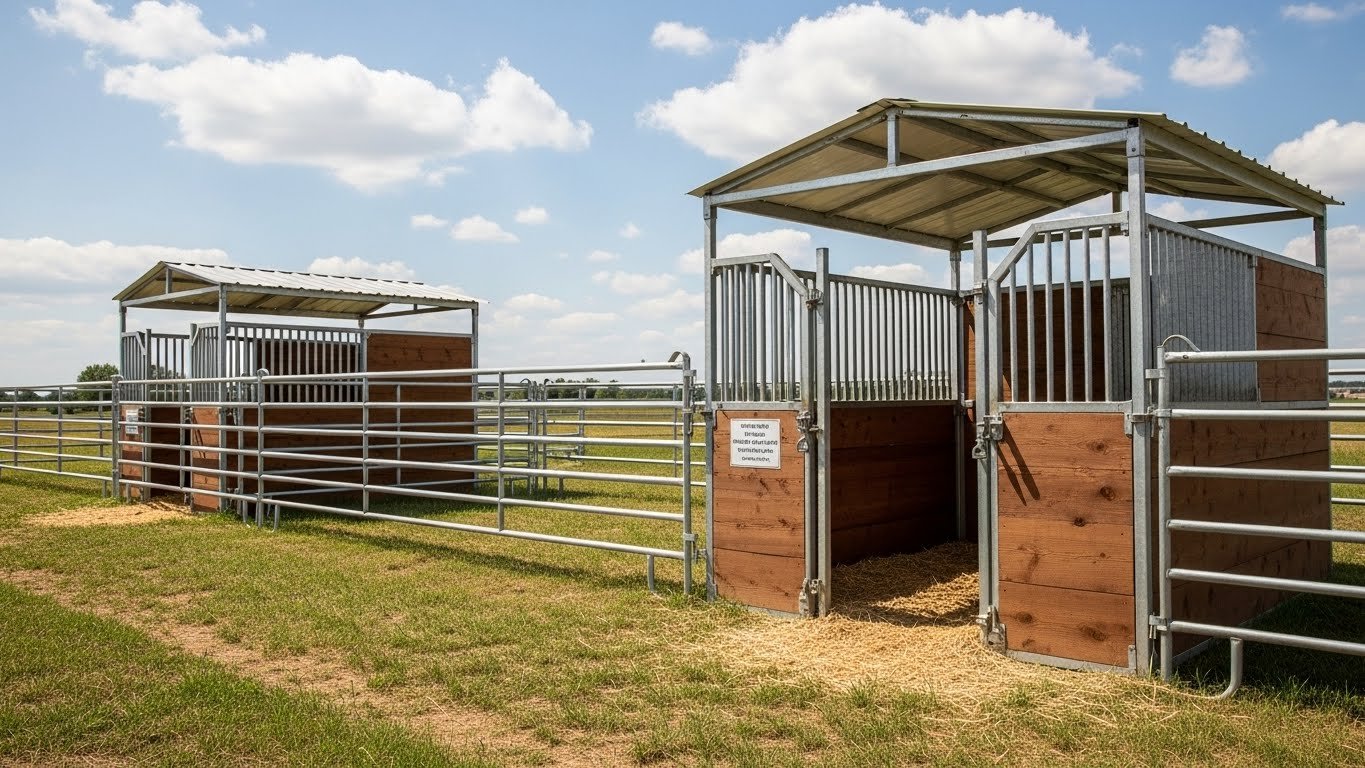
Does “Pre-Galvanized” Mean Rust-Proof? (Spoiler: No)
No. Pre-galvanized steel is coated before fabrication, leaving all welds, cuts, and drill holes completely exposed. These unprotected points are exactly where rust begins.
The Inherent Weakness of Pre-Coated Steel
Using pre-galvanized steel for any welded structure is a critical design flaw. The intense heat from welding simply vaporizes the thin zinc layer around every joint, leaving raw steel exposed. Any cutting or drilling done during fabrication also creates uncoated edges that are immediately vulnerable to moisture and corrosion.
The Solution: Hot-Dip Galvanization After Fabrication
Our process ensures total protection because we apply the zinc coating *after* all welding and cutting is finished. We weld the entire إطار فولاذي first, then immerse the completed structure into a bath of molten zinc. This method creates a thick, seamless protective layer that covers every surface, inside and out.
- Complete Coverage: The molten zinc flows over every weld, into every corner, and inside every tube, leaving no part of the steel exposed.
- Superior Thickness: The coating averages over 70 microns (μm), far thicker and more durable than a pre-galvanized sheet.
- Certified Standard: The entire process conforms to BS EN ISO 1461, the international standard for hot-dip galvanized coatings.
This is the only way to guarantee comprehensive, long-term rust protection for a steel stable الهيكل.

Why Should You Demand HDPE over Plywood?
HDPE outperforms plywood because it’s completely waterproof, won’t rot or splinter, and requires no maintenance. It provides a safer, more durable stall infill for the long term.
The Problem with Plywood: Moisture, Rot, and Constant Upkeep
Plywood is a poor choice for any equestrian environment. It absorbs moisture from urine, washing, and humidity, which causes it to swell, warp, and rot. This requires constant sealing and painting just to delay the inevitable damage, adding ongoing labor and material costs. Worse, a kick from a horse can easily splinter or crack the wood, creating sharp, hazardous edges that compromise the stall’s integrity.
HDPE’s Advantage: Zero Maintenance and Impact Absorption
Our systems use 28mm-32mm thick HDPE planks that are completely impermeable to water. They resist rot, mold, and pests. The material is engineered with UV stabilizers to prevent cracking from sun exposure, ensuring it lasts. This design offers superior impact absorption, delivering a ‘Kick-Proof’ and ‘Zero Maintenance’ infill that guarantees horse safety and eliminates upkeep costs.

How Important is the Connector Design?
Connector design is the difference between a rigid, safe enclosure and a rattling liability. The right engineering prevents flexing, dangerous gaps, and long-term rust failure.
The Role of Connectors in Structural Stability and Safety
Connectors are the primary load-bearing points that unite individual stall panels into a single, rigid structure. A weak or poorly fitted system allows panels to flex under pressure. This flexing creates rattling noises that can stress horses and eventually leads to material fatigue. More critically, poor connector design can result in dangerous gaps forming between panels. Any gap large enough for a hoof poses a significant risk of leg entrapment, violating fundamental ‘Cast-Proof Design’ principles.
Engineered for Longevity: Galvanized Pins and Stainless Hardware
Our system addresses these failure points with specific material and خيارات التصميم that guarantee long-term reliability. We focus on components that withstand both physical القوة and environmental corrosion.
- Exceptional Strength: Our connection pins are built from 40x40mm square tubes with fully welded 6mm steel plates, providing a robust joint that resists bending and shear forces.
- المجموع Rust Protection: The entire connector pin assembly is hot-dip galvanized *after* fabrication. This process, conforming to ISO 1461, ensures complete zinc coverage on all surfaces, including welds—the most common points of failure for pre-galvanized parts.
- Corrosion-Proof Fasteners: Every installation kit includes anchor bolts, screws, and other fasteners made exclusively from 304 Stainless Steel for superior resistance to rust and corrosion in damp stable البيئات.
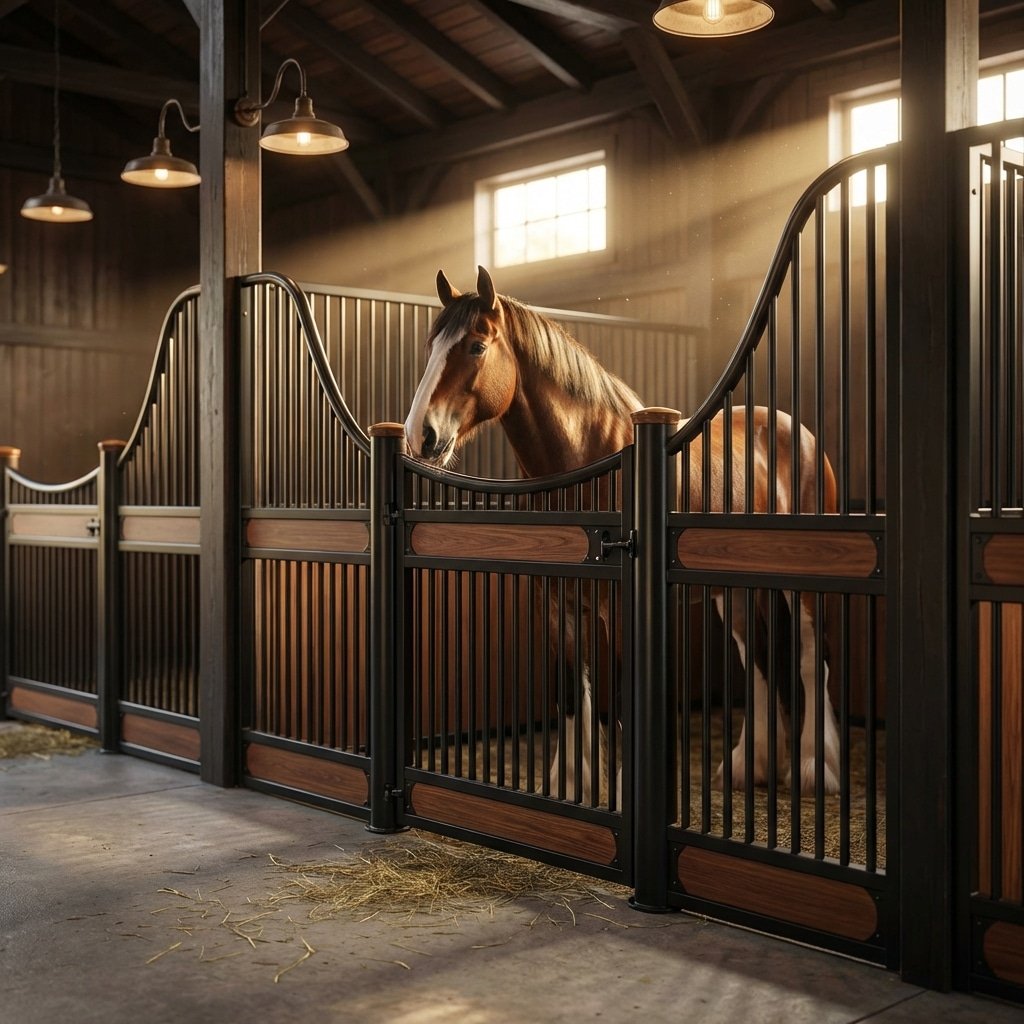
Engineered Horse Stables Built to Last.
الأفكار النهائية
Generic panels trade a low upfront price for high long-term risk from rust and weld failure. Our commitment to post-weld hot-dip galvanizing (ISO 1461) isn’t just a feature; it’s your safeguard against safety liabilities. This standard protects your reputation and eliminates the costly service calls that erode your profit.
Don’t take our word for it—verify the engineering yourself. The next step is to arrange a trial order to test the fit, finish, and durability firsthand. Contact our team to discuss your market’s needs and see how our flat-pack logistics can directly impact your bottom line.

الأسئلة المتداولة
What makes your stables last so long, especially in coastal areas?
We use a process called Hot-Dip Galvanization After Fabrication. The entire panel is welded first, then dipped in molten zinc. This creates a thick protective coating that meets ISO 1461 standards, with over 70-85 microns of zinc. This method offers superior rust protection, especially for high salt spray markets like Australia.
Are your stable infill materials safe for horses that kick or chew?
Yes. We offer impact-absorbing HDPE for zero maintenance, or high-density Bamboo that is three times harder than oak and naturally resists chewing. For distributors in المناخات الباردة, our optional Q345B steel frames provide superior low-temperature toughness to prevent brittle fractures from kicks in winter.
How do you help distributors save on international shipping costs?
Our Steel Pallet Flat-Pack system allows distributors to load 30 to 45 stable sets into a single 40HQ container. Fully welded sets from other suppliers only fit 12 to 15. This system reduces per-unit freight costs by over 60%, which directly protects our distributors’ profit margins.
What is included in a standard stable set?
A standard set includes a stable front with a door, a التقسيم panel, all pre-cut infill planks (HDPE or Bamboo), and a complete hardware kit. The kit contains all connectors and bolts, which are 304 stainless steel. We also include a can of cold galvanizing spray for any touch-ups needed after installation.
Why is plywood a poor choice for horse stalls?
Plywood is not recommended for horse stalls because of its vulnerability to moisture, potentially toxic adhesives, and difficulty of repair. In a damp stable environment, plywood absorbs moisture from urine and humidity, which causes it to swell, warp, and structurally degrade. The glues used in its construction can be harmful if horses chew on the wood. Any damage typically requires replacing the entire panel, making superior materials like high-density bamboo or zero-maintenance HDPE a safer and more durable long-term investment.
How can I verify a product is truly hot-dip galvanized?
A true hot-dip galvanized finish, done after fabrication, has a distinctively thick and slightly uneven coating that covers everything, including welds and cut edges. Visually, it weathers from a shiny silver to a uniform matte gray. You can use a digital coating thickness gauge to confirm; readings should be well above 70 microns to meet ISO 1461 standards. In contrast, cheaper pre-galvanized tubing will show exposed, unprotected steel at every weld point.
Do you provide replacement parts for your stable systems?
Yes. We support our B2B clients with a full inventory of replacement components. Every stable system already includes a complete hardware kit with 304 stainless steel connectors and a can of cold galvanizing spray for installation touch-ups. If you need specific parts like a door latch, roller, or feeder in the future, they can be ordered directly through our distributor service channel.
What is the warranty on your stable systems?
لدينا أنظمة مستقرة are backed by a comprehensive structural warranty. The hot-dip galvanized steel framework is warrantied against rust-through for 10 years under normal operating conditions. All moving components, such as door hardware and swivel feeders, are covered for 1 year against manufacturing defects. This warranty reflects our commitment to high-quality materials and معايير الهندسة.
Are there any sharp edges on the steel components?
No. A core part of our ‘السلامة الهندسية‘ principle is ensuring all components are free of sharp edges. After welding and fabrication, every panel and frame undergoes a finishing process to deburr and smooth any potentially hazardous surfaces. This attention to detail is critical for preventing injuries to both horses and handlers and is a non-negotiable part of our manufacturing standard.

 Arabic
  English
  Spanish
  French
  German
0 تعليق