
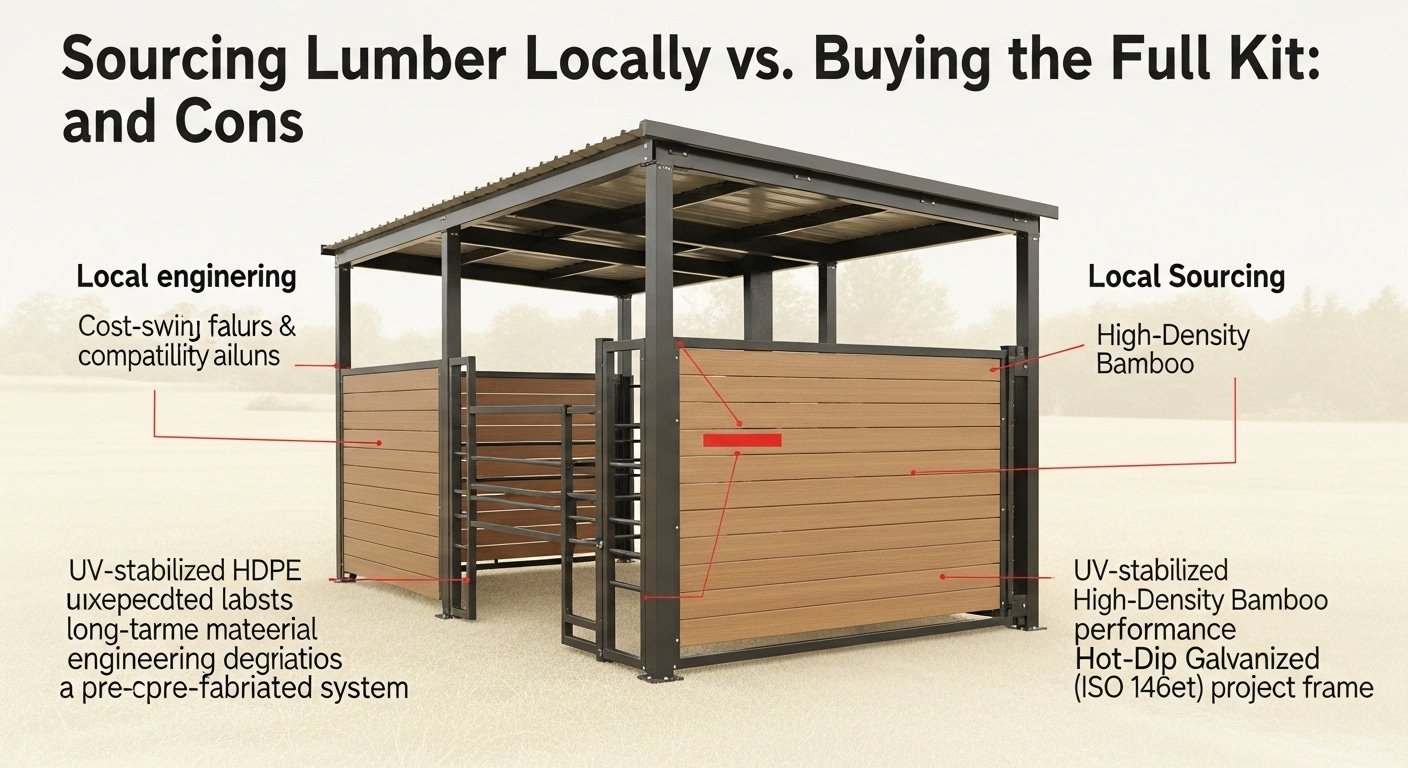
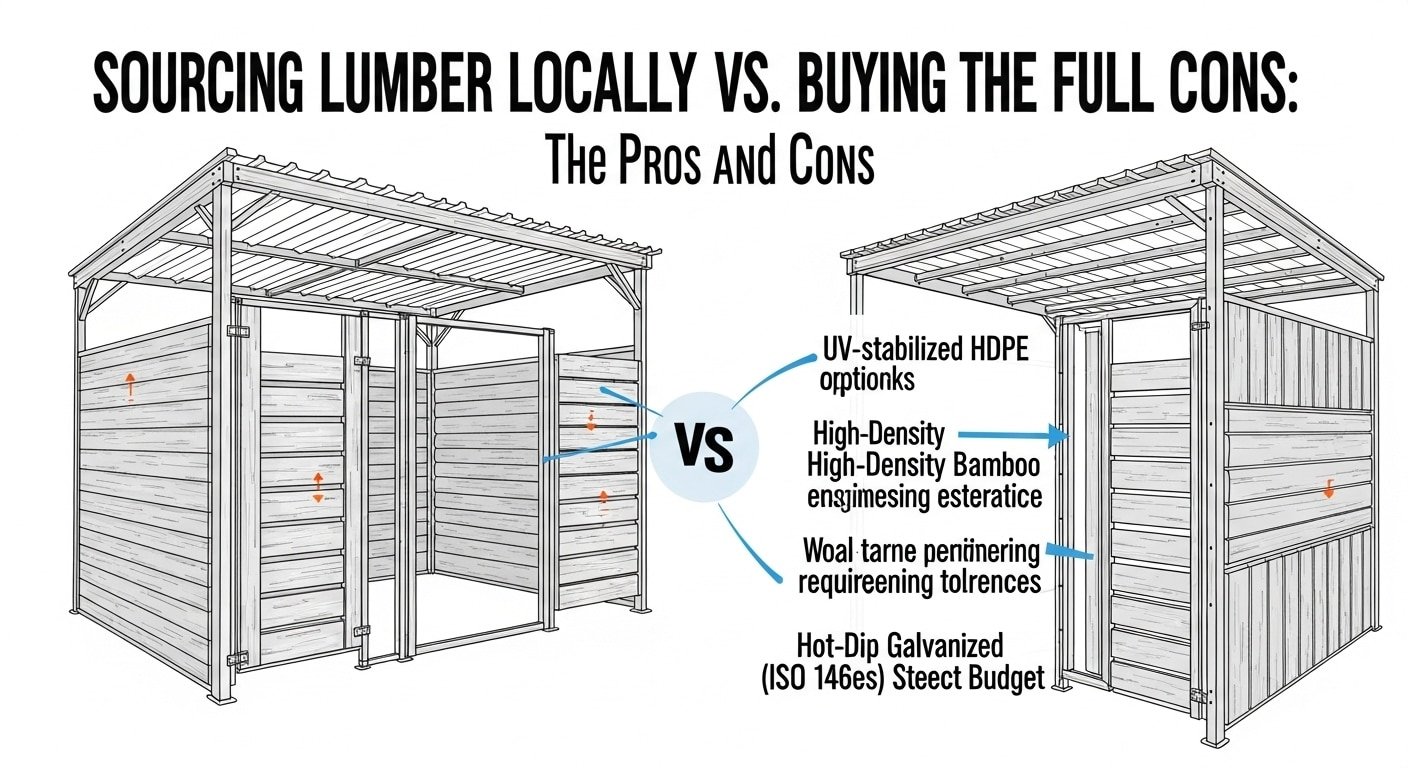
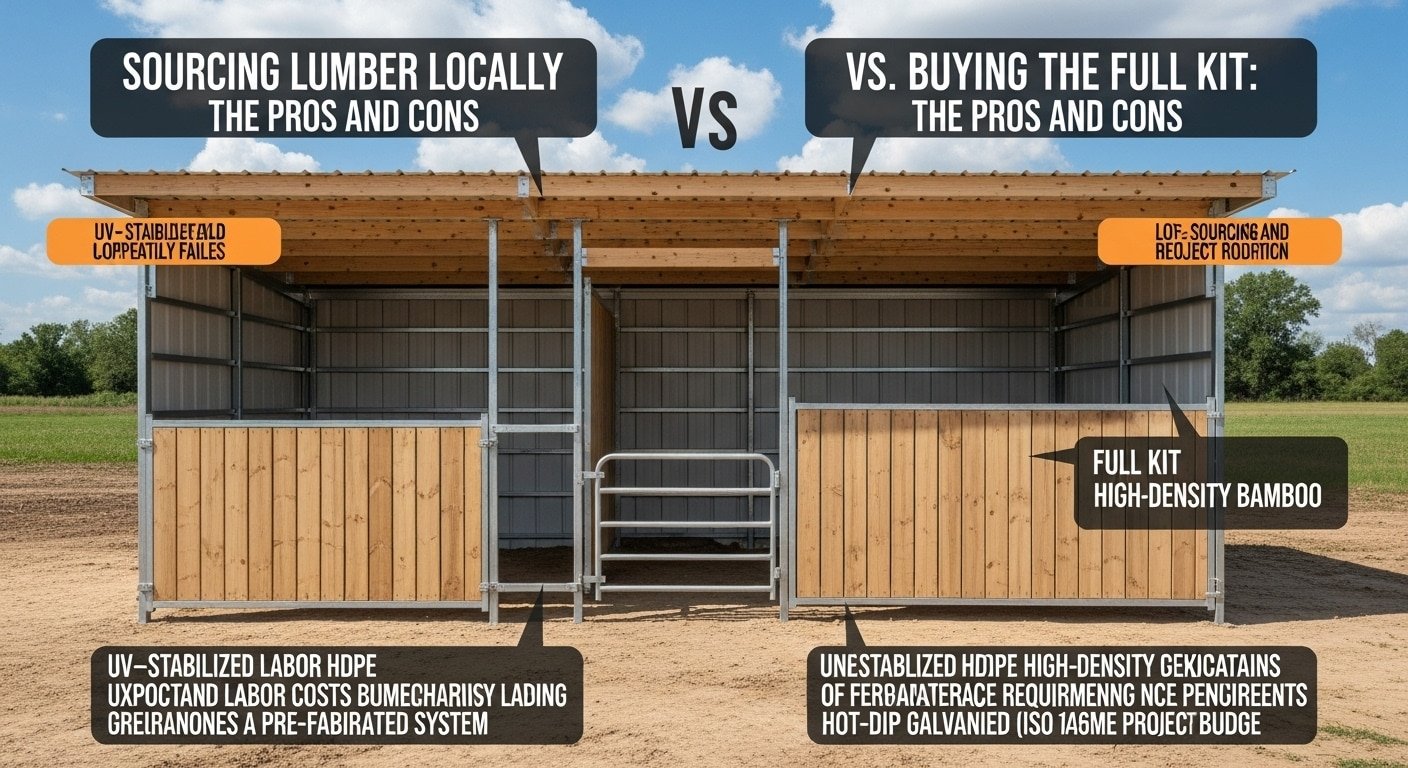
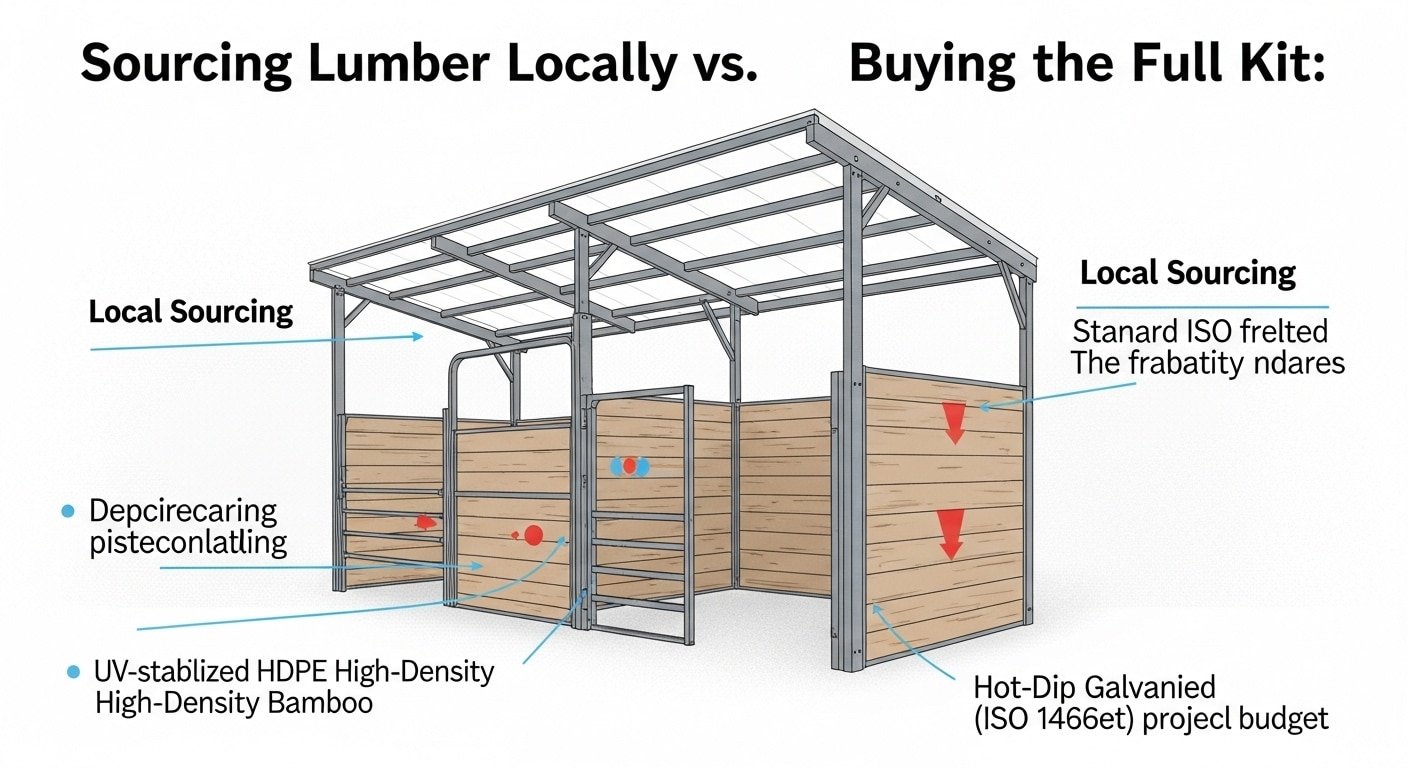
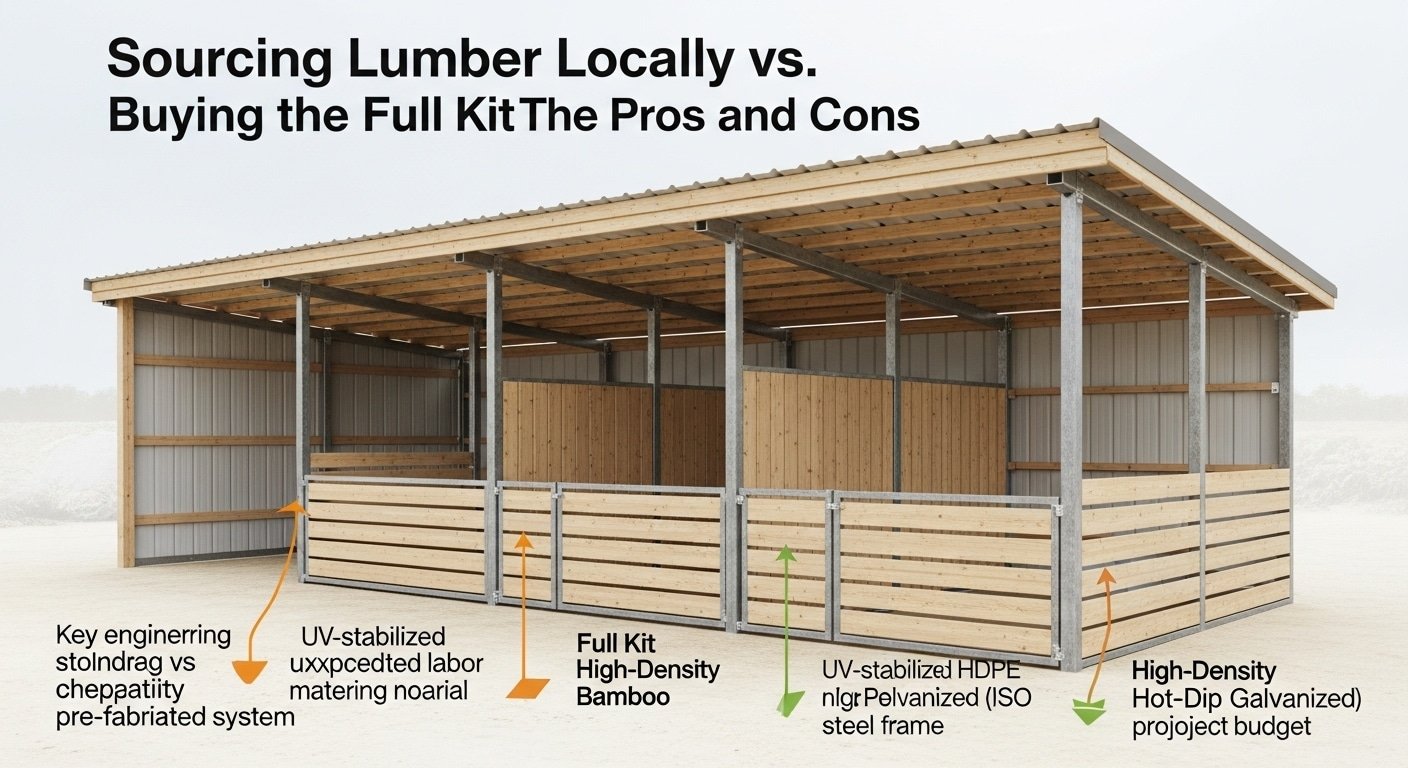
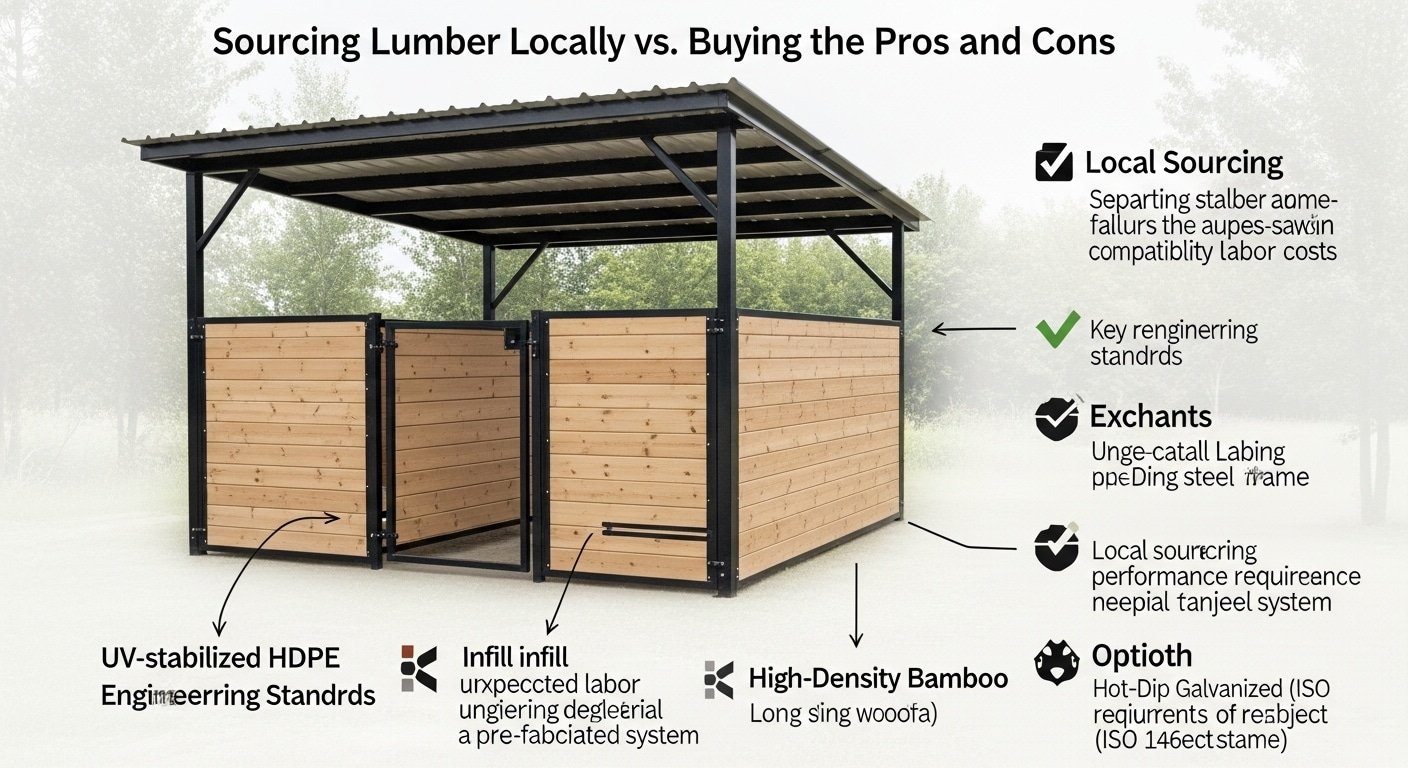
Sourcing stall kit lumber separately from the steel frame appears to be a cost-saving measure, but it often creates compatibility failures and project delays. This sourcing mistake can erase profit margins through unexpected labor costs and long-term material degradation, especially when local wood doesn’t meet the engineering tolerances of a pre-fabricated system.
This analysis benchmarks the full kit approach against the local sourcing model using key engineering standards. We evaluate infill options like UV-stabilized HDPE and High-Density Bamboo against the performance requirements of a Hot-Dip Galvanized (ISO 1461) steel frame to protect your project budget.
Why Do Most Stall Kits Rust at the Joints First?
Joints rust first by trapping moisture. Many brands weld pre-galvanized tubes, which burns off the coating at the weld, leaving critical connection points immediately exposed.
How Trapped Moisture Creates Corrosion Hotspots
Welds, joints, and seams are natural weak points. They trap water from rain or washing, preventing it from evaporating. This prolonged contact between moisture and steel is the primary driver of rust. The problem gets worse when manufacturers use a common shortcut: welding pre-galvanized tubes. The intense heat of welding vaporizes the thin zinc coating at the joint, exposing the raw steel underneath. This leaves the most structurally important areas of the stall completely unprotected from day one.
The Advantage of Hot-Dip Galvanization After Fabrication
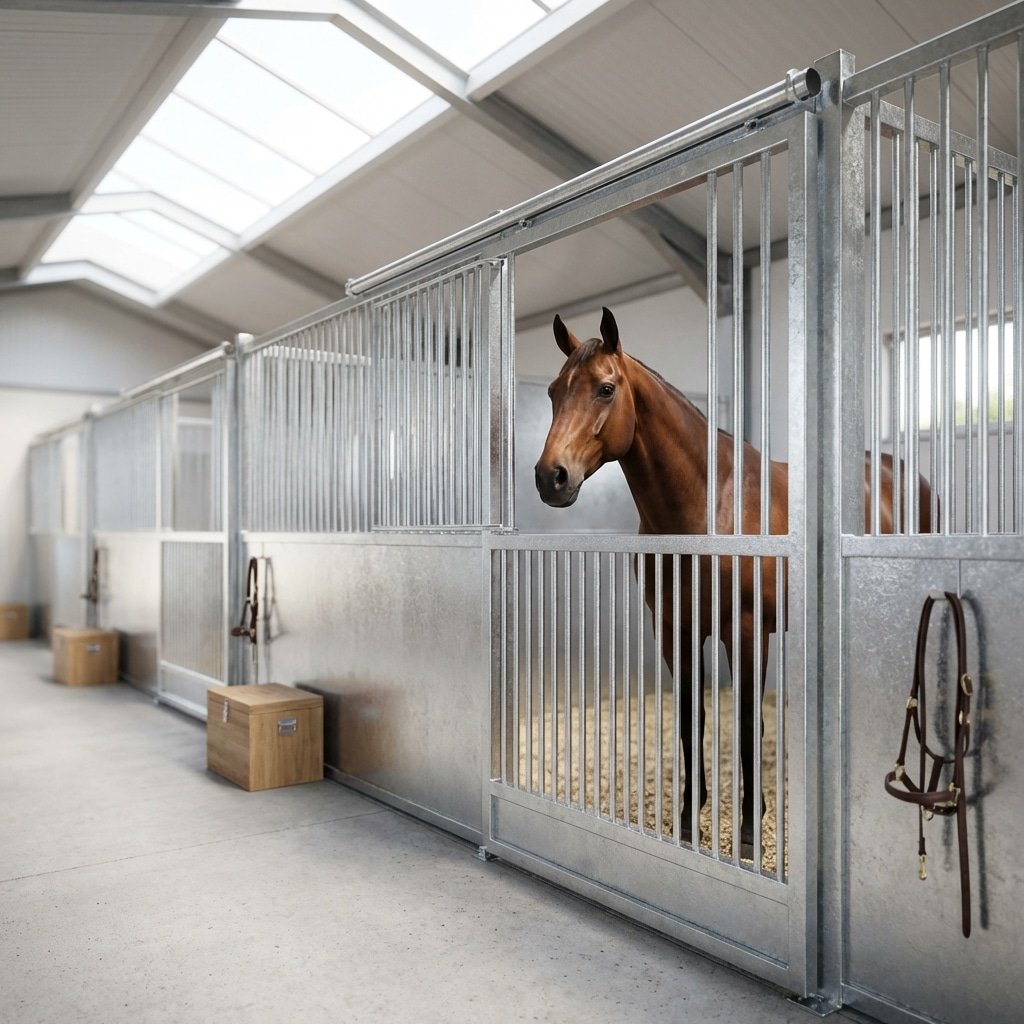
We solve this problem by reversing the manufacturing sequence. First, we fabricate the entire stable panel using raw Q235B structural steel. Then, we submerge the completed panel in a bath of molten zinc. This process, known as Hot-Dip Galvanization After Fabrication, conforms to BS EN ISO 1461. It guarantees a protective zinc coating over 70 microns thick covers every surface, inside and out—especially the welds. This method completely seals the most vulnerable areas, creating a truly rust-resistant structure.
The Top 10 Hardware Components That Fail in Cheap Kits
Cheap stall kits fail at the hardware. Untreated screws, thin latches, and low-grade hinges rust fast, compromising door security and structural integrity.
When a budget stall kit fails, it almost always starts with the small parts. Manufacturers of low-cost systems cut corners on fasteners, latches, and hinges because they are easy places to reduce upfront cost. The problem is that these components are subjected to constant stress, moisture, and ammonia. Using inferior materials like untreated steel or thin “pre-galvanized” parts leads directly to rust, seizure, and structural failure. This isn’t just an aesthetic issue; a failed latch or hinge can create a serious safety hazard for both horses and handlers.
| Failing Component | Common Failure Mode | Root Cause |
|---|---|---|
| 1. Standard Steel Screws & Bolts | Rust streaks, head stripping, snapping under load. | Untreated or thinly zinc-plated steel that cannot resist moisture and ammonia. |
| 2. Door Latches | Sticking, seizing, or spring mechanism failure. | Thin pre-galvanized steel that rusts at cut edges and weld points. Internal parts are often low-grade. |
| 3. Hinge Pins & Plates | Bending under door weight, seizing, complete rust-through. | Undersized pins and thin plates that lack the gauge to support a heavy stall door. |
| 4. Weld Joints | “Pack rust” that bubbles under paint or coating. | Welding pre-galvanized tubing burns off the zinc coating, leaving the joint unprotected. |
| 5. Sliding Door Rollers | Grinding, seizing, and excessive noise. | Unsealed bearings that allow dust and moisture to enter, causing internal corrosion. |
| 6. Panel Connectors | Bending or fracturing at the connection point. | Stamped from thin-gauge steel that can’t handle the stress of a leaning or kicking horse. |
| 7. Feeder Hatch Hardware | Small latches stick or hinges break from repeated use. | Miniature, low-cost hardware not designed for the repetitive stress of a barn environment. |
| 8. Grill Bar Welds | Rust originating where vertical bars meet the frame. | Moisture traps in the crevices of the weld, a common spot for coating to fail. |
| 9. Floor Guides | Breaking, bending, or coming loose from the floor. | Often made from cheap plastic or thin metal that fractures under incidental impact. |
| 10. Anchor Bolts | Corrosion at the concrete line, leading to loose posts. | Using standard plated anchors instead of corrosion-resistant stainless steel or hot-dip galvanized. |
Why Material Specification Matters
These failures are preventable but require a commitment to quality materials from the start. For example, our standard hardware kits exclusively use 304 Grade Stainless Steel for all screws, bolts, and connectors. This material is specified because its chromium and nickel content provides inherent corrosion resistance, unlike the temporary protection offered by a thin zinc plating. This eliminates the risk of rust streaks and fastener failure. For structural components, using a “Hot-Dip After Fabrication” process ensures that every weld, cut, and corner is fully encapsulated in a thick zinc coating, preventing the joint failures seen in cheaper kits.
Why is 304 Stainless Steel Non-Negotiable for Anchors?
304 stainless steel is essential for stable anchors. Its chromium and nickel content resists rust from ammonia and moisture, ensuring connections remain strong and safe for decades.
Corrosion Resistance in Harsh Stable Environments
The 18% chromium and 8% nickel content in 304 stainless steel creates a protective oxide layer on the surface. This layer actively resists rust from constant exposure to animal waste, moisture, and harsh cleaning agents. It maintains high mechanical strength throughout its lifecycle, preventing slow degradation at critical connection points where failure is not an option.
A Complete 304 Stainless Steel Hardware Kit
Every DB Stable installation kit includes a complete set of anchor bolts, connectors, and screws made entirely from 304 stainless steel. This strict specification isn’t optional. It guarantees longevity and structural safety at all load-bearing points of the stable frame, protecting the entire investment.
How Does “Cold Galvanizing Spray” Save Your Installation?
Cold galvanizing spray repairs scratches on-site to stop rust before it starts. This saves the time and cost of sending components back for re-treatment.
Immediate On-Site Corrosion Repair
When steel gets scratched during transport or assembly, the protective zinc layer is broken. Cold galvanizing spray lets installers create a new zinc-rich barrier directly at the job site. This stops rust before it can start on exposed steel, welds, and cut edges. You can fix the problem instantly without the massive downtime and expense of sending a heavy steel panel back to a galvanizing plant for re-dipping.
A Standard Component in Every DB Stable Kit
Minor abrasions are inevitable during shipping and installation. That’s why every DB Stable hardware kit includes a can of cold galvanizing touch-up spray. It’s a standard part of our quality process. This ensures installers can immediately fix any scuffs, maintaining the integrity of the primary Hot-Dip Galvanization (ISO 1461) that protects the main structure. It’s about protecting your investment from day one.
Are Plastic Caps a Sign of Poor Quality?
No. Properly engineered plastic caps are a sign of thoughtful design. They seal galvanized tubes from internal moisture and eliminate sharp edges, ensuring safety and longevity.
The Protective Function of Tube End Caps
Plastic end caps are not a cosmetic afterthought; they are a necessary engineering component. They perform critical functions that protect the stable’s structural integrity and the safety of the animals and handlers inside.
- Internal Rust Prevention: They seal hollow steel posts to block internal moisture collection, preventing rust from starting inside the frame.
- Safety: They cover sharp, cut edges on the tubing, creating a safer environment and removing a significant hazard for horses and people.
- Hygiene: The seal blocks insects, pests, and debris from nesting inside the stable’s frame, maintaining structural hygiene.
Component Quality as a System-Wide Standard
The quality of a small component like an end cap reflects the engineering standard of the entire system. Using cheap, poorly fitted caps that crack under pressure undermines the whole structure. We specify high-grade, UV-stabilized plastic caps that won’t fail in harsh climates, particularly meeting the high UV resistance standards for the Australian market.
This focus on component durability is consistent across our products. It’s the same reason all our hardware kits use 304 Stainless Steel fasteners instead of cheaper alternatives. A properly fitted cap is the final step in sealing a structure that has undergone Hot-Dip Galvanization After Fabrication, guaranteeing complete protection inside and out.
Invest in 20-Year, All-Weather Horse Stables.
Final Thoughts
Choosing a complete kit over sourcing parts isn’t about convenience; it’s about risk management. Our system’s non-negotiable standard—Hot-Dip Galvanization After Fabrication (ISO 1461)—is the only way to guarantee protection at the welds. This protects your projects and reputation from the structural failures common in cheaper, pre-galvanized alternatives.
Don’t guess on quality—verify it. We recommend a trial order to test our material durability and the efficiency of our flat-pack system firsthand. Contact our team to get a detailed quote or discuss your OEM/ODM specifications.
Frequently Asked Questions
Do you sell single stables directly to individuals?
No. As a B2B OEM/ODM manufacturer, our focus is serving distributors and large-scale equestrian projects. We don’t retail individual stables to end-users, which lets us provide dedicated support and value to our partners.
How do you protect the steel frames from rust?
We use a process called ‘Hot-Dip Galvanization After Fabrication.’ The entire steel panel is fully welded first, then submerged in molten zinc. This method conforms to BS EN ISO 1461 and applies a thick protective coating over every surface and weld, with an average thickness of 70-85 microns for long-term rust prevention.
What are the benefits of your flat-pack shipping system?
Our steel pallet flat-pack system lets us load 30-45 stable sets into a single 40HQ container, compared to only 12-15 fully welded units. This high-density loading cuts per-unit freight costs by over 60%, which protects our B2B clients’ profit margins.
What is the difference between your HDPE and Bamboo infill options?
Our HDPE infill is a zero-maintenance choice that is UV-stabilized and absorbs impacts, making it extremely durable. The high-density strand-woven bamboo is an eco-friendly option that is three times harder than oak (Janka hardness >3000 lbf), offering superior scratch resistance and natural protection against mold and rot.
What is ‘Hot-Dip After Fabrication’ and why does it matter?
This means we construct the entire steel panel first—including all welding—and then submerge the completed panel in molten zinc. This process coats every edge, corner, and weld with a thick, protective zinc layer of over 70 microns, making it highly resistant to rust. It is far superior to competitors who weld pre-galvanized tubes, leaving the critical weld joints exposed and prone to immediate corrosion.
Is all the necessary hardware included in the stable kit?
Yes, every stable system arrives as a complete kit. It includes a full set of 304 stainless steel hardware—anchor bolts, panel connectors, and screws—for assembly. We also include a can of cold galvanizing touch-up spray to cover any scratches that might happen during installation.
Why do my existing stable door latches get stuck?
The most common cause for sticking latches is an unlevel floor. When the ground is uneven, the bottom of the door can drag, which pulls the entire frame out of alignment and prevents the latch from operating smoothly. Our designs have built-in tolerances, but a level foundation is essential for long-term performance.
What’s the difference between the 304 stainless steel you use and cheaper hardware?
Our kits use 304 stainless steel, which has high chromium and nickel content for excellent rust resistance, especially in damp barn environments. Cheaper 201 stainless steel is harder but contains less nickel, making it far more likely to corrode over time. Using 304 stainless steel ensures durability for all critical connection points.
Can I order replacement parts or extra hardware separately?
Yes, all components are available for individual purchase. If you need a replacement latch, extra connectors, or different infill boards for a custom project, we can supply the specific parts you need for repairs or expansions.


 English
  Spanish
  French
  Arabic
  German
0 Comments