



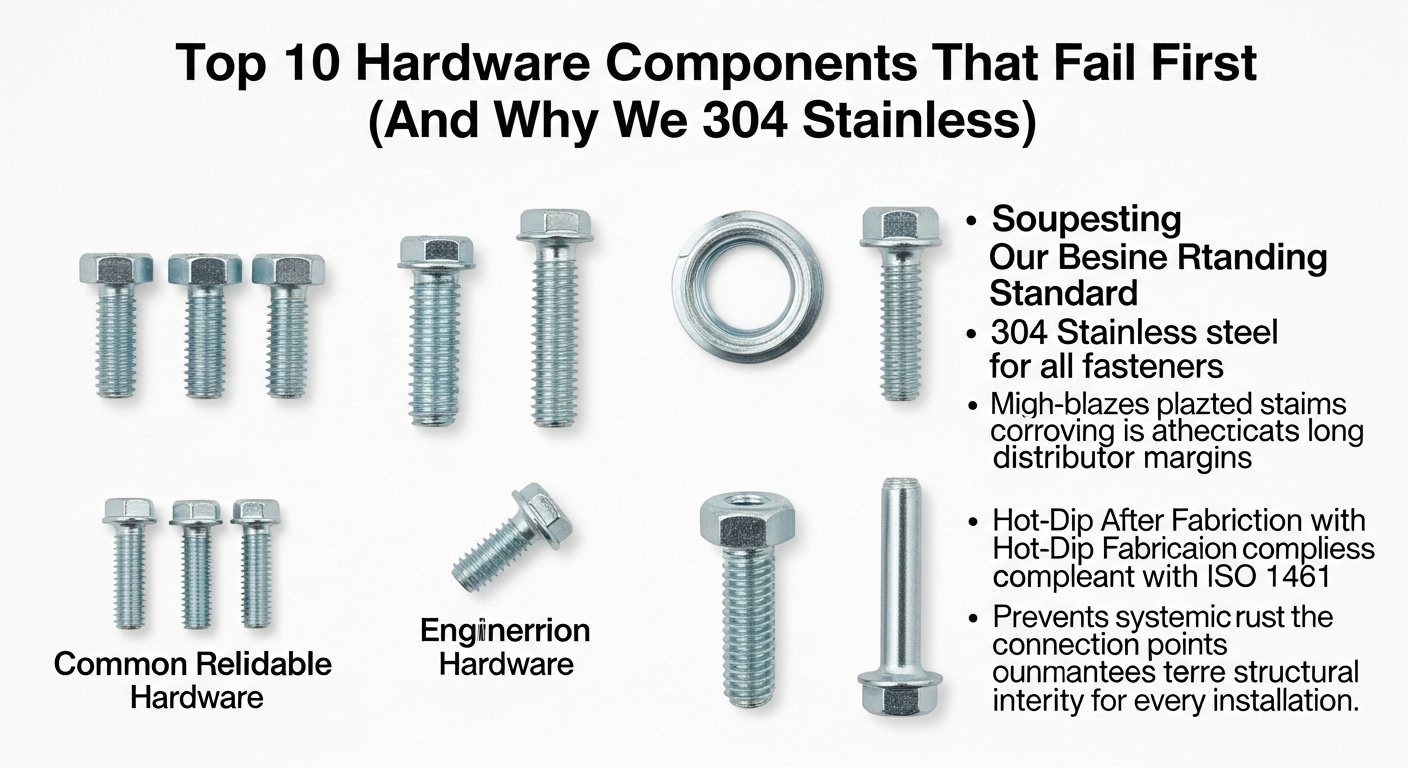
Sourcing reliable stall kit hardware is a critical defense against warranty claims and reputational damage. Low-grade plated steel fasteners are a primary failure point, corroding quickly in high-moisture stable environments and leading to costly call-backs that directly impact distributor margins. These components often fail long before the main structure, creating a significant liability.
This analysis benchmarks common hardware against our baseline engineering standard: 304 stainless steel for all fasteners. We examine how this material choice, combined with a Hot-Dip After Fabrication process compliant with ISO 1461, prevents systemic rust at connection points and guarantees long-term structural integrity for every installation.
The Top 10 Hardware Components That Fail in Cheap Kits
Quick Comparison
| Product Name | Best For | Key Feature | Verdict |
|---|---|---|---|
Power Devices (MOSFETs, SCRs, Triacs) | Power Management | Provides Stable Current/Voltage Control | Essential for high-power switching, but they are highly susceptible to failure from output shorts and overheating. |
Fuses | Circuit Protection | Prevents Catastrophic System Failure | Offers simple and effective overcurrent protection, but a blown fuse indicates a deeper problem that must be resolved. |
Solder Joints and Connections | Structural Integrity | Ensures Reliable Electrical Pathways | Provides a permanent electrical and mechanical connection, but is vulnerable to fractures from vibration and thermal cycling. |
Connectors and Cables | Physical Interface | Enables Modular and External Connectivity | Allows for easy assembly and user interaction, but is a high-wear component that is a primary point of mechanical failure. |
Protection Devices (MOVs, TVS Diodes) | Circuit Protection | Shields Electronics from Voltage Surges | Excellent at absorbing dangerous voltage spikes, but it is a sacrificial component designed to fail under surge conditions. |
Resistors | Passive Components | Manages Circuit Current Flow | Fundamental for setting circuit operating points, but can be easily destroyed by overcurrent from other component failures. |
Printed Circuit Boards (PCBs) | Structural Integrity | Provides the Foundation for All Components | Organizes complex circuits into a compact form, but can crack or develop invisible trace breaks under stress. |
EEPROM/Firmware Chips | System Logic | Stores Critical Operating Instructions | Enables complex functionality and updates, but data corruption can render the entire device non-functional. |
Transformers | Power Management | Manages AC Voltage Conversion | Provides crucial voltage stepping and isolation, but generates significant heat and can fail if ventilation is inadequate. |
Capacitors | Passive Components | Stabilizes Voltage and Filters Signals | Essential for filtering in power supplies, but electrolytic types have a limited lifespan and are very sensitive to heat. |
KEY COMPONENT
Power Devices (MOSFETs, SCRs, Triacs)
The Verdict: Among the first components to check, these often fail due to short circuits in the load they are driving or from developing internal defects. They are critical for managing power flow in a circuit.
✅ The Good
- Essential for high-power switching
- Enable efficient power regulation
⚠️ The Bad
- Highly susceptible to failure from output shorts and overheating
KEY FEATURE
Fuses
The Verdict: As sacrificial protection devices, fuses are designed to fail safely during overcurrent events. A blown fuse is often a symptom of a more significant failure elsewhere, such as a shorted power device.
✅ The Good
- Simple and effective overcurrent protection
- Easy to diagnose and replace
⚠️ The Bad
- A blown fuse indicates a deeper problem that must be resolved
KEY FEATURE
Solder Joints and Connections
The Verdict: One of the most frequent failure modes, poor solder joints can fracture from physical or thermal stress. Additionally, lead-free solder can grow ‘tin whiskers’ that cause unexpected electrical shorts.
✅ The Good
- Provides permanent electrical and mechanical connection
- Enables high-density circuit board designs
⚠️ The Bad
- Vulnerable to fractures from vibration and thermal cycling
KEY FEATURE
Connectors and Cables
The Verdict: Essential for modularity, connectors and cables are a primary point of mechanical failure due to constant user interaction, repeated flexing, and potential damage during insertion.
✅ The Good
- Allows for easy assembly and user interaction
- Facilitates system modularity and repairs
⚠️ The Bad
- High-wear component that is a primary point of mechanical failure
KEY FEATURE
Protection Devices (MOVs, TVS Diodes)
The Verdict: Metal oxide varistors (MOVs) and TVS diodes are designed to absorb voltage spikes. They fail by going into a short circuit state, which in turn blows the main fuse to protect the more valuable components.
✅ The Good
- Absorbs dangerous transient voltage spikes
- Provides fast-acting protection for sensitive circuits
⚠️ The Bad
- It is a sacrificial component; its failure is expected under surge conditions
KEY FEATURE
Resistors
The Verdict: Resistors typically fail by increasing in resistance or burning out completely. A burnt resistor is almost always a sign that another component has failed and caused excessive current to flow through it.
✅ The Good
- Fundamental for setting circuit operating points
- Available in a wide range of precise values
⚠️ The Bad
- Can be easily destroyed by overcurrent from other component failures
KEY FEATURE
Printed Circuit Boards (PCBs)
The Verdict: As the backbone of any electronic device, PCBs provide essential structure but are susceptible to mechanical and electrical stress. Failures often manifest as cracked traces, delamination, or heat damage.
✅ The Good
- Organizes complex circuits into a compact form
- Offers rigid mechanical support
⚠️ The Bad
- Can crack or develop invisible trace breaks under stress
KEY FEATURE
EEPROM/Firmware Chips
The Verdict: Firmware corruption is a critical failure point that can render a device useless (‘bricked’), often triggered by a failed update or sudden power loss.
✅ The Good
- Enables complex device functionality and software updates
- Retains data without power
⚠️ The Bad
- Data can be corrupted, making the entire device non-functional
KEY COMPONENT
Transformers
The Verdict: Transformers are crucial for AC voltage conversion, but their reliability depends on managing the heat they generate, as overheating can cause insulation breakdown and short circuits.
✅ The Good
- Provides crucial voltage stepping and electrical isolation
- Highly reliable when operated within thermal limits
⚠️ The Bad
- Generates heat and can fail if ventilation is inadequate
KEY FEATURE
Capacitors
The Verdict: Electrolytic capacitors are a very common failure point, especially in power supplies. Over time, they can dry out, bulge, or leak, leading to a loss of capacitance and causing circuit instability or startup failure.
✅ The Good
- Essential for filtering and smoothing in power supplies
- Stores energy for high-demand moments
⚠️ The Bad
- Electrolytic types have a limited lifespan and are sensitive to heat
Why Do Most Stall Kits Rust at the Joints First?
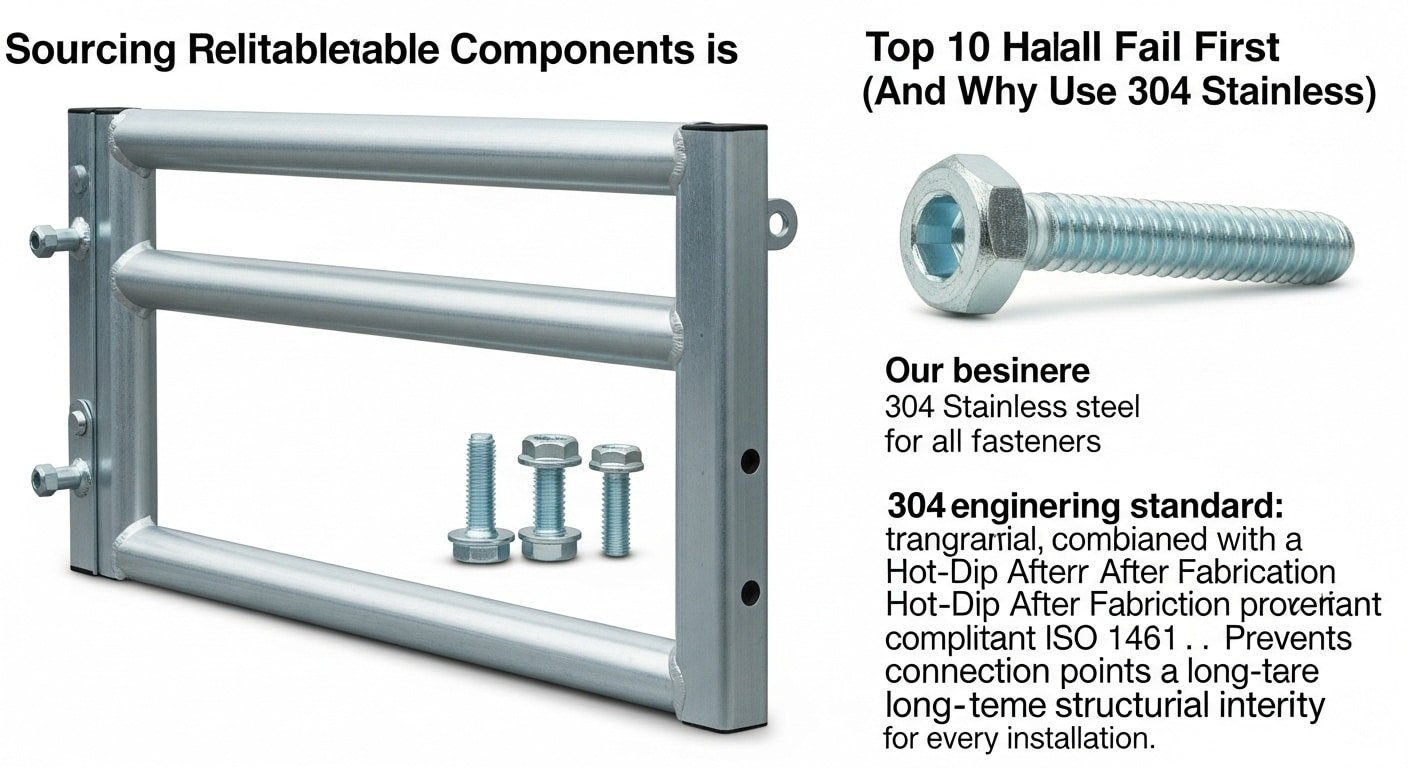
Joints, seams, and fastener points are the first areas to rust on horse stalls because their design inherently traps moisture. This constant exposure, combined with protective coatings being scratched or too thin in these tight areas, creates the perfect environment for corrosion to begin.
Moisture Trapping in Crevices and Gaps
The connection points between stall panels, frames, and grills create countless tiny gaps and crevices. These areas trap moisture from humidity, rain, or wash-downs, preventing proper air circulation and drainage. This lingering dampness accelerates oxidation. Many manufacturers weld pre-galvanized tubes, which burns off the protective zinc at the weld joint, leaving the most vulnerable area completely exposed. Our process of Hot-Dip Galvanization After Fabrication ensures that the entire welded panel is submerged in molten zinc, sealing every seam and crevice with a coating that exceeds 70 microns.
Damaged Coatings During Assembly
The act of installation is harsh on any coating. Tightening bolts and screws inevitably scratches or chips paint and even thinner galvanized coatings, exposing the raw steel underneath. Small metal shavings from drilling can embed into the surface, creating new starting points for rust. To solve this, we include a can of Cold Galvanizing Touch-up Spray in every hardware kit. This allows installers to immediately repair any scratches and restore the protective zinc barrier, ensuring long-term integrity right from day one.
Vulnerability of Fasteners and Hardware
Fasteners like bolts, nuts, and screws are common failure points. If they are made from low-grade plated steel, their thin protective coating wears off quickly, especially under bolt heads and washers where moisture seeps in and gets trapped. This leads to rust that stains the stall front and compromises the structural connection. We prevent this weak link by including a complete hardware kit where all bolts, connectors, and screws are made from corrosion-proof 304 Stainless Steel, guaranteeing a secure and rust-free connection for the life of the stable.

Why is 304 Stainless Steel Non-Negotiable for Anchors?
For long-term structural safety, 304 stainless steel is the only material we trust for our anchor bolts and connectors. Its unique composition delivers superior corrosion resistance and high mechanical strength, preventing failures caused by rust or stress in harsh stable environments. This commitment to quality ensures every installation is secure and durable, protecting both the animals and our clients’ investment.
Superior Corrosion Resistance in Harsh Environments
Stable environments expose hardware to constant moisture and corrosive agents. 304 stainless steel contains 18% chromium and 8% nickel, which forms a passive, self-repairing oxide layer on its surface. This invisible shield actively prevents rust, even when scratched. It stands up to continuous exposure without failing, which is why we exclusively use 304 stainless steel for all anchor bolts and connectors in our hardware kits.
High Mechanical Strength for Structural Safety
The hardware holding a stable together must withstand immense physical stress. 304 stainless steel provides a minimum tensile strength of 515 MPA, ensuring that anchors can handle heavy loads from the structure and impacts from horses. Using weaker, rust-prone materials for anchors can lead to catastrophic system compromise. Our choice guarantees that the structural integrity of the stable is never in question.
The Validated Standard in Demanding Applications
Our decision to use 304 stainless steel isn’t an upgrade; it’s the baseline standard for reliability. This material is trusted in critical industries like construction, architecture, and food production where failure is not an option. It offers a long lifecycle with minimal maintenance, making it more economical over time. Its proven performance confirms its status as the right choice for protecting a long-term asset like a horse stable.
Engineered Horse Stables Built to Last

How Does “Cold Galvanizing Spray” Save Your Installation?
The cold galvanizing spray included in our hardware kits provides immediate, on-site protection for any scratches, cuts, or welds made during assembly. It applies a zinc-rich coating that acts as a sacrificial barrier, preventing rust from ever taking hold on vulnerable steel and ensuring the long-term integrity of your investment.
The Principle of Galvanic Protection
The spray works by applying a zinc-rich coating directly to the steel. This creates an electrochemical barrier where the zinc acts as a sacrificial metal—it corrodes first to protect the underlying steel. Even if the surface gets scratched again, the surrounding zinc continues to provide protection, thanks to a high concentration of up to 96% that creates a durable, long-lasting protective layer.
Critical On-Site Repair Applications
During assembly, it’s inevitable that surfaces will be scratched or damaged by drilling, cutting, or welding. This spray is perfect for these spot repairs, instantly sealing compromised areas. It’s especially useful for protecting vulnerable weld seams where the original protective coating was affected by heat. We include a can in every hardware kit so installers can immediately address any abrasions, stopping rust before it starts.
Field Advantages for Installers
This solution offers huge advantages for installation teams in the field. It allows for on-the-spot application without needing to disassemble the structure and send it back to a galvanizing plant. This dramatically reduces installation downtime. Surface preparation is simple, usually just requiring a wire brush to clean the area before spraying. The fast-drying coating delivers reliable protection equivalent to G60 hot-dipped coatings, ensuring the final installation maintains its rust-proof standard.

Are Plastic Caps a Sign of Poor Quality in Stable Hardware?
While plastic caps on non-critical parts can sometimes indicate cost-cutting, the true measure of quality is in the material choice and manufacturing process for structural hardware. We believe focusing on verifiable standards for steel and fasteners is what protects our distributors’ investments. The most reliable indicator of quality isn’t a single component, but a commitment to processes that ensure long-term durability.
The Role of Rigorous Engineering Standards
Instead of relying on visual assessments, we build our stable systems to globally recognized engineering standards. Our factory operates under ISO 9001 for quality management, ensuring every stage of production is controlled and repeatable. For rust protection, we adhere strictly to BS EN ISO 1461, the international standard for hot-dip galvanizing. This process guarantees a minimum zinc coating thickness—over 85 microns on structural parts—which provides decades of corrosion protection, a stark contrast to components that might only look good on day one.
Process Defines Quality: “Hot-Dip After Fabrication”
The most common failure point in cheaper stable kits is rust at the welds. This happens when manufacturers use pre-galvanized tubes and weld them together, burning off the protective coating at the joints. Our “Hot-Dip After Fabrication” method prevents this entirely. We weld the raw Q235B steel panels first, then dip the entire completed structure into molten zinc. This process seals every weld, corner, and crevice, creating a seamless barrier that is impossible for moisture to penetrate. It’s a foundational part of our kick-proof and cast-proof design philosophy.
Material Choice for Critical Connections
Material selection should match the application’s demands. While a plastic cap might be fine for a decorative finish, it’s unsuitable for load-bearing or high-contact points. That’s why every component in our installation hardware kits—from anchor bolts to connectors and screws—is made from 304 Stainless Steel. This choice provides superior resistance to the ammonia and moisture common in equestrian environments, ensuring that the connections holding the stable together won’t fail. We even include a cold galvanizing spray for touching up any scratches during installation, ensuring total protection.
Final Thoughts
While generic kits lower initial costs, their plated hardware exposes your business to rust claims and reputational damage. Our system uses 304 stainless steel and Hot-Dip Galvanization After Fabrication to eliminate these failure points. This engineering standard protects your margins and secures long-term client loyalty.
Don’t take our word for it—verify the quality yourself. We recommend a trial order to physically inspect our weld integrity, coating thickness, and hardware. Contact our team to configure a shipment and discuss your OEM project needs.
Frequently Asked Questions
What makes your steel rust-resistant for long-term use?
We use a process called ‘Hot-Dip Galvanization After Fabrication.’ The entire steel frame is welded together first, then dipped in molten zinc. This method ensures a thick, protective coating (over 70 microns) that covers every surface, including the welds, which are the most common failure points in cheaper kits.
What materials are used for the stall walls?
Our primary infill options are 28-38mm thick boards of either UV-stabilized High-Density Polyethylene (HDPE) for zero maintenance and impact absorption, or high-density strand-woven bamboo, which is three times harder than oak and naturally resists mold.
Is all the necessary hardware included for installation?
Yes, every system includes a complete hardware kit with all anchor bolts, connectors, and screws made from 304 stainless steel to prevent rust. We also provide a can of cold galvanizing spray for touching up any scratches that might occur during installation.
How does your packaging reduce shipping costs for distributors?
We use a steel pallet flat-pack system. Unlike bulky, fully-welded stables that fit only 12-15 sets per container, our design allows for loading 30-45 sets into a standard 40HQ container. This dramatically lowers the per-unit freight cost for our clients.
What is the typical production lead time for an order?
Standard production lead time is 35-45 days. This schedule is necessary to accommodate the hot-dip galvanizing process, which is a critical step that cannot be rushed and ensures the lifetime quality of the product.
What is the difference between 304 and 201 stainless steel?
304 stainless steel has a higher chromium and nickel content, giving it superior corrosion resistance against moisture and chlorides common in stable environments. 201 stainless is a cheaper, harder alternative but rusts more easily. For this reason, we exclusively use 304 stainless steel for all hardware in our installation kits to ensure long-term structural integrity and safety.
Are the anchor bolts included in the stall kits?
Yes, every stable system we provide includes a complete hardware kit. This kit contains all necessary 304 stainless steel components for a standard installation, including anchor bolts, connectors, and screws. Our goal is to ensure our partners have everything needed for a secure setup without requiring separate purchases.
Why do my current latches stick?
Sticking latches are almost always a sign of low-quality hardware or improper installation. The cause is typically an internal mechanical failure, like broken springs, jammed components, or debris in a poorly designed mechanism. Our kits prevent these issues by using robust, precision-engineered 304 stainless steel hardware designed for smooth, reliable operation over many years.
Can I buy hardware components separately?
Our primary business is supplying complete, engineered stable systems to our B2B distributor partners and for large-scale projects. While we don’t retail individual components to end-users, we fully support our partners with replacement parts and custom hardware solutions as part of our OEM/ODM commitment. Please contact your regional distributor or our project team to discuss specific needs.
Do your kits use nylon locking nuts?
Our stable kits are designed for extreme durability, especially in environments with constant vibration from animal movement. We use high-quality 304 stainless steel fasteners engineered to maintain a secure connection. While specific fastener types may vary by stable series and application, every component is selected to prevent loosening and ensure long-term structural integrity.
Is magnetic stainless steel used in stall hardware?
No, the hardware in our stable kits is not magnetic. We exclusively use Grade 304 stainless steel, which is an austenitic type known for its superior corrosion resistance rather than its magnetic properties. This ensures that all fasteners, connectors, and bolts withstand harsh stable conditions without rusting, prioritizing long-term safety and durability.

 English
  Spanish
  French
  Arabic
  German
0 Comments