



When building or upgrading horse stalls, the safety of your animals and staff is paramount. But what if the steel you choose isn’t strong enough to withstand a horse’s powerful kick? Many overlook the crucial detail of steel gauge, potentially risking structural failure and injury.
This article explains why 14-gauge steel is the minimum for horse stall frames, and why thinner options like 16-gauge steel, which can be as thin as 1.5mm, often fail. We’ll cover the basics of steel gauge measurement, the specific risks of thinner tubing under dynamic loads, and the engineering standards that ensure true durability against a horse’s impressive 7-foot vertical kick.
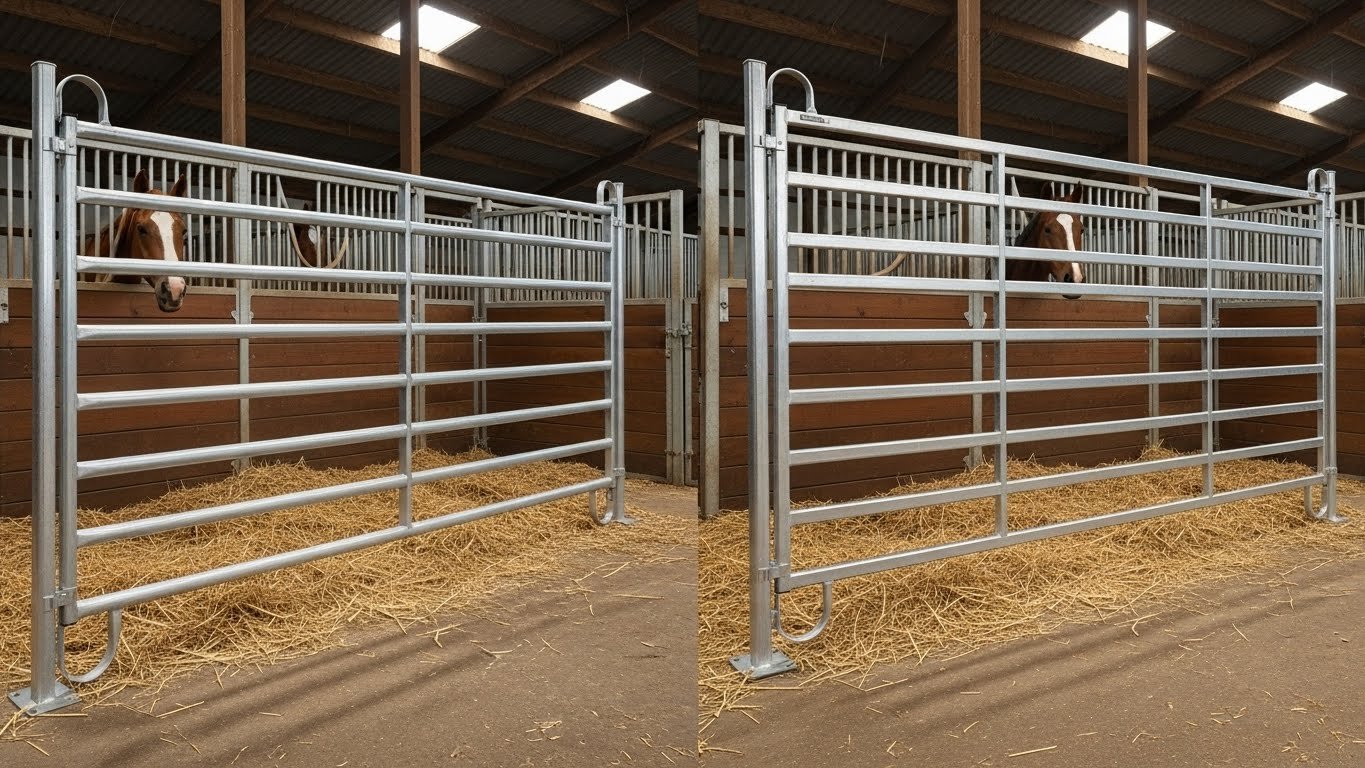
Understanding Steel Gauge (Lower # = Thicker)
Steel gauge refers to a standardized measurement system where a lower gauge number indicates a thicker piece of steel. This inverse relationship, defined by U.S. Code and manufacturers’ standards, is crucial for assessing material strength and durability. For instance, 10-gauge steel is significantly thicker and more robust than 16-gauge steel, offering superior impact resistance for demanding applications.
The Inverse Relationship of Gauge and Thickness
Steel gauge is a standardized measurement system, codified by 15 U.S. Code § 206 for sheet and plate iron and steel.
A fundamental principle is the inverse relationship: as the gauge number decreases, the steel’s actual thickness increases, meaning 14 ga is thicker than 16 ga.
The system’s origin is tied to the weight per square foot, specifically 41.82 lb/ft² per inch of thickness for carbon steel.
Material-Specific Thicknesses and Practical Applications
While gauge numbers are standardized, the precise thickness for a given gauge can differ based on the material type, impacting material selection for projects in 2026.
For 16 gauge, standard/carbon steel measures approximately 1.52 mm, while galvanized steel is about 1.61 mm, and aluminum is roughly 1.29 mm.
Typical commercial sheet steel ranges from about 7 ga (heavy-duty, 4.55 mm) to 30 ga (lightweight), with sizes beyond 31 rarely standardized.
Applications requiring high structural integrity or impact resistance, such as horse stall frames, prioritize lower gauge (thicker) materials, commonly 7–14 ga for heavy-duty work.
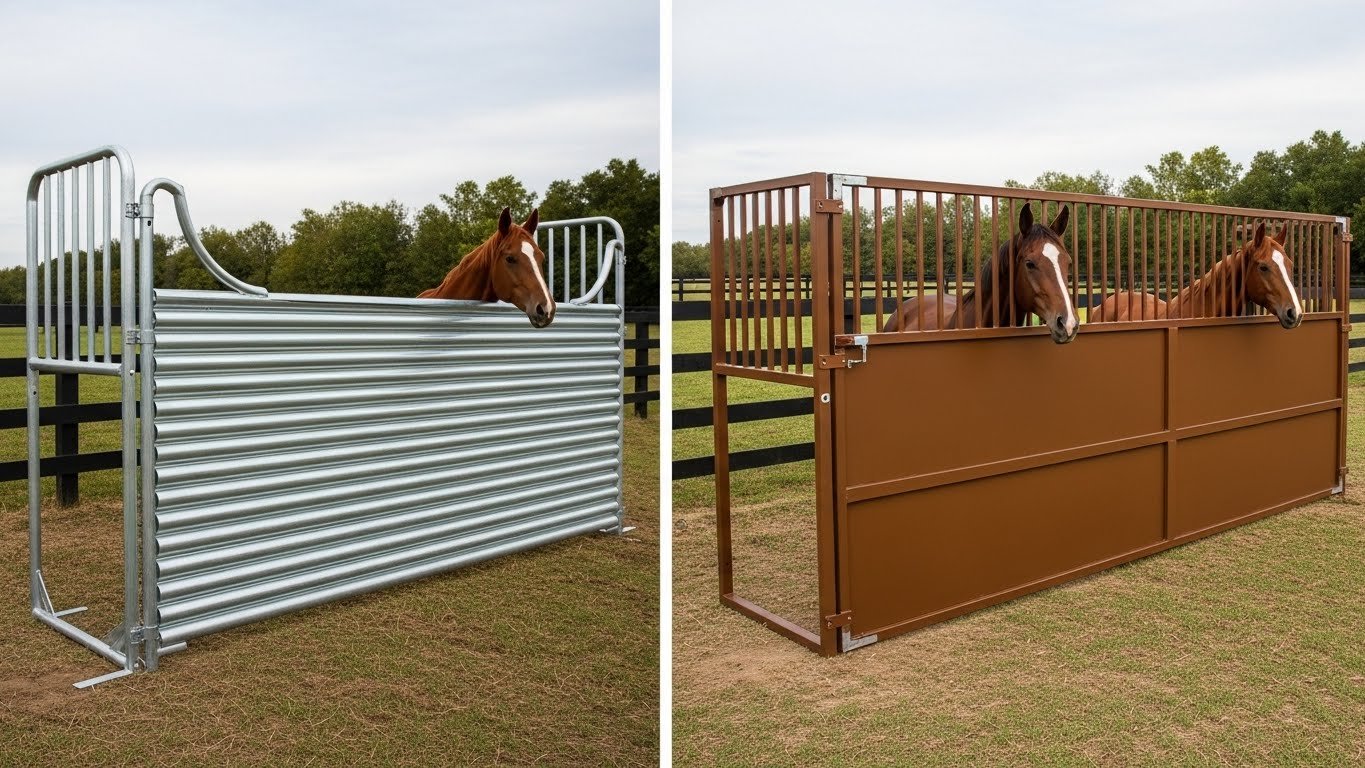
The Danger of 1.5mm (16ga) Tubing
1.5mm (16ga) steel tubing, with a nominal thickness of 0.065″ (1.65mm), can thin to 0.058″ (1.47mm) due to manufacturing tolerances. This makes it highly vulnerable to buckling and failure under dynamic loads, like animal kicks, and is generally unsuitable for safety-critical structural applications.
| Specification/Property | Details | Implications/Context |
|---|---|---|
| Nominal 16ga Thickness | 0.065″ (1.65mm) | Per ASTM A513; actual thicknesses range from min 0.058″ (1.47mm) to max ~0.071″ (1.80mm) with tolerances. |
| 1.5mm Equivalence | ~0.059″ | Falls within 16ga low-end tolerance (e.g., 0.058″ min for 17-16ga transitions). |
| ASTM A513 Tolerances (Round) | Min 0.056″ to max 0.065″ (for 3/4″-1″ OD 16ga) | Tolerances vary by Outer Diameter (OD); e.g., ±0.006″ OD for larger sizes. |
| ASTM A513 Application | Mechanical Tubing (Electric Resistance Welded carbon/alloy) | Used for structural/forming with tight tolerances to prevent buckling under load. |
| ASTM A500 Structural Context | Cold-formed welded carbon steel (bridges/buildings) | Thinner walls risk deformation in high-impact scenarios, such as animal containment. |
| ASTM A653 Galvanized 16ga | Rectangular tubing (ERW) | Suitable for structural supports but prone to failure in dynamic loads; qualified for bending/coiling only. |
The Inherent Weakness of 16ga Steel
Nominal 16ga thickness is 0.065″ (1.65mm) for steel tubing per ASTM A513, with manufacturing tolerances.
Actual thicknesses can drop to 0.058″ (1.47mm) or 1.5mm, particularly at the low end of tolerance ranges.
This thinness makes 16ga unsuitable for structural applications that experience high impact or dynamic loads.
Thin-walled tubing exhibits low resistance to buckling and deformation, a critical concern in high-stress environments.
Technical Limitations and Safety Implications
ASTM A513 specifies 16ga for mechanical tubing, primarily for forming and non-critical applications, not high-impact structural roles.
Tolerances in ASTM A513 mean wall variations, where thinner sections increase risk under stress.
ASTM A500 for structural limits highlights thin-wall deformation risks, especially in animal containment applications.
ERW (Electric Resistance Welded) seams, common in 16ga tubing, offer reduced ductility compared to seamless alternatives like ASTM A519, increasing failure points.
Safety-critical enclosures, such as horse stalls, require significantly thicker gauges (14ga-11ga, 0.083″-0.120″) for adequate impact resistance and longevity.
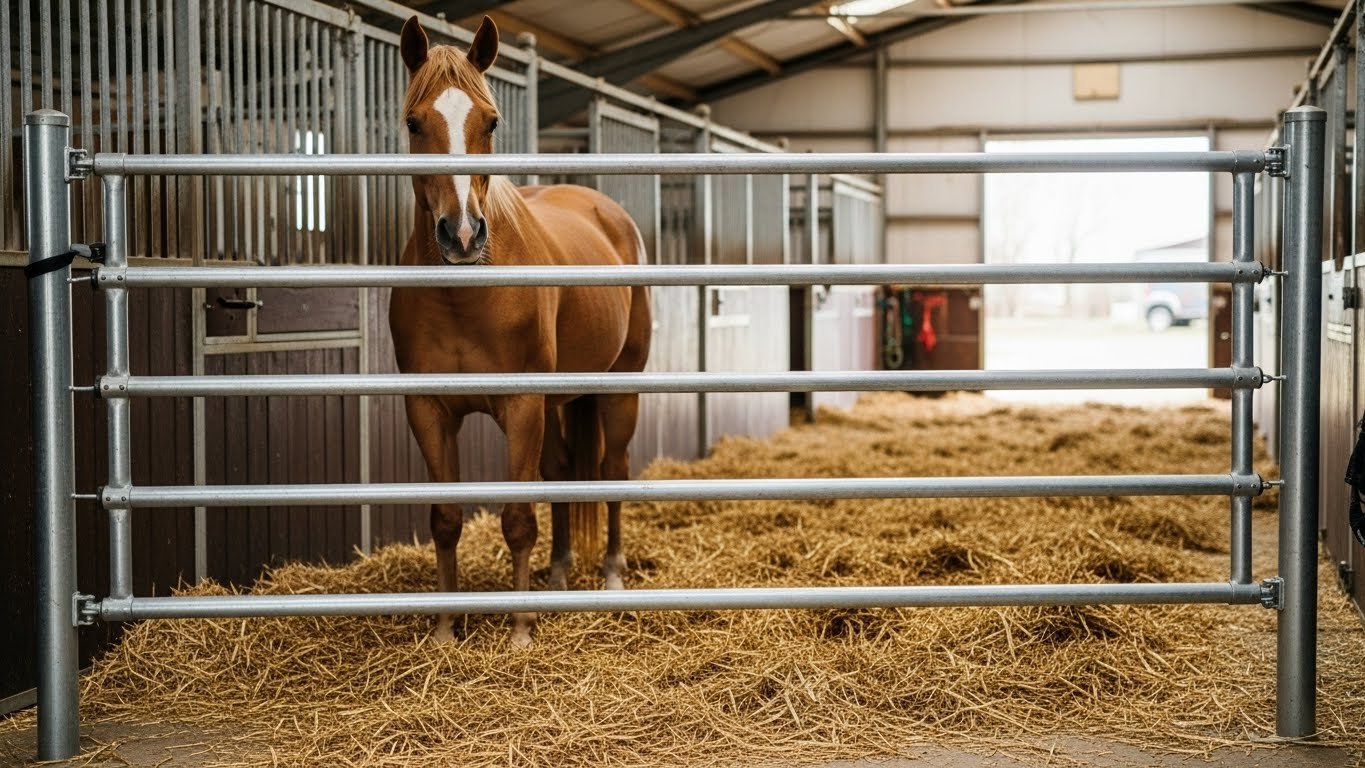
Why We Use 3.0mm+ for Frames
Frames for horse stalls require a minimum of 14-gauge (2.1mm) steel. However, 3.0mm+ (12-gauge or higher) is preferred for enhanced durability and safety against horse impacts. This thickness ensures structural integrity, prevents failure under stress, and meets industry standards like ASTM A-36 and A-123 for robust, long-lasting construction.
Ensuring Structural Integrity and Safety
-
14-gauge steel (approximately 2.1mm) serves as the minimum standard for horse stall frames to ensure structural integrity.
-
Thicker gauges prevent denting, bending, or collapse when horses apply weight or kicking forces.
-
Using 3.0mm+ thickness reduces risks associated with impacts from horses, which can be significant.
-
Equine environments need materials that can withstand high-impact forces without failing.
Material Specifications and Durability Standards
-
12-gauge steel (approximately 2.7mm) is used for U-channels, end channels, and center columns to add critical strength.
-
3/16″ (4.76mm) thick ASTM A-36 steel plates are used for posts, attachments, and trusses in high-load areas.
-
Hot-dip galvanizing per ASTM A-123 (minimum 98% zinc coating, 42 microns) is applied after fabrication for corrosion resistance, lasting over 10 years.
-
Tubing must have a minimum 50,000 psi yield strength to resist deformation.
-
16-gauge steel (approximately 1.65mm) is insufficient for frames. It is typically reserved for interior bars or top/bottom tubes.
Unrivaled Horse Stables: Built to Last, Designed to Perform
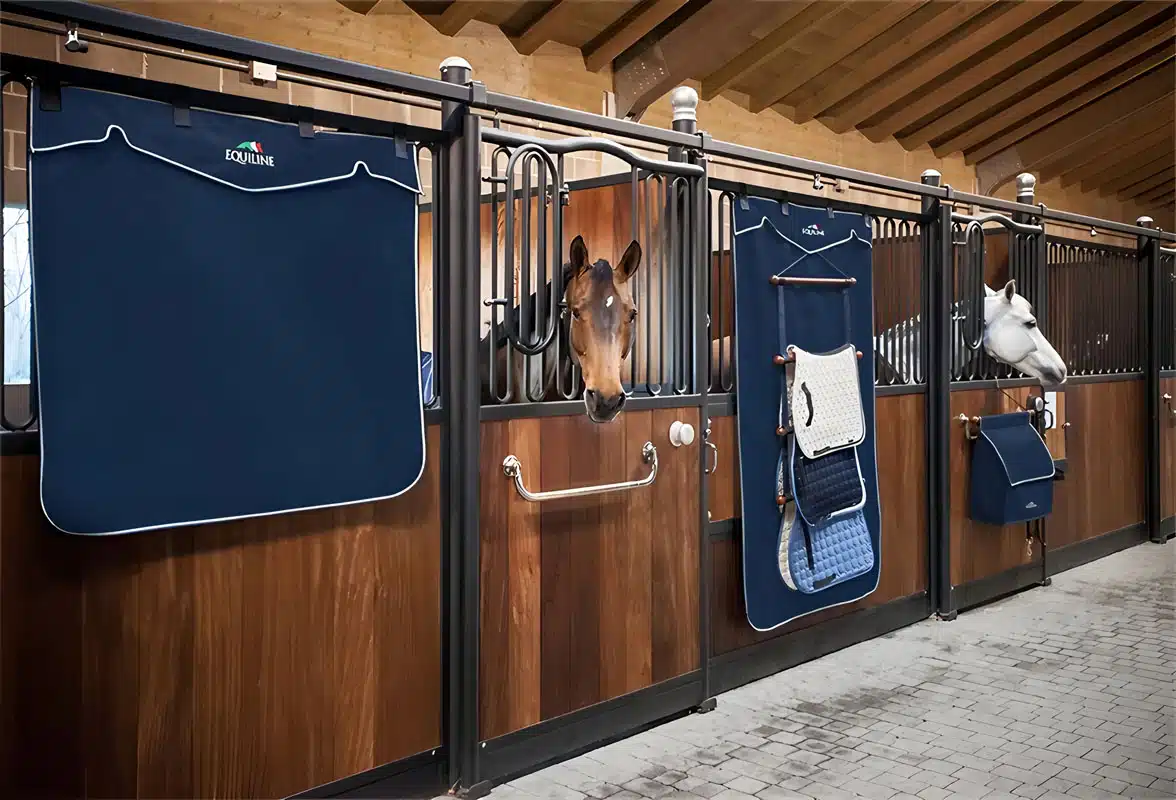
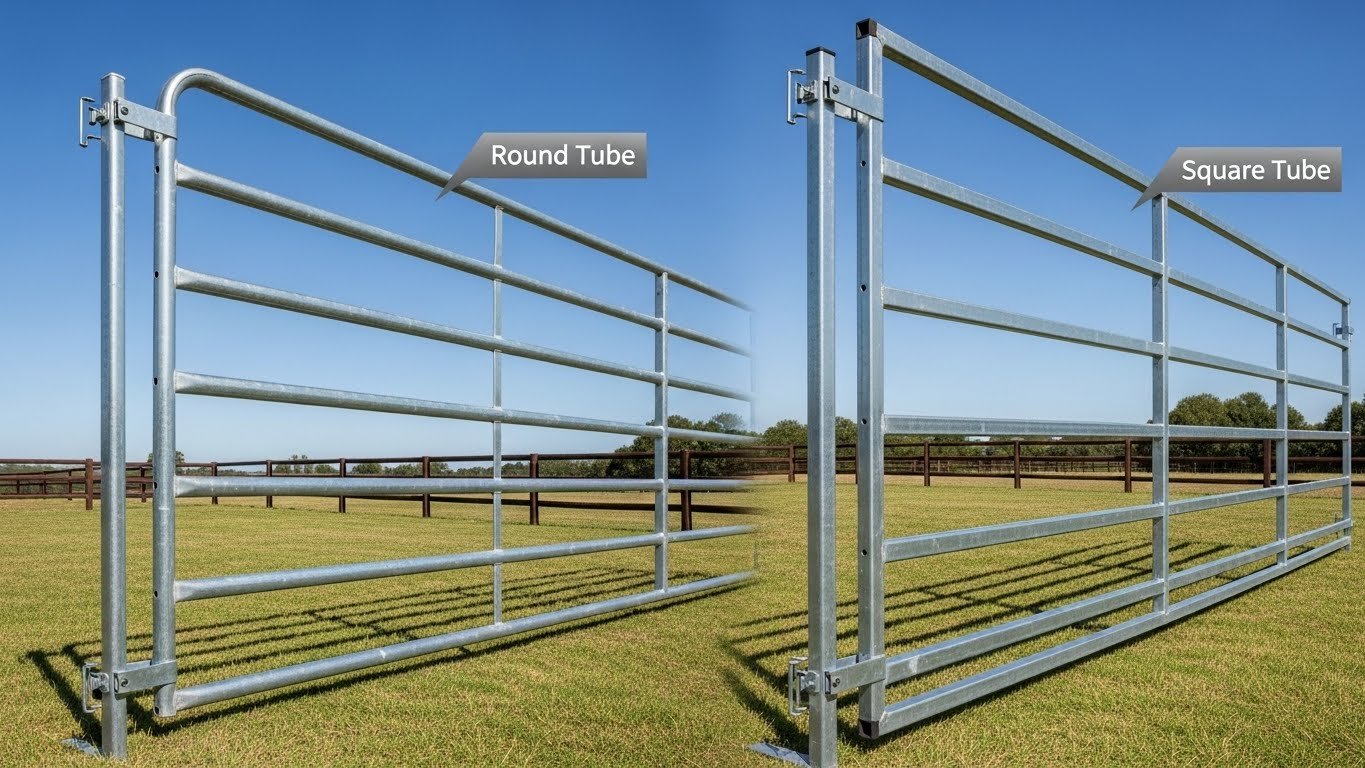
The Impact Physics of a Kick
A horse’s kick is a powerful, high-impact event capable of reaching 7 feet vertically. Stall designs in 2026 mitigate this by using heavy-gauge steel (12-14 ga), precise bar spacing, and robust bracing, ensuring structures can safely contain these impulsive loads.
| Characteristic | Specification / Value | Design Implication |
|---|---|---|
| Horse Kick Vertical Reach | Up to 7 ft (2.1 m) | Stall partitions need to be at least 7.5 ft high; 8 ft is standard. |
| Premium Stall Steel Gauge | 12-gauge | Used for stronger, high-quality stall systems. |
| Standard Stall Steel Gauge | 14-gauge | Common for frames, grilles, and lighter-duty systems. |
| Commercial Grille Specification | 14-ga galvaneal, 1 in tubing, 4 in on center | Forms welded grilles to resist typical impact loads. |
| Long Stall Wall Runs (e.g., 12 ft) | Require vertical center bracing | Prevents board or panel failure from kick impacts. |
| Vulnerable Horizontal Wood Edges | Reinforced with metal caps | Resists splintering and damage from repeated impacts. |
Understanding Equine Kick Dynamics
A horse’s kick creates unique forces and a significant vertical reach, posing primary design challenges for horse stalls. Understanding these dynamics is essential for creating safe and durable equine environments.
Horses can kick vertically up to 7 feet (2.1 meters), establishing a critical impact zone for stall structures. This vertical reach means anything below approximately 7 feet must withstand direct impact risk.
Kicks represent short-duration, high-force events, requiring structures to withstand impulsive loads rather than just static pressure. Stall components must absorb and dissipate this sudden energy effectively.
Design standards for 2026 recommend stall partitions to be at least 7.5 feet high, with 8 feet as a common standard. This ensures the structures fully contain a horse’s peak kicking reach, aligning with university extension design guidance.
Engineering for Impact Resistance in Stall Design
Effective stall design requires specific material specifications and structural reinforcements to mitigate impacts from horse kicks. This involves selecting appropriate materials and reinforcement strategies for critical areas.
Primary impact zones below 7 feet commonly utilize 12-gauge to 14-gauge steel for framing and grilles in 2026 stall systems. Heavy-gauge steel and dense framing address the short-duration, high-force nature of kicks.
Commercial grille systems frequently feature 14-gauge galvaneal steel, with 1-inch tubing spaced 4 inches on center. These fully welded constructions optimize resistance to contact and prevent entrapment, marketed as “horse-safe.
Long stall wall runs, such as 12-foot sections, require vertical center bracing. This prevents board or panel failure from kick impacts, as indicated by extension engineering guidance.
Vulnerable horizontal wood edges are typically reinforced with metal caps. This practice resists splintering and damage from repeated impacts, enhancing the longevity and safety of the stall structure.
Final Thoughts
For structures needing real strength, like horse stalls, 14-gauge steel sets the minimum standard. Using thinner steel, such as 16-gauge, risks failure when faced with powerful forces like horse kicks. Its minimal thickness and tolerance variations make it prone to buckling and collapsing, putting safety at risk.
Building truly safe and lasting enclosures means choosing stronger steel. For frames and critical supports, 12-gauge or even heavier steel provides the necessary resistance to impacts and wear. This choice not only makes the structure stronger and last longer, but also keeps animals and people safer by preventing failures from everyday forces.
Frequently Asked Questions
What gauge steel is best for horse stalls?
For permanent horse stalls, the industry standard is heavy 12–14 gauge steel for the main frame and 14–16 gauge for grills/rails. Reputable manufacturers often specify 12 gauge for permanent systems and 14 gauge for portable components.
How thick should stall bars be?
Steel horse stall bars commonly use 7/8–1 inch diameter round tubing in 14–16 gauge steel, spaced about 2–2.25 inches apart. A 7/8-inch diameter, 16-gauge steel tube is a standard size.
Can a horse kick through a steel stall?
A horse cannot kick through a properly constructed steel stall that uses industry-standard gauges of 14-gauge (around 0.075″ thick) or thicker. These include 12-gauge (0.105″ thick) steel, often with hot-dip galvanized spindles of 22-28 mm diameter spaced 53-60 mm apart in double-walled frames, designed to withstand impacts.
Is 14 gauge stronger than 16 gauge?
Yes, 14 gauge steel is stronger than 16 gauge steel due to its greater thickness (0.0781 inches or 1.98 mm versus 0.0625 inches or 1.59 mm). This increased thickness provides superior strength, durability, rigidity, and resistance to bending, denting, and corrosion.
Standard steel thickness for barns?
Standard steel thickness for barns typically involves 12 or 14 gauge for frames and 26 or 29 gauge for metal panels. For larger barns, 12 gauge frames and 26 gauge panels are recommended to ensure structural stability and durability.
Why is heavy gauge steel important?
Heavy gauge steel is crucial for safety-critical enclosures and structures as it provides higher load-bearing capacity, impact resistance, and deformation resistance. Lower gauges (thicker steel, like 7–14 gauge, approximately 4.5–1.9 mm) distribute bending stress over a larger cross-section, increasing structural strength and reducing failure risk. For instance, 12-gauge steel (about 2.66 mm thick) is a preferred heavy gauge for long-term durability against impact, corrosion, and weathering.

 English
  Spanish
  French
  Arabic
  German
0 Comments