


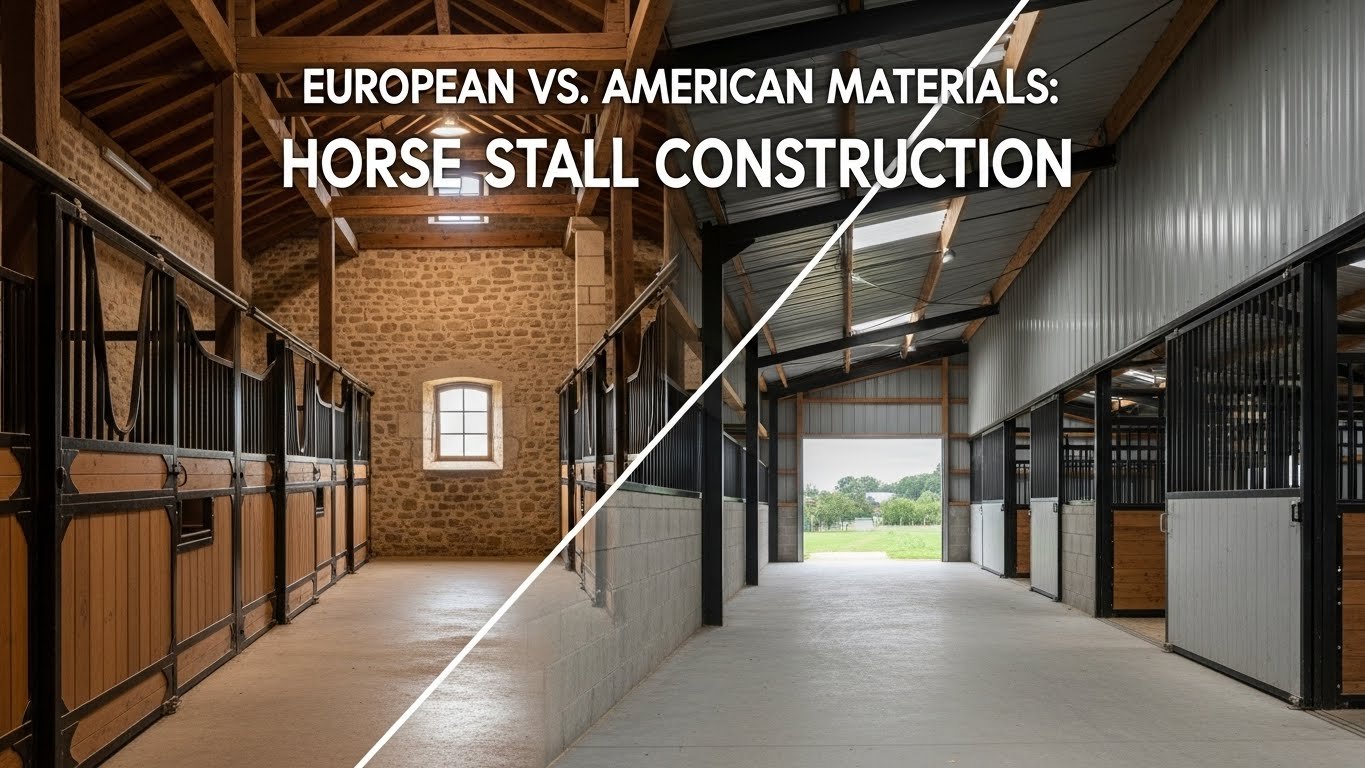
Choosing between European style horse stalls and American designs goes beyond aesthetics. European stalls are defined by their ‘heavy column’ appearance and elegant finishes, but American stalls prioritize linear function and structural durability. The core difference lies in the steel selection and finishing processes each region prefers.
This article compares the specific materials and engineering behind both styles. We analyze how European stalls achieve their massive look with oversized 80×80 mm structural posts, while American construction uses standard, load-bearing C-channels. We also explain the finishing standards, from the multi-layer powder coat on European stalls to the durable zinc coating—often 85 µm or thicker—required by the American ASTM A123 standard.
Design Philosophy: Euro vs US
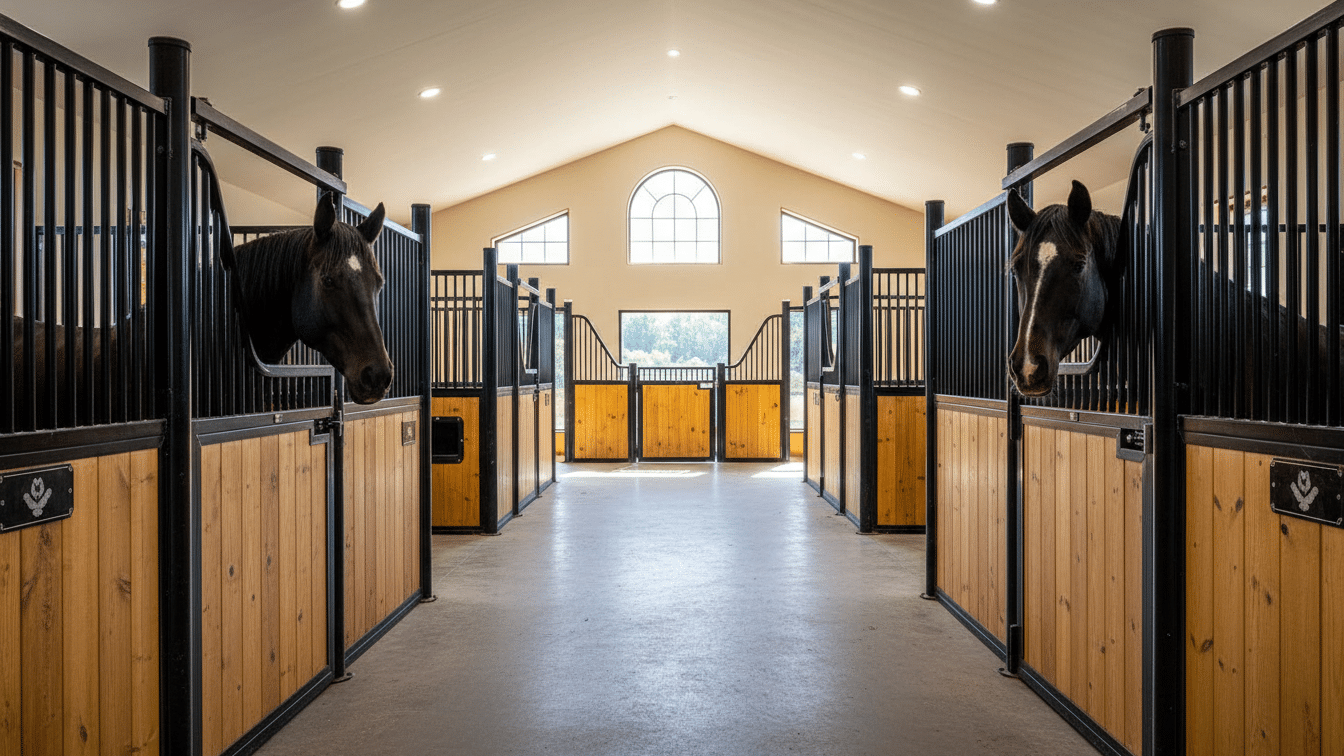
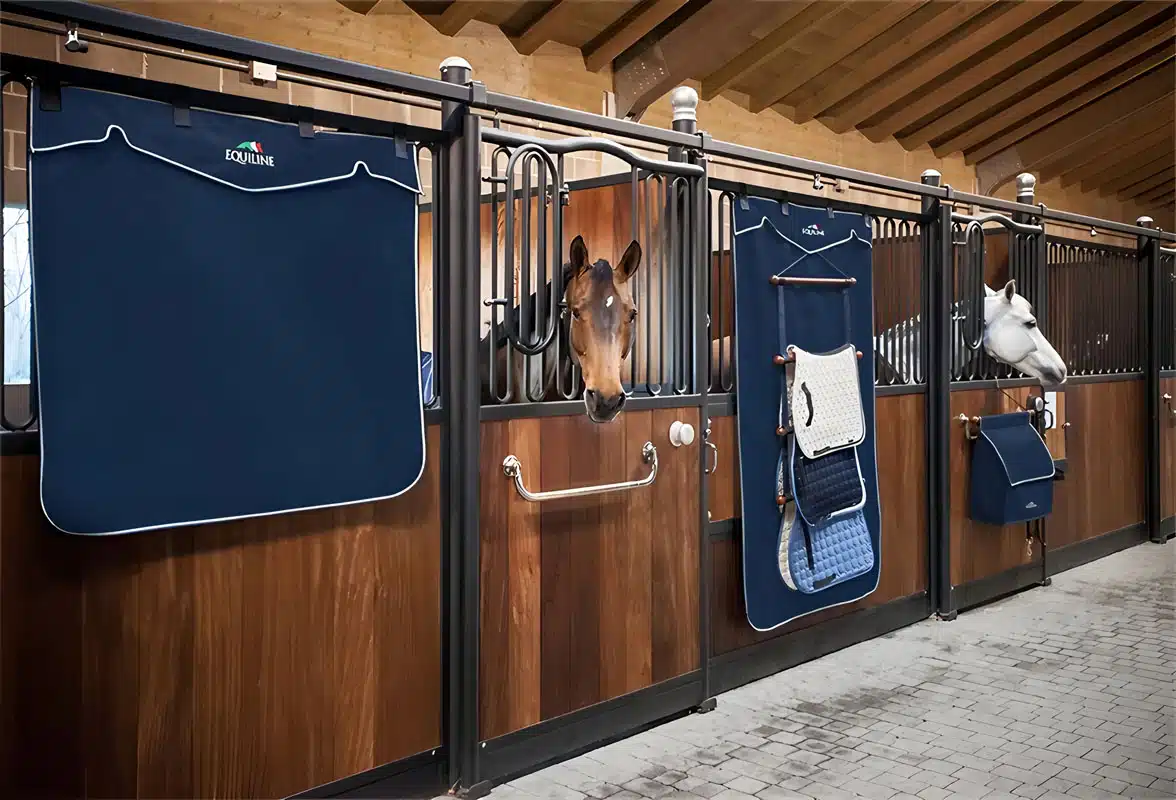
European stall design prioritizes aesthetic openness, socialization, and airflow, using hinged doors and swooping fronts for large center-aisle barns. American design typically favors practicality and space-efficiency, employing linear, sliding doors that are better suited for compact barn layouts.
| Feature | European Design | American Design |
|---|---|---|
| Core Principle | Aesthetics, socialization, and airflow | Functionality, space-efficiency, and utility |
| Door System | Hinged doors, often with open, swooping fronts | Sliding doors, typically with linear grilled or solid fronts |
| Barn Layout | Best for spacious center-aisle barns with wide aisles | Optimal for compact layouts or barns with tighter aisle widths |
| Main Benefit | Promotes visibility and ventilation | Maximizes usable floor space and number of stalls |
European: Aesthetics, Airflow, and Socialization
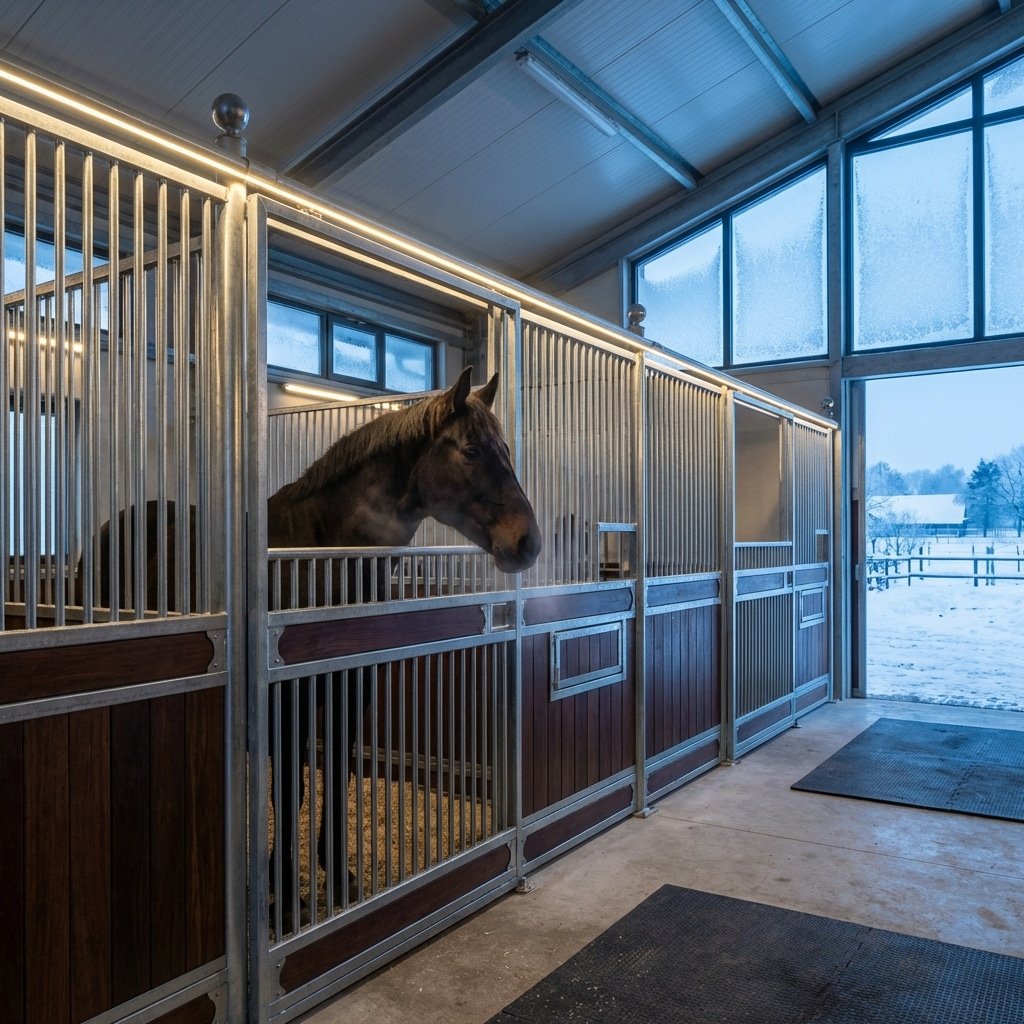
European horse stall design is built on a foundation of aesthetic openness and social interaction. It characteristically uses hinged doors paired with decorative, swooping wings to create an elegant and inviting look. This open-front structure is not just for appearance; it significantly improves natural ventilation and airflow, which is critical in larger center-aisle barns.
The low-front “Low Euro” variation enhances visibility, allowing horses to see their surroundings and interact with neighbors. This setup helps reduce stress and is particularly beneficial for social breeds like European Warmbloods. Functionally, the hinged door system requires a wide barn aisle to accommodate the door’s swing, making it best suited for spacious, well-planned facilities where space is not a primary constraint.
American: Functionality, Space-Efficiency, and Utility
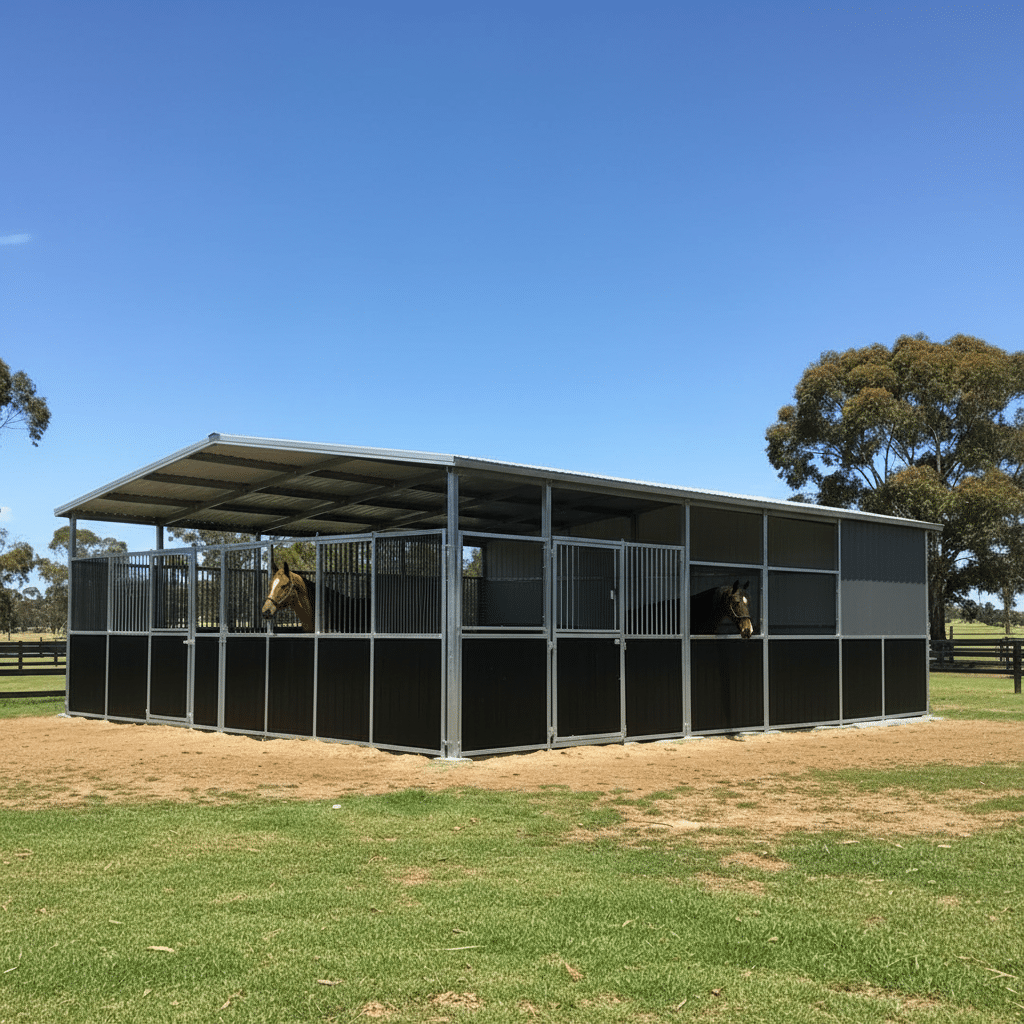
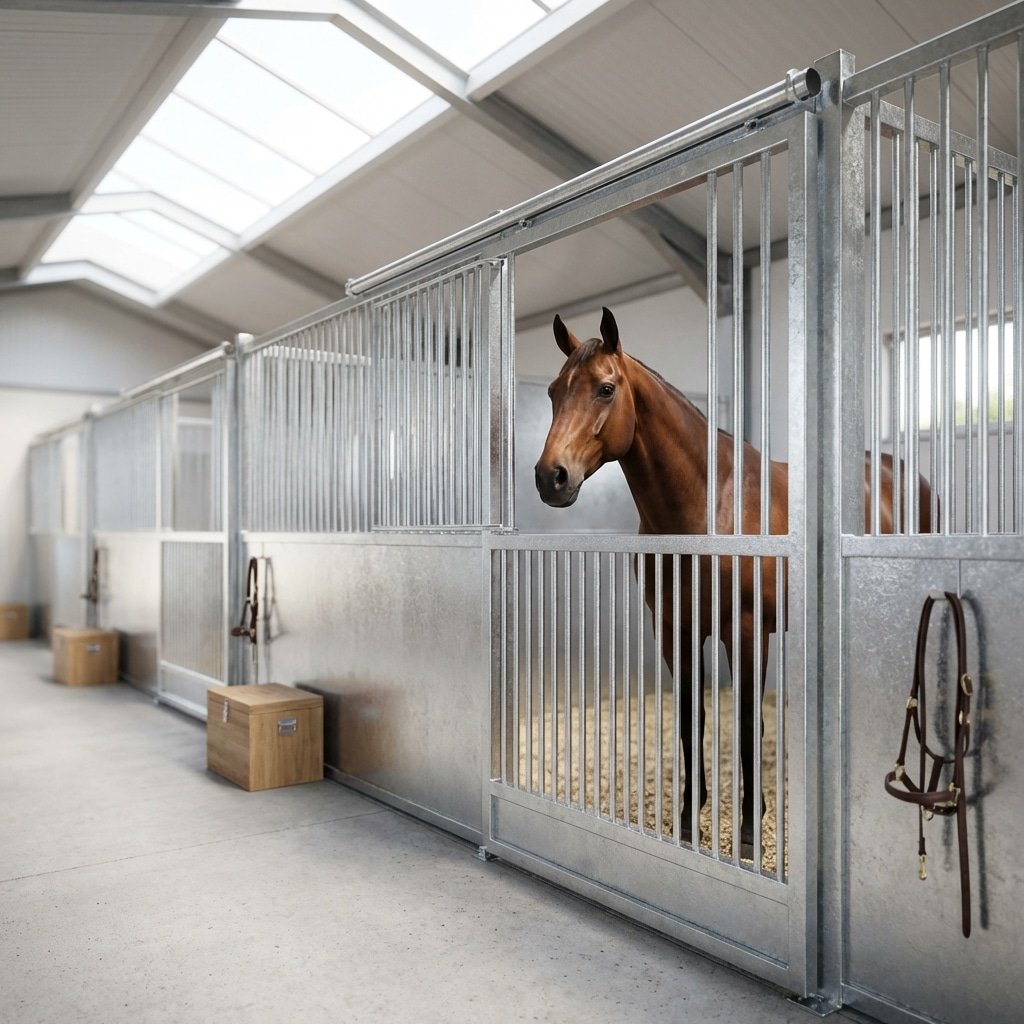
American stall design prioritizes practicality and the efficient use of space. The most common feature is the linear sliding door, which can be specified with a full grill, solid wood, or a combination. Unlike hinged doors, sliding systems do not swing out into the aisle, making them an ideal solution for barns with tighter aisle widths or more compact layouts. This design choice directly saves valuable floor space.
The focus is on simple, robust containment and straightforward utility rather than elaborate aesthetics. This practical approach allows barn owners to maximize the number of stalls that can fit within a given footprint. The result is a design that is highly functional, durable, and space-efficient, reflecting a core emphasis on utility over ornamentation.
Euro: Heavy Columns & Brass (Aesthetic)
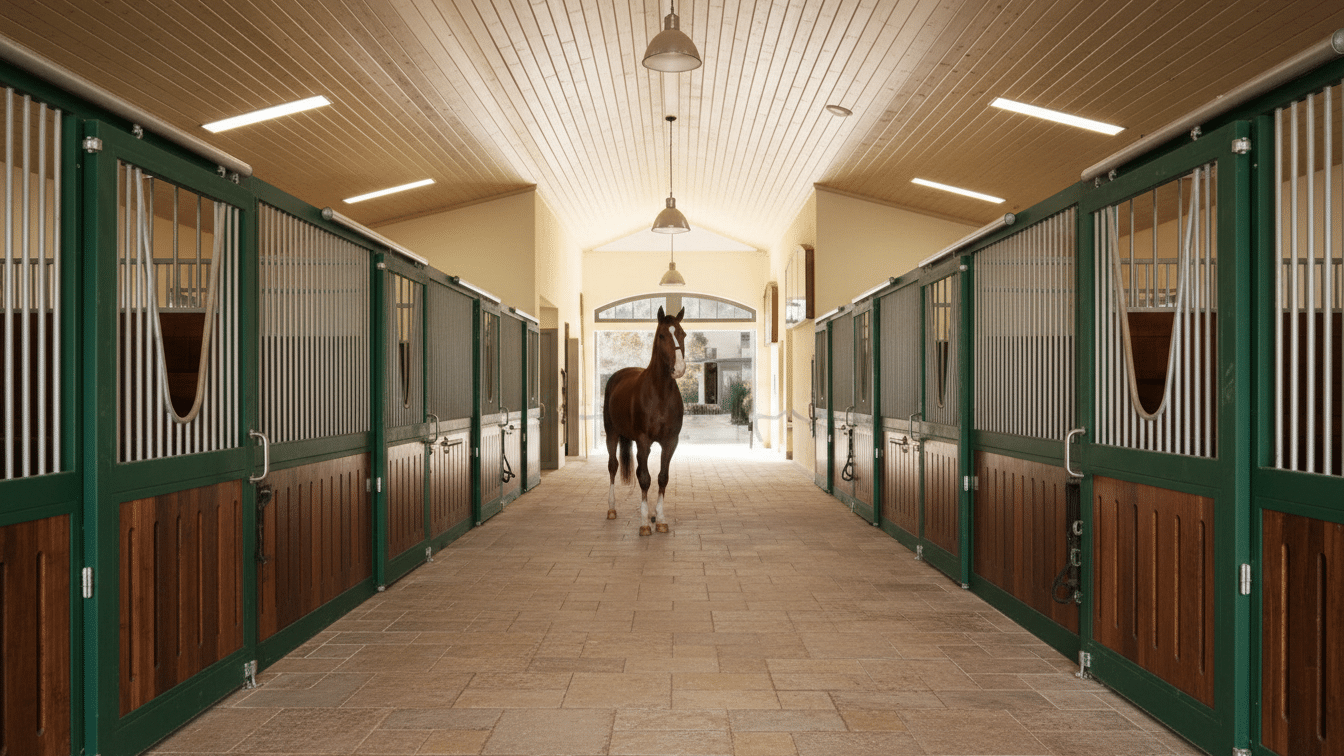
The European stall aesthetic combines oversized structural posts, often 80×80 mm or 4 inches, for a ‘heavy column’ look. The ‘brass’ sheen is not from solid brass but from advanced finishing systems, like a durable powder coat over hot-dip galvanized steel certified to standards like DIN EN ISO 1461.
Structural Mass: The ‘Heavy Column’ Foundation
The “heavy column” effect is a direct result of using oversized structural components. These stall fronts feature dominant steel posts, typically 80×80 mm square or 4-inch (114.3 mm) round, creating a substantial visual anchor. The frame is constructed from robust 50×50 mm C-profile steel and secured by thick 8 mm base plates. This massive look is further enhanced by closely spaced ¾-inch (26.9 mm) grille tubes, which not only add to the solid appearance but also serve a critical safety function by preventing hoof entrapment.
Finishes: Achieving the ‘Brass’ Sheen
The “brass” sheen comes from a sophisticated, multi-layer finishing system, not solid brass. The process starts by hot-dip galvanizing the steel components to standards like DIN EN ISO 1461 or ASTM A123, which provides a protective zinc coating. A high-gloss powder coat, around 12–15 microns thick, is then applied over the galvanized base to create the final metallic or brass-toned appearance. For a premium, rust-free finish, some systems use 0.125-inch aluminum tubing with stainless steel hardware, often backed by long-term warranties.
US: Linear Channels & Galvanized (Function)
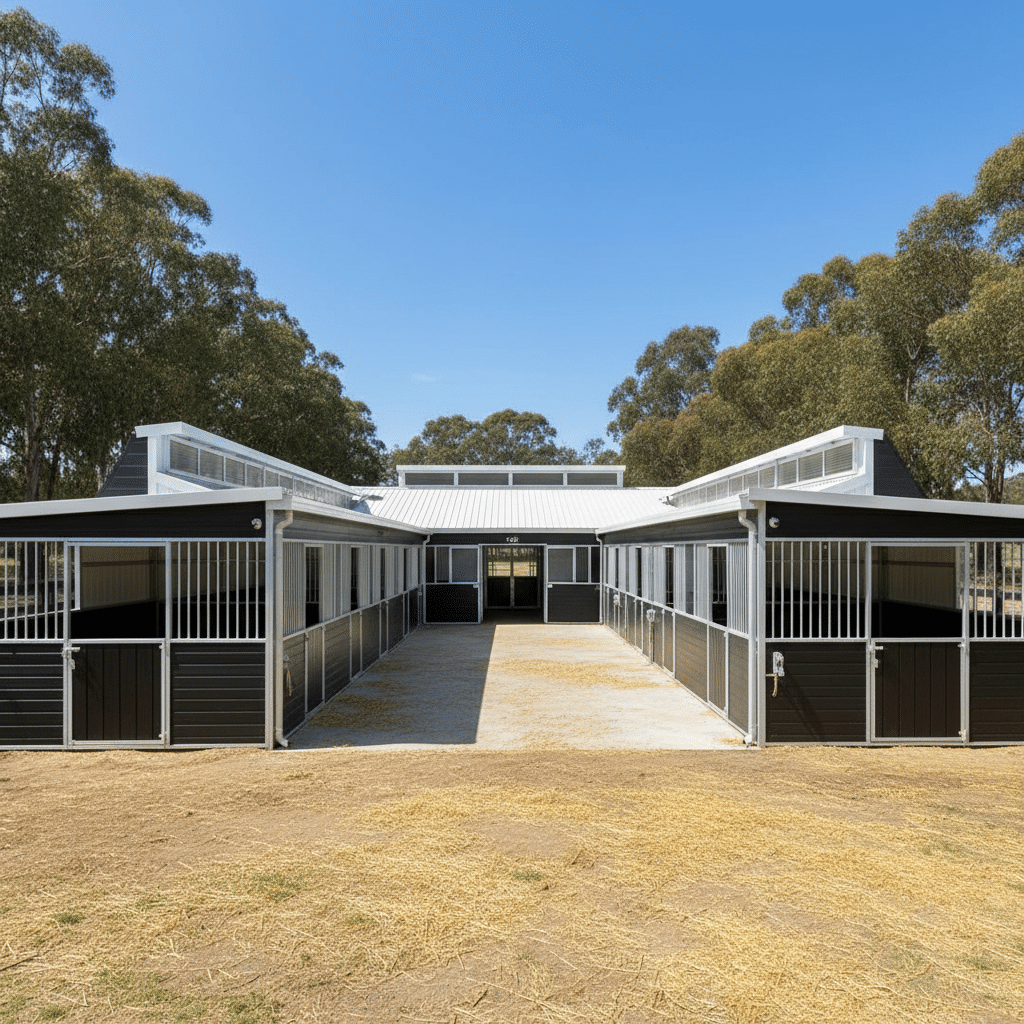
In US applications, standard structural steel channels (C-series) are hot-dip galvanized according to the ASTM A123 standard. This process creates a durable, corrosion-resistant zinc coating, often 85 µm or thicker, that ensures long-term structural integrity for framing and supports, prioritizing function over aesthetics.
Structural Integrity with Steel C-Channels
American construction often uses standard structural steel C-channels, such as the C4 x 5.4 profile, for framing and support systems. These channels are defined by their load-bearing capacity and rigidity, making them a functional choice for building sturdy frames. The design prioritizes strength and durability, using the inherent properties of steel for reliable, long-term performance.
Corrosion Protection Under ASTM A123
The hot-dip galvanization process must meet the ASTM A123/A123M standard for fabricated iron and steel products. This specification ensures a minimum zinc coating thickness for corrosion protection, for example, 85 µm for structural steel thicker than 6.0 mm. The zinc coating creates a metallurgical bond with the steel, providing a continuous, uniform finish that resists rust and environmental damage.
Durable, Custom Stables Engineered for Any Climate
Cost & Weight Comparison
European horse stalls generally cost more and weigh more than American styles due to more complex designs, taller frames, thicker materials, and decorative elements. A typical European front can start over $4,000 and weigh 300 lbs, while a comparable American front starts around $3,000 with a simpler build.
The differences in cost and weight between European and American horse stalls are driven by distinct design philosophies, material specifications, and fabrication requirements. European styles prioritize aesthetics and socialization with open, swinging designs, while American styles often focus on space efficiency and practicality. The following table provides a direct comparison of key metrics.
| Metric | European Style | American Style |
|---|---|---|
| Base Model Price (12′ Front) | $4,168 – $5,995 | Starts at $2,993 |
| Typical Front Weight | Approx. 300 lbs | Lighter due to simpler build |
| Standard Frame Height | 90″ – 96″ | Shorter to fit sliding tracks |
Primary Factors Driving Cost Differences
The higher price of European stalls stems from several key areas. Design complexity is a major contributor, as features like curved arches and decorative yokes require specialized machinery and increased labor for bending and fabrication. These stalls also use more materials. Their hinged, swing-out doors need taller, more robust frames, often 90 to 96 inches high, constructed from thick-walled 0.125” aluminum or heavy-gauge steel. Finishing details such as polished brass finials, custom end caps, and fully welded 1-inch round bars add to the final cost, which contrasts with the more straightforward, function-oriented fabrication of American sliding stalls.
Comparative Price and Weight Benchmarks
Specific figures highlight the gap between the two styles. A 12-foot European base model front can start between $4,168 and $5,995, while a comparable American sliding front begins around $2,993. The weight difference is also significant. A complete European stall front can weigh 300 pounds, built from materials like 15-gauge steel or thick-walled aluminum chosen for strength and durability. Even individual components carry substantial weight; a single European-style gate measuring 51 inches wide by 65 inches high can weigh approximately 71 pounds on its own.
Final Thoughts
The choice between European and American stall materials highlights a difference in design philosophy. European stalls use oversized steel posts and multi-layer finishes to create a specific aesthetic—the heavy, traditional look with a brass-like sheen. American stalls lean on standard structural steel channels, focusing on functional strength and proven corrosion resistance through hot-dip galvanization.
Ultimately, neither approach is inherently better, they just serve different priorities. If your goal is a distinct visual statement defined by mass and elegance, the European material specifications are tailored for that. If you need a straightforward, durable structure built for long-term performance and efficiency, the American functional approach is a reliable choice. The decision comes down to whether your project prioritizes form or function.
Frequently Asked Questions
What is a European style stall?
A European stall is a horse stall front with a low-profile, swooping design for better visibility and horse socialization. It’s built from heavy materials like 0.125” thick aluminum tubing or heavy-gauge steel, with bar spacing of at least 3 inches to ensure safety.
What is the difference between a European and an American style barn?
European barns use stalls with arched, swinging fronts that require a wider aisle for the doors to open. American barns use square, sliding-front stalls that save space, allowing for a more compact and cost-efficient layout. The European style focuses on aesthetics and airflow, while the American style is more functional and space-saving.
Are European style stalls better?
Not necessarily. European stalls excel in aesthetics and provide great visibility, which is good for social horses. But they cost more and need more space for their swinging doors compared to the more practical American sliding stalls.
What is the typical cost of European style stall fronts?
A standard 12-foot wide by 8-foot high European stall front usually costs between $4,000 and $6,000. This price is for a powder-coated base model and does not include the wood infill.
Why is brass used on European style stalls?
Brass is used mostly for its elegant, sophisticated look, which enhances the traditional European design. You’ll see it on hardware like latch knobs and decorative finials, where it adds a touch of grandeur.
What is the difference between a low front and high front stall?
In European designs, a ‘high front’ stall has side wings that are about 7 to 8 feet tall, offering more containment. A ‘low front’ stall swoops down much lower, creating more openness and visibility. Low fronts are a good choice for calmer horses.


 English
  Spanish
  French
  Arabic
  German
0 Comments