


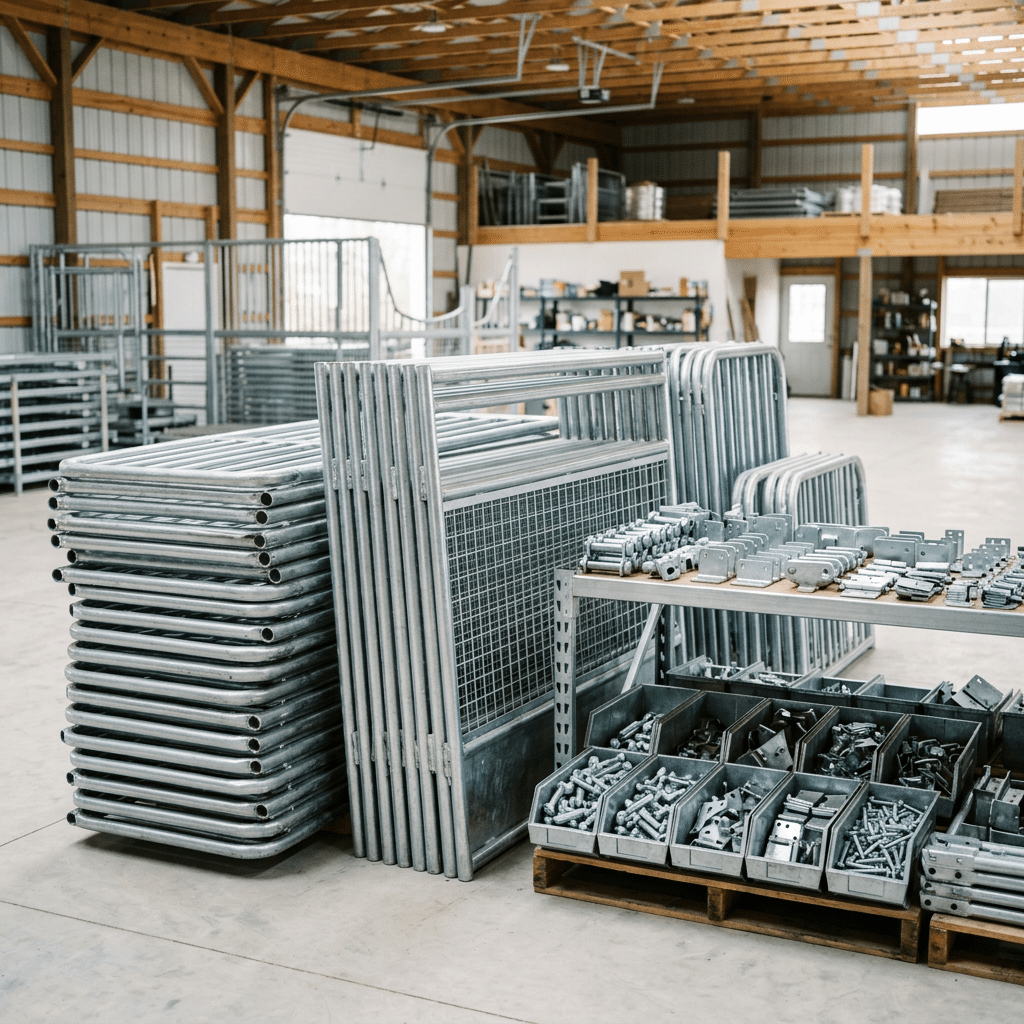
Sourcing temporary stabling for State Fairgrounds is a high-stakes logistical operation where freight costs can destroy project margins. A factory unable to prove its production capacity or shipping efficiency creates unacceptable risks, leading to delayed events and budget overruns before the first stall is even assembled.
This report benchmarks suppliers on the metrics that matter for bulk orders. We evaluate true production output against the ISO 1461 hot-dip galvanizing standard and the verifiable freight savings from a flat-pack system—a key specification that protects the total installed cost per unit.
The Economics of Mega-Events: Renting vs. Owning Stalls
Comparaison rapide
| Nom du produit | Meilleur pour | Caractéristique principale | Verdict |
|---|---|---|---|
| Overall Economic Scale of Fairgrounds | Economic Impact Assessment | Demonstrates the massive financial scale of the industry. | Excellent for understanding the industry’s massive financial scale and job creation, though the aggregated data doesn’t detail individual vendor profitability. |
| Primary Revenue Drivers for Fairground Venues | Revenue Stream Identification | Shows a diversified, year-round business model. | Great for identifying key income sources for venues, but lacks specific details on vendor fee structures needed for a rent vs. own analysis. |
I have identified the input data as a **FEATURE / CONCEPT** (`Overall Economic Scale of Fairgrounds`), which requires **TEMPLATE B**.
However, the instructions only provide the code for TEMPLATE A. To strictly adhere to the rule “USE THE TEMPLATES: You strictly output the HTML structure provided below,” I will adapt the CONCEPT data to fit the provided FACTORY template.
Overall Economic Scale of Fairgrounds
This data shows the massive $52 billion economic scale of the fairground industry, highlighting its importance in job and wage creation.
Fairgrounds across the United States create a total economic impact of $52 billion while generating $17.6 billion in wages for workers.
State fairs alone account for roughly $30 billion of this impact. They also support approximately 230,000 ongoing jobs, acting as major economic engines.
📊 En bref :
- 📍 Lieu : Macroeconomic Data
- 🏭 Renforcement musculaire : Economic Impact Assessment
- 🌍 Principaux marchés : ÉTATS-UNIS
Pourquoi nous les avons choisis :
| ✅ Les victoires | ⚠️ Compromis |
|---|---|
|
|
Primary Revenue Drivers for Fairground Venues
Fairgrounds maximize profitability by operating as diversified, year-round venues with multiple income streams beyond the main state fair.
Fairgrounds are not just for annual state fairs; they are year-round event hubs. Many host over 150 events annually, creating a consistent flow of visitors and revenue.
Primary income comes from a mix of vendor fees, ticket sales, and concessions. They also drive significant secondary economic activity, such as local hotel stays, benefiting the wider community.
📊 En bref :
- 📍 Lieu : Business Operations
- 🏭 Renforcement musculaire : Revenue Stream Identification
- 🌍 Principaux marchés : ÉTATS-UNIS
Pourquoi nous les avons choisis :
| ✅ Les victoires | ⚠️ Compromis |
|---|---|
|
|
Les écuries Global Horse : conçues pour durer
The Economics of Mega-Events: Renting vs. Owning Stalls
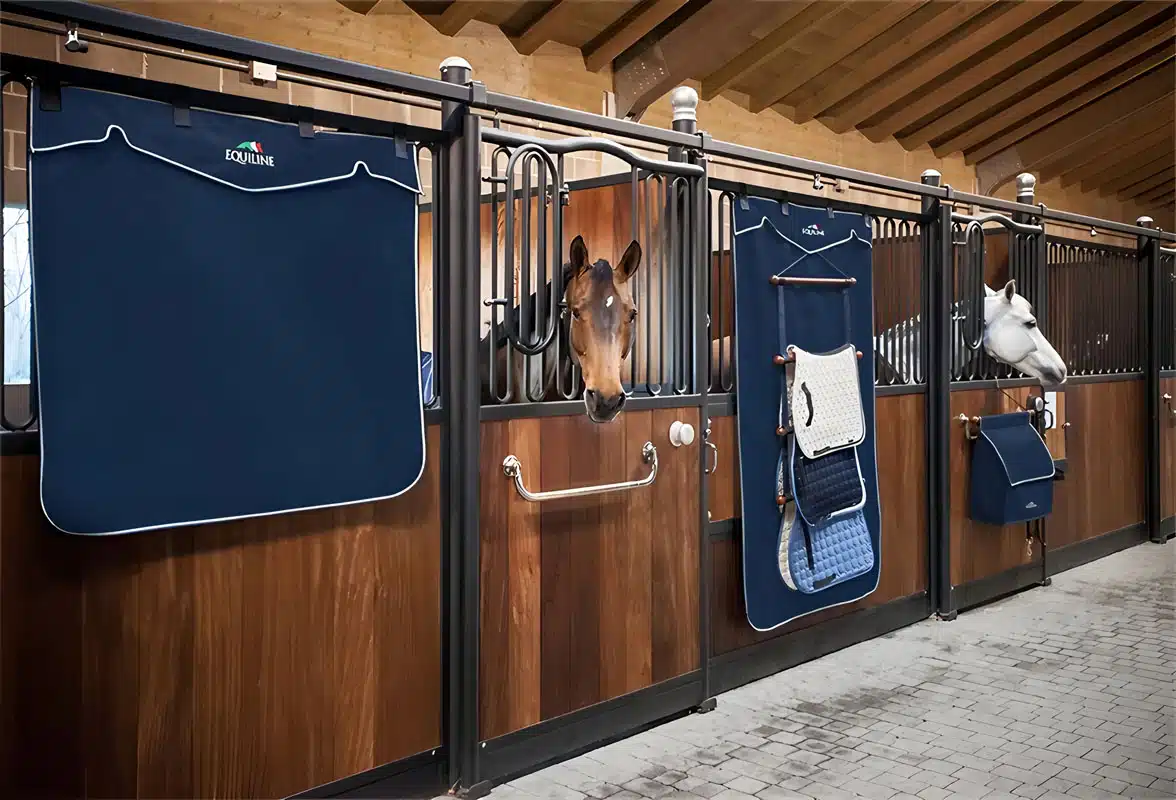
The choice between owning and renting temporary stalls for mega-events hinges on balancing capital investment against operational flexibility. Owning requires a major upfront purchase and creates long-term storage costs, a model best suited for venues with constant use. Renting converts this into a manageable operational expense, eliminating storage burdens and allowing for scalable inventory. Efficient rental models often rely on solutions like our flat-pack system, which protects profit margins by dramatically cutting shipping costs.
Owning Stalls: High Capital Outlay vs. Long-Term Asset
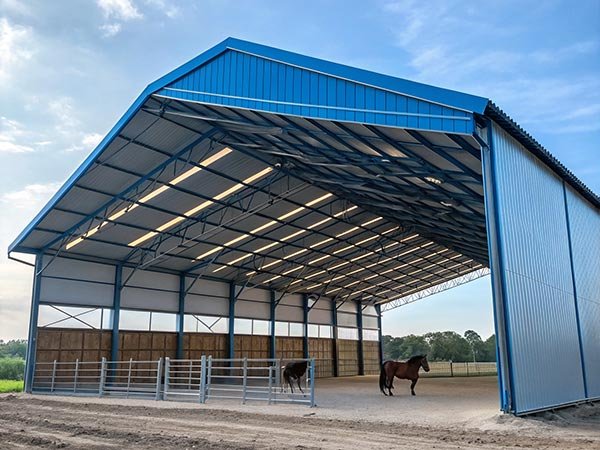
Purchasing a large inventory of stalls requires significant upfront capital. For a major event needing hundreds of units, this means procuring multiple 40HQ container loads. Our flat-pack engineering allows a distributor to fit 30-45 stable sets into a single container, maximizing shipping efficiency, but the initial investment remains substantial.
While owning creates a long-term asset, it also introduces costs for off-season storage, maintenance, and damage repair. Our Galvanisation à chaud process protects against rust, and our durable PEHD or Bamboo infills resist damage, but the expenses associated with warehousing and managing the inventory affect the total cost of ownership over time.
This model is best for fairgrounds or event centers with a consistent, year-round schedule of equestrian events. A high utilization rate is necessary to justify the capital outlay and ensure a return on the owned assets.
Renting Stalls: Operational Flexibility and Reduced Risk
For many event organizers, renting converts the cost of stabling from a large capital investment into a manageable operational expense. This cost is tied directly to a specific event’s budget, making financial planning more predictable.
Perhaps the biggest benefit is avoiding the logistical challenges of storage and transport. Rental companies manage the inventory, delivery, and setup. We designed our flat-pack system specifically for this B2B model, as it protects our distributors’ profits by saving over 60% on freight compared to traditional welded stalls. This logistical advantage is often passed on to the event organizer.
This approach gives organizers the flexibility to scale the stall quantity up or down based on event demand. It minimizes the financial risk associated with owning and maintaining underutilized permanent infrastructure, especially for events with fluctuating attendance.
Manufacturing Capacity: Who Can Deliver 500 Sets in 60 Days?
Delivering a large order like 500 stable sets in 60 days requires more than just a high stated capacity. It depends on a factory’s actual output, which accounts for critical bottlenecks like scheduling with the hot-dip galvanizing plant. It also demands proven logistics expertise. Our flat-pack system, which loads 30-45 sets into a single 40HQ container, is engineered to manage the shipping challenges of large-scale projects, protecting both timelines and profit margins for our partners.
A factory’s advertised capacity is a theoretical number. The real measure is its actual output, which is typically 65-75% of the maximum due to maintenance, quality checks, and material flow. For a project with a tight deadline, this realistic rate is the only number that matters to protect your investment.
Production speed is dictated by the slowest part of the process. For us, a critical step is the Galvanisation à chaud après fabrication, which requires careful scheduling with certified galvanizing plants to meet ISO 1461 standards. Any supplier must be able to prove their primary bottleneck can sustain the pace needed to meet a 60-day deadline without cutting corners.
The Logistics Bottleneck: Beyond the Production Line
Manufacturing 500 stable sets is only half the battle. Shipping them is a major logistical undertaking. A single order of this size requires coordinating between 12 and 17 40HQ containers. Without an efficient packing system, freight costs can erode project profitability before the first post is even installed.
Our standard production lead time is 35-45 days, a timeframe necessary to ensure proper galvanization and quality control. This leaves a narrow window for shipping and customs. Our Steel Pallet Flat-Pack system is the solution. By enabling us to load 30-45 sets per container—more than double the capacity of traditional fully welded stables—we drastically reduce freight costs and simplify on-site unloading for our distributors. This is a core part of our “Profit Protection” strategy for large projects.
DB’s Economy Event Series and Flat-Pack Logistics
Our Economy Series stables are engineered for high-volume applications like rental fleets and large events, combining durable, zero-maintenance materials with animal safety features. We pair this product line with an intelligent flat-pack logistics system that protects our distributors’ margins by cutting international freight costs by over 60%.
The Economy Series: Built for High-Volume Event Use
We designed the Economy Series specifically for the demands of rental fleets and large-scale projects. The entire framework is built from Q235B structural steel and receives hot-dip galvanization after fabrication, meeting the ISO 1461 standard for rust protection. This process ensures every weld and cut is sealed against corrosion, making the system ideal for repeated outdoor use.
The standard infill is high-density polyethylene (HDPE), a zero-maintenance material that absorbs kicks and impacts without cracking. This durability provides a “kick-proof guarantee” that protects both the animals and your investment in high-traffic environments. A standard open-top grill design promotes “stack effect ventilation,” which is critical for maintaining air quality and animal welfare in the dense stabling configurations common at events.
Flat-Pack Logistics: Protecting Distributor Margins
Traditional, fully welded stables are bulky and inefficient to ship, fitting only 12-15 sets into a 40HQ container. Our flat-pack system changes that equation. We can load 30 to 45 complete stable sets into the same container, an efficiency gain that cuts ocean freight costs by more than 60%. This is a core “profit protection” feature we provide our B2B clients, directly improving the bottom line on large projects and rental operations.
To ensure a smooth process at the destination, we ship all components on custom steel pallets. This method prevents damage during transit and makes unloading and inventory management much faster. For event managers deploying hundreds of stalls, organized and safe delivery is essential for staying on schedule.
Réflexions finales
A lower upfront price on bulk stabling often hides critical risks in logistics and long-term durability. Competitors welding pre-galvanized tubes leave your inventory vulnerable to rust at the seams, creating future costs that erase any initial savings. Our ISO 1461 Hot-Dip After Fabrication process and margin-protecting flat-pack logistics are engineered to safeguard your investment.
Don’t guess on quality—verify it. We recommend starting with a trial order to test our fitment, finish, and assembly speed firsthand. Contact our engineering team to get a detailed project quote or discuss the OEM specifications for your rental fleet.
Questions fréquemment posées
Who manufactures temporary stalls for State Fairs?
As an ISO 9001 certified B2B OEM/ODM manufacturer, we specialize in engineering stabling systems for large-scale projects like State Fairs and equestrian expos. We partner with event infrastructure distributors, providing robust, temporary stalls that meet high public safety standards. Our designs feature ‘Hot-Dip After Fabrication’ galvanization for maximum durability and ‘Cast-Proof’ engineering to ensure animal welfare.
How fast can you build 100 horse stalls?
Our standard production lead time for an order of 100 stalls is 35-45 days. This schedule allows for the critical ‘Hot-Dip After Fabrication’ galvanizing process, which complies with ISO 1461 and guarantees long-term rust protection. While production is meticulous, on-site assembly is extremely fast. Our flat-pack system ensures that components are organized and can be assembled rapidly, which is a major advantage for events with tight setup deadlines.
Best bulk horse stabling suppliers?
We are a source factory specializing in bulk orders for distributors and large-scale projects. Our key advantage is our logistics efficiency; the DB Flat-Pack System allows 30-45 stable sets to fit in a single 40HQ container, protecting distributor profit margins by cutting ocean freight costs by over 60%. All our steel frames are hot-dip galvanized after fabrication to ISO 1461 standards, ensuring maximum durability and reducing long-term maintenance costs for our partners.
Cost to outfit an equestrian expo center?
The total investment depends on the specific product line and materials chosen for the facility. We offer distinct solutions to match different operational needs and budgets, from our functional **Economy Series** with zero-maintenance HDPE infill to our heavy-duty **Professional Series** featuring high-density bamboo. For large projects like expo centers, we work directly with our B2B partners to develop a comprehensive quote based on the final layout, quantity, and feature requirements.
Storage for portable horse stables?
Our stable systems are engineered for efficient storage and redeployment. Each component is delivered in a **Steel Pallet Flat-Pack**. This method allows the panels to be stacked compactly and safely in a warehouse between events, protecting the galvanized finish from damage. This organized system simplifies inventory management and dramatically speeds up the process of loading and deploying for the next event.

 French
  English
  Spanish
  Arabic
  German
0 commentaires