


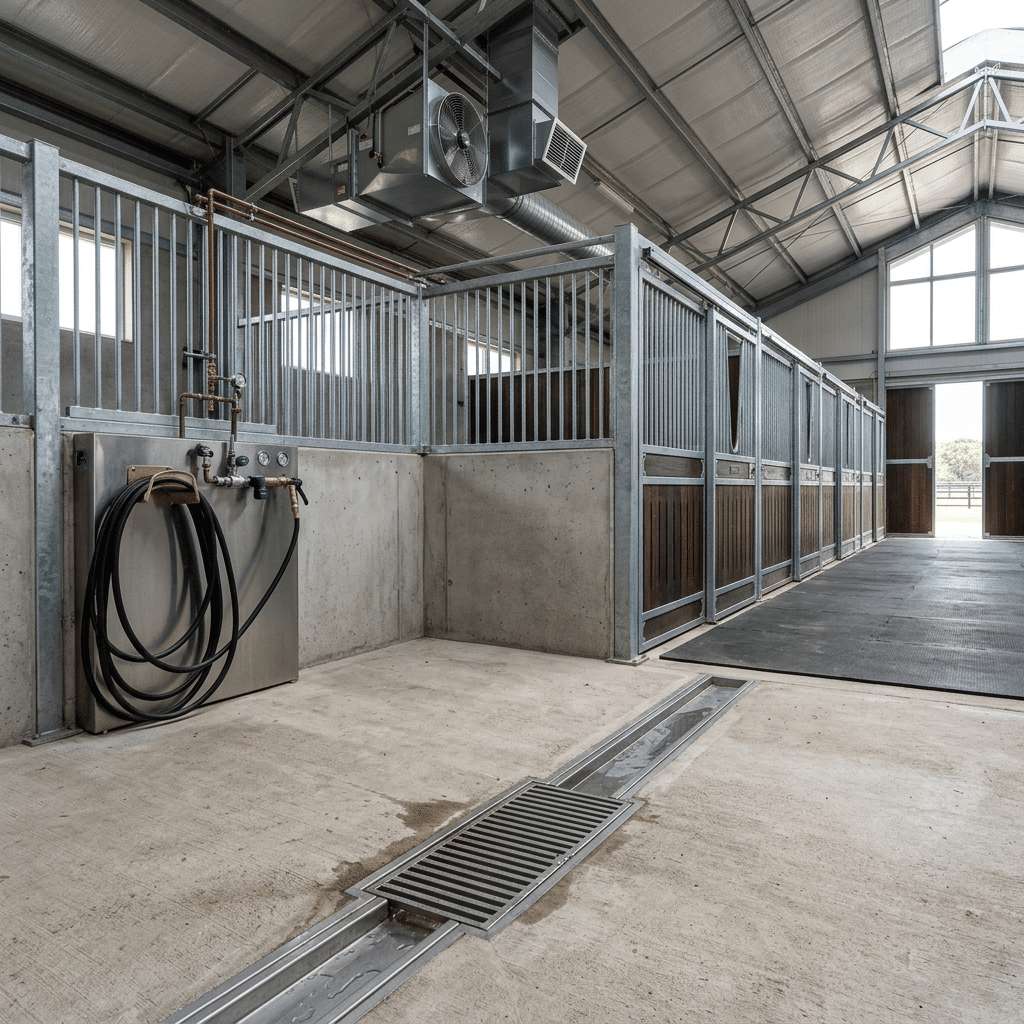
The structural integrity of Commercial Stud Farms directly impacts asset value and operational safety. Standard equestrian equipment fails quickly under the constant pressure of high humidity and ammonia, leading to rapid depreciation and creating unacceptable risks for valuable bloodstock.
This analysis defines the engineering standard for durable breeding facilities. We benchmark stable systems against the BS EN ISO 1461 galvanization process and the performance of non-porous infills like HDPE and thermally treated bamboo, providing a clear specification for long-term capital projects.
The Rot Cycle in High-Humidity Environments
Constant moisture from respiration and cleaning, combined with ammonia from waste, accelerates corrosion and decay. This leads to structural failure and health risks for horses.
How Moisture and Ammonia Create a Cycle of Decay
In a barn, moisture is constant. It comes from animal respiration, daily cleaning, and the local climate. This water vapor saturates the air, condenses on cooler surfaces, and seeps into porous materials like wood and unprotected steel. The structure never gets a chance to fully dry out.
This persistent dampness is a breeding ground for mold and mildew. At the same time, ammonia vapor from urine and bedding mixes into the moist air. This corrosive gas attacks metal fittings and fasteners, while the dampness invites rot in any organic materials, creating a self-perpetuating cycle of structural failure.
Interrupting the Cycle with Corrosion-Resistant Materials
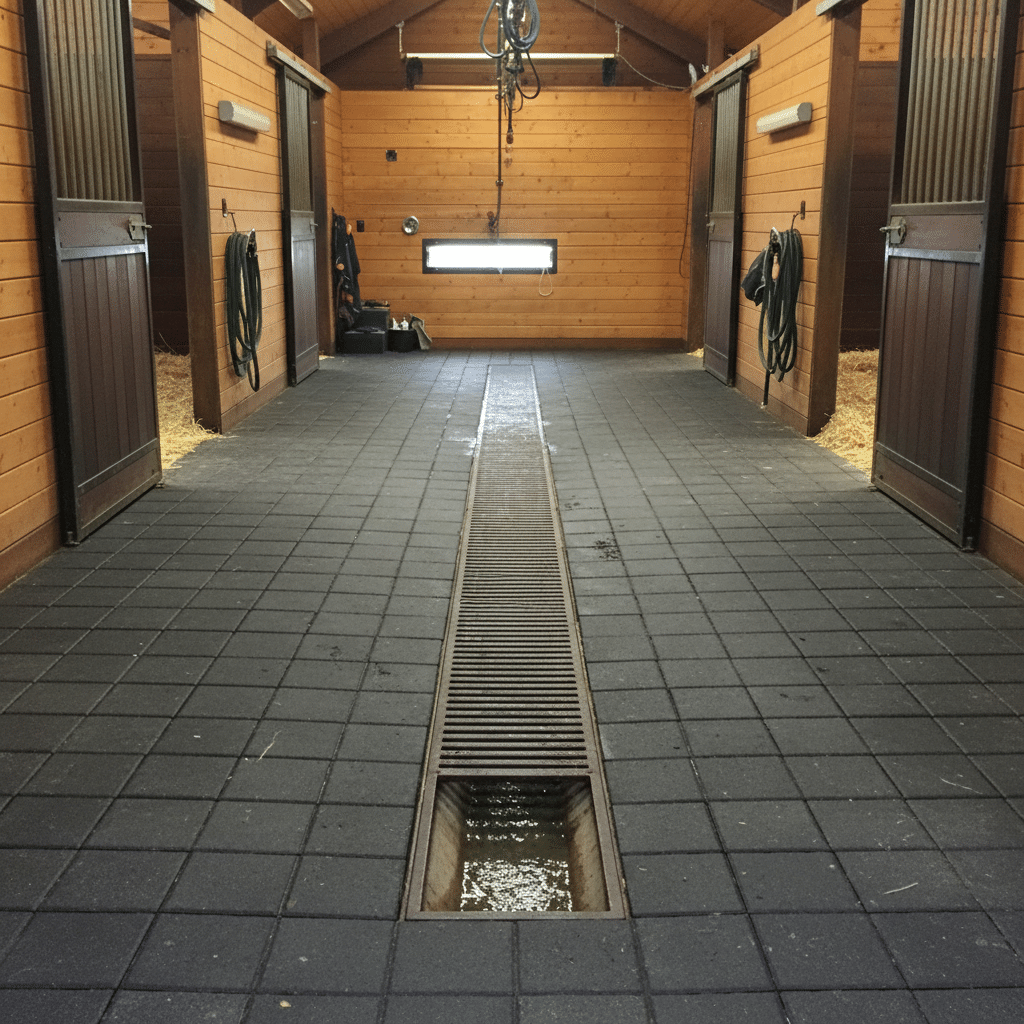
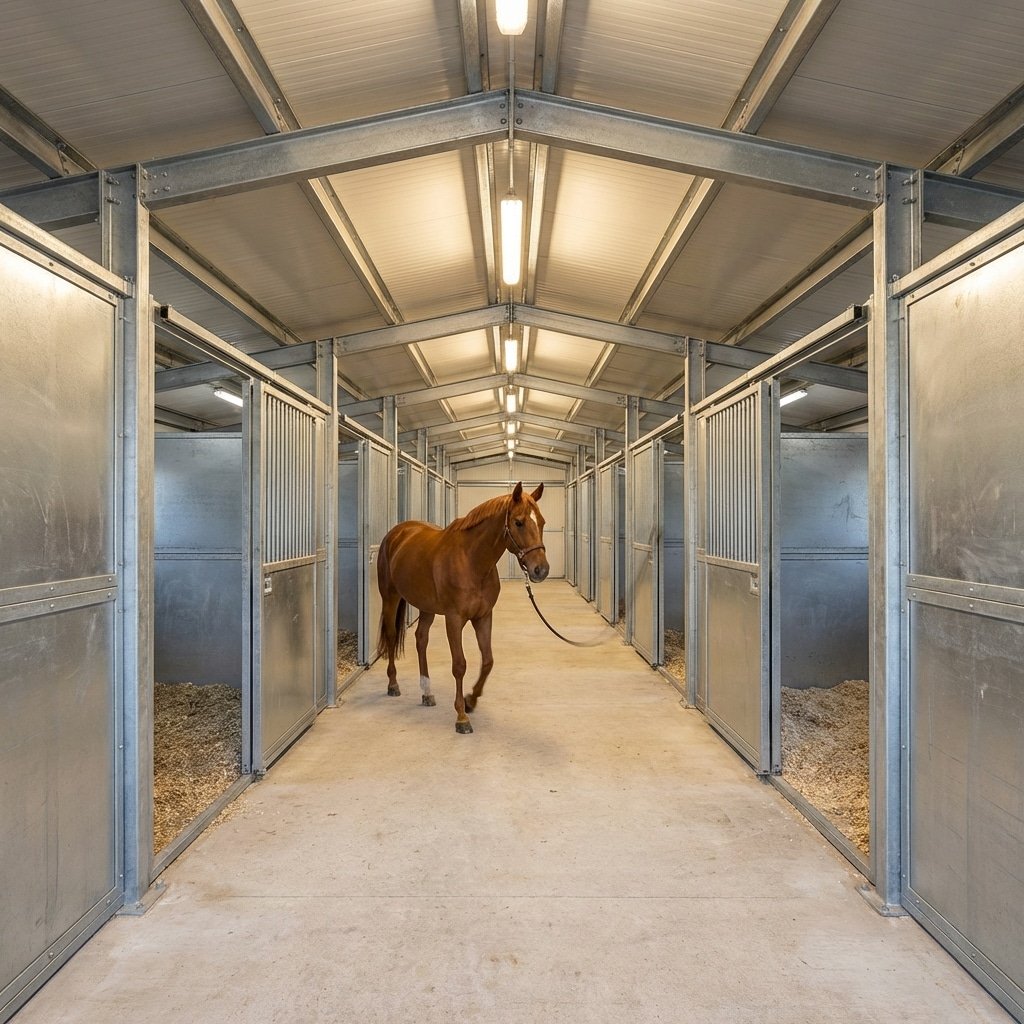
The most direct solution is to build with materials that don’t participate in the rot cycle. Steel frames that undergo Galvanisation à chaud after fabrication, conforming to BS EN ISO 1461, are completely sealed within a layer of zinc. This barrier provides total protection against rust, even in an atmosphere heavy with ammonia.
For infill, the choice of material is just as critical. High-density, strand-woven bamboo is thermally treated to remove sugars, making it resistant to mold and rot. Non-porous HDPE planks are another option, as they are physically incapable of absorbing water. Both materials eliminate the food source that fungi and rot depend on, effectively stopping the decay cycle before it can start.
Material Comparison for Tropical Climates
Tropical climates demand materials that resist rust and UV damage. Hot-dip galvanized steel (ISO 1461) and UV-stabilized HDPE provide longevity with zero maintenance.
| Défi environnemental | Common Ma terial Failure | Engineered Solution |
|---|---|---|
| High Humidity & Rain | Unprotected steel rusts quickly. Porous materials like wood absorb moisture, leading to rot and mold growth. | Hot-Dip Galvanization (ISO 1461): We galvanize the entire steel structure *after* fabrication, creating a complete zinc shield over 70 microns thick that seals all welds. |
| Intense UV Sunlight | Standard plastics become brittle and crack. Untreated wood warps, splits, and requires constant sealing. | HDPE stabilisé aux UV : Our high-density polyethylene infill planks contain UV inhibitors, preventing sun damage. They are a zero-maintenance, impact-absorbing solution. |
| Coastal Salt Spray | Salt-laden air dramatically accelerates corrosion on all metal components, especially at weld points and fasteners. | Protection double couche : The thick galvanized coating passes 96-hour salt spray tests. We also use 304 Stainless Steel for all hardware, ensuring even the smallest parts resist rust. |
Primary Challenges: Humidity, UV Rays, and Salt Air
En tropical regions, stable materials are in a constant fight for survival. High humidity and frequent rain create the perfect environment for rust on unprotected steel and encourage mold to grow on porous materials like wood. You’re not just fighting moisture, but also decay.
The intense, direct sun is another problem. Its UV radiation makes standard plastics brittle and causes traditional wood infills to warp and crack over time. For any facility near the coast, salt spray from the ocean air makes things even worse by speeding up metal corrosion.
The Right Materials: Galvanized Steel and UV-Stabilized HDPE
To solve these issues, you need materials specified for the job. Our Hot-Dip Galvanization process coats the entire steel structure *after* it’s been welded and fabricated. This creates a thick zinc shield, over 70 microns, that passes 96-hour salt spray tests. This isn’t pre-galvanized tubing welded together; it’s a complete, sealed barrier against rust.
For infill, we use high-density polyethylene (HDPE) planks. These boards are UV-stabilized, so they won’t break down under the sun. They provide a zero-maintenance, impact-absorbing wall that doesn’t need painting or sealing. To ensure total system integrity, all hardware—every bolt, nut, and connector—is 304 Stainless Steel. This guarantees that even the smallest parts resist rust and hold the structure together securely for years.
Engineered Horse Stables for Any Climate

Airflow Design to Prevent Tropical Fungal Infections
In tropical climates, managing humidity is key to preventing fungal infections. Our stable designs use open-grill panels to create natural ‘Ventilation par effet de cheminée,’ keeping stalls healthier.
The Link Between Stagnant Air and Fungal Growth
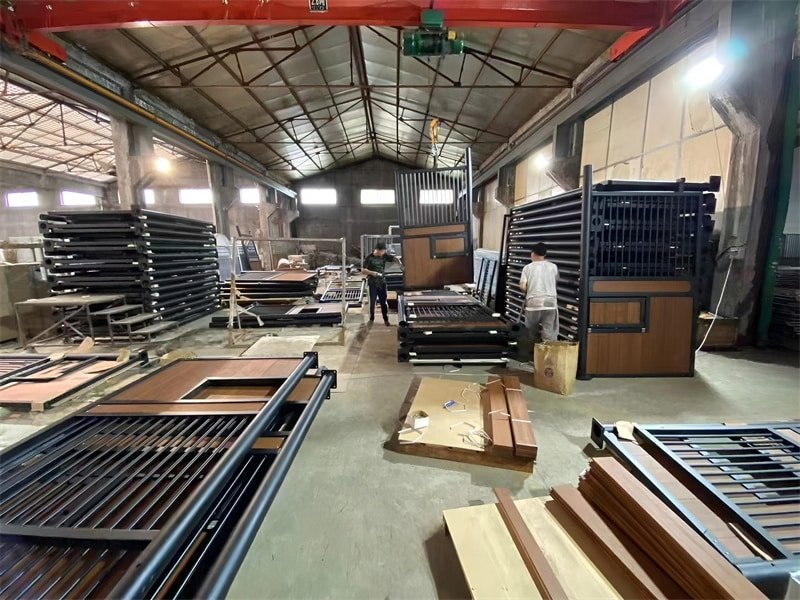
Fungal spores need two things to multiply: high humidity and stagnant air. Tropical regions provide plenty of both. In an enclosed stall with poor circulation, warm, moist air from a horse’s breath and waste gets trapped. This creates the perfect breeding ground for mold and other infections to take hold on walls, bedding, and in the air.
To break this cycle, constant air exchange is non-negotiable. You need a system that actively dries out surfaces and dilutes the concentration of airborne spores. Without it, you’re fighting a losing battle against decay and respiratory issues.
Using Stack Effect Ventilation in Stable Panels
Nous concevons nos stable fronts and partitions with an open top grill design specifically to address this problem. This isn’t just for visibility; it’s a passive ventilation engine that leverages a natural process called the “Stack Effect.”
The design works by allowing the warmer, more humid air inside the stall to naturally rise and escape through the top grills. As this air exits, it creates a pressure difference that pulls cooler, drier air into the stall from below. This creates a continuous, silent cycle of air exchange that reduces humidity and keeps the horse’s environment healthier without any mechanical systems.
Questions fréquemment posées
What is the best infill for stables in high-humidity climates?
For high-humidity environments, you have two superior choices: our high-density strand-woven bamboo or UV-stabilized HDPE. The bamboo is thermally treated, which removes the natural sugars that attract mold and makes it rot-proof. Our HDPE is a non-absorbent plastic, so moisture isn’t an issue, and it requires zero maintenance. Both options completely sidestep the moisture retention and rot that plague traditional wood in damp conditions.
How can I prevent mold on stable walls?
Mold prevention comes down to materials and airflow. Our stable systems are built with hot-dip galvanized steel frames, which are inorganic and won’t support mold growth. When you pair that frame with our non-porous HDPE or dense bamboo infills, you eliminate the organic material mold needs to survive. The open-grill design on our stable fronts also promotes constant ventilation, creating a “stack effect” that keeps the interior air dry.
Does high-density strand-woven bamboo rot in horse stalls?
No, our high-density strand-woven bamboo is engineered to be rot-proof. It goes through a thermal modification and high-pressure compression process that removes its natural sugars and creates a board with a Janka hardness over 3000 lbf—three times harder than oak. This process makes it naturally resistant to rot, mold, and insects. It achieves a Durability Class 1 rating, meaning it’s built for a lifespan of 25 years or more.
Is the HDPE infill waterproof?
Yes, our HDPE (High-Density Polyethylene) infill is effectively waterproof. It’s a hydrophobic material that repels water and has a moisture absorption rate below 0.01%. It will not swell, warp, or degrade from constant exposure to wet stall conditions, which makes it an extremely durable and zero-maintenance choice.
What features of your stables are best for hot, tropical climates?
Our stables are engineered for performance in hot and humid climates. The open-grill design on our fronts and partitions is critical because it promotes natural airflow through the “stack effect,” which pulls hot air up and out of the stall. We use materials like hot-dip galvanized steel (to standard BS EN ISO 1461) and non-absorbent infills like HDPE or rot-proof bamboo. These ensure the structure withstands high humidity without rusting, rotting, or deteriorating over time.
Réflexions finales
The upfront cost of a generic stable is tempting until a partition fails from unseen rot or rust. Specifying Hot-Dip Galvanization after fabrication is not an upgrade; it’s a baseline requirement for protecting high-value bloodstock. Your operation’s safety and reputation depend on materials engineered to withstand the cycle of moisture and ammonia.
The logical next step is to verify this engineering yourself. We recommend a trial order of 3-5 stalls to test the fitment and finish in your own environment. Contact our team to discuss your farm layout and receive a detailed quotation.

 French
  English
  Spanish
  Arabic
  German
0 commentaires