



When you buy portable horse stalls, your procurement decision directly impacts long-term operational costs and liability risks. Opting for cheaper systems built with thin, pre-galvanized steel invites rapid rust at the welds, structural failure, and costly replacements that erode your initial investment and professional standing.
This evaluation benchmarks stalls against non-negotiable engineering standards, including Hot-Dip Galvanization After Fabrication (ISO 1461) and a minimum 14-gauge (2.0mm) steel frame. We analyze how material choices, from Q235B steel to zero-maintenance HDPE infills, determine total cost of ownership and asset longevity.

Top 10 Features to Look for in Portable Stalls
Quick Comparison
| Product Name | Meilleur pour | Key Feature | Verdict |
|---|---|---|---|
Durable Frame Materials | Extended Lifespan & Structural Integrity | Galvanized steel or aluminum frames with HDPE panels that resist rust, corrosion, and weather damage. | A top choice for longevity and stability, though steel options are heavier than aluminum alternatives. |
Kick-Through-Resistant Walls | Maximum Horse & Handler Safety | Walls made from High-Density Polyethylene (HDPE) with a smooth, nail-free construction to prevent injuries. | Critical for preventing injuries from kicks. HDPE is the recommended material for superior long-term durability. |
Easy Setup and Assembly | Minimal Installation Time & Labor | An interlocking panel system that allows for rapid setup and disassembly without special tools. | Ideal for saving time and labor with its tool-free design, but requires level ground for optimal stability. |
Weather Resistance and Waterproofing | Protects Horse from Elements | Utilizes waterproof materials and offers optional roofs for complete protection from rain, snow, and sun. | Excellent for keeping the horse and bedding dry and shaded, though a full roof is often an added cost. |
Superior Ventilation and Airflow | Maintains Respiratory Health | Incorporates mesh panels, windows, or vertical bars to ensure adequate airflow and prevent overheating. | Crucial for reducing moisture and preventing overheating, but highly open designs may offer less protection from wind. |
Stability and Security Features | Wind Resistance & Structural Integrity | Solid anchoring options (stakes or weighted bases) and secure door locks (foot locks or kick-over bolts). | A non-negotiable feature for safety, providing reliable anchoring and secure locks to prevent accidents. |
Sliding or Swing Door Design | Safe & Reliable Access | Strong steel hinges and secure locks, with popular yoke door options to reduce horse stress. | Yoke doors are a fantastic addition for horse comfort. Portes coulissantes save space but require level ground to work smoothly. |
Optional Stall Mats and Cushioning | Joint Support & Reduced Fatigue | Durable, interlocking tapis en caoutchouc that provide a level and cushioned surface on uneven ground. | Highly recommended for horse comfort and safety by improving traction, though they add significant weight and cost. |
Low Maintenance Requirements | Reduced Long-Term Costs & Effort | Constructed with easy-to-clean, waterproof HDPE and rust-resistant galvanized cadres en acier. | A major long-term benefit due to easy-to-clean surfaces and rust-resistant frames, but regular hardware checks are still advised. |
Customization and Modularity | Adapts to Different Scenarios | Modular structures that allow for easy adjustment of size, color, and layout to fit changing needs. | Offers excellent flexibility for various events and horse counts, but be aware that custom options can increase cost and lead time. |
Key Feature
Durable Frame Materials
The Verdict: Stalls should be built with galvanized steel or aluminum frames and high-density polyethylene (HDPE) panels. These materials resist rust, corrosion, and weather damage, ensuring the structure maintains its integrity and lasts for years.
✅ The Good
- Resists corrosion and weather damage
- Maintains high structural stability
⚠️ The Bad
- Galvanized steel adds weight compared to aluminum alternatives
Key Feature
Kick-Through-Resistant Walls
The Verdict: Walls made from High-Density Polyethylene (HDPE) or heavy-duty fabric are critical for preventing injuries and stopping horses from escaping. Look for smooth, nail-free construction to eliminate sharp edges that could harm the animal.
✅ The Good
- Prevents horse injury from kicks
- Smooth, nail-free surfaces are safer
⚠️ The Bad
- HDPE is generally preferred over fabric for superior long-term durability
Key Feature
Easy Setup and Assembly
The Verdict: De haute qualité portable stalls use interlocking panels that fit together securely without special tools. This design allows for rapid setup and disassembly, saving significant time and labor during installation or relocation.
✅ The Good
- Interlocking panel design is fast
- No special tools are typically required
⚠️ The Bad
- Setup still requires level ground for optimal stability and door function
Key Feature
Weather Resistance and Waterproofing
The Verdict: Look for stalls with waterproof materials and optional roofs to provide complete protection from rain, snow, and sun. This feature is essential for keeping the interior dry and comfortable for the horse in all conditions.
✅ The Good
- Keeps interior bedding and horse dry
- Provides crucial shade in hot weather
⚠️ The Bad
- A full roof option is often an additional cost
Key Feature
Superior Ventilation and Airflow
The Verdict: Designs that incorporate mesh panels, windows, or vertical steel bars in the upper sections ensure adequate airflow. Proper ventilation is crucial for preventing overheating and maintaining a horse’s respiratory health.
✅ The Good
- Reduces moisture and ammonia buildup
- Helps prevent overheating in summer
⚠️ The Bad
- Highly open dessins et modèles may offer less protection in windy or driving rain conditions
Key Feature
Stability and Security Features
The Verdict: To be safe, portable stalls must include solid anchoring options, such as stakes or weighted bases, to resist wind. Secure locking mechanisms like foot locks or kick-over bolts prevent doors from opening unexpectedly.
✅ The Good
- Solid anchoring options prevent shifting
- Secure door locks enhance safety
⚠️ The Bad
- The required anchoring method may vary based on the ground type
Key Feature
Sliding or Swing Door Design
The Verdict: Quality doors have strong steel hinges, secure handles, and reliable locks. Yoke doors are a popular feature, as they allow horses to comfortably extend their heads for better visibility, which can reduce stress.
✅ The Good
- Yoke doors improve horse visibility and comfort
- Strong hinges and secure locks are essential for safety
⚠️ The Bad
- Sliding doors save aisle space but can be harder to operate if not on level ground
Key Feature
Optional Stall Mats and Cushioning
The Verdict: Durable rubber stall mats with interlocking edges provide a level, cushioned surface on uneven ground. They offer critical joint support, reduce fatigue, and improve traction, making them vital for temporary events.
✅ The Good
- Creates a comfortable, level surface
- Improves traction and reduces slipping
⚠️ The Bad
- Mats add significant weight and cost to the overall setup
Key Feature
Low Maintenance Requirements
The Verdict: Stalls built with easy-to-clean, waterproof materials like HDPE and rust-resistant galvanized steel frames require minimal upkeep. This drastically reduces long-term operational costs and labor compared to traditional wood stalls.
✅ The Good
- Non-porous surfaces are easy to clean
- Rust-resistant frames prevent deterioration
⚠️ The Bad
- Regular inspection of hardware and connection points is still recommended
Key Feature
Customization and Modularity
The Verdict: Leading designs allow for customization of size, color, and layout. Modular structures are highly flexible, enabling you to easily adjust configurations to accommodate more or fewer horses as your needs change.
✅ The Good
- Can be adjusted for varying numbers of horses
- Can be reconfigured for different events or uses
⚠️ The Bad
- Fully custom options may increase both the final cost and delivery lead time

Why Should You Avoid Cheap Portable Panels?
Cheap portable panels often use thin, untreated steel that quickly dents, bends, and rusts, creating serious safety hazards and escape risks. The low initial price is misleading, as frequent repairs, replacements, and potential liability from animal injuries make them a poor long-term investment for any professional operation.
Poor Durability and Structural Integrity
Budget panels are typically made from thin-walled, low-grade steel that cannot withstand the force of a leaning or kicking horse. These materials dent easily, and a determined animal can shift the entire structure, leading to instability or collapse. Our systems use Q235B structural steel with a minimum wall thickness of 14-gauge (2.0mm), providing the strength needed for secure and reliable equine containment.
High Risk of Escape
The primary function of a stall is containment, a weak point in low-cost panels. Flimsy connection points and lightweight construction make it relatively easy for horses to push through or knock over a panel, especially in an unfamiliar setting. This not only defeats the purpose of the enclosure but also puts the animal at risk of injury or getting lost.
Rapid Material Degradation
Many cheap panels are made from pre-galvanized tubing or are simply painted. This means the welds—the most critical structural points—are left unprotected. Rust forms quickly at these joints, weakening the panel and creating sharp, dangerous edges. We prevent this by performing **Hot-Dip Galvanization After Fabrication**, a process that coats the entire welded panel in zinc according to ISO 1461 standards. This ensures every edge and weld is sealed against corrosion.
Greater Long-Term Costs
While the upfront cost is lower, the total cost of ownership for cheap panels is significantly higher. You will face ongoing expenses for repairs and eventual replacement. More importantly, the potential for veterinary bills from injuries caused by panel failure can erase any initial savings. Investing in a durable, properly engineered system from the start protects your animals, your clients, and your bottom line.
Does “Pre-Galvanized” Mean Rust-Proof? (Spoiler: No)
Pre-galvanized steel is not genuinely rust-proof for demanding applications like horse stalls. The zinc coating is applied before cutting and welding, leaving critical seams and edges unprotected. Rust starts at these weak points and spreads, unlike our hot-dip after fabrication process, which seals the entire structure for complete, long-term protection.
The Critical Flaw of Pre-Galvanizing
In the pre-galvanizing process, steel sheets are coated with zinc *before* they are cut and assembled into a final product. This method leaves the most vulnerable areas—the cut edges and weld points—completely exposed and unprotected. Rust inevitably begins at these weak points and spreads underneath the thin zinc coating, quickly compromising the entire structure and threatening animal safety.
Pre-Galvanized vs. Hot-Dip After Fabrication
Pre-galvanized steel offers only a thin, superficial layer of zinc protection. It’s a shortcut used by low-cost manufacturers that fails in the high-moisture, high-ammonia environment of a stable.
Our **hot-dip galvanizing after fabrication** method is fundamentally different. We weld the entire stable panel first, then dip the fully assembled steel frame into molten zinc. This superior process creates a thick, metallurgically bonded coating (averaging over 70 microns) that seals every edge, seam, and weld. It is the only way to conform to the **BS EN ISO 1461** standard and ensure decades of reliable, rust-free service.
The Right Application for Pre-Galvanized Steel
Pre-galvanized steel is acceptable for indoor or light-duty outdoor uses where moisture exposure is minimal, like appliance components or gutters. It is completely unsuitable for high-impact, high-moisture environments like horse stalls, especially in coastal climates with salt spray or regions with heavy rainfall.
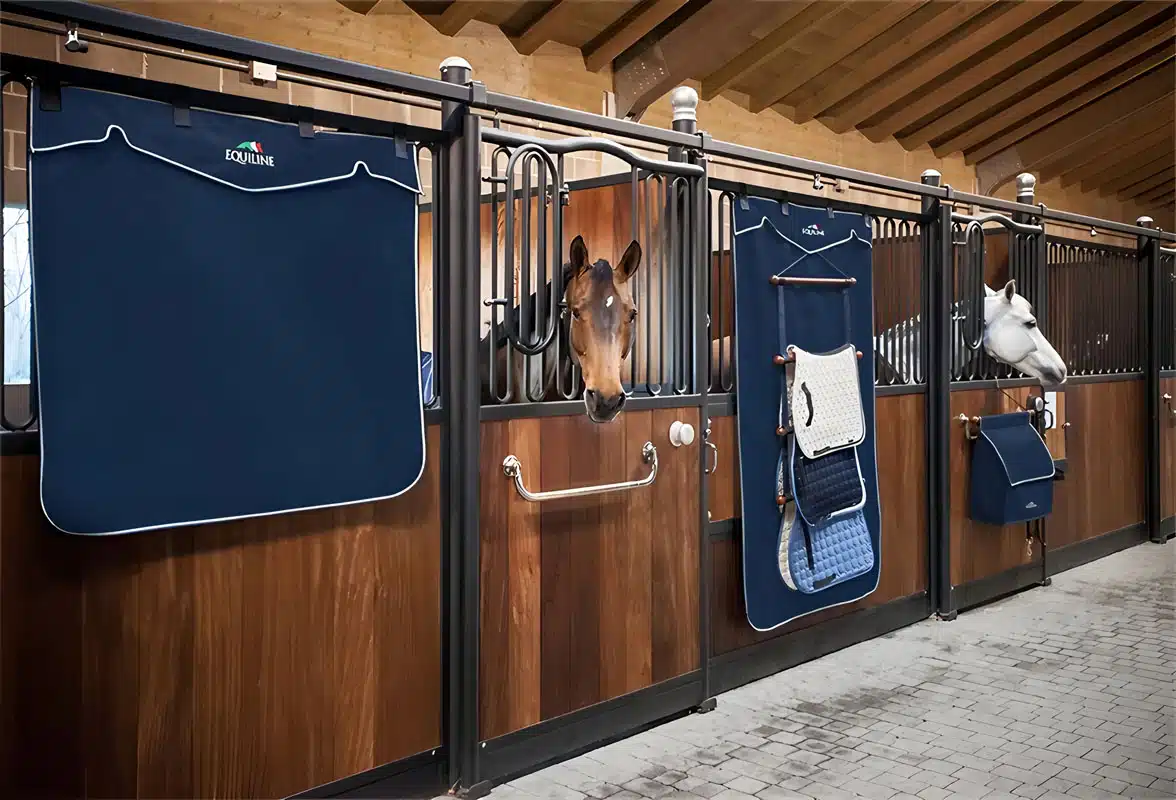
Global-Standard Stables Built for Any Climate
How Important is the Connector Design?
The design of a stable’s connector system is fundamental to its safety, structural integrity, and valeur à long terme. A well-engineered system prevents panel shifting, ensures layout flexibility, simplifies installation for your teams, and reduces maintenance, directly protecting your investment and the animals’ well-being.
Structural Integrity and Safety
A stable system is only as strong as its connection points. Our connectors are engineered to create a rigid, stable structure that resists shifting or tipping when challenged by a horse’s weight and movement. Using fully welded, heavy-duty steel plates, we ensure a snug fit that eliminates dangerous gaps. This robust design is foundational to providing a safe environment and preventing incidents that could lead to injury or claims.
Connector Types and Layout Flexibility
We understand that every barn layout is different. Our system includes a variety of connectors—from 2-way and 3-way to 4-way configurations—allowing for versatile back-to-back or in-a-row setups. We also provide specialized connectors and door stops for secure attachment to existing barn walls. This modularity gives you the flexibility to reconfigure stall layouts for different projects or events while maintaining complete structural security.
Installation and Maintenance Demands
A thoughtful connector design directly lowers installation time and long-term maintenance costs for your team. Our system is designed for straightforward assembly, but we emphasize that all connection points must be securely fastened during setup. To ensure lasting performance and minimize upkeep, our entire hardware kit, including all connectors and bolts, is made from corrosion-resistant 304 Stainless Steel. This choice protects against rust and ensures the connections remain strong for years.
Materials and Durability
Connectors must endure the stress of repeated assembly, transport, and daily use. We construct our connector plates from heavy-duty Q235B structural steel to guarantee they withstand these demands without failing. Crucially, every component is protected by our Hot-Dip Galvanization After Fabrication process, which creates a thick, durable zinc coating that prevents rust far more effectively than inferior pre-galvanized methods. This commitment to superior materials ensures the connectors maintain their strength across any climate.
Why You Should Demand HDPE over Plywood
For any stable operator, choosing infill material is a long-term investment. While plywood seems like a cost-effective option initially, High-Density Polyethylene (HDPE) provides superior value through unmatched durability, zero maintenance requirements, and enhanced animal safety. It eliminates the constant repair costs and hygiene issues associated with wood, protecting both your horses and your bottom line.
Exceptional Durability and Moisture Resistance
Plywood’s greatest weakness in a barn environment is its vulnerability to moisture. Urine, humidity, and wash-downs cause it to swell, warp, and eventually rot, requiring frequent and costly replacement. Our HDPE planks are completely impermeable to water. We use thick, 28mm-32mm UV-stabilized boards that absorb impacts from kicks without cracking or becoming brittle. This resilience ensures a long service life, even in the most demanding climates, from the high humidity of Australia to the frost cycles in Europe.
Zero-Maintenance and Long-Term Cost Savings
The term “Zero Maintenance” is a core benefit for our B2B partners. Plywood demands a constant cycle of sealing, painting, or varnishing to delay its inevitable decay. This process consumes labor hours and material costs that eat into your operating margins. HDPE completely eliminates these tasks. Its upfront cost is offset quickly by the savings in labor and replacement materials. For distributors and large project managers, offering a solution that lowers the total cost of ownership is a powerful selling point.
Superior Hygiene and Animal Safety
A healthy horse starts with a hygienic environment. Plywood’s porous surface can harbor mold, mildew, and bacteria, creating respiratory risks. Our HDPE planks are non-porous, making them incredibly easy to clean and disinfect to the high standards required for le bien-être des animaux. Unlike wood, HDPE will never splinter or crack, which removes the risk of injuries and subsequent vet bills. This commitment to safety reduces liability and helps you maintain a reputation for excellent animal care.
Environmental Sustainability
Choosing durable materials is also an environmentally responsible decision. The long lifespan of HDPE minimizes the need for frequent replacements, reducing resource consumption over time. It is also a recyclable material, which lessens its environmental impact at the end of its service life. By avoiding the chemical preservatives and treatments required for plywood, you create a healthier space for animals and staff.
Réflexions finales
The upfront cost of a generic stall is a false economy. Systems that fail to meet the ISO 1461 hot-dip galvanizing standard expose your business to rust claims and safety liabilities. Our 14-gauge steel and zero-maintenance HDPE construction is the baseline for protecting your reputation and long-term margins.
The specifications are clear, but the build quality must be seen. We recommend a trial order of 3-5 sets to verify our engineering and finish firsthand. Contact our team to discuss your project requirements or OEM branding options.
Questions fréquemment posées
What are the main trends in portable stalls for 2026?
The market is moving toward modular, flat-pack systems that significantly reduce expédition costs for distributors. Material trends focus on longevity and low upkeep. We see strong demand for hot-dip galvanized steel frames that comply with ISO 1461 for maximum rust protection, paired with zero-maintenance infills like UV-stabilized HDPE. These systems offer the flexibility to reconfigure layouts for events or expand facilities without major construction.
Are portable stalls as durable as permanent barns?
Yes, when engineered correctly. Our systems are designed to meet or exceed the lifespan of many traditional structures. We use heavy-gauge Q235B structural steel, and for colder climates, Q345B steel to prevent fractures from kicks. The key is our “Hot-Dip After Fabrication” galvanizing process, which coats every weld and edge for complete rust prevention. Paired with kick-proof HDPE or high-density bamboo, these stalls offer a robust, long-term asset.
Why use portable stalls instead of building a new barn?
For our B2B clients, the primary advantages are rentabilité and operational flexibility. Portable systems avoid the lengthy timelines and high capital costs of permanent construction. Our flat-pack design allows loading 30-45 sets into a single 40HQ container, protecting distributor profit margins by saving over 60% on freight. This makes it easier to scale operations, manage temporary housing for events, or establish quarantine zones quickly and affordably.
What is the difference between 14-gauge and 16-gauge steel?
We exclusively use 14-gauge steel for our structural framework, which has a wall thickness of 2.0mm to 2.5mm. This provides the strength needed to withstand powerful kicks and ensures long-term durability. We consider thinner 16-gauge steel (approx. 1.5mm) insufficient for the safety required in professional installations équestres, which is why it is never used in our stable systems.
Why is plywood a poor choice for portable stalls?
Plywood is highly susceptible to moisture from urine and bedding, which leads to rot, warping, and dangerous splintering. This creates ongoing maintenance costs and safety risks for the animals. We recommend our infill options instead: UV-stabilized HDPE for a “zero maintenance” solution that absorbs impacts, or high-density bamboo, which is three times harder than oak and naturally resists mold.
How can I tell if a stall is truly hot-dip galvanized?
True “Hot-Dip After Fabrication” galvanizing, which is our required standard, leaves a distinctive matte gray finish, often with a crystalline or spangled pattern. This is different from the shiny, uniform finish of cheaper pre-galvanized tubing. The most reliable indicator of our quality is that the weld joints are fully coated and protected, as the entire completed panel is dipped in molten zinc after welding.
Do you sell replacement parts for your stalls?
Yes, we support our distributors with a full inventory of replacement components. Our modular system is designed for easy part replacement. We stock everything from individual panels and infill planks (HDPE or Bamboo) to complete hardware kits featuring 304 Stainless Steel connectors, bolts, and latches. Each kit also includes a cold galvanizing touch-up spray for minor repairs.
What kind of warranty is offered on portable stalls?
We engineer our stalls to last a lifetime, and our quality standards serve as our guarantee. Our rust protection conforms to the BS EN ISO 1461 standard, delivering a zinc coating over 70 microns thick that passes 96-hour salt spray tests. For climats froids, we use Q345B steel to prevent fractures. Our entire ISO 9001 certified process is designed to ensure consistent, long-term performance and durability for our partners.
Are the edges of the stall panels sharp?
Absolutely not. Animal safety is central to our engineering. All steel components are de-burred before the galvanization process, which itself creates a smooth, rounded coating on any edges. Our infill boards, whether HDPE or bamboo, are precision-cut with smooth finishes to prevent splintering. Our “Cast-Proof Design” also ensures there are no hazardous gaps where a horse could get injured.


 Français
  English
  Español
  العربية
  Deutsch
0 commentaires