

Ask ten suppliers for insulated horse stalls and you get the same word ten times, with almost no numbers behind it. Four things are worth insisting on: the value, the unit, the method and the assembled bay it describes. Without them you are not buying insulation — you are buying a lined steel frame and hoping for a mild winter.
The physics explains why a barn that feels warm still drips. Cold interior surfaces are where water vapor leaves the air, and a horse barn is one of the wettest buildings in agriculture: breathing and sweating animals, soaked bedding, daily wash-down. Insulation does two jobs at once — holding heat in, and keeping interior faces above the temperature at which they get wet.
Key Takeaways
- A thermal claim needs a number, a unit and a standard. R-value, the US convention, rises as a build-up resists heat; U-value (thermal transmittance, W/m²·K), the European one, falls as performance improves. They are reciprocals, so check which unit your quote and your architect are both using.
- Liners are not insulation. Bamboo, HDPE and pine lining boards in this range are specified against chewing, kicking and wash-down, not against heat loss.
- In a steel-framed stall the frame is usually the leak. Steel carries heat far more readily than a foam or mineral core, so an insulated panel set in a continuous steel post will usually leave the steel as one of the coldest faces in the bay.
- Cold surfaces collect water before they show damage. Condensation inside a build-up cannot be wiped off; it reports later as coating failure at welds and cut edges, staining and frost-lifted faces.
- A durability claim is not a thermal claim. The documented design point for Poland in this range is a frost-resistant structure rated for -10°C winters — about steel and coating, not heat loss.
- Order terms: stable sets from a 10-set minimum, 5-15% volume discount on larger runs, 4-6 weeks globally, 1-2 weeks expedited from the Sydney or Warsaw hub.
Three Things Sold as Insulation
The word attaches to three different parts of a stall, and only the middle one is where insulation lives. First the liner: the board the horse can reach. In this range, stall liners are bamboo, HDPE or pine, specified for chewing, kicking and ammonia-and-water wash-down. A timber liner slows a little heat on its own; nothing about specifying it tells you how much.
Second is the panel build-up: what sits between the outer skin and the face you see. Ask for the core by name, because a core type is a specification and ‘insulated’ is not. Then ask for the value of the finished panel, not of the bare core — a foam slab is not a horse stall.
Third is the assembled bay: panels plus posts, door, glazing and roof line. That is the figure a building authority and your heating bill care about, and it is almost never quoted.
So state in the quote request which unit you want, for the assembled bay, and what document you expect back. This range publishes liner materials and a 20-year rust-protection specification for hot-dip galvanized steel; it publishes no stall-panel thermal value. An uninsulated lined stall is a legitimate product at a lower price, and the wrong one for a freezing barn.
Where the Heat Actually Leaves
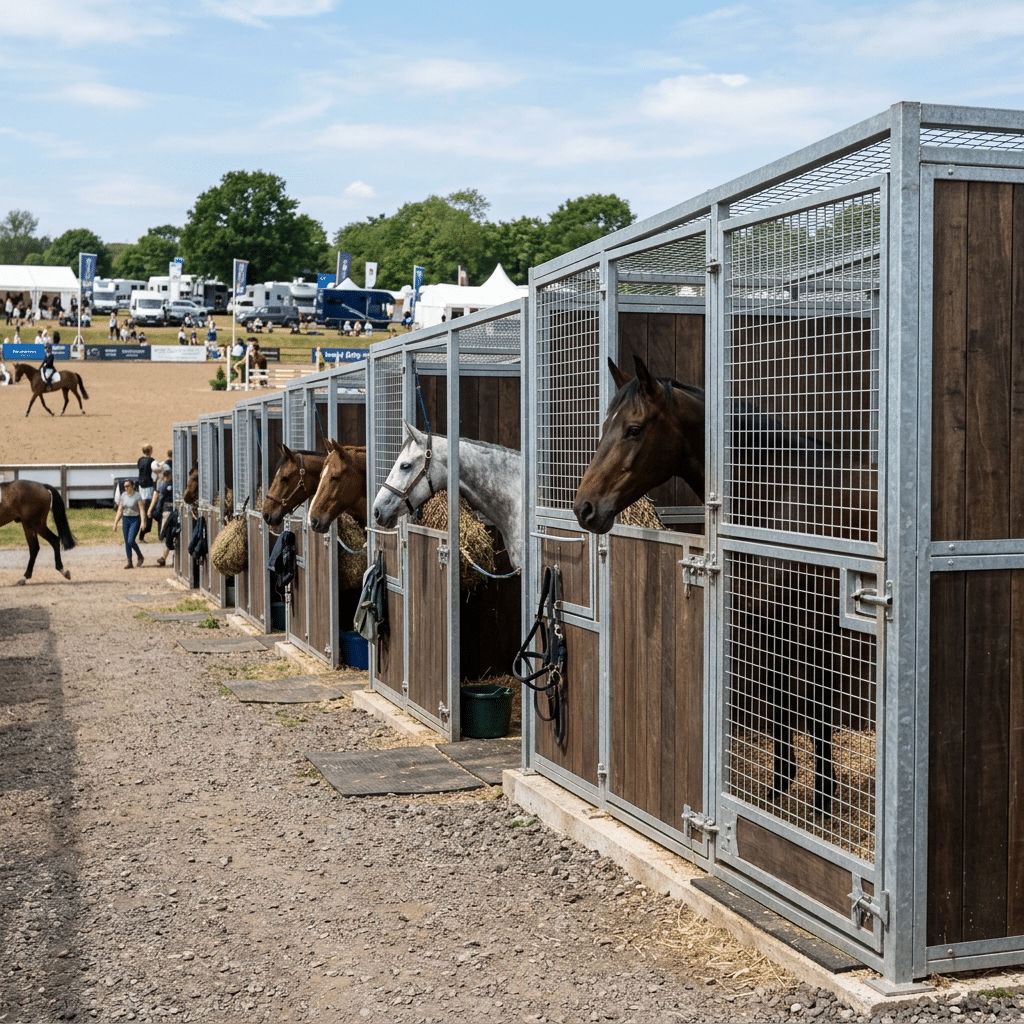
Steel carries heat like a wick. A stall frame bolted floor to top rail is a continuous path from warm inside to cold outside, so heat follows the frame instead of the panel beside it — the shortcut builders call a thermal bridge. The penalty is usually double: the bay loses more than the panel value promises, and the steel becomes one of the coldest surfaces in the room.

Frame questions therefore matter as much as core questions. Is the post one continuous steel member, or is it broken at the panel line? What sits between panel face and post — gasket, spacer, nothing? How is the door stile handled, and the metal-framed window? For Poland, this range’s documented design point is a frost-resistant structure rated for -10°C winters — a claim about steel and coating, not a heat-loss figure.
Condensation Is a Surface-Temperature Problem
Cool a surface below the dew point — the temperature at which air can no longer keep its vapor as vapor — and water settles out on it. Average barn temperature does not prevent that: a stall just above freezing, with damp bedding and a cold steel rail, will wet the rail. Where all that water comes from, and what it does to ammonia and to airways, is the subject of the existing condensation guide linked below. This section stays on the specification side of the same problem.
Beading appears first on glazing, on the top rail, at welded nodes and at drilled or cut edges where coating has been worked through. Some of it forms inside the build-up, out of sight: condensation between a core and a face stays wet for months, then reports itself as coating failure, dark staining and frost-lifted surfaces. Standing condensate at an unprotected weld or field-cut end is where this range’s 20-year rust-protection specification gets tested.
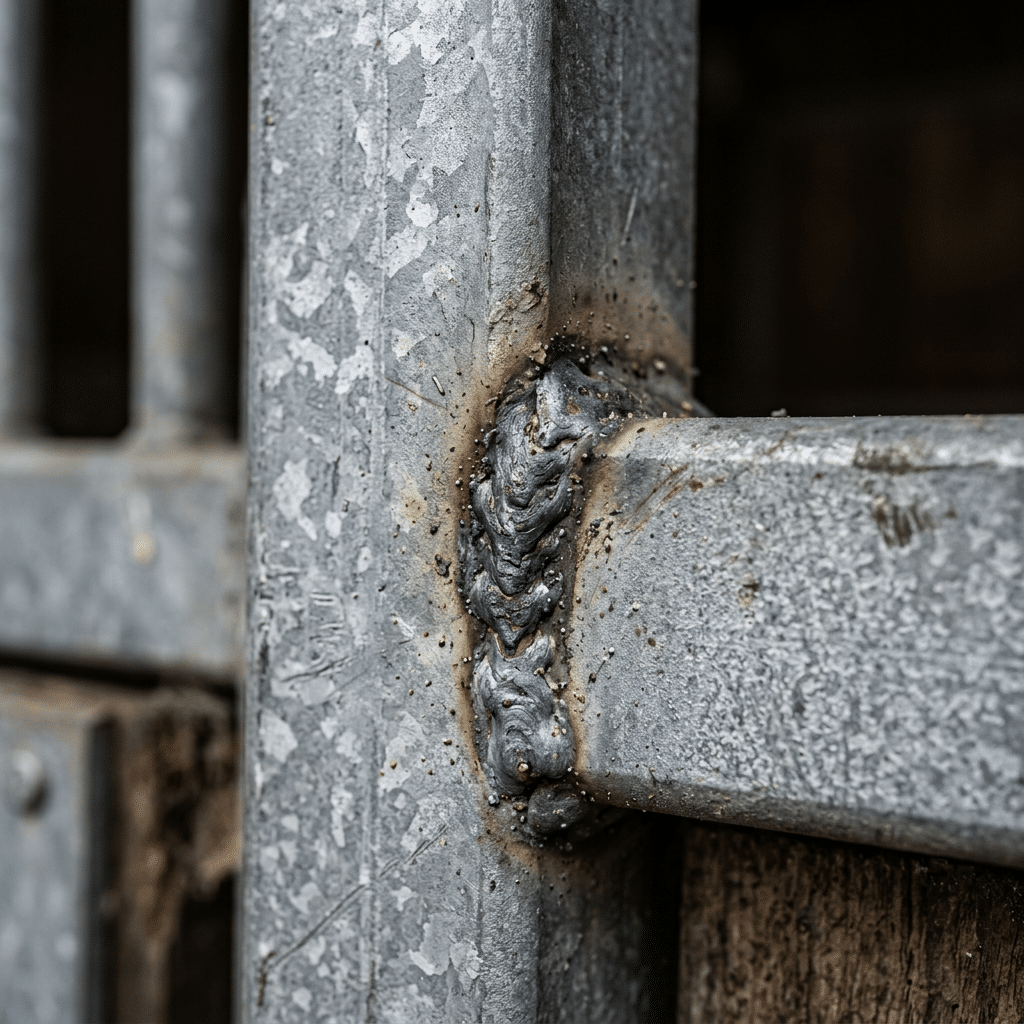
Fixing it has two halves, and buyers routinely pay for one and skip the other. Insulation raises surface temperature; moving damp air out of the building removes the water. A well-insulated barn with no air change will still be wet, and a ventilated barn with a cold steel frame will still drip. The moisture and ammonia side is covered in our guide to stopping barn condensation and ammonia — treat the thermal and the ventilation specification as one decision.
You can check a finished building with no instruments. On a cold, damp morning, feel the panel face and the top rail with the back of your hand, then look along the glazing and the roof line. Cold steel wet to the touch in a bay meant to be insulated is the finding — photograph it before you release the balance.
Six Items to Have in Writing
Documentation is the cheap part of an insulated barn. Six rows, asked for before the order rather than after the first wet January, settle most disputes before they start.
| Item | What to have in writing |
|---|---|
| Panel build-up | Core named by type, facers identified, and which liner faces the horse — bamboo, HDPE or pine |
| Thermal value | One unit stated consistently — R-value or U-value in W/m²·K — plus the standard or method assessed |
| Assembled bay | A figure covering posts, door, glazing and roof line, or a written statement that it is panel-only |
| Frame details | Where the steel runs continuous, what sits at panel-to-post joints, how welds and cut ends are re-coated |
| Vapor and liners | Whether a vapor control layer is part of the panel, and what the liner is credited with doing |
| Commercials | 10-set minimum, 5-15% volume discount, 4-6 weeks lead time, 1-2 weeks from Sydney or Warsaw |
On delivery, check three of those rows instead of counting crates: the core as named against a cut edge or returned sample, the coating at welded and drilled nodes, and whether the liner matches the paperwork. Orders of 20 sets or more come with a regional account manager. Start from the horse stable range, and read the site’s existing rundown of insulated horse stables for Danish winters before you decide how far north your requirement runs.
Questions fréquemment posées
What R-value do insulated horse stalls need?
It depends on your market, local rules and whether you heat the barn, and this range publishes no panel R-value. Take the requirement from your authority or architect, then have the supplier answer it in writing for the assembled bay.
Is a bamboo or HDPE liner insulation?
Not as a thermal layer. Both are lining materials specified against chewing, kicking and wash-down; they add a face to the panel, and a quote should not imply that specifying one insulates the stall.
Why does a new insulated stall still drip in winter?
Usually a cold surface is below dew point — the steel frame, glazing or roof line rather than the panel. Insulation lifts surface temperature; moving damp air out of the building removes the water. You normally need both.
Does condensation damage galvanized steel stalls?
The hot-dip galvanized steel here carries a 20-year rust-protection specification. Long-damp welds, drilled holes and field-cut ends are where coating is hardest to trust, so ask how those are re-coated and inspect on delivery.
What is the smallest order for a cold-climate stall package?
Stable sets start at 10, with a 5-15% volume discount on larger runs. Lead time is 4-6 weeks worldwide, or 1-2 weeks expedited from the Sydney and Warsaw hubs. A regional account manager is assigned from 20 sets.
Conclusion
Insulation earns its keep by keeping interior surfaces warm and dry, not by appearing in a heading. The specification that protects you is a set of numbers with units, a stated method, an assembled-bay figure, a frame detail — and the ventilation that carries the moisture away.
Send those six rows to every supplier on your shortlist and see who answers with a document rather than the word. The horse stable range is where to start a lined-panel brief.

 French
 English
 Spanish
 Arabic
 German
0 commentaires