


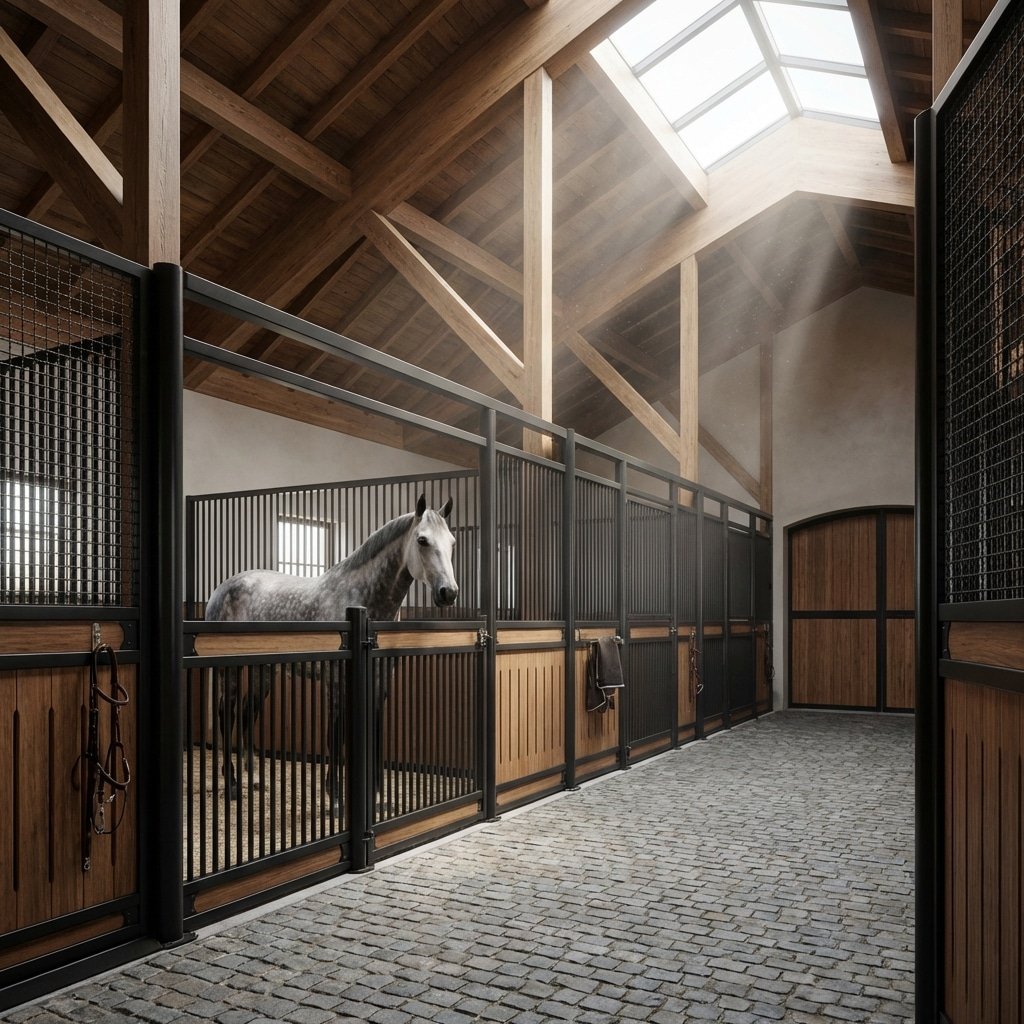
Ceiling jumping prevention is the primary safety metric for facilities housing high-energy warmbloods. When designers leave a 2-foot gap above a standard 2.2-meter panel, they create a mechanical trap that can sever tendons or crush vertebrae during a rear. This structural oversight turns a standard installation into a significant liability nightmare for commercial breeders.
We solve this geometry problem by engineering floor-to-ceiling barriers using Q345B High Strength Steel. This analysis details how extending 14-gauge frames to the roofline eliminates escape routes while preserving Stack Effect ventilation, ensuring your facility meets the highest safety standards.
The Panicked Jumper: When Horses Try to Climb Out
Panicked horses generate immense vertical force. Preventing catastrophic “climb-over” injuries requires 14-gauge steel framing and sufficient height to stop hooves from hooking the top rail.
Horses are flight animals. When confined during high-stress events—thunderstorms, separation from herd mates, or sudden loud noises—their instinct is to go vertical. Separation anxiety often triggers a “blind panic” where the horse attempts to rear and vault over the stable front. This is not a calculated jump; it is a desperate scramble.
The danger lies in the landing. If a horse does not clear the stall front completely, its front legs hang up on the top rail or grill. In standard lightweight stables, this creates an immediate entrapment hazard. We approach this through specific design mandates:
- Vertical Rearing Triggers: Isolation leads to claustrophobia. The horse attempts to climb the door, placing its full chest weight and front hooves on the top bar.
- Entrapment Prevention: The top rail must be high enough (typically 2.2m+) to discourage the attempt, but smooth enough that if a horse hits it, they slide back rather than getting hooked. This is the vertical equivalent of “cast-proof” safety.
- Latch Failure Points: Standard gravity latches often pop open under vertical vibration or lifting force. When a horse rears and lands on the door, the impact creates a jarring vertical shock. If the latch fails, the door swings out while the horse is straddling it, leading to severe abdominal or leg injuries.

Engineering Resilience: 14-Gauge Steel and Welded Integrity
Most commercial stable fronts buckle under the weight of a 1,200lb warmblood attempting to climb out. This happens because manufacturers prioritize shipping weight over structural density. At DB Stable, we engineer our fronts to withstand the downward impact of a rearing horse without crushing.
Structural integrity comes down to three non-negotiable specifications:
- 14-Gauge Wall Thickness: We strictly use 2.0mm – 2.5mm steel tubing. Thinner 1.6mm (16-gauge) industry-standard tubes will crimp and fold if a horse lands on them, turning the metal into a sharp blade that can sever tendons.
- Q345B High Strength Steel: For facilities in varied climates, we use Q345B (Low Alloy High Strength) steel. This material offers superior impact toughness compared to standard mild steel, ensuring the frame absorbs the shock of a frantic horse rather than snapping brittlely, especially in freezing temperatures.
- Hot-Dip After Fabrication: We weld the black steel first, then dip the entire door. This bonds the joints into a single structural unit. Competitors who weld pre-galvanized tubes leave the weld joints weak and susceptible to snapping when subjected to the sheer force of a panicked horse.
The 7-Foot Standard vs The 10-Foot Ceiling
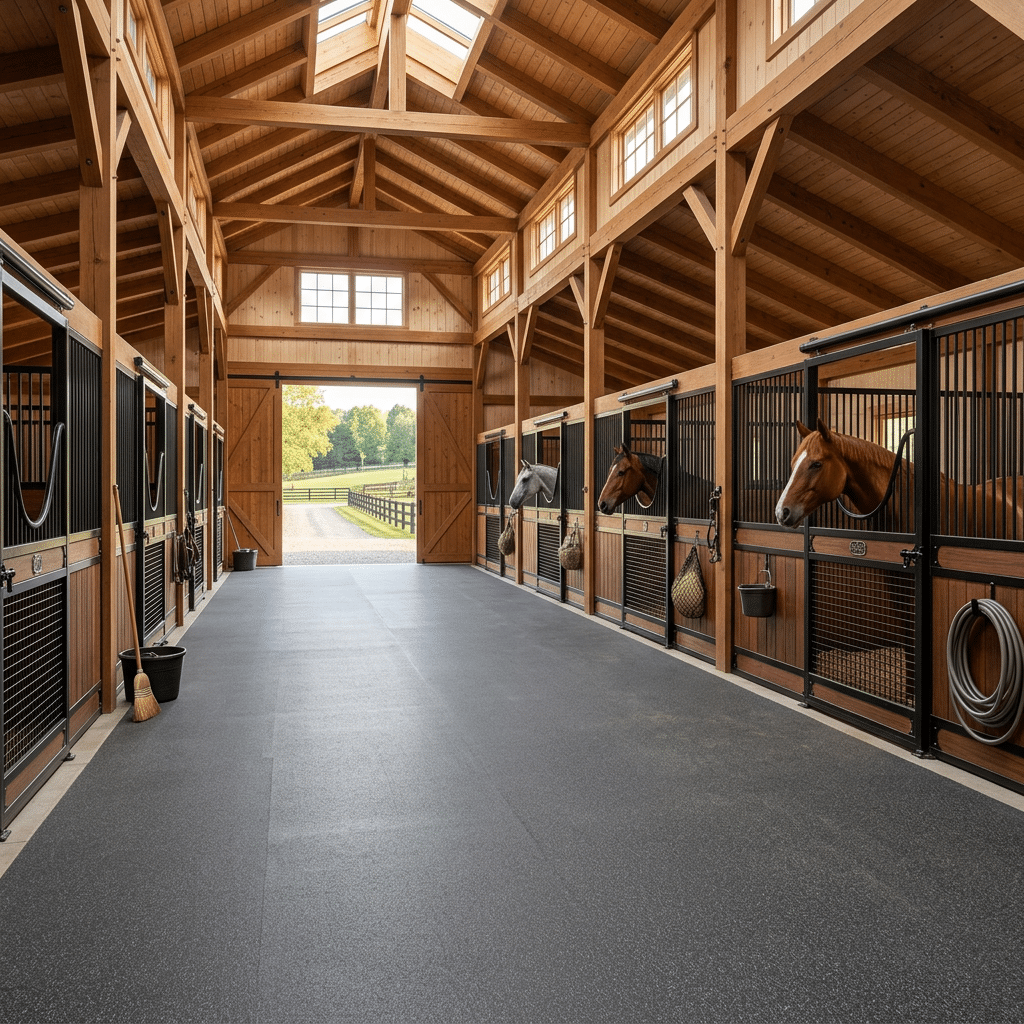
The “7-Foot Standard” (2.2m) stall height paired with a minimum 10-foot ceiling creates a critical 3-foot buffer for rearing safety and essential Stack Effect ventilation.
The Safety Mechanics of Overhead Clearance
Most B2B buyers focus heavily on the strength of the steel rails but overlook the vertical interaction between the stall front and the facility structure. The standard industry height for a horse stall panel is 2.2 meters (approximately 7.2 feet). This specific height is not arbitrary; it prevents the majority of horses from getting a leg over the wall while remaining low enough to fit within standard clear-span structures.
The danger arises when facility designers lower the overall ceiling height to save on construction costs. A 17-hand Warmblood rearing inside a stall can easily reach a vertical height exceeding 8 or 9 feet. If the barn ceiling sits at 8 feet or features exposed low-hanging trusses, a simple spook becomes a veterinary emergency involving severe poll trauma or spinal compression.
- Trauma Prevention: A 3-foot clearance (buffer zone) above the 2.2m panel absorbs the energy of a rear without physical impact.
- Psychological Impact: Low ceilings create a “cave effect” that increases claustrophobia and stall vices like weaving.
- Lighting Hazards: Sufficient gap protects overhead electrical fixtures from being struck by an agitated horse.
Leveraging the Gap for Stack Effect Ventilation
We engineer our Professional Series et Economy Series specifically to utilize the vertical gap between the panel top and the roof. This is the engine room for “Stack Effect Ventilation.” In a stable environment, heat, ammonia, and dust are lighter than cool air and naturally rise. If you install floor-to-ceiling solid partitions, you trap these contaminants at the horse’s respiratory level.
By capping the stall front at 2.2 meters and leaving the space above open, we create a thermal chimney. The stale, ammonia-rich air rises out of the stall and evacuates through ridge vents or cupolas, while fresh, cooler air is drawn in from the aisle. This passive air exchange is impossible in fully enclosed, floor-to-ceiling designs often found in retrofitted warehouses.
Our open top grill design further accelerates this process. The vertical bars allow air to pass through the front of the stall, preventing stagnant pockets where ammonia concentrates. For facilities in high-humidity regions like Australia or the Southern US, this vertical airflow dynamic is the difference between a healthy barn and a respiratory hazard.
Premium Horse Stables Engineered For Durability
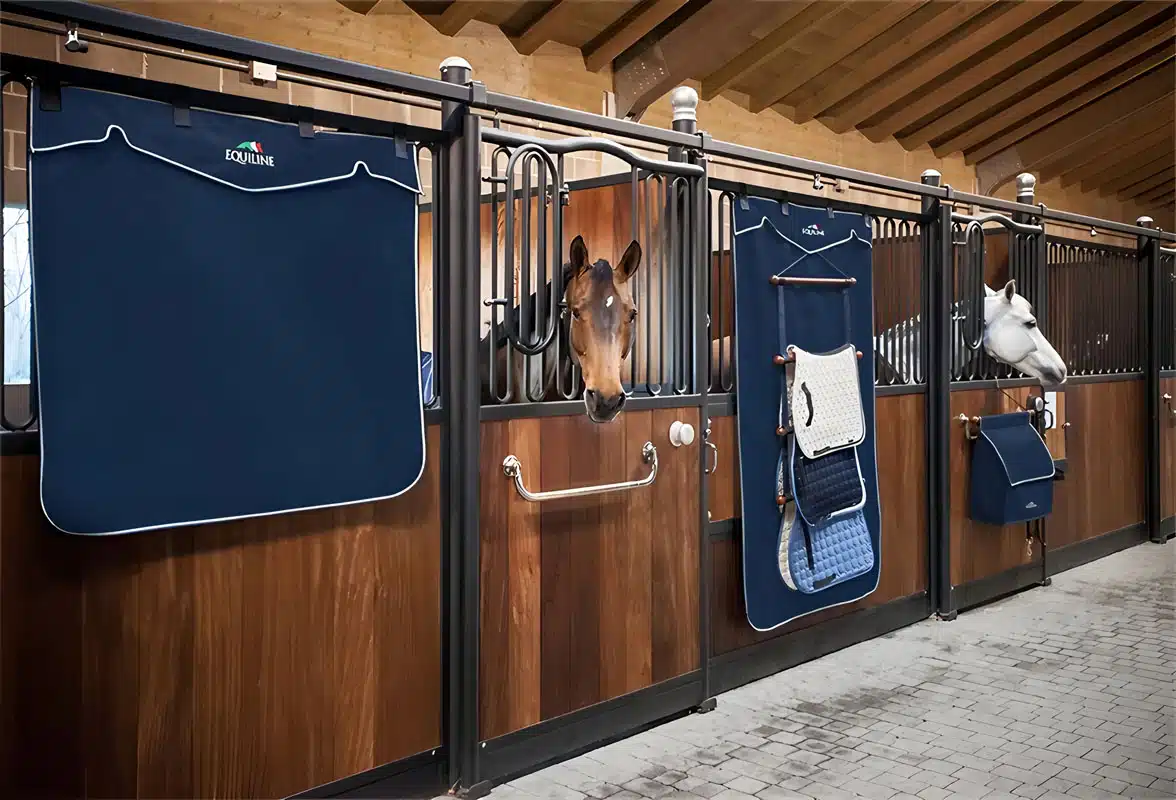
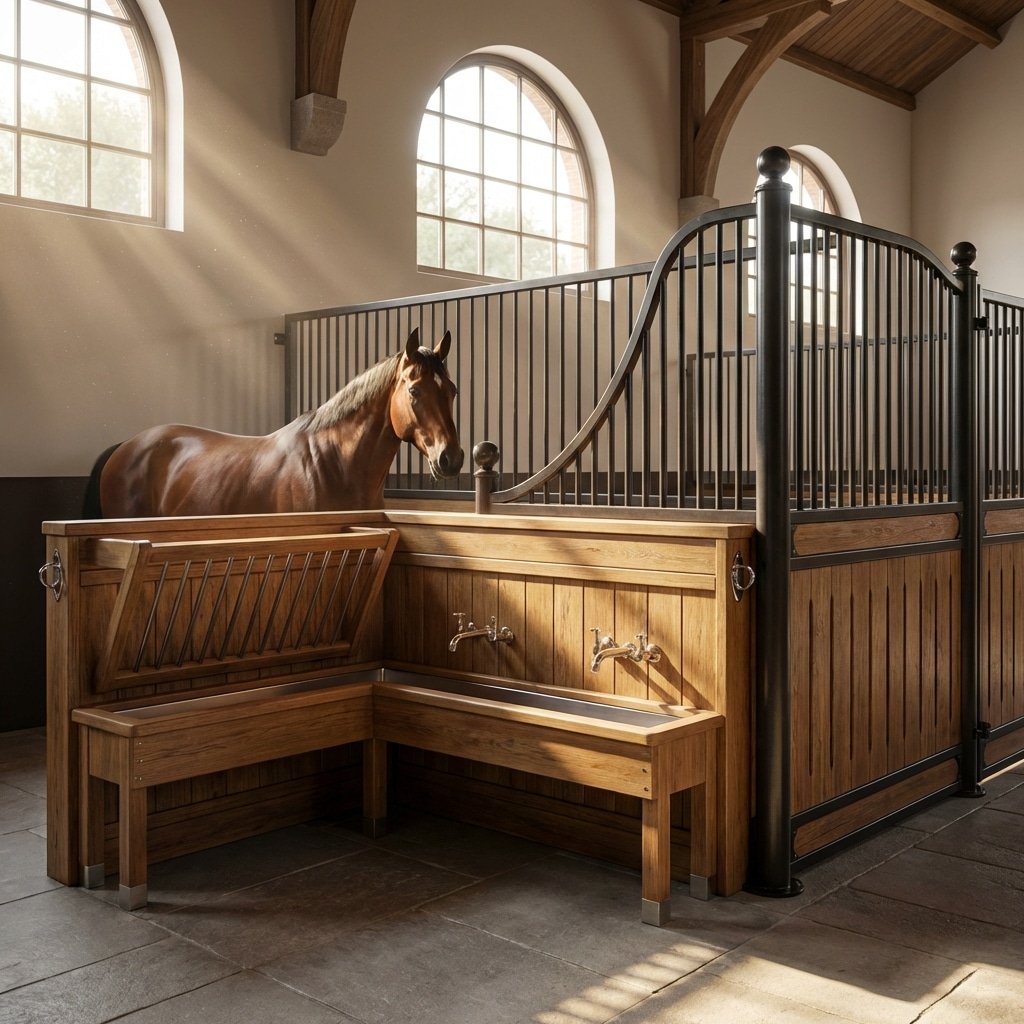
The Danger Zone: A 2-Foot Gap Between Panel and Roof
Executive Summary: A 2-foot (approx. 60cm) vertical gap is a critical entrapment zone. It is small enough to trap a rearing horse’s forelegs but too high for them to clear safely.
The Geometry of Entrapment: Head and Hoof Hazards
In stable design, specific dimensions kill. The most dangerous configuration we see in commercial projects is a standard 2.2-meter (7.2 ft) stall front installed in a barn with a 3-meter (10 ft) ceiling. This creates a vertical gap of roughly 80cm to 1 meter above the top rail. This is the “hang-up” zone.
When a horse rears inside a stall—whether from panic, aggression, or play—they can easily elevate their forelegs above the 2.2-meter mark. If that space is open, their legs hook over the top rail. As gravity pulls them back down, the rail catches them under the chest or armpits. The horse cannot back up because their weight is resting on the rail, and they cannot go forward because the gap isn’t large enough to jump through.
Panic sets in immediately. The horse will twist and thrash, often locking their neck against the roof stru
cture or fracturing legs against the top rail. A floor-to-ceiling wall avoids this. A completely open barn avoids this. But this specific partial gap creates a mechanical trap.
Defensive Design: Blocking Gaps with Galvanized Grills
We solve this geometry problem by physically filling the void while maintaining the ventilation benefits of the gap. You do not need to build a solid wall to the roof; you just need to make the space impenetrable to a hoof.
- The Economy Series ‘Open Top Grill’: Our standard design includes an upper grill section that extends to block this gap. It allows stack-effect ventilation to pull ammonia up and out, but acts as a physical shield against rearing.
- Q345B High Strength Steel: If a horse strikes this upper barrier, standard steel might bend, creating a new entrapment hazard. We use Q345B (Low Alloy High Strength) steel for our frames to withstand direct impact without deformation.
- Galvanized Mesh & Bars: We utilize heavy-gauge vertical bars or welded mesh that are Hot-Dip Galvanized after fabrication. This prevents rust from weakening the welds over time, ensuring the barrier holds strong even ten years after installation.
Closing the Gap: Ordering Floor-to-Ceiling Custom Stalls
Floor-to-ceiling designs eliminate overhead escape routes using heavy-duty Q345B steel frames, ensuring structural rigidity and total containment for jumpers without sacrificing ventilation.
| Specification | Standard Panel (2.2m) | Floor-to-Ceiling Custom |
|---|---|---|
| Steel Grade | Q235B (ASTM A36) | Q345B (ASTM Grade 50) |
| Vertical Clearance | leaves 1m-2m Gap | Zero Gap (Flush to Truss) |
| Tube Thickness | 2.0mm | 2.5mm (Mandatory for Spans >3m) |
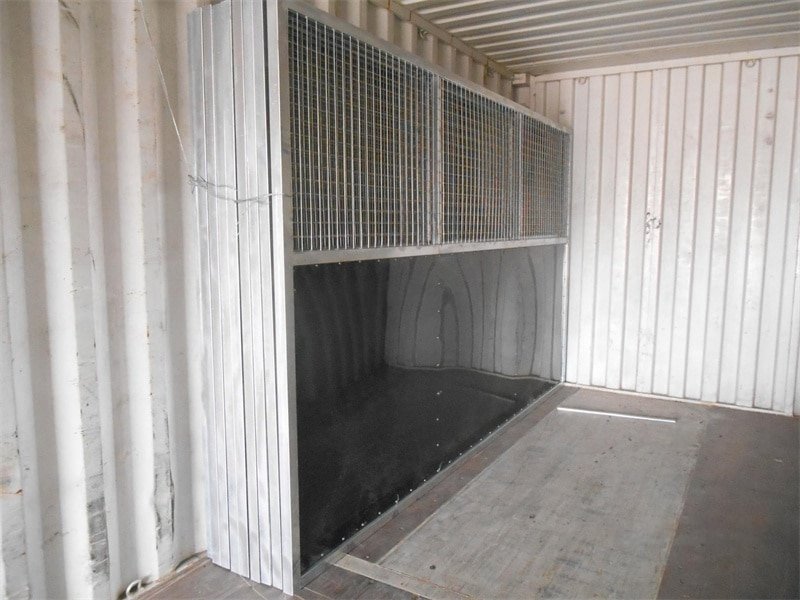
Engineering the Full-Height Barrier
Standard stable panels typically stand 2.2 meters (approx. 7.2 feet) high. In a barn with 3.5-meter or 4-meter ceilings, this leaves a significant “danger gap” above the wall. Panicked horses, particularly high-performance jumpers or warmbloods, view this open space as an escape route. When they attempt to rear or climb over, the risk of getting hung up on the top rail increases drastically.
We engineer full-height barriers to close this gap completely without turning the stall into a sealed box. The design extends the upper grill work or mesh directly to the ceiling line. This requires precise measurements of your facility’s architecture. If your barn has a sloped roof, we manufacture the top frame at a matching angle to ensure a flush fit against the rafters or trusses.
- Vertical Bar Extension: We extend 25mm solid bars or heavy-duty tubes to the roofline to block escape while maximizing airflow.
- Mesh Upper Sections: For facilities requiring higher visibility, we use heavy-gauge wire mesh that prevents hoof entrapment but maintains sightlines.
- Architectural Integration: Frames are custom-fabricated to accommodate roof pitch, light fixtures, and truss spacing.
Reinforcement with Q345B High-Strength Steel
Extending a stable front from 2.2 meters to 4 meters significantly changes the structural load. Standard mild steel often flexes under the weight of the extra material or buckles if a horse kicks the higher sections. To counter this, we do not use standard Q235B steel for floor-to-ceiling projects.
We strictly utilize Q345B Low Alloy High Strength Steel (equivalent to ASTM Grade 50). This material offers superior tensile strength and rigidity, ensuring the tall vertical spans remain stiff and kick-proof. We also increase the wall thickness of the tubing to a minimum of 2.5mm (approx. 12-gauge) for the main structural posts to prevent warping.
- Material Spec: Q345B High Strength Steel for enhanced rigidity in tall spans.
- Wall Thickness: 14-Gauge (2.0mm – 2.5mm) strictly enforced to prevent flexing.
- Rust Protection: Complete Hot-Dip Galvanization (ISO 1461) after fabrication ensures welds at the ceiling extension points do not rust.
Réflexions finales
Relying on standard 2.2m panels for athletic warmbloods creates a liability that cheap steel cannot mitigate. Upgrading to our Q345B High Strength Steel floor-to-ceiling designs ensures your facility withstands rearing force without buckling. Real asset protection requires engineering that physically eliminates entrapment points before a horse ever strikes the wall.
Do not wait for an accident to audit your stable’s vertical safety. Submit your facility’s architectural sections to our engineering team today for a precise “Zero Gap” fitment analysis. We will configure a Professional Series proposal that balances maximum airflow with absolute containment.

 French
  English
  Spanish
  Arabic
  German
0 commentaires