
Cross-renting temporary stabling inventory for both equine and livestock events is the most effective strategy to maximize asset utilization rates. Relying on standard lightweight panels for this dual purpose often leads to structural failure and costly repair cycles that erode project margins.
This analysis benchmarks rental-ready systems built with Q235B structural steel et Hot-Dip Galvanization to ISO 1461 standards. We examine how modular flat-pack logistics allow you to fit 30-45 sets per container, reducing freight costs while ensuring your fleet withstands high-impact usage across multiple species.
The Rise of ESG (Environmental, Social, Governance) in Construction
In 2026, ESG mandates drive construction toward low-carbon materials. For equine facilities, this means prioritizing renewable bamboo and hot-dip galvanized steel to minimize w
aste and operational carbon footprints.
Environmental Imperatives and Market Drivers
ESG has shifted from a marketing buzzword to a financial gatekeeper in the construction sector. With the industry generating approximately 34% of global CO2 emissions, 2026 introduces stricter regulatory carbon budgets and embodied carbon limits. We are seeing a hard pivot where investors and clients demand circular economy practices. They prioritize materials that offer verifiable longevity and recyclability over temporary, disposable solutions.
Competitive differentiation now relies on adopting these low-carbon techniques. This is not just about compliance; it is about capitalization. The sustainable construction projects market is projected to surpass $1.37 trillion globally by 2034. Firms that fail to integrate durable, low-carbon materials into their supply chain risk being locked out of major commercial tenders.

Achieving Sustainability with Bamboo and Flat-Pack Logistics
At DB Stable, we translate these high-level ESG goals into specific engineering and logistical specifications. We reject “greenwashing” in favor of measurable reductions in waste and freight emissions through three core strategies:
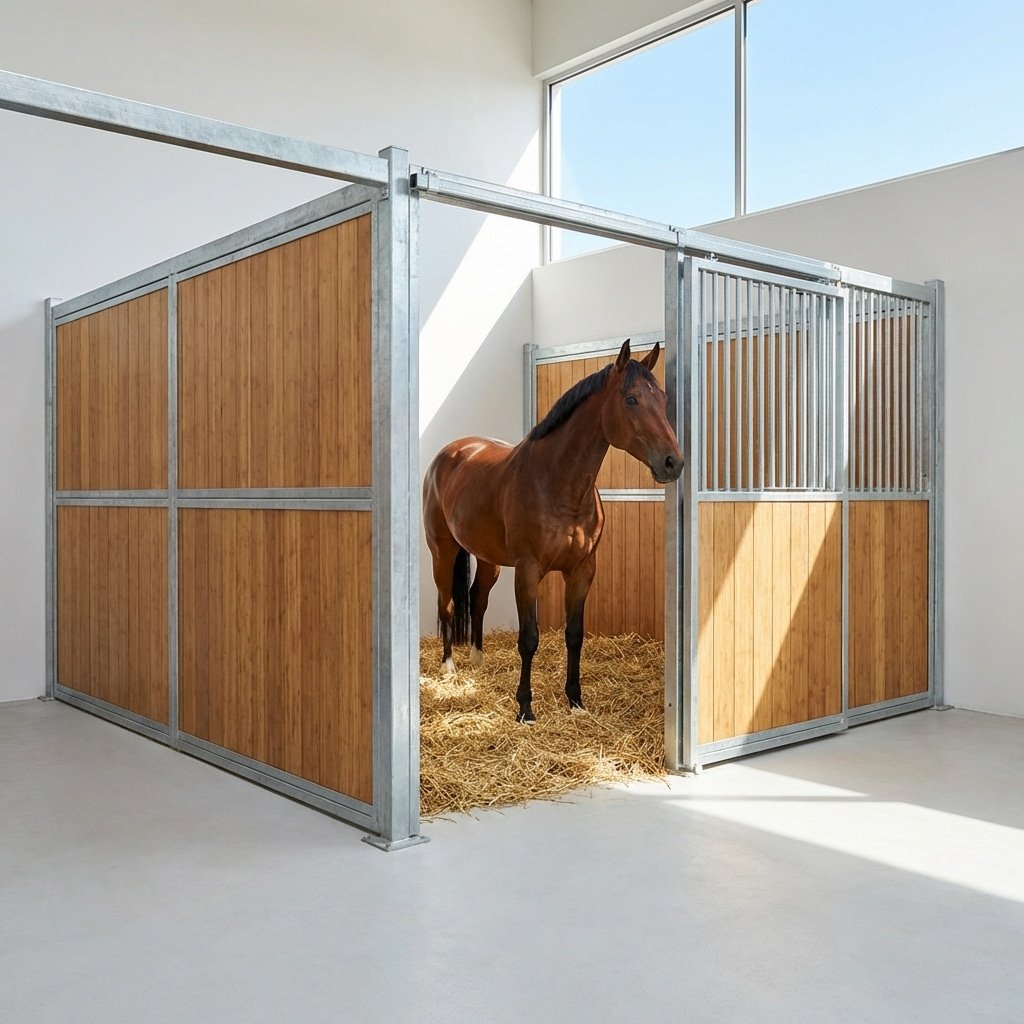
- Renewable Infill: We utilize High-Density Strand Woven Bamboo. It is a rapidly renewable resource (3-5 year maturity) that tests 3x harder than Oak (Janka > 3000 lbf), offering extended service life without the deforestation impact of traditional hardwoods.
- Reduced Waste via Longevity: We adhere strictly to ISO 1461 Hot-Dip Galvanization after fabrication. This ensures a zinc coating >85 microns thick, allowing structures to last decades without replacement. A product you do not have to replace is the most effective form of waste minimization.
- Carbon-Efficient Logistics: Shipping empty space is a carbon disaster. Our DB Flat-Pack System fits 30-45 sets in a 40HQ container, compared to the industry average of 12-15 welded sets. This loading density reduces freight carbon emissions by over 60% per unit.
Moving Away from Old-Growth Timber (Oak/Pine)
Executive Summary: The industry is pivoting from heritage timber to engineered bamboo and HDPE. These materials offer superior impact resistance (3x harder than oak) and solve the hygiene liabilities of porous wood without depleting endangered forests.
The Ecological and Practical Decline of Heritage Timber
For decades, oak and pine were the default choices for stable infills, but they are rapidly becoming a liability for commercial projects. The primary driver here is regulatory pressure. Strict environmental protections on old-growth forests have choked the supply of mature hardwood, driving prices up while quality goes down. We are no longer cutting 100-year-old oaks for stall fronts; the timber available today is younger, less dense, and more prone to warping.
Beyond the supply chain, traditional softwood fails the “barn hygiene” test. Pine is essentially a sponge. It absorbs urine, moisture, and cleaning fluids, creating a permanent breeding ground for bacteria and ammonia. No amount of varnish can permanently seal a softwood plank against the daily abuse of a stable environment. Once that seal breaks, the wood rots from the inside out.
- Safety Hazard: Standard lumber often lacks the density to withstand a direct kick from a warmblood, leading to jagged splintering that causes severe leg injuries.
- Maintenance Trap: Wood requires regular stripping, sanding, and resealing to maintain its integrity, creating a recurring labor cost that eats into facility margins.
- Environmental Impact: Sourcing these materials now often conflicts with carbon sequestration goals, as harvesting mature trees releases significant stored carbon.
High-Density Strand Woven Bamboo as the Modern Standard
The technical replacement for oak is not younger wood—it is engineered bamboo. Specifically, DB Stable utilizes High-Density Strand Woven Bamboo. This is not the hollow cane you see in gardens; it is crushed bamboo fiber compressed under extreme heat and pressure with eco-friendly resins. The result is a plank that is functionally waterproof and structurally superior to almost any hardwood.
- Impact Resistance: Our bamboo boasts a Janka Hardness rating greater than 3000 lbf, making it three times harder than traditional Red Oak. It does not splinter under impact.
- Hygiene Profile: The manufacturing process renders the material resistant to mold, rot, and pest infestation. It does not absorb fluids, eliminating the “stable smell” retention common in pine barns.
- Sustainability: Bamboo regenerates in 3-5 years compared to 50+ years for hardwood trees. It allows facilities to maintain the traditional warm aesthetic of wood while meeting modern ESG construction standards.
Questions fréquemment posées
How to build an ESG compliant equestrian center?
Building an ESG-compliant facility requires a three-pillar approach: Environmental, Social, and Governance. It is not just about solar panels; it is about operational transparency and welfare.
- Environmental (E): Focus on water independence through rainwater harvesting and renewable energy integration. Leading facilities like the Equitom Equine Hospital generate 80% of their power onsite.
- Social (S): Prioritize strict safety protocols for staff working with large animals and machinery. This includes mental health support and professional development to reduce turnover in high-stress veterinary roles.
- Governance (G): Implement clear Codes of Ethics regarding animal welfare and business conduct. Data transparency and compliance with regulations like GDPR are mandatory for modern investable projects.
Is bamboo a sustainable building material?
Yes, bamboo is arguably the most sustainable structural material available for stables. Unlike timber, which kills the tree upon harvest, bamboo is a grass that regenerates from its root system (rhizome) without soil disturbance. A bamboo grove reaches maturity in 3-5 years, compared to decades for hardwood forests. Functionally, strand-woven bamboo provides a density higher than steel by weight and sequesters carbon effectively, often resulting in a negative carbon footprint for the raw material phase.
Environmental impact of steel vs wood barns?
Wood has lower embodied carbon initially because trees absorb CO2 while growing. However, wood barns are maintenance-heavy and degrade faster, requiring replacement materials that increase their lifecycle carbon footprint. Steel framing (specifically Q235B) has higher initial manufacturing emissions but is 100% recyclable and lasts significantly longer. When protected by Hot-Dip Galvanization (to BS EN ISO 1461 standards), a steel barn can last 50+ years with zero structural degradation, making it the more sustainable choice for long-term commercial infrastructure.
Green certifications for horse stables?
Standard certifications like LEED are often ill-suited for agricultural buildings due to their focus on urban commercial metrics (like HVAC efficiency). However, strict regional codes are emerging. The CalGreen Code in California is a prime example, mandating specific water conservation and waste reduction standards for agricultural structures. For B2B projects, demonstrating compliance with these codes—even outside California—signals to investors that the facility is future-proofed against tightening environmental regulations.
Eco-friendly horse barn manufacturers?
The market is split between modular wood framers and steel fabricators. Companies like MD Barnmaster et Coffman Barns have led the charge in the US with modular designs that reduce construction waste. WYO Custom Builders focuses on steel structures for their recyclability and pest resistance. At DB Stable, we support this ecosystem as an OEM partner, supplying High-Density Bamboo infills and Hot-Dip Galvanized steel components to distributors who require materials that meet these modern sustainability benchmarks without sacrificing heavy-duty performance.
Premium Horse Stables Built For Lifelong Durability
Top Factories Embracing Sustainable Materials
Global leaders like Siemens and Lego are standardizing zero-waste and renewable energy. DB Stable aligns with this via High-Density Bamboo and recyclable HDPE for long-lifecycle equestrian infrastructure.
| Entity | Key Initiative | Outcome / Spec | ||
|---|---|---|---|---|
| Siemens (Chengdu) | Digital Waste Tracking | 48% reduction in production waste | ||
| Lego (Vietnam) | Rooftop Solar Integration | DB Stable (Infill) | High-Density Bamboo | Janka Hardness > 3000 lbf (3x Oak) |
| DB Stable (Frame) | Q235B/Q345B Steel | 100% Recyclable & Hot-Dip Galvanized |
Benchmarking Global Green Initiatives
Sustainability in manufacturing has moved beyond marketing fluff into measurable operational metrics. Major industrial players are reshaping their supply chains to minimize carbon footprints, setting a precedent for the equestrian manufacturing sector.
- Siemens Electronics Works (Chengdu): By implementing digital tracking, they achieved a 48% reduction in production waste.
- Lego Factory (Vietnam): Currently targeting 100% clean energy operation by 2026, primarily driven by massive rooftop solar installations.
- Tesla Gigafactory (Shanghai): Utilizes advanced “Giga casting” and automated manufacturing to drastically minimize scrap metal and emissions per unit.
The industry trend is clear: a shift toward circular waste management and the integration of renewable energy at the source factory level.
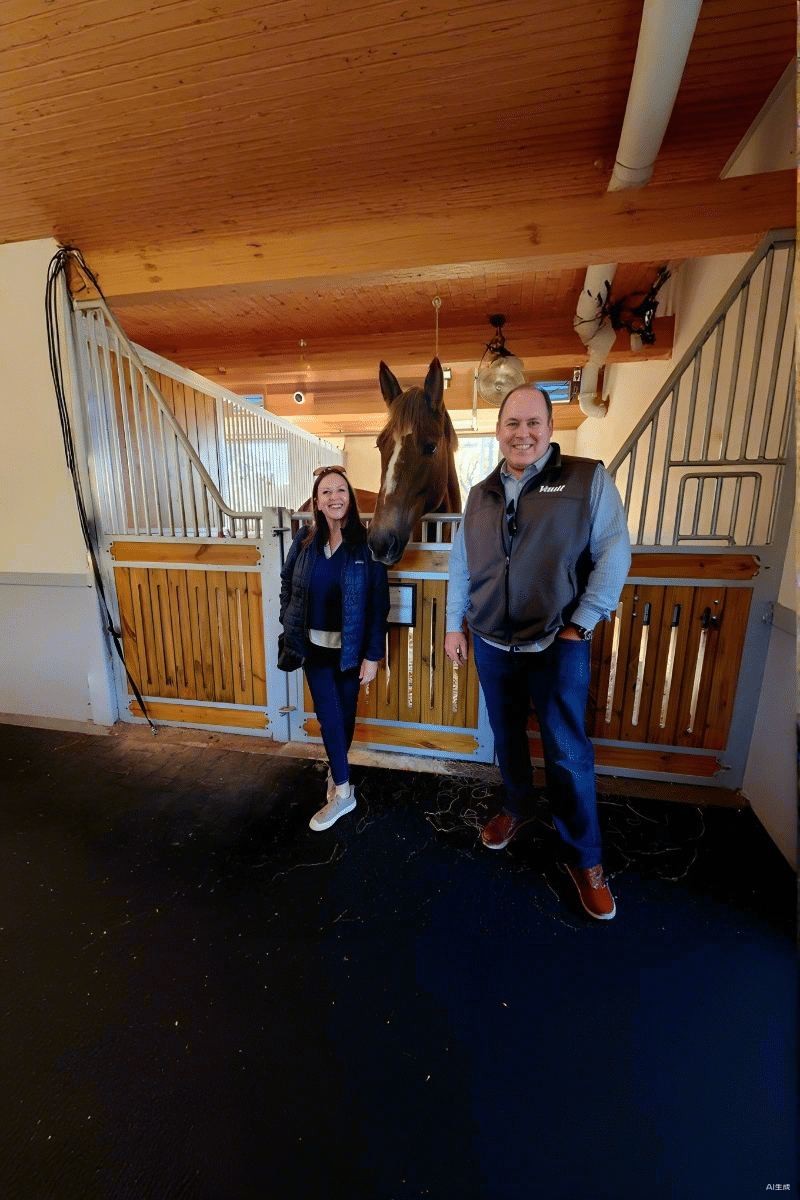
Sustainable Infill Options: Bamboo and HDPE
At DB Stable, we translate these global trends into specific product specifications. True sustainability in equestrian facilities comes from material longevity and recyclability, rather than just using organic materials that rot quickly.
- High Density Bamboo: This is a renewable alternative to slow-growing hardwood. We use strand-woven bamboo with a Janka Hardness > 3000 lbf, making it 3x harder than Oak and highly resistant to hoof impact.
- HDPE Infill: Our 28mm-32mm UV-stabilized boards are fully recyclable. Unlike wood, they require zero maintenance—no toxic varnishes, paints, or chemical treatments are ever needed during their lifecycle.
- Longevity as Sustainability: We apply Hot-Dip Galvanization (>70 microns) to our steel. This prevents premature rust and replacement. A stable that lasts 20 years creates a smaller environmental footprint than one replaced every 5 years due to corrosion.
Questions fréquemment posées
How to build an ESG compliant equestrian center?
Building an ESG-compliant facility requires a three-pillar approach. Environmental: Focus on renewable energy (e.g., Equitom Equine Hospital generates 80% of power via solar) and water independence through rainwater harvesting. Social: Implement strict safety protocols for staff working with large animals and ensure diversity in hiring. Governance: Establish ethical business codes and transparent reporting. Leading groups like Global Equestrian Group prioritize horse welfare as the foundation of their ESG strategy.
Is bamboo a sustainable building material?
Yes. Bamboo is a grass that regenerates in 3-5 years, compared to 30-50 years for hardwoods like Oak. It acts as a carbon sink, absorbing up to four times more CO2 than some tree species. For construction, strand-woven bamboo provides a Janka hardness rating (>3000 lbf) that exceeds steel in tensile strength per weight, making it a viable, long-lasting alternative to traditional timber.
Environmental impact of steel vs wood barns?
Wood generally has lower embodied carbon during the manufacturing phase. However, steel (specifically Q235B) is 100% recyclable and offers superior longevity. A wood barn often requires replacement or heavy chemical treatment to resist rot and cribbing. A hot-dip galvanized steel barn can last decades with minimal maintenance, offsetting its initial production footprint through durability and eventual recycling.
Green certifications for horse stables?
LEED is the global standard, but it is designed primarily for commercial urban buildings, making it difficult for agricultural projects to score high. Alternatively, the CalGreen Code (California) mandates specific efficiency standards for agricultural structures. Facility owners can also pursue sustainable agriculture recognitions by conducting energy audits to identify and fix inefficiencies in lighting and water use.
Eco-friendly horse barn manufacturers?
Several manufacturers prioritize sustainability. MD Barnmaster et Coffman Barns focus on modular, prefab designs that reduce construction waste. WYO Custom Builders utilize recyclable steel frames resistant to pests and rot. DC Structures specializes in engineered wood kits. DB Stable supports this ecosystem as an OEM partner, supplying galvanized steel components and sustainable infills to builders and distributors globally.
Strand-Woven Bamboo: A High-Yield Carbon Sink
Strand-woven bamboo acts as a massive carbon sink, locking atmospheric CO2 into a fiber density of 900 kg/m³. Its Janka rating of 3000+ lbf makes it three times harder than oak and impervious to stable moisture.
The Mechanics of Carbon Sequestration
Bamboo functions as a biological vacuum for carbon dioxide. During its rapid growth phase—reaching maturity in just 3–5 years—the culms absorb atmospheric CO2 at rates that far exceed traditional hardwood forests. This fast cycle allows for high-yield biomass production without the decades-long wait required for oak or pine.
The sustainability advantage is solidified during manufacturing. We use a strand-woven process that shreds the bamboo and compresses it under immense pressure. This effectively locks the absorbed carbon into a dense, solid block for the lifespan of the product. When production parameters are optimized, the material achieves a negative carbon footprint, sequestering more carbon than is emitted during its processing.
Harvesting methods further protect the ecosystem. Unlike timber logging that kills the tree, we selectively harvest bamboo stems while leaving the underground rhizome system intact. This approach prevents soil erosion and allows for continuous regeneration without replanting. It creates a sustainable loop where the material works for the environment before it ever reaches the stable.
High-Density Performance Specifications
For professional equestrian facilities, technical durability metrics determine the lifespan of the investment. We engineer our bamboo infill to exceed the physical requirements of high-traffic stables, ensuring safety and longevity.
- Density Profile: We utilize high-density strand-woven bamboo averaging 900 kg/m³, creating a solid mass that absorbs impact energy without fracturing.
- Impact Resistance: With a Janka Hardness rating exceeding 3000 lbf, this material is approximately 3x harder than Oak, making it effectively immune to cribbing and kicking.
- Structural Dimensions: Available in 28mm to 38mm thicknesses, these boards provide the heavy-duty barrier required for safety in stallion stalls and riding school environments.
- Environmental Resilience: The high compression manufacturing process creates a natural resistance to mold and rot, preventing degradation in damp, ammonia-rich stable conditions.
Q235B Steel: The 100% Recyclable Framework
Q235B structural steel ensures 100% recyclability without material degradation, offering a closed-loop disposal path that retains asset value unlike non-recyclable composite alternatives.
The Lifecycle of Recyclable Carbon Steel
Composite materials and treated timber often face a dead end at the scrapyard, becoming landfill liability due to chemical adhesives and preservatives. Q235B carbon steel operates differently. It allows for repeated re-smelting without any degradation of essential mechanical properties. You can melt it down and re-cast it, and the molecular integrity remains intact.
- 95% Recycle Rate: Industrial data confirms steel frameworks have one of the highest recovery rates, massively reducing landfill volume compared to fiberglass or wood.
- Closed-Loop Disposal: Unlike chemical-soaked timber, steel provides a clear path for a circular construction economy.
- Green Building Compliance: Lowering the carbon footprint of raw material sourcing is now a prerequisite for global ESG standards.
Structural Performance and ASTM A36 Equivalency
We specify Q235B as the direct equivalent to the American ASTM A36 standard to ensure universal compliance and predictable performance. The critical factor here is ductility. In an equestrian environment, high-impact events like horse kicks are inevitable. Q235B absorbs this energy, deforming rather than suffering the brittle fractures common in lower-grade or high-carbon alternatives.
To maximize this material advantage, we enforce strict manufacturing specifications that exceed typical market offerings:
- Profile Standard: Utilized in our 50mm x 50mm RHS (Square Hollow Section) frameworks.
- Minimum Wall Thickness: We mandate a strict 14-Gauge (2.0mm) minimum. While others cut costs with 1.5mm tubing, we refuse to compromise structural integrity.
- Galvanization Compatibility: The chemical composition is optimized for hot-dip galvanization, ensuring proper zinc adhesion to BS EN ISO 1461 standards.
Questions fréquemment posées
How does the environmental impact of steel stables compare to wood?
The comparison relies on the difference between initial manufacturing and long-term operational costs. Wood generally claims a lower carbon footprint during the initial extraction phase. But in a commercial equestrian environment, wood degrades. It rots, warps, and suffers from “cribbing” (horses chewing the timber), often requiring replacement every 10–15 years.
Steel, specifically Hot-Dip Galvanized steel (ISO 1461), changes the equation through longevity. A galvanized steel framework lasts 50+ years with minimal maintenance. It is 100% recyclable at the end of its life, unlike treated timber which often ends up in landfill due to chemical preservatives. For fleet operators and large facilities, steel offers a superior lifecycle assessment because you do not need to rebuild the infrastructure a decade later.
Is bamboo a reliable infill material for high-traffic stables?
Yes, but only if you specify High-Density Strand Woven Bamboo. Standard vertical or horizontal bamboo is too soft for horses. We strictly use strand-woven bamboo with a Janka Hardness rating exceeding 3000 lbf—making it approximately three times harder than Oak. It possesses tensile strength rivaling steel and compressive strength similar to concrete.
From an ESG perspective, bamboo is a powerhouse. It regenerates in 3–5 years compared to 50 years for hardwoods and absorbs up to four times more CO2. Unlike wood, high-density bamboo does not splinter into sharp shards when kicked, which significantly reduces injury risks in high-traffic commercial yards.
What are the key steps to making an equestrian center ESG-compliant?
Building an ESG-compliant facility requires a three-pronged approach focusing on efficiency, safety, and transparency:
- Environmental (E): Reduce operational resource reliance. Install solar panels for energy independence and rainwater harvesting systems for washing down yards. Switch to materials like recycled steel and bamboo infills to lower the embodied carbon of the structure.
- Social (S): Prioritize safety protocols. This includes “kick-proof” infrastructure (using Q345B steel where necessary) to protect both staff and animals, and ensuring proper ventilation to maintain respiratory health.
- Governance (G): Audit your supply chain. Ensure your manufacturers hold ISO 9001 certifications and adhere to fair labor practices. Transparency in sourcing materials (e.g., proving your steel is not from conflict zones) is now a baseline requirement for large-scale funding.
Are there specific green certifications for horse stables?
There is no single global “Green Stable” ISO standard yet. Most recognition currently comes from regional stewardship programs, such as the Maryland Farm Stewardship Certification in the US, which focus on nutrient management, soil erosion, and water quality rather than just the building shell. However, larger commercial equestrian centers can apply for general building certifications like LEED or BREEAM by leveraging sustainable material choices—specifically recycled steel content, FSC-certified bamboo, and water-efficient systems.
Réflexions finales
Shifting to High-Density Strand Woven Bamboo and ISO 1461 Hot-Dip Galvanized steel safeguards your rental margins against the crippling maintenance costs of rotting timber. This investment not only meets tightening ESG mandates for commercial tenders but ensures your fleet withstands the abuse of high-turnover events without structural degradation. You secure asset longevity and regulatory compliance in a single strategic upgrade.
Maximize your logistics ROI immediately with our DB Flat-Pack System, which fits 30-45 sets per 40HQ container compared to the industry average of 12. We recommend initiating a Professional Series trial order to validate our Janka hardness ratings and galvanization thickness firsthand. Contact our team to engineer a durable, multi-species fleet that drives long-term profitability.

 French
  English
  Spanish
  Arabic
  German
0 commentaires