


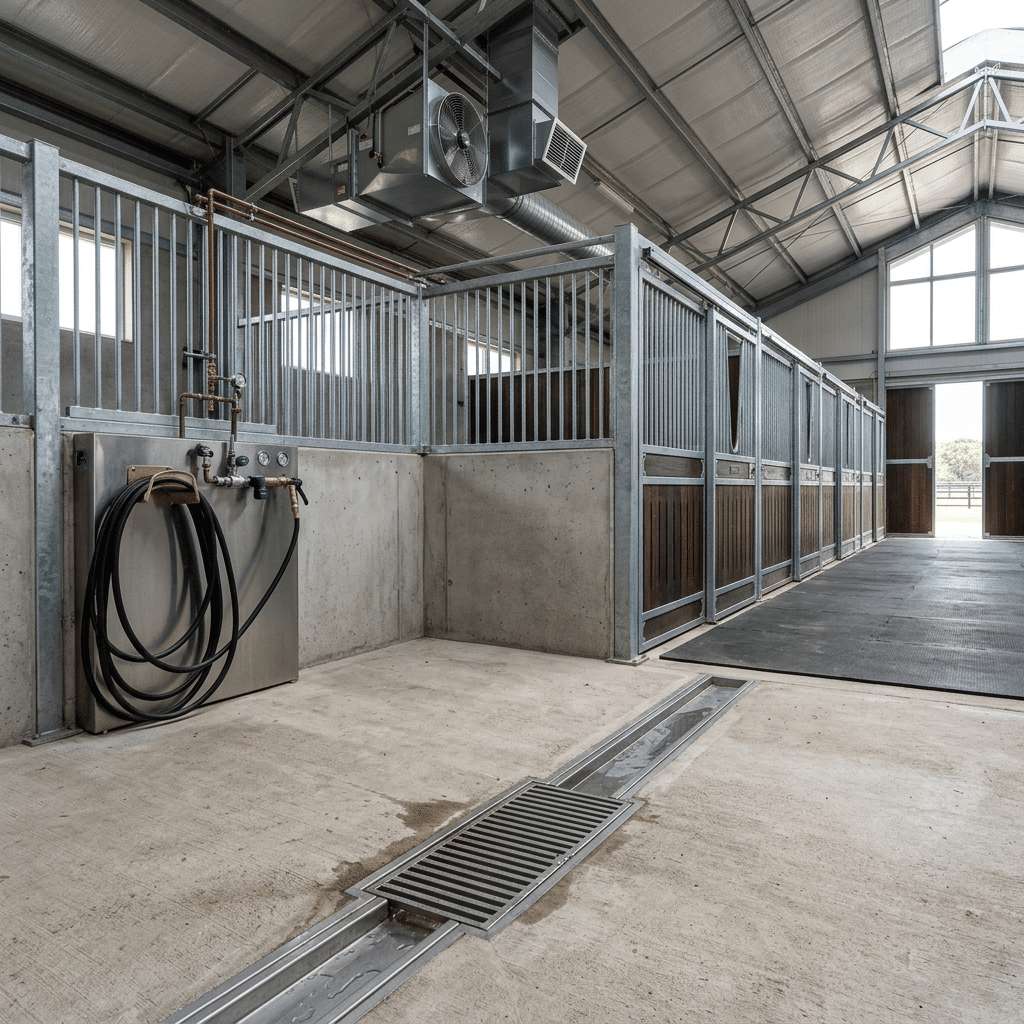
Sourcing verified ESG / Green Factories is the only effective hedge against rising carbon taxes and scope 3 compliance liabilities. Corporate developers who rely on opaque supply chains risk failing environmental audits, facing significant financial penalties that far outweigh the initial savings of non-certified steel fabrication.
This analysis benchmarks manufacturers against the ISO 1461 lifetime durability standard and verifiable carbon reduction metrics. We evaluate how utilizing 100% recyclable Q235B steel and flat-pack logistics helps you reduce freight emissions by 60 percent while securing a scalable, audit-ready supply chain.
Les principales usines qui adoptent des matériaux durables
Global manufacturing leaders are shifting toward circular economies and carbon-neutral operations. We translate these high-level industrial benchmarks into the equestrian sector by utilizing recyclable structural steel, implementing ISO 1461 galvanization for lifetime durability, and optimizing logistics to reduce freight emissions.
Benchmarks Set by Global Manufacturing Leaders
Major industrial players are redefining production efficiency through aggressive sustainability targets. Lego’s facilities in Vietnam are maximizing rooftop solar capacity to achieve carbon-neutral operations by 2026, setting a precedent for energy independence in manufacturing. Similarly, IKEA has transitioned over 400 suppliers to 100% renewable electricity, targeting a 50% reduction in greenhouse gas emissions by 2030.
Operational efficiency is also being revolutionized by digitalization. Siemens Electronics Works in Chengdu utilizes digital twins and AI tracking to reduce energy consumption per unit by 24%, while Tesla’s Gigafactory in Shanghai has established a blueprint for low-emission production through advanced waste recycling processes. These examples illustrate that sustainable manufacturing is not just an environmental choice but a strategic operational advantage.
Adapting ESG Standards for Equestrian Manufacturing
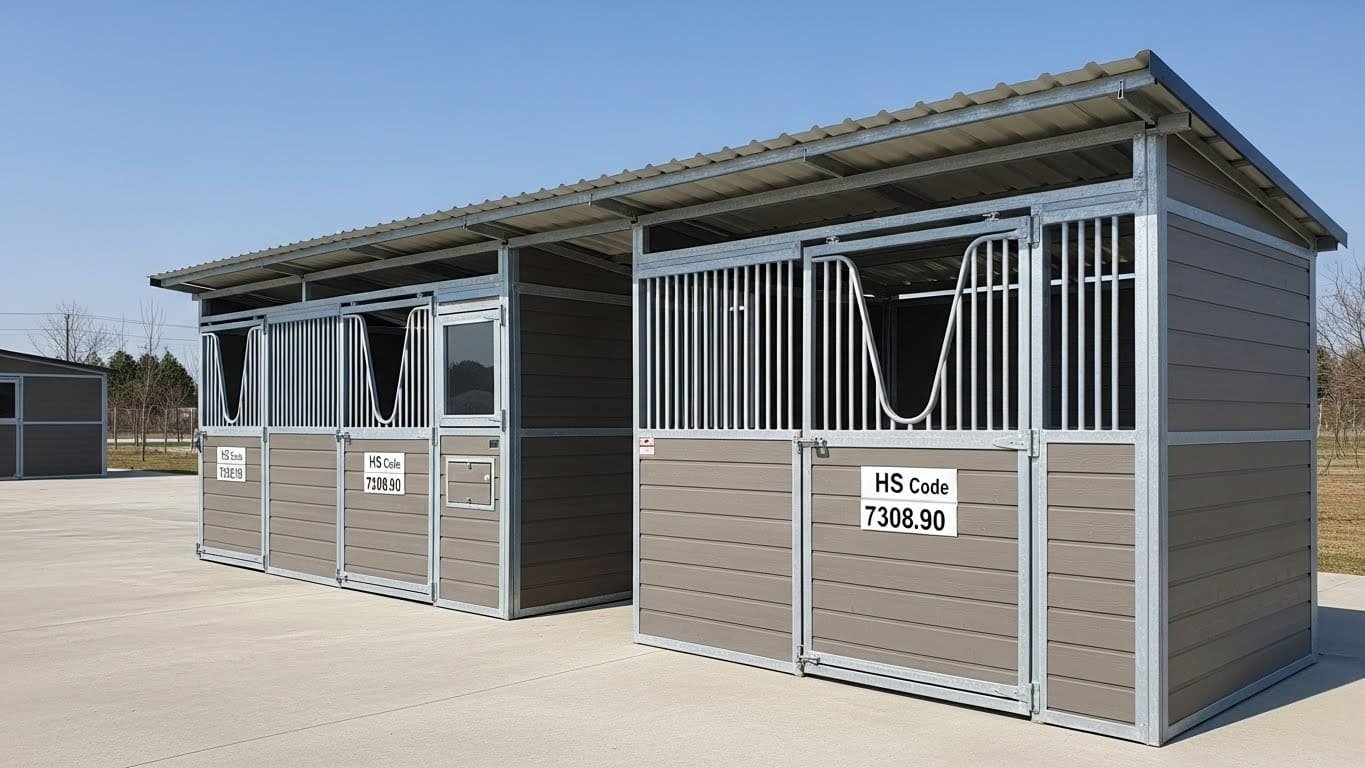
We align our production methodologies with these global standards to offer distributors and large projects a truly sustainable product. Our steel frameworks utilize Q235B and Q345B structural steel, chosen not only for their high strength-to-weight ratios but for their alignment with circular economy principles through 100% recyclability.
To ensure longevity that rivals the structure’s lifecycle, our Hot-Dip Galvanization process strictly adheres to BS EN ISO 1461. By achieving zinc coating averages exceeding 85 microns on structural parts, we eliminate the need for frequent replacements or toxic paint maintenance. This “Lifetime” standard directly reduces the long-term environmental impact of every stable we produce.
Logistics play a crucial role in our sustainability strategy. Our flat-pack system allows us to load 30 to 45 sets per 40HQ container, compared to the 12 to 15 sets typical of fully welded alternatives. This efficiency reduces freight carbon emissions by over 60% per unit while protecting our clients’ profit margins against fluctuating shipping costs. Under ISO 9001 quality management, we further minimize production scrap, ensuring raw materials like high-density bamboo and steel are utilized with maximum efficiency.
| Sustainability Metric | Global Industry Standard | DB Stable Implementation |
|---|---|---|
| Material Circularity | Recyclable inputs (e.g., Tesla/IKEA) | 100% Recyclable Q235B/Q345B Steel |
| Logistics Efficiency | Supply chain compression | Flat-Pack: 45 sets/container (60% less freight CO₂) |
| Durabilité | Extended product lifecycle | ISO 1461 Galvanization (>85μm Zinc Coating) |
| Production Waste | Digital tracking (Siemens) | ISO 9001 Quality Management System |
Premium Horse Stables Engineered For Longevity
L'essor des critères ESG (environnementaux, sociaux et de gouvernance) dans le secteur de la construction
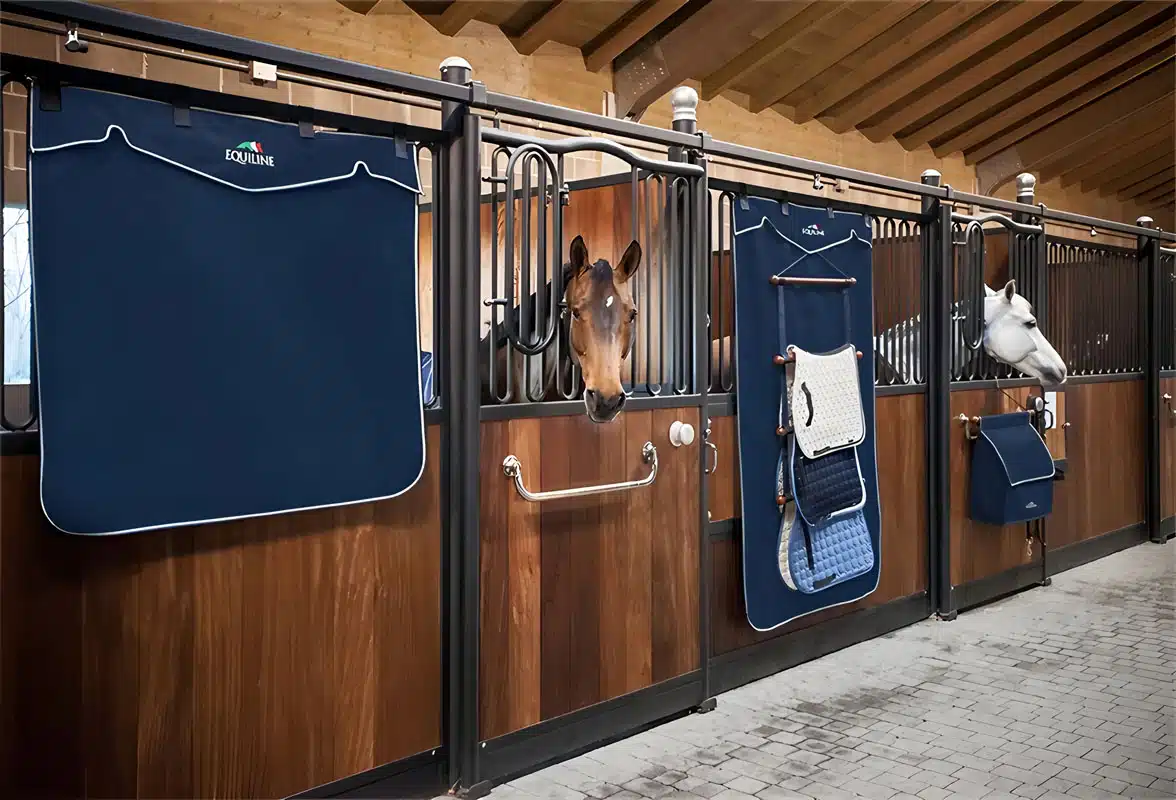
By 2026, environmental responsibility has evolved from a marketing preference to a strict regulatory requirement. Major equestrian projects now demand explicit carbon budgets and lifecycle assessments before breaking ground, prioritizing materials that minimize replacement waste and maximize structural longevity.
Environmental Mandates: Carbon Budgets and Material Lifecycles
Investors are increasingly targeting embodied carbon, pushing builders to replace disposable materials with high-longevity options. We support this shift by utilizing hot-dip galvanized st
eel (ISO 1461 standard), which extends product lifecycles beyond 20 years. This durability significantly reduces the frequency of replacement cycles and the associated waste found in cheaper, painted alternatives.
Sustainable sourcing is also reshaping procurement strategies to align with global net-zero targets. Our manufacturing relies on Q235B and Q345B structural steel, which are fully recyclable, alongside renewable high-density bamboo infills. This approach favors rapid regeneration over the depletion of old-growth timber, ensuring that your facility meets strict environmental impact standards without sacrificing structural integrity.
Governance Standards: ISO Compliance and Supply Chain Accountability
Governance in construction now hinges on verifiable transparency. Certifications like ISO 9001 (Quality Management) and ISO 1461 (Galvanization) serve as non-negotiable gatekeepers for entering regulated markets in Europe and Australia. Project owners mitigate risk by partnering with manufacturers who control the entire production chain—from raw steel processing to final galvanization—ensuring no “black tube” shortcuts compromise structural safety.
We integrate these governance standards directly into our fabrication process. By adhering to a “Hot-Dip After Fabrication” protocol and maintaining strict kick-proof guarantees, we provide the audit trails necessary for stakeholders to verify safety specs and animal welfare compliance before physical installation occurs.
Abandonner les peuplements de vieux bois (chêne/pin)
The global equestrian market is shifting away from finite old-growth resources like oak and pine toward engineered, rapidly renewable alternatives. For developers and distributors, this transition secures supply chain stability and meets modern durability standards. We engineer our stable systems using High-Density Strand Woven Bamboo to provide a structural solution that outperforms traditional timber in hardness, weather resistance, and ecological compliance.
The ESG Imperative: Reducing Reliance on Slow-Growth Species
Old-growth oak and pine forests act as vital carbon sinks, and harvesting these mature trees creates an environmental deficit that takes decades to recover. In the current regulatory climate, modern ESG standards prioritize rapidly renewable materials that actively sequester carbon during short growth cycles rather than depleting ancient, finite resources. This shift is critical for large-scale equestrian projects aiming for green certifications or government grants.
For our B2B partners, sourcing materials from responsibly managed forests is becoming a mandatory requirement to enter premium markets in Europe and Australia. By utilizing engineered bamboo, we ensure that your product offering aligns with strict environmental protocols. This prevents the supply chain bottlenecks associated with the dwindling availability of quality hardwoods and positions your inventory as a forward-thinking, sustainable solution.
Performance Over Tradition: Why Bamboo Outperforms Oak
While oak is the traditional choice for European stables, High-Density Strand Woven Bamboo provides a superior alternative for our “Professional Series” stables. We utilize bamboo processed to achieve a Janka Hardness greater than 3000 lbf, making it approximately three times harder than red oak. This extreme density is essential for safety, as it creates a “Kick-Proof” barrier that resists splintering under impact, a common risk with standard softwood lumber.
Pine, often used as a cheaper alternative, is soft and prone to cribbing (chewing), leading to rapid degradation and safety hazards for the horse. Our strand-woven bamboo offers the density required to prevent cribbing damage without the ecological cost of harvesting slow-growing hardwoods. Additionally, the manufacturing process renders the material naturally resistant to mold and rot, ensuring that the stables maintain their structural integrity even in damp wash bays or humid climates.
Le bambou tressé : un puits de carbone à haut rendement
Strand-woven bamboo represents the intersection of high-performance engineering and environmental stewardship. By compressing bamboo fibers into a material significantly denser than traditional hardwood, we provide stable infrastructure that acts as a verifiable carbon storage medium, aligning physical durability with corporate ESG mandates.
Optimizing Carbon Density Through Compression
Strand-woven bamboo achieves an average density of 900 kg/m³ by compressing fibers under intense pressure, creating a material that significantly outperforms conventional wood in mass and structural integrity. This high-density composition is not just about strength; it enables effective carbon sequestration. One cubic meter of this material stores approximately 1.6 tons of carbon over its lifespan, effectively locking away atmospheric carbon within the stable framework.
We utilize this engineered lumber specifically in our Professional Series to help clients align with modern ESG goals. By choosing this infill, facility managers turn necessary physical infrastructure into a measurable asset for carbon accounting, rather than a liability.
Balancing Ecological Impact with Structural Durability
Bamboo regenerates at speeds up to 50 cm per day, which allows for selective harvesting. This method preserves the root systems and maintains soil stability, a distin
ct advantage over the clear-cutting techniques often required for traditional timber. Life-cycle assessments indicate that when production credits outweigh processing emissions, these optimized bamboo products can achieve a negative carbon footprint.
Ecological benefits must not compromise safety. With a Janka hardness exceeding 3000 lbf—making it three times harder than Oak—this material is central to our “Kick-Proof Guarantee.” It resists heavy hoof impact, mold, and rot, drastically reducing the need for replacements. This longevity lowers the total environmental cost of the facility by minimizing waste and repair cycles over the long term.
Acier Q235B : le cadre recyclable 100%
We engineer our stable frameworks using Q235B structural steel (ASTM A36 equivalent) because it delivers the necessary tensile yield strength to withstand equine impact while maintaining the ductility required for complex fabrication. This material choice serves as the foundation of our “Kick-Proof Guarantee,” ensuring that safety and structural longevity take precedence over cost-cutting measures found in lighter-gauge alternatives.
Material Composition and Structural Integrity
We utilize Q235B structural steel as the standard baseline for our horse stable systems. This material is chemically equivalent to ASTM A36, offering a yield strength that absorbs shock rather than snapping under pressure. Unlike budget manufacturers who compromise safety with thin 1.5mm tubing, we enforce a strict minimum wall thickness of 14-gauge (2.0mm to 2.5mm) across all posts and rails. This density is non-negotiable for maintaining the structural integrity required to contain powerful animals safely.
For projects located in regions with severe winters—such as Northern Europe or Canada—we recommend upgrading the framework to Q345B Low Alloy High Strength Steel (equivalent to ASTM Grade 50). This grade provides superior low-temperature impact toughness, preventing the brittle fractures that can occur when horses kick frozen metal. Strategically, this material choice allows us to classify our exports under HS Code 7308.90 (Structures of Iron/Steel), helping our distributors avoid the complex regulations and tariffs often applied to prefabricated buildings.
Circular Economy and Extended Lifecycle
Steel is a permanent material capable of being recycled indefinitely without losing its structural properties. This 100% recyclability eliminates end-of-life construction waste, a critical factor for projects targeting green building certifications or ESG compliance. To ensure the material survives long enough to justify its carbon footprint, we protect every component through hot-dip galvanization after fabrication.
Adhering to BS EN ISO 1461 standards, we submerge the fully welded frames into molten zinc, achieving an average coating thickness exceeding 85 microns on structural parts. This creates a metallurgical bond that prevents rust for 30 to 50 years, significantly outlasting painted or pre-galvanized alternatives (black tube welded). By extending the replacement cycle, we effectively lower the embodied carbon of the facility over time, protecting both your investment and the environment.
Réflexions finales
Aligning with ESG mandates requires infrastructure that survives decades, not just the next fiscal year. While painted alternatives offer lower upfront costs, only hot-dip galvanized Q235B steel (ISO 1461) secures your project against future carbon taxes and structural replacement cycles. Specifying 100% recyclable materials protects both your environmental rating and your long-term capital investment.
Verify our logistics efficiency and material density before committing to a full-scale development. We recommend requesting a flat-pack capability assessment or a strand-woven bamboo sample to test the “Kick-Proof” hardness firsthand. Contact our engineering team today to integrate these sustainable specifications directly into your next tender.
Questions fréquemment posées
Comment créer un centre équestre conforme aux critères ESG ?
To achieve ESG compliance, prioritize longevity and efficient logistics to reduce carbon footprint. We recommend specifying hot-dip galvanized steel frames that last decades without replacement. Utilizing our flat-pack system allows you to ship 30-45 sets per container, cutting freight emissions by over 60% compared to fully welded alternatives.
Le bambou est-il un matériau de construction durable ?
Yes, strand-woven bamboo serves as an excellent carbon sink, maturing in just 3-5 years compared to decades for oak. We process this renewable resource into high-density boards with a Janka hardness exceeding 3000 lbf. This creates a rot-resistant, kick-proof infill that reduces reliance on old-growth timber while ensuring animal safety.
Quel est l'impact environnemental des granges en acier par rapport à celles en bois ?
Steel offers a superior lifecycle profile because it remains 100% recyclable. Unlike wood, which often requires chemical treatments and rots over time, our Q235B and Q345B steel frames use hot-dip galvanization to resist corrosion for a lifetime. This eliminates the need for toxic maintenance paints and frequent structural replacements.
Des certifications écologiques pour les écuries ?
Focus on manufacturing standards like ISO 1461 for hot-dip galvanizing, which ensures durability and minimizes waste. We adhere to strict quality management systems (ISO 9001) to guarantee material consistency. Using certified long-life materials supports broader green building goals by reducing the facility’s total material consumption over time.
Des fabricants d'écuries respectueux de l'environnement ?
As a B2B source factory, DB Stable integrates sustainability directly into our engineering. We design modular, flat-pack systems that maximize shipping efficiency and reduce transport emissions. By offering zero-maintenance HDPE and renewable bamboo options, we help projects build durable facilities that align with modern environmental standards.

 French
  English
  Spanish
  Arabic
  German
0 commentaires