


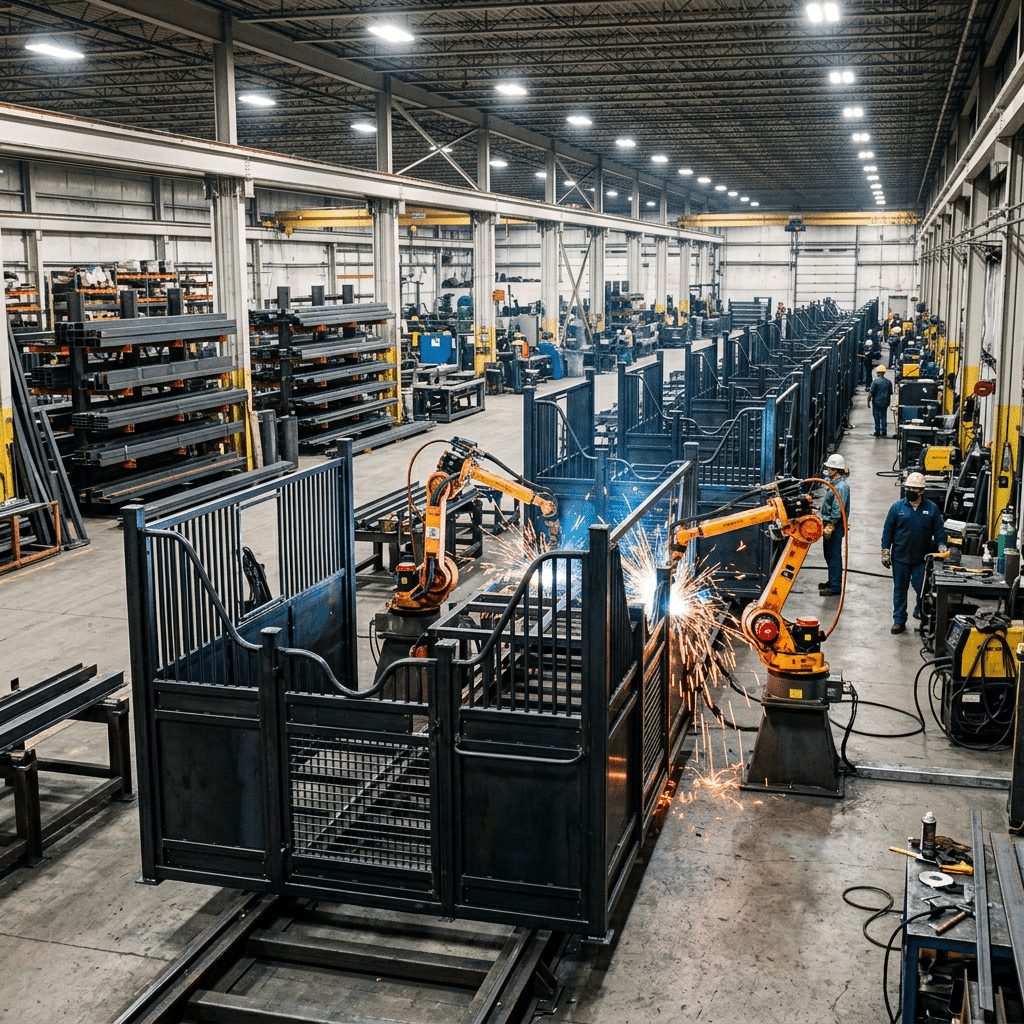
Failure to understand DIN/CE Steel Standards is a direct threat to any EU stable importer’s bottom line. Sourcing structural steelwork without mandatory EN 1090 certification leads to rejected shipments, project-killing delays, and significant financial penalties at the border.
This analysis clarifies the core requirements, from a certified Factory Production Control (FPC) system to the material science behind Q235B and Q345B steel grades. We provide the empirical data needed to verify supplier claims and ensure your products meet legal and structural safety benchmarks.
Why Visual Inspection Can’t Reveal Steel Quality
Visual checks miss internal flaws like micro-cracks and are prone to human error. Real quality is verified by certified material grades and a traceable system, not surface appearance.
The Limits of the Naked Eye: What Visual Checks Miss
Relying on someone to just “look at” a piece of steel for quality control is a recipe for failure. The human eye, even a trained one, is an inconsistent and limited tool for a job that demands precision.
- Inspector Fatigue and Error: An inspector might catch 75% of surface defects at the start of a shift. After a few hours, that rate drops below 50%. It’s an unreliable system that guarantees defects will be missed.
- Invisible Internal Flaws: The most dangerous defects are the ones you can’t see. Visual checks completely miss internal problems like lamination, subsurface voids, and micro-cracks that weaken the steel’s structure.
- Subjective Judgments: What one inspector flags as a defect, another might pass. This inconsistency between people, and even between days, leads to unpredictable and unreliable quality control.

Verifying Quality with Material Certification
We don’t guess about material integrity. Instead of subjective visual checks, we use a documented system of material certification to ensure every component meets exact engineering specifications.
- Mandated Steel Grades: We use specific, certified steel grades like Q235B and Q345B. This isn’t just a label; it’s a guarantee of mechanical properties like yield strength and impact toughness, which are critical for safety.
- Full Traceability: Our ISO 9001 quality management system ensures every piece of steel is traceable back to its source. We know exactly what material is in every stable component, confirming it’s the correct, certified grade from start to finish.
Understanding CE Marking for Structural Steelwork (EN 1090)
EN 1090 is a mandatory European standard requiring CE marking for structural steel. It ensures products meet EU safety regulations through a certified Factory Production Control system.
| EN 1090 Requirement | Our Compliance Framework |
|---|---|
| Mandatory CE Marking | Our products, classified under HS Code 7308.90, fall directly within the scope. |
| Certified Factory Production Control (FPC) | Our ISO 9001 Quality Management System provides the foundation for our FPC. |
| Third-Party Assessment | Our FPC is audited and certified by an independent Notified Body. |
Core Requirements of the EN 1090 Standard
EN 1090 is a harmonised European standard, which means compliance isn’t optional. It makes CE marking a legal requirement for any structural steel components sold into the European market. If your product falls under its scope, this standard supersedes any older national standards.
The standard requires every manufacturer to establish and maintain a Factory Production Control (FPC) system. Think of the FPC as the complete rulebook for production. It documents and controls everything from material sourcing and design calculations to welding procedures and final inspections, ensuring every product is made to the same specified quality.
A company cannot just claim to have an FPC. The entire system must be assessed, approved, and certified by an independent third-party known as a Notified Body. This external audit verifies that the FPC is not only documented but actively followed, providing credible proof of quality control.
Product Classification and Factory Control Alignment
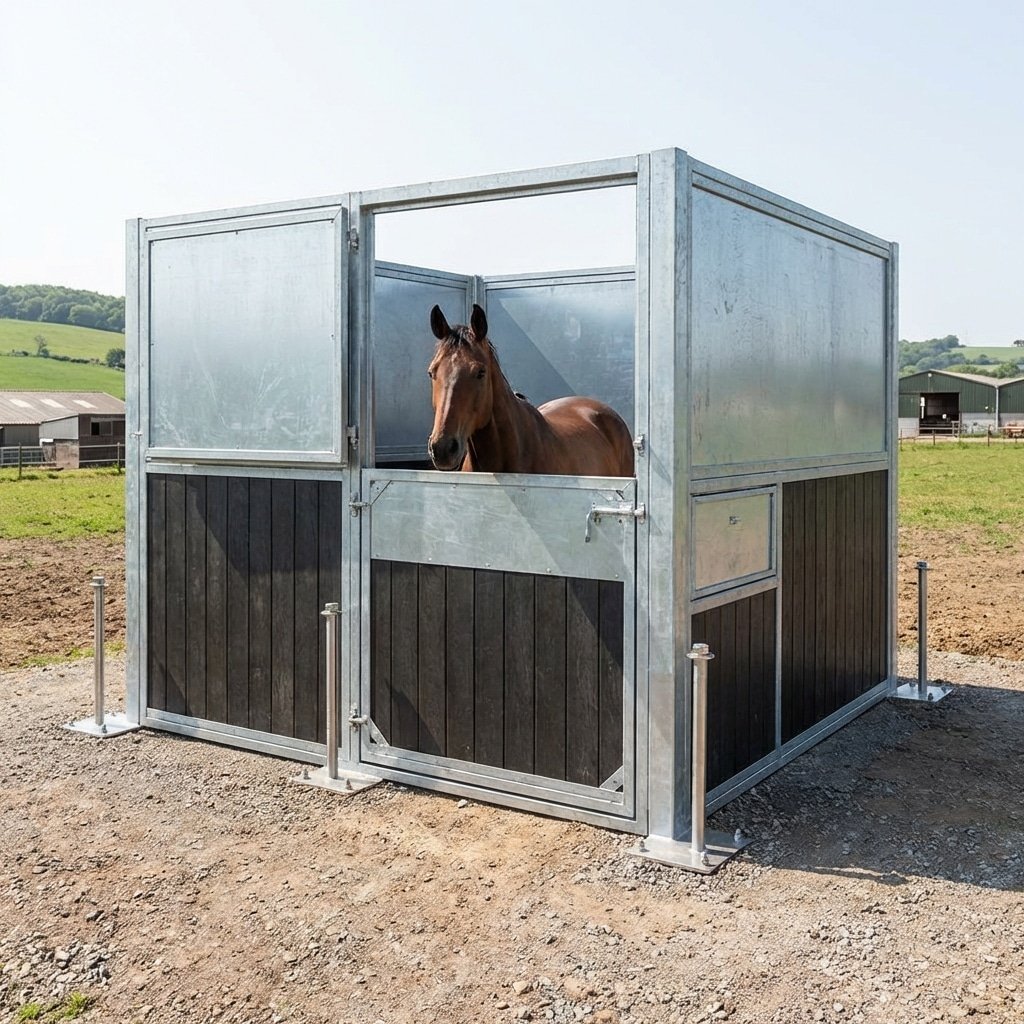
Our horse stable systems are correctly classified under HS Code 7308.90 as ‘Structures of Iron/Steel’. This classification places them squarely within the scope of EN 1090, making CE marking a necessity for our European distributor partners.
We built our Factory Production Control system on the framework of our existing ISO 9001 certification for Quality Management. This provides the structure for document control, corrective actions, and internal audits. For our B2B clients, this means our quality processes are already aligned with internationally recognized standards before even addressing the specifics of EN 1090.
The system ensures complete material and process traceability, a core principle of EN 1090. We can track the steel from the mill, through fabrication and welding, to the final galvanized product. This accountability is fundamental to proving that what we designed is exactly what we produced.
Custom-Engineered Stables for Any Global Climate.
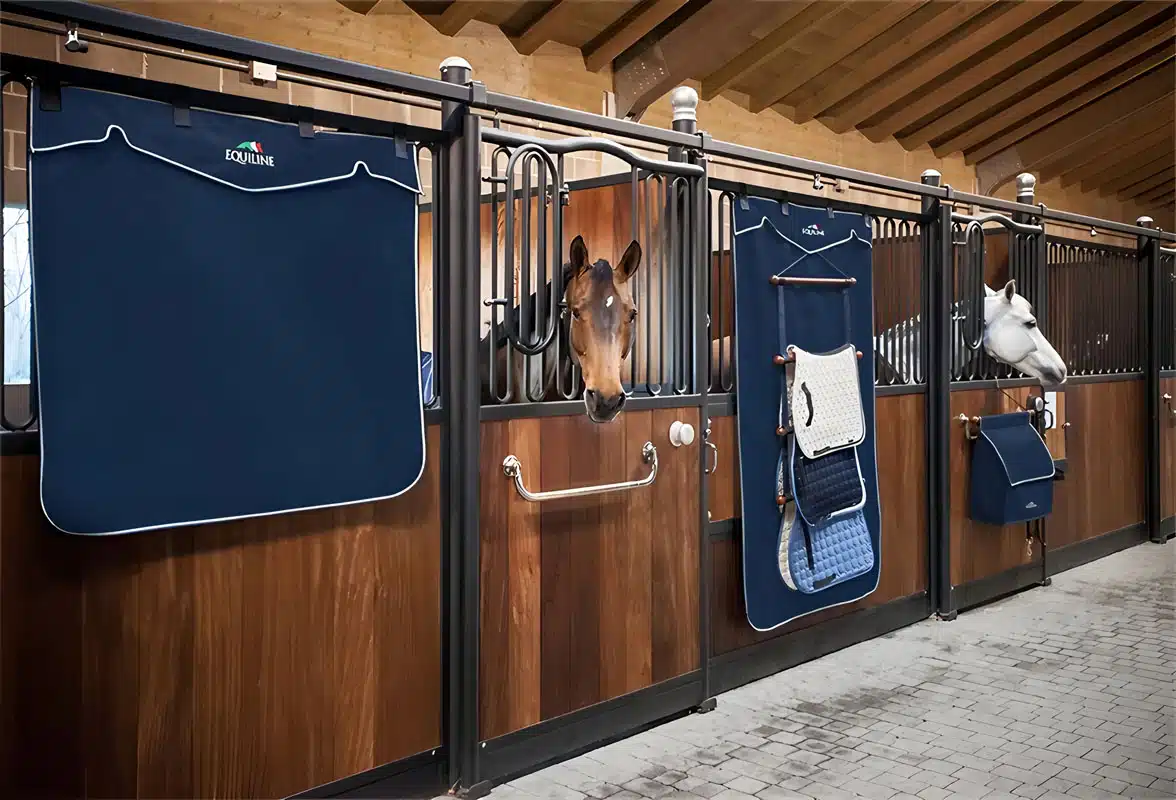
Wall Thickness (Gauge) vs. Yield Strength (Q235B/Q345B)
Yield strength, not thickness, defines steel’s ability to resist damage. Our Q345B steel (345 MPa) is nearly 50% stronger than standard Q235B (235 MPa), offering superior impact resistance.
Yield Strength: The True Measure of Steel’s Resilience
People often mistake a thicker steel wall for a stronger one. The real metric for toughness is yield strength—the maximum force steel can take before it permanently bends. Once steel passes its yield point, it’s damaged for good.
Standard Q235B steel, common in the industry, has a minimum yield strength of 235 Megapascals (MPa). The Q345B low-alloy steel we specify has a minimum yield strength of 345 MPa. That’s a massive difference. It means Q345B can handle almost 50% more impact force before deforming, which is critical when dealing with a powerful horse.
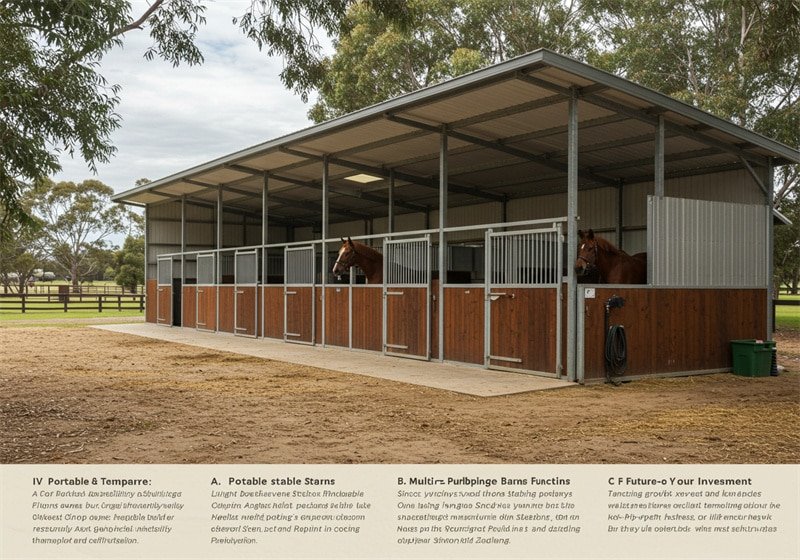
Why We Use Q345B for Cold Climates and Heavy-Duty Use
We specify Q345B steel for our Professional Series stables and any installations in cold climates for a clear reason: safety. Its higher yield strength provides the structural integrity needed for our “kick-proof guarantee” against powerful impacts.
But its most important feature is low-temperature toughness. Standard steel can become brittle in freezing weather, and a solid kick can cause it to fracture unexpectedly. Q345B maintains its ductility in the cold, preventing this kind of catastrophic failure during harsh winters.
The Danger of “Recycled” Black Market Steel
Black market recycled steel contains contaminants like lead that degrade its structure and prevent it from meeting safety standards, causing accelerated corrosion and significant health risks.
Structural Weakness from Contamination
When scrap steel bypasses regulated recycling channels, it often brings hazardous materials along with it. These aren’t just minor impurities; they are contaminants that fundamentally compromise the metal’s performanc
e and safety. A visual inspection can’t detect these internal flaws, but they show up later as catastrophic failures.
The primary issues with contaminated steel include:
- Degraded Integrity: Contaminants like lead, mercury, and asbestos get mixed into the molten steel, reducing its hardness and overall structural strength.
- Failed Compliance: The resulting material is inconsistent and weak, making it impossible to meet DIN/CE compliance standards required for any serious industrial application.
- Poor Corrosion Resistance: The chemical impurities accelerate rust and deterioration, dramatically cutting the product’s lifespan short.
Material Guarantees with Q235B Structural Steel
This is why material traceability isn’t just a line item on a certificate—it’s a non-negotiable requirement for safety. We exclusively use certified Q235B structural steel, which is the direct equivalent of ASTM A36. This standard guarantees a clean, consistent chemical composition, ensuring every component performs exactly as engineered, without hidden weaknesses.
For projects in cold climates where metal can become brittle, we specify Q345B steel. Its superior low-temperature toughness prevents brittle fractures from animal kicks or impacts in freezing conditions. Using certified, virgin steel is the only way to build structures that are both safe and durable.
DB’s Factory QC and ISO 9001 Traceability
Our Factory Production Control (FPC) system, structured by ISO 9001, creates a documented trail for every component, from raw steel sourcing to final ISO 1461 galvanization.
The Core of Quality: Factory Production Control (FPC)
Factory Production Control, or FPC, is the internal quality system that governs how we manufacture structural steel products. It isn’t just a suggestion; it’s a documented system that monitors every part of the production process. This includes reg
ular inspections, tests, and assessments of both our equipment and the raw materials we use.
The goal of the FPC is simple: ensure every single component meets its required technical specifications before it leaves our factory. This means a stable panel or post doesn’t get shipped unless it has passed all internal checks for strength, dimensions, and weld integrity.
ISO 9001: The Framework for Verifiable Traceability
Our FPC system doesn’t operate in a vacuum. The ISO 9001 certification provides the formal, internationally recognized structure for it. This framework turns our internal quality control into a verifiable, auditable process that provides real accountability for our B2B partners.
In practice, this system creates quality records that link a specific batch of raw materials, like Q235B structural steel, directly to the finished stable panels made from it. It gives us a documented trail for critical processes. We can prove which welding procedures were used on a specific order or confirm that a galvanization batch conforms to the ISO 1461 standard. This traceability guarantees consistency and compliance from start to finish.
Questions fréquemment posées
What is CE marking and why is it important for stables in Europe?
CE marking is a mandatory legal requirement for structural steel products sold in the European Union, governed by the EN 1090 standard. It certifies that the steel components meet strict health, safety, and performance criteria. For distributors, this ensures full compliance with construction regulations, guarantees material traceability, and prevents project delays from non-compliant materials.
Is Q235B steel strong enough for horse stables?
Yes, Q235B is our standard structural steel, equivalent to ASTM A36, and provides excellent strength for most stable applications. For regions with harsh winters, we recommend our Q345B steel option, which has superior low-temperature impact toughness to prevent brittle fractures from kicks in the cold.
What does 14-gauge wall thickness mean for durability?
14-gauge steel corresponds to a wall thickness of 2.0mm to 2.5mm. We strictly use this thickness as our minimum standard because it provides the necessary resistance to bending and denting from powerful horse kicks, ensuring the long-term structural integrity of the stable frame.
Why do cheaper stalls bend, and how is your design different?
Cheaper stalls often use thin, pre-galvanized tubes. Welding burns off the zinc at the joints, creating weak spots that rust and fail quickly. Our system uses a “Hot-Dip After Fabrication” process. We weld the entire panel first using black steel, then dip it in molten zinc, ensuring every weld and surface is protected under ISO 1461 standards.
How can I verify your factory certifications like ISO 9001?
Our ISO 9001 and ISO 1461 (Hot-Dip Galvanizing) certificates are available for inspection. You can verify their authenticity by checking the certificate number, scope, and expiry date directly with the accredited issuing body. This provides transparent proof of our quality management and production standards.
Réflexions finales
Basing your inventory on visual checks or low bids invites rust claims and structural failures. Our EN 1090 compliance and ISO 9001 traceability are designed to protect your dealership from that liability. This isn’t just about meeting a standard; it’s about supplying a product that builds client trust.
The next step is to verify our engineering firsthand. We recommend a small trial order to test our heavy-gauge steel and hot-dip galvanization quality. Contact our team to get the technical specifications for your first container load.

 French
  English
  Spanish
  Arabic
  German
0 commentaires