


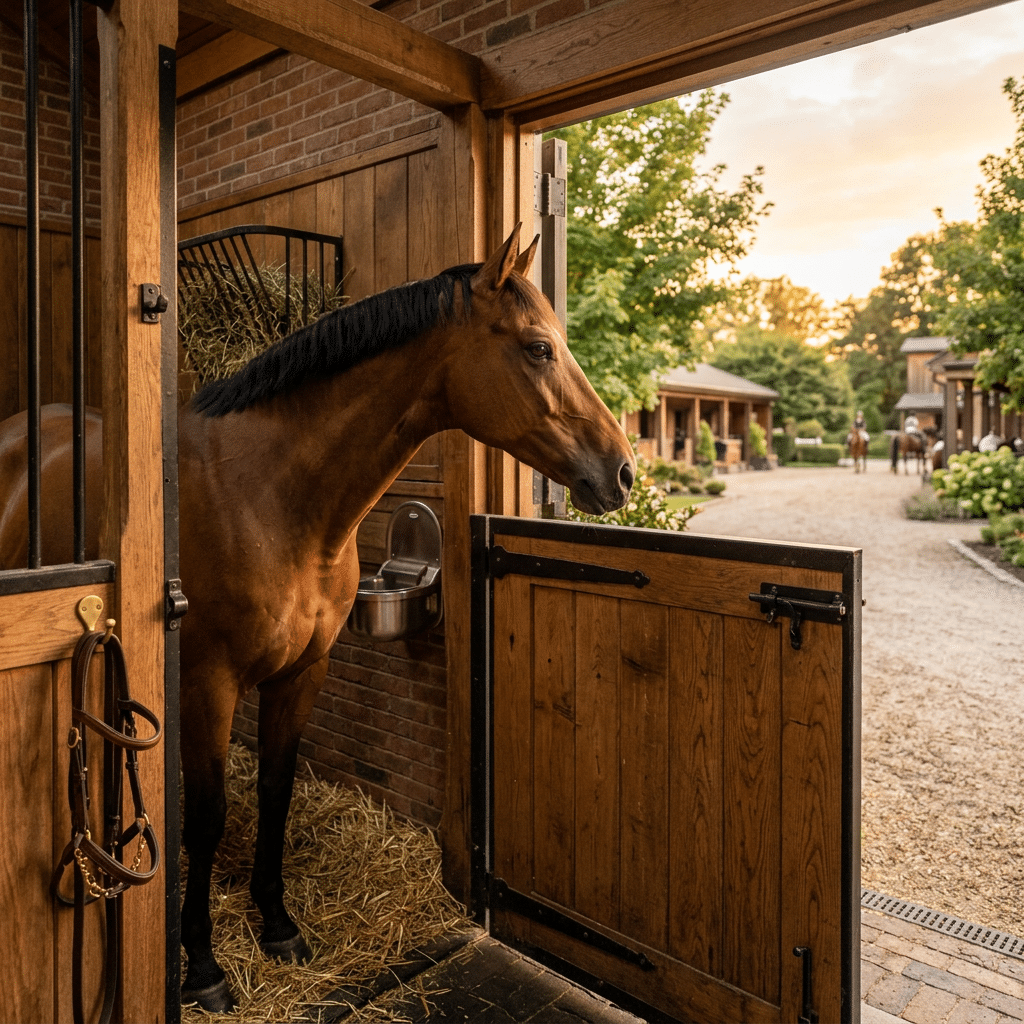
Specifying barn dutch doors for a stable project usually comes down to one decision: what goes in the top leaf. DB HorseStable builds the component in two styles — an open V-yoke in steel, or a glazed panel in tempered glass — and both do the same base job while behaving very differently in wind, rain, and heat. Since 2013 the company has exported stable systems and barn components to nine countries, from Australian summers at 40°C to Polish winters that push toward -10°C.
This guide compares the two on airflow, visibility, weather sealing, and maintenance, then maps the choice onto climate and facility type. Where a number would normally appear — glass thickness, yoke bar spacing, dimensions — demand it in writing from your supplier before signing a purchase order.
Key Takeaways
- The split design gives top-leaf airflow and visibility with bottom-leaf containment; V-yoke maximizes airflow, glass adds daylight and a weather seal.
- V-yoke suits hot, dry Australia and Spain (40°C, UV); tempered glass suits wet UK/NZ climates and freeze-prone Poland.
- Hot-dip galvanized steel frames carry a 20-year rust-resistance rating from the factory.
- Barn components ship with stable systems; main lines carry an MOQ of 10 stable systems or 50 fence panels, with 5–15% tiered volume discounts.
- Global lead time is 4–6 weeks; Sydney and Warsaw warehouses cut that to 1–2 weeks. Orders of 20+ units get a dedicated account manager.
What a Dutch Door Is and Why the Split Design Matters
A Dutch door is divided horizontally into two leaves that latch independently. Open the top leaf and the horse gets airflow and a view of the aisle while the bottom leaf stays shut, keeping the animal contained and the bedding protected from wind-driven rain and ground-level drafts. Close both leaves and the door behaves like a solid stall front. One opening does the work of a window and a door at once.
The split also does quiet safety work: a horse that can see activity through the open top half tends to settle faster than one staring at a solid panel, and top-leaf ventilation moves ammonia and heat out without chilling the animal at floor level. Those are tendencies, not guarantees — door safety depends on frame build, hardware, and fit, so treat any style as one part of a broader stall-safety plan. On the frame, DB HorseStable builds on hot-dip galvanized steel rated by the factory for 20 years of rust resistance; pre-galvanized or painted steel rusts at weld points and scratches first. If a competing quote will not state its coating process in writing, that silence is your answer.
V-Yoke Dutch Doors: Maximum Airflow, Classic Barn Look
The V-yoke style replaces the top leaf’s panel with an open steel yoke — a V-shaped frame of welded bars that keeps the door rigid while leaving the opening to the air. Nothing else in the component line moves as much air, and in hot-weather operations that is a working tool, not a comfort perk: heat stress management depends on continuous air exchange. The look also reads as the classic barn — open steel, visible horses — which carries weight at venues where presentation matters.
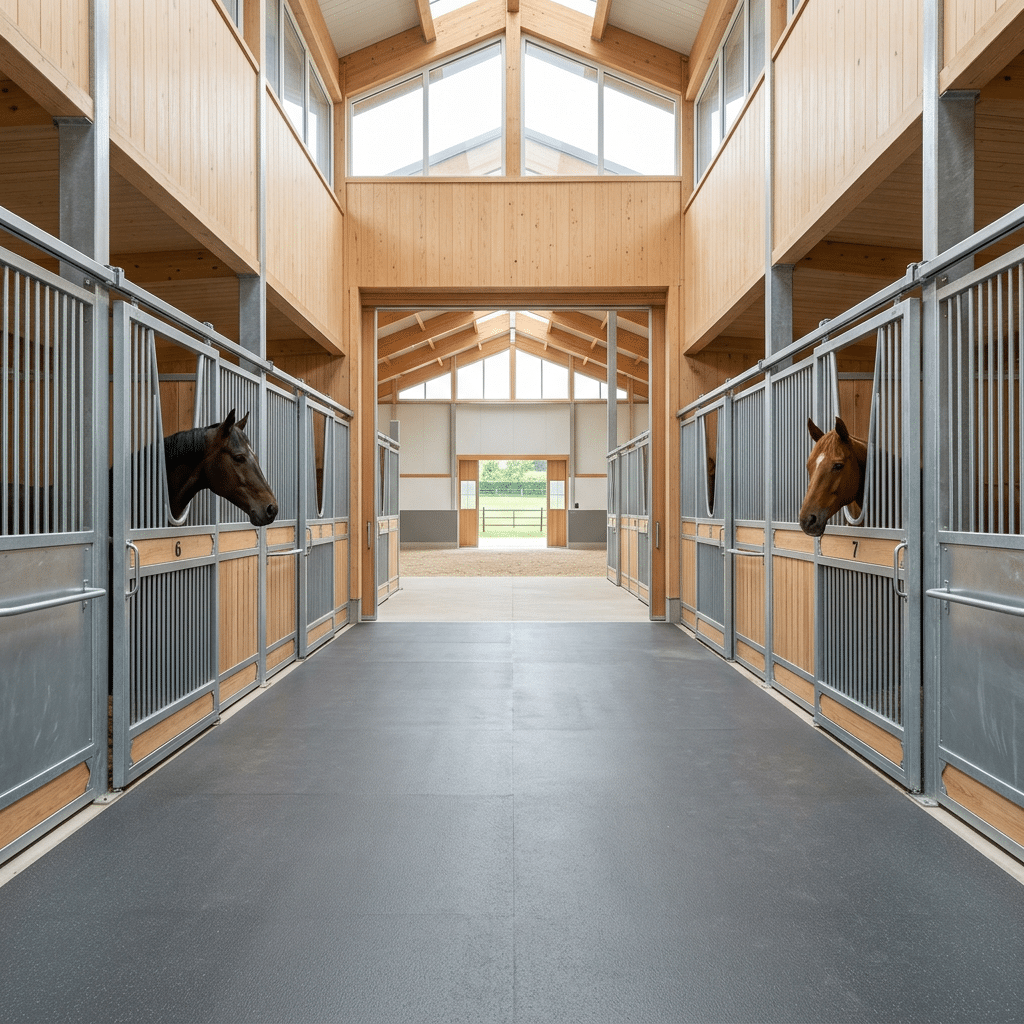
Two considerations deserve a clear-eyed look. First, an open yoke is a full weather opening: rain, dust, and snow reach the stall when the top leaf is open, so wet climates rely on closing it — sacrificing the ventilation benefit. Second, the yoke invites contact: many barns want a horse hanging its head into the aisle, but bar spacing and tube gauge determine whether a horse can trap a hoof or head in the frame, and those figures vary by manufacturer. Do not accept “horse-safe” as a spoken answer — request bar spacing, tube dimensions, and steel gauge on a written spec sheet. The same open-steel logic extends to the barn window and door range.
Tempered Glass Dutch Doors: Light Transmission and Weather Sealing
The tempered glass style glazes the top leaf. The horse stays visible through the panel, natural light enters the stall — a real welfare benefit in enclosed barns where interior stalls get little daylight — and the glazing forms a weather barrier against wind-driven rain and dust. In wet climates like the UK and New Zealand, that sealing is often the deciding factor. The trade-offs are airflow and upkeep: a glazed panel passes less air than an open yoke, so in 40°C heat the glass door depends on supplementary ventilation, and glass needs cleaning — a recurring task that steel bars do not add.
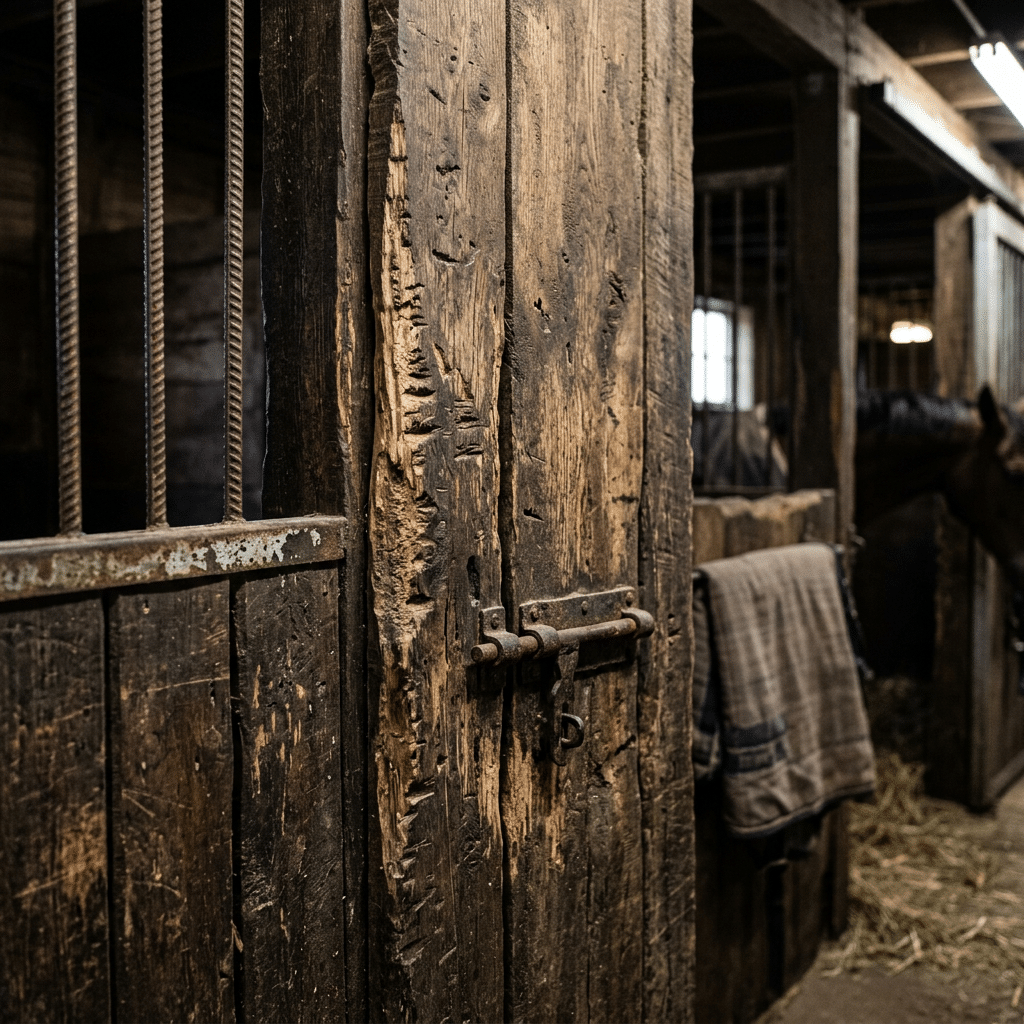
On safety: tempered glass is engineered to fracture into small blunt fragments rather than sharp shards, which is why it is the standard glazing for animal-facing applications. That is designed material behavior, not a promise that a kicked panel cannot injure a horse — breakage pattern, mounting method, and panel size all affect outcomes, and no responsible supplier certifies a door as injury-proof. Request glazing thickness, glass certification, and mounting details in writing, and inspect sample units before committing to a full run. Non-standard openings run through the customization process.
V-Yoke vs Tempered Glass: Side-by-Side Comparison
The table summarizes the qualitative differences. The reasoning around it matters more than the cells — no table tells you which failure mode your climate punishes harder.
| Aspect | V-Yoke Style | Tempered Glass Style |
|---|---|---|
| Débit d'air | Maximum — open yoke leaves the opening free | Restricted — glazing blocks air passage |
| Visibilité | Direct, open contact with the aisle | Clear sightline behind a barrier |
| Weather sealing | None when top leaf is open | Glazing seals against rain, wind, and dust |
| Light transmission | Indirect only | High — daylight enters the stall |
| Maintenance | Low — no glazing to clean | Higher — recurring glass cleaning and seal inspection |
| Best-fit climate | Hot regions — Australia, Spain | Wet and cold regions — UK, New Zealand, Poland |
Read the “best-fit climate” row as a rule of thumb, not a law. A boarding barn in southern Spain may still choose glazed doors for dust control, and an Australian training center may mix styles — yokes on the hot exterior wall, glass on the aisle side. That mix is a legitimate option; price both configurations.
Selecting Barn Dutch Doors by Climate and Facility Type
Climate should drive the style decision before budget does: replacing a wrong-style door across a full barn costs far more than the unit-price gap. The logic below maps to the regional engineering priorities DB HorseStable applies across nine export markets.
- Australia and Spain: sustained 40°C heat and strong UV. Airflow is the priority, which points to the V-yoke. Confirm coatings and hardware are rated UV-resistant in writing — the factory’s UV-resistant PVC fencing line (a fencing product, not a door component) carries a 15-year life rating.
- United Kingdom and New Zealand: wet, high-drainage environments where wind-driven rain is daily. Tempered glass usually wins, and UK-facing designs are built with BHS (The British Horse Society) compliance alignment in mind.
- Pologne : winters that reach -10°C. Freeze resistance matters for hardware, coatings, and seals, and the glazed style holds interior warmth better than an open yoke.
- Allemagne : sustainability and FEI-aligned design priorities shape the market; treat door style as a facility-by-facility call.
Facility type layers a second filter. Training centers and competition venues run high animal traffic and public visibility — glazed doors on the public aisle present well and control dust, while yokes on work walls maximize air exchange for horses in heavy work. Boarding barns answer to client expectations and climate. Doors specified as part of a larger build ship with the stable systems line, covering indoor, portable, and temporary configurations.
What to Specify in a Wholesale Purchase Order
Barn components at DB HorseStable are ordered alongside stable systems rather than as standalone catalog items. Main lines carry a minimum order quantity of 10 stable systems or 50 fence panels, and Dutch doors are typically specified within a stable-system project — which works in the buyer’s favor, because doors specified with the system match the stall fronts’ steel gauge, coating, and finish by default. Commercially: tiered volume discounts of 5–15%, global lead time of 4–6 weeks, expedited 1–2 week fulfillment from the Sydney and Warsaw warehouses, and a dedicated regional account manager on orders of 20+ units.
The factory operates under ISO 9001 quality management and CE certification, with design aligned to BHS guidance in the UK, ASPCA expectations in the US, and EU Directive 98/58/EC on animal welfare. “Aligned” means the design process takes those frameworks into account — verify how each applies to your market with your account manager and, where relevant, the local authority.
Finally, the numbers no catalog prints, which you must request in writing before signing: door dimensions and opening tolerances, yoke bar spacing and tube gauge, glass thickness and glazing certification, hardware and latch specifications, coating thickness, and unit pricing by volume. Put them on the spec sheet attached to the purchase order. A supplier who hesitates at that request is telling you something — better to hear it before the deposit clears than after the container lands.
Questions fréquemment posées
Can I order Dutch doors on their own, without a full stable system?
Barn components are ordered alongside stable systems. Main lines carry an MOQ of 10 stable systems or 50 fence panels, and doors are typically specified within the stable-system project so gauges and finishes match.
Which style is better for hot climates?
The V-yoke style. Its open steel yoke passes far more air than a glazed panel, which matters in Australia and Spain, where barns face sustained 40°C heat. Confirm UV-resistant ratings on coatings and hardware in writing.
Are tempered glass Dutch doors safe for horses?
Tempered glass is designed to fracture into small blunt fragments rather than sharp shards, and the glazing keeps horses behind a barrier. No door is injury-proof, so request glazing thickness, glass certification, and mounting details in writing before ordering.
What is the lead time for an international order?
Global lead time is 4–6 weeks. Projects served from the Sydney and Warsaw warehouses can be expedited to 1–2 weeks, subject to stock — confirm availability with your account manager.
Do volume discounts apply to door orders?
Tiered volume discounts of 5–15% apply to bulk orders, and orders of 20+ units include a dedicated regional account manager. Ask for the tier breakdown at your projected volume in writing.
Conclusion
The style decision is a climate and operations call before it is a price call: V-yoke for airflow in hot, dry markets like Australia and Spain; tempered glass for weather sealing, daylight, and barrier visibility in wet UK and New Zealand climates and freeze-prone Poland. Both ride on the same hot-dip galvanized steel frame rated for 20 years of rust resistance.
Before you commit a purchase order, collect the numbers in writing — dimensions, yoke bar spacing or glazing certification depending on style, hardware specs, and pricing at your volume. If you are weighing a mixed climate plan, request quotations for both configurations and let the tiered discounts and regional warehouse options finish the math.

 French
  English
  Spanish
  Arabic
  German
0 commentaires