



A formal Touch-Up Protocol is the final defense against installation scratches that can jeopardize a project handover. A single abrasion during assembly can compromise the hot-dip galvanized coating, exposing raw steel and creating a flashpoint for rust, client rejection, and future warranty claims.
This procedure details how to correctly apply a cold galvanizing compound to restore the zinc barrier. The goal is to re-establish cathodic protection that meets the original BS EN ISO 1461 standard, securing the integrity of the initial >85 micron coating and ensuring a perfect sign-off.
Decoding Shipping Jargon for Large-Scale Importers
Understanding terms like FOB and CIF defines your costs. For heavy goods, maximizing container space with flat-pack systems is the most critical factor for protecting profit margins.
FOB vs. CIF: Knowing Your Core Responsibilities
With FOB (Free On Board), the factory’s job is done once your goods are loaded onto the vessel at the port of origin. After that, you are in control. You hire the freight forwarder, manage the insurance, and handle customs at your end. This approach gives you full visibility of the costs and the shipping timeline.
CIF (Cost, Insurance, and Freight) means the factory handles everything to get the product to your country’s port. While it seems convenient, the lack of control can be a problem. The factory chooses the shipper and insurance, and importers often discover surprise “destination fees” that were not in the original quote. You trade convenience for cost uncertainty.
Container Load Quantity: The Most Important Number for Profitability
The biggest shipping cost for heavy steel products isn’t the price per mile; it’s the wasted space in the container. How your product is packed directly impacts your landed cost per unit. Bulky, inefficient packaging erodes your margin before the product even arrives.
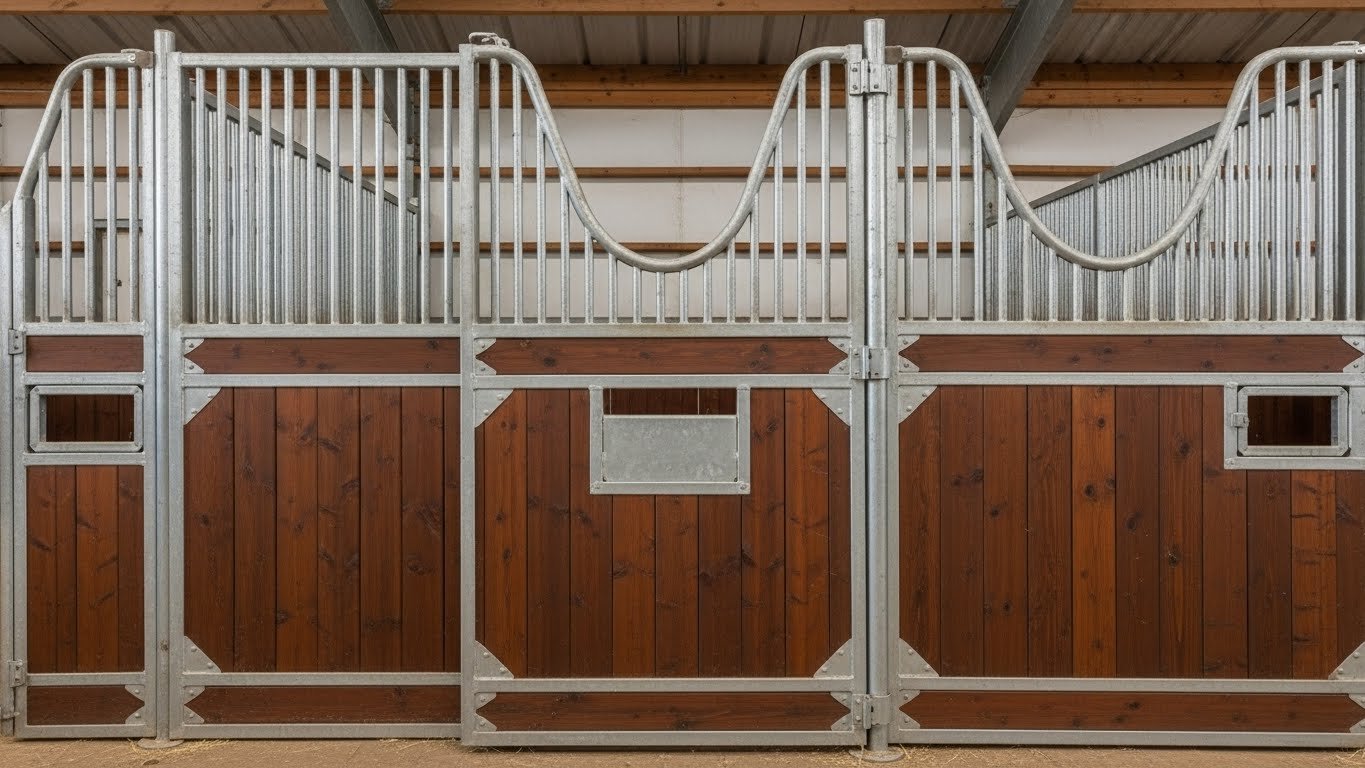
A traditional, fully-welded stable is a perfect example of this problem. You can only fit about 12-15 welded sets into a 40-foot container. We designed our system to fix this logistics issue for our distributors.
- Our steel pallet flat-pack system lets distributors load **30 to 45 stable sets** into a single 40HQ container.
- This is a **60%+ increase in loading capacity**. It directly cuts the per-unit shipping cost and protects the distributor’s profit.
The CIF Trap: Hidden Destination Terminal Handling Charges (DTHC)
The CIF trap hooks buyers with low freight quotes, only to leave them paying surprise port fees (DTHC) to release their own cargo upon arrival.
CIF (Cost, Insurance, and Freight) is a common shipping term that looks attractive on paper. The seller handles the cost of freight to your destination port, which seems simple enough. But this convenience often masks a significant financial risk: Destination Terminal Handling Charge
s (DTHC). These mandatory fees are rarely itemized in the initial quote, leaving you responsible for a large, unexpected bill before you can even access your goods.
What DTHC Actually Covers
Once the vessel arrives at your port under CIF terms, the seller’s financial responsibility ends. The buyer becomes liable for every cost incurred from that point forward. DTHC is a bundled fee for the essential services required to get your container off the ship and ready for pickup.
This bundle includes fees for:
- Unloading the container from the vessel.
- Moving and stacking the container within the terminal yard.
- Administrative processing and gate fees.
These charges can easily range from $100 to over $500 per container, depending on the port. Because the seller’s agent at the destination sets the price, you have no negotiating power—you either pay the bill or you don’t get your cargo.
Offsetting Port Fees with Smart Packing
While you can’t avoid DTHC when using CIF, you can protect your overall profit margin by aggressively managing the costs you *can* control, like per-unit freight.
The DB Stable flat-pack system is designed for this exact purpose. A standard 40HQ container can only fit 12-15 sets of traditional, fully-welded stable panels. Our flat-pack design allows you to load 30-45 sets into that same container. That’s a 60%+ saving on ocean freight per unit.
This logistics efficiency provides a crucial financial buffer. The money saved on freight can absorb variable destination costs like DTHC, protecting your investment and ensuring your landed cost remains predictable.
Globally Compliant Stables for Any Climate
Why FOB (Free On Board) Gives You Maximum Control
FOB lets you control logistics by choosing your own shipping company and negotiating rates. This provides cost transparency and leverages efficient packaging to dramatically lower freight expenses.
| Feature Comparison | DB Flat-Pack System (Under FOB) | Traditional Welded Stables |
|---|---|---|
| Container Loading (40HQ) | 30-45 Sets | 12-15 Sets |
| Freight Cost Efficiency | Saves over 60% | Standard Market Rate |
| Contrôle logistique | Buyer-Managed | Often Supplier-Managed (CIF) |
Direct Authority Over Logistics and Costs
When you buy on FOB terms, you stop relying on bundled quotes from the factory’s preferred shipper. Instead, you take direct command of the most volatile part of your landed cost. You see the real price for freight, insurance, and customs because you’re the one paying the invoice.
- Choose your own partners. You negotiate directly with freight forwarders to get the best possible rates and most reliable shipping routes.
- Gain total cost transparency. Eliminate hidden fees and opaque “shipping and handling” charges. You see exactly what you pay for.
- Manage your own timeline. Align shipping schedules with your project deadlines and warehouse capacity, not the other way around.

Leveraging the DB Flat-Pack System for Freight Savings
Controlling the freight company is only half the battle. Your product’s design determines how much space you actually need to buy. Our Steel Pallet Flat-Pack system was engineered specifically to maximize this advantage. We can load 30 to 45 stable sets into a single 40HQ container. Fully welded stables from other factories typically fit only 12 to 15 sets.
This efficiency saves our distributors over 60% on per-unit freight costs. It’s a critical part of our “Profit Protection” strategy, ensuring that the control you gain with FOB translates directly into healthier margins when the container lands at your port.
DDP (Delivered Duty Paid): The “Hands-Off” Premium Option
DDP (Delivered Duty Paid) means the seller handles the entire delivery, including shipping, insurance, and all import taxes. The buyer only needs to receive the goods.
What DDP Covers: From Our Factory to Your Doorstep
Under a DDP agreement, we take on total responsibility for the shipment until it arrives at your warehouse, ready to unload. This all-inclusive service covers every step of the process.
- The seller manages all transportation, including export and import customs clearance, and the final inland delivery to your address.
- All import duties, taxes, VAT, and any other customs fees are prepaid by the seller. You won’t get a surprise bill from customs.
- The buyer faces no unexpected charges or complex administrative burdens when the shipment arrives. It is a completely hands-off process.
For our B2B clients, DDP isn’t just a shipping term—it’s a way to protect profit margins and streamline operations, especially for large project or distributor orders.
- It provides a clear, final landed cost for a full order, such as a 1x 40HQ container. This makes budgeting exact and protects your bottom line.
- You avoid the hassle of hiring and managing international customs brokers or trying to navigate complex import tax laws.
- We simplify your sourcing. This allows your team to focus on sales and local distribution instead of dealing with overseas logistics.
Cargo Insurance: Protecting $50k of Steel at Sea
For a $50,000 steel stable shipment, ‘all-risk’ cargo insurance covers the full declared value from factory to destination, unlike carrier liability which is limited by weight.
The Gap Between Carrier Liability and Actual Value
A shipping carrier’s standard liability is almost always calculated by weight, not the commercial value of your goods. For a container of heavy steel stables, this payout might cover only a tiny fraction of your actual loss. This creates a massive financial risk for any distributor. An all-risk cargo insurance policy is designed to close that gap. It covers the full declared value of your shipment against physical damage, weather events, theft, and even shared losses from maritime incidents, known as general average.
Warehouse-to-Warehouse Protection for Your Steel Pallets
Proper cargo insurance protects your investment from the moment our steel pallet flat-packs leave the factory, not just when they get loaded onto a ship. This “warehouse-to-warehouse” coverage secures the entire value of your container, which can hold 30-45 stable sets. The policy ensures your capital is protected all the way through the supply chain until the pallets are safely delivered to your final destination warehouse.
Questions fréquemment posées
What is the difference between FOB and CIF shipping terms?
The main difference between FOB and CIF comes down to who controls the shipment and when risk transfers. With FOB (Free on Board), you, the buyer, take control once the goods are on the ship. You arrange and pay for the freight and insurance. With CIF (Cost, Insurance, and Freight), the seller handles all that. It sounds easier, but you lose control and often end up paying more in hidden fees at your destination port.
Are DDP (Delivered Duty Paid) shipments safe for large orders?
DDP is safe for large orders, but only if your seller truly knows what they’re doing. It puts all the risk and responsibility on them, right down to handling customs and duties in your country. This gives you a clear, all-in price, which is great for budgeting. The danger is picking a seller who isn’t an expert in your country’s import rules, which can lead to major delays and compliance headaches.
What are the common hidden fees with CIF shipping?
The biggest trap with CIF shipping is the mountain of hidden fees that hit you at the destination port. Your supplier’s forwarder will quote a cheap ocean rate, but their agent in your country makes up for it by hitting you with inflated charges. Watch out for Destination Terminal Handling Charges (DTHC) and bogus ‘China Import Service Fees’ (CISF). Since your supplier picked the forwarder, you have zero leverage to negotiate when they hold your cargo hostage.
Who is responsible for buying marine cargo insurance?
It all comes down to the Incoterm you agree on. With CIF, the seller is required to buy insurance for you, but it’s usually just the bare minimum coverage. With FOB, it’s your job to get insurance as soon as the goods are loaded onto the vessel. Don’t skip this. A carrier’s liability is a joke—often capped at just $500 per package, which won’t cover your loss on a real shipment.
What is the best Incoterm for importing heavy steel products like horse stables?
For heavy steel products like our horse stable systems, the choice between FOB and CIF depends on your experience. If you’re a seasoned distributor with a trusted freight forwarder, use FOB. You’ll get better rates and full control over the logistics, which is critical when you’re trying to protect your margins. If you’re newer to importing or prefer less hassle, CIF is a decent option. The seller arranges shipping and insurance, giving you some protection for a high-value, heavy load. Just be prepared for potential hidden fees at your port.
Réflexions finales
A low ex-factory price is irrelevant if inefficient packaging destroys your landed cost. Our Steel Pallet Flat-Pack system protects your margin by cutting per-unit freight by over 60%. This is the critical difference between a profitable container and a logistical mistake.
Stop guessing on shipping costs and verify the numbers. Request a formal quote for a full 40HQ container to calculate your true profit. Our logistics team is ready to build a loading plan that secures your investment.


 French
  English
  Spanish
  Arabic
  German
0 commentaires