


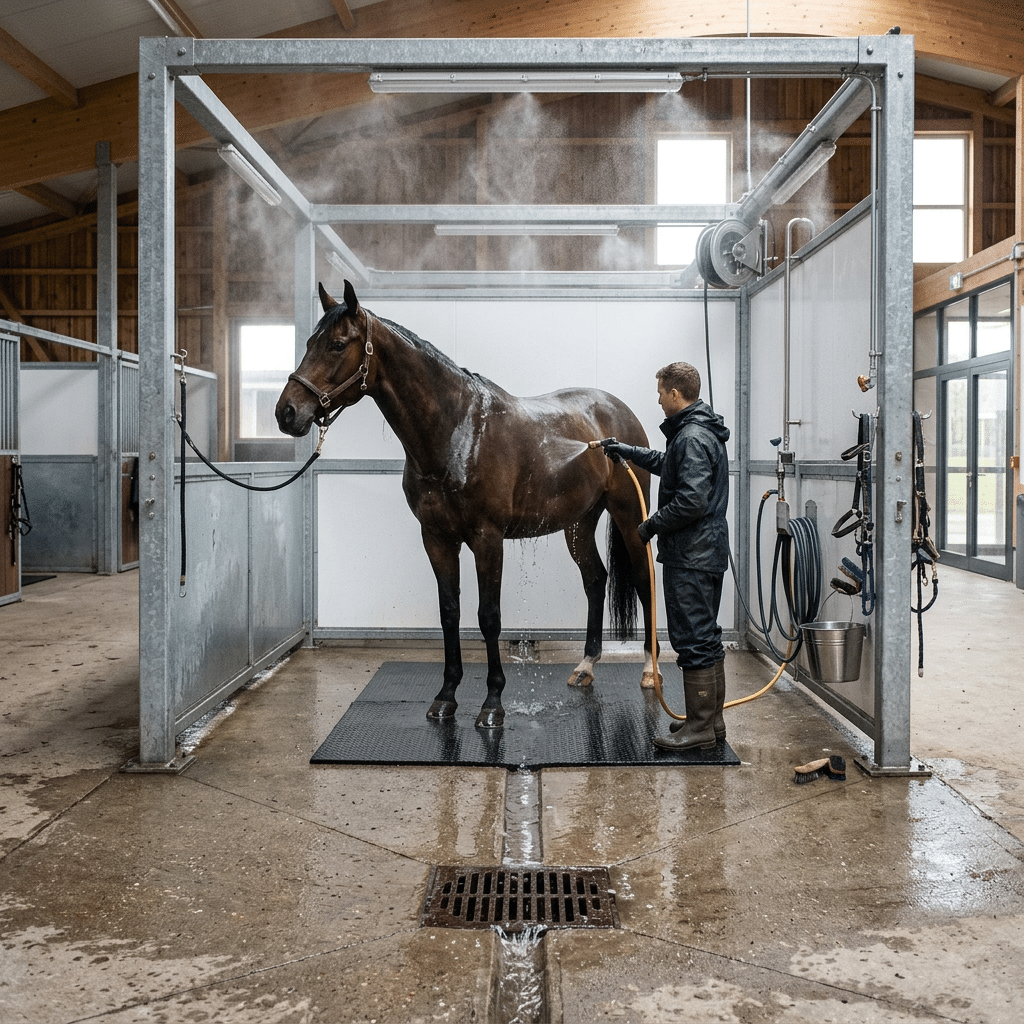
Coastal salt fog accelerates corrosion, turning expensive steel barns into structural liabilities. Coatings marketed as “marine-grade” often fail prematurely, forcing property owners into unplanned, high-cost replacements that erase an asset’s long-term value.
This analysis benchmarks superficial paint against the ISO 1461 hot-dip galvanizing standard. We evaluate performance based on a verifiable zinc coating of over 70 microns, the industrial specification required for multi-decade durability in marine environments.
L'essor des critères ESG (environnementaux, sociaux et de gouvernance) dans le secteur de la construction
ESG prioritizes total cost of ownership over low initial price. It favors durable materials and verifiable standards, like ISO 1461 for galvanization, to ensure long-term performance and sustainability.
ESG’s Focus on Life-Cycle and Material Durability
ESG principles are shifting material selection away from simple cost-cutting toward performance-based specifications. The focus is now on the required service life of an asset, forcing a more honest evaluation of how materials hold up over time.
This approach directly supports infrastructure life extension and adaptive reuse. By building things to last, you automatically reduce long-term waste from premature replacements and constant repairs.
The goal is to move the entire industry away from a “cheap upfront” mindset. Instead, the model values the total cost of ownership and a structure’s ability to withstand its environment, which is a much more resilient and responsible way to build.

Hot-Dip Galvanization to ISO 1461 as an ESG Standard
Adhering to the BS EN ISO 1461 standard for hot-dip galvanization is a tangible example of ESG in action. It provides a clear, verifiable governance framework for corrosion protection, taking the guesswork out of durability claims.
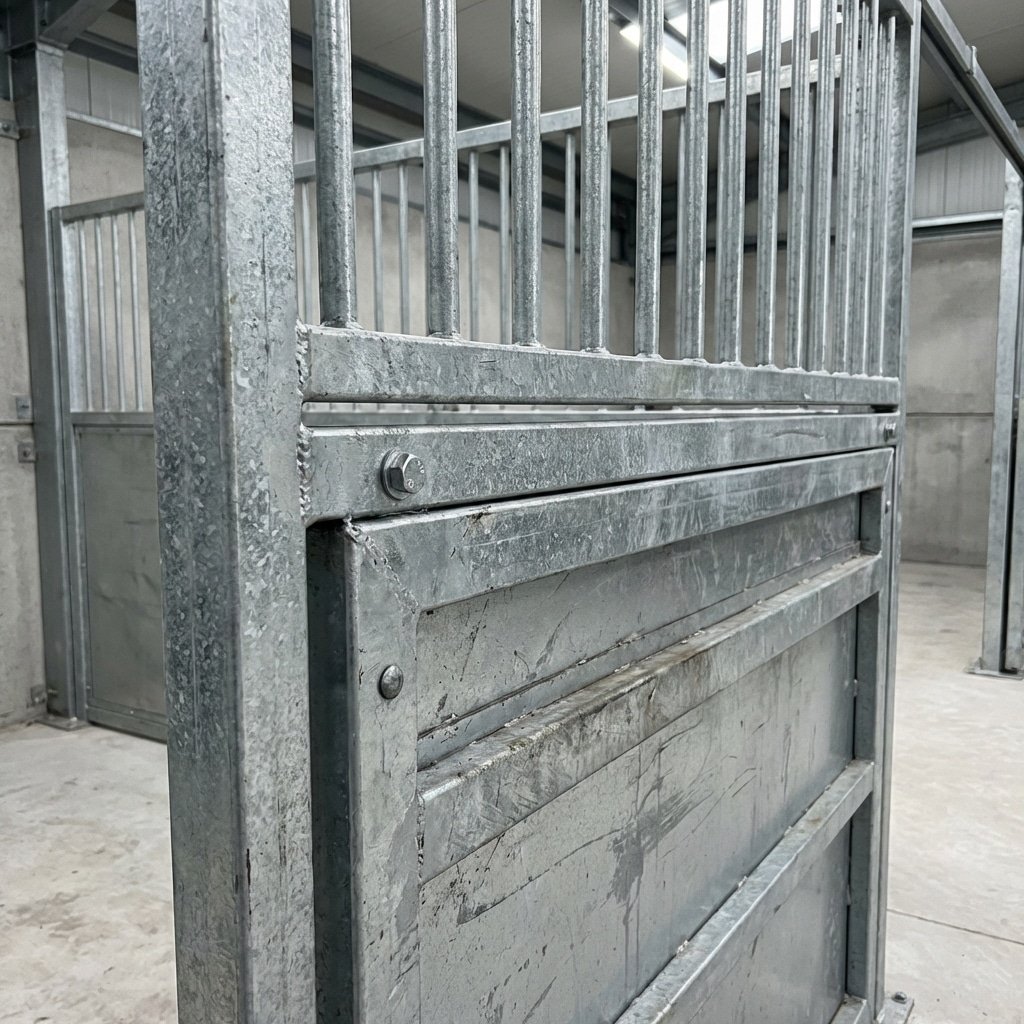
When steel tubing meets this standard, it achieves an average zinc coating of over 70 microns. This isn’t just a number—it translates to multi-decade durability in most environments. This longevity significantly cuts down on the resource consumption needed for frequent repairs or replacements.
This manufacturing process is a direct form of environmental stewardship. By extending product life through superior protection, it promotes responsible material use and reduces the long-term environmental footprint of a structure.
Abandonner les peuplements de vieux bois (chêne/pin)
The shift from old-growth timber is driven by environmental impact and economic reality. Modern stables now use superior alternatives like zero-maintenance HDPE and high-density bamboo for better performance.
The Environmental and Economic Push for Alternatives
Logging old-growth
forests is no longer a viable practice for commercial construction. These forests are vital carbon stores, and harvesting them causes irreversible damage to ecosystems. The industry is moving toward materials that align with responsible forestry and corporate ESG mandates, reducing deforestation and carbon footprints.
Traditional hardwoods like oak also present a simple economic problem: they take decades to regrow. This long regeneration cycle makes them impractical and unsustainable for meeting modern demand. The market now requires materials that can be produced at scale without depleting finite resources.
High-Performance Infill: HDPE and High-Density Bamboo
In response, the industry has adopted engineered materials that outperform traditional wood in every critical metric for equestrian facilities. DB Stable uses two primary infill options that provide superior safety, durability, and a lower environmental impact.
- High-Density Strand Woven Bamboo: This isn’t decorative bamboo. It’s an engineered material with a Janka hardness rating over 3000 lbf, making it about three times harder than oak. Its high density provides extreme impact resistance and natural defense against mold and rot.
- UV-Stabilized HDPE: High-Density Polyethylene offers a true zero-maintenance solution. It absorbs kicks without cracking, won’t fade under sun exposure, and never requires sealing or painting. This material is ideal for facilities focused on operational efficiency and animal safety.
Globally Compliant Stables Built to Last

Les principales usines qui adoptent des matériaux durables
Leading factories now integrate renewable energy, circular economy principles, and digital monitoring to drive resource efficiency and achieve zero-waste goals.
| Factory | Key Sustainable Practices |
|---|---|
| Siemens Electronics Works Chengdu (SEWC) |
|
| Nestlé Surčin Facility |
|
| Lego Factory (Vietnam) |
|
| Schneider Electric Smart Factory |
|
| IKEA Zbąszynek |
|
| Tesla Gigafactory (Shanghai) |
|
Le bambou tressé : un puits de carbone à haut rendement
Strand-woven bamboo captures atmospheric carbon during its 3-5 year growth. Processing it into dense stable planks with a Janka hardness over 3000 lbf locks that carbon away for the product’s lifespan.
Rapid Growth and Atmospheric Carbon Capture
Bamboo matures in just 3-5 years, allowing it to absorb atmospheric CO2 much faster than traditional hardwoods that take decades to grow. This rapid biological process uses photosynthesis to convert carbon dioxide into dense biomass, effectively sequestering carbon within the plant’s physical structure before it’s even harvested.
High-Density Planks as a Long-Term Carbon Store
The manufacturing process for strand-woven bamboo takes this carbon-rich biomass and compresses it into exceptionally dense planks. These planks achieve a Janka hardness rating over 3000 lbf, making them more durable than most hardwoods. Using these mold and rot-resistant
boards as stable infill locks the captured carbon into the building’s structure for its entire service life, preventing its release back into the atmosphere.
Acier Q235B : le cadre recyclable 100%
Q235B is our standard structural steel, providing a robust, weldable, and affordable framework. It offers excellent structural integrity and is 100% recyclable, meeting modern environmental goals.
Properties of a Versatile Structural Steel
Q235B is a carbon structural steel chosen for its reliable performance in a wide range of industrial applications. Its specifications deliver a practical balance between mechanical strength and ease of fabrication, making it a default material for engineered structures.
- It offers a yield strength of 235 MPa, which is more than sufficient for the standard structural loads found in equestrian facility construction.
- The material is recognized for its excellent weldability and affordability, allowing for efficient and cost-effective manufacturing without compromising on safety.
- It is fully recyclable without any loss of material strength. This supports circular economy principles by ensuring the framework can be repurposed indefinitely at the end of the stable’s life.

Our Standard for Engineered Safety
We use Q235B steel (the international equivalent of ASTM A36) as the standard for all our stable frameworks. It provides the necessary structural integrity for everyday equestrian use in most climates, handling the demands of a professional facility.
For operations in colder regions, this system works with an optional upgrade to Q345B steel. Q345B offers superior low-temperature impact toughness, a critical feature to prevent brittle fractures from horse kicks in freezing conditions.
Questions fréquemment posées
How do you build an ESG-compliant equestrian center?
Building an ESG-compliant facility involves focusing on three core areas. Environmentally, this means using renewable energy like solar, managing water with rainwater collection, and improving biodiversity. Socially, it requires ensuring employee welfare, promoting diversity, and upholding high standards of animal welfare. For governance, it’s about aligning with recognized standards like GRI or SASB, transparently reporting metrics to avoid greenwashing, and integrating these practices into the core strategy.
Is bamboo a sustainable building material for stables?
Yes, bamboo is a highly sustainable material. It’s the world’s fastest-growing plant, reaching structural maturity in just 6-9 years compared to decades for timber. Bamboo forests absorb significantly more CO₂ than equivalent trees and properly manufactured products can have a negative carbon footprint. High-density strand-woven bamboo is also extremely durable, with a Janka hardness rating over 3000 lbf, making it about three times harder than oak and an excellent choice for stable construction.
What is the environmental impact of steel vs. wood barns?
Wood has a much lower initial carbon footprint because its production is less energy-intensive than steel manufacturing. But steel offers major longer-term advantages. It is 100% recyclable without losing quality, has greater durability against rot and pests, and reduces replacement needs. While wood sequesters carbon, that carbon gets released if it decomposes. Steel, on the other hand, can be perpetually repurposed, making it a key component of a circular economy.
Are there green certifications specifically for horse stables?
Currently, there is limited information on specific green certifications designed just for horse stables. Most existing equine certifications focus on facility management, horsemanship, or safety. While some programs cover sustainable practices like manure management, dedicated third-party green facility standards for stables are not yet widely established. The closest options are general green building certifications like LEED, which can be adapted to equestrian facilities.
Who are some eco-friendly horse barn manufacturers?
Several established manufacturers focus on sustainable horse barn construction. Companies like Equinox for Horses, Coffman Barns, and MD Barnmaster are known for using eco-conscious materials and processes. They often incorporate mass timber, such as Cross-Laminated Timber (CLT) from managed forests, along with recycled materials and efficient water management systems into their designs.
Réflexions finales
A low initial price on painted or pre-galvanized barns creates a high-risk liability for rust and replacement. Our commitment to hot-dip galvanizing after fabrication to ISO 1461 isn’t just a feature; it’s a safeguard for your asset’s total cost of ownership. This is the specification that prevents costly callbacks and protects your reputation in coastal markets.
The data speaks for itself, but physical verification is essential for any serious buyer. We recommend a trial order of 3-5 stables to confirm the fit, finish, and material integrity firsthand. Contact our team to configure your test shipment or discuss OEM specifications for your brand.

 French
  English
  Spanish
  Arabic
  German
0 commentaires