


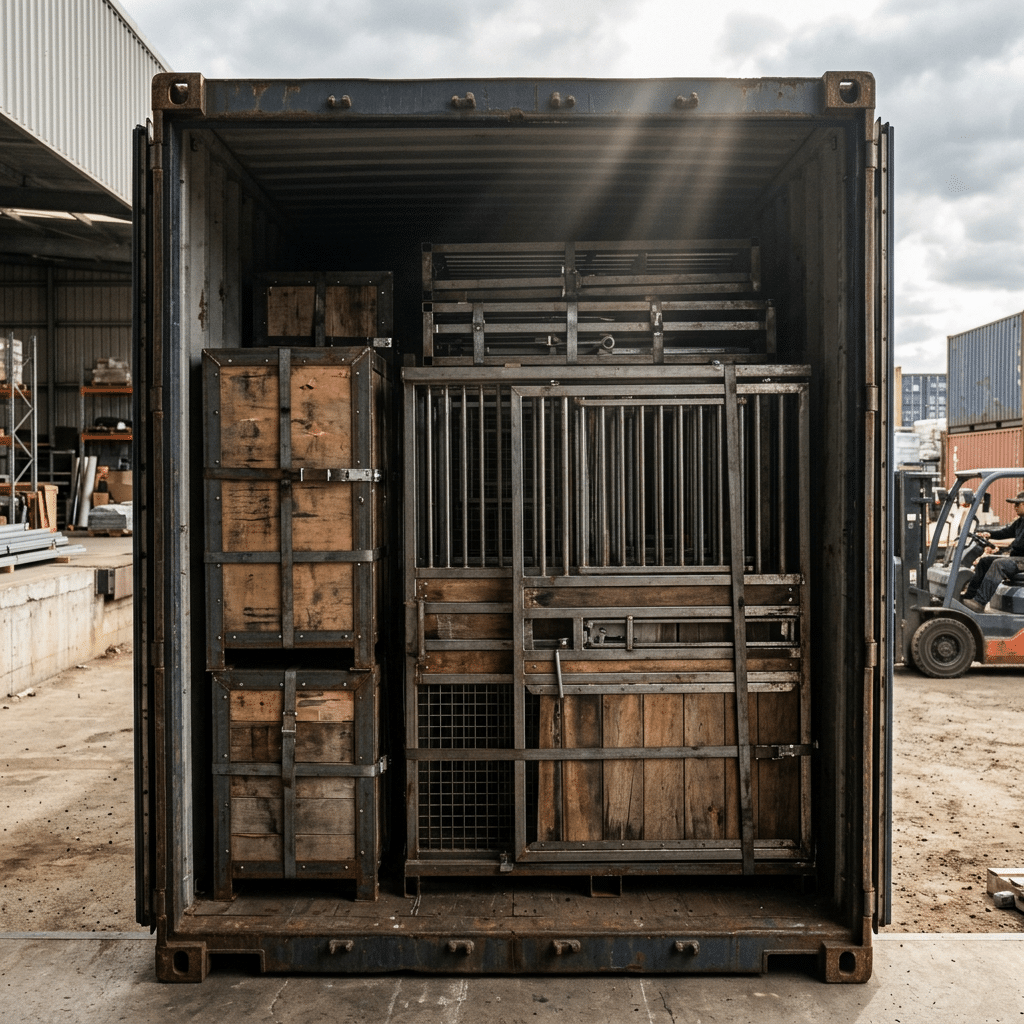
Factory QC & Audits are the only defense against receiving a container of defective product. A common shortcut is using pre-galvanized tubing with exposed welds, a method that guarantees premature rust and costly warranty claims. This failure turns an entire import order into a financial liability, destroying profit margins.
This guide provides a framework for verifying specifications like ISO 1461 Hot-Dip Galvanization via live video inspection. Before wiring a deposit, confirm the factory’s ISO 9001 status and their ability to meet critical engineering standards. This process protects your investment and secures a reliable supply chain partner.
Le microclimat d'une aire de lavage : chaleur, eau et fumier
A horse wash bay creates a corrosive micro-climate where constant water, heat from manure, and ammonia accelerate rust. Hot-dip galvanized steel and waterproof HDPE are critical for safety.
Understanding Thermal Dynamics and Corrosion
A wash bay isn’t just a wet area; it’s an aggressive, self-sustaining corrosive environment. The core problem is the manure. Its decomposition is an aerobic process that generates significant biological heat, much like a compost pile.
When you combine this constant low-grade heat with daily water spray, you get a warm, high-humidity atmosphere. This steamy air is the perfect accelerator for rust on any unprotected steel. On top of that, animal waste byproducts release corrosive gases like ammonia, which directly attack metal surfaces.
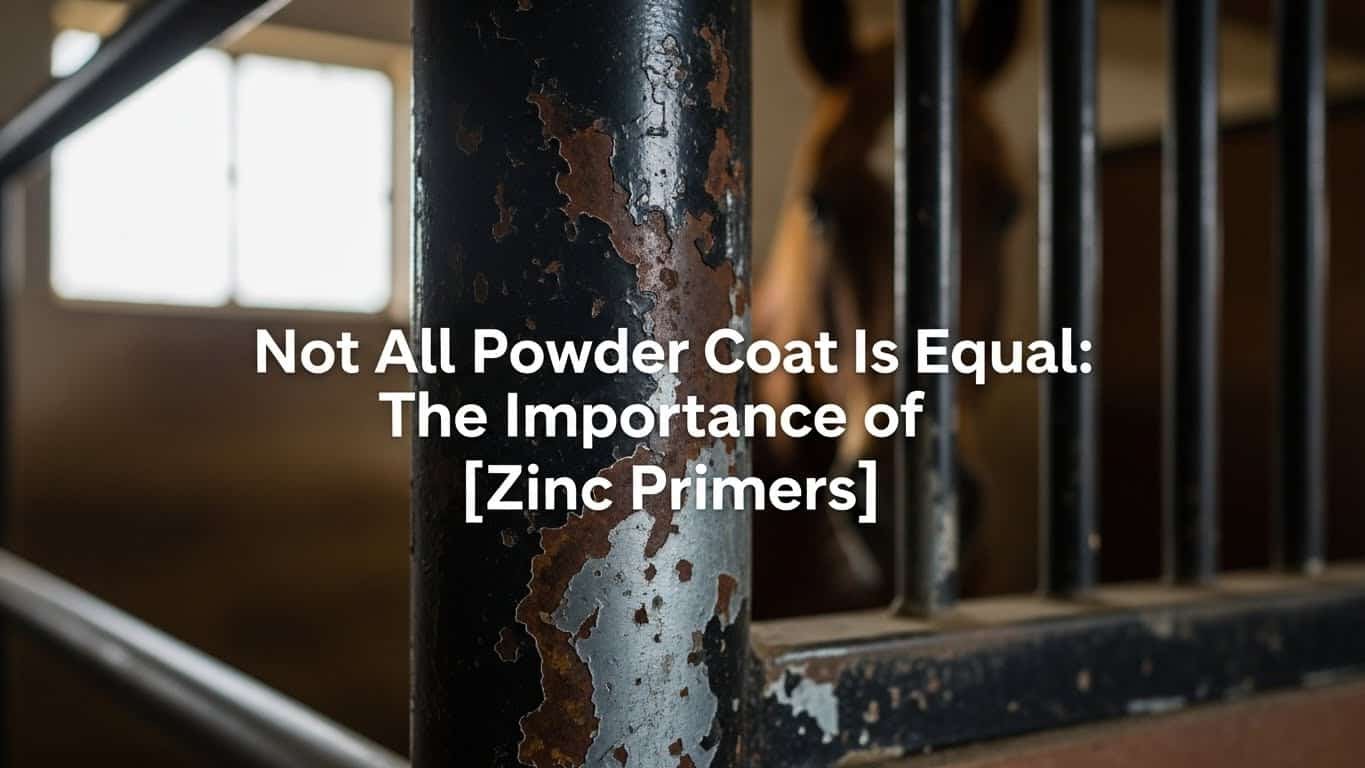
Material Specifications for a High-Humidity Zone
Standard materials fail quickly here. You need components engineered for this specific challenge. The steel framework must be protected against moisture getting into seams and welds.
Our process involves Galvanisation à chaud après fabrication. We build the entire steel frame first, and then dip the whole unit. This method completely seals every weld and cut edge, leaving no entry points for moisture. This is a critical distinction from cheaper pre-galvanized tubing that has exposed welds.
The resulting zinc coating conforms to ISO 1461 standards, with an average thickness greater than 70 microns. This heavy coating is designed to withstand constant humidity and corrosive gases. For the infill, we use non-porous, zero-maintenance HDPE panels. They don’t absorb water, so they can’t rot, warp, or degrade from waste exposure.
Murs en béton : porosité, fissuration et difficulté de nettoyage
Concrete’s porous nature leads to cracking and bacterial growth, making it difficult to clean and maintain. This creates ongoing hygiene challenges and health risks for horses.
The Inherent Risks of Porous Concrete in Stables
Concrete is fundamentally flawed for stable construction because it acts like a sponge. Through capillary action, it constantly pulls moisture, urine, and ammonia up from the ground, cre
ating persistently damp walls and foul odors. This moisture doesn’t just sit on the surface; it saturates the entire structure.
This damp environment is a perfect breeding ground for mold and bacteria. These organisms thrive within the concrete’s pores, producing acids that eat away at the material from the inside out. Over time, the constant movement of moisture dissolves the essential calcium compounds that give concrete its strength, leading to structural degradation and inevitable cracking. Once cracks form, they become highways for more moisture and contamination, accelerating the decay cycle and creating serious health risks for the horses.
The porous surface makes deep cleaning and proper disinfection impossible. Dirt and pathogens become embedded deep within the material, failing to meet the high standards of animal welfare required in a modern equestrian facility.
The Advantage of Non-Porous HDPE and Bamboo Infill
The problems created by concrete walls are solved by using modern, non-porous infill materials. These engineered solutions provide a hygienic, durable, and low-maintenance environment that concrete simply cannot match.
- HDPE Infill: This material offers a completely non-absorbent surface, which means moisture and bacteria have nowhere to hide. It delivers a ‘Zero Maintenance’ promise; a simple power wash is enough to keep it sanitary.
- Bamboo Infill: We use high-density strand woven bamboo, a material naturally resistant to mold and rot. Its extreme density prevents moisture absorption and ensures long-term structural integrity and hygiene.
- Absorption des chocs : Both HDPE and bamboo are designed to absorb powerful kicks from horses without cracking or shattering. This guarantees a safe enclosure and avoids the costly repairs associated with brittle concrete.
- Clean Finish: Unlike the rough and difficult-to-maintain surface of concrete, these materials provide a clean, professional finish that lasts for years with minimal effort.
Custom Horse Stables Engineered for Any Climate.

Les tapis en caoutchouc accrochés aux murs : un véritable nid à moisissures
Installing rubber mats on stall walls traps moisture from washing and condensation. This creates a hidden breeding ground for mold that damages air quality and the wall structure.
Comment l'humidité emprisonnée crée un terrain propice à la prolifération
Rubber mats create a non-breathable barrier against the stall wall. This design prevents the underlying wall from ever drying out completely. Any moisture that gets behind the mat during stall cleaning or from simple condensation is trapped.
The complete lack of air circulation, combined with persistent dampness and darkness, provides the perfect environment for mold and mildew. This fungal growth can go unnoticed for months or years, silently compromising the structural integrity of the wall and the air quality inside the stable.
The Advantage of Mold-Resistant Infill Materials
Instead of creating a moisture trap, our infill materials are engineered to prevent these problems from the start. We offer two core options designed for long-term health and durability.
- HDPE Infill: This is a completely non-porous plastic that cannot absorb water. It is a true ‘Zero Maintenance’ material that eliminates the risk of moisture-related decay.
- Bambou haute densité : Our Strand Woven Bamboo is three times harder than oak. The material is naturally resistant to both mold and rot, ensuring a healthier stall environment without chemical treatments.
Plastique PEHD : 100%, hydrophobe et lavable au jet haute pression
HDPE is a non-porous plastic that repels water, stopping rot and mold. Its slick, durable surface is easily cleaned with a power washer, making it a true zero-maintenance solution.
| Spécifications | DB Stable Standard | ||
|---|---|---|---|
| Material Composition | High-Density Polyethylene (HDPE) | ||
| Water Absorption Rate | Near-Zero (Inherently Hydrophobic) | ||
| Plank Thickness | 28mm – 32mm | ||
| Performance Additive | Core Feature | High Impact Absorption | |
| Required Maintenance | Power-washable; No painting or sealing ever needed |

Why Hydrophobic Surfaces Resist Contamination
The molecular structure of HDPE naturally repels water, giving it an absorption rate close to zero. Unlike wood or concrete, this non-porous surface gives bacteria, mold, and animal waste nowhere to hide. Contaminants can’t soak into the material, so they stay on the surface. The plastic’s low surface friction means grime and manure have a very weak grip, allowing a power washer to strip it clean without any fuss.
Specification: 28mm UV-Stabilized & Impact-Absorbing Planks
We build our stable infills to a specific standard that guarantees this zero-maintenance performance. The material’s durability comes from a combination of factors:
- Épaisseur : We use 28mm to 32mm thick HDPE planks. This provides serious impact absorption to handle kicks from large horses without cracking.
- Stabilisation aux UV : Each plank is UV-stabilized during production. This ensures it won’t get brittle, fade, or degrade from sun exposure during cleaning or if used in outdoor-facing stalls.
- Zero Maintenance Result: This mix of durability and water-repelling properties creates a true “set and forget” infill. It completely eliminates the future costs and labor of painting, sealing, or replacing boards due to rot.
Châssis en acier HDG : résister à la zone d'éclaboussures
In coastal ‘splash zones,’ standard galvanization corrodes quickly. A dual-protection system, like powder coating over the galvanized layer, is essential to prevent premature failure and ensure long-term durability.
Why Splash Zones Aggressively Attack Steel
The splash zone’s cycle of repeated wetting and drying, combined with high exposure to oxygen and salt, accelerates corrosion far more than full water immersion. This process can strip the protective zinc coating at a rate of 50 to 100 micrometers per year. Independent analysis shows that without additional protection, standard hot-dip galvanized steel in these aggressive environments may require its first maintenance in as little as 2-3 years.
The Dual-Protection System: Powder Coating Over Galvanization
For facilities in coastal or high-humidity areas, a ‘duplex system’ is the recommended engineering standard for durability. DB Stable’s Royal Series features a Powder Coat over Galvanized finish, creating a sealed, secondary barrier against corrosive elements. This dual-layer system extends the service life by 1.5 to 2.3 times the combined life of each coating alone, ensuring structural integrity in the harshest conditions.
Questions fréquemment posées
What are the best materials for horse wash rack walls?
The ideal materials are concrete blocks with a waterproof sealant, fiberglass-reinforced panels (FRP), or high-density polyethylene (HDPE). These options effectively resist water, mold, and mildew while being easy to sanitize. Avoid using metal panels, as they are prone to rust, retain cold, and can create noise that spooks horses.
Can rubber mats be applied to barn walls?
Yes, rubber mats are suitable for applying to barn walls, particularly inside horse stalls. They serve a dual purpose: protecting the wall structure from damage and safeguarding the horse from injuries to its hips, knees, and ankles. These wall liners are typically thinner than floor mats and can be mounted directly onto the existing wall surface.
How do you properly waterproof a horse wash bay?
Effective waterproofing involves three key areas. For walls, use materials like fiberglass-reinforced plastic (FRP) or sealed concrete blocks. For flooring, seamless poured-rubber is recommended over standard mats to prevent moisture from getting trapped. Finally, ensure proper drainage with a floor that slopes (about one inch per six feet) towards a trench drain.
Can your HDPE infill be custom molded?
Yes, high-density polyethylene (HDPE) is well-suited for injection molding. The process involves melting HDPE resin and injecting it into a custom mold to create specific shapes. This allows for the production of durable, impact-resistant parts tailored to different designs.
Réflexions finales
Cheaper materials like pre-galvanized tube or porous concrete guarantee future rust claims and maintenance calls from your clients. Our ISO 1461 hot-dip galvanized frames and zero-maintenance HDPE infills are engineered to protect your brand’s reputation. This is the core difference between a quick sale and building a reliable product line.
Verify our engineering standards for yourself before committing to a full container. The next logical step is a small trial order to test our material quality and flat-pack efficiency firsthand. Contact our B2B team to configure your initial sets and discuss OEM project requirements.

 French
  English
  Spanish
  Arabic
  German
0 commentaires