


The complexity of Building Permits for agricultural structures creates a significant risk of project delays and budget overruns. Misclassifying a modular system as a permanent building can trigger costly requirements for engineer-sealed plans, directly eroding contractor margins and stalling project timelines.
This analysis explains the strategic difference between permanent and equipment classifications. We examine how specifying bolt-on systems under HS Code 7308.90 and providing formal CAD drawings gives local authorities the verifiable data needed to simplify or bypass traditional permitting hurdles.
The Bureaucracy of Barn Building Permits
Traditional barn permits demand costly, engineer-sealed plans and complex county rules. Modular systems can bypass this by being classified as equipment, not permanent buildings.
Common Hurdles: Site Plans, Engineering Seals, and County Rules
Building a permanent barn isn’t just about construction; it’s a paperwork battle. Local authorities treat these as significant structures, and the requirements reflect that. The process is slow, expensive, and varies wildly from one county to the next.
You will almost certainly need to provide a formal documentation package that includes:
- Detailed Site Plans: These aren’t simple sketches. They must be drawn to scale and show property lines, easements, and required setbacks from other buildings or roads.
- Sealed Construction Documents: Most jurisdictions require your plans to be signed and sealed by a licensed engineer or architect, confirming the structure meets all local safety and load standards.
- County-Specific Rules: You have to comply with a checklist of local regulations covering everything from building height restrictions and flood zone elevations to distances from property lines.
Classification Strategy: Using HS Code 7308.90 to Simplify Approval
The red tape involved with permanent buildings is exactly why product classification matters. It’s a strategic move to protect project timelines and budgets for distributors and their clients.
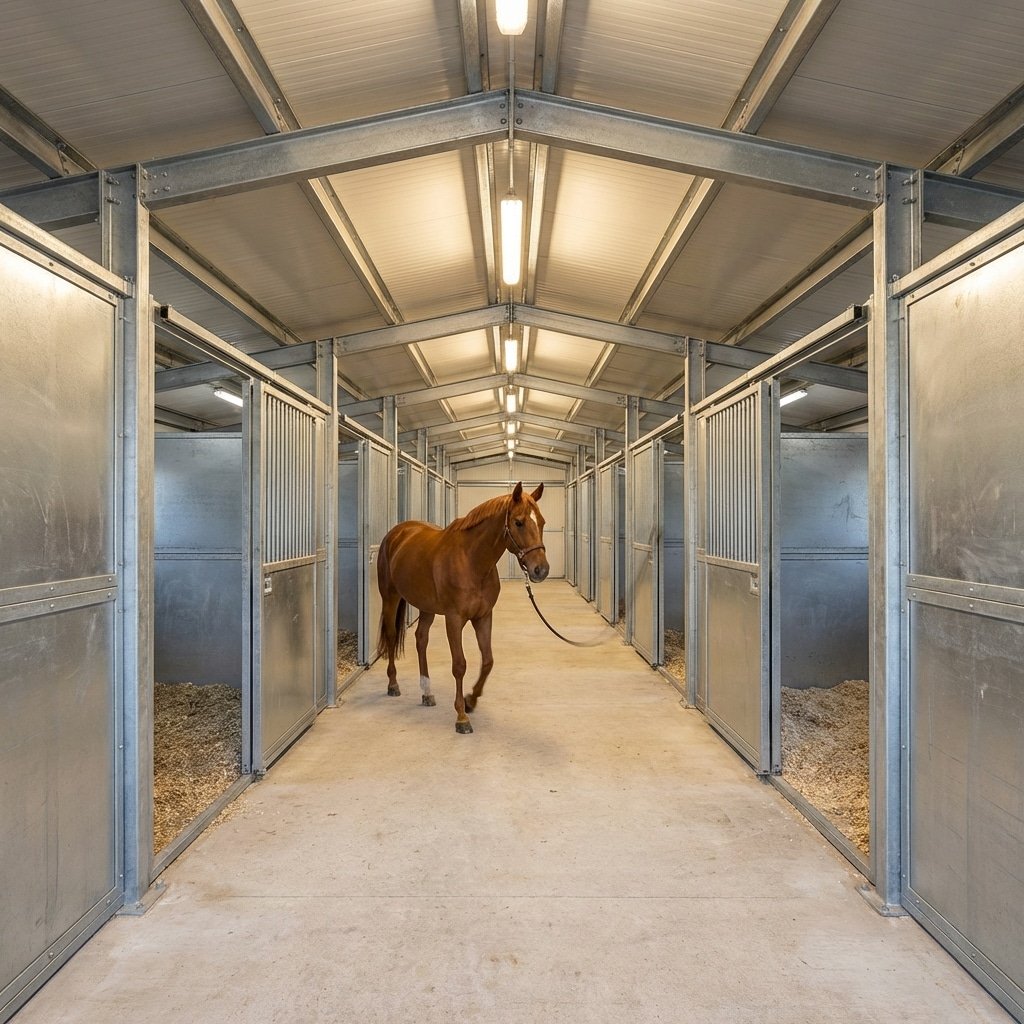
We classify our stable systems under HS Code 7308.90, which covers ‘Structures of Iron or Steel’. This is intentional. It separates the product from the ‘Prefabricated Buildings’ category, which often triggers higher tariffs and a much more intensive inspection process.
Positioning the product as bolt-together equipment can streamline both importation and local approvals. By avoiding the ‘permanent building’ label, the system is viewed differently by authorities, often bypassing the most complex and costly steps of traditional construction permitting.
What Defines a “Permanent Building” vs. “Equipment”?
A permanent building is fixed to a foundation and needs full permits. Equipment, like our bolt-on stables classified under HS Code 7308.90, is a non-permanent asset.
Intent and Installation: The Core Regulatory Differences
The main difference comes down to intent and how a structure is fixed to the ground. Permanent buildings are meant for long-term use and are typically built on concrete foundations. This triggers a complex and expensive permitting process that requires full compliance with local building codes.
Equipment is different. It’s designed to be non-permanent. The key indicator is the installation method. If a structure is bolted to a surface rather than poured into a foundation, regulators often see it as a movable asset that can be relocated.
How Modular Stables Classify as Equipment (HS Code 7308.90)
We designed our stable systems to fit the ‘equipment’ classification. For customs and regulatory purposes, they fall under the international HS Code 7308.90, which covers ‘Structures of Iron/Steel,’ not ‘Prefabricated Buildings.’ This is a critical distinction that simplifies importation and local approvals for our distributors.
The entire system arrives as a bolt-together kit, delivered flat-packed with all necessary connectors. This design proves its status as a non-permanent, re-locatable asset, not a fixed piece of real estate that complicates permits and property taxes.
Engineer Custom Horse Stables for Any Climate.

The Modular Advantage: Bolt-On vs. Concrete Anchored
Bolt-on systems classify as removable equipment, often simplifying permits. Concrete-anchored systems are permanent structures, requiring stricter building code compliance and inspections.
| Fonctionnalité | Bolt-On System (Semi-Permanent) | Concrete-Anchored System (Permanent) |
|---|---|---|
| Installation | Secured to a cured concrete slab with anchor bolts. The system can be disassembled and relocated. | Connection points are embedded directly into the wet concrete foundation, becoming integral to the slab. |
| Classification | Often classified as “equipment” or a trade fixture, not a permanent part of the real property. | Classified as a “permanent structure,” legally merging the building with the land. |
| Permit Impact | Frequently streamlines the permit process and may qualify for agricultural equipment exemptions. | Almost always requires a full building permit, engineered plans, and multiple inspections. |
Defining Permanent vs. Semi-Permanent Installation
The distinction between a permanent structure and semi-permanent equipment hinges entirely on the anchoring method. Concrete-anchored systems involve setting connection hardware directly into a wet concrete foundation. Once the concrete cures, the stables are an immovable, integral part of the building’s footing. This approach permanently affixes the structure to the real estate, triggering full building code scrutiny.
Bolt-on systems take a different approach. The panels are secured to a fully cured concrete slab using heavy-duty anchor bolts. This method creates a strong, secure installation but preserves the ability to unbolt, disassemble, and relocate the entire stable system later. Because it’s removable, many jurisdictions classify the structure as ‘equipment’, which often simplifies or bypasses the complex permitting required for permanent construction.
The DB Stable Bolt-On Hardware Kit
We engineer every stable system for a straightforward, secure bolt-on installation. Each set ships as a complete package with a hardware kit containing all necessary anchor bolts, connectors, and screws. You don’t need to source miscellaneous parts. To guarantee longevity and prevent unsightly rust stains from dripping down your concrete or pavers, all included hardware is made from 304 Stainless Steel.
Engineering Drawings: Providing CAD Specs to Inspectors
Use CAD models as the single source for all specs. This allows automated inspection reports, directly verifying critical data like steel grade and coating thickness without manual error.
The Modern Workflow: From Digital Models to Inspection Checklists
The days of handing an inspector a paper blueprint are over. The modern process uses the 3D CAD model and its associated digital drawings as the single source of truth for all manufacturing and quality control data. All critical dimensions, mater
ial notes, and tolerances live in that digital file, eliminating the conflicts that arise from multiple outdated paper versions floating around.
Instead of manually typing dimensions into a spreadsheet, modern quality systems pull data directly from the drawing files (like PDFs or DXFs). This automates the creation of inspection checklists. It ensures that what the engineer designed is exactly what the inspector is measuring against, killing the human error that comes from transcribing numbers by hand.
Verifying Key Specs: Coating Thickness and Steel Grade
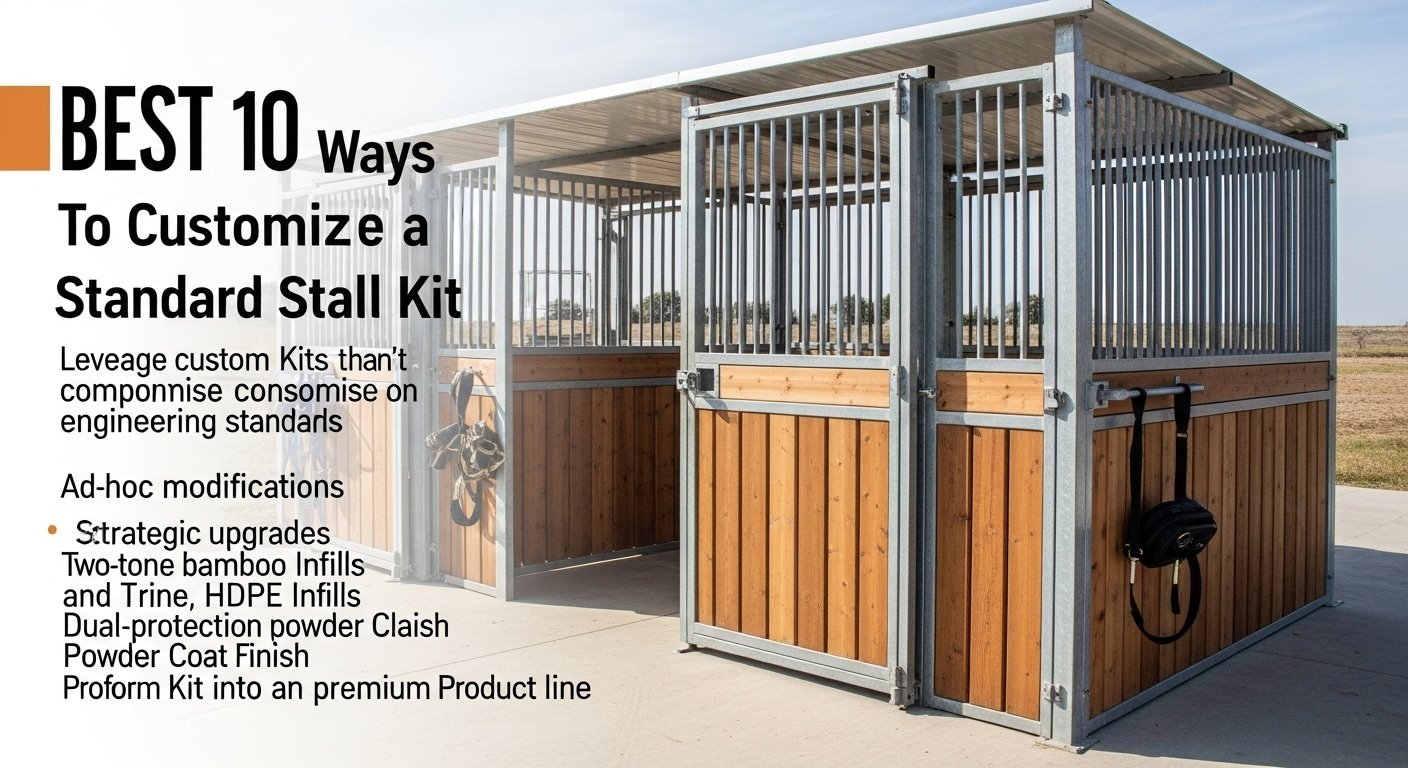
A proper engineering drawing provides clear, non-negotiable pass/fail criteria for inspectors. There is no guesswork. For a product like a galvanized steel horse stall, the drawing contains specific, measurable standards that must be met before shipment.
- Steel Grade: The drawing specifies the exact structural steel required, such as Q235B. For projects in cold climates, it might call for Q345B to ensure superior low-temperature impact toughness.
- Rust Protection Standard: The notes will explicitly require Hot-Dip Galvanization conforming to BS EN ISO 1461. This is a specific manufacturing process, not a vague suggestion.
- Épaisseur du revêtement : A critical checkpoint for any inspector is the average zinc coating thickness. The drawing will state it must measure over 70 microns (μm). This is a clear, verifiable number.
How DB Stable Provides Free Layout Drawings for Approval
We offer a free two-step drawing service, turning your sketch into a preliminary layout and quote, then providing formal CAD drawings with the technical specifications required for project approval.
Step 1: The Preliminary Layout and Quotation Phase
The process starts with your concept. Clients provide us with their basic requirements, which can be as simple as the barn’s dimensions or a hand-drawn sketch of the desired stable configura
tion. You don’t need to be an engineer to get started.
Our team translates these ideas into a professional 2D floor plan. This layout shows the exact placement and number of stable fronts and partitions, giving you a clear visual of the final setup. This initial drawing is delivered with a detailed quotation, providing a solid foundation for project planning and budgeting.
Step 2: Formal CAD Drawings with Technical Specifications
Once the preliminary layout is approved, we issue formal CAD drawings. These documents are suitable for official review by architects, inspectors, or project managers who need to sign off on the plans before production begins.
These technical documents specify all critical engineering data needed for compliance. We leave no room for ambiguity, which helps facilitate a smooth approval process. Key details include:
- Steel Grades: The drawings specify the exact structural steel used, such as Q235B or the cold-climate Q345B option.
- Tube Wall Thickness: We note the precise thickness of the steel tubing to verify structural integrity.
- Hardware Materials: All hardware specifications are listed, confirming the use of 304 Stainless Steel for durability.
- Compliance Standards: Key manufacturing standards, like the BS EN ISO 1461 for Hot-Dip Galvanization, are noted directly on the drawings.
Questions fréquemment posées
Do I need a building permit for horse stalls?
Yes, you usually need a building permit for horse stalls because they are considered structures that must follow local building codes and zoning rules. The exact requirements depend on your location and property’s zoning. Always check with your local zoning office first to confirm what is needed for your project.
Can I get an agricultural exemption for my horse barn?
Sometimes. Agricultural buildings used strictly for farm purposes, like storing machinery or raising livestock, may be exempt from standard building permits. These exemptions do not apply if the building is used for public access or human habitation. Rules vary greatly by state and county, so you must verify your eligibility with local officials.
Are modular horse stalls exempt from property tax?
The tax status depends on their installation. If a modular stall is installed on a permanent concrete foundation, it is typically classified as real property and is taxed. If it rests on skids or a gravel pad without being permanently fixed, it may be considered personal property, which is often not subject to property tax. Consult a local tax professional to be sure.
Is it possible to move my modular stalls to a new location in the future?
Moving modular stalls depends on how they are classified by your local authorities—either as permanent structures or as portable equipment. If they are deemed permanent, relocating them will likely require a new permit at the new site. It is best to clarify this with your local building department before the initial installation.
How can I obtain engineering drawings for my stable project?
You can get professional engineering drawings from specialized barn builders, architects, or directly from some manufacturers. DB Stable provides free CAD layout drawings that detail the structure’s dimensions and specifications, which you can then submit to your local authorities for permit approval.
Réflexions finales
Bypassing permits isn’t about cutting corners; it’s a calculated commercial strategy. Relying on our engineering drawings and HS Code 7308.90 classification protects your projects from costly zoning delays and stop-work orders. This is how you secure project timelines and protect your client relationships.
Don’t speculate on local compliance. Submit your barn sketch or dimensions to our team for a free preliminary layout and quotation. This is the fastest way to get the formal CAD drawings you need for official approval.

 French
  English
  Spanish
  Arabic
  German
0 commentaires