
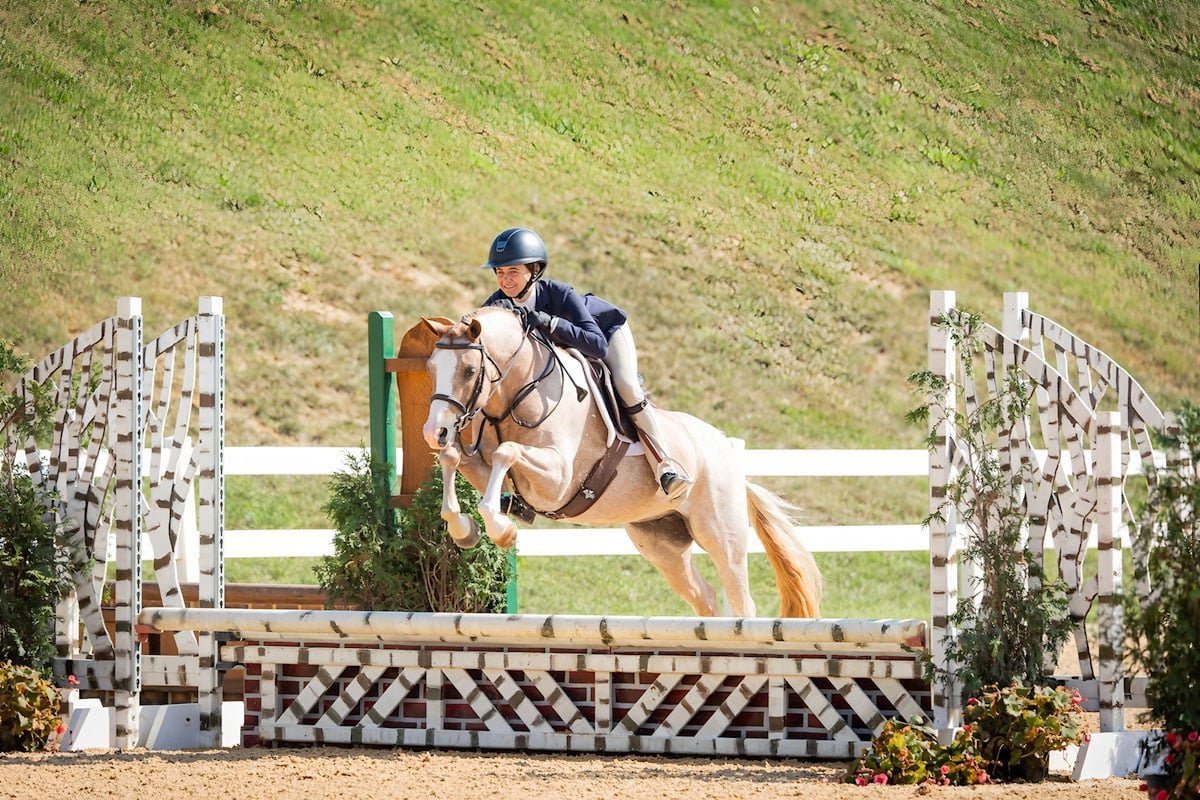
Jump cups and pins are two of the small parts on a horse jump that get ordered wrong most often. A yard replaces a knocked cup, buys one that looks identical, and finds the new one sits higher on the standard than the one it replaced. The jump leans. The pole rolls at the touch.
Fit is a measurement problem, not a catalog problem. Cups have to match the standard’s hole pitch and the pole’s diameter; pins have to match the hole they pass through and the load they hold. This site publishes none of those dimensions for its FEI-standard jump lines, so the numbers have to come off your own equipment and go onto the order in writing.
Points clés à retenir
- A spare cup is specified against the standard it fits, not against the jump you saw at a show — hole pattern first, pole diameter second, material third. This is fitment and sourcing, not safety inspection.
- Hole pitch — the vertical spacing of the cup positions up the post — is what makes a replacement set interchangeable. It is not a published figure here; measure it and put it on the order.
- Pins usually fail through wear and tolerance rather than one dramatic break. A slightly small pin in a worn hole can let the pole lift under a hoof, and nobody notices until a rail drops in a competition round.
- Buy the cup and pin set by the standard you own. Mixing suppliers across one post is where interchangeability tends to break down.
- Spare hardware has no published ordering floor on this site, unlike the fence line’s 50 panels, so state the quantity you need and ask what the actual minimum is.
- Production runs 4-6 weeks globally; expedited orders from Sydney or Warsaw regional stock can run 1-2 weeks where the item is held. That gap is long enough for a broken cup to cost a training week.
Why This Is a Fitment Problem
On most standards the cup locates in a row of holes, and the depth behind each hole is what a spare has to match. Two cups from different suppliers can share the same diameter and still sit at different heights on the same post, because what matters is how the cup locates — commonly a pin through the post, a stop collar and a pole shoulder, but designs vary, so confirm which your posts use.
Wings and decorative panels make it worse. A wing clamps or bolts to the standard and changes what a cup can reach; a panel that sits proud of the post can block part of the hole line. When you order spares for a winged setup, order for that setup — the wing’s fix method and the standard’s hole line get named in the same message. Safety inspection of cups in use is a different job, and our guide to FEI jump cup safety covers it; this piece covers sourcing.

The Four Measurements That Decide a Fit
Take a tape and a caliper to one standard you already own and write four numbers down. Then send those four numbers to the supplier and ask them to confirm against their parts. Nothing published on this site replaces that step. Ask for the fit confirmed in writing before payment.
| Mesure | Why it decides fit | How to record it |
|---|---|---|
| Hole diameter in the standard | The cup pin must pass through it, not force it | Caliper at three holes on the same post |
| Hole pitch up the post | Sets whether replacement cups land at the same heights | Measure ten pitches and divide, not one |
| Pole diameter at the cup | Decides the cup cradle size and how easily a pole rolls | Measure where the pole sits, not mid-span |
| Wing fix method on that post | Clamps and bolts can block part of the hole line | Photograph the fitting with the numbers |
Pins: Wear, Tolerance and Quiet Failures
The pin carries the load. Cup bodies crack visibly; pins can fail quietly, as a little play that grows each season. An undersized pin can let the cup rock and shift load onto the pole edge instead of the cradle, so rails that should have held start dropping. An oversized pin can score the inside of the hole, and then the next one rattles too.
Material and coating are the second and third questions, and they tie to how spares age. Where steel hardware is hot-dip galvanized, this site’s published figure is 20 years of rust protection; that is a coating claim about the steel, not a wear rating for a pin that moves in a hole every day. Ask which parts are galvanized, which are plated, and which are bare, in writing.

Our position: cups and pins are bought per standard, not per jump. Order the set that fits the posts you already own, keep one original cup and one original pin as a pattern sample, and treat any supplier who sells you a “universal” cup as someone who has not measured your posts.
Ordering Spares Without a Specification Sheet
Many yards have no drawing for their jumps. That is fine. A usable spare-parts enquiry is four measurements, one photograph of the standard with a scale in frame, one photograph of the wing fitting, and the quantity you want — spares usually bought in sets per post rather than single pieces, because a mid-season replacement that lands at a different height is worse than no replacement.
Then ask three questions and expect written answers. Which existing cup and pin model matches these dimensions? What is the ordering minimum for spare hardware — none is published for this site’s jump parts, while the fence line starts at 50 panels, so ask rather than assume? What ships from regional stock, given 4-6 weeks global production and expedited orders running 1-2 weeks from Sydney or Warsaw regional stock where the item is held? Volume discounts of 5%-15% apply to batch orders, so a season’s worth of spares in one line is usually the better buy than three urgent ones.
Certification sits behind all of this as a factory statement, not a part number: manufacturing runs under ISO 9001 with CE marking. For venues specifying FEI-compliant training equipment, the sourcing standard is the same — dimensions and written confirmation, not a logo alone. That logic is set out in our piece on FEI-compliant training facilities in Germany, and the horse show jumps product page is where a spare-parts enquiry lands.
Questions fréquemment posées
Can I buy jump cups by the model name of my standards?
Only if the supplier confirms the dimensions behind that name. Model names rarely carry across factories, so hole diameter, hole pitch and pole diameter are what make a spare fit.
How many spare cups and pins should a yard hold?
Enough to keep every standard in service during a competition season, which usually means a set per post rather than a handful of loose pieces. This site publishes no spare-parts ratio, so plan against your own breakage history and the 4-6 week production window.
Do decorative wings affect which cups I can order?
Yes, when the wing clamps or bolts to the post and covers part of the hole line. Send a photo of the wing fitting with your measurements so the supplier can see what the cup has to clear.
Is a galvanized pin the same as a stainless one?
No, and the finish changes how the part wears. Where steel is hot-dip galvanized, this site states 20 years of rust protection, which is a coating-life claim. Ask in writing which finish each pin carries before you substitute one for the other.
Conclusion
Jump cups and pins become interchangeable when four measurements are written down and confirmed before payment: hole diameter, hole pitch, pole diameter at the cup, and the wing’s fix method. Keep a pattern sample from the original set and order against it.
Send the numbers and the photographs together, ask for the ordering minimum and the regional stock position, and put the answer in the same document as the purchase order. Start at the horse show jumps product page.

 French
 English
 Spanish
 Arabic
 German
0 commentaires