


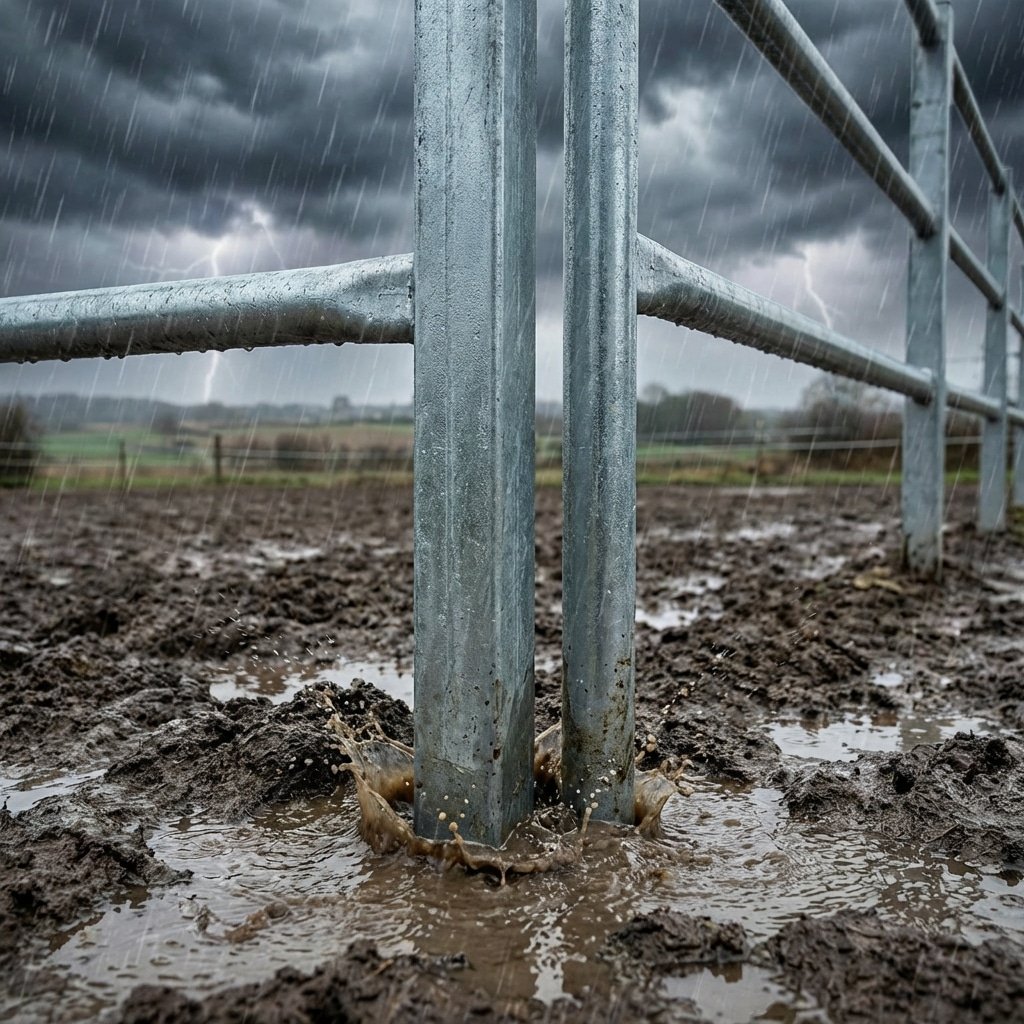
Dutch door hardware in humid climates fails in a predictable order: the latch stiffens, the hinge squeals, the coating blooms white, and eventually the moving parts seize in position. The door panel itself is rarely the problem. In the wet climates of Britain, New Zealand and coastal Europe, the hinges, latches and fasteners are where moisture, washdown water and ammonia concentrate — and where the specification either survives or quietly rots.
This guide explains how to specify Dutch door hardware for humid climates: which galvanization grades to demand on steel components, how hinge and latch design either sheds water or traps it, and what a realistic maintenance routine looks like. The door styles themselves — V-yoke and tempered glass — are compared in our Dutch barn door styles guide; here the focus is the hardware that keeps them working.
Key Takeaways
- Humidity attacks hardware first: moving parts concentrate condensation, washdown water and ammonia, so hinges and latches fail long before door panels or frames.
- Galvanization grade is the key steel spec: hot-dip galvanizing bonds zinc metallurgically and protects cut edges and drilled holes; pre-galvanized and zinc-plated hardware leave those points exposed.
- The factory rates its hot-dip galvanized steel at 20 years of rust protection — a stated claim, and one that hardware in wet climates tests hardest.
- Design details decide whether water sits: face-fixed hinges that shed water outlast designs that trap it; latches with covered mechanisms outlast open springs.
- Mixed-specification orders are the common failure: a galvanized door on plated hardware gives you a perfect door and a seized latch — specify the whole assembly.
- Maintenance is minutes, not days: a periodic lubrication and inspection routine catches humid-climate hardware wear while it is still cheap.
Why Humidity Attacks Hardware First
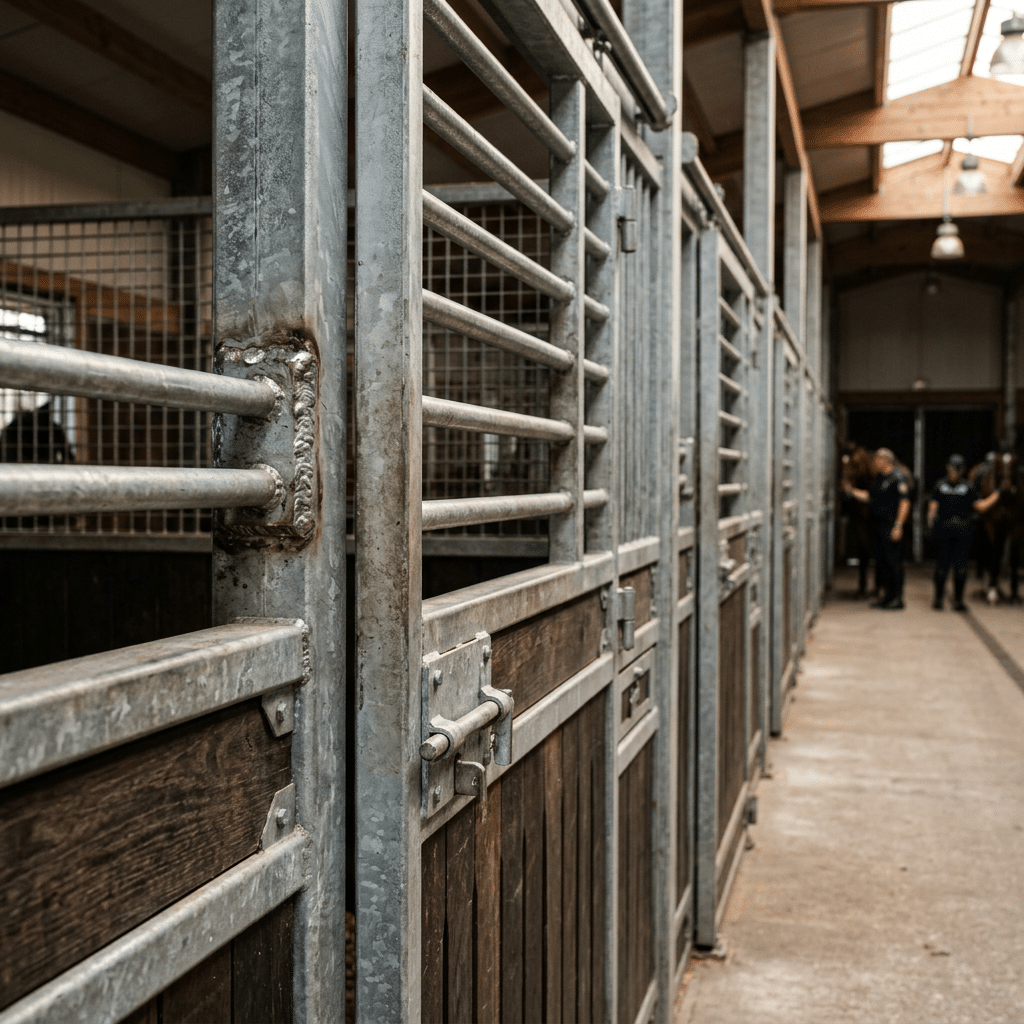
A stable door presents two kinds of surface to the weather. The panel and frame are large, static surfaces: they get wet, they dry, and a good coating rides out the cycle. The hardware is different. Hinges and latches are moving parts with clearances, crevices and dissimilar metals in contact — exactly the geometry where moisture lingers and corrosion starts. Add the stable’s own chemistry — ammonia from bedding, chlorides from washdown or coastal air, dust that holds damp against metal — and the hinge barrel becomes the most aggressive micro-environment on the door.
The British and New Zealand markets — two of the nine DB HorseStable serves with drainage-first, BHS-aligned stable designs for wet climates — are the environments that prove the point: doors whose hardware specification matched the climate run for years on a lubrication schedule, while doors specified for a drier market tend to show their first problems in a wet winter. The lesson generalizes — in a humid climate, the hardware specification is not a detail of the door order. It is the door order.
Galvanization Grades in Plain Terms
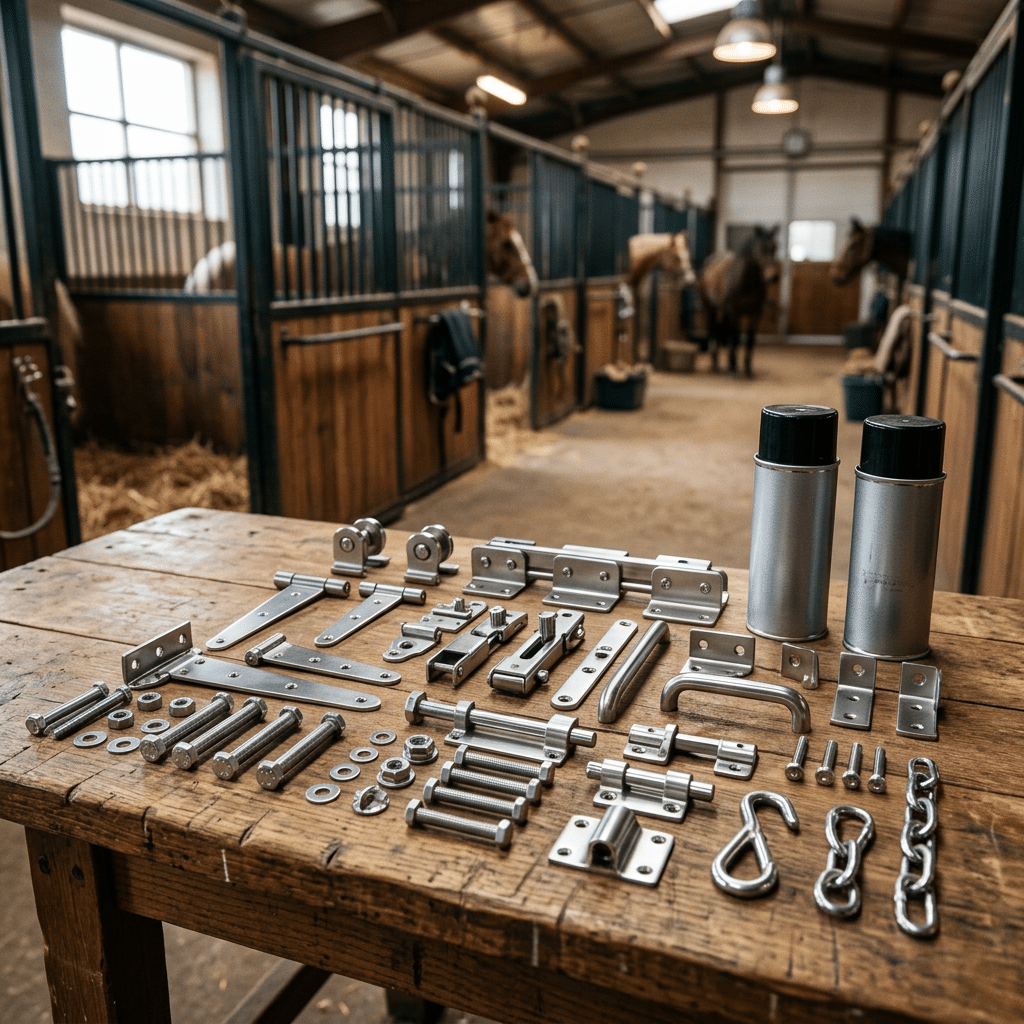
“Galvanized” on a hardware quotation can mean three different processes, and the difference decides how the part ages in humidity. Hot-dip galvanizing immerses the finished part in molten zinc, coating every surface and — critically for hardware — the inside of hinge barrels, the walls of drilled holes and the cut ends of links. Zinc-plated (electroplated) parts take a thin, bright deposit in a bath; the coverage looks similar on the shelf and performs very differently in a wet barn, especially at edges and inside moving joints. Pre-galvanized steel is coated at the mill before fabrication, so every cut, drill and weld made afterwards is bare unless it is touched up.
For humid climates, the hierarchy is straightforward: hot-dip galvanizing or stainless steel for the parts that move and carry load; nothing less. DB HorseStable’s stabling steel is hot-dip galvanized, and the factory rates that steel at 20 years of rust protection — a stated claim worth holding suppliers to, and worth remembering applies to the steel as specified, not to whatever plated hinge a packing list substitutes. Where budget allows, stainless hardware moves the ceiling higher again; the trade-offs between zinc-plated and 304 stainless components are set out in our stable hardware materials guide.
Hinge and Latch Design for Wet Barns
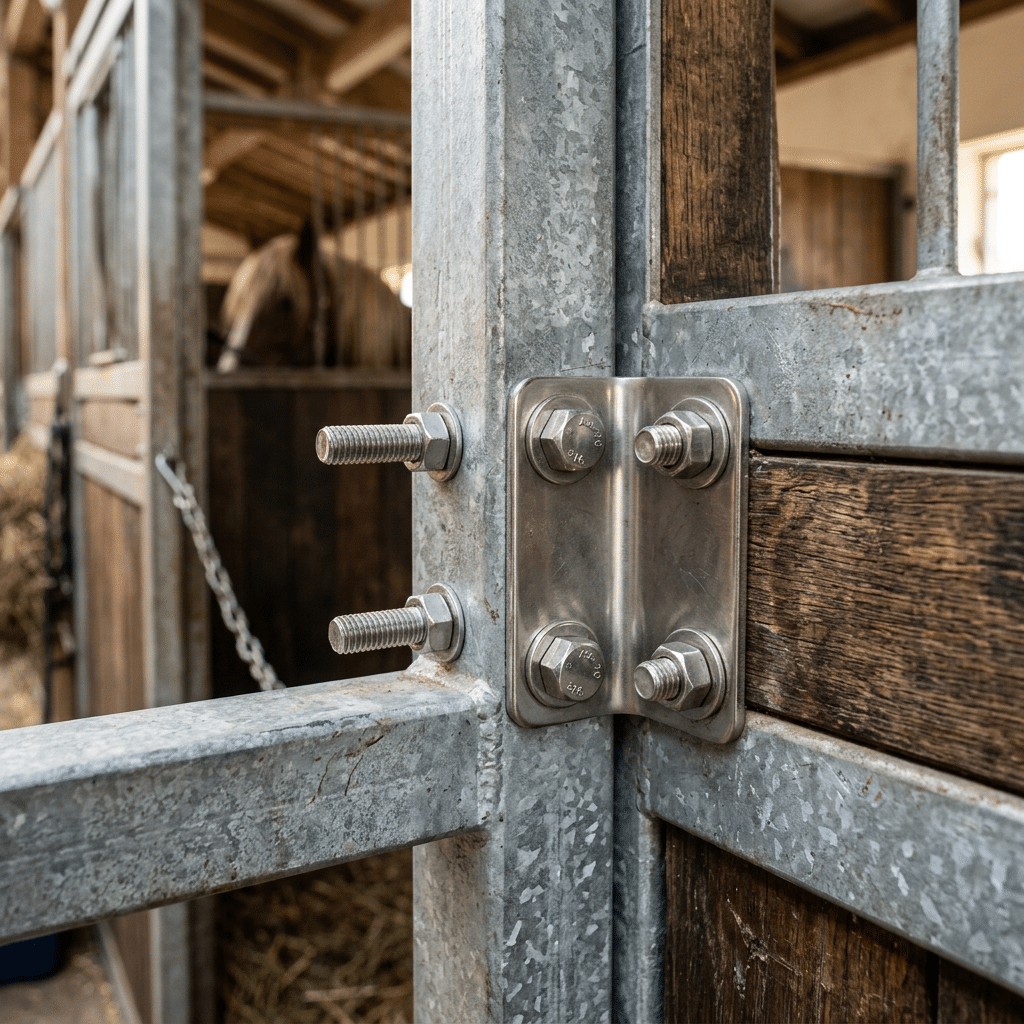
Beyond the coating, the design of the hardware decides where water goes. Hinges that stand off the door face let water run past; hinges seated in a recess hold it against the joint. Latches with covered mechanisms keep bedding dust and moisture out of the springs; open spring latches in a washdown aisle collect both. Fasteners deserve the same attention as the parts they hold — a galvanized hinge fitted with unplated bolts fails at the bolt holes first, because every fastener hole is a breach in the coating that the wrong screw makes worse.
Dutch doors add one design consideration of their own: the horizontal split. The meeting point of the two halves, the tip-latch that ties them together and the hinges that carry both leaves are all points of relative movement, which means repeated small exposures of unprotected metal if the parts are plated. Specify the split hardware to the same grade as the main hinges, and ask for the latch mechanism’s maintenance access — a latch that must be dismantled to lubricate will not be lubricated.
Specifying Hardware in the Order
Put the hardware in writing as its own line, not as “fittings included”. The specification that travels well between factories and survives substitutions has four elements: the coating grade per part (hot-dip galvanized or stainless for hinges, latch bodies and load-bearing fasteners); the design type (face-fixed, shedding hinges; covered-mechanism latches); the compatibility statement (hardware supplied with the door system it fits, from the same manufacturer); and the spares line — a small stock of hinges and latches with the order, because the day one latch fails is not the day to discover the mounting pattern changed.
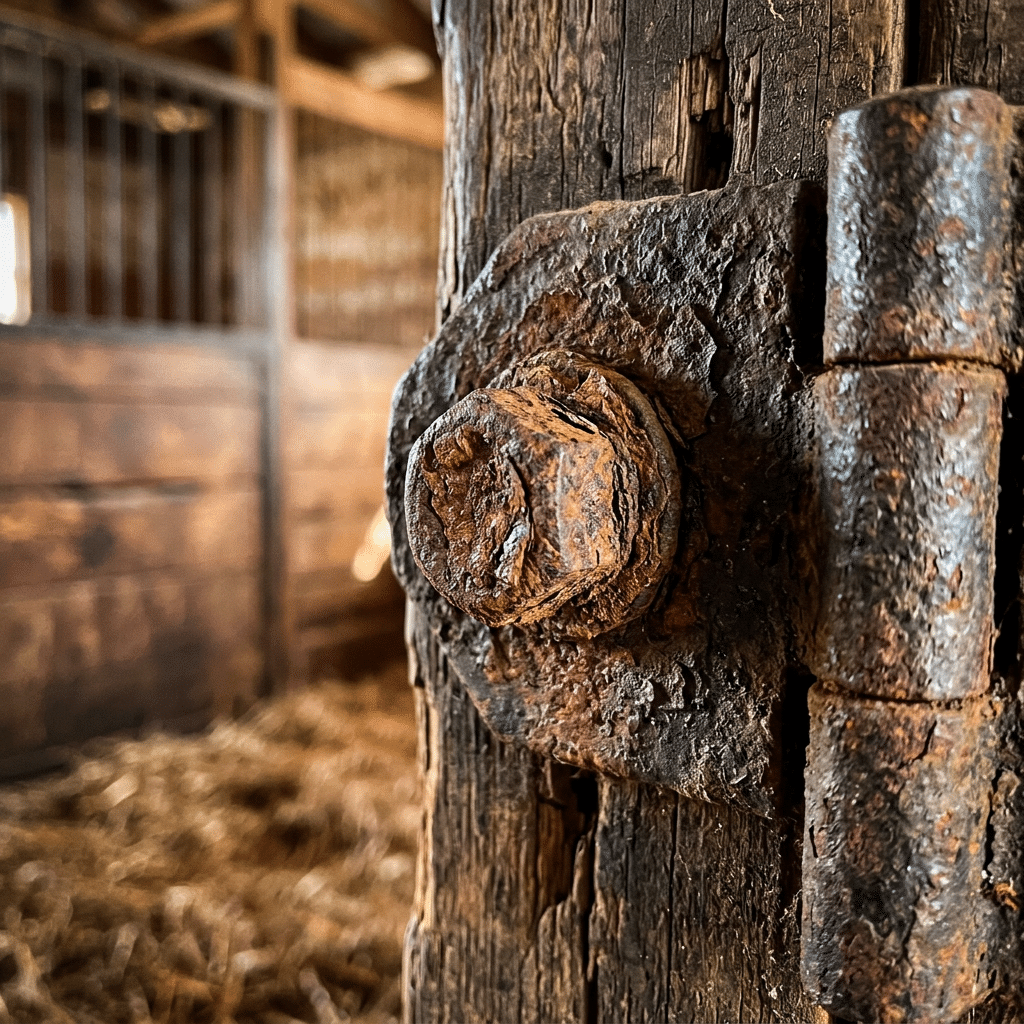
On arrival, inspect what was actually shipped. The check is quick: look inside the hinge barrel and the fastener holes, where the difference between hot-dip and plated parts is visible, and work every latch before installation. A five-minute check at the loading dock prevents the classic humid-climate discovery — a mixed delivery where the doors are hot-dip galvanized and the fittings are whatever was in the bin that week.
The Humid-Climate Maintenance Routine
Hardware maintenance in a wet barn is a short list run regularly. Work every latch and hinge through its full movement on the routine, listening for the first stiffness — that is the signal to lubricate, not to wait. Lubricate with a product suited to wet, dusty environments and wipe the excess, because oil-soaked dust holds moisture against the very joint you are protecting. Wash salt and ammonia residue off door hardware when you wash the panels, and dry what you can reach. And walk the doors after the first cold snap and the first hot spell of each year: seasonal contraction loosens fasteners, and a loose hinge wears its holes oval in weeks.
The payoff for those minutes is the difference between hardware that outlives the door and hardware that is replaced twice while the door stands. In specification terms: the coating grade does the long work, the design details keep water moving, and the routine catches the small failures before they become the ones that matter.
Questions fréquemment posées
What galvanization grade should Dutch door hardware have in humid climates?
Hot-dip galvanizing or stainless steel for hinges, latch bodies and load-bearing fasteners. Hot-dip coats inside barrels and drilled holes; zinc-plated and pre-galvanized parts leave those points bare, and they fail first in wet barns.
How long does galvanized stable hardware last in a wet climate?
The factory rates its hot-dip galvanized steel at 20 years of rust protection — a stated claim, and hardware in humid climates is where it is tested hardest. Realistic upkeep (lubrication, washing, fastener checks) keeps moving parts in service for the life of the door.
Can I mix stainless hardware with a galvanized door?
Yes, and in washdown aisles and coastal sites it is a sensible upgrade for the parts that move. Use isolating details where the two metals contact and keep fasteners consistent, so the corrosion-prone junction is designed rather than accidental.
How often should stable door hardware be maintained?
Run a quick work-through of every latch and hinge on a routine schedule — monthly is common in busy barns — and add a full walk after the first cold snap and first hot spell each year, when seasonal movement loosens fasteners.
Conclusion
Dutch door hardware in humid climates is a specification game with three moves: hot-dip galvanizing or stainless on the moving and load-bearing parts, design details that shed water rather than trap it, and a minutes-long maintenance routine that catches stiffness before it becomes seizure. The door panel will outlive all of it — which is exactly why the hardware deserves its own line on the order.
When specifying doors for a wet-climate facility, ask for the hardware schedule alongside the door schedule: review the barn door and window options and confirm coating grades, latch types and spares before the order is confirmed.

 French
  English
  Spanish
  Arabic
  German
0 commentaires