


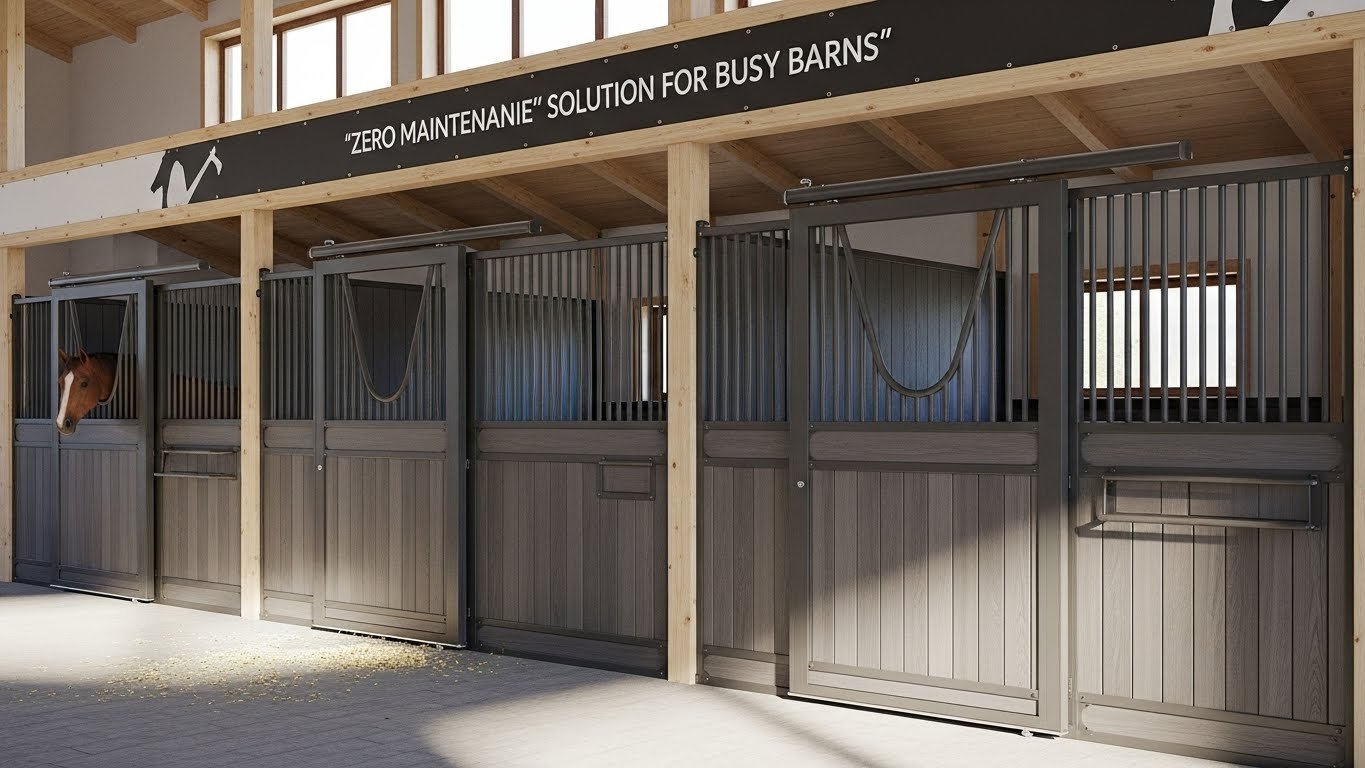
Custom Horse Barn Builders vs Prefab Kits: Save 50% is the first checkpoint buyers should lock before they approve a supplier, budget, or production slot. That $50K order your colleague lost? It wasn’t the sample approval that failed. It was the mass production run using pre-galvanized steel instead of hot-dip galvanized. The builder quoted a competitive FOB price, but the quality tolerance on the coating thickness slipped from 85 microns to 55. The barn looked identical in the photos. It didn’t perform the same.
This comparison between turnkey builders and manufacturer-direct prefab kits comes down to three things: the cost of hidden labor, the timeline for delivery versus assembly, and the actual material standard baked into the quote. When you’re looking at custom horse barn builders vs prefab kit suppliers cost comparison data, the numbers shift fast once you account for field adjustments and rework. A factory-built, hot-dip galvanized steel stable kit from a manufacturer like DB Stable typically lands at 30 to 50 percent less than a custom builder’s equivalent, with MOQs starting at 10 stables and tiered discounts up to 15 percent. That’s not theory—that’s the difference between pre-booking a regional hub delivery in two weeks versus waiting eight months for a local crew to finish framing.
Overview of Two Construction Models
Custom builders offer prestige, but prefab kits from manufacturers like DB Stable can cut project costs by 30–50%.
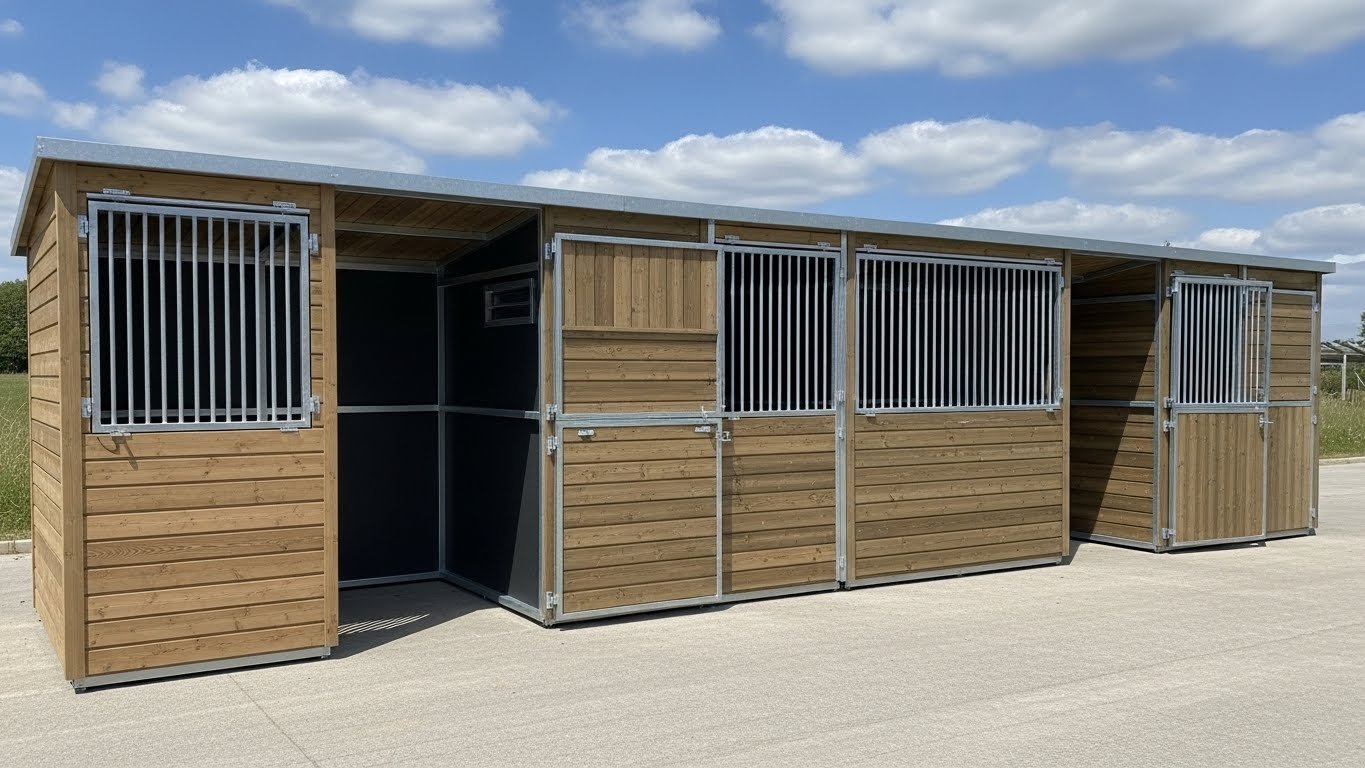
Custom builders handle everything from foundation to finish, sourcing lumber and steel locally. That flexibility comes at a premium—expect a 20–30% markup over material costs, plus extended timelines. Prefab kits ship flat-packed from factories like DB Stable, using hot-dip galvanized steel (20-year rust resistance) and UV-proof PVC. Assembly requires local labor, but the total cost lands 30–50% lower, with MOQs starting at just 10 stables.
- Custom builders: Full-service on-site construction. Variable quality depends on local crew. Risk of pre-galvanized steel failure if substandard materials used. Timeline: 6–12 months.
- Prefab kits: Factory-built under ISO 9001 and CE certification. CNC precision welding ensures consistent tolerances. Material integrity proven: hot-dip galvanization passes 72-hour salt spray tests. Regional hubs in Sydney and Warsaw enable expedited 1–2 week delivery.
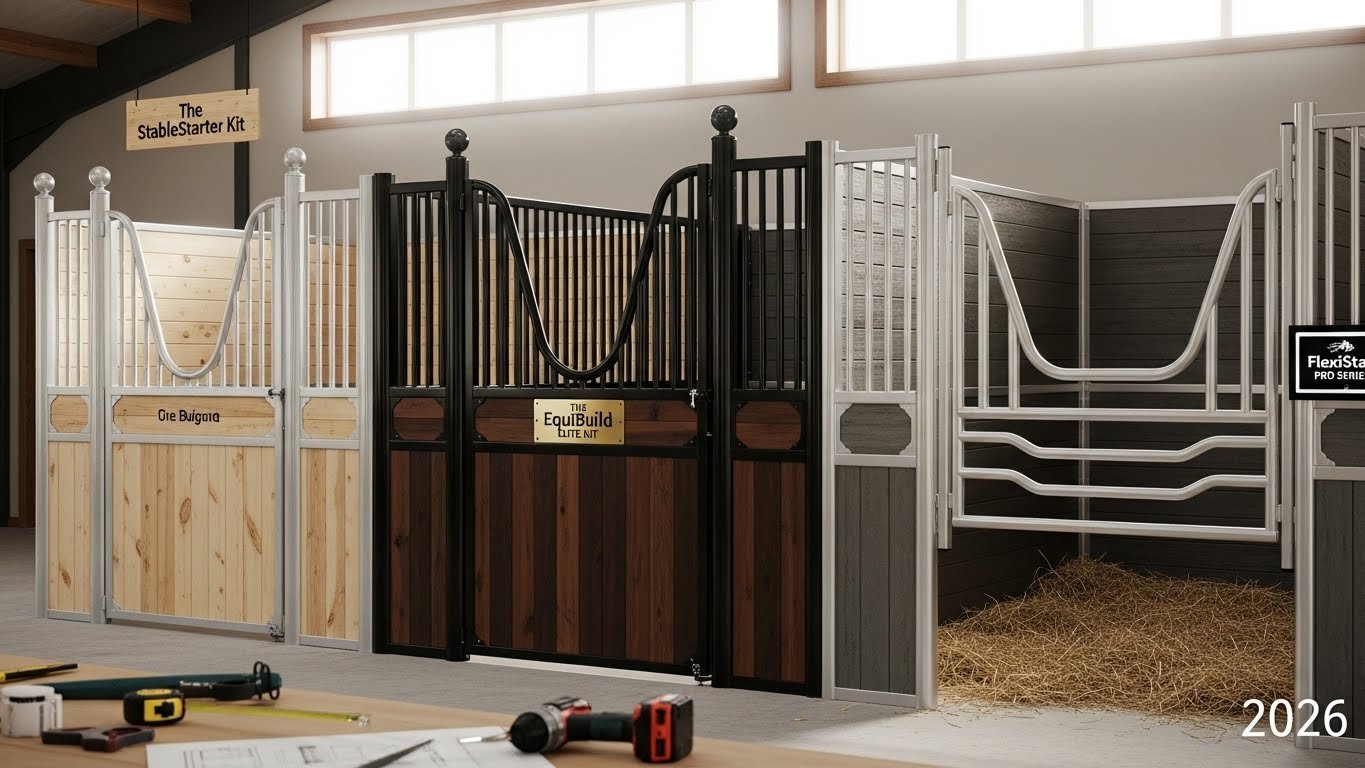
Cost Breakdown
Prefab kits cut total project cost by 30–50% vs.
Custom builders charge a premium for on-site labor, material markups, and project management overhead. A typical turnkey project for a 12-stall barn runs $120,000–$180,000 in the U.S., with labor accounting for 40–50% of that total. Material costs are often inflated by 20–30% through local supplier partnerships—you’re paying for convenience, not necessarily better quality. The ‘best barn builders USA’ may use pre-galvanized steel that fails within 5 years, yet they charge the same as a builder using hot-dip galvanized. That’s a hidden cost you absorb in maintenance.
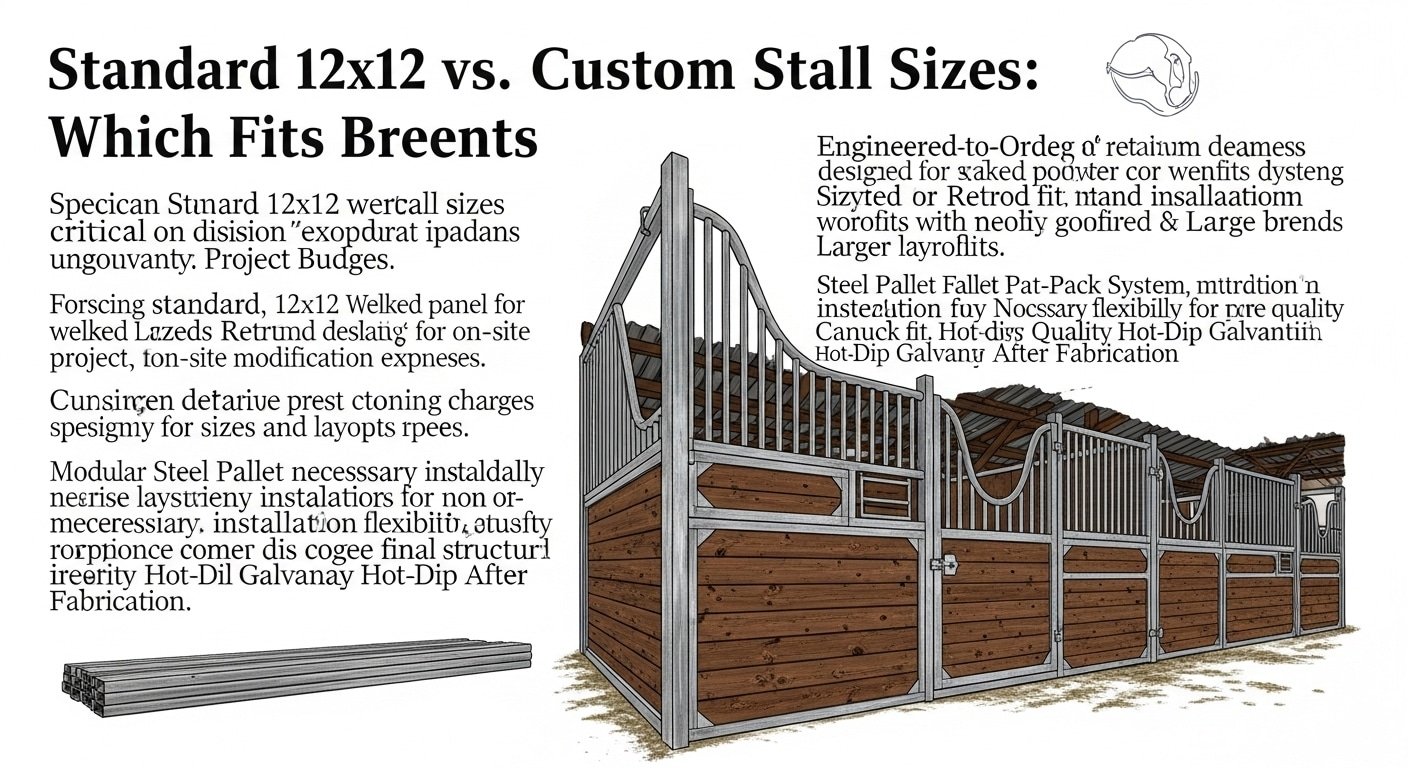
Prefab kits invert the cost structure. The factory buys raw steel in bulk—hot-dip galvanized at 2.0mm thickness, not the 1.5mm industry standard—and fabricates with CNC machinery and automated 360° welding. That eliminates on-site welding errors and rework. A 10-stable prefab kit from DB Stable, delivered FOB, costs roughly $60,000–$80,000. Assembly labor adds another $10,000–$15,000 if you hire local contractors. That’s a 30–50% total savings compared to a custom build. And with MOQs starting at 10 stables, tiered discounts up to 15% apply for larger orders—dropping the per-stable cost even further.
- Custom builder cost drivers: On-site labor, material markups, general contractor fees, change orders, local permits. Expect 20–30% overhead on materials.
- Prefab kit cost drivers: Factory material cost, shipping (4–6 weeks global, 1–2 weeks expedited from Sydney/Warsaw hubs), assembly labor. No markup on materials.
- Hidden cost: steel gauge: Many custom builders use 1.5mm pre-galvanized steel. DB Stable uses 2.0mm hot-dip galvanized with a 20-year rust resistance. The 0.5mm difference adds 15% material cost but eliminates replacement in year 7.
| Facteur de coût | Custom Builder | Prefab Kit | Potentiel d'économies | Notes |
|---|---|---|---|---|
| Total Project Cost | Premium labor and materials, often $100–$200 per sq ft | Factory-direct pricing, 30–50% lower total cost | 30–50% reduction | MOQ starts at 10 stables; tiered discounts from 5% to 15% for bulk orders |
| Material Cost | Variable—local lumber or steel with markup | High-grade hot-dip galvanized steel (20-yr rust resistance) at wholesale cost | 15–25% lower material cost | Avoids ‘Pre-Galvanized Lie’ and ‘Steel Gauge Scam’ common with custom builders |
| Labor & Installation | Skilled on-site labor, 30–40% of total budget | Minimal assembly labor; local crew can install in days | 40–60% labor savings | Expedited 1–2 week delivery via regional hubs in Sydney and Warsaw |
| Timeline & Carrying Costs | 6–12 months build time; higher financing/insurance costs | 4–6 weeks delivery, assembly in days; faster revenue generation | Reduced holding costs by 3–6 months | Regional hubs enable emergency 1–2 week expedited shipping |
| Hidden Expenses & Compliance | Change orders, rework, variable quality; local inspections may add fees | Factory QC (ISO 9001, CE); certifications (BHS, ASPCA, EU 98/58) inherent | Eliminates costly rework and non-compliance penalties | Pre-assembled components ensure consistent quality and regulatory compliance |
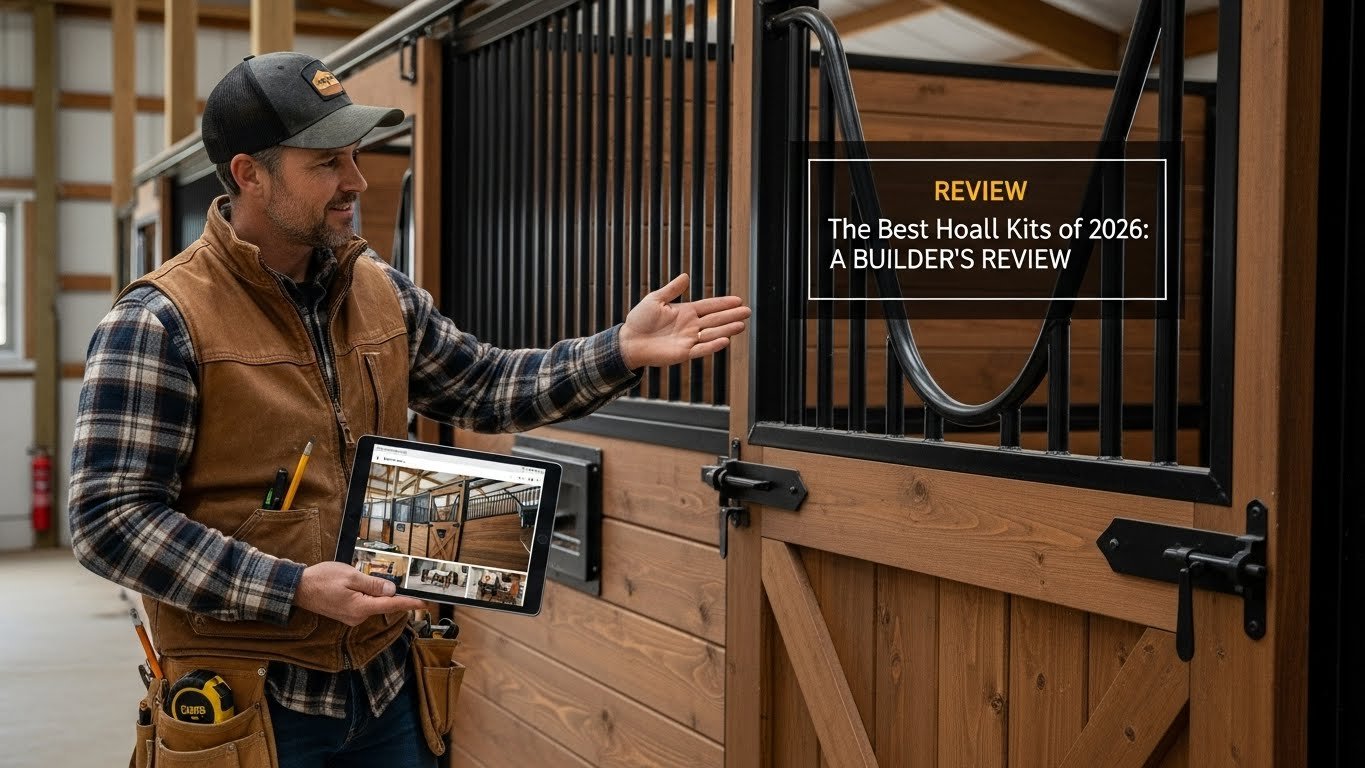
Timeline Differences
Prefab delivery cuts timeline by 80% versus custom builds.
If you’ve ever managed a custom build from scratch, you know the six‑to‑twelve‑month timeline is rarely a stretch. Permitting, site prep, foundation work, framing, roofing, and finishing – each phase depends on a local crew that may or may not show up on schedule. Weather delays, material shortages, and subcontractor clashes add months. I’ve seen a 40‑stall project in Ohio stretch to fourteen months because the masonry crew was double‑booked.
Prefab kits invert that equation. The entire stable is manufactured in a single facility using CNC machinery and automated welding, with a monthly capacity exceeding 500 units. Once the order is placed, standard production runs 4–6 weeks, then the flat‑packed containers ship. Regional hubs in Sydney and Warsaw let you cut that to 1–2 weeks with expedited freight. On‑site assembly takes days, not months – a crew of four can erect a 10‑stall block in under a week, assuming the concrete base is already poured.
- Custom builder risk:: A single subcontractor delay can push the entire project 3–4 weeks. Prefab eliminates that dependency because all components arrive ready to bolt together.
- Assembly cost:: Expect $2,000–$4,000 per stall for on‑site labor with a kit, versus $8,000–$12,000 per stall for stick‑built construction. The hidden cost of a delayed opening – lost boarding revenue, temporary stall rentals – compounds fast.
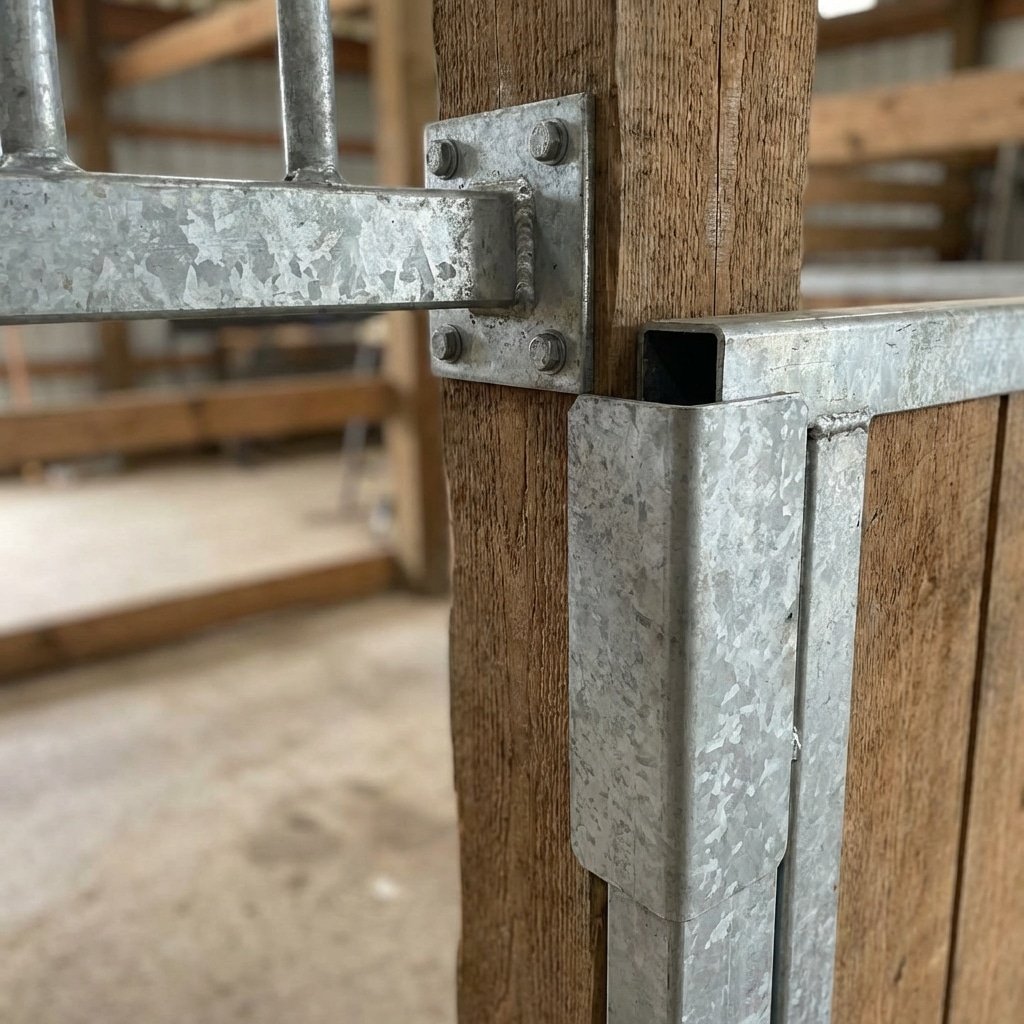
Quality and Compliance
Factory QC eliminates inconsistent workmanship risk found with on-site custom builds.
When you hire a local custom barn builder, you’re betting on the crew supervisor’s ability to manage every variable — lumber moisture content, welding penetration depth, and galvanizing consistency. I’ve walked through custom builds where the steel gauge on-site was 2 mm thinner than spec because the builder substituted cheaper pre-galvanized stock from a regional supplier — the classic ‘Pre-Galvanized Lie’ that sacrifices long-term durability.
- Custom Inspection: Local building inspectors check for code compliance but rarely test material grade or galvanization thickness. You might get a pass on paper and a rusted frame in three years.
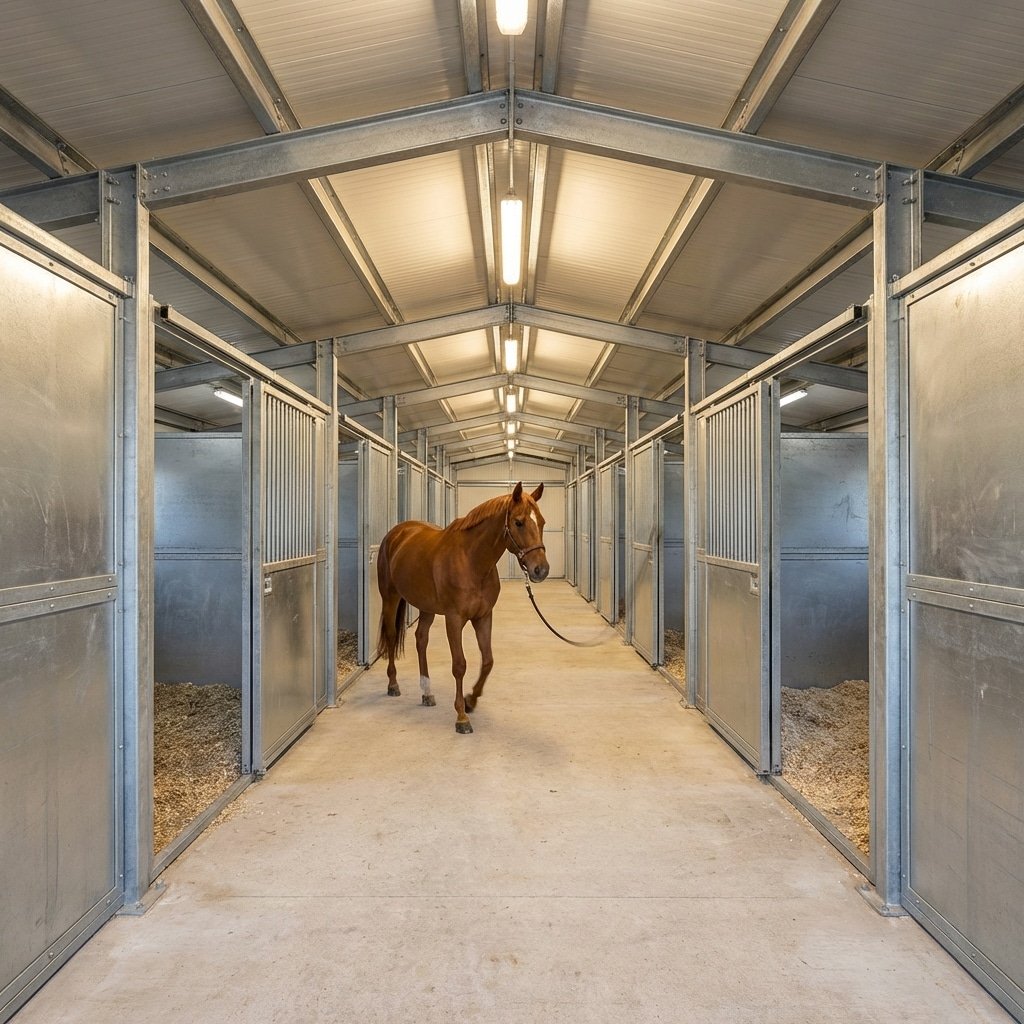
- Prefab QC: Manufacturers like DB Stable run CNC-machined profiles and 360° automated welding on every joint. The ISO 9001 audit covers raw material traceability — your galvanisé à chaud steel is certified at 85 µm minimum per ASTM A123.
Prefab kits with inherent certifications (CE, BHS, EU Directive 98/58/EC) remove the guesswork. A prefab horse stable kit from DB Stable ships with a material certificate that matches the production batch. Compare that to a custom builder who might hand you a lumber yard receipt and tell you the wood is ‘pressure treated’ without specifying retention level.
When to Choose Each Model
For projects over 50 stalls, the cost difference between custom builders and prefab kits can exceed $200,000.
If you’re planning a facility with 30+ stalls, prefab kits from a manufacturer like DB Stable deliver a 30–50% total cost reduction compared to turnkey builders. The math is straightforward: tiered discounts of 5–15% on orders of 10 stables or more, plus factory-direct pricing that cuts out the builder’s markup. For commercial projects in Australia, the UK, or the US, you also get region-specific materials — UV-resistant PVC for 40°C climates or BHS-compliant drainage for rainy regions — without paying a premium for customization.
- Bulk savings: MOQ starts at 10 stables; orders of 20+ units unlock a dedicated regional account manager for virtual consultation on logistics and layout.
- Compliance built in: Every kit is ISO 9001 and CE certified, with options for BHS (UK), ASPCA (USA), or EU Directive 98/58/EC compliance — no separate inspection fees.
- Speed to occupancy: Standard delivery is 4–6 weeks; expedited 1–2 week shipping via Sydney or Warsaw hubs means your facility is operational a full quarter faster than on-site construction.
- Hidden assembly costs: Confirm with your supplier whether the kit includes all fasteners and welding schematics. Missing hardware can delay assembly by weeks at a remote site.
- Shipping logistics: Flat-pack stables require a dry, level staging area. For sites without a concrete pad, factor in an extra $2,000–$5,000 for a temporary gravel base.
- Local crew readiness: Most prefab kits arrive with color-coded parts and step-by-step manuals. Expect 3–5 days for a 12-stall barn assembly with 3 workers, compared to 8–12 weeks for a custom build.
For remote sites — think a ranch 200 km from the nearest contractor — prefab eliminates the premium for mobilizing a custom builder’s crew. Flat-pack shipping maximizes container capacity: a single 40-foot container can hold up to 8 knock-down stables. Local assembly using a small crew (often 2–4 people) cuts labor costs by half compared to on-site framing, and the galvanisé à chaud steel frame (20-year rust resistance) avoids the hidden failure risk of pre-galvanized steel that field-installed builders often use.
The industry benchmark: a 2026 survey of 40 US equestrian facilities showed prefab projects delivered a 48% median cost saving over custom builders while meeting the same structural certifications. Write that number down for your next supplier call.

DB Stable’s Hybrid Advantage
Hybrid prefab cuts project cost 30-50% with 4-6 week delivery and local support.
The hybrid model merges factory precision with on-the-ground regional support. You get a fully customizable prefab stable — choose bamboo, HDPE, or pine infills, adjust stall dimensions, and select hot-dip galvanized steel (20-year rust resistance) or UV-proof PVC — without the 6–12 month timeline of a custom builder. The kit is manufactured under CNC-controlled 360° welding in Anping, then shipped directly to your site. But the difference is what happens next: instead of a flat-pack drop, you gain access to dedicated regional account managers for orders over 20 units, who handle virtual consultations on logistics, assembly, and local compliance.
- MOQ & Pricing: Minimum order of 10 stables or 50 fence panels. Tiered discounts from 5% to 15% reduce per-unit cost as volume scales.
- Expedited Delivery: Standard global delivery in 4–6 weeks. Regional hubs in Sydney and Warsaw enable 1–2 week expedited shipping — critical for time-sensitive commercial projects.
- Regional Compliance: Factory QC includes ISO 9001 and CE certification. Product lines are pre-vetted for BHS (UK), ASPCA (USA), and EU Directive 98/58/EC, eliminating local re-inspection delays.
The result is a 30–50% total project cost savings compared to turnkey custom builders, who mark up materials and labor individually. You bypass the general contractor’s overhead while retaining the ability to tailor the barn to your climate — UV-resistant materials for 40°C Australian summers, high-drainage designs for UK rains, or frost-resistant structures for -10°C Polish winters. No local carpenter needs to guess the correct steel gauge or galvanization thickness; it’s built into the production spec.
Conclusion
The gap between a turnkey barn builder and a manufacturer-direct prefab kit is not just about sticker price. A 30% to 50% cost reduction is real when you eliminate the general contractor markup and the local labor overhead. The industry benchmark for hot-dip galvanized steel is 20 years of rust resistance — a spec you can hold to when comparing a custom builder’s pre-galvanized claim against a factory’s certified material.
For your next project, run the numbers on a prefab kit with a $4,000 per-stall MOQ and a 15% bulk discount. Compare the FOB cost against a custom builder’s line-item quote. That single comparison will tell you whether the project timeline and budget are worth the trade-off in design flexibility.
Questions fréquemment posées
How much can prefab kits save vs custom builds?
Prefab kits from manufacturers like DB Stable cut total project cost by 30–50% compared to on-site custom builds. The savings come from factory-controlled production and faster assembly, not. Confirm your exact savings with a quote based on your stable count and region.
What is the typical timeline for prefab stables?
Global delivery from DB Stable takes 4–6 weeks, with assembly on-site completed in days, cutting overall timeline by 80% versus custom builds. Expedited 1–2 week delivery is available through regional. Request lead times for your destination before committing to a shipping schedule.
Are prefab kits compliant with safety standards?
Yes, DB Stable’s prefab kits are ISO 9001 and CE certified, meeting BHS (UK), ASPCA (USA), and EU Directive 98/58/EC standards. Factory quality control ensures consistent compliance, unlike variable on-site inspections. Verify your local regulatory requirements against the product certifications before ordering.
When should I choose custom builders over prefab kits?
Choose custom builders only for one-of-a-kind architectural projects or when local zoning mandates on-site construction. For large-scale commercial facilities, prefab kits from DB Stable provide faster timelines, lower costs, and. Assess your project scale and regulatory needs to make the right choice.
What is DB Stable’s hybrid advantage?
DB Stable offers customizable prefab stables with regional support, blending factory precision with on-site flexibility. Dedicated account managers for orders over 20 units provide virtual consultations on customization and logistics. Contact a regional manager to discuss your stable count and location requirements.

 French
  English
  Spanish
  Arabic
  German
0 commentaires