


Door Edge Cribbing rapidly degrades facility infrastructure and creates a recurring maintenance liability. When horses anchor their incisors on exposed timber, the resulting 29.4kg of force warps track systems and shreds softer materials, transforming a cosmetic issue into a structural failure that demands immediate replacement.
Our engineering approach eliminates this vulnerability by capping critical impact zones with 14-Gauge Q235B structural steel. By encasing infill planks within a hot-dip galvanized U-channel, we remove the friction point entirely, denying the horse the grip necessary to exert lateral torque or damage the door frame.
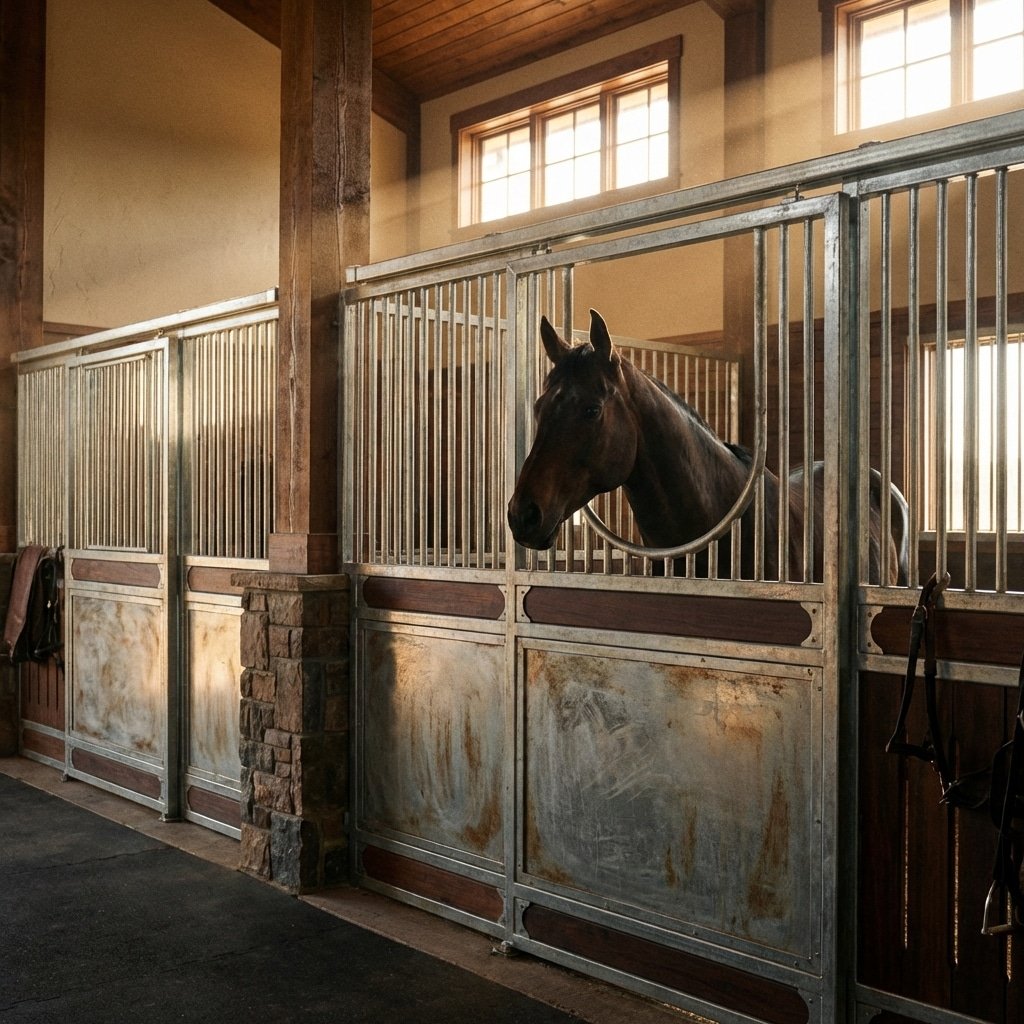
The Vulnerable Vertical Edge of the Sliding Door
Sliding door edges lack fixed hinge support, making them prone to warping from lateral horse impact. We mitigate this using fully welded 50mm Q235B steel frames with 2.5mm wall thickness.
Structural Susceptibility to Lateral Impact
A hinged door possesses a natural structural advantage: three fixed anchor points attached directly to the post. A sliding door does not. The vertical leading edge—the part of the door the horse interacts with most—floats freely when not latched and relies entirely on the track system for stability. This creates a mechanical vulnerability.
When a 500kg horse kicks or leans against this floating edge, the force does not transfer linearly into a hinge. Instead, it creates a rotating motion and lateral torque. If the steel frame lacks sufficient torsional rigidity, the door bows. This prying force often disengages the bottom guide or pops the rollers off the top track, leaving the door hanging precariously.
Reinforcing with 50mm Q235B Structural Steel
We address this inherent physics problem by over-engineering the frame itself. Standard market options often use light-gauge steel (1.5mm to 1.6mm) that buckles under lateral torque. DB Stable mandates a heavier specification to ensure the door remains rigid even when the edge takes a direct hit.
- Profile Dimensions: 50mm x 50mm RHS (Square Hollow Section) creates a wide footprint that resists twisting.
- Épaisseur de la paroi : We strictly use 14-Gauge (2.0mm – 2.5mm) steel. This thickness prevents the “coke can effect” where thin tubes dent and fold.
- Material Grade: Q235B Structural Steel (ASTM A36 equivalent) provides the necessary yield strength for high-impact zones.
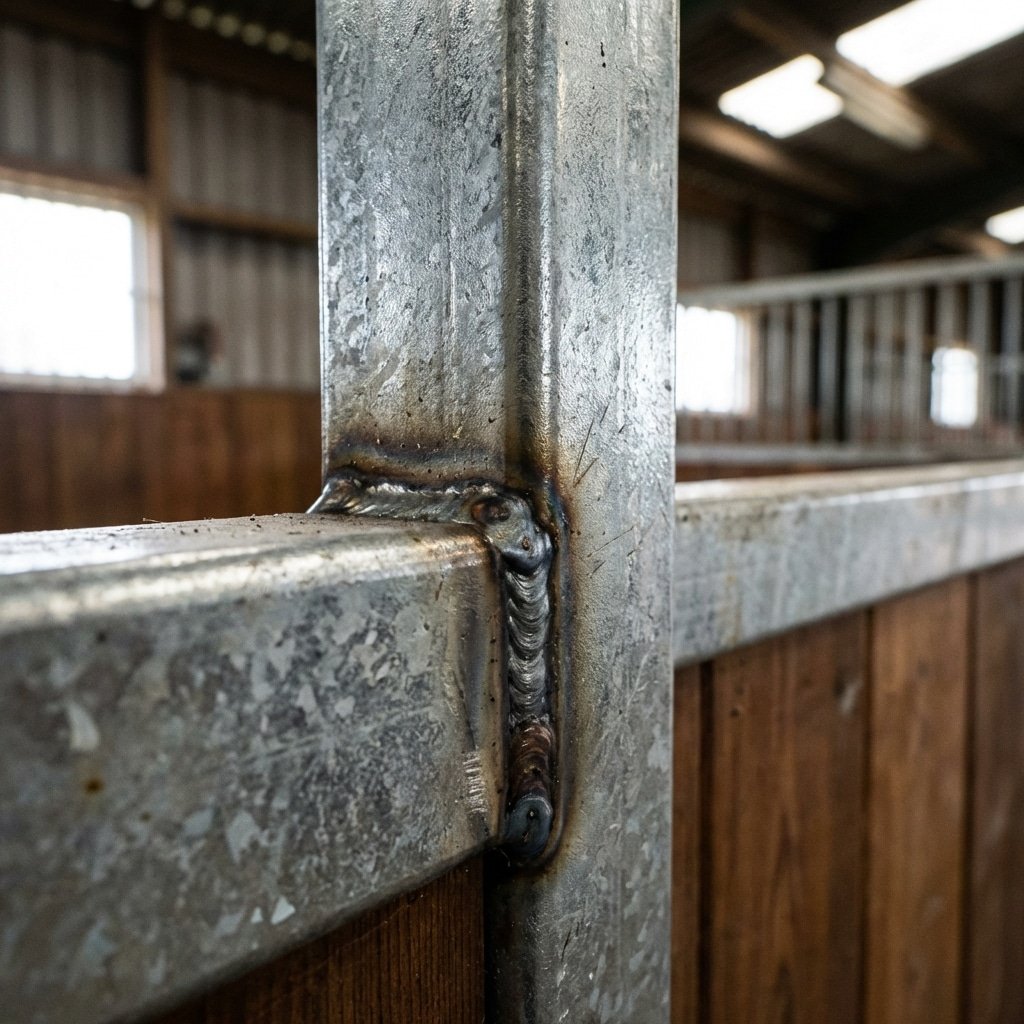
- Intégrité de la soudure : We Hot-Dip Galvanize après fabrication. This metallurgically bonds the zinc to the steel, ensuring the critical welds at the vertical edge do not crack or rust from stress.
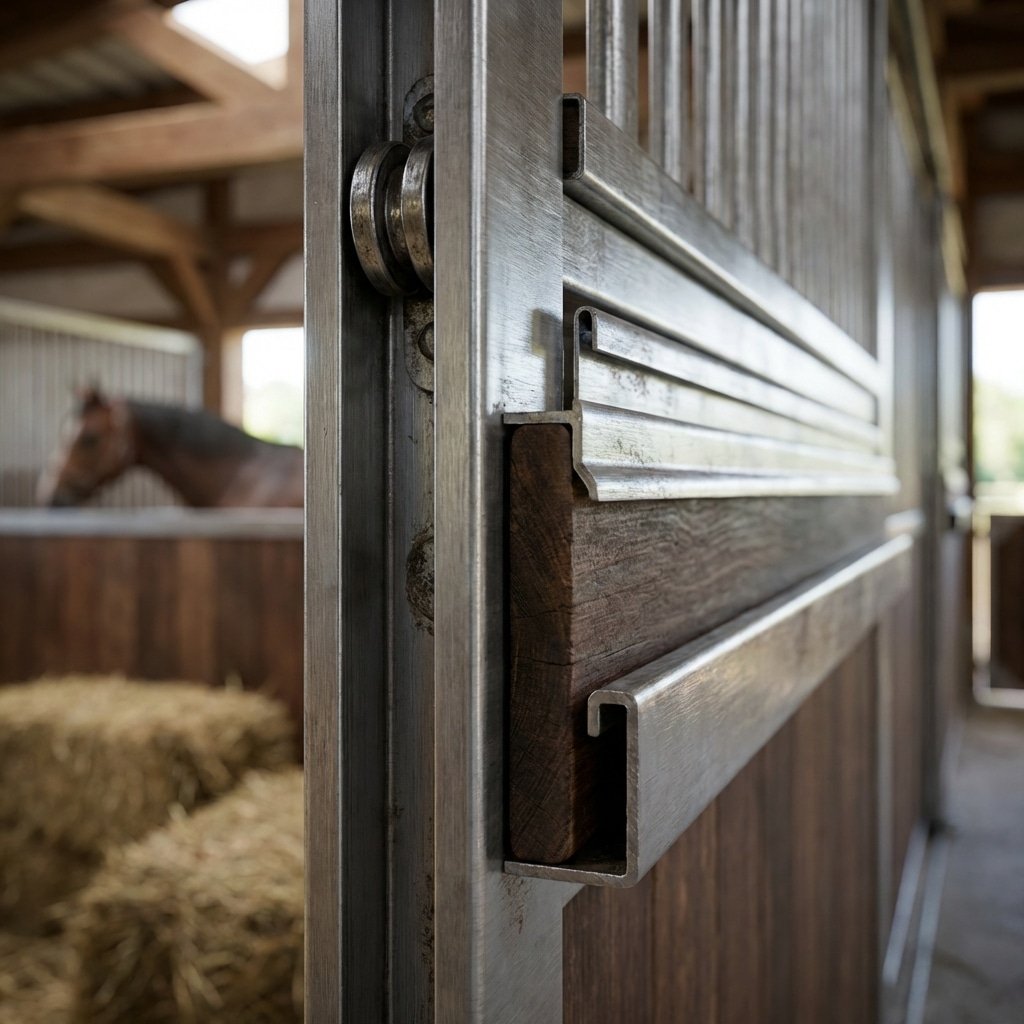
How Horses Grip the Door Frame with Their Incisors
Cribbing generates 29.4kg of force per flex. Horses anchor incisors on soft edges like wood, while smooth hot-dip galvanized steel prevents this grip entirely.
The Mechanics of the Incisor Lock
To understand why stable doors fail, you must understand the physics of the cribbing action. It is not a casual chew; it is a mechanical anchoring process. The horse plants its upper incisors firmly onto a horizontal or vertical edge, using the surface as a fulcrum. Once the teeth are locked in position, the animal contracts its lower neck muscles and pulls backward with significant intensity to retract the larynx.
This action turns the door edge into a high-stress contact point. Research indicates that a single neck flex generates approximately 29.4 kilograms of force. While a single pull might not destroy a fixture, a chronic cribber repeats this motion hundreds of times daily. This repetitive load concentrates entirely on the bite zone, rapidly fatigue-testing the material until soft metals (like aluminum) warp or wood fibers shear apart.
Surface Texture and Grip Vulnerability
Friction is the enemy of door longevity. Horses naturally prefer materials with “give,” such as wood or soft plastics, which allow their incisors to sink in and gain necessary traction. A rough or splintering surface actually encourages the behavior, as it provides a more secure ledge for the teeth to latch onto. As wood degrades, the “grip” improves, creating a cycle of destruction.
- Material Hardness: Soft materials allow teeth to penetrate, creating a lock. Hardened steel denies this purchase.
- Surface Smoothness: DB Stable uses Hot-Dip Galvanized steel (Q235B/Q345B) which creates a slick, hardened exterior.
- Friction Denial: Without surface friction, the incisors slide off the metal before the horse can contract its neck muscles.
Nous utilisons Galvanisation à chaud after fabrication, ensuring the steel edges remain smooth and round. Unlike painted steel, which chips and reveals a rough surface that horses can exploit, galvanized steel retains a metallurgical bond that frustrates the cribbing attempt by denying the horse the friction needed to lock on.
Premium Stables With 20-Year Rust Resistance
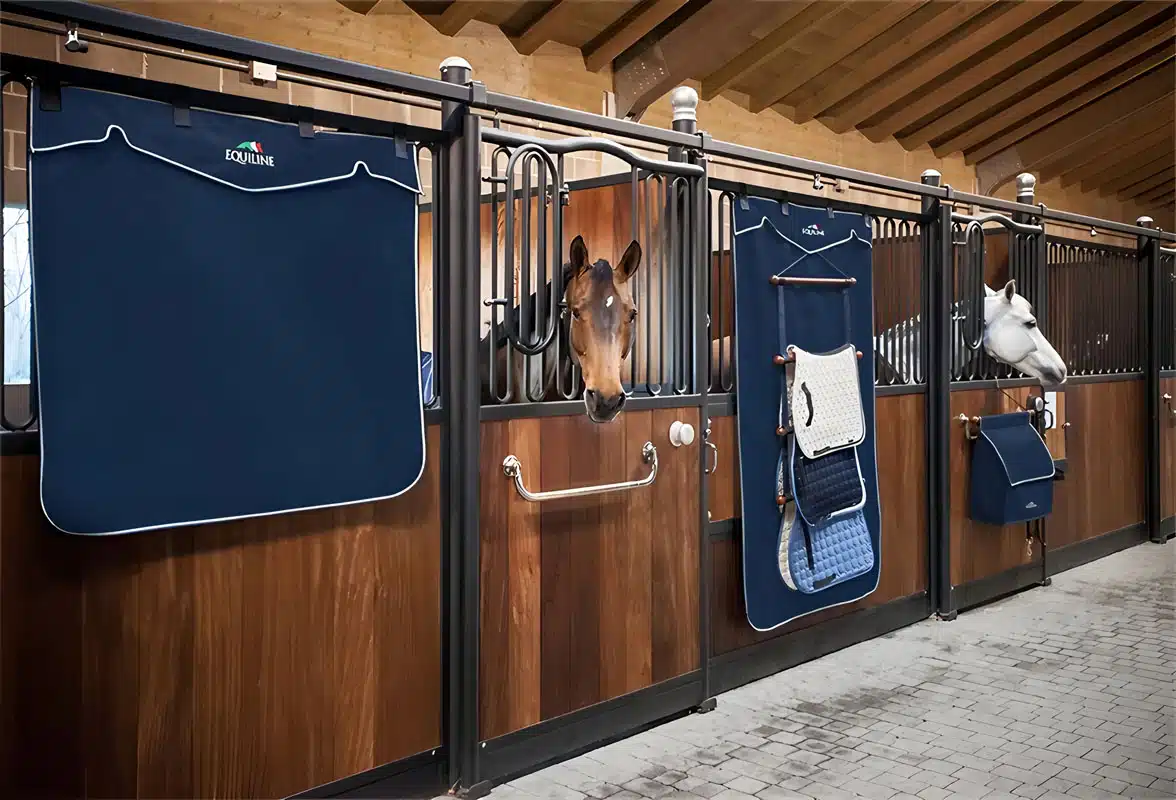
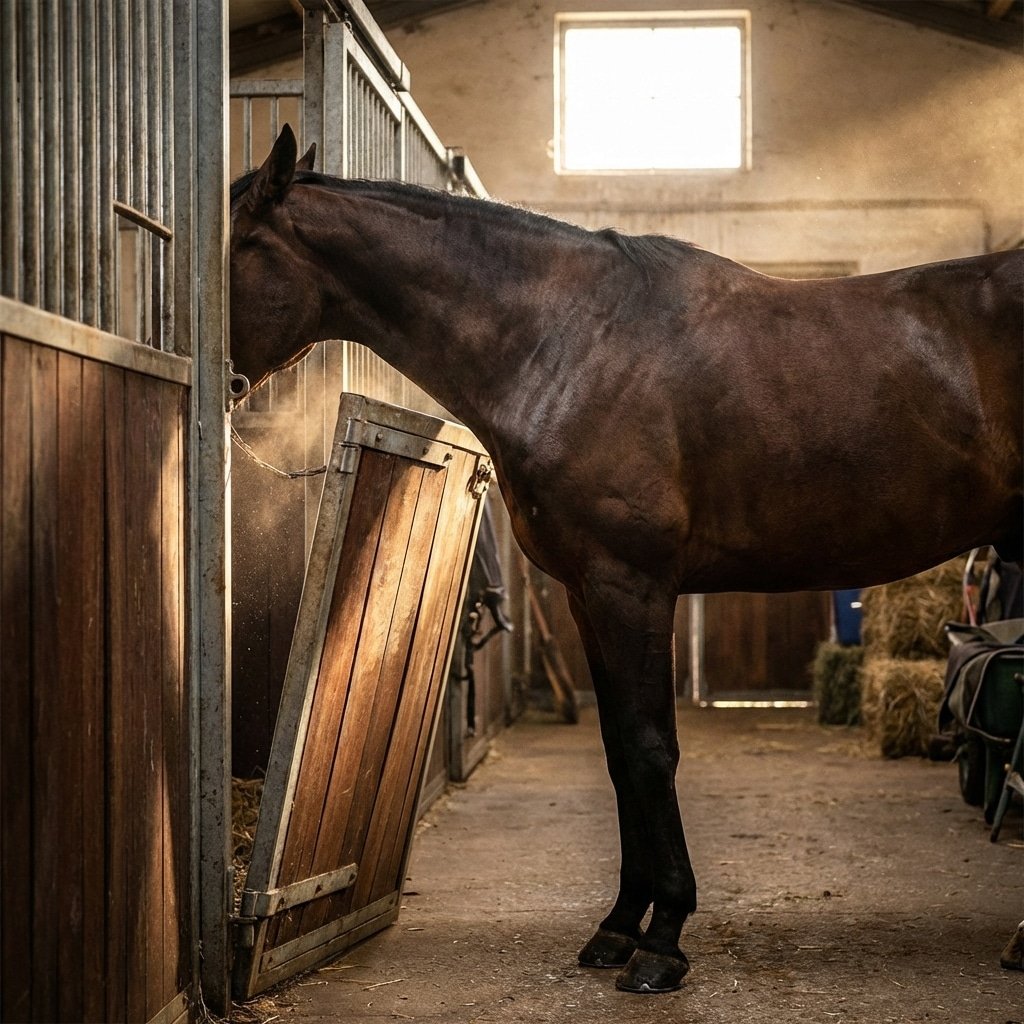
The DB Vertical U-Channel Cap
The DB Vertical U-Channel transforms vulnerable plank edges into a rigid, bite-proof steel spine, preventing cribbing and structural warping in high-traffic stable doors.
Structural Containment of Infill Planks
The vertical edge of a sliding stable door is the most common failure point in equestrian facility hardware. Horses naturally seek a “lip” or exposed edge to grip with their incisors (cribbing). Standard flat-bar edging often leaves small gaps where the wood or HDPE expands and contracts, creating the perfect leverage point for a horse to tear the door apart.
The DB Vertical U-Channel Cap eliminates this vulnerability by completely encasing the raw ends of the infill material. It functions as a mechanical lock rather than just a cosmetic trim. This structural spine serves four critical functions:
- Edge Encasement: Fully seals the raw edges of 28mm (HDPE) to 38mm (Bamboo) planks, preventing moisture ingress into the grain.
- Movement Prevention: Stops individual boards from shifting or warping within the door frame during humidity changes.
- Cribbing Elimination: Removes the physical ledge horses use to start biting, forcing their teeth to slide off the smooth steel surface.
- Span Rigidity: Acts as a vertical stiffener, adding necessary structural integrity to 3.0m – 4.0m door spans that would otherwise flex under impact.
14-Gauge Q235B Steel Specification
Many competitors reduce costs by using thin, pre-galvanized sheet metal (often 1.2mm or 1.5mm) folded into a U-shape. These thin profiles deform quickly when a 500kg horse kicks or rubs against the door. We adhere strictly to the DB Stable “Kick-Proof Guarantee” engineering standards.
Notre U-Channel Caps are manufactured exclusively from Q235B Structural Steel (equivalent to ASTM A36). We prioritize impact resistance and longevity over manufacturing shortcuts:
- Épaisseur de la paroi : We use 14-Gauge (2.0mm) steel, providing 33% more material density than the 1.5mm industry average.
- Fabrication Process: The channel is welded to the frame avant galvanizing, ensuring a unified structural bond.
- Corrosion Protection: Finished with Hot-Dip Galvanization to ISO 1461 standards.
- Zinc Coverage: Achieves an average coating thickness of >70 microns, sealing the steel against ammonia and moisture even inside the channel where paint cannot reach.
Preventing Wood Splinters in the Door Track
Résumé : Preventing track jams starts with material selection. Cap all exposed timber edges with galvanized steel channels or switch to high-density bamboo and HDPE to eliminate splintering sources entirely.
Protective Metal Barriers for Door Edges
The primary cause of sliding door failure isn’t always the rollers; it is often debris in the track. When horses crib or chew on exposed wooden door edges, the resulting splinters fall directly into the bottom guide, mixing with bedding and dirt to create a cement-like wedge that jams the door. Standard timber doors without edge protection are essentially a maintenance liability in active stables.
We mitigate this by capping every vulnerable edge with structural steel. A simple wooden edge is a soft target for a horse’s incisors. By installing metal anti-chew strips and deep U-channels, we remove the grip point entirely. This creates a mechanical barrier that protects the structural integrity of the door and keeps the operating track clear of wood debris.
- Full Perimeter Capping: We use hot-dip galvanized steel channels to cover the top, bottom, and side edges, leaving no exposed timber for the horse to bite.
- Face Protection: For aggressive cribbers, steel lining extends down the front face of the door, preventing teeth from finding purchase on the flat surface.
- Track Preservation: By preventing the wood from shredding, we eliminate the primary source of organic debris that causes sliding gear to derail or seize.
Selecting Splinter-Resistant Infills: Bamboo and HDPE
Applying metal caps to soft pine is a stop-gap measure. The most effective long-term solution is specifying infill materials that naturally resist splintering. Softwoods degrade quickly under the pressure of a horse’s jaw, but engineered materials like High Density Strand Woven Bamboo and HDPE (High-Density Polyethylene) fundamentally change the wear profile of the stable.
We specify materials based on density and impact resistance. Our manufacturing process involves fully encasing these high-grade infills within Q235B steel channels. This “framed” design means the edges of the planks are never exposed to the horse, and the surface material itself is too dense to yield splinters even if kicked or scraped.
- High Density Bamboo: With a Janka Hardness rating exceeding 3000 lbf, this material is three times harder than oak. It resists gnawing and does not fray into sharp splinters like traditional timber.
- HDPE Resin: This synthetic option offers a “Zero Maintenance” surface. It absorbs impact shock without cracking and cannot be chewed into debris, making it ideal for high-traffic or quarantine units.
- Steel Encasement: All infill planks are slide-mounted into hot-dip galvanized steel channels, ensuring the raw edges of the material are buried deep inside the metal frame, completely inaccessible to the horse.
Questions fréquemment posées
How does the door design prevent horses from chewing or cribbing on the edges?
Standard wooden doors offer a soft ledge that horses can grip with their incisors. DB Stable prevents this by capping all vertical edges with Hot-Dip Galvanized Steel U-Channels. This metal barrier eliminates the gripping surface entirely. Also, using PEHD ou Bambou haute densité infills creates a surface that is significantly harder than standard timber, making it virtually impossible for horses to bite into.
What is the specific purpose of the vertical U-channel cap?
Beyond preventing cribbing, the U-channel cap provides critical structural reinforcement. It binds the infill planks together to prevent warping or twisting, which is common in humid stable environments. It also acts as a seal against moisture ingress, protecting the ends of the bamboo or wood from rot and splintering.
How do you minimize the gap between the sliding door and the frame?
Safety and draft protection are key. Our sliding doors are designed to close into a vertical receiving channel or stop, which covers the gap when the door is shut. For external barn doors requiring extra weatherproofing, we recommend installing brush seals or rubber compression gaskets along the vertical edge to block wind and dust while allowing smooth operation.
Is the bottom of the door safe for horses rolling in the stall?
Yes. We adhere to a “Cast-Proof Design” philosophy. We strictly engineer the gap between the bottom of the door and the floor (typically approx. 50mm) to ensure a horse cannot get a hoof or leg trapped underneath if they roll against the door. This is a critical safety standard for professional equestrian facilities.
Réflexions finales
Retailers selling stable doors with exposed timber edges face recurring liability through warranty claims and dissatisfied clients. Our Q235B Structural Steel U-Channels eliminate this risk by encasing raw materials in a 14-gauge, hot-dip galvanized rigid spine. This engineering choice safeguards your inventory against cribbing damage and ensures long-term structural performance for your buyers.
Verify our build quality by requesting a technical corner sample to compare against standard market offerings. We encourage distributors to inspect the weld integrity and zinc coating thickness firsthand before finalizing a container order. Reach out to our design team today to discuss OEM specifications for your upcoming commercial projects.

 French
  English
  Spanish
  Arabic
  German
0 commentaires