


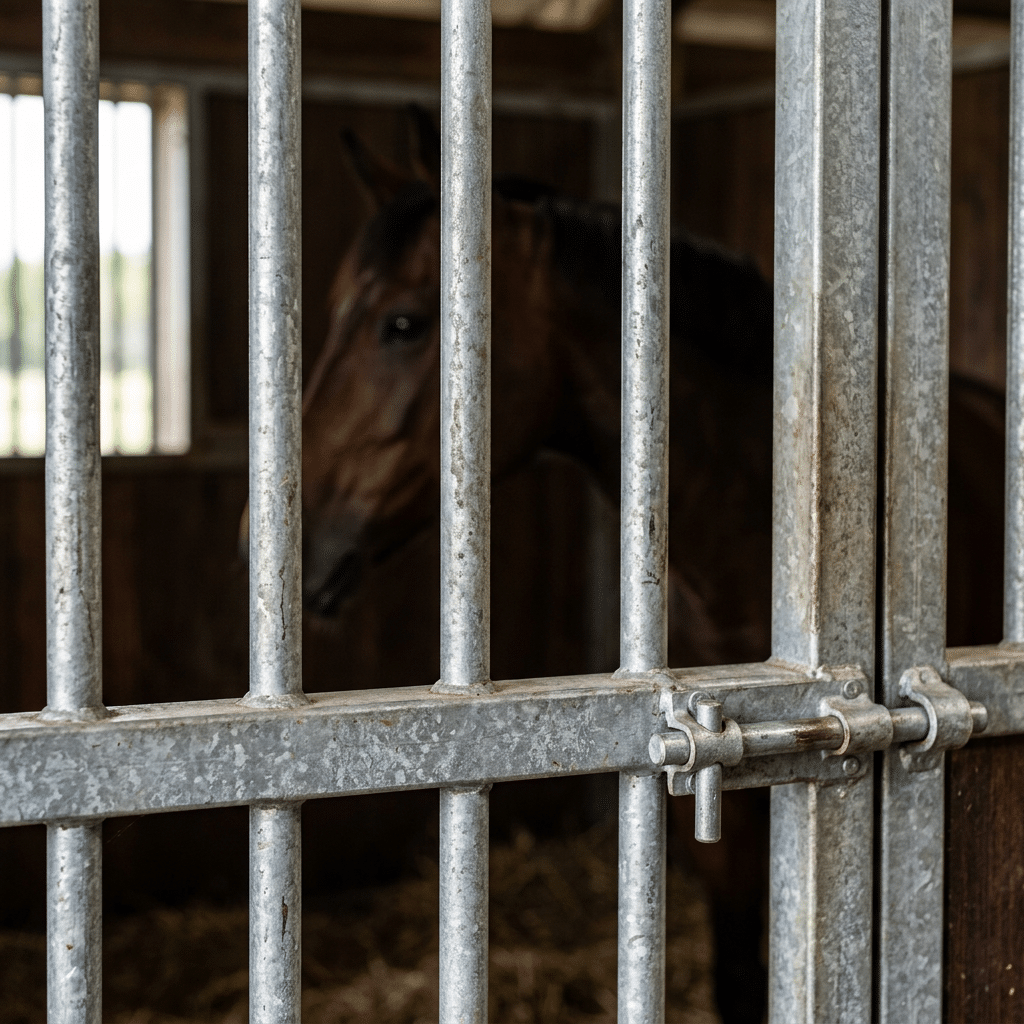
Sourcing heavy-duty infrastructure for mounted police units is a critical defense against catastrophic animal injuries and expensive liability claims. Standard commercial enclosures fail under the daily impact of massive draft crosses, destroying maintenance budgets and contractor margins.
This analysis benchmarks leading manufacturers against the Q345B low-alloy steel standard required for authentic kick-proof guarantees. We evaluate suppliers based on BS EN ISO 1461 hot-dip galvanization processes and ISO 9001 traceability, ensuring your government contract bids remain fully compliant and highly profitable.
Top List
Comparaison rapide
| Requirement / Protocol | Domaine d'intervention | Caractéristique principale | Verdict |
|---|---|---|---|
| Training Requirements | Training Protocol | Extensive Pre-Deployment Preparation | Highly prepares officers for complex operations and tactical field applications, though it requires a significant time and resource commitment before duty. |
| Officer Selection and Qualification Standards | Personnel Management | Specialized Personnel Vetting | Guarantees highly qualified, physically fit personnel and unified horse-and-rider teams, but the strict criteria significantly limit the pool of eligible candidates. |
| Equine Resource Management | Logistics & Care | Maintained Health and Operational Readiness | Maintains optimal health, safety, and equipment readiness with breed flexibility, but creates substantial daily logistical and inventory management demands. |
| Specialized Operational Applications | Field Operations | Crowd Control and Search & Rescue Capabilities | Provides unique tactical advantages for crowds and limited-access searches, though it necessitates intensive desensitization to extreme noises and obstacles. |
| Continuous Training and Proficiency Requirements | Ongoing Maintenance | Sustained Operational Excellence | Sustains high skills and team unity under adverse conditions, but requires constant administrative documentation and meticulous tracking. |
| Deployment Control Structure | Command Architecture | Organized and Supervised Field Deployment | Delivers structured command and clear direction during high-stress deployments, at the cost of generating additional supervisory overhead. |
Training Requirements
An intensive curriculum guarantees officers possess the equine handling and tactical skills necessary for high-stakes deployments.
This standard mandates a comprehensive 40-hour to 200-hour equestrian training program before field deployment. Officers master basic and advanced equitation skills while learning essential equine physiology and psychology.
The rigorous curriculum integrates tactical applications directly into the rider’s skill set. We view this intensive preparation as a fundamental requirement to keep specialized units safe and effective during complex operations.
📊 En bref :
- 📍 Lieu : Training Protocol
- 🏭 Renforcement musculaire : Extensive Pre-Deployment Preparation
- 🌍 Principaux marchés : Law Enforcement Agencies
Pourquoi nous les avons choisis :
| ✅ Les victoires | ⚠️ Compromis |
|---|---|
|
|
Officer Selection and Qualification Standards
The rigorous vetting process ensures that only the most capable personnel manage field operations, guaranteeing a highly functional and unified horse-and-rider team.
Law enforcement mounted units demand exceptional dedication and skill from their personnel. Officers must serve as full-time sworn personnel who have successfully completed their probationary periods. They undergo strict physical and background checks to verify their readiness for specialized duties.
The selection process extends beyond standard law enforcement requirements by testing advanced equestrian abilities. Evaluators assess the candidate and the horse as a cohesive unit instead of judging the rider in isolation. This unified approach guarantees that the team can safely navigate complex tactical environments.
📊 En bref :
- 📍 Lieu : Personnel Management
- 🏭 Renforcement musculaire : Specialized Personnel Vetting
- 🌍 Principaux marchés : Law Enforcement Agencies
Pourquoi nous les avons choisis :
| ✅ Les victoires | ⚠️ Compromis |
|---|---|
|
|
Equine Resource Management
It ensures peak operational performance by maintaining rigorous health, safety, and equipment standards across all mounted unit assets.
Effective equine resource management involves comprehensive oversight of both animal welfare and specialized operational equipment. Agencies conduct regular and meticulous inspections of horses, transport vehicles, trailers, and stable facilities to prevent breakdowns and injuries.
This discipline also applies strict age and physical conformation criteria during the initial horse selection process. By evaluating structural soundness rather than focusing strictly on pedigree, units secure mounts possessing the necessary endurance and strength for demanding police work.
📊 En bref :
- 📍 Lieu : Logistics & Care
- 🏭 Renforcement musculaire : Maintained Health and Operational Readiness
- 🌍 Principaux marchés : Law Enforcement Agencies
Pourquoi nous les avons choisis :
| ✅ Les victoires | ⚠️ Compromis |
|---|---|
|
|
Specialized Operational Applications
These specialized applications deliver a distinct tactical advantage for large-scale crowd control and critical incidents.
Mounted units deliver essential tactical support during critical incidents. Officers rely on these teams to clear crowds and execute complex searches in limited-access areas. The horses grant high visibility and an elevated vantage point for field commanders.
Success in these operations demands deep proficiency in specialized techniques, including horse baton use. Riders condition their mounts to ignore extreme noises, fireworks, and physical obstacles. This rigorous preparation ensures readiness for high-stress deployments, visible public events, and mutual aid requests.
📊 En bref :
- 📍 Lieu : Field Operations
- 🏭 Renforcement musculaire : Crowd Control and Search & Rescue Capabilities
- 🌍 Principaux marchés : Law Enforcement Agencies
Pourquoi nous les avons choisis :
| ✅ Les victoires | ⚠️ Compromis |
|---|---|
|
|
Continuous Training and Proficiency Requirements
Consistent practice guarantees flawless execution during high-stress law enforcement operations.
Mounted law enforcement units must attend mandatory monthly training sessions to maintain their active certifications. Instructors subject teams to standardized proficiency tests designed to mimic adverse physical and environmental field conditions.
Unit supervisors meticulously track all training hours and statistical data to verify true operational readiness. This ongoing evaluation keeps the unified horse-and-rider team fully prepared for unpredictable deployments.
📊 En bref :
- 📍 Lieu : Ongoing Maintenance
- 🏭 Renforcement musculaire : Sustained Operational Excellence
- 🌍 Principaux marchés : Law Enforcement Agencies
Pourquoi nous les avons choisis :
| ✅ Les victoires | ⚠️ Compromis |
|---|---|
|
|
Deployment Control Structure
This framework keeps operations running smoothly by providing specialized command and clear direction during high-stress deployments.
Mounted units operate under a dedicated Watch Commander or Incident Commander. This setup relies on specific activation protocols to manage field operations effectively. Leaders assign units to minimum four-hour details to maintain consistent and reliable coverage.
This architecture gives teams focused guidance when responding to critical incidents. It structures the specialized personnel to keep operational oversight tight. Supervisors coordinate every deployment to prevent communication breakdowns in the field.
📊 En bref :
- 📍 Lieu : Command Architecture
- 🏭 Renforcement musculaire : Organized and Supervised Field Deployment
- 🌍 Principaux marchés : Law Enforcement Agencies
Pourquoi nous les avons choisis :
| ✅ Les victoires | ⚠️ Compromis |
|---|---|
|
|
Precision-Engineered Horse Stables Built to Last

Les exigences spécifiques des unités équestres institutionnelles
Institutional mounted units face extreme operational demands, requiring rigorous equestrian training and heavy-duty infrastructure. We engineer our stable systems to withstand high-impact law enforcement environments, protecting valuable equine assets while eliminating facility maintenance.
Rigorous Training and Operational Deployments
Law enforcement mounted units require extensive pre-deployment preparation compared to standard patrol divisions. Agencies like the LAPD mandate a 200-hour equestrian training program covering advanced equitation, tactical applications, and equine physiology. Officers deploy these specialized units for critical, high-stress incidents. These demanding deployments include active crowd control, search operations in limited-access areas, and specialized scenarios involving loud noises and gauntlet obstacles.
The daily physical and mental stress on both horse and rider means their supporting facility infrastructure must perform flawlessly. Horses need a secure, reliable environment to recover from rigorous field operations without the risk of injury from failing hardware or inadequate partitions.
Heavy-Duty Facility Requirements for Police Horses
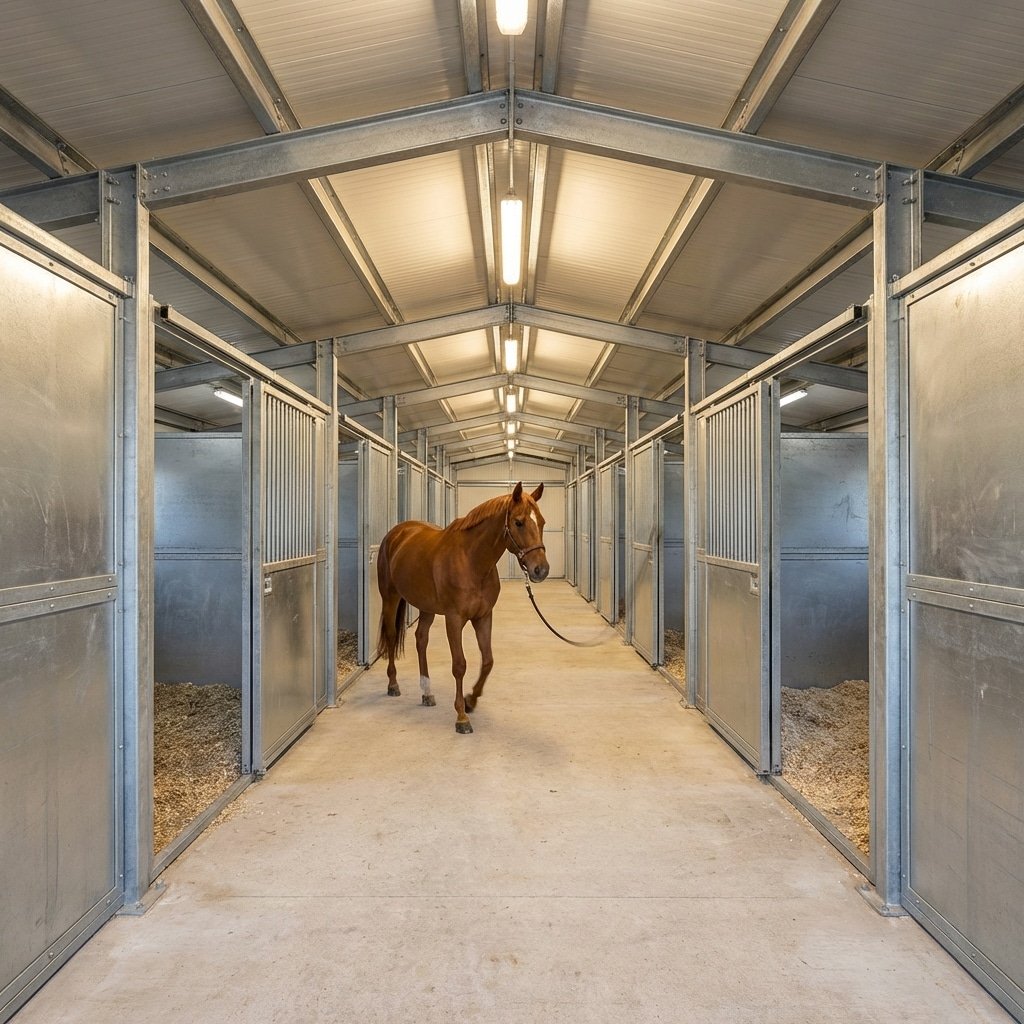
The intense daily operations of police units demand stabling facilities capable of passing strict supervisory inspections for structural integrity and animal welfare. Standard commercial enclosures fail under the physical pressure of large draft crosses and continuous operational use. We engineer our professional stable systems using Q345B low alloy high strength steel, providing the exceptional yield strength necessary to absorb extreme impact without brittle fractures.
We process every frame through hot-dip galvanization after fabrication, ensuring all internal and external welds receive a solid zinc coating averaging over 85 microns. This engineering standard guarantees a kick-proof environment that protects high-value institutional horses from injury. For facility directors and project distributors, our structural integrity directly prevents liability claims and secures long-term profit margins by eliminating continuous maintenance costs.
Limite d'élasticité de l'acier : Q235B vs Q345B pour les traverses de charpente
Q345B low-alloy high-strength steel delivers a 345 MPa minimum yield strength, making it the required standard for heavy draft cross horses. While Q235B works well for standard operations, upgrading to our Q345B framework protects your project by preventing structural bending and brittle fractures under heavy impact.
Mechanical Properties and Load-Bearing Capacity
When engineering stable systems for heavy draft crosses, the choice of steel framework dictates the long-term viability of the installation. Q345B structural steel delivers a minimum yield strengt
h of 345 MPa, outperforming the standard Q235B grade at 235 MPa. This strength increase proves essential when handling the dynamic loads generated by large draft horses.
The elevated tensile strength of Q345B, ranging from 470 to 630 MPa, allows us to design robust stable frames that actively resist heavy repetitive stress, impact loads, and torsional forces. Q235B provides a reliable baseline for standard operations, but outfitting facilities for heavy-duty draft equipment requires the predictable load-bearing performance of Q345B. Specifying this stronger steel prevents structural bending, reduces maintenance claims, and protects distributor profit margins.
Impact Toughness for Winter Operations
Cold climates expose steel to unique vulnerabilities, particularly the risk of brittle fractures caused by high-impact kicks. Microalloying elements like niobium and titanium give Q345B exceptional low-temperature impact toughness. This structural resilience ensures the framework absorbs force safely, keeping horses secure even in freezing weather conditions.
We integrate Q345B heavy-duty frameworks directly into our Professional Series to secure a reliable kick-proof guarantee for mounted police units and training centers. Pairing this low-alloy high-strength steel with our strict hot-dip galvanization after fabrication process ensures the stable system maintains uncompromised structural integrity and rust protection. This durable engineering eliminates the need for constant structural repairs, giving your clients a facility built for long-term performance.
Quincaillerie inviolable et loquets encastrés
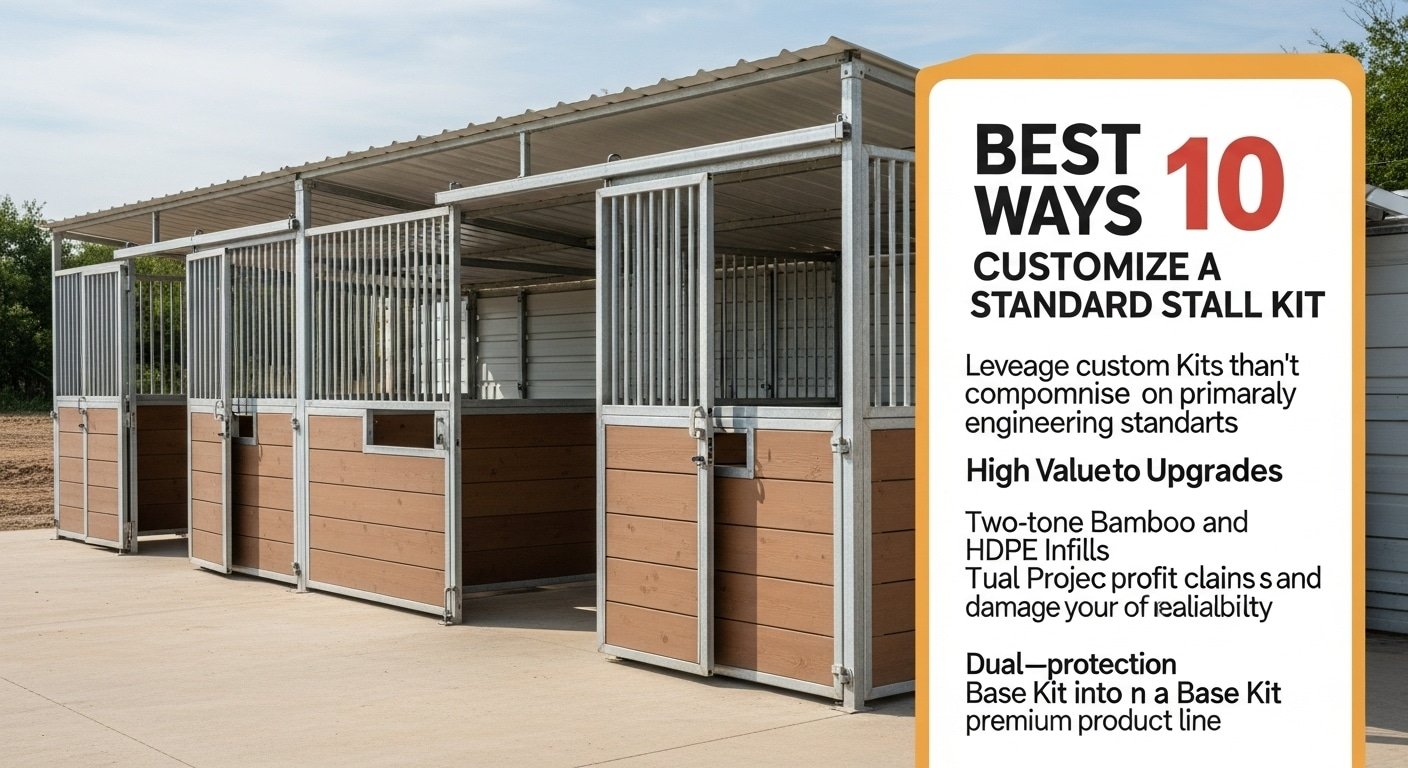
To protect heavy draft cross police horses and secure facility equipment, we equip our stable systems with flush-mounted sliding latches and tamper-resistant 304 stainless steel hardware. This integration eliminates dangerous snag points in high-traffic aisles while locking down the heavy-duty hot-dip galvanized framework against immense torsion forces and unauthorized access.
Eliminating Snag Hazards with Flush-Mounted Latches
Traditional protruding latches present severe snag hazards for draft cross police horses entering and exiting stalls rapidly. When handling animals that stand up to 17.2 hands tall and carry significant momentum, facility designers must prioritize a completely unobstructed barn aisle to prevent serious lacerations and expensive tactical equipment damage.
We integrate flush-mounted sliding mechanisms directly into our heavy-duty Q345B low-alloy high-strength steel frames. This recessed engineering directly supports our cast-proof design philosophy. By keeping the latching mechanisms flush with the door profile, we ensure large institutional horses operate in environments completely free from sharp structural edges, safeguarding both the animals and the officers handling them during high-stress deployments.
Tamper-Resistant 304 Stainless Steel Fastening Systems
Government equestrian facilities demand high-security hardware to prevent unauthorized access and protect expensive patrol gear. Standard retail fasteners fail to meet the strict security protocols required by modern law enforcement units and cannot withstand the daily wear of an active mounted division.
Our standard installation kit provides specialized tamper-resistant 304 stainless steel anchor bolts and connectors that securely lock the stable panels to the facility floor. These proprietary fasteners complement our hot-dip galvanized steel panels, providing maximum site security. They actively resist the high torsion forces generated by large police horses leaning or turning within the stall, ensuring the structural integrity of the entire stable grid remains intact for decades.
Traçabilité selon la norme ISO 9001 de DB pour les marchés publics
Securing law enforcement and government contracts requires flawless documentation and verifiable quality standards. Our ISO 9001 certified manufacturing process provides complete traceability from raw Q345B steel sourcing to final flat-pack pallet loading, ensuring your bids are fully compliant and audit-ready.
Document Control and Compliance Proof for Tenders
Law enforcement procurement teams rigorously evaluate operational reliability during the bidding process. They demand strict documentation of equipment standards, facility design, and manufacturing procedures to minimize liability and guarantee safety. When you partner with us for government tenders, you gain access to a fully documented production pipeline that satisfies these demanding requirements.
Our ISO 9001 certification delivers audit-ready traceability for your project submissions. We track every operational step, from sourcing the initial raw materials to securing the final flat-pack steel pallets for shipment. This systematic quality management proves to selection committees that the stable systems you provide are built with verifiable oversight, directly strengthening your contract proposals and protecting your business reputation.
Integrating Quality Systems with Heavy-Duty Specifications
Traceability directly rein
forces the technical specifications required for mounted police units and institutional facilities. Our quality control protocols guarantee batch-to-batch consistency for critical structural components, specifically our Q345B low alloy high strength steel frameworks. This rigorous tracking ensures every draft cross stable we manufacture provides the exact yield strength needed to withstand heavy repetitive stress and unpredictable impact loads from large service animals.
We align our internal quality systems directly with BS EN ISO 1461 standards to eliminate any guesswork regarding long-term rust protection. Our factory records precise hot-dip galvanization metrics after fabrication, proving that zinc coatings consistently exceed 85 microns on all structural parts thicker than 6mm. By supplying this hard data, we protect your project margins, drastically reduce long-term warranty claims, and give you a definitive edge in competitive institutional bidding.
Réflexions finales
While generic commercial enclosures offer lower upfront costs, outfitting a law enforcement unit with our Q345B high-strength steel framework is the only way to safeguard your project against brittle fractures and liability claims. Relying on our ISO 9001 certified manufacturing process ensures your government bids remain fully compliant and audit-ready. Supplying this heavy-duty, hot-dip galvanized infrastructure protects your competitive margins while eliminating expensive long-term maintenance overhead.
Do not guess on structural integrity when bidding on strict institutional tenders—verify our engineering standards firsthand. We recommend starting with a trial order of three to five Professional Series stables to evaluate our flush-mounted hardware and cost-saving flat-pack logistics. Contact our manufacturing team today to secure your wholesale pricing and align our production schedule with your next public tender.
Questions fréquemment posées
Comment construire des écuries pour les chevaux de la police ?
We manufacture police horse stables using our heavy-duty Q345B steel framework combined with kick-proof HDPE or high-density bamboo infills. Our Professional Series incorporates a cast-proof design and stack effect ventilation to maximize equine safety and respiratory health. We hot-dip galvanize every component after fabrication, guaranteeing zero maintenance and long-term durability for active institutional units.
Qu'est-ce que l'acier à haute résistance Q345B ?
Q345B represents a low-alloy, high-strength structural steel equivalent to ASTM Grade 50. We use this premium material as the core of our heavy-duty stable upgrades, stepping up from our standard Q235B steel. It delivers exceptional low-temperature impact toughness, actively preventing brittle fractures when massive draft horses kick the panels during cold winter operations.
Les loquets encastrés sont-ils plus sûrs ?
Yes. We engineer our heavy-duty stables with flush-mounted latches and tamper-proof 304 stainless steel hardware to keep all passageways entirely free of sharp protrusions. This design eliminates the risk of officers or large draft crosses catching their tactical gear or sustaining injuries while exiting the stall rapidly.
Comment remporter des marchés publics dans le domaine équestre ?
Winning government tenders requires strict compliance and aggressive cost-efficiency. We support our B2B distributors by supplying ISO 9001 certified traceability and documented BS EN ISO 1461 galvanization standards. Our steel pallet flat-pack logistics system also allows you to load 30 to 45 sets into a single 40HQ container, cutting freight costs by over 60% and protecting your competitive margins during the bidding process.
Quelle taille de box pour les chevaux de police issus d'un croisement de race de trait ?
Draft cross police horses require much larger accommodations than standard light horses. We manufacture institutional stall fronts and partitions in expanded 3.5-meter to 4.0-meter lengths to give these animals the room they need to turn and lie down comfortably. We frame these enlarged spaces using heavy-duty 14-gauge structural tubing, ensuring massive police horses remain safely contained.

 French
  English
  Spanish
  Arabic
  German
0 commentaires