


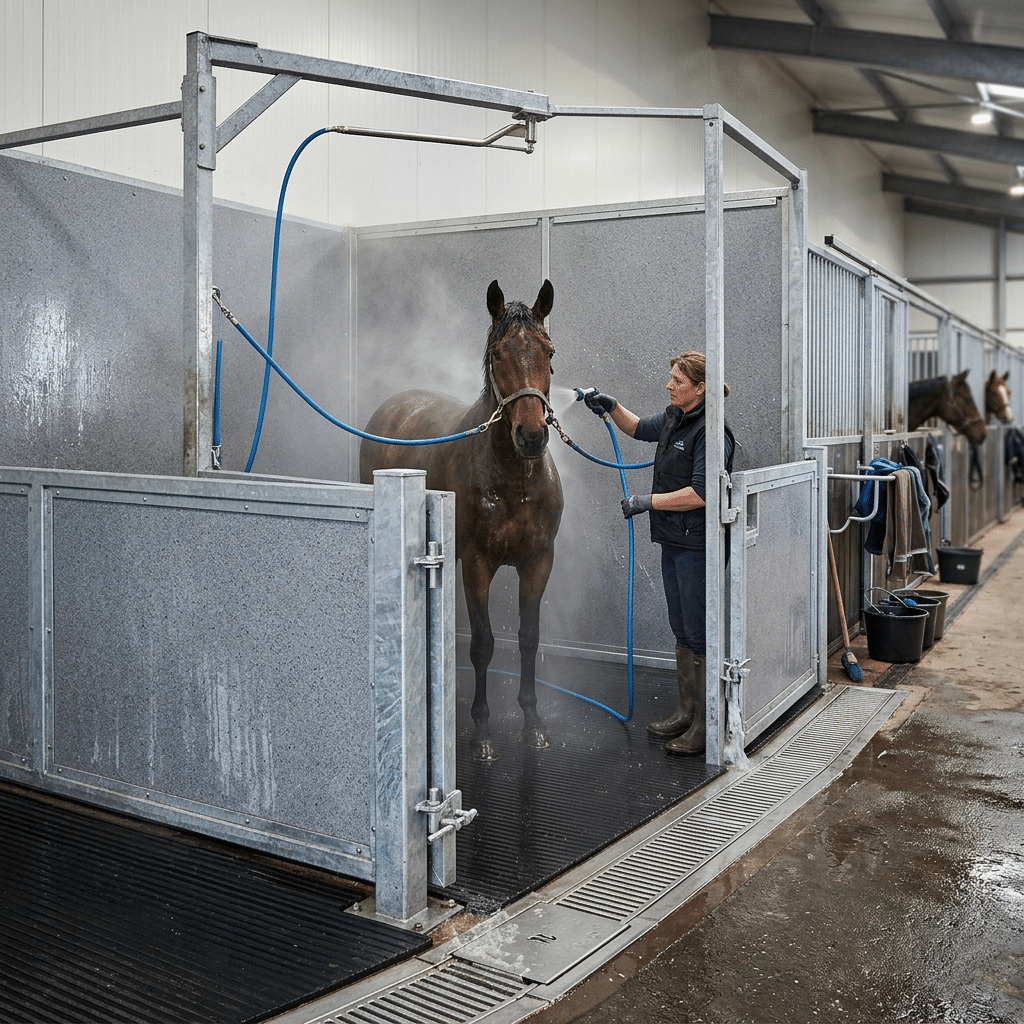
Sourcing reliable Portable/Event Stalls directly dictates whether an equestrian show generates profit or bleeds capital through hidden logistics and labor costs. Traditional fully welded frames drain your budget by limiting shipping capacity to a mere 15 units per container, which instantly crushes project margins through exorbitant freight expenses.
This analysis benchmarks top manufacturers against the 14-gauge structural steel and hot-dip galvanized after fabrication standards. We evaluate suppliers on flat-pack logistics density and drop-pin assembly speeds to help organizers protect their bottom line and secure a scalable B2B partnership.
The Economics of Renting vs. Buying Event Stabling
Comparaison rapide
| Facteur | Domaine d'intervention | Core Advantage | Verdict |
|---|---|---|---|
| Cost Structure Comparison | Cost Management | Fractional Upfront Investment | Renting offers lower upfront capital needs, though frequent use may cause cumulative fees to eventually exceed outright purchase costs. |
| Frequency of Use | Usage Dynamics | Optimized Capital Allocation | Ideal for occasional events to eliminate storage expenses, whereas frequent event planners achieve better cost recovery through ownership. |
| Hidden Ownership Costs | Capital Expenditure | Maintenance & Storage Avoidance | Renting effectively removes the unpredictable financial burdens of ongoing maintenance, repairs, and long-term storage space. |
| Scalability and Flexibility | Event Management | Access to Varied Inventory | Provides versatile access to diverse equipment, allowing planners to scale dynamically and free up budget for other event elements. |
| Environmental Economics | Développement durable | Circular Economy Support | An eco-conscious approach that reduces event waste and disposal costs while actively supporting an organization’s broader green initiatives. |
Cost Structure Comparison
Renting offers a highly flexible pay-for-use model that drastically reduces initial capital expenditure for event planners.
Renting operates on a straightforward pay-for-use model. This approach aligns your costs directly with the specific duration and physical requirements of each event. Planners avoid the heavy financial burden associated with purchasing equipment outright.
While renting demands a significantly lower upfront investment, long-term frequency matters. Hosting frequent events means cumulative rental fees might eventually surpass the initial purchase price of the stabling. Event organizers must weigh their scheduling frequency against these financial tipping points.
📊 En bref :
- 📍 Lieu : Cost Management
- 🏭 Renforcement musculaire : Fractional Upfront Investment
- 🌍 Principaux marchés : Mondial
Pourquoi nous les avons choisis :
| ✅ Les victoires | ⚠️ Compromis |
|---|---|
|
|
Frequency of Use
Match your strategy to your schedule to maximize capital efficiency and avoid wasted budget.
The frequency of events dictates the best financial approach for stabling. Occasional events benefit highly from renting due to lower upfront costs and eliminated storage expenses.
Frequent event planners achieve better cost recovery through outright ownership. Evaluating your annual calendar accurately prevents inefficient spending and aligns your budget with actual use.
📊 En bref :
- 📍 Lieu : Usage Dynamics
- 🏭 Renforcement musculaire : Optimized Capital Allocation
- 🌍 Principaux marchés : Mondial
Pourquoi nous les avons choisis :
| ✅ Les victoires | ⚠️ Compromis |
|---|---|
|
|
Hidden Ownership Costs
Renting eliminates unpredictable long-term expenses, giving you complete control over your event budget.
Buying equipment demands more than the initial sticker price. You must allocate ongoing capital for maintenance, repairs, and secure storage space over the lifespan of the event stabling.
These continuous expenses often exceed your initial cost calculations. Renting shifts the burden of lifecycle replacements and facility upkeep back to the supplier, protecting your bottom line from unexpected financial drains.
📊 En bref :
- 📍 Lieu : Capital Expenditure
- 🏭 Renforcement musculaire : Maintenance & Storage Avoidance
- 🌍 Principaux marchés : Mondial
Pourquoi nous les avons choisis :
| ✅ Les victoires | ⚠️ Compromis |
|---|---|
|
|
Scalability and Flexibility
Renting avoids long-term capital traps, allowing you to reallocate your budget to vital event elements like catering and entertainment.
Renting provides immediate access to a varied equipment inventory without requiring a long-term capital commitment. Event planners can scale their needs up or down based on attendee counts and specific aesthetic requirements for each gathering.
This flexibility protects working capital from depreciating assets. Teams avoid spending heavily on static inventory and instead shift those funds directly into high-impact, attendee-facing experiences.
📊 En bref :
- 📍 Lieu : Event Management
- 🏭 Renforcement musculaire : Access to Varied Inventory
- 🌍 Principaux marchés : Mondial
Pourquoi nous les avons choisis :
| ✅ Les victoires | ⚠️ Compromis |
|---|---|
|
|
Environmental Economics
Renting event stabling drives down waste and disposal costs by keeping materials in active circulation.
Adopting reuse-based rental models actively supports circular economy principles. This sustainable approach cuts waste-related costs and bolsters your organization’s broader environmental initiatives.
Instead of discarding materials after limited use, renting keeps high-quality stabling equipment in continuous circulation. This lowers the carbon footprint of your event and minimizes the financial burden of waste disposal.
📊 En bref :
- 📍 Domaine d'intervention : Développement durable
- 🏭 Core Benefit: Circular Economy Support
- 🌍 Portée : Mondial
The Breakdown:
| ✅ Les victoires | ⚠️ Compromis |
|---|---|
|
|
Des écuries conçues avec précision pour une durabilité exceptionnelle
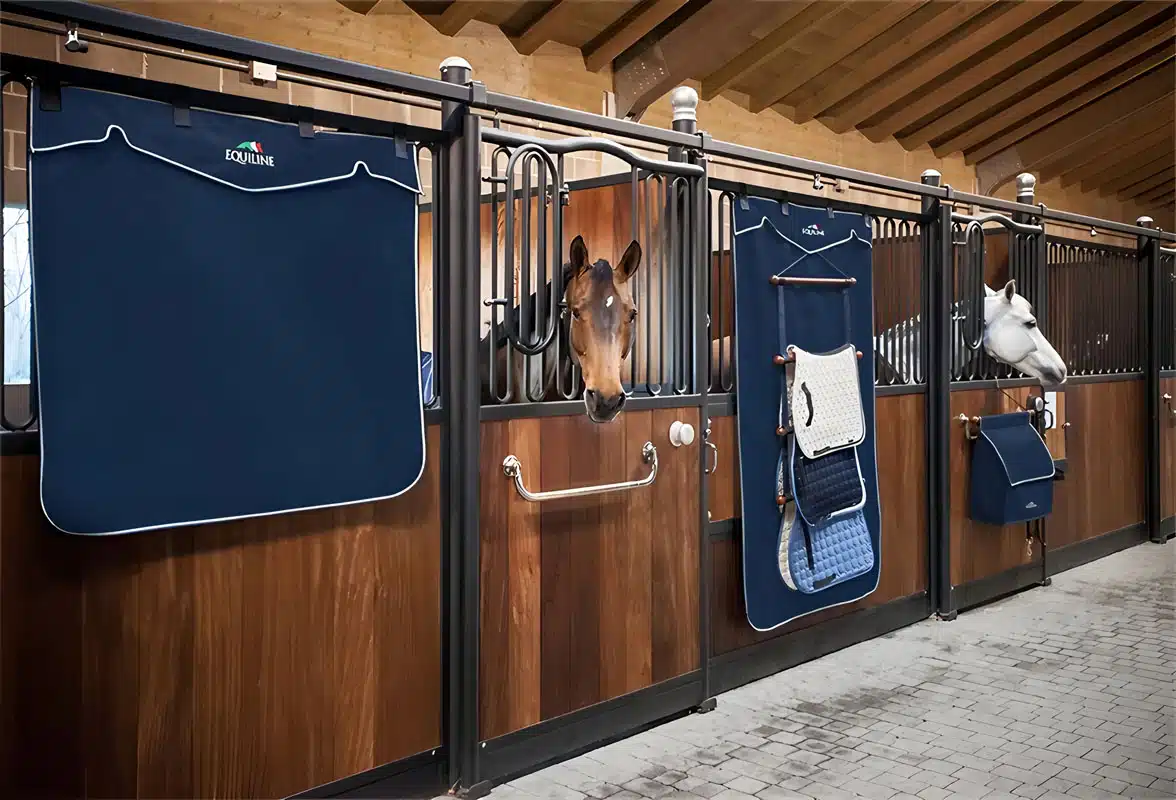
The Economics of Renting vs. Buying Event Stabling
While renting minimizes upfront capital for occasional events, frequent organizers achieve superior profit margins through direct ownership. We engineered our flat-pack stabling system to eliminate the traditional hidden costs of ownership by maximizing storage density and utilizing zero-maintenance materials to protect your investment.
Cost Structure of Short-Term Rentals Versus Long-Term Ownership
Renting offers a pay-for-use model that minimizes upfront capital. This approach perfectly suits organizations hosting rare or one-off equestrian events. But for frequent event planners, cumulative rental fees quickly exceed the initial purchase price. Direct ownership creates a distinct financial advantage over time. By investing in your own inventory, you transition from recurring rental expenses to long-term asset utilization, directly improving your bottom line and event profit margins.
Reducing Hidden Ownership Expenses With Smart System Design
Purchasing temporary stalls typically introduces hidden expenses like off-season storage allocation and ongoing maintenance for damaged panels. We designed our logistics technology to solve this exact problem. Our flat-pack system fits up to 45 sets into a single 40HQ container. This radically reduces the warehouse footprint you need for compact off-season storage and cuts your freight costs by over 60% compared to traditional fully welded frames.
To eliminate ongoing repair costs, we equip our structural steel frames with UV-stabilized HDPE infills. This material easily absorbs heavy impacts and delivers a true zero-maintenance lifespan. We also hot-dip galvanize every steel component after fabrication to guarantee lifetime rust protection. This engineering strategy ensures your temporary stabling inventory remains a profitable asset year after year without draining your budget on constant upkeep and replacement parts.
The Assembly Speed Test: Pin Connectors vs. Bolts
Drop-pin connectors outperform traditional bolts by operating up to 40% faster. By eliminating manual torque verification, our drop-pin hardware allows installation crews to rapidly deploy our DB flat-pack systems, maximizing labor efficiency and protecting project margins.
The Time Cost of Traditional Bolting Methods
Relying on traditional bolt fastening forces crews to perform manual torque verification at every joint. This repetitive task adds unnecessary minutes to each connection point during large-scale event setups or commercial facility builds
. Installation teams also need specialized tools to secure standard bolted joints. When working with our heavy-duty 14-gauge structural steel panels, this heavy reliance on complex tooling directly slows down deployment and eats into your project labor budget.
Efficiency Gains with Pin Connector Systems
Assembly mechanic studies prove that push-in and pin-based connectors operate up to 40% faster than threaded screws or bolts. We integrate drop-pin hardware into our stable designs to capitalize on this speed. This hardware pairs perfectly with our DB flat-pack delivery method. Because our packing system allows you to load 30 to 45 stable sets into a single 40HQ container, your crews can unload and assemble an entire commercial block in a fraction of the time. The drop-pin design requires minimal tooling, keeping your workers moving and safeguarding your bottom line.
Logistics: Why Our Flat-Pack System Fits 45 Sets per Container
Traditional fully welded stalls waste container space, limiting a 40HQ to just 12 to 15 sets. We engineered a modular, steel pallet flat-pack system that fits up to 45 sets inside a single 40HQ, completely eliminating loose loading while saving our B2B partners over 60% on freight.
Comparing Traditional Welding to Flat-Pack Efficiency
Traditional fully welded horse stalls create bulky, awkward shapes that consume massive amounts of container volume. This inefficiency limits a standard 40HQ shipping container to just 12 to 15 sets, forcing buyers to absorb exceptionally high shipping costs per unit.
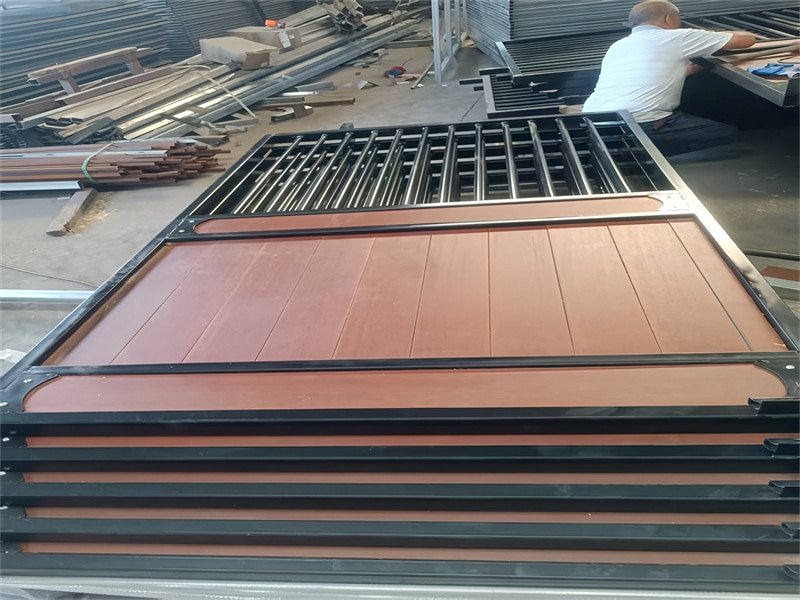
We designed our flat-pack system to solve this exact logistical bottleneck. By utilizing modular frame components packaged tightly on steel pallets, we completely eliminate the risks and space waste of loose loading. This optimized structural packing allows us to load up to 45 complete sets into a single 40HQ container. You immediately save over 60% on freight costs
, and your warehouse team benefits from a much safer, faster unloading process at the destination.
Weight Specs and B2B Profit Protection
Each flat-packed stable set weighs between 250kg and 450kg, with standard panel lengths spanning 3.0m to 4.0m depending on your choice of zero-maintenance HDPE or high-density bamboo infill. We manufacture these systems using heavy-duty 14-gauge steel, yet our engineering ensures the dismantled footprint remains incredibly compact.
This dense packing strategy serves as a direct form of profit protection for our distributors. Maximizing the structural capacity of every shipping container drastically lowers your landed cost per stable. When you minimize the per-unit freight expense, you instantly widen your profit margins and secure a dominant pricing advantage for your large project bids.
Structural Integrity: 14-Gauge Frames for Panicked Horses
We engineer our stall frames using 14-gauge steel with a strict 2.0mm to 2.5mm wall thickness. This construction delivers a 50,000 PSI yield strength, absorbing severe impact energy from panicked horses while preventing structural deformation and reducing liability claims for facility operators.
The Engineering Behind 14-Gauge Steel Frames
A 14-gauge steel construction featuring 2.0mm to 2.5mm wall thickness provides an optimal strength-to-weight ratio. This specific thickness delivers a minimum yield strength of 50,000 PSI, giving the framework the exact resilience needed to resist heavy deformation when horses kick or rear against the partitions.
We enforce a strict minimum thickness requirement of 2.0mm across our entire manufacturing line, entirely prohibiting thinner tubing. By pairing these 14-gauge walls with 50mm x 50mm square hollow sections or 114mm round posts, our structural design absorbs severe impact energy. This robust engineering safely contains distressed animals and protects your project margins from costly early replacements.
Steel Grades and Geometry for High-Stress Scenarios
Facilities operating in cold climates face higher risks of metal fatigue and failure. We upgrade these installations from our standard Q235B structural steel to Q345B low-alloy, high-strength steel. This advanced material offers superior low-temperature impact toughness, stopping brittle fractures during winter panic episodes to maintain a fail-safe environment.
Our stall geometry pairs 14-gauge main structural members with tightly spaced vertical bars positioned at strict 3 to 4-inch intervals. This exact spacing stops hooves from passing through the barrier during a cast or panic event, all while promoting stack effect ventilation to maintain excellent air quality inside the barn.
Réflexions finales
While standard welded stalls present a familiar upfront choice, they actively erode your profit margins through wasted shipping volume and rapid rust failure. Upgrading to our 14-gauge structural steel frames, complete with true hot-dip galvanization after fabrication, is the precise strategy required to eliminate ongoing maintenance liabilities. This rigorous engineering standard ensures your temporary stabling inventory operates as a high-performing financial asset rather than a recurring operational expense.
Do not risk your next large-scale event on unverified equipment or inefficient logistics. We recommend starting with an LCL trial order of 3 to 5 flat-packed stable sets to experience our drop-pin assembly speed and zero-maintenance HDPE firsthand. Contact our DB Stable engineering team directly to secure your 40HQ container allocation and lock in a permanent pricing advantage for your commercial bids.
Questions fréquemment posées
Best portable horse stalls for events?
Our Economy Series fits event needs perfectly. We build these units using 14-gauge steel frames hot-dip galvanized after fabrication, paired with UV-stabilized HDPE infill. This combination delivers a zero-maintenance, highly durable solution tailored for temporary setups, rental stables, and event staging areas.
How many temporary stalls fit in a 40HQ?
Using our flat-pack steel pallet system, you can fit 30 to 45 temporary stall sets inside a single 40HQ container. Traditional fully welded setups only fit 12 to 15 sets. Our design protects your profit margins by saving over 60% on international freight costs.
Cost to buy vs rent event stabling?
Buying direct from a B2B manufacturer offsets the long-term costs of renting, especially for large event venues. Renting works well for one-off needs, but purchasing a 40HQ container of our flat-packed stalls ensures a quick return on investment for frequent event organizers and protects your operational margins.
Are portable horse stables safe?
Yes. We engineer safety into every panel using heavy-duty 14-gauge Q235B structural steel frames and impact-absorbing HDPE. Our panels feature a cast-proof design with minimal 50mm bottom gaps to stop legs from getting stuck. This design ensures complete protection and delivers our kick-proof guarantee even for panicked horses.
Quick assembly horse stall panels?
We build our portable systems for rapid deployment. Each flat-pack kit includes pre-cut infill planks, pre-drilled panels, and a complete 304 stainless steel hardware kit. This modular setup allows your event staff to assemble and dismantle stall blocks quickly without specialized heavy equipment.

 French
  English
  Spanish
  Arabic
  German
0 commentaires