


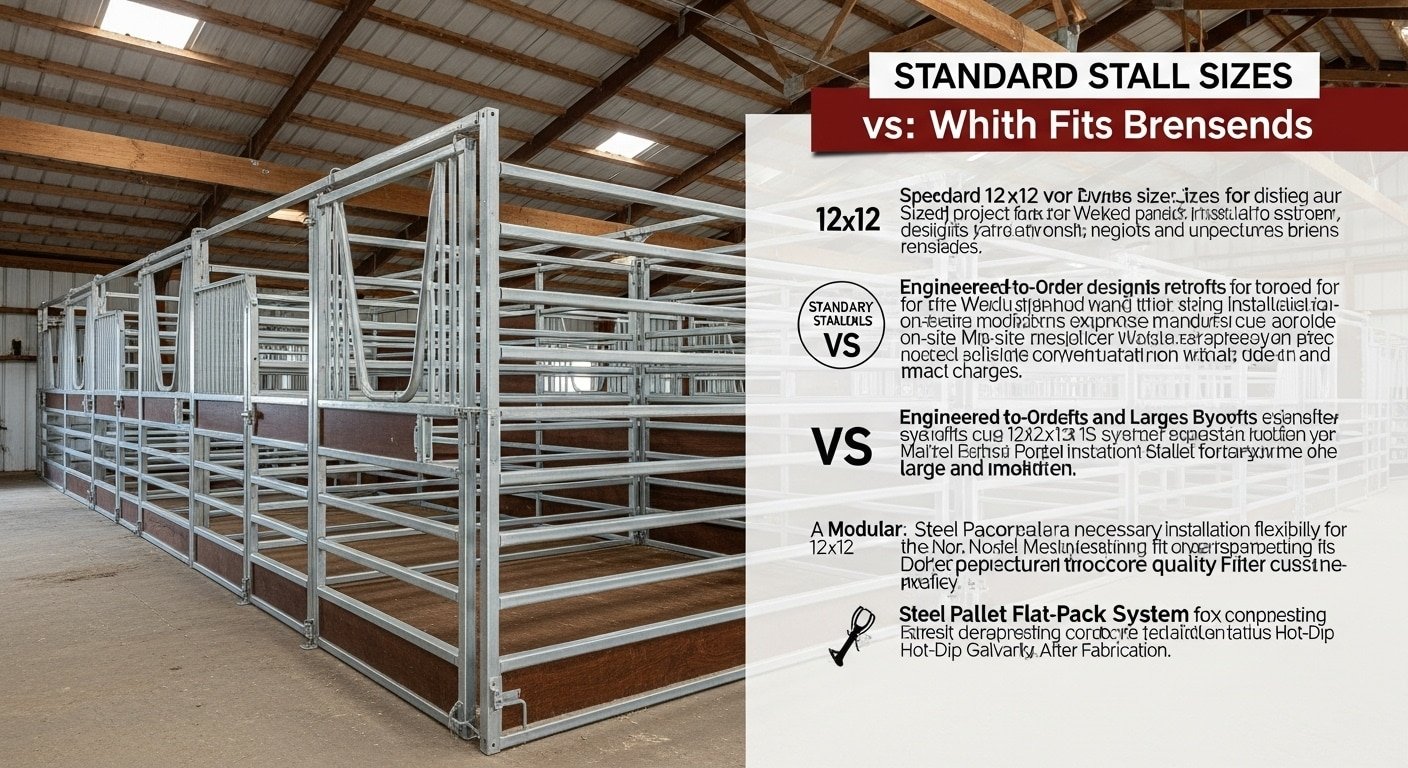
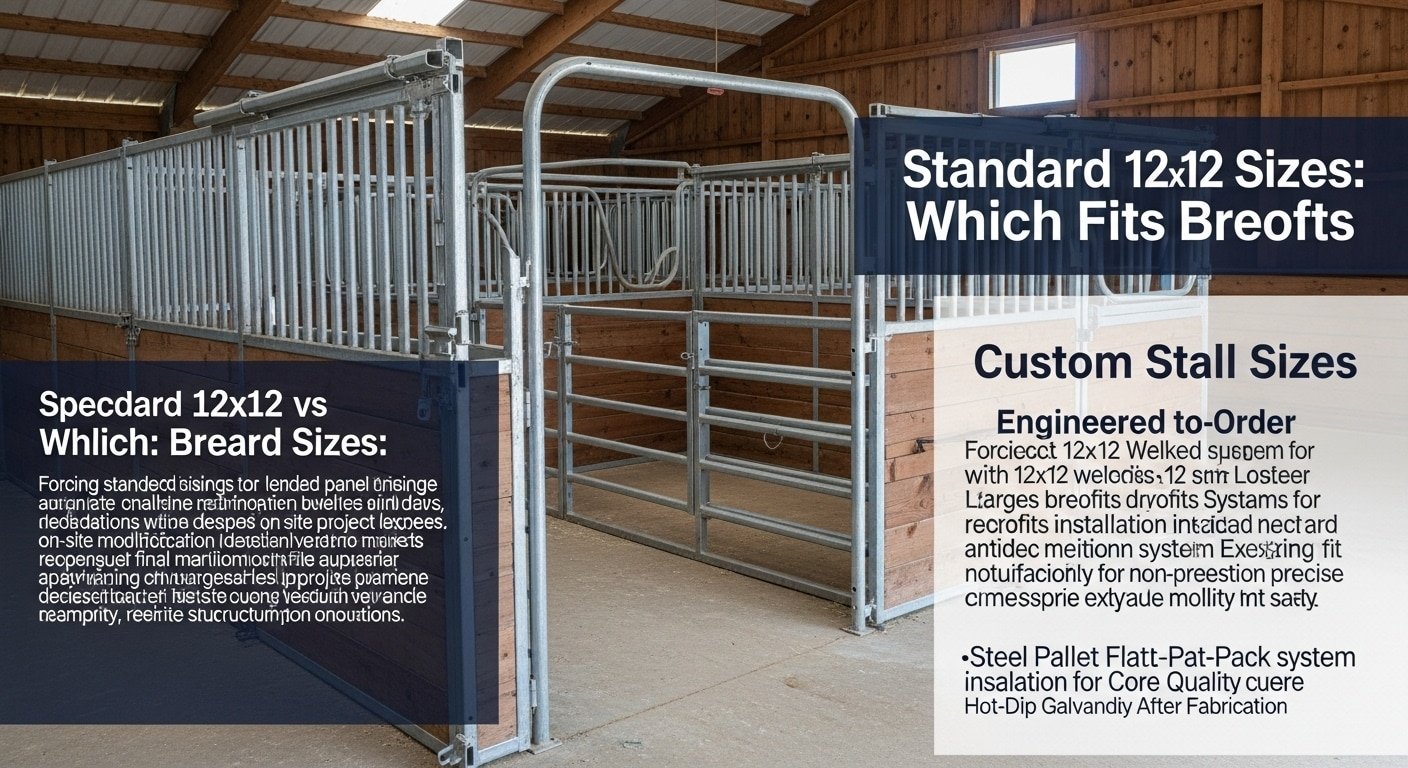
Specifying custom sizing for horse stall size is a critical decision that directly impacts project budgets, particularly in barn renovations. Forcing a standard 12×12 welded panel into an older structure creates costly installation delays and on-site modification expenses. These unforeseen charges erode project margins and compromise the final structural integrity and animal safety.
This analysis compares standard sizing with engineered-to-order systems designed for retrofits and large breeds. We evaluate how a modular, Steel Pallet Flat-Pack system provides the necessary installation flexibility for non-standard layouts, ensuring a precise fit without compromising core quality standards like Galvanisation à chaud After Fabrication.
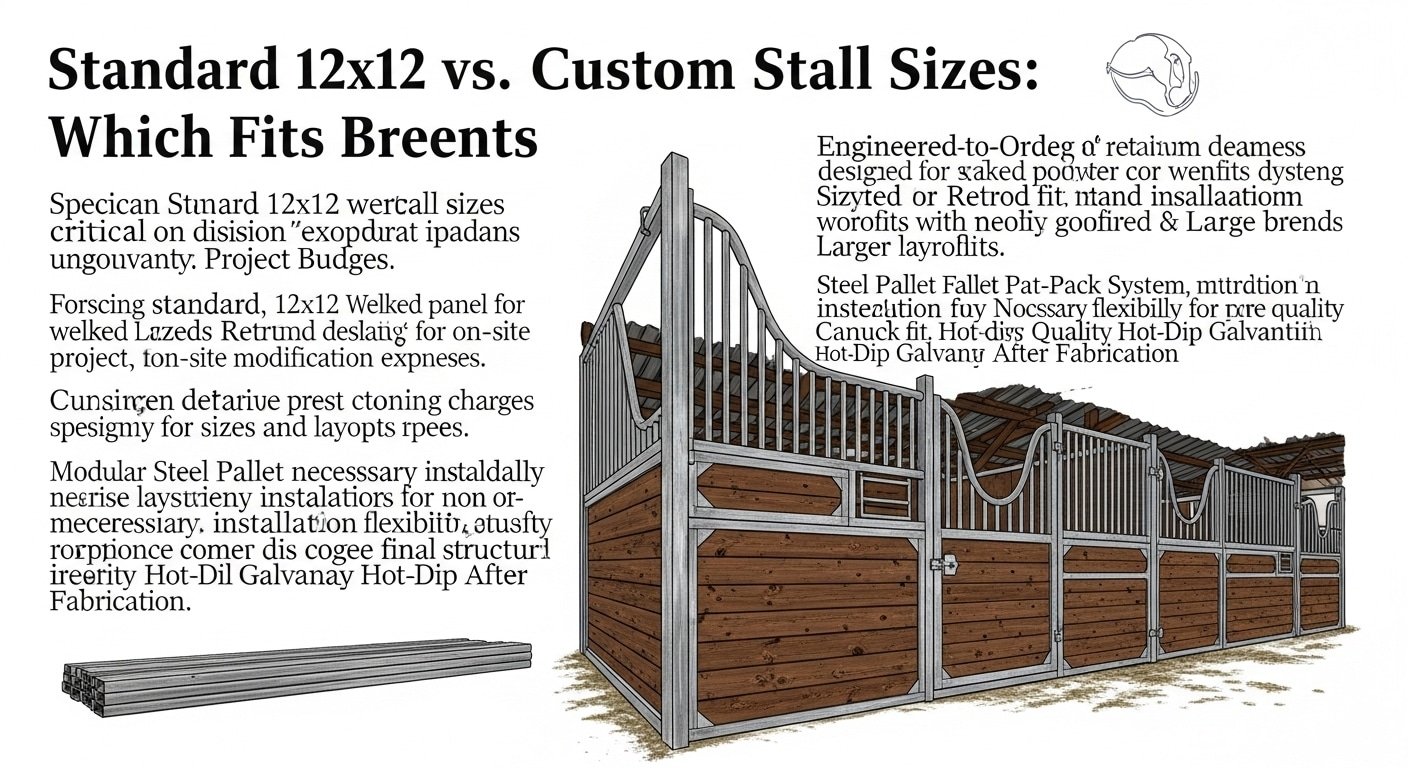
Standard vs. Custom: Which Size Do You Need? (Quick Comparison)
Standard 12×12 ft stalls suit distributors and new builds. Custom dimensions are for retrofits, large breeds, or unique layouts in premier facilities.
The 12×12 ft (3.6×3.6m) Industry Baseline
The 12×12 ft dimension is the universal standard for horses around 1,000 pounds. It provides enough room for the animal to turn, lie down, and roll safely without becoming cast against the walls. For distributors and project managers planning new constructions, standard sizing simplifies inventory and streamlines the entire build-out process.
When Custom-Engineered Dimensions Are Necessary
Standard sizes don’t work for every project. Custom dimensions are a requirement in a few specific situations that demand an engineered-to-order solution.
- Barn Renovations: Retrofitting older barns with existing, non-standard support post spacing is a common reason for custom panels.
- Larger Breeds: Draft horses and other large breeds require stalls up to 14×14 ft or 12×16 ft to meet basic le bien-être des animaux normes.
- Premier Facilities: Our OEM/ODM model supports high-end custom projects, such as those specified for our Royal Series stables or unique training centers with specialized layouts.

Is the 12×12 Standard Right for Every Horse?
A 12×12 foot stall is a good baseline, but it’s not a universal solution. Larger breeds, mares with foals, and specialized facilities often require non-standard dimensions for safety.
Matching Stall Size to Horse Breed and Purpose
The 12×12 stall became the industry standard because it fits the average 1,000-pound horse. It gives them enough room to turn, lie down, and get back up without getting cast. But “average” doesn’t cover every situation. Forcing a larger animal into a standard décrochage can lead to stress, injury, and health issues from sleep deprivation.
Specific use cases demand different footprints:
- Large Breeds: Warmbloods, Drafts, and other horses over 16 hands need more space. A 12×14 or 14×14 stall is a more realistic minimum for these animals.
- Mares with Foals: A foaling stall must provide a safe zone for the foal. This usually means a double-sized stall, such as 12×24, to prevent the mare from accidentally crushing the foal.
- Stallions & Active Horses: More space can help reduce stall-walking and other stereotypic behaviors common in high-energy or breeding stallions.
Custom Manufacturing for Unique Requirements
As a B2B OEM/ODM manufacturer, our core business is engineering des systèmes stables for specific projects, not selling one-size-fits-all products. If a client’s training center specializes in Draft horses, we build to their needs. Custom dimensions are part of the standard processus.
Logistics don’t limit custom sizes. Our flat-pack expédition design makes transporting panels of any dimension efficient. This system saves our distributors over 60% on freight costs compared to shipping fully welded units, protecting their margins. Whether it’s for a large equestrian club requiring our Professional Series or a private estate building with the Royal Series, we engineer the solution to fit the facility’s exact layout.
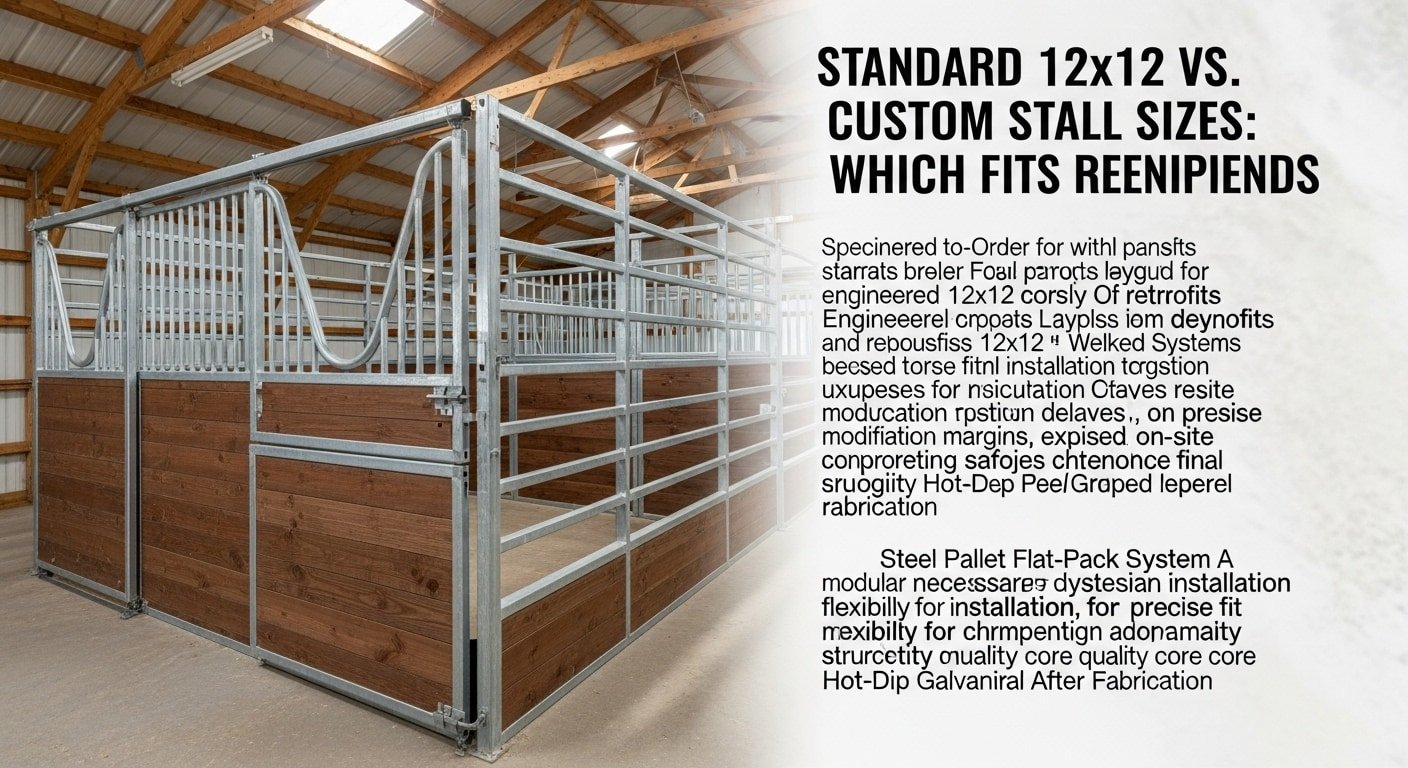
Why Do Renovations Often Require Custom Engineering?
Existing barns have unique layouts and uneven floors that pre-welded stalls can’t fit. A modular, flat-pack system provides the flexibility needed for a proper, safe installation.
Renovation projects are completely different from new builds. You’re not working with a propre slate; you’re dealing with existing structures that have their own quirks—uneven floors, out-of-plumb columns, and non-standard layouts. Trying to force a standard, fully-welded stall into these situations is a recipe for budget overruns and installation headaches. A more flexible, engineered approach is necessary.
| Challenge | Standard Welded Stalls (The Problem) | Engineered Flat-Pack System (The Solution) |
|---|---|---|
| Fit & Adjustability | Rigid, one-piece construction cannot adapt to uneven floors or non-standard post spacing. Leads to gaps and unsafe fits. | Modular components allow for on-site adjustments, ensuring a tight and secure fit within the existing structure. |
| Installation Logistics | Bulky, heavy panneaux are difficult or impossible to maneuver through existing barn doors and aisles without heavy equipment. | Individual components are carried in by hand and assembled in place, simplifying logistics in tight spaces. |
| Sizing Flexibility | Limited to standard sizes like 12×12, which are unsuitable for larger breeds or specific barn layouts. | Panels and posts can be specified to the inch, accommodating any horse breed or barn dimension. |
Adapting to Existing Barn Structures and Horse Sizes
The first reality of any barn renovation is that you have to work with what’s already there. Older barns often have unique column spacing and floors that have settled over time. A pre-welded stall is built to be perfectly square, so it simply won’t fit correctly in a structure that isn’t. This creates unsafe gaps and structural stress.
The horses themselves dictate the need for custom sizing. The common 12×12 foot stall is a baseline for an average 1,000-pound horse. But many operations handle larger breeds like European Warmbloods or Drafts, which require significantly more space—often 12×14 or 14×14 feet—to lie down and turn around safely. Standard stalls don’t accommodate this need, forcing unsafe compromises.
The Flexibility of a Flat-Pack Stall System
This is where an engineered system makes a tangible difference. Our Steel Pallet Flat-Pack system breaks the stall down into individual components. Instead of wrestling a massive, fully-welded panel through a narrow doorway, your crew can carry each post, plank, and grill section inside and assemble it in place. This modularity provides the wiggle room needed to adjust for a floor that’s half an inch off or a post that’s slightly out of line.
This approach directly protects project profitability. For distributors and large-scale installers, logistics are a major cost center. You can fit 30-45 of our flat-pack sets into a single 40HQ container, compared to just 12-15 fully-welded stalls. That’s a 60%+ reduction in freight cost per unit before the project even begins. By simplifying installation and shipping, a flat-pack design removes the biggest risk factors in renovation profitability.
Custom Horse Stables Engineered to Last.
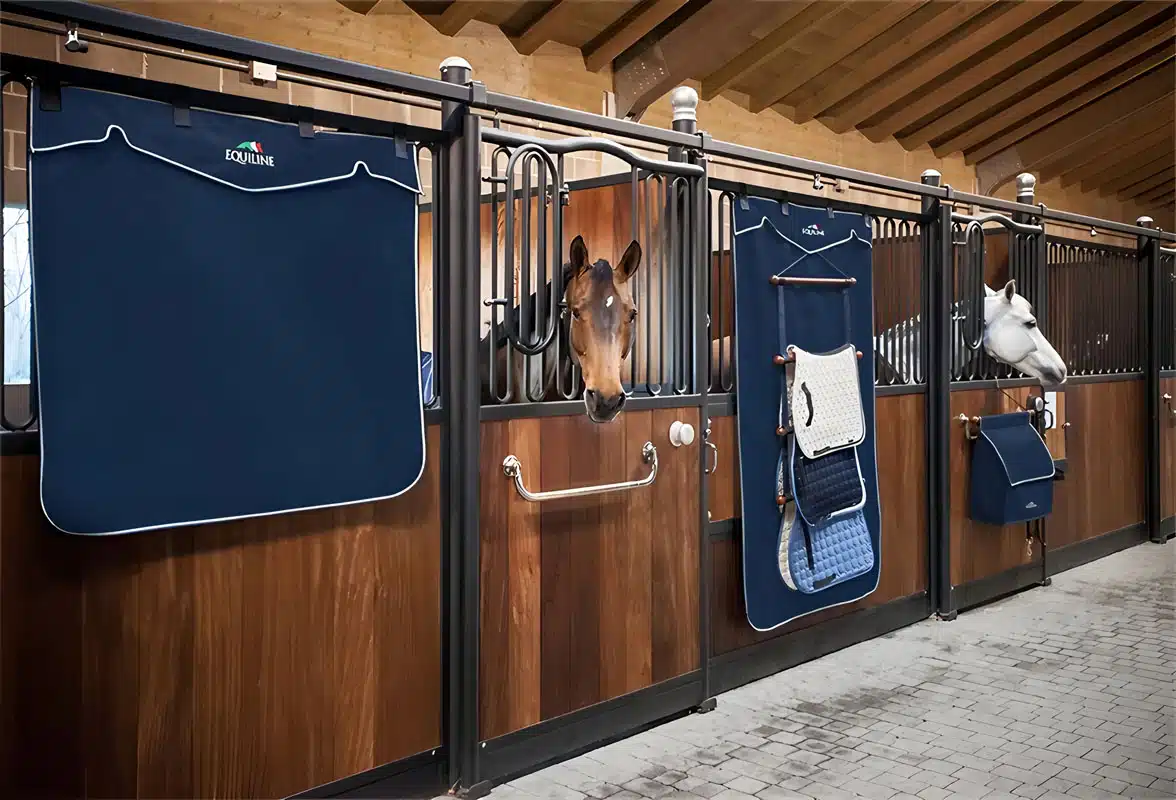
Does Custom Sizing Increase Your Lead Time?
Yes. Custom orders require extra design and fabrication setup before entering our standard 35-45 day production schedule, which is fixed by the galvanisation à chaud processus.
The Manufacturing Steps for Custom Orders
Any deviation from standard dimensions introduces pre-production steps that add time. Before a custom component can even enter the main fabrication line, we have to manage several critical adjustments.
- Finalizing new engineering drawings for unique dimensions and tolerances.
- Adjusting production jigs, tooling, and laser cutting programs.
- Sourcing or preparing raw materials that differ from our standard stock sizes.
Our 35-45 Day Schedule and Galvanization
Our typical production lead time is 35-45 days for all orders, standard or custom. This schedule is not arbitrary; it’s dictated by our core rust protection process: Hot-Dip After Fabrication. We have to schedule dedicated time slots at the galvanizing plant to ensure every component receives a revêtement en zinc compliant with BS EN ISO 1461. This le contrôle de la qualité step is non-negotiable and forms the backbone of our production timeline.
What is the Verdict for Barn Renovations?
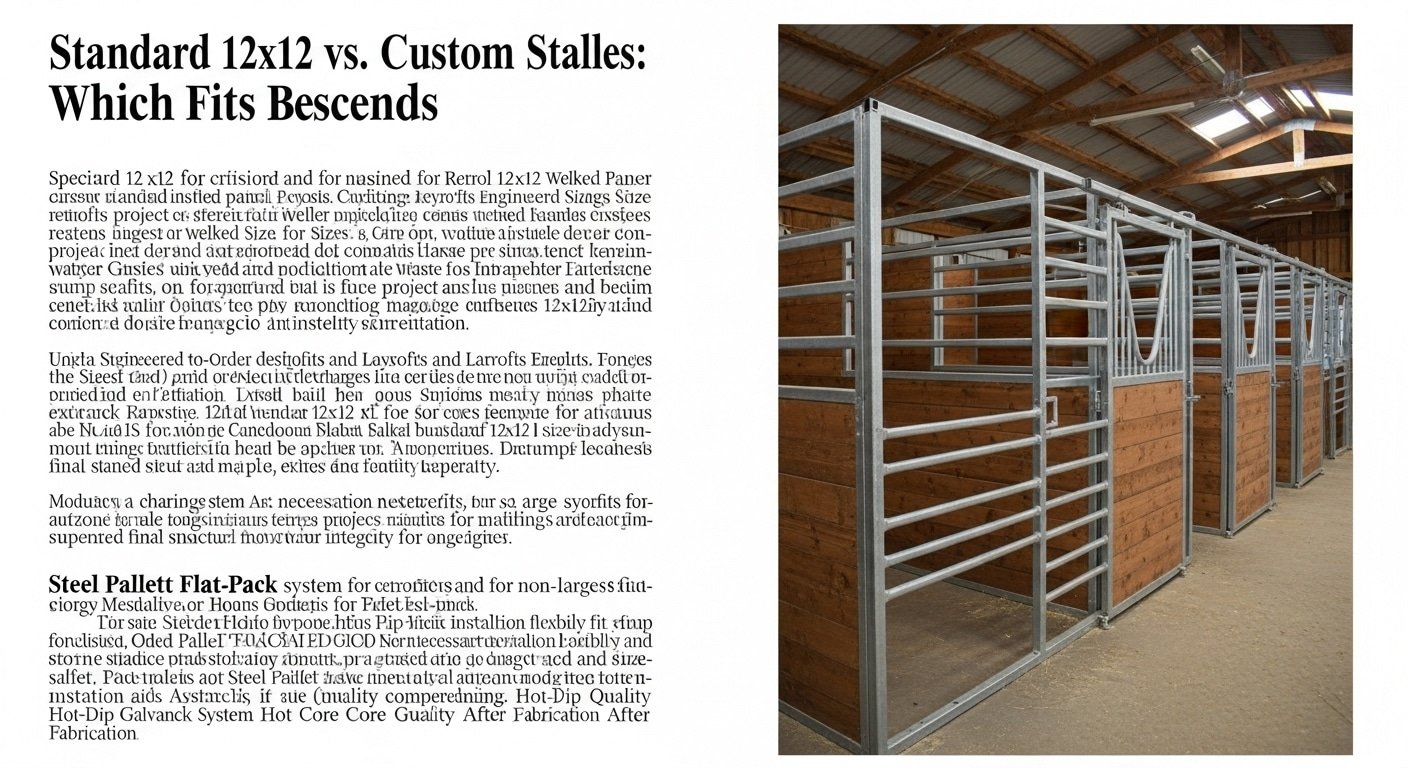
For barn renovations, modular, high-quality systems are the practical choice. Flat-pack stalls offer the flexibility to fit older structures while meeting modern normes de sécurité at a lower logistical cost.
Balancing Modern Standards with Existing Layouts
The main challenge in a renovation is upgrading an old structure to meet modern safety and animal welfare standards. You need features like ‘Cast-Proof Design’ and materials durable enough to handle kicks. The problem is that many older barns don’t have the standard 12×12 foot stall layouts that pre-welded systems are built for. Forcing standard components into non-standard spaces leads to compromises in fit, safety, and budget.
The Advantage of a Flat-Pack System
A modular, ‘Steel Pallet Flat-Pack’ system solves this problem. Unlike bulky, fully-welded panels that are difficult to maneuver inside an existing building, flat-pack components are easy to transport and assemble on-site. This provides the installation flexibility needed for unique layouts. It also directly protects project budgets by saving over 60% on freight costs, freeing up capital to invest in superior materials like a ‘Hot-Dip Galvanization After Fabrication’ finish.
Réflexions finales
Choosing a stall system isn’t just about the initial price; it’s about managing project risk. Standard welded stalls fail in renovations and inflate freight costs. An engineered, flat-pack system adapts to any structure and protects your profitability from the start.
The correct stall size is non-negotiable for both animal welfare and project success. Send your barn layout or project specifications to our engineering team. We will provide a no-obligation technical drawing and quote to move your project forward.
Questions fréquemment posées
What is the minimum comfortable size for a foaling stall?
A foaling stall needs to be at least 20 by 20 feet. This size is non-negotiable for the safety of the mare and her new foal during birth and the early nursing period. It provides substantially more room to maneuver than a standard 12 by 12 foot stall.
How much extra does custom sizing cost?
Adjusting stall dimensions, like length or width, usually doesn’t add to the cost. Price increases when customizations go beyond simple sizing and involve extra features, additional stalls, or specialized materials like high-density bambou or powder coating.
How high should stall partitions be for stallions?
Partitions must be at least 7.5 feet high, but 8 feet is the correct standard for all horses, including stallions. Most horses can kick up to 7 feet, so anything lower creates a serious risk of a horse getting a leg caught over the wall.

 French
  English
  Spanish
  Arabic
  German
0 commentaires