


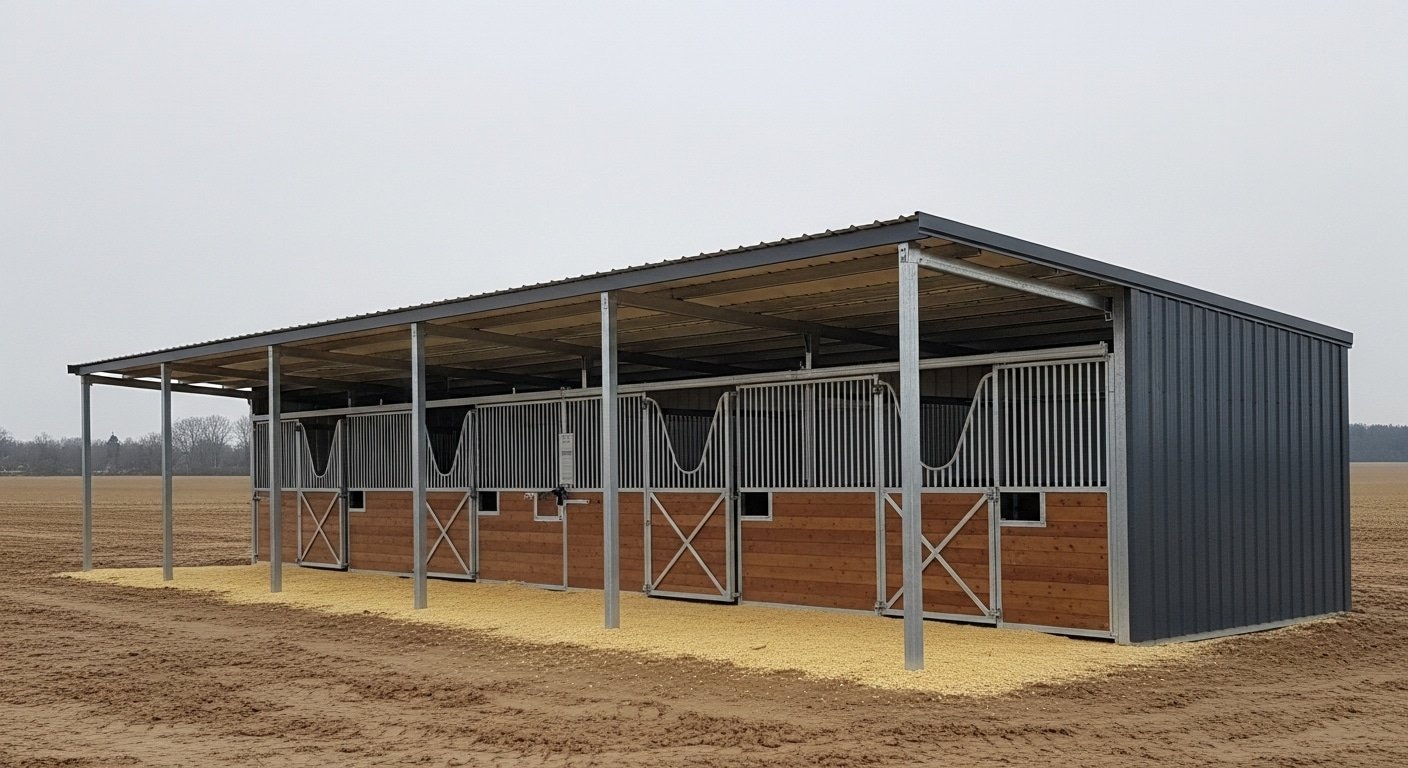
Specifying the correct cold climate winter horse stalls is the primary defense against catastrophic material failure. Using standard structural steel in sub-zero temperatures invites brittle fractures and warped panels, leading directly to costly warranty claims and significant liability risks for builders and distributors.
This review evaluates kits based on the Q345B steel standard for low-temperature toughness. We compare how infill options, from high-density bambú to UV-stabilized HDPE, manage thermal contraction and prevent component failure, ensuring year-round structural integrity and safety.
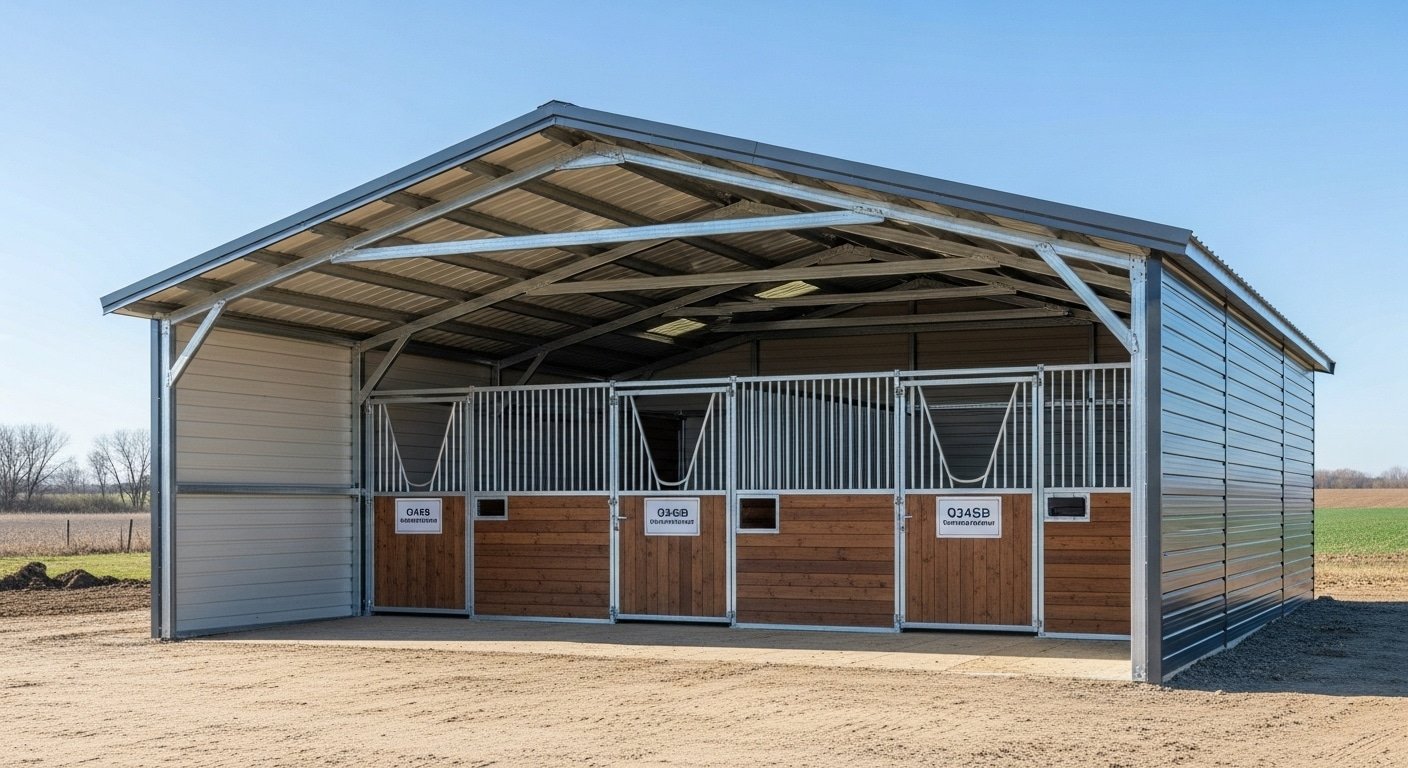
Best 10 Features for Winter-Ready Stall Kits
Comparación rápida
| Característica | Categoría | Beneficio principal | Veredicto |
|---|---|---|---|
Heated Water Systems | Horse Care | Ensures Constant Hydration | Essential for reducing labor and ensuring horses stay hydrated, preventing health issues in the cold. |
Adequate Stall Dimensions | Structural Design | Improves Horse Comfort & Safety | A fundamental safety feature that allows for natural movement and reduces the risk of a horse getting injured. |
Proper Ventilation | Air Quality | Prevents Respiratory Illness | Critical for preventing respiratory illnesses by controlling humidity and reducing airborne pathogens. |
Stall Doors with Mesh or Grill | Structural Design | Enhances Airflow & Light | An excellent choice for improving airflow and natural light, while also allowing for social interaction. |
Barn Insulation | Climate Control | Stabilizes Internal Temperature | A key investment for stabilizing the barn’s temperature, increasing energy efficiency, and improving comfort. |
Wind-Protected Positioning | Site Planning | Minimizes Drafts & Wind Chill | A smart, no-cost design choice that passively protects horses from drafts and harsh weather. |
Strategic Sun Exposure | Site Planning | Provides Passive Solar Heating | An effective passive strategy to reduce energy costs and create a brighter, more natural environment. |
Gutter and Snow Management | Safety & Maintenance | Prevents Ice Hazards & Damage | A non-negotiable task that ensures safe access and protects the barn’s foundation from water damage. |
Non-Slip Flooring | Seguridad | Reduces Slip & Fall Injuries | A vital safety upgrade that provides secure footing for horses and handlers, reducing slip and fall risks. |
Blanket and Bedding Drying Stations | Barn Management | Prevents Mold & Mildew | A practical solution that keeps expensive gear in good condition and enhances overall horse health. |
KEY FEATURE
Heated Water Systems
El veredicto: Incorporating heated buckets, troughs, or automatic waterers prevents water from freezing, ensuring horses have constant access to drinkable water and eliminating the need for manual ice-breaking.
Lo bueno
- Reduces manual labor
- Promotes horse health and prevents dehydration
⚠️ Lo malo
- Requires access to a safe electrical source
KEY FEATURE
Adequate Stall Dimensions
El veredicto: A standard 12′ x 12′ puesto is essential for a horse’s comfort and safety during winter, as it allows for natural movement and reduces the risk of injury when they spend more time indoors.
Lo bueno
- Allows natural movement
- Reduces the risk of being cast or injured
⚠️ Lo malo
- Requires a sufficient barn footprint for installation
KEY FEATURE
Proper Ventilation
El veredicto: A system with windows, fans, or ventilation gaps is critical for promoting air movement. This removes moisture and ammonia, preventing respiratory issues while minimizing cold drafts.
Lo bueno
- Controls humidity and condensation
- Reduces airborne pathogens
⚠️ Lo malo
- Must be carefully designed to avoid chilling drafts
KEY FEATURE
Stall Doors with Mesh or Grill
El veredicto: Choosing stall doors with mesh or grill tops enhances airflow and allows more natural light into the stall compared to solid doors, improving the overall environment and reducing dampness.
Lo bueno
- Improves stall ventilation
- Allows for social interaction between horses
⚠️ Lo malo
- Offers less protection from drafts than a solid door
KEY FEATURE
Barn Insulation
El veredicto: Proper insulation is a critical feature for regulating internal barn temperatures, creating a more stable and comfortable environment for animals during extreme cold spells.
Lo bueno
- Increases energy efficiency
- Reduces condensation and frost buildup
⚠️ Lo malo
- Represents a significant upfront construction cost
KEY FEATURE
Wind-Protected Positioning
El veredicto: Positioning a new barn away from prevailing winds is a smart, no-cost way to reduce drafts and protect horses from harsh weather, making it a crucial step in the initial planning phase.
Lo bueno
- Passive, no-cost climate control
- Protects structural components from harsh weather
⚠️ Lo malo
- Dependent on initial construction and site limitations
KEY FEATURE
Strategic Sun Exposure
El veredicto: Orienting the barn to capture natural sunlight is a powerful, passive way to keep stalls warmer and brighter in winter, cutting down on heating costs and improving horse comfort.
Lo bueno
- Reduces energy consumption
- Creates a brighter, more natural indoor environment
⚠️ Lo malo
- May require planning for shade during hot summer months
KEY FEATURE
Gutter and Snow Management
El veredicto: Proper gutter and snow management is a non-negotiable for barn safety, preventing dangerous ice buildup and protecting the structure’s foundation from water damage.
Lo bueno
- Ensures safe entry and exit points
- Protects the building’s foundation from erosion
⚠️ Lo malo
- Requires regular cleaning and seasonal maintenance
KEY FEATURE
Non-Slip Flooring
El veredicto: Durable, non-slip flooring materials are an essential safety measure, providing secure footing for both horses and handlers, especially in wet or icy conditions.
Lo bueno
- Ensures secure footing year-round
- Materials are often durable and easy to clean
⚠️ Lo malo
- Can have a higher installation cost than basic flooring
KEY FEATURE
Blanket and Bedding Drying Stations
El veredicto: Installing dedicated hooks or racks in a well-ventilated area is a simple yet effective way to dry wet blankets and equipment, preventing mold and keeping gear in good condition.
Lo bueno
- Improves longevity of expensive gear
- Enhances horse comfort and health
⚠️ Lo malo
- Requires dedicating space within the barn layout
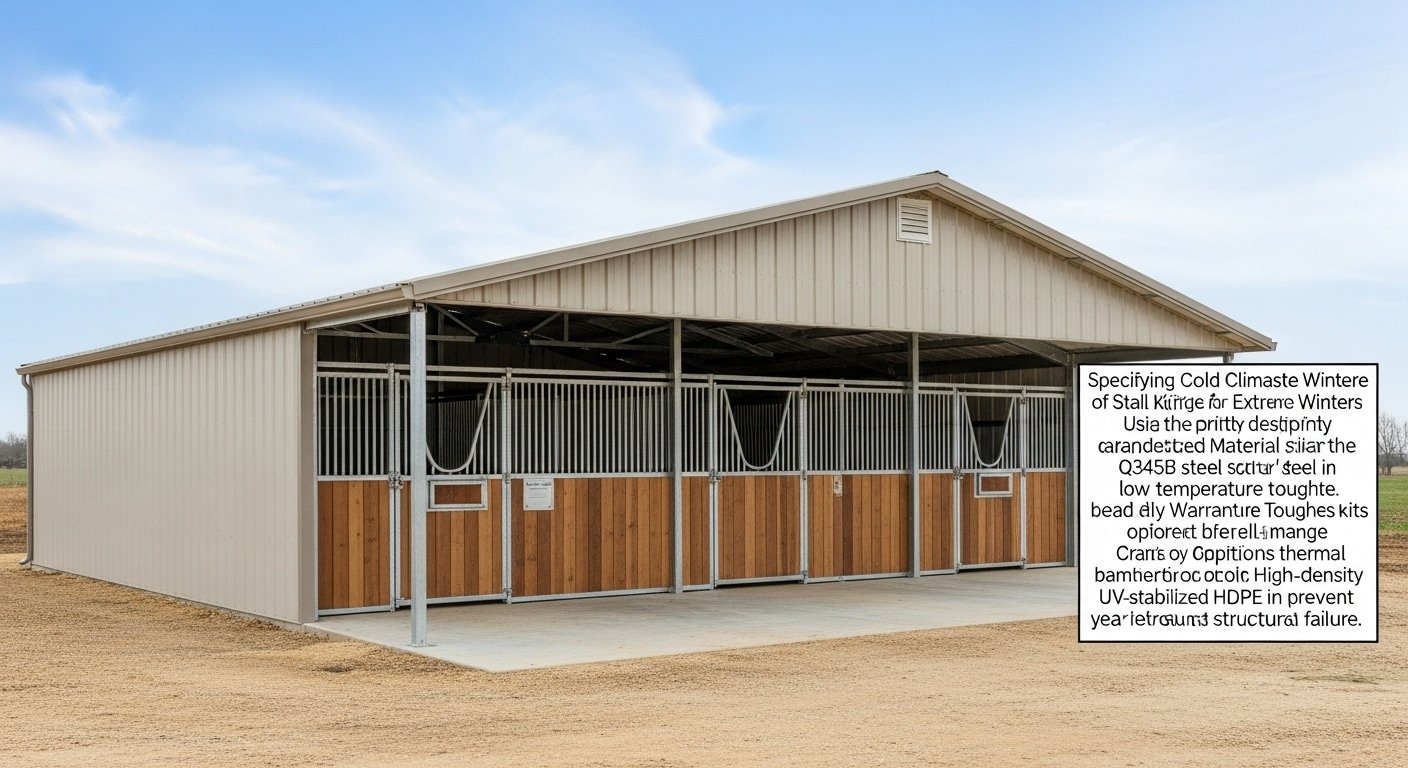
Why Do Standard Stall Kits Fail in Freezing Climates?
Standard stall kits often fail in freezing weather because common structural steel becomes brittle and can fracture from an impact. Different materials also shrink at different rates, causing infill boards to warp and doors to jam. Our engineered systems address these failures directly, using specialized steel and materials designed for sub-zero performance and long-term durability.
When temperatures drop below freezing, the structural integrity of a establo de caballos is put to the test. Many standard, off-the-shelf kits are designed for temperate climates and lack the specific engineering needed to withstand the unique stresses of a harsh winter. These failures not only lead to expensive repairs but can also create serious safety hazards for the animals they are meant to protect.
Material Brittleness and Steel Fractures
The most common point of failure is the steel itself. Standard structural steel, like Q235B (ASTM A36), loses its impact toughness in sub-zero temperatures. It becomes brittle, meaning an impact from a kick that would normally be absorbed can cause the steel tubing to crack or even shatter. Welded joints are especially vulnerable to these stress fractures as the metal becomes less ductile.
This is why we specify **Q345B low-alloy high-strength steel** for our cold-climate projects. This material is engineered to maintain its strength and resist brittle fractures in freezing conditions, providing a true “Kick-Proof Guarantee” when it matters most. It’s a critical upgrade that ensures safety and protects your investment through the toughest winters.
Thermal Contraction and Component Warping
All materials shrink in the cold, but they do so at different rates. A marco de acero will contract differently than wood or standard plastic infill panels. This differential contraction creates immense stress within the stall panel. It can cause wood planks to warp, bow, or crack, creating dangerous gaps that can trap a horse’s hoof. The structural frame itself can also warp, causing sliding doors to jam in their tracks or hinged doors to misalign so they no longer latch securely.
Our infill options are selected to manage this thermal movement. The **UV-stabilized HDPE** we use is a stable material that resists warping, and our high-density **strand woven bamboo** is far more dimensionally stable than traditional lumber. This ensures the entire system remains square and functional, preventing gaps and maintaining smooth door operation.
Frozen Mechanisms and Water System Failures
Any moisture trapped in sliding door tracks, latches, or hinge mechanisms can freeze solid overnight, rendering them inoperable. This can be a minor annoyance or a major safety issue in an emergency. Furthermore, repeated freeze-thaw cycles accelerate corrosion on any hardware that isn’t properly protected. Low-quality plated bolts and connectors will quickly rust and fail. For this reason, all our installation kits include **304 Stainless Steel hardware**, providing superior resistance to corrosion from moisture and road salts tracked into the barn.
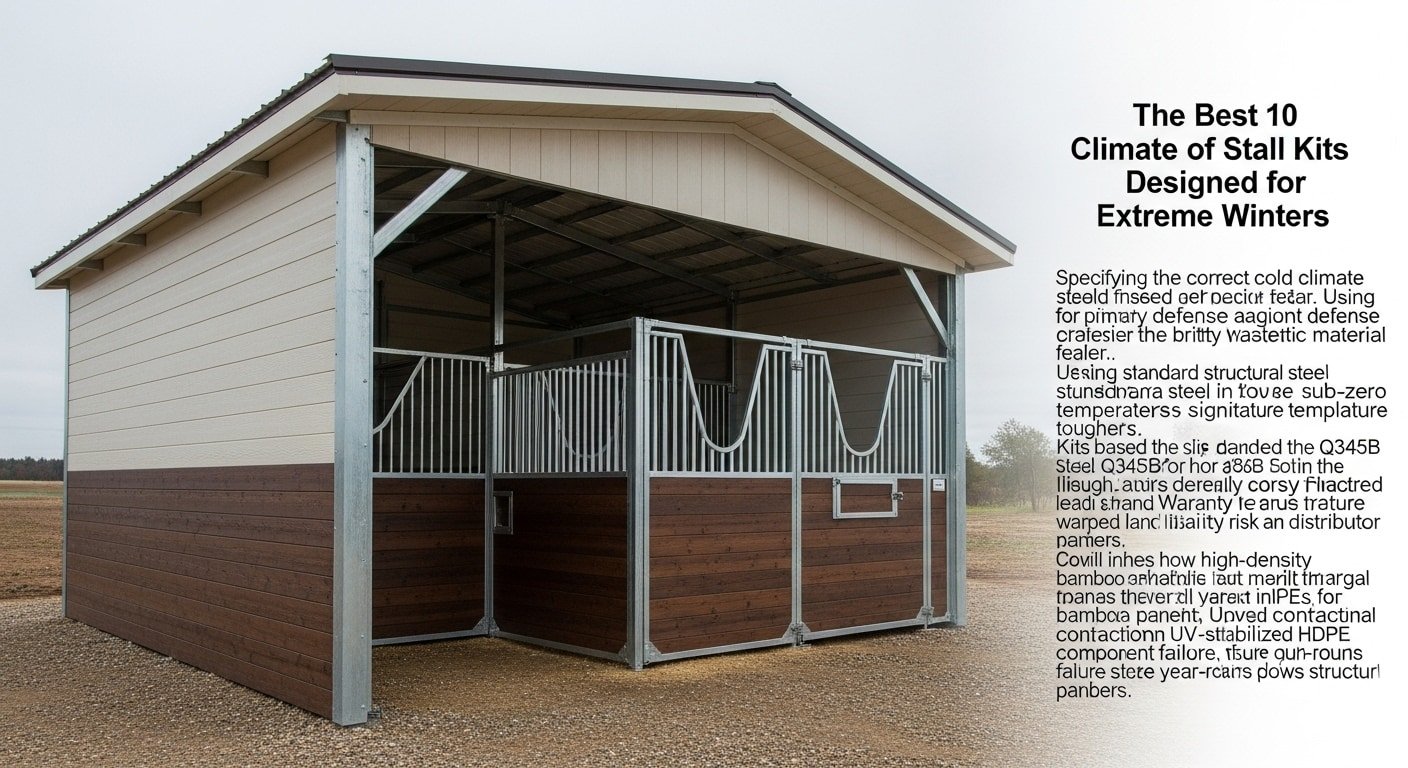
How Does Q345B Steel Resist Cold Brittleness?
Q345B steel resists cold brittleness because of its specific low-carbon alloy composition. We engineer it with elements like manganese that refine its internal structure, giving it superior toughness and impact resistance. This ensures our stable frames don’t suffer from brittle fractures when kicked by a horse, even in freezing winter conditions.
Low-Carbon Alloy Composition
Q345B is a low-alloy, high-strength steel with a carefully controlled low-carbon composition. It contains specific alloying elements like manganese and silicon that refine its grain structure, which is key to improving the steel’s overall toughness. For our distributors in cold regions like Europe and North America, this means providing a stable frame with a built-in “Kick-Proof Guarantee” against brittle fractures, even when a horse kicks it in the dead of winter.
Superior Low-Temperature Performance
Standard structural steel can become dangerously brittle as temperatures drop. We use Q345B for our cold climate kits precisely because it’s engineered to maintain its ductility and impact resistance in sub-zero environments. It resists the sudden, catastrophic failures that can occur with lesser materials, ensuring the long-term safety and structural integrity of the stables. This is a critical selling point for projects in markets with harsh winters.
Reduced Welding Cracking Susceptibility
The structural integrity of a panel estable is only as strong as its weakest weld. The low-carbon design of Q345B steel also reduces the risk of cold cracking during our fabrication process. This ensures that the welded joints—critical stress points in any stall—maintain their strength and integrity after we perform our “Hot-Dip After Fabrication” galvanizing. It’s one more engineering detail that contributes to the system’s overall durability and reduces potential claims for our partners.
Why is Bamboo Better Than Plastic in Sub-Zero Temps?
In freezing conditions, standard plastics like HDPE can become brittle, increasing the risk of shattering from a horse’s kick. Our high-density bamboo maintains its natural flexibility and immense structural strength, providing a safer and more durable wall system for instalaciones ecuestres in cold climates.
Resilience to Cracking and Brittleness
Many common plastics, including HDPE, lose their impact resistance in sub-zero temperatures. The material becomes rigid and brittle, making it prone to cracking or even shattering from a powerful kick. This creates sharp edges and a serious safety hazard for the horse. Our high-density strand-woven bamboo is engineered for these conditions. Its natural fibrous structure distributes impact forces effectively, preventing the brittle fractures that affect polymers in the cold and ensuring animal safety year-round.
Superior Structural Strength and Longevity
Beyond temperature resilience, our bamboo infill offers unmatched durability. With a Janka hardness rating over 3000 lbf, it is three times harder than oak, easily withstanding kicks, bites, and daily wear. While plastics degrade over time from UV exposure and temperature cycles, bamboo’s dense molecular structure provides lasting stability. This ensures your stable walls won’t sag, warp, or weaken, protecting your investment and reducing long-term replacement costs.
Do You Need Larger Expansion Gaps for Winter?
For traditional wood stalls, yes, seasonal gaps are a major consideration. But for our sistemas estables, the answer is no. We use dimensionally stable materials like UV-stabilized HDPE and high-density bamboo that are engineered for minimal movement, eliminating the need for special winter gaps and ensuring a secure fit year-round.
The Principle of Thermal Expansion in Stalls
Most traditional building materials, especially wood, naturally expand in the heat and contract in the cold. Installers typically leave small “expansion gaps” around panels and flooring to give the material space to move without buckling or warping. In winter, this contraction can create wider-than-desired gaps or put stress on fasteners if the initial installation didn’t account for significant temperature swings.
How Modern Materials Change the Equation
The need for large, season-specific gaps depends entirely on the stall’s infill material. Our systems use materials specifically chosen for their exceptional dimensional stability. Materials like our UV-stabilized HDPE are engineered to resist significant size changes, regardless of the temperature. This provides a consistent, secure fit without the guesswork required for wood, helping your clients avoid issues with warped or buckled panels.
Installation for Year-Round Stability
When you build with our high-density bamboo or HDPE infill, a standard installation gap is sufficient for all seasons. The key is using materials that are inherently stable and resistant to major size changes from temperature shifts. This simplifies the installation process and delivers a secure, reliable stall that performs just as well in the middle of winter as it does in the peak of summer, protecting your investment and your reputation.
Get Weatherproof Stables with 20-Year Durability

Reflexiones finales
While standard stalls present a lower upfront cost, specifying the Q345B steel option is the only way to safeguard your projects against brittle fracture claims. This engineered choice protects your reputation and eliminates the risk of catastrophic failures in harsh winter climates. Investing in superior materials builds the long-term trust that repeat business depends on.
Don’t risk a full container on unverified claims. We recommend a small trial order to validate our engineering and ISO 1461 galvanizing standards firsthand. Contact our team to configure your trial shipment or discuss OEM specifications for your market.
Preguntas frecuentes
How do I prevent horse water from freezing in winter?
Heated water systems are the standard solution for ensuring horses have access to water in freezing temperatures. While we focus on the stall structure, a well-built facility is key. Our stalls, especially the Q345B steel option for cold climates, are engineered to resist low-temperature impact toughness. This ensures the frame won’t suffer brittle fractures from kicks in the cold, maintaining a safe environment as part of your overall winter management plan.
Should I seal the barn completely for warmth or prioritize ventilation?
Ventilation is absolutely critical for managing moisture and preventing respiratory issues. Sealing a barn traps harmful ammonia and damp air. Our stall fronts and partitions are designed with open-top grills that promote natural “Stack Effect Ventilation.” This design allows warm, moist air to rise and escape while fresh air circulates, maintaining air quality without creating dangerous drafts at the horse’s level.
What is a safe snow load capacity for a stall roof?
The snow load capacity is determined by your main barn’s engineering, not the internal kits de estacionamiento. It is vital to ensure your building’s roof complies with local building codes, which might specify 20-35 pounds per square foot or more. Our responsibility is to provide stall systems with the structural integrity to remain safe and secure within a properly engineered building, regardless of external weather conditions.
When should I start preparing stalls for winter?
Starting your winter prep in early fall gives you plenty of time for inspections and repairs. Our stall systems simplify this process for our partners. The Hot-Dip Galvanized finish resists rust from winter moisture, and our infill options—like “Zero Maintenance” HDPE or mold-resistant Bamboo—do not rot, warp, or require seasonal replacement. This durability reduces annual maintenance costs and labor for your facility.
Will your HDPE boards shatter in extreme cold?
Our high-density HDPE infill is specifically engineered for resilience. Unlike standard plastics that can become brittle, our thick (28mm-32mm) UV-stabilized boards are designed to absorb impact. For regions with severe winters, we pair this with our Q345B steel framework, which offers superior low-temperature toughness. This combination ensures the entire system resists brittle fractures from horse kicks, even in freezing conditions, delivering on our kick-proof guarantee.
Do your metal latches freeze shut in winter?
While any mechanism can freeze if moisture gets inside, our systems are designed to minimize problems. Every kit de herramientas includes components made from 304 Stainless Steel. This premium material is less susceptible to the contraction and jamming that affects cheaper metals in the cold. It also offers excellent corrosion resistance, ensuring smooth operation and preventing rust-related seizing that can be made worse by winter moisture.
Is the Q345B steel option a lot more expensive?
Q345B steel carries a modest price premium over standard Q235B steel. We view it as a crucial investment for our partners in cold climates. The slightly higher cost provides significant value by preventing brittle fractures from kicks in sub-zero temperatures. This reduces the risk of animal injury and eliminates expensive future repairs, protecting both the end-user’s assets and our distributor’s reputation for supplying durable, safe equipment.
Does the galvanizing peel or crack in freezing weather?
Absolutely not. Peeling is an issue associated with extreme heat, not cold. Our process of hot-dip galvanizing *after* fabrication, compliant with ISO 1461, creates a thick, metallurgically bonded zinc coating (over 70 microns). This protective layer is exceptionally resilient to low temperatures and flexes with the steel, providing lifetime protección contra la oxidación that will not peel, flake, or crack in even the harshest winter conditions.
Can I install your horse stalls during the winter?
Yes. Our systems are engineered to streamline installation, which is a significant advantage for projects during the shorter days of winter. Every stable kit is delivered in a steel pallet flat-pack. This ensures all components, including pre-cut infill planks and a complete stainless steel kit de herramientas, are organized and ready for assembly. This minimizes on-site cutting and preparation, allowing for a faster and more efficient build regardless of the season.
Do you ship to cold regions like Canada or Alaska?
Yes, we are a global OEM/ODM manufacturer with extensive logistics experience envío to major markets, including North America. Our flat-pack shipping method is a key advantage for our distributors in these regions. By packing 30-45 stable sets into a single 40HQ container, we can reduce per-unit freight costs by over 60% compared to fully-welded stalls. This “Profit Protection” strategy makes shipping to any location, including Canada, economically viable for our partners.


 Spanish
  English
  French
  Arabic
  German
0 comentarios