


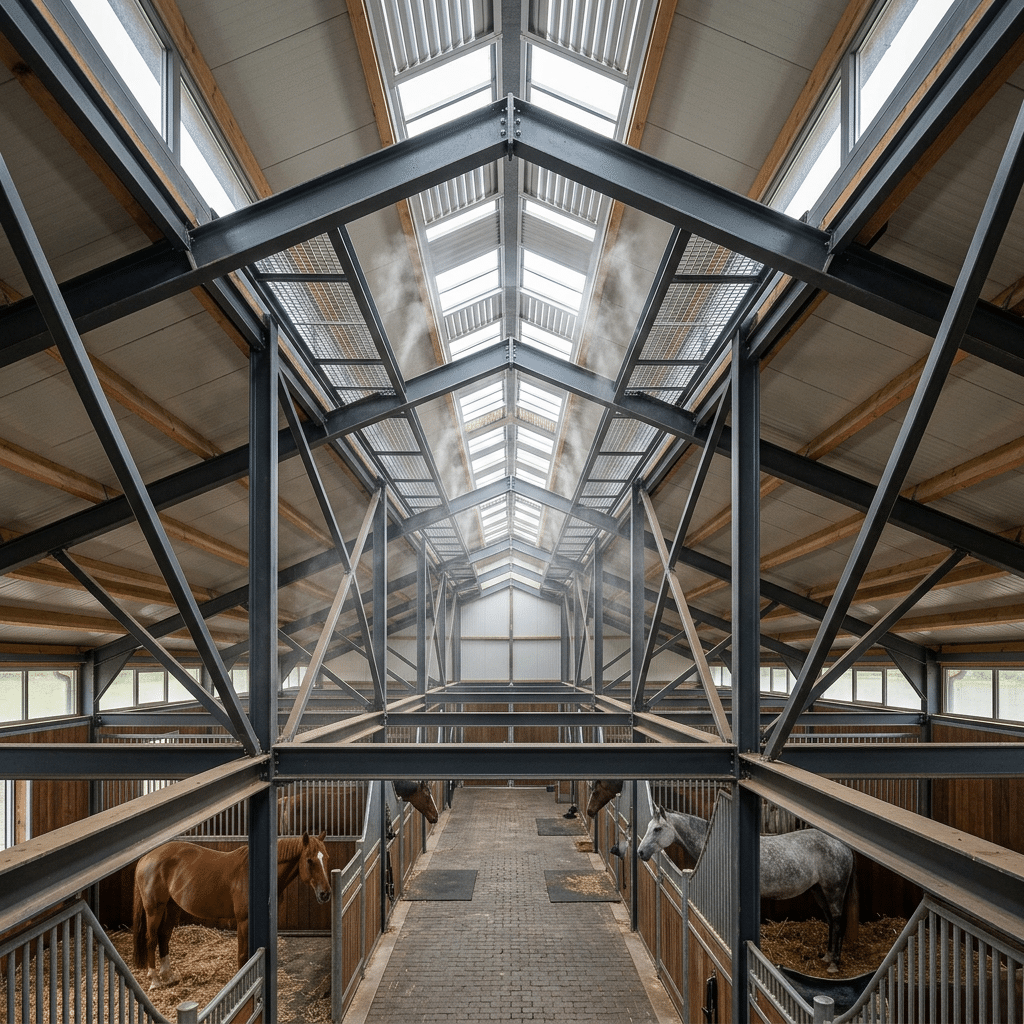
Sourcing horse stalls for New Zealand demands materials that survive 149% of normal rainfall without corroding. Standard pre-galvanized frames often fail the salt spray test within months, turning paddock infrastructure into a liability of rust and rot.
This analysis benchmarks waterproof durability against the ASTM B117 salt spray standard. We examine why Galvanización en caliente to ISO 1461 specifications and zero-maintenance Relleno de HDPEs are the only viable defense against ground-level decay and ammonia corrosion.
New Zealand Winters: High Rainfall and Constant Mud
Resumen ejecutivo: New Zealand’s localized rainfall can hit 149% of normal levels, turning paddocks into corrosive mud baths. Standard steel fails here; only hot-dip galvanization tested to ASTM B117 standards withstands this specific oxidation risk.
Regional Rainfall Variations and Mud Impact
New Zealand generally projects a clean, green image, but for infrastructure, the reality is wet and abrasive. The geography creates extreme disparities in precipitation that standard stable designs often overlook. You cannot build the same stable for Central Otago’s dry cold as you do for the Waikato’s humid saturation.
Recent climate data highlights the severity of this issue. Regions like Dunedin and Waikato frequently experience winter rainfall levels reaching 120% to 149% of normal averages. Extreme localized events, such as the 164mm single-day rainfall recorded in Motueka, result in rapid, deep mud accumulation. This isn’t just water; it is heavy, shifting soil that traps moisture against the base of your structure.
- The Saturation Factor: Constant moisture prevents materials from drying out, creating a permanent “wet cycle” at ground level.
- Acidic Environments: Mud mixed with manure creates an acidic, bacterial environment that accelerates rot in timber and rapid oxidation in untreated steel.
- Structural Stress: Heavy mud adds physical pressure to base plates and infill, requiring higher tensile strength materials like our Q345B steel options.
Validating Durability via ASTM B117 Salt Spray Testing
New Zealand is an island nation. Even inland properties face higher atmospheric salinity than continental regions. When you combine salt-laden air with the acidic mud described above, you get a perfect recipe for rust. Standard “pre-galvanized” steel (often used in budget kits) typically carries a thin zinc layer of 15-20 microns. This fails rapidly when the “mud line” acts as a constant corrosive poultice.
We do not rely on generic claims of “rust-proof.” At DB Stable, we validate our materials using ASTM B117 Salt Spray Testing. This standardized test subjects the steel to a continuous saline fog, simulating years of coastal weather exposure in a condensed timeframe.
- La norma DB: Our hot-dip galvanized framework (BS EN ISO 1461) must exceed 96 hours in the salt spray chamber with zero red rust formation.
- Espesor del revestimiento: We achieve this by applying a zinc coating averaging >70 microns en tubos y >85 microns on structural parts—over 3x the thickness of generic competitors.
- The Outcome: This certification ensures the framework withstands the wet/dry cycles typical of NZ winters, preventing the structural failure often seen in cheaper, painted alternatives.
The Base Plate Problem: Wood Rotting from the Ground Up
Traditional timber base plates act like sponges, absorbing moisture and urine via capillary action. We eliminate this risk by replacing the bottom wood with hot-dip galvanized steel channels.
The Mechanics of Timber Decay at Ground Level
Putting timber directly in contact with stable floors creates a stru
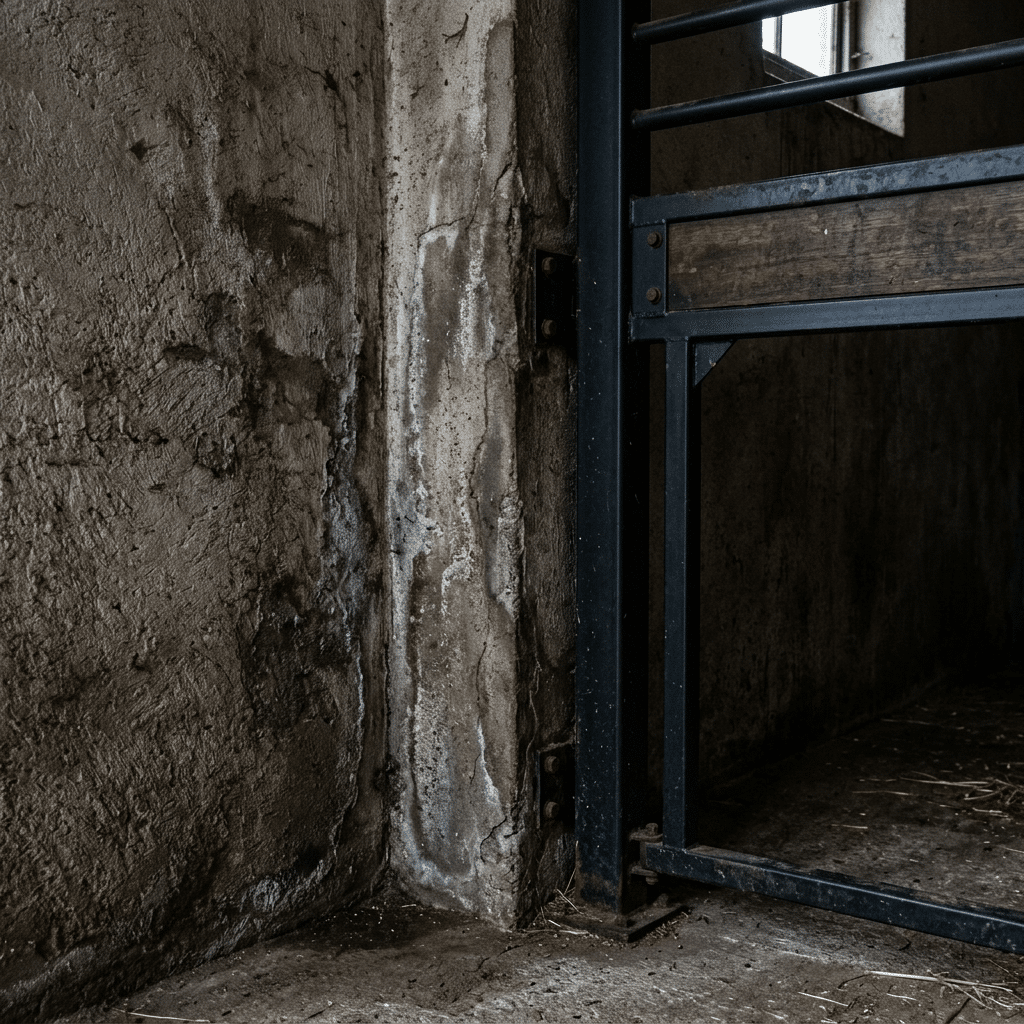
ctural wick. Capillary action draws moisture, urine, and dissolved salts up into the timber grain, bypassing surface treatments. This is compounded by the chemical reality of horse waste; ammonia accelerates the breakdown of wood fibers far faster than water alone. When you add constant contact with mud or wet bedding, the base plate becomes an ideal breeding ground for fungi, leading to structural failure often hidden behind kickboards.
The Solution: Hot-Dip Galvanized Steel Base Channels
We solve the “rotting from the bottom up” issue by removing wood from the ground equation entirely. Our design replaces the traditional timber bottom plate with a dedicated steel infrastructure designed to withstand high-moisture environments.
- Q235B Structural Steel Channel: We use a heavy-duty steel U-channel as the foundation, providing a non-porous barrier against ground moisture.
- Cast-Proof Design (50mm Gap): We raise the frame 50mm off the ground. This allows fluids to drain freely and prevents the “moisture trap” typical of flush-mounted lumber.
- ISO 1461 Hot-Dip Galvanization: The entire steel profile is dipped in molten zinc después de fabrication, sealing every edge against rust and ammonia corrosion.
- HDPE Infill Integration: We swap timber for high-density polyethylene infill, which is impervious to urine and requires zero maintenance.
Engineered For 20 Years Of Extreme Durability
100% Waterproof Horse Stall Panels (HDPE vs Pine)
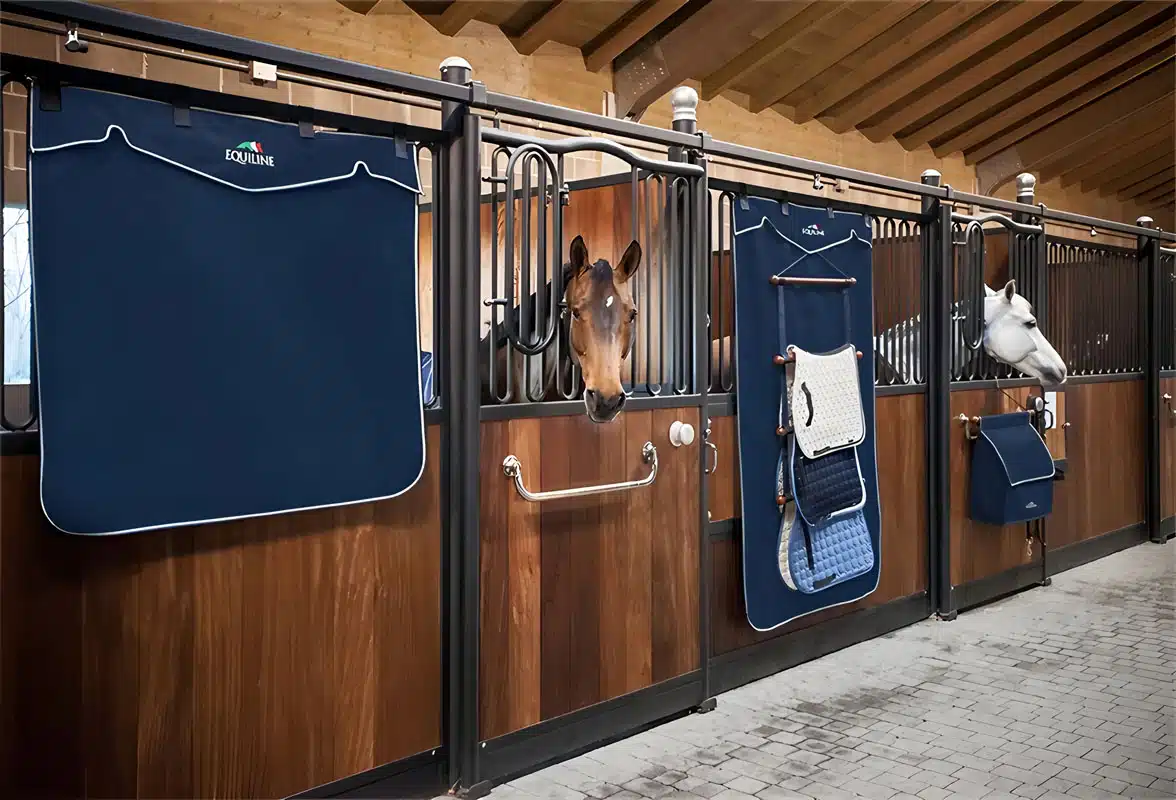
Traditional pine acts as a biological sponge for urine and bacteria. DB Stable’s 28mm-32mm HDPE panels provide a non-porous, zero-maintenance barrier that remains 100% waterproof for decades.
| Característica | Traditional Pine Timber | DB Stable HDPE (28-32mm) |
|---|---|---|
| Water Resistance | Porous; absorbs urine & moisture | 100% Waterproof (Non-porous) |
| Maintenance Required | Annual sealing, staining, painting | Zero Maintenance (Wash down only) |
| Hygiene Profile | High bacterial/ammonia retention | Resists bacteria; easy to sanitize |
| Durabilidad | Prone to rot, warping, and chewing | Impact absorbing, rot-proof, UV stable |
The Vulnerability of Pine: Moisture Absorption and Rot
Pine is naturally porous. In a stable environment, it functions like a slow-acting sponge, absorbing urine, water, and atmospheric moisture. This absorption causes structural warping and creates a breeding ground for bacteria deep within the grain where topical cleaners cannot reach. The resulting ammonia buildup often compromises air quality, affecting the respiratory health of stabled horses.
Maintenance is the hidden cost of timber infills. To maintain even basic water resistance, pine requires annual sealing, staining, or painting. In humid climates, such as New Zealand winters, organic timber is highly susceptible to mold and mildew. Furthermore, the soft density of pine allows horses to crib or chew the material. Once teeth break the sealed surface, moisture enters the core, accelerating rot from the inside out.

HDPE Technology: The Zero-Maintenance Waterproof Standard
We engineer our infills using 28mm-32mm High-Density Polyethylene (HDPE). This creates a solid, non-porous surface that is physically incapable of absorbing liquid. Whether it is urine, water from wash-downs, or ambient humidity, the material remains unaffected. This technology shifts the focus from constant repair to simple daily operations.
- Zero Maintenance Standard: Panels require no painting, sealing, or chemical treatments for the product’s lifetime.
- Superior Hygiene Control: The surface resists bacteria and sanitizes easily with standard power washers.
- UV Stabilization: The composition resists UV degradation, ensuring the material remains impact-resistant and does not become brittle under intense sunlight.
- Kick-Proof Guarantee: Unlike rigid wood that splinters, our HDPE absorbs impact energy, reducing injury risk for the horse.
Hot-Dip Galvanizing: Rust-Proofing Your Stable Frame
True corrosion resistance requires dipping the entire welded frame into molten zinc, not just spraying paint over welded seams. This post-fabrication process is the only way to guarantee a bond that lasts decades.
The Advantage of Galvanizing After Fabrication
Many manufacturers cut corners by using pre-galvanized tubing. They weld these pre-coated tubes together, which burns off the zinc at the joints, leaving the most critical structural points protected only by a thin layer of spray paint. We reject this method entirely. At DB Stable, we fabricate the entire frame from raw black steel (Q235B or Q345B) first. Only after all welding and drilling are complete do we submerge the full unit into a 460°C molten zinc bath.
- Total Weld Sealing: The molten zinc penetrates every crevice, sealing weld seams that are typically the first points of failure in pre-galvanized systems.
- Internal Protection: Unlike spray-on coatings, the immersion process coats both the exterior and the interior of the tubing, preventing rust from eating the frame from the inside out.<
/li>
- Enlace metalúrgico: The heat creates a zinc-iron alloy layer that is harder than the base steel itself, providing superior impact resistance against hooves and machinery.
Zinc Coating Thickness and ISO 1461 Standards
We do not rely on visual estimates for protection. Our process strictly adheres to BS EN ISO 1461 standards, which dictate the minimum mass and thickness of the zinc coating based on steel thickness. This ensures consistent performance in high-ammonia environments typical of equestrian facilities. While industry averages often hover around 40-50 microns for tubing, our specific output data confirms significantly higher protection levels.
- Structural Parts (>6mm steel): We maintain an average coating thickness exceeding 85 microns.
- Tubing Components (3-6mm steel): We guarantee an average coating thickness above 70 micras.
- Verified Durability: Our frames pass the ASTM B117 Salt Spray Test with over 96 hours of resistance, ensuring they withstand coastal and humid climates.
Designing Open-Front Stalls for Easy Mucking
Open-front designs with partial-solid partitions and puertas correderas streamline mucking by removing physical barriers and maximizing aisle efficiency for machinery access.
Structural Layout for Equipment Access
Time determines profitability in large commercial facilities. If your staff spends extra seconds maneuvering a wheelbarrow around a poorly designed door frame, you lose hours of labor over a month. We engineer open-front designs to eliminate these friction points. Partial-solid fronts provide the necessary containment for the animal while maintaining clear visual lines for handlers, ensuring safety during cleaning routines.
The critical factor here is width. Standard retail stalls often restrict access, but professional operations require clearance for machinery. Our panels utilize a standard 3.5m to 4.0m width. This accommodates skid steers and wide-load wheelbarrows easily, removing the need for precision maneuvering that slows down the muck-out crew. By eliminating swinging barriers, you speed up the removal of soiled bedding and waste significantly.
Utilizing Sliding Doors and Swivel Feeders
Hardware choices directly impact barn workflow. Hinged doors are a liability in active aisles; they block traffic and create hazards for horses and handlers alike. We rely on the Sistema de vías ocultas for our sliding doors. This mechanism keeps the door flush against the stall front, preventing aisle blockage during active cleaning hours. It keeps the walkway clear for machinery and staff movement.
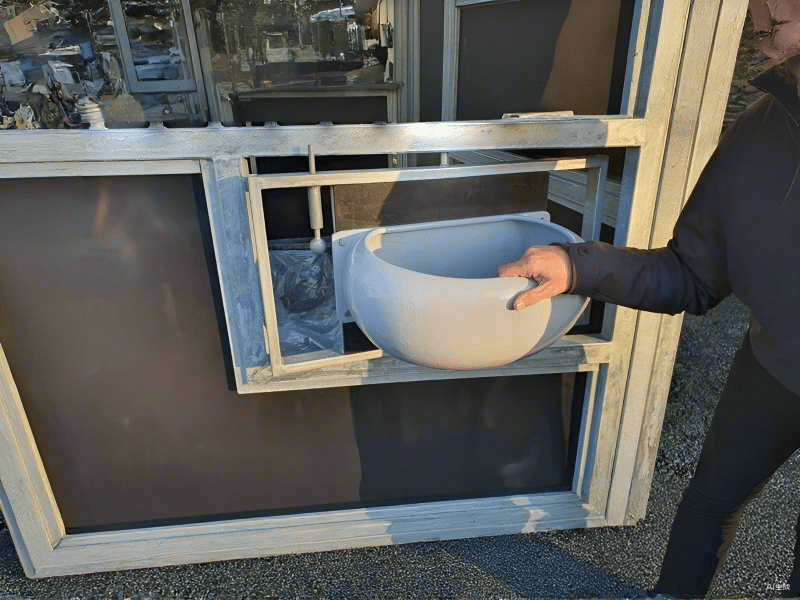
- Aluminum Swivel Feeders: These allow staff to feed hay and grain from the exterior. You do not need to enter the stall, which keeps the floor clear of feed buckets and speeds up the wash-down process.
- Diseño a prueba de fundición: We engineer a strict 50mm bottom gap on all fronts. This specific clearance prevents horses from getting legs stuck while rolling but maintains enough airflow to dry floors rapidly after mucking.
- Zero Maintenance Infill: Using HDPE or high-density bamboo means you wash walls down with a hose. No scrubbing porous wood or treating rot caused by wet bedding.
Preguntas frecuentes
What are the best waterproof materials for horse stalls in New Zealand?
In New Zealand’s wet climate, High-Density Polyethylene (HDPE) and recycled plastic sheeting are superior alternatives to traditional plywood or pine. HDPE is 100% waterproof, does not absorb moisture, and is immune to rot, mold, or mildew. Unlike wood, which requires regular staining, HDPE offers a zero-maintenance solution that withstands high humidity and frequent washing.
Why is hot-dip galvanizing recommended for New Zealand stables?
New Zealand’s coastal environment exposes steel to high salt spray levels, accelerating rust. Hot-dip galvanizing involves immersing the entire steel frame into molten zinc after welding (ISO 1461 standard). This creates a metallurgical bond exceeding 70 microns in thickness, protecting both the surface and the internal welds from corrosion, ensuring a lifespan of over 20 years even in harsh conditions.
Is a shelter legally required for horses in New Zealand?
Yes, under the Animal Welfare Act 1999 and Codes of Welfare, owners are legally obligated to provide adequate shelter to protect horses from cold or wet weather. A compliant shelter typically consists of a three-sided structure with a roof and one open side, allowing the horse to move freely while staying dry and protected from prevailing winds.
How can I prevent stable boards from rotting at ground level?
Rot often starts where boards touch damp ground or concrete. To prevent this, use a steel bottom channel that elevates the infill boards slightly (approx. 50mm), creating a ‘cast-proof’ gap that allows drainage and airflow. Alternatively, specify the bottom half of the stable partition with waterproof HDPE planks instead of wood to eliminate the risk of rising damp entirely.
What is the benefit of a flat-pack stable system for remote NZ locations?
Flat-pack systems significantly reduce logistics costs compared to fully welded frames. A 40HQ container can hold 30-45 flat-pack sets versus only 12-15 fully welded sets. For remote locations in New Zealand, this compact packaging makes offloading easier and reduces freight costs, allowing for high-spec materials (like Q345 steel) without blowing the budget on shipping.
Reflexiones finales
New Zealand’s corrosive mud and high rainfall demand more than standard painted steel. Choosing our ISO 1461 hot-dip galvanized frames with rot-proof HDPE infill eliminates the warranty claims associated with timber decay. Your reputation relies on supplying infrastructure that survives the winter, not just the showroom.
Validating these materials starts with examining the specs firsthand. We invite you to request our technical catalog or discuss a trial order to test our fitment and finish against local requirements. Contact our engineering team today to secure high-margin, weather-proof inventory for your next container.

 Spanish
  English
  French
  Arabic
  German
0 comentarios