


Equine operations in Spain face aggressive thermal challenges where standard stabling often leads to costly heat stress incidents. Relying on enclosed masonry structures increases veterinary overhead and dehydration risks compared to open-air designs that prioritize ventilation.
This analysis examines ventilated free-standing systems engineered for maximum airflow and zero-foundation deployment. We evaluate modular designs against the BS EN ISO 1461 hot-dip galvanization standard and stack effect principles to secure asset longevity without capital-intensive construction.
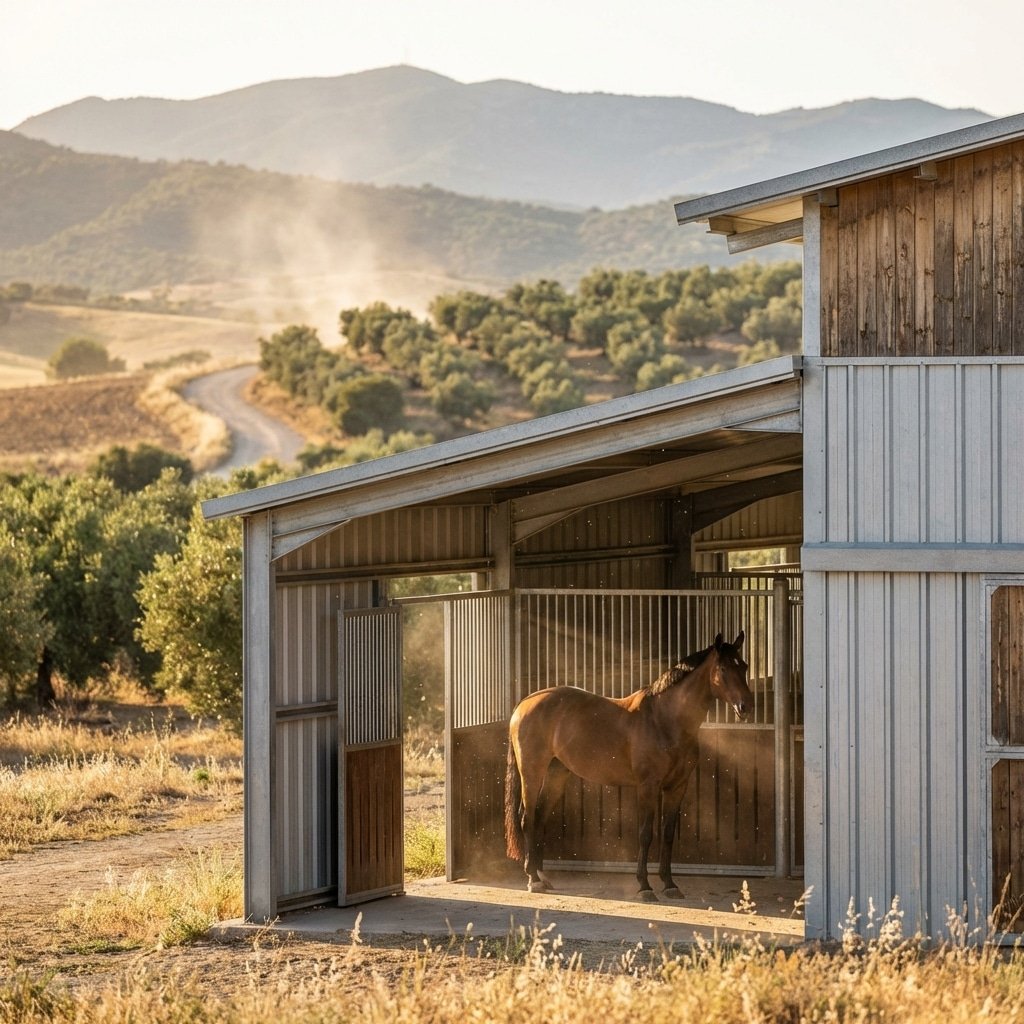
Managing Equine Heat Stress in the Spanish Summer
Combating Spanish heat requires maximum airflow. Open grill partitions and stack effect ventilation lower internal temperatures, protecting horses from dehydration and heat stroke.
Recognizing Thermal Risks in Iberian Climates
The Spanish summer presents specific, aggressive thermal challenges that go beyond standard heat management. In regions like Andalusia, ambient temperatures frequently exceed 40°C, creating an immediate and severe risk of dehydration for stabled horses. Facilities that fail to account for this extreme baseline often face higher veterinary costs due to heat stress.
- Stagnant Air Accumulation: Inside enclosed structures with poor design, air becomes static, accelerating the onset of heat exhaustion faster than in open paddocks.
- Humidity Factors: In coastal areas, high heat combines with humidity to prevent effective sweating, which is the horse’s primary cooling mechanism.
Leveraging Stack Effect Ventilation Designs
To mitigate these risks without expensive HVAC systems, we utilize Stack Effect Ventilation in our DB Stable designs. This engineering principle relies on the natural buoyancy of hot air to expel it from the facility. Standard solid walls trap rising heat at the horse’s level, creating a micro-climate significantly hotter than the aisle.
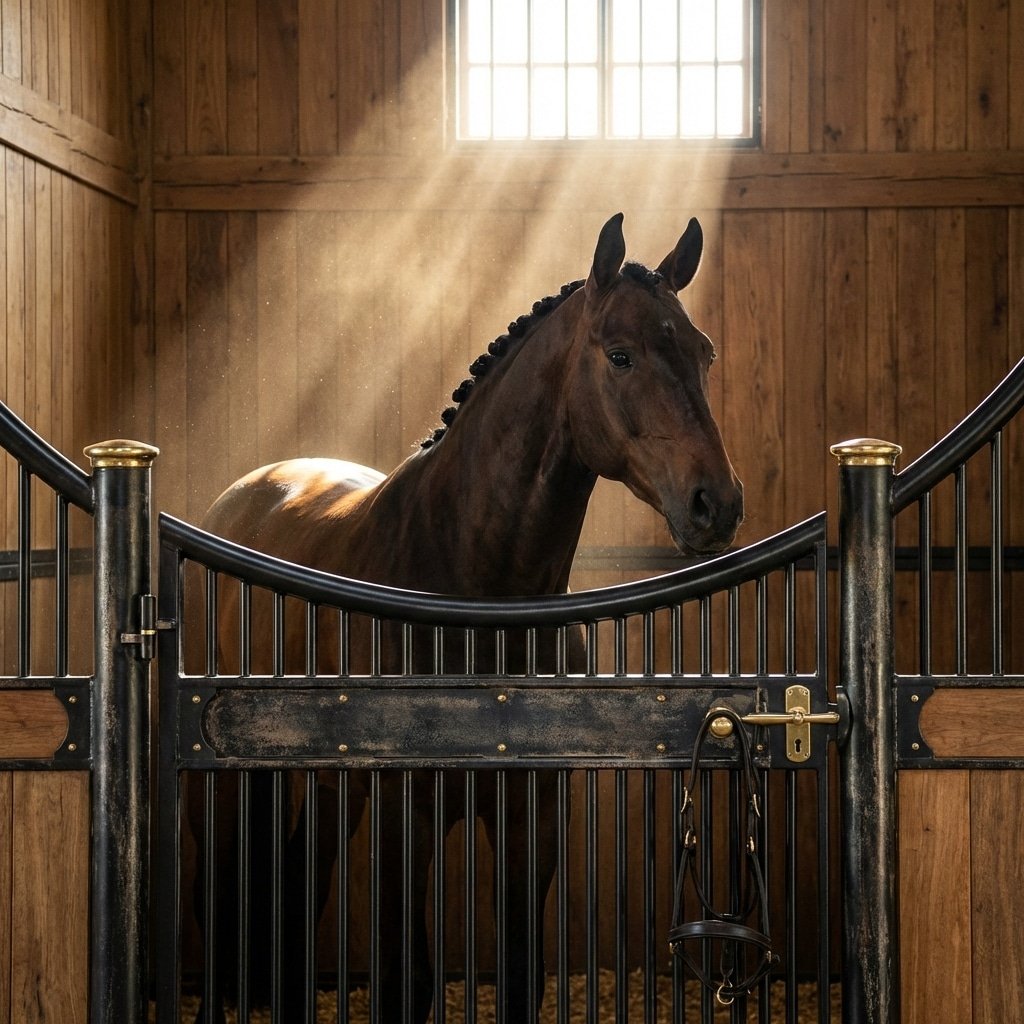
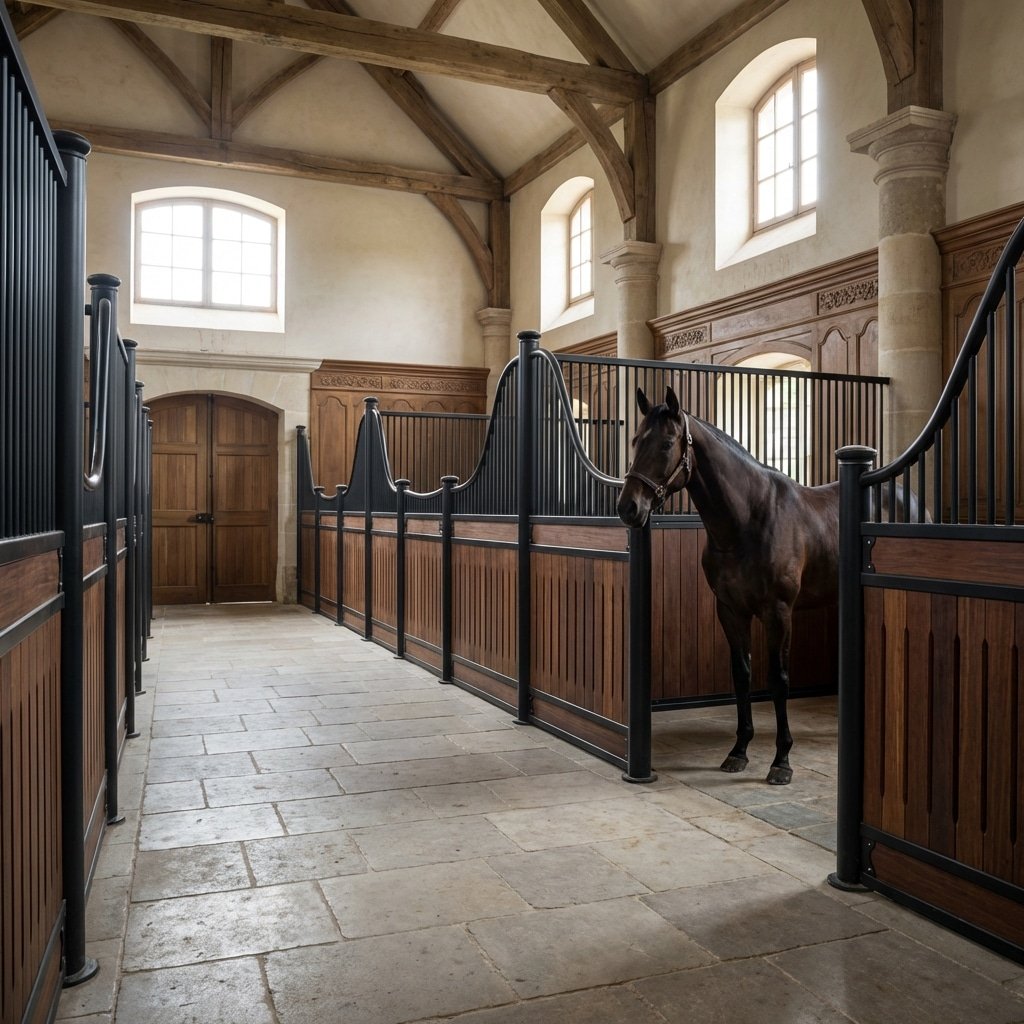
- Open Grill Partitions: Unlike solid infill, upper panels featuring open grillwork allow constant cross-breezes between stalls, breaking stagnant air pockets.
- Vertical Airflow: The design promotes the upward movement of heat, lowering the ambient temperature inside the stall by several critical degrees.
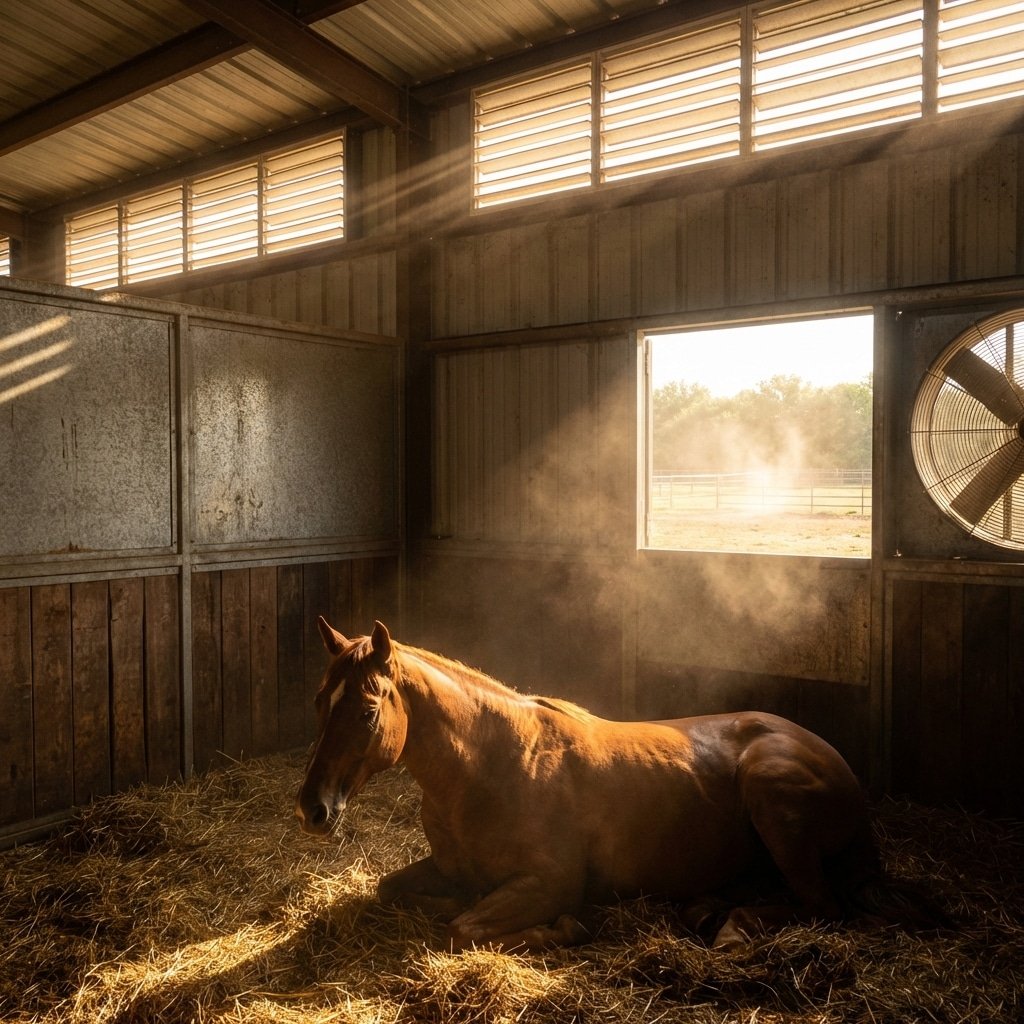
Free-Standing Horse Stables: Instant Shade Anywhere
Free-standing stables deliver immediate, foundation-free weather protection using modular galvanized steel frames, offering facility owners strategic flexibility without the capital cost of permanent infrastructure.
| Característica | DB Stable Free-Standing Unit | Standard Permanent Build |
|---|---|---|
| Foundation Requirement | Zero (Direct to Dirt/Sand) | Concrete Slab Required |
| Mobility | Fully Relocatable | Fixed Location |
| Steel Protection | Hot-Dip Galv (BS EN ISO 1461) | Often Painted or Pre-Galv |
| Permitting | Temp. Equipment (Usually Exempt) | Full Planning Permission |
Operational Flexibility of Portable Designs
For professional facilities and distributors, the value of free-standing stables lies in logistics and asset management rather than just shelter. These units bypass the heavy capital expenditure associated with concrete slabs and permanent construction. You can deploy them directly on flat ground or compacted sand, which immediately reduces site preparation costs.
This “Zero Foundation” approach offers distinct strategic advantages for large-scale operations:
- Regulatory Ease: Most jurisdictions classify these as temporary agricultural equipment rather than permanent buildings, often eliminating the need for complex planning permissions.
- Seasonal Adaptability: You can relocate structures to different paddocks to follow grazing rotations or maximize wind exposure during hotter months.
- Montaje rápido: Our modular flat-pack design allows for quick setup to address immediate heat stress concerns without waiting for construction crews.
Integrated Steel Roofing and Anchoring Specs
A portable structure must withstand the same environmental loads as a permanent one. We do not compromise on material integrity just because the unit is movable. The frame relies on structural grade steel to prevent warping under wind loads, and we strictly enforce a “Hot-Dip After Fabrication” process to ensure the welds never rust.
Technical specifications for our free-standing units include:
- Structural Steel Grade: Frames use Q235B or Q345B steel (equivalent to ASTM A36/Grade 50). Q345B offers superior impact toughness for kick resistance.
- Corrosion Defense: The entire unit undergoes Galvanización en caliente a BS EN ISO 1461 standards after welding, achieving an average coating thickness >85 microns on structural parts.
- Reflective Roofing: We utilize 0.4mm–0.8mm steel board roofing with powder coating to reflect solar radiation and actively reduce internal temperatures.
- Secure Anchoring: Stability is guaranteed via heavy-duty anchor bolts and a hardware kit made entirely from 304 Stainless Steel to prevent ground-level corrosion.
Engineered For Durability: 20-Year Rust-Free Stables
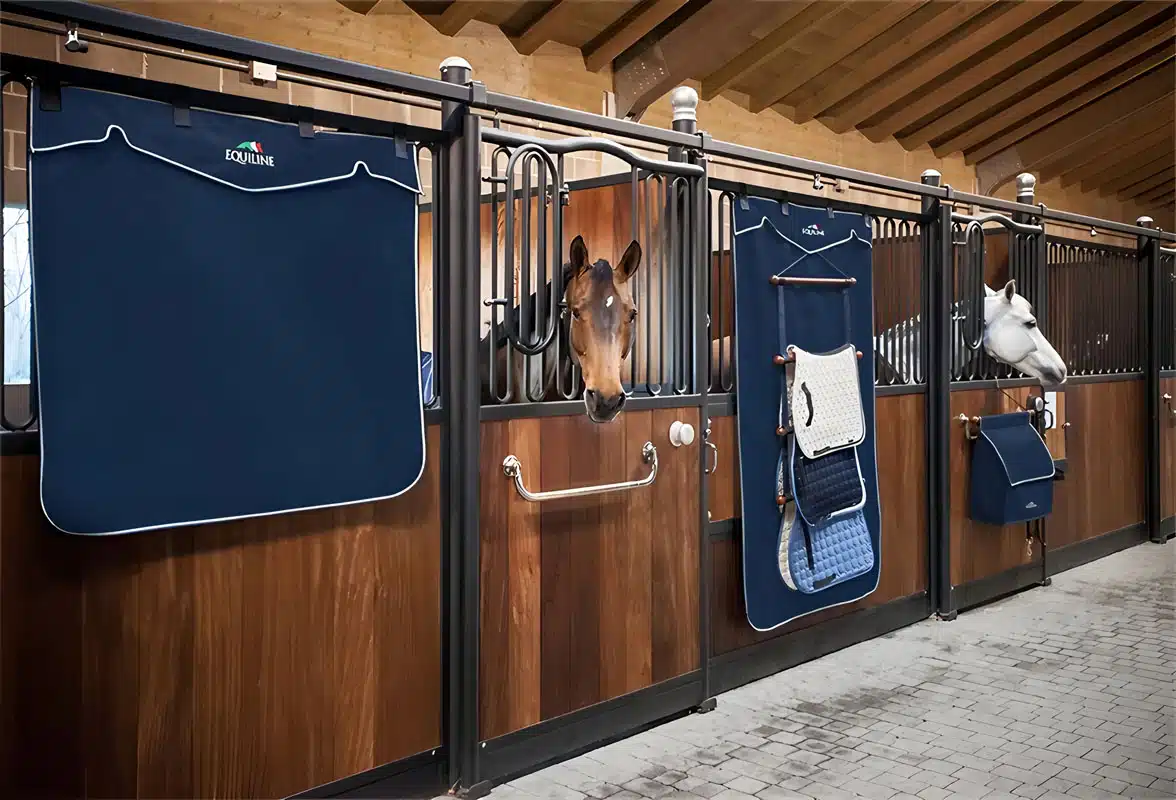

Maximizing Airflow: Fully Grilled Horse Stall Panels
Fully grilled panels leverage stack effect ventilation to disperse heat and ammonia, replacing solid walls with vertical bars for a cooler, healthier environment during hot Spanish summers.
The Mechanics of Stack Effect Ventilation
In high-heat environments like Southern Spain, solid partition walls often act as heat traps. They block air movement at the animal’s level, creating stagnant pockets where temperature and ammonia concentrations spike. Fully grilled panels solve this by replacing the solid infill with vertical metal bars, allowing air to pass freely through the entire structure.
This open design facilitates Stack Effect Ventilation. As heat rises from the horse’s body, it isn’t blocked by a solid wall. Instead, it dissipates vertically while cooler air is drawn in from the aisle. This continuous cycle is critical for removing respiratory irritants like ammonia, which is heavier than air but disperses effectively with constant low-level airflow.
- Ammonia Removal: Prevents the buildup of noxious gases that damage equine lungs.
- Temperature Regulation: Eliminates the “oven effect” created by solid wood or plastic partitions.
- Social Interaction: Allows horses to see and smell neighbors, significantly reducing behavioral stress.
Engineered for Longevity: Hot-Dip Galvanized Grillwork
A fully grilled panel introduces a specific manufacturing challenge: weld density. A standard stall front might have over 40 vertical bars, creating 80+ weld points. In cheaper production methods using pre-galvanized tubing, the zinc burns off at every weld site during fabrication. If manufacturers simply spray paint over these burns (a common shortcut), rust will bleed through within months.
At DB Stable, we treat rust as a structural failure, not a cosmetic issue. We utilize a Hot-Dip After Fabrication process compliant with BS EN ISO 1461. We weld the entire panel using black steel first, and then submerge the complete unit into molten zinc. This ensures that every single weld point, corner, and internal tube surface is sealed against corrosion.
- Zinc Thickness: We achieve an average coating exceeding 70 microns on tubing, far surpassing the thin layers found on pre-galvanized alternatives.
- Steel Strength: Utilizamos 14-Gauge (2.0mm – 2.5mm) steel for all bars. We strictly prohibit thinner materials that bend under impact.
- Weld Integrity: The post-fabrication dip seals the metallurgical bond, preventing rust from starting at the heat-affected zone.
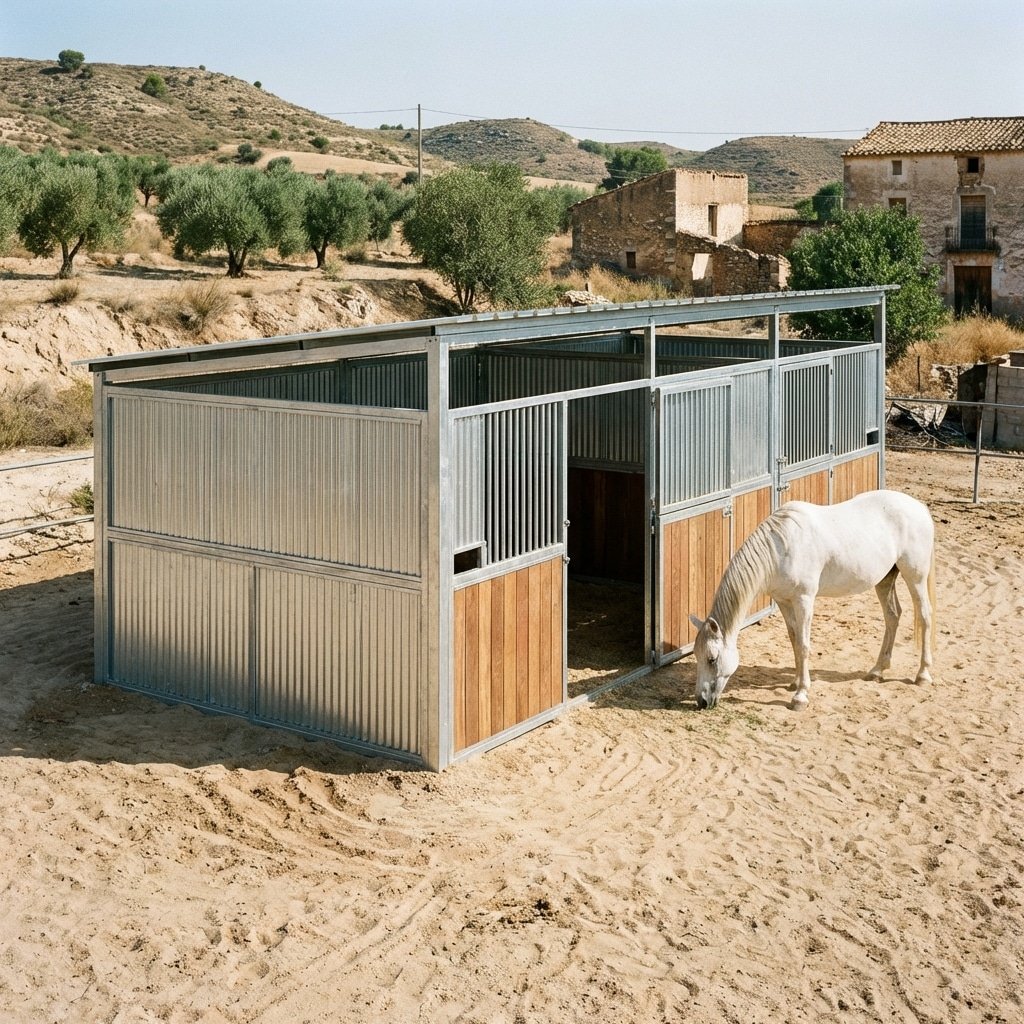
Heat-Reflective Roof Materials for Outdoor Stalls
Heat-reflective ‘cool roofs’ utilize high Solar Reflectance Index (SRI) materials to bounce solar radiation, maintaining surface temperatures near 30-40°C compared to 90°C on standard asphalt.
The Mechanics of Solar Reflectance
Standard dark roofing absorbs heat like a sponge, transferring it directly into the stall environment. Reflective materials function differently by targeting the full solar spectrum. They reject visible, infrared, and ultraviolet wavelengths to minimize heat transfer into the animal housing area. This is not just about shade; it is about active thermal rejection.
- Surface Temperature Control: Reflective technology maintains roof surface temperatures in the 30-40°C range, a massive drop from the 60-90°C temperatures typical of non-reflective surfaces.
- Heat Island Reduction: In concentrated stable blocks, these roofs lower the ambient air temperature, reducing the “heat island” effect and improving overall air quality.
- Thermal Barrier: Prevents the roof itself from becoming a radiator that heats the stall interior long after the sun goes down.
Powder-Coated Steel Roofing Systems
We avoid flimsy membranes that tear in high winds. Our “Royal Series” approach utilizes a dual-layer system: hot-dip galvanized steel serves as the structural base, finished with a specialized powder coating. This combination delivers the high SRI of a ‘cool roof’ alongside the industrial rigidity required for agricultural abuse. The powder coat provides the reflectivity, while the galvanized substrate ensures the steel survives humidity and ammonia exposure.
- Gauge Specifications: We utilize 0.4mm to 0.8mm thick steel boards for the roof sheeting, providing robust structural integrity against wind uplift and falling debris.
- Dual-Layer Protection: The system features a powder coating applied strictly over hot-dip galvanized steel, creating a double barrier against corrosion and UV degradation.
- Structural Integration: The roofing integrates seamlessly with our heavy-duty Q235B (Standard) or Q345B (Cold Climate) steel frameworks, ensuring the roof lifespan matches the structural longevity of the stable.
Swivel Feeders for Safe Watering and Feeding
Swivel feeders allow staff to feed and water horses from the aisle without entering the stall, reducing injury risks and facilitating rapid cleaning of feed bowls.
Enhancing Barn Safety with Aisle-Side Access
Feeding time often triggers excitement or aggression in stabled horses. By installing swivel feeders, you remove the handler from the ‘danger zone’ entirely. Staff can dispense grain or hay from the safety of the barn aisle, eliminating the need to unlock doors or physically enter the stall during high-energy moments. This operational shift significantly lowers the risk of staff injury and prevents horses from bolting through open doors.
- Zero Entry Required: Staff remain in the aisle during feeding, keeping them separated from the horse.
- Injury Prevention: Removes the risk of kicks or bites from food-aggressive or excited animals.
- Escape Mitigation: Keeps stall doors latched, preventing horses from pushing past handlers.
- Efficient Hygiene: Allows for rapid dumping of dirty water directly into aisle drainage without hauling buckets.
Professional Series Aluminium Feeder Integration
For our Professional Series, we utilize heavy-duty Cast Aluminium rather than the plastic or thin-gauge steel often found in retail-grade products. Plastic feeders frequently shatter under hoof impact, and pressed steel bowls rust quickly once the coating wears thin. Cast Aluminium provides the structural integrity required for commercial facilities while resisting corrosion. The entire assembly integrates seamlessly into our standard framing.
- Material: Heavy-duty Cast Aluminium bowls that resist rust and cracking.
- Mechanism: Integrated 360-degree pivot system for smooth rotation.
- Safety Design: Smooth, rounded edges to prevent injury to the horse’s muzzle.
- Compatibility: Fits standard 50mm x 50mm RHS stable frames.
Reflexiones finales
Combating Andalusian heat requires infrastructure that actively lowers thermal risk rather than just providing shelter. Choosing our ISO 1461 Hot-Dip Galvanized frames over pre-galvanized alternatives protects your capital investment from sweat-induced corrosion and structural failure. This “Zero Maintenance” durability ensures your facility remains safe and professional through decades of aggressive summers.
Logistics define your landed cost, and our flat-pack engineering allows us to load 30-45 sets per 40HQ container to secure your margins. Don’t speculate on ventilation performance; verify our “Stack Effect” design with a specific project consultation. Contact our team today to configure a trial order that meets your exact layout requirements.


 Spanish
  English
  French
  Arabic
  German
0 comentarios