
Designing a Vet University Hosp. now demands strict adherence to mandatory carbon budgets and circular economy lifecycles. Architects and government planners relying on traditional welded assemblies risk immediate tender disqualification due to inefficient Scope 3 logistics and unverified material longevity.
This report evaluates hoist-compatible frameworks engineered from Q345B structural steel and hot-dip galvanized to ISO 1461 standards. We analyze how shifting to modular flat-pack logistics increases container density to 45 sets, drastically reducing freight emissions while securing the LEED credits necessary for institutional approval.
The Rise of ESG (Environmental, Social, Governance) in Construction
By 2026, ESG compliance shifts from optional to mandatory. Projects must now demonstrate strict carbon budgets, efficient Scope 3 logistics, and verifiable circular economy lifecycles.
Mandates for Decarbonization and Circular Economy
The construction industry is facing a hard pivot. Regulatory bodies and institutional investors are moving past vague “green” promises to enforcing strict carbon budgets. For large-scale projects, this means accounting for embodied carbon in every structural element before breaking ground. If a supplier cannot prove the longevity and carbon efficiency of their materials, they are increasingly excluded from tender lists.
The “Circular Economy” model is central to this shift. The goal is to maximize the service life of materials to prevent early replacement and landfill waste. Institutional clients, such as universities and government entities, now demand transparency in sourcing to meet their own Net-Zero targets. Green financing approvals frequently hinge on a supply chain’s ability to document adherence to ISO environmental standards, making non-compliant generic steel a liability rather than a cost-saving measure.

Reducing Scope 3 Emissions with Modular Flat-Pack Logistics
Scope 3 emissions—indirect emissions that occur in a company’s value chain—are often the hardest to control. For stable distributors and developers, the logistics of heavy steel components represent a massive portion of this carbon footprint. DB Stable’s manufacturing and logistics protocols are engineered to directly address these ESG metrics.
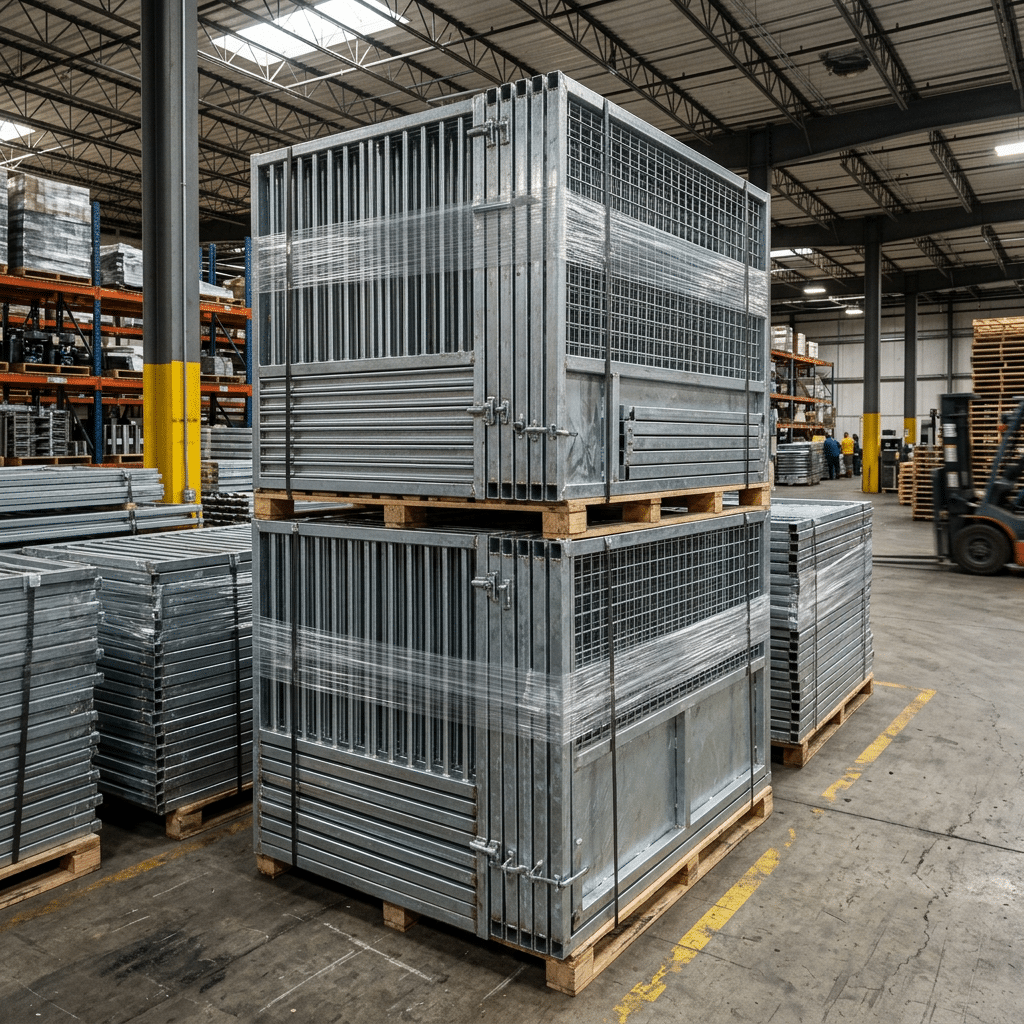
- Optimized Freight Efficiency: Traditional welded stable fronts limit container capacity to just 12-15 sets due to “shipping air.” Our modular flat-pack system loads 30-45 sets per 40HQ container. This density reduces shipping-related carbon emissions per unit by over 60%.
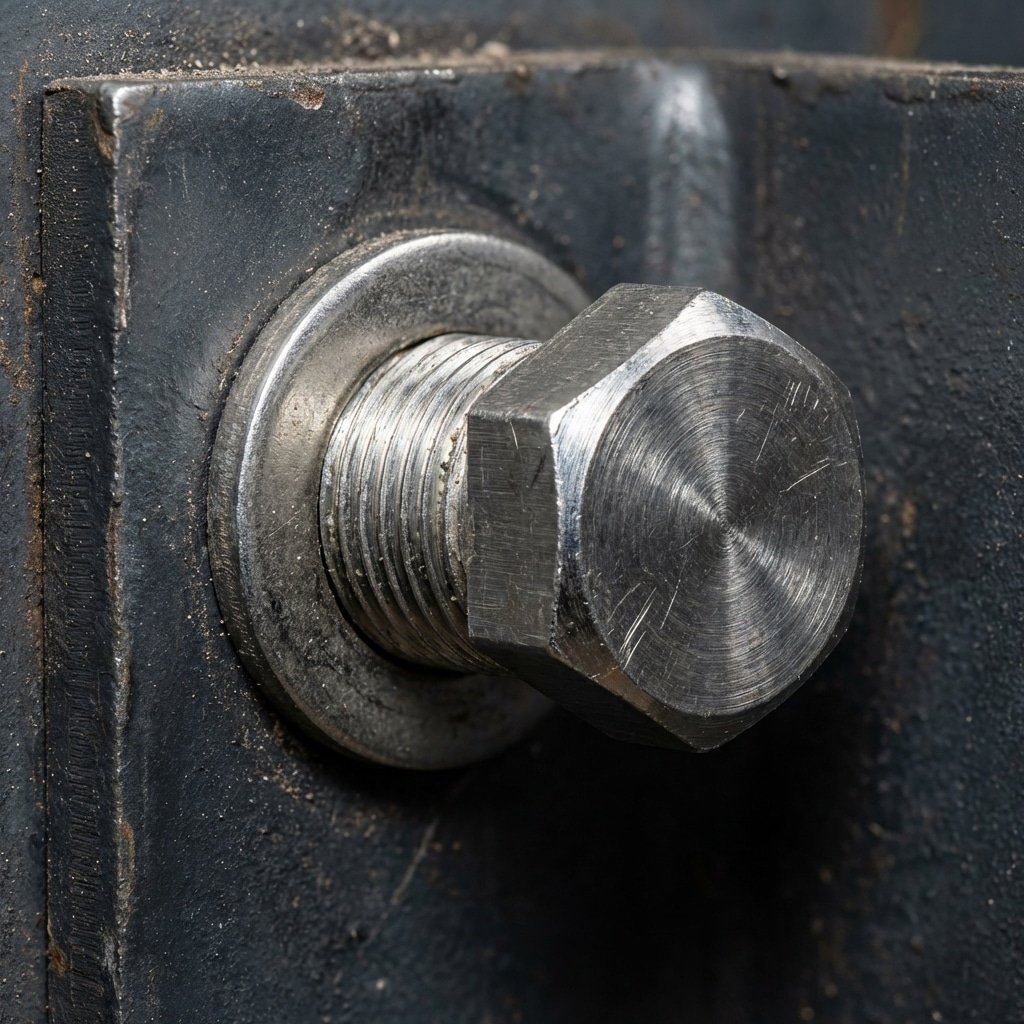
- Extended Lifecycle (ISO 1461): We adhere strictly to Galvanización en caliente after fabrication with zinc coatings exceeding 85 microns. This prevents rust for decades, aligning with circular economy mandates by drastically reducing the need for replacement compared to pre-galvanized alternatives.
- Sustainable Material Choices: We offer High-Density Bamboo (Janka Hardness > 3000 lbf) as a rapidly renewable alternative to slow-growth hardwoods. Alternatively, our UV-stabilized Relleno de HDPE provides a fully recyclable, zero-maintenance option that requires no chemical treatments.
- Traceable Governance: Major institutional projects require paper trails. Our adherence to ISO 9001 (Quality Management) and ISO 1461 (Galvanizing) provides the documented compliance necessary for rigorous ESG reporting.
Moving Away from Old-Growth Timber (Oak/Pine)
Veterinary facilities are switching to high-density bamboo because porous oak acts as a bacterial trap. Bamboo offers 3x the hardness and meets modern sustainability mandates.
The Sanitary and Ecological Risks of Softwoods in Clinical Settings
The veterinary industry is phasing out traditional oak and pine infills. While these materials were once the standard
, they present functional liabilities in sterile environments where infection control is the priority. We identify three critical failure points that make softwoods unsuitable for modern equine hospitals:
- Bacterial Retention: Traditional pine and oak are porous materials. They absorb fluids—blood, urine, and water—turning stall walls into vectors for bacterial growth that standard surface cleaning cannot eliminate.
- Injury Risks: Softwoods lack the density to withstand heavy impact. When kicked, they tend to splinter, creating jagged edges that pose severe injury risks to neurologically compromised horses and the students handling them.
- Sustainability Conflict: Old-growth timber requires decades to regenerate. Sourcing these materials conflicts with the strict sustainability mandates and Green Building standards now enforced by university campuses and large institutions.
High-Density Bamboo: The 3,000 Janka Hardness Clinical Standard
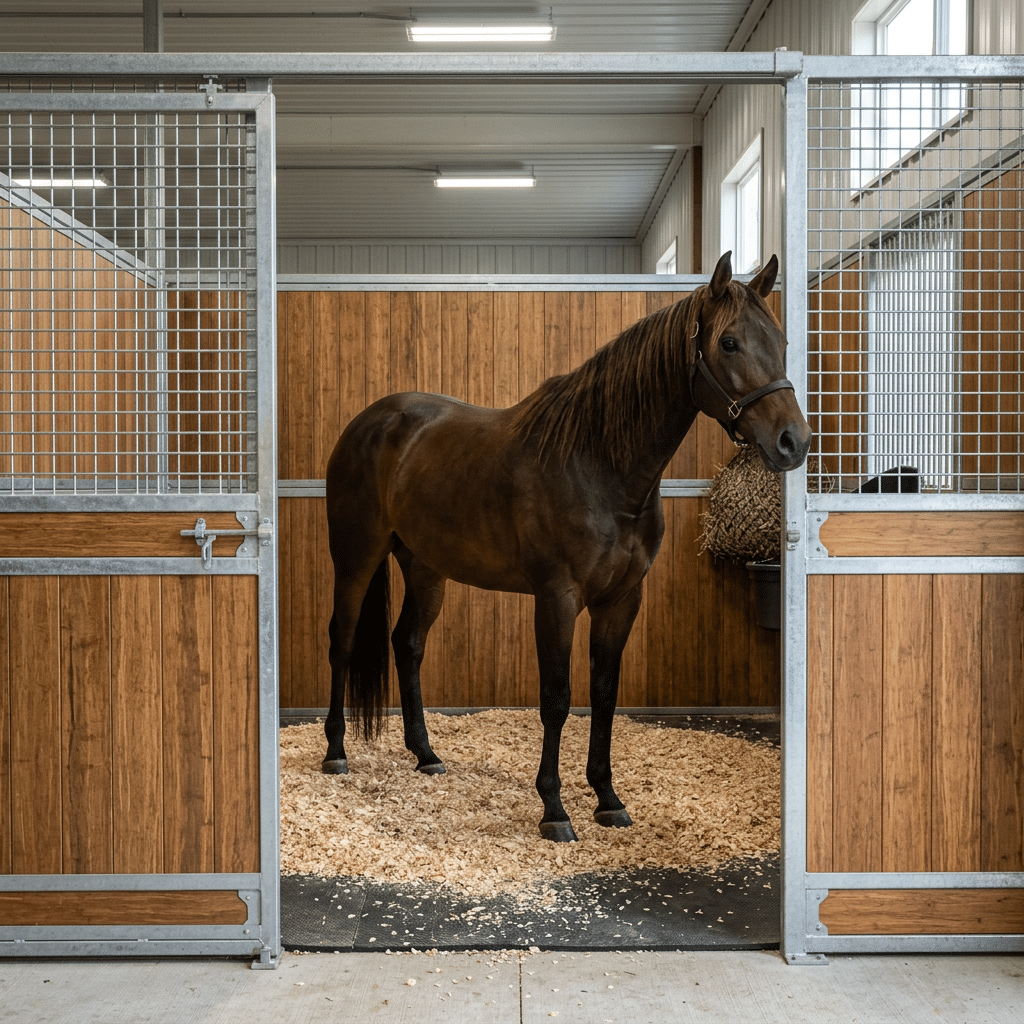
To address these deficits, DB Stable utilizes High-Density Strand Woven Bamboo as the technical successor to hardwood. This material is not merely a wood alternative; it is an engineered product designed to withstand the abuse of clinical use while maintaining a sealed, sanitary surface.
- Superior Hardness: Our bamboo achieves a Janka Hardness rating of over 3,000 lbf. This makes it three times harder than oak, rendering it virtually immune to kick damage and wear.
- Non-Porous Hygiene: The strand-woven manufacturing process compresses fibers under immense pressure, creating a dense surface that resists mold, rot, and moisture absorption without the need for toxic sealants.
- Rapid Renewability: Bamboo reaches maturity in just 3-5 years. This allows facilities to specify a durable, industrial-grade material that aligns with institutional carbon budgets and renewable resource goals.
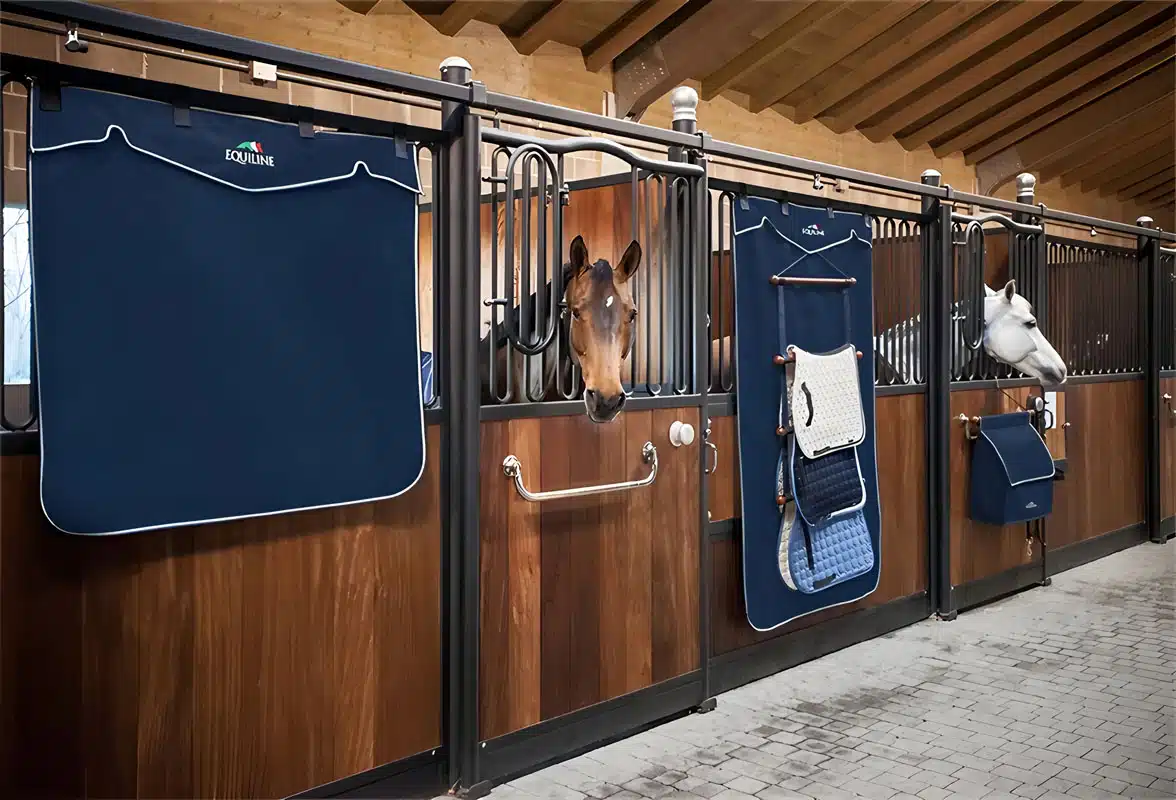
Precision-Engineered Stables Built for Lifetime Durability
Top Factories Embracing Sustainable Materials
Insider Insight: ESG has moved from a marketing slide to an operational necessity. These facilities prove that sustainable manufacturing drives efficiency, not just compliance.
The shift toward sustainable manufacturing isn’t happening in the future; it is already the standard for global market leaders. We are seeing a transition where factories are no longer just production hubs but active participants in the circular economy. The following facilities have moved beyond basic compliance, integrating digital twins, renewable microgrids, and zero-waste protocols to redefine industrial output.
| Fabricante | Location | Key ESG Milestone |
|---|---|---|
| Siemens | Chengdu, China | Reduced production waste by 48% using digital twins. |
| Lego | Vietnam | Carbon-neutral run via 12,400 rooftop solar panels. |
| P&G | Taicang, China | 100% renewable electricity & circular water systems. |
| Nestlé | Serbia / UK | Achieved strict “Zero Waste to Landfill” status. |
| Schneider Electric | Spain / China | Zero CO2 status via integrated solar microgrids. |
1. Siemens Electronics Works (China)
Siemens has turned its Chengdu facility into a World Economic Forum Sustainability Lighthouse. Rather than just swapping materials, they digitized the entire production line. By using AI-driven analytics and digital twins, they increased output by 92% while simultaneously cutting energy consumption per unit by 24%. This proves that heavy industrial scaling does not require a linear increase in carbon footprint.
2. Lego (Vietnam)
Lego backed its sustainability rhetoric with a US$1 billion investment in Vietnam. The facility is designed to be carbon-neutral from the start, powered by a massive array of 12,400 rooftop solar panels and a local battery storage solution. This is a direct response to the energy-intensive nature of plastic injection molding, showing that even polymer-heavy industries can transition to clean energy grids.
3. Schneider Electric (Global)
Schneider Electric is practicing what it preaches. Their Barcelona facility hit Zero CO2 status not by buying offsets, but by integrating a microgrid system combining solar generation with battery storage. Similarly, their Wuxi Smart Factory in China earned the Advanced Lighthouse designation for using industrial IoT to track and reduce emissions in real-time.
4. Procter & Gamble (China)
P&G’s Taicang facility focuses heavily on water stewardship—a critical ESG metric often overshadowed by carbon. They implemented steam condensate recovery and rainwater harvesting to close the loop on water usage. Additionally, the plant operates on 100% renewable electricity and maintains zero manufacturing waste to landfill, setting a high bar for the FMCG (Fast-Moving Consumer Goods) sector.
5. IKEA (Poland)
IKEA’s Zbąszynek facility serves as the operational hub for their renewable energy strategy. The company pushed 408 of its factories and suppliers to switch to 100% renewable electricity by 2023. This aggressive supply chain mandate highlights a key trend: big brands are no longer just cleaning up their own houses; they are forcing their entire upstream supply chain to decarbonize or lose contracts.
Strand-Woven Bamboo: A High-Yield Carbon Sink
Strand-woven bamboo acts as a dual-purpose carbon solution: an active sink during its rapid 4-5 year growth and a passive storage block with densities exceeding 1,080 kg/m³.
Carbon Sequestration: Turning Fast Growth into Durable Storage
Traditional timber requires decades to reach maturity, limiting how quickly a forest can cycle carbon. Bamboo operates on a different biological clock. It reaches full maturity in just 4 to 5 years, allowing for frequent harvesting that stimulates the root system rather than destroying it. This rapid turnover creates an aggressive carbon capture cycle that outperforms standard forestry.
- Rapid Sequestration Rate: Because of its fast growth, a single bamboo culm can capture up to 60kg of CO2 before harvest.
- Net-Negative Footprint: The biogenic carbon locked inside the finished material often exceeds the emissions produced during manufacturing and transport.
- Avoided Emissions: Swapping energy-intensive concrete or steel partitions for bamboo significantly lowers the facility’s overall embodied carbon.
We do not specify strand-woven bamboo solely for its environmental profile. In a commercial stable, a wall that cannot withstand a direct kick is a liability. The “strand-woven” process involves shredding bamboo fibers and compressing them under immense pressure with eco-friendly resins. This transforms a hollow grass into a solid structural board that outperforms hardwoods.
- Resistencia al impacto: With a Janka Hardness rating exceeding 3,000 lbf, this material is three times harder than Oak. It is engineered to survive the “Kick-Proof” standard required for aggressive horses.
- Material Density: We compress our boards to a density of >1,080 kg/m³. This extreme density eliminates internal air pockets, preventing moisture ingress and denying bacteria or rot a place to flourish.
- DB Stable Specification: To ensure structural integrity in high-traffic equine hospitals, we supply these boards in 28mm, 32mm, and 38mm thicknesses.
Q235B Steel: The 100% Recyclable Framework
Q235B steel combines ASTM A36 structural equivalence with 100% recyclability, offering veterinary facilities a high-strength, sterile framework that supports LEED certification and long-term circular economy goals.
Circular Economy: Steel in Green Hospital Design
Steel stands alone in the construction material hierarchy for one reason: infinite recyclability. Unlike wood, which degrades with each cycle, or composites that often end up in landfills, Q235B carbon steel can be re-smelted and repurposed indefinitely without losing a single percentage point of structural integrity. For university campuses and large-scale veterinary hospitals, this is a direct path to securing LEED points and meeting strict environmental impact standards.
Beyond the carbon footprint, the material composition itself is critical for clinical environments. Q235B is inorganic and non-porous. It does not off-gas volatile organic compounds (VOCs) like treated lumber, nor does it provide a substrate for bacteria or mold growth. In a high-traffic equine hospital where sterility is non-negotiable, steel provides a safe, chemically inert barrier between patients.
Technical Performance: ASTM A36 Equivalence
We strictly utilize Q235B Structural Steel for all standard frameworks. In the global steel market, this grade is the direct equivalent to the American standard ASTM A36. It offers the specific balance of tensile strength and ductility required to absorb the kinetic energy of a kicking horse without snapping or deforming permanently.
- Yield Strength: Minimum 235 MPa. This ensures the frame withstands significant impact loads common in large animal containment.
- Espesor de pared: We enforce a strict 14-Gauge (2.0mm – 2.5mm) minimum for all primary tubing. While budget competitors often drop to 1.5mm to save on raw material costs, we prohibit this as it compromises structural safety.
- Fabrication Standard: All Q235B components undergo Hot-Dip Galvanization after welding (BS EN ISO 1461), ensuring the recycled steel core is sealed against corrosion for decades.
Preguntas frecuentes
Why is hot-dip galvanized steel preferred for veterinary teaching hospitals?
Clinical environments demand aggressive daily disinfection protocols that destroy standard finishes. Unlike painted steel or wood, our frames undergo hot-dip galvanization after fabrication strictly adhering to ISO 1461 standards. With an average zinc coating thickness exceeding 85μm on structural parts, this finish withstands harsh chemical cleaning agents and biological fluids without rusting or chipping. This creates the sterile, non-porous surface essential for infection control.
Can the stable frames support medical equipment like ceiling hoists?
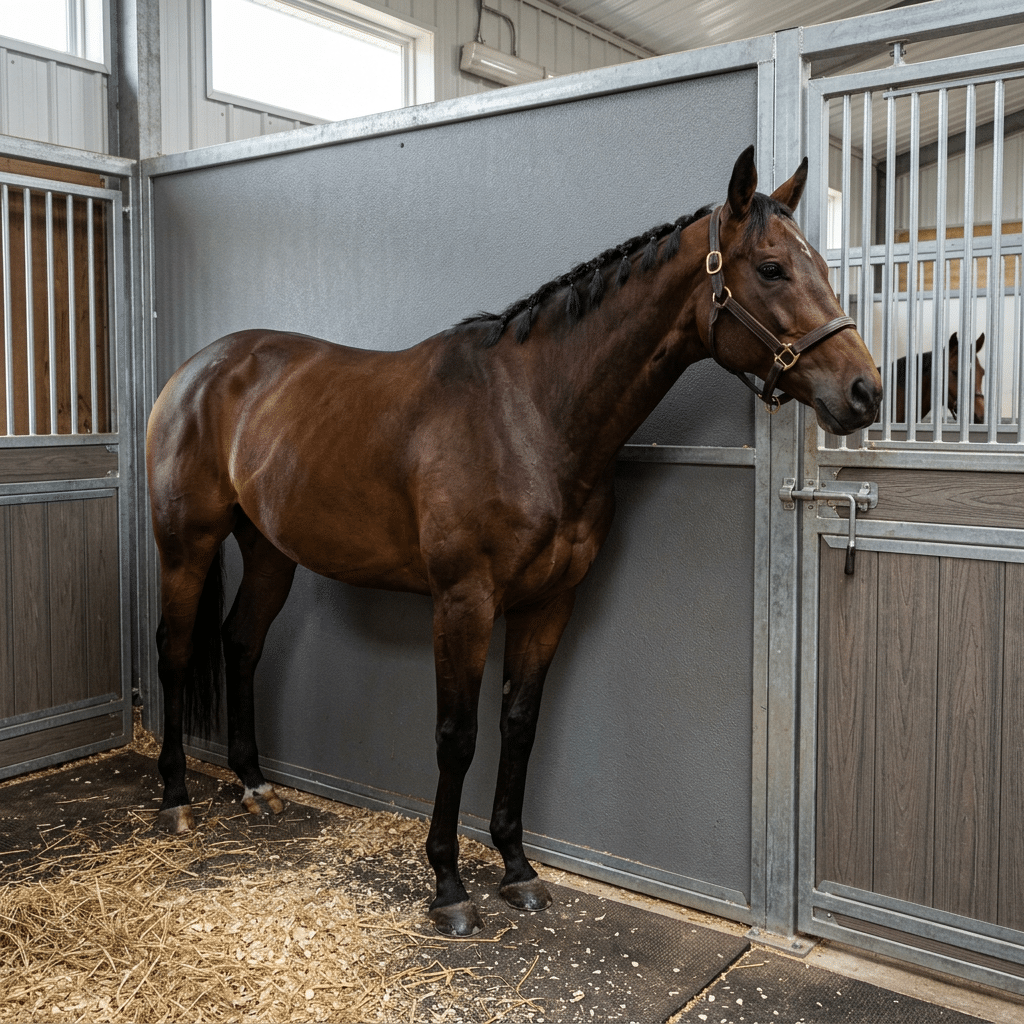
While heavy-duty ceiling hoists usually anchor to the building’s primary structural beams, our partition systems are engineered to integrate with these setups. We use Q345B Acero de baja aleación y alta resistencia (equivalent to ASTM Grade 50) for critical uprights rather than standard carbon steel. The 50mm x 50mm RHS posts feature a wall thickness greater than 2.0mm, providing rigid support capable of withstanding the impact of horses recovering from anesthesia.
Which infill material is best for isolation and quarantine units?
For strict bio-security zones, we exclusively recommend 28mm-32mm HDPE (High-Density Polyethylene). Unlike wood or bamboo, HDPE is completely non-porous, meaning it cannot retain bacteria, viruses, or moisture. It allows for complete wash-downs with industrial disinfectants without risk of rot, swelling, or splintering. This ensures the isolation unit remains a sterile environment between patients.
How does the flat-pack design benefit large university construction projects?
University tenders often face strict budget caps. Our flat-pack logistics system allows us to load 30-45 stable sets into a single 40HQ container. In contrast, traditional fully welded stables only fit 12-15 sets. This density reduces shipping costs by over 60%, freeing up significant budget allocation for medical technologies rather than wasted freight spend.
Do your manufacturing processes meet government procurement standards?
Yes. DB Stable operates under ISO 9001 Quality Management Systems. We provide full material traceability for state-funded projects, including mill certificates for our Q235B/Q345B steel and specific galvanization thickness reports. This documentation ensures compliance with the rigorous auditing standards required by government and university procurement departments.
Reflexiones finales
Meeting strict Scope 3 mandates requires verifiable durability, not just low initial bids. Choosing ISO 1461 hot-dip galvanized frameworks ensures your facility passes rigorous carbon audits while eliminating the massive replacement liability of generic steel. This strategy secures both LEED certification points and long-term operational efficiency in a single commercial decision.
Stop speculating on compliance and start validating your supply chain. Request our technical data pack, including steel mill certificates and bamboo density reports, to integrate directly into your tender documentation. Contact our engineering team today to align your project specifications with global ESG standards.

 Spanish
  English
  French
  Arabic
  German
0 comentarios