


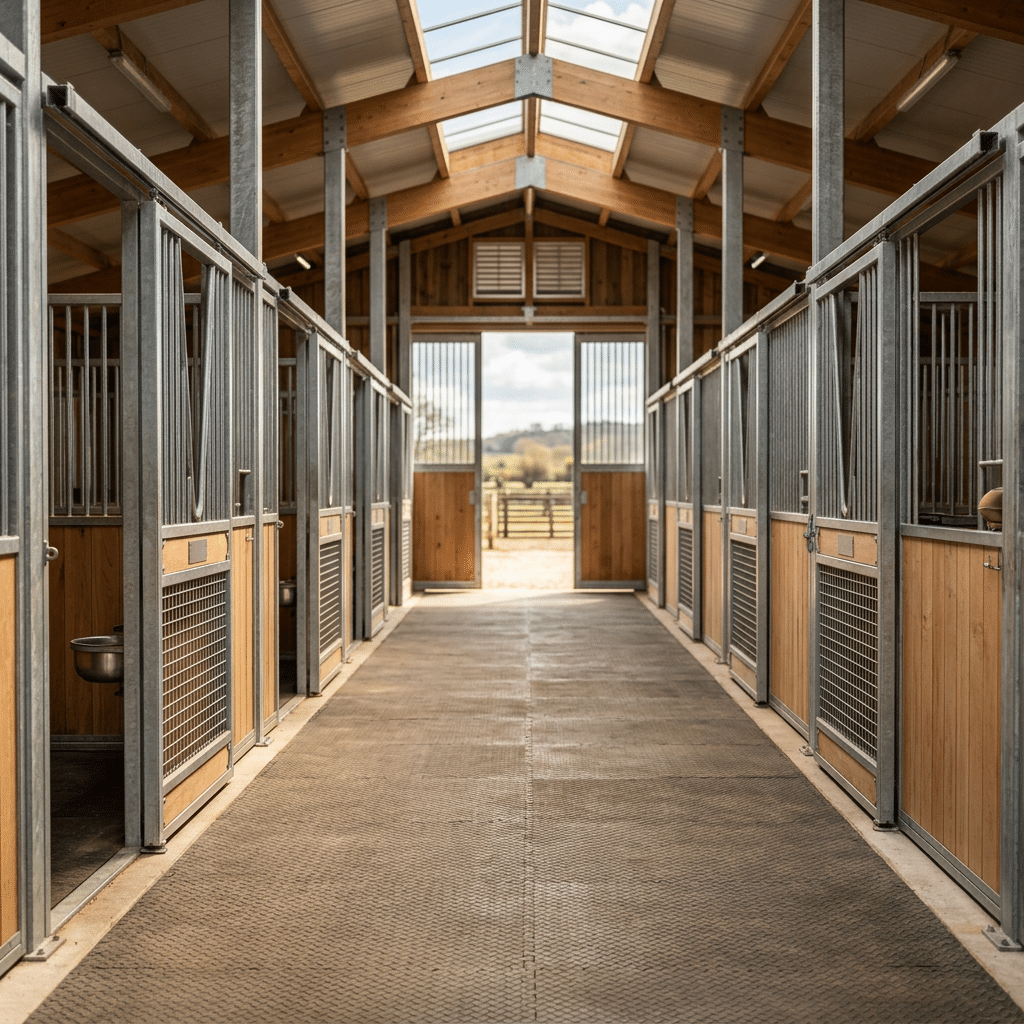
Maximizing Rental Fleet ROI requires shifting capital from sunk leasing costs to appreciating asset ownership. While renting solves immediate capacity issues, it drains operational budgets without building long-term equity or residual value for fairground boards and organizers.
We analyze the capitalization potential of owning portable stables engineered with Q235B structural steel and ISO 1461 hot-dip galvanization. By eliminating the maintenance cycle of wood through Rellenos de HDPE, facilities transform temporary housing expenses into a liquid, resellable infrastructure asset.
The Rise of ESG (Environmental, Social, Governance) in Construction
By 2026, ESG compliance is mandatory for securing capital. Builders must adopt durable, recyclable materials like galvanized steel to meet carbon budgets and reduce lifecycle waste.
Market Drivers: Decarbonization and Green Capital
ESG has shifted from a corporate buzzword to a hard constraint on liquidity and operations. With the construction secto
r responsible for approximately 34% of global CO2 emissions, regulators and financiers have stopped asking nicely. They now enforce strict embodied carbon limits, making low-carbon execution a requirement for staying in business.
- Regulatory Pressure: Governments are setting hard caps on embodied carbon. Projects exceeding these limits face permitting delays or outright rejection.
- Green Capital Access: Banks and private equity firms tie interest rates and loan approvals to ESG performance. Projects demonstrating circular economy principles secure cheaper financing.
- Bidding Eligibility: Supply chain transparency is now non-negotiable. Large developers disqualify bids that cannot prove waste reduction and responsible sourcing.
Sustainable Lifecycle: The Role of ISO 1461 Galvanization
True sustainability isn’t just about planting trees; it’s about product longevity. In the steel industry, the most effective way to lower a project’s carbon footprint is to prevent the need for replacement. DB Stable aligns with ESG mandates by engineering durability directly into the specifications.
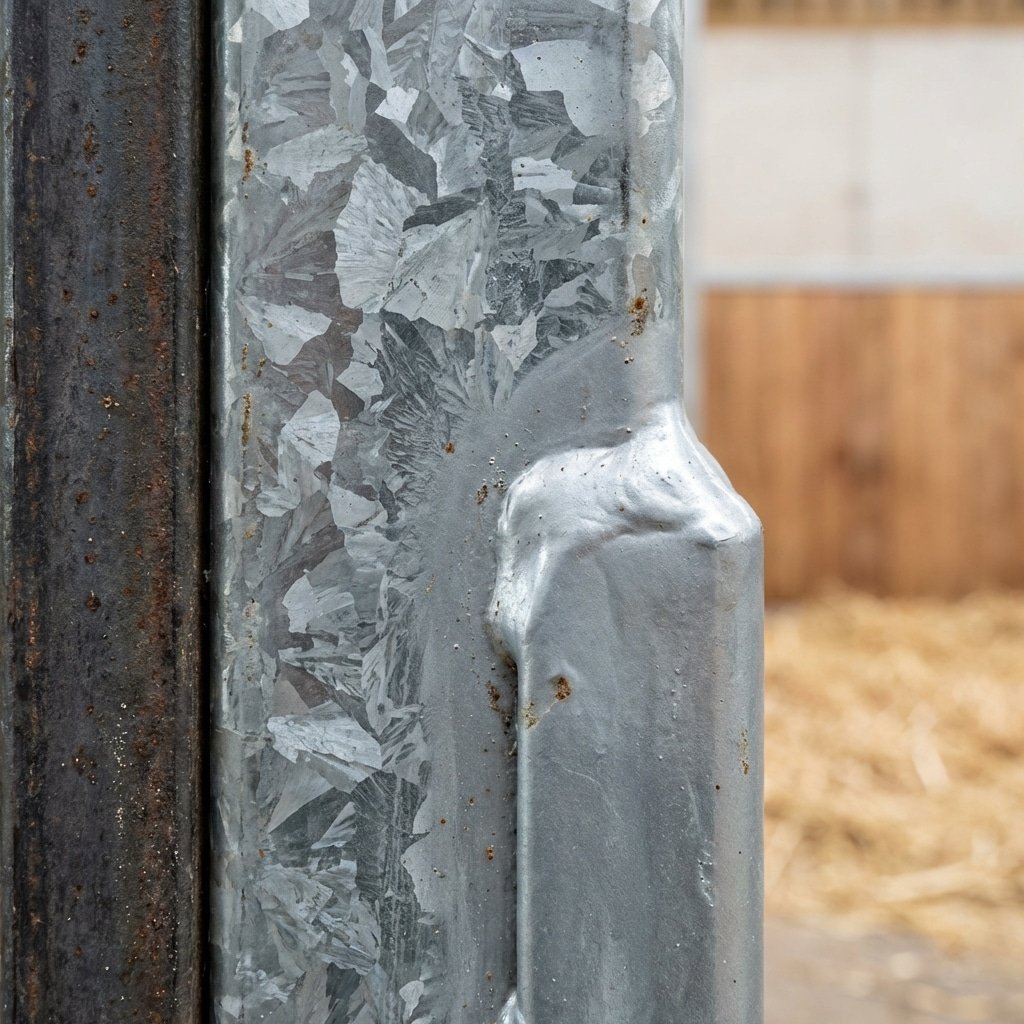
- Longevity as Sustainability: We apply ISO 1461 Hot-Dip Galvanization with zinc coatings exceeding 85 microns. This ensures a 10+ year lifespan, drastically reducing the material waste associated with replacing rusted equipment every few years.
- Circular Economy Materials: Our frames use Q235B Structural Steel, which is 100% recyclable. At the end of the facility’s life, the steel is smelted and reused, preventing landfill contribution.
- Toxic-Free Maintenance: Traditional wood requires chemical preservatives that can leach into the soil. Our Rellenos de HDPE are chemically inert and UV-stabilized, eliminating the need for toxic varnishes and supporting safer groundwater governance.
Moving Away from Old-Growth Timber (Oak/Pine)
Traditional timber creates maintenance liabilities through rot and cribbing. We prioritize high-density bamboo and UV-stabilized HDPE to eliminate upkeep and ensure kick-proof durability for rental operations.
The Maintenance Liability of Traditional Timber
While Oak and Pine offer a classic aesthetic on installation day, they quickly become a liability for commercial facilities. Natural wood is organic, meaning it reacts to the aggressive environment of a stable—specifically moisture, ammonia, and physical impact. For rental fleets or large equestrian centers, relying on softwood creates a cycle of repair that eats into ROI.
- Moisture Absorption: Softwoods act like sponges during wash-downs and exposure to urine. This absorption accelerates rot from the bottom up, requiring frequent board replacement.
- Cribbing Risks: Bored horses frequently chew (crib) on natural wood ledges. This damages the structural integrity of the partition and creates sharp splinters that risk animal safety.
- Inconsistent Density: Natural timber contains knots and grain variations. These inconsistencies create weak points where a direct kick can cause brittle fractures and catastrophic failure.
- Recurring Labor Costs: Maintaining the visual appeal of wood requires annual stripping, varnishing, and sealing, adding significant labor hours to operational overhead.
Engineered Resilience: High-Density Bamboo and HDPE Infills
To solve the durability issues of natural wood, the industry has shifted toward engineered materials that provide uniform strength and resistance to biological decay. Our DB Stable systems utilize materials specifically processed to withstand the impact of a 1,200 lb animal while removing the need for surface maintenance.
- Bamboo Infill: We use strand woven bamboo processed under extreme pressure. This achieves a Janka Hardness rating > 3000 lbf, making it 3x harder than Red Oak and effectively dent-proof.
- HDPE Infill: Our 28mm-32mm UV-stabilized Recycled Plastic offers a true “Zero Maintenance” solution. It is impervious to rot, bacteria, and moisture, making it ideal for wash bays and high-turnover rental stables.
- Kick-Proof Design: Engineered infills provide consistent density throughout the plank. There are no knots or weak spots, ensuring the material absorbs impact rather than snapping.
- Eco-Friendly Shift: Bamboo regenerates in 3-5 years compared to the decades required for oak. This reduces reliance on old-growth deforestation while providing a technically superior product.
Premium Stables Engineered For Extreme Durability
Top Factories Embracing Sustainable Materials
Resumen ejecutivo: Global giants like Siemens and Lego are shifting to carbon-neutral production by 2026. DB Stable mirrors this by using rapidly renewable High-Density Bamboo and fully recyclable HDPE to minimize lifecycle waste.
| Sustainability Focus | Global Benchmark Example | DB Stable Implementation |
|---|---|---|
| Waste Reduction | Siemens (48% reduction via Digital Twins) | Pre-engineered Flat-Pack (Zero on-site fabrication waste) |
| Material Lifecycle | Nestlé (Zero-waste-to-landfill) | Hot-Dip Galv ISO 1461 (20+ Year Rust Protection) |
| Renewable Inputs | Lego (100% Clean Energy by 2026) | High-Density Bamboo (3-5 year maturity vs. 50+ for Oak) |
Leading Examples of Green Manufacturing
The manufacturing sector is undergoing a hard reset. Major industrial players are moving beyond vague “eco-friendly” claims and executing precise, data-driven strategies to eliminate waste and carbon emissions. These facilities set the standard that B2B suppliers must now meet to remain relevant in global supply chains.
- Siemens Electronics Works (Chengdu): By integrating digital twin technology, this factory slashed production waste by 48%. They simulate the entire production lifecycle virtually before cutting a single piece of material.
- Lego (Vietnam): This facility is on track to operate entirely on clean energy by 2026. They utilize extensive rooftop solar panels to power operations, proving that high-volume manufacturing does not require fossil fuel dependence.
- Nestlé (Serbia & UK): These plants achieved strict “zero-waste-to-landfill” certifications. Every scrap of byproduct is either recycled or recovered, eliminating the concept of trash in their production cycle.
- Procter & Gamble (Taicang): P&G runs this plant on 100% renewable electricity and employs advanced water recovery systems, setting a high bar for resource efficiency in heavy industry.

Integrating Sustainability into Stable Design
We align our production with these global standards by focusing on material longevity and recyclability. In the equestrian industry, the most sustainable product is one you don’t have to replace every five years. We prioritize materials that withstand the harsh ammonia-heavy environment of a stable while minimizing ecological impact.
- High-Density Bamboo Infill: This is our primary alternative to slow-growing hardwoods. Bamboo reaches maturity in 3-5 years compared to decades for oak. Our strand-woven processing yields a Janka hardness over 3000 lbf—making it 3x harder than oak and significantly more resistant to hoof impact.
- UV Stabilized HDPE: For projects demanding zero maintenance, we use recyclable High-Density Polyethylene. Unlike wood that requires chemical stains and varnishes, HDPE needs no toxic treatments and prevents the replacement waste caused by rot and chewing.
- Hot-Dip Galvanization (ISO 1461): Steel longevity is the core of our sustainability strategy. We adhere to BS EN ISO 1461, ensuring zinc coatings exceed 85 microns on structural parts. This extends the steel lifecycle to over 20 years, drastically reducing the carbon footprint associated with manufacturing, shipping, and installing replacement stables.
Strand-Woven Bamboo: A High-Yield Carbon Sink
Executive Insight: Strand-woven bamboo is a density giant (>1,200 kg/m³) that locks carbon away for decades. It utilizes nearly 100% of the raw plant, delivering a material three times harder than oak.
Carbon Sequestration via High-Yield Processing
Bamboo is a powerhouse for atmospheric cleanup during its growth phase, capturing CO2 rapidly and locking it within its fiber structure. Unlike traditional timber, which requires decades to mature, bamboo reaches harvestable maturity in just 3 to 5 years. This rapid cycle allows for frequent carbon capture turnover without depleting the forest stock.
The real efficiency advantage lies in the manufacturing process. Hardwood forestry often sees significant wastage in the form of bark, branches, and sawdust. Strand-woven manufacturing changes this equation by utilizing crushed fibers and offcuts. This process achieves a yield efficiency that traditional lumber cannot match, using nearly the entire plant to create the final board.
- High Density Storage: The compression process creates a material density of approximately 1,200 kg/m³. This creates a massive carbon storage stock per unit volume, far exceeding standard wood.
- Lifecycle Impact: By storing carbon in the stable structure longer than the emissions generated during production, industrial bamboo products can achieve a negative carbon footprint over their full lifecycle.
Engineered for Impact: Janka Hardness > 3000 lbf
In the DB Stable “Professional Series,” we utilize 28mm-38mm High Density Strand Woven boards. We don’t choose this for aesthetics; we choose it for survival in high-traffic rental fleets. Standard softwoods and even some hardwoods fail when subjected to the daily abuse of an active stable.
The Janka Hardness rating of this material exceeds 3000 lbf. For comparison, traditional Oak sits around 1300 lbf. This makes our bamboo infill roughly three times harder than Oak. It effectively resists aggressive horse kicks and impact damage that would splinter lesser materials.
- Environmental Resistance: The extreme density makes the boards naturally resistant to mold, rot, and moisture absorption—common killers of wood in damp stable environments.
- Asset Protection: This durability extends the operational lifespan of the stable. For rental operators, this significantly lowers long-term maintenance and replacement costs.
Q235B Steel: The 100% Recyclable Framework
Unlike wood or composites that degrade into liability, Q235B steel retains scrap value, converting your stable infrastructure from a sunk cost into a recoverable financial asset.
The Residual Value of Steel Assets
Most facility managers view construction materials purely as upfront expenses. This perspective ignores the end-of-life financial reality. While wood rots and composite plastics often require paid disposal in landfills, steel frames function as a bankable asset. The material retains intrinsic value regardless of its age or condition, providing a guaranteed exit strategy for the capital invested in your rental fleet or facility.
- 100% Recyclability: Steel can be re-smelted repeatedly without any loss of structural properties or tensile strength.
- Market Liquidity: Established global infrastructure exists to recover and pay for 70% of steel products immediately upon decommissioning.
- End-of-Life ROI: Unlike landfill-bound materials that incur removal fees, steel frames offer a cash-positive liquidation event.
Technical Specs: Q235B and ASTM A36 Equivalency
We do not rely on generic “metal” definitions. DB Stable utilizes Q235B Structural Steel, the direct equivalent to ASTM A36. This grade provides the necessary ductility to absorb impact—crucial for containing large animals—without snapping. To ensure this asset retains its mass and value, we protect it with industrial-grade galvanization rather than aesthetic paint.
- Estándar: Q235B Structural Steel (ASTM A36 Equivalent) ensures global compliance and consistent mechanical performance.
- Asset Protection: Hot-Dip Galvanization (>85 microns) preserves the steel mass against rust and ammonia for decades.
- Heavy Duty Profile: We use 50mm x 50mm RHS at a strict 2.0mm (14-Gauge) thickness to maximize material weight and structural integrity.
Preguntas frecuentes
How to build an ESG compliant equestrian center?
Building an ESG-compliant facility requires a three-pillar approach. For Environmental compliance, focus on energy independence—facilities like Equitom Equine Hospital generate 80% of their power via on-site solar. Water self-sufficiency through rainwater harvesting is also a standard benchmark. For Social commitments, prioritize employee safety with strict protocols for machinery and animal handling, alongside genuine biodiversity efforts like planting pollinator-friendly landscapes. Finally, Governance demands ethical business conduct, clear conflict-of-interest policies, and data protection compliance (GDPR). Start with a professional audit of your current operations to set a baseline before investing.
Is bamboo a sustainable building material?
Yes, bamboo outperforms traditional timber on almost every sustainability metric. It regenerates in 3-5 years compared to decades for oak or pine, preventing deforestation. It also acts as a massive carbon sink, absorbing up to four times more CO₂ than many tree species. Structurally, High-Density Strand Woven bamboo (the type we use) rivals the hardness of tropical hardwoods and tensile strength of steel. Since the root system remains intact during harvest, it prevents soil erosion and eliminates the need for replanting.
Environmental impact of steel vs wood barns?
The trade-off is between “Embodied Carbon” and “Lifecycle Value.” Wood wins on initial manufacturing emissions—producing timber generates less carbon than smelting steel. However, wood is often a single-use material that degrades, rots, or requires chemical treatments. Steel requires higher initial energy to produce but is 100% recyclable and infinitely reusable. For a temporary structure, wood might lower the carbon footprint. For a commercial facility built to last 50+ years, steel’s durability and recyclability often provide a superior long-term environmental profile.
Green certifications for horse stables?
LEED is the global giant, but it is designed for office blocks, not agriculture. While you can apply for LEED credits, it’s often an awkward fit. In California, the CalGreen Code is the mandatory standard, enforcing water conservation and construction waste reduction for agricultural buildings. Many facilities also look to sustainable agriculture recognitions or conduct independent energy audits. If you are building for resale value or investor relations, these certifications validate your asset’s efficiency; if you are building for private use, practical energy audits often yield better ROI than chasing a plaque.
Eco-friendly horse barn manufacturers?
The market is split between heritage wood builders and modern material engineers. Companies like MD Barnmaster and Coffman Barns have long emphasized modular, low-waste construction. DC Structures focuses on high-end kits using heavy timbers. WYO Custom Builders leverages the recyclability of steel. The industry trend is moving toward mass timber (CLT) and recycled steel frameworks because they reduce on-site waste. When sourcing, look for manufacturers who use Hot-Dip Galvanization to prevent early replacement cycles—longevity is the ultimate sustainability metric.
Preguntas frecuentes
How does the environmental impact of steel compare to traditional wood construction?
While wood is often marketed as a low-carbon option, its sustainability fails when applied to equestrian environments. Horses crib (chew) and damage soft timber, and the humid ammonia-rich environment of a stable causes rapid rot. To combat this, wood requires chemical treatments that prevent it from being safely returned to the soil. In contrast, our hot-dip galvanized steel (Q235B) offers a lifecycle exceeding 20 years with zero degradation. Steel is a permanent asset that is 100% recyclable at the end of its life, fitting perfectly into the circular economy model required by modern ESG standards.
Is bamboo infill durable enough for high-traffic event stabling?
Absolutely. We use High-Density Strand Woven Bamboo, which has a Janka hardness rating exceeding 3,000 lbf—making it three times harder than Oak. Unlike traditional lumber which has knots and weak points where fractures occur, strand woven bamboo is engineered for uniformity and immense impact resistance. From an environmental perspective, bamboo regenerates in 3-5 years compared to the 30-50 years required for hardwood trees, allowing for high-volume production without deforestation.
What is the difference between pre-galvanized and hot-dip galvanized after fabrication?
This is the single most important technical specification for longevity. “Pre-galvanized” means the manufacturer buys steel tubes that were coated at the mill, cuts them, and welds them together. This process burns the zinc off at the weld points, leaving the most critical structural joints exposed to rust immediately. At DB Stable, we strictly use Galvanización en caliente después de la fabricación (ISO 1461 standard). We weld the black steel frame first, then submerge the entire structure into molten zinc. This coats the steel inside and out with a thickness exceeding 70 microns, sealing the welds completely against corrosion.
How many stable sets can fit in a shipping container?
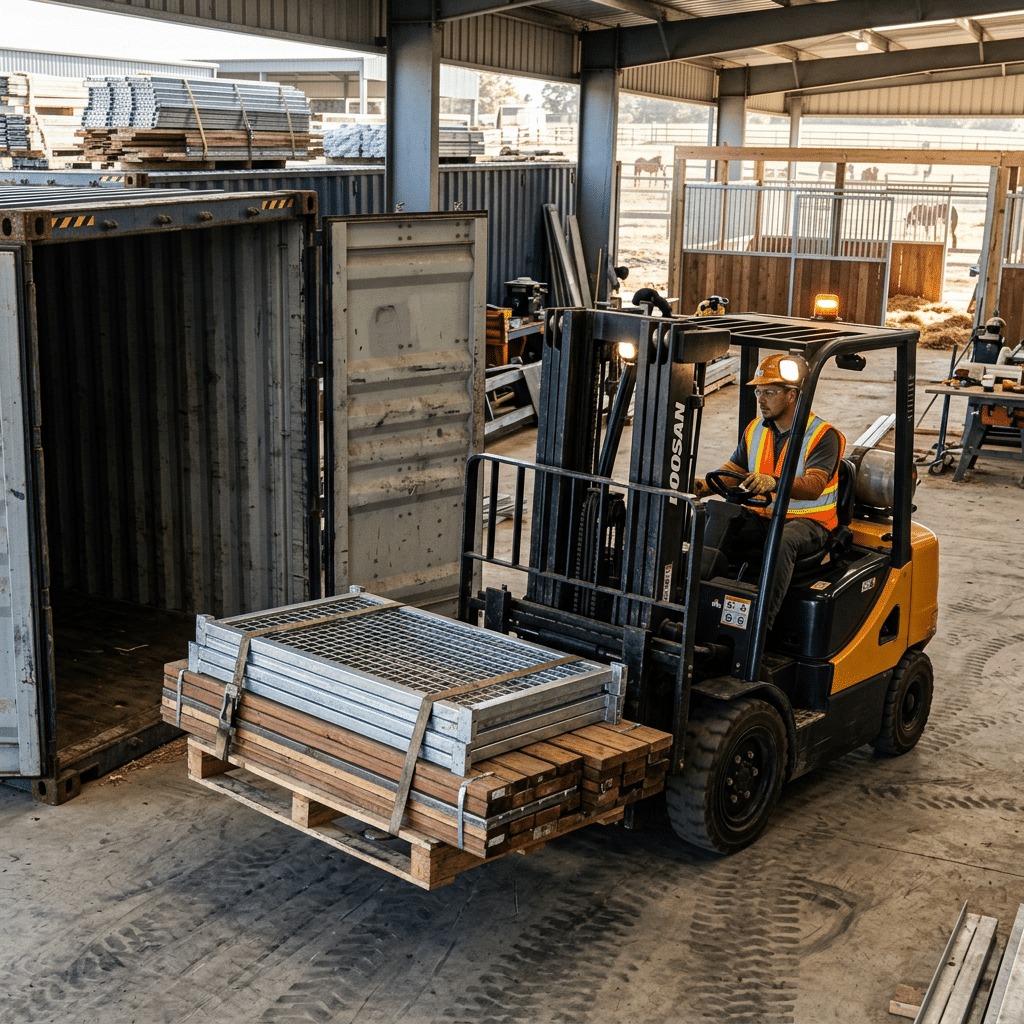
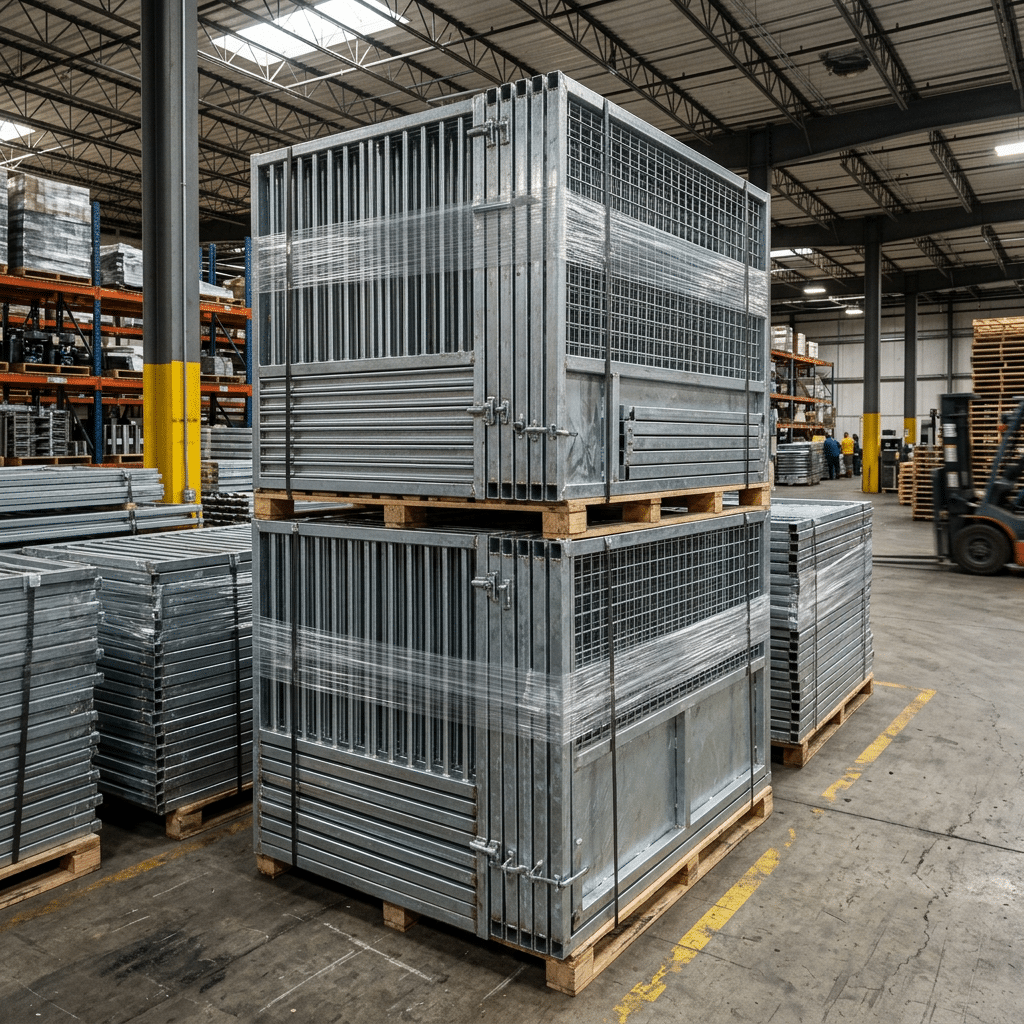
Logistics efficiency is a massive factor in both cost and carbon footprint. Traditional fully welded fronts are “shipping air,” limiting a 40HQ container to just 12-15 sets. Our engineered flat-pack design allows us to load 30-45 sets per 40HQ container. This density reduces the ocean freight cost per unit by over 60% and significantly lowers the transportation emissions associated with each stable. For distributors, this margin protection is critical.
Does the rental fleet require maintenance between events?
Our systems are designed for a “Zero Maintenance” operational model. If you select our HDPE (High-Density Polyethylene) infill, the planks are impervious to moisture, bacteria, and rot, requiring no painting or staining—ever. The hot-dip galvanized steel frames are easily cleaned with a pressure washer. For minor surface scratches that occur during assembly or transport, we provide a cold galvanizing zinc spray that restores the protective layer instantly, preventing rust from gaining a foothold.
Reflexiones finales
Relying on timber rental fleets creates a predictable cycle of repair costs that erodes event profit margins. Investing in ISO 1461 Hot-Dip Galvanized frames and HDPE infills converts a depreciating liability into a permanent, recyclable asset that meets strict ESG capital requirements. This strategic shift protects your liquidity against future carbon taxes while eliminating the labor overhead of constant maintenance.
Stop paying for “shipping air” with pre-welded units and switch to our engineered flat-pack system that loads up to 45 sets per container. We invite you to request a factory specification sheet to verify our Q235B steel standards and calculate your specific logistics savings. Contact our engineering team today to secure a production slot before the seasonal rush tightens capacity.

 Spanish
  English
  French
  Arabic
  German
0 comentarios