


Adopting specific Aisle Feeding Hacks is the fastest method to cut chore time and remove the liability of stall-entry protocols. Operations that require staff to open doors for every feed cycle face compounded labor costs and higher injury rates from direct horse-human contact.
This analysis contrasts the utility of swing-out windows against the Professional Series cast aluminum swivel feeder. We examine the hardware through the lens of Q235B steel durability and ISO 1461 galvanization metrics to determine which system offers the best return on infrastructure investment.

The Goal: Feeding the Herd Without Entering the Stall
Implementing aisle-side feeding protocols eliminates the need to enter stalls, significantly reducing handler risk while cutting daily labor hours in commercial facilities.
Enhancing Operational Safety and Efficiency
Feeding time is often the most chaotic part of the daily schedule. When handlers must enter individual stalls to drop hay or grain, they expose themselves to unnecessary risk. Hungry horses can be aggressive or unpredictable in confined spaces. Moving the feeding process to the aisle eliminates this “confined space” hazard entirely. Staff remain on the safe side of the barrier, removing the need to open gates or navigate around excited animals.
Beyond safety, the efficiency gains are measurable. In a facility with 40+ stalls, opening a door, entering, depositing feed, exiting, and securing the latch takes significantly longer than simply operating a feed window or swivel feeder. Aisle-side feeding allows for rapid distribution of hay and grain, drastically cutting chore time. This method also creates a strict biosecurity line. It prevents “muddy boot” cross-contamination between the common aisle and the clean bedding area, keeping manure inside the stall and aisle debris out.
Integrating Access into the Stable Front Panel
A well-engineered Stable Front Panel serves as the primary interface for this workflow. We design our fronts, particularly the Professional Series, to support heavy-duty delivery systems like swivel feeders. These units allow staff to rotate the feed bowl out into the aisle for filling and spin it back into the stall, all without unlocking the main door.
- Integridad estructural: The system relies on our 50mm x 50mm RHS posts (with 2.0mm+ wall thickness) to support the weight and movement of the feeder without sagging.
- Corrosion Resistance: Feed and saliva are highly corrosive. We use Hot-Dip Galvanization After Fabrication (ISO 1461) to ensure the steel withstands the acidic environment created by wet feed.
- Retrofit Capability: These systems can often be retrofitted into existing frameworks. As long as the structural posts are sound, feed windows can be integrated without compromising the stability of the stall front.
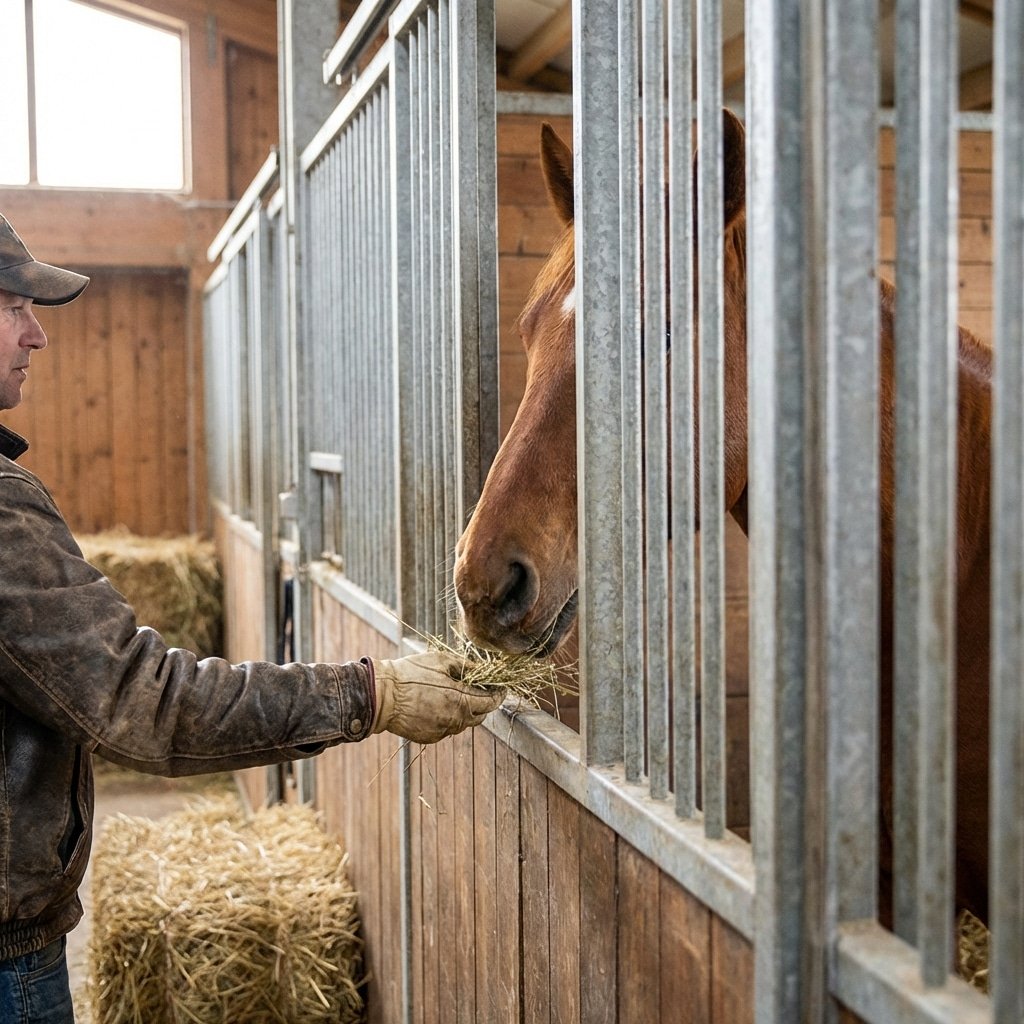
Swing-Out Feed Windows: Simple and Traditional
Swing-out windows allow feeding from the aisle without opening main doors, keeping horses contained while ensuring staff safety and operational speed.
Efficient Aisle-Side Feeding
This operational concept prioritizes risk reduction and speed. By integrating a hinged section into the stable grill, staff can deliver hay or grain directly into the manger without ever entering the stall. This separation keeps the horse securely contained during feeding—often a high-excitement time—and significantly lowers the risk of injury to handlers. The design remains simple: a hinged grill section that locks flush with the stable front, maintaining a clean aesthetic while providing immediate access.
Rust Defense: Hot-Dip Galvanization After Fabrication
Feed windows endure constant friction from daily opening and closing, plus corrosive exposure to horse saliva. Standard paint or pre-galvanized steel often fails at the hinge points first. We counter this by using Hot-Dip Galvanization After Fabrication.
- Complete Seal: Unlike pre-galvanized alternatives where welds strip the zinc away, our process coats the entire welded assembly, ensuring hinges and joints are sealed against moisture.
- Heavy-Duty Coating: We adhere to the BS EN ISO 1461 standard, achieving a zinc thickness of > 70 microns on tubing.
- Saliva Resistance: The thick zinc layer acts as a sacrificial anode, preventing rust even when surface scratches occur from horse teeth or equipment impact.
Premium Horse Stables Built for Extreme Climates
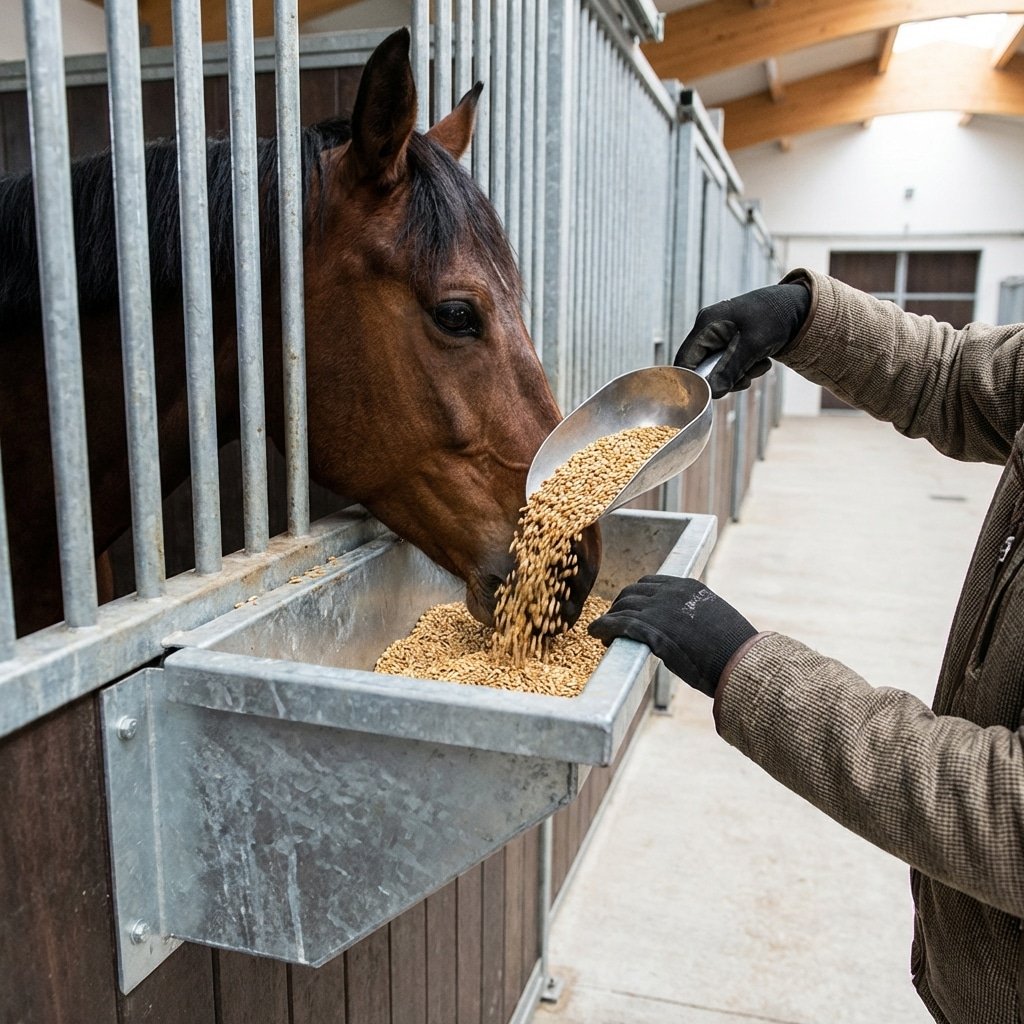
Aluminum Swivel Feeders: The Zero-Spill Solution
The Professional Series Swivel Feeder eliminates stall entry during feeding, reducing labor risks and preventing rust through heavy-duty cast aluminum construction.
| Operational Feature | Standard Static Bucket | DB Aluminum Swivel Feeder |
|---|---|---|
| Stall Entry | Required for every feed | Zero entry required |
| Safety Risk | High (Door rushing) | Zero (Barrier remains closed) |
| Material Lifespan | Low (Plastic cracks/Steel rusts) | Lifetime (Cast Aluminum) |
| Hinge Load | N/A | Lightweight (Reduced strain) |
Operational Mechanics: Feeding Without Stall Entry
Commercial facilities cannot afford the liability or time loss associated with entering fifty separate stalls twice a day. The Professional Series swivel mechanism changes the workflow by allowing staff to dispense feed and water directly from the aisle. This system creates a permanent physical barrier between the handler and the horse during high-excitement feeding times, which is critical for managing food-aggressive animals.
- Eliminates Stall Entry: Stable hands remain safely in the aisle, removing the risk of injury from crowding or kicking during feeding.
- Prevents “Door Rushing”: Horses cannot charge the exit while the door is open, as the swivel gate blocks the gap effectively.
- Reduces Feed Spillage: The rotating design prevents horses from bumping buckets off the door, keeping the aisle clean and reducing waste.
- Increases Labor Efficiency: Staff can feed a 20-stall barn significantly faster by simply rotating the feeder, filling it, and locking it back in place.
Material Engineering: The Aluminum Anti-Rust Advantage
We strictly use cast aluminum for our swivel feeder bowls rather than galvanized steel or plastic. Steel bowls eventually succumb to corrosion from the constant exposure to wet mash and horse saliva, while plastic becomes brittle and cracks over time. Aluminum offers the necessary resilience for a wet environment while remaining light enough for effortless daily operation.
- Cast Aluminum Construction: Prevents the pitting and rust common in steel feeder bowls, maintaining hygiene and structural integrity.
- Lightweight Design: Significantly reduces mechanical strain on the hinges compared to heavy galvanized steel options, ensuring the gate doesn’t sag over time.
- One-Handed Operation: The reduced weight allows staff to unlatch and swivel the feeder with one hand while carrying heavy feed bags with the other.
- Professional Series Integration: Specifically engineered for long-term durability in high-traffic commercial barns where equipment failure affects the bottom line.

Retrofitting Feed Options onto Existing Stall Fronts
Retrofitting requires cutting specific infill sections to install framed inserts. You must seal exposed steel with cold galvanizing spray and use 304 stainless hardware to maintain structural integrity.
Upgrading an existing stall system doesn’t always require a full tear-down. You can modify current fronts to accept modern feeding solutions, but the method depends entirely on your existing frame structure and the level of fabrication you are willing to perform on-site.
Evaluating Retrofit Styles: Cut-Outs vs. Swivel Systems
The complexity of your retrofit correlates directly with the type of feeder you choose. Simple access holes work for basic operations, while swivel systems require structural modifications to ensure the heavy-duty mechanics don’t warp your existing grillwork.
- Feed Hole Modifications: This is the standard approach for our Serie económica setups. You cut a specific opening in the grill mesh or vertical bars to allow grain delivery. It requires no additional framing if the surrounding bars are stable.
- Structural Swivel Inserts: Installing an aluminum swivel feeder—standard in our Professional Series—is more invasive. You must cut a precise frame section and reinforce the opening with channel steel to support the weight of the pivoting mechanism.
- Clearance Considerations: Before cutting, verify the feeder’s position relative to the door. A retrofitted feeder must not obstruct the sliding door track or the swing radius of a hinged door.
Corrosion Control: Treating Field Cuts on Galvanized Frames
Our stalls undergo Hot-Dip Galvanization After Fabrication to create a sealed zinc envelope. When you cut or drill into this frame during a retrofit, you break that seal. Failing to treat these new edges guarantees rust within months, especially in high-ammonia environments.
- Compromised Zinc Layer: Any field cut exposes raw carbon steel. This is the weak point where corrosion starts and spreads under the remaining zinc coating.
- The Cold Galvanizing Solution: You must immediately apply the DB Touch-up Spray (Cold Galvanizing) included in our Installation Kit to all cut edges. This restores rust protection conformant to ISO 1461 standards.
- Hardware Compatibility: Do not use standard zinc-plated bolts from a hardware store. Use the 304 Stainless Steel bolts and connectors provided in the DB Installation Kit. This prevents galvanic corrosion between the new feeder and the old steel frame.
Preguntas frecuentes
How do feed windows improve barn safety?
Feed windows keep handlers in the aisle and out of the stall. This separation eliminates close contact with food-aggressive or anxious horses during feeding times, which is when most biting or kicking accidents occur. From an operational standpoint, it speeds up the daily workflow since staff do not need to open sliding doors, enter the stall, and re-secure the latch for every single horse.
What is the difference between a swivel feeder and a standard feed opening?
A standard feed opening is just a gap or small door for tossing grain into a loose bucket inside. A swivel feeder—standard in our Professional Series—integrates a rotating aluminum pan attached directly to the door framework. This design secures the feed bowl so horses cannot tip it over, and it rotates out into the aisle for easy filling. This mechanism reduces feed waste by up to 40% compared to loose buckets that horses often kick around.
What aisle width is best for barns using aisle-side feeding?
For private facilities with manual carts, a minimum width of 12 feet (approx. 3.6m) allows safe movement. Commercial barns or facilities using tractors for feed delivery must plan for 14 to 16 feet. Narrow aisles in commercial settings lead to equipment damage and safety hazards when machinery tries to pass active feed stations.
Can I retrofit a feed system into my existing stall fronts?
Yes, retrofitting is common. It usually involves replacing a section of the grill with a dedicated feed door or installing a “Feed Hole” plunger system. But you must verify your existing steel framework. If the current bars are not structural steel (like Q235B or stronger) or are heavily rusted, they may not support the weight and torque of a new mechanical feeder.
Reflexiones finales
While static buckets lower upfront costs, stocking stalls with Professional Series swivel feeders provides the measurable labor efficiency your commercial clients demand. To prevent expensive warranty claims in these high-corrosion zones, you must insist on Hot-Dip Galvanization After Fabrication (ISO 1461) rather than cheap pre-galvanized welds. This commitment to industrial-grade protection secures your reputation as a supplier of long-term infrastructure.
Do not rely on spec sheets alone; verify the build quality yourself. We recommend initiating a Trial Order (LCL) to test the cast aluminum mechanisms and zinc thickness before finalizing your seasonal inventory. Contact our engineering team today to discuss OEM customization and maximize your container load efficiency.


 Spanish
  English
  French
  Arabic
  German
0 comentarios