


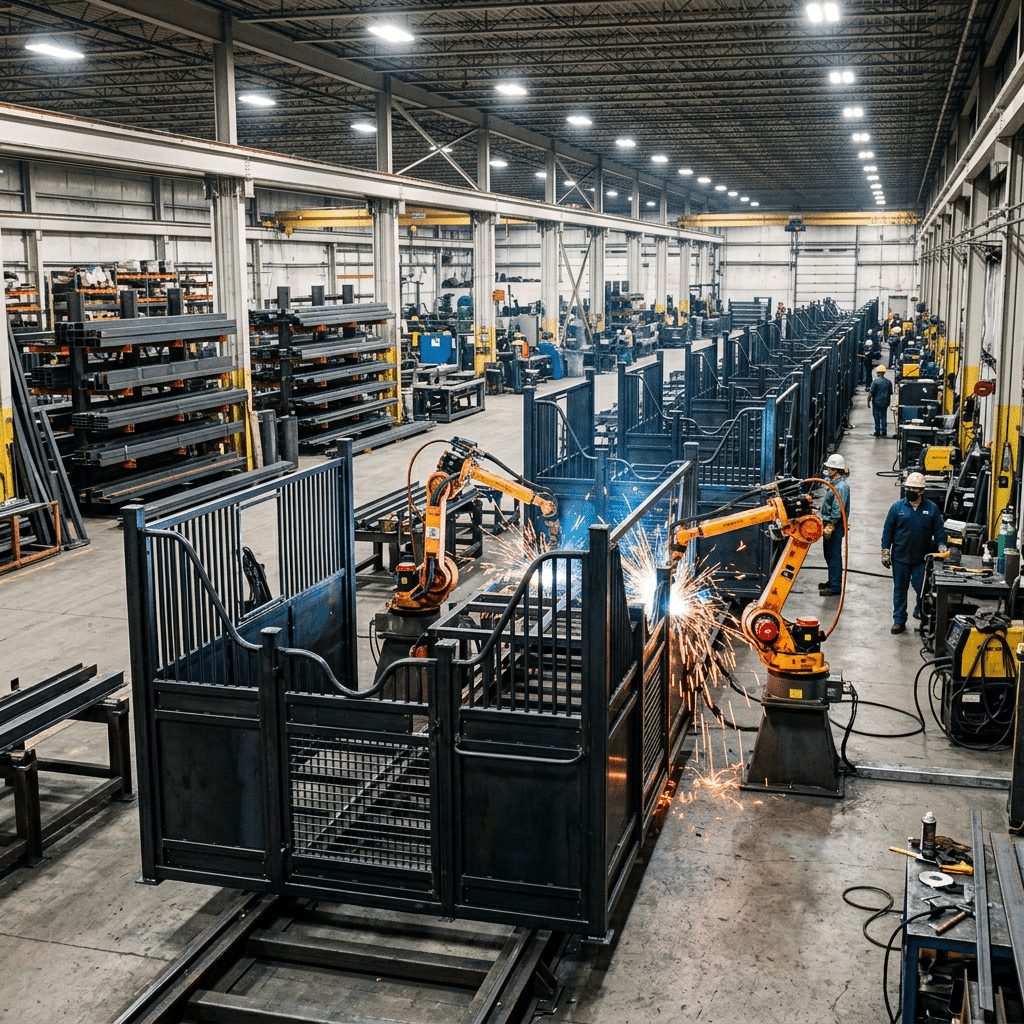
Stall Guard D-Rings must be integrated during fabrication to prevent catastrophic pull-out failures. Retrofitting screw-in eyes into 2.0mm RHS tubing compromises the steel wall integrity and strips internal threads under dynamic equine impact. This mechanical weakness creates significant liability risks for show barns and increases long-term maintenance costs for summer operations.
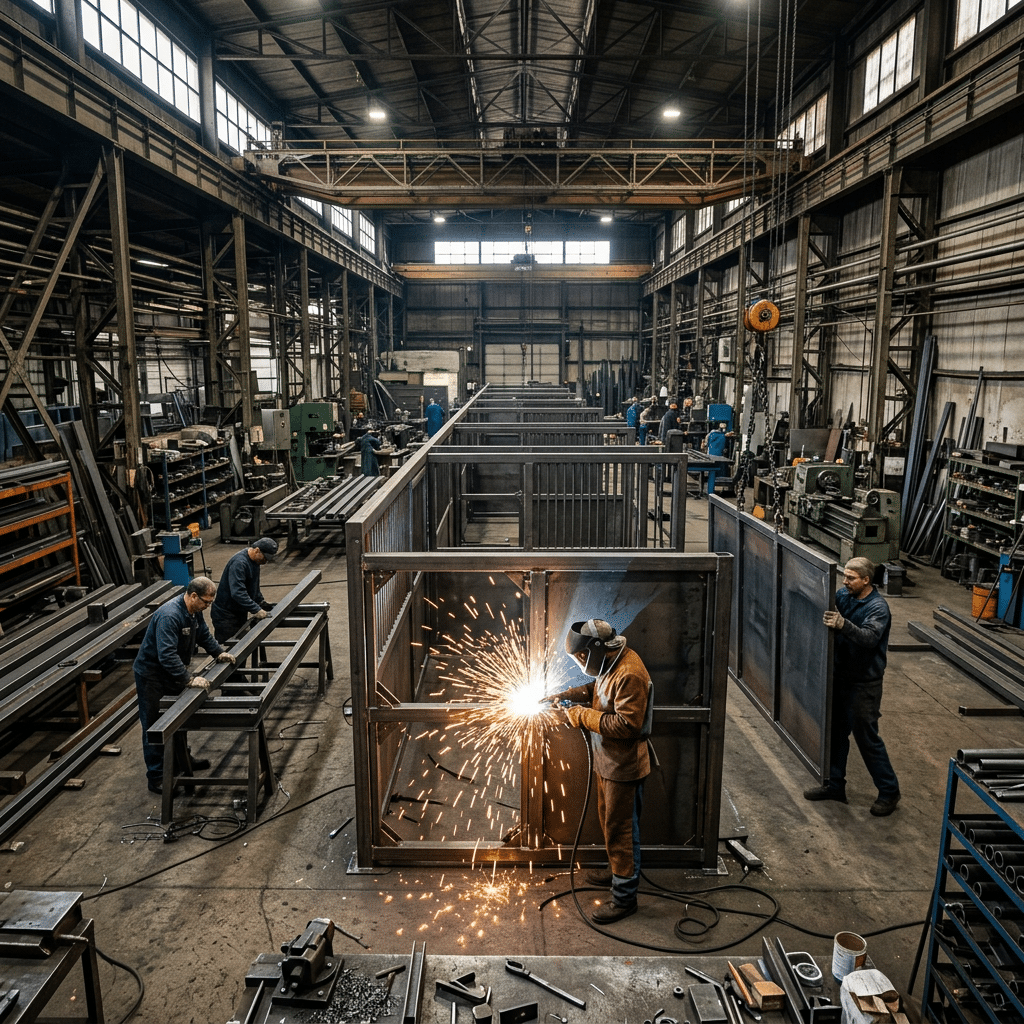
Our manufacturing process eliminates this hazard by fusion-welding 304 Stainless Steel anchor points before Hot-Dip Galvanization. This method ensures the Q235B structural frame maintains its 70-micron zinc coating seal while providing a zero-maintenance connection for heavy-duty webbing. We prioritize structural permanence to secure the stack effect ventilation system without sacrificing barrier strength.
The Purpose of the Fabric Stall Guard (Airflow & Visibility)
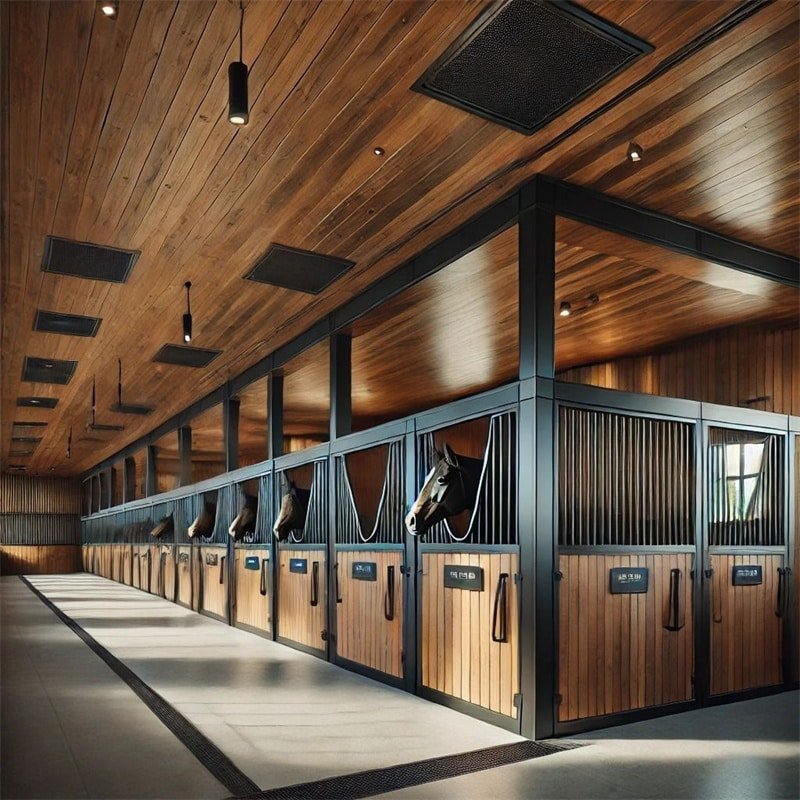
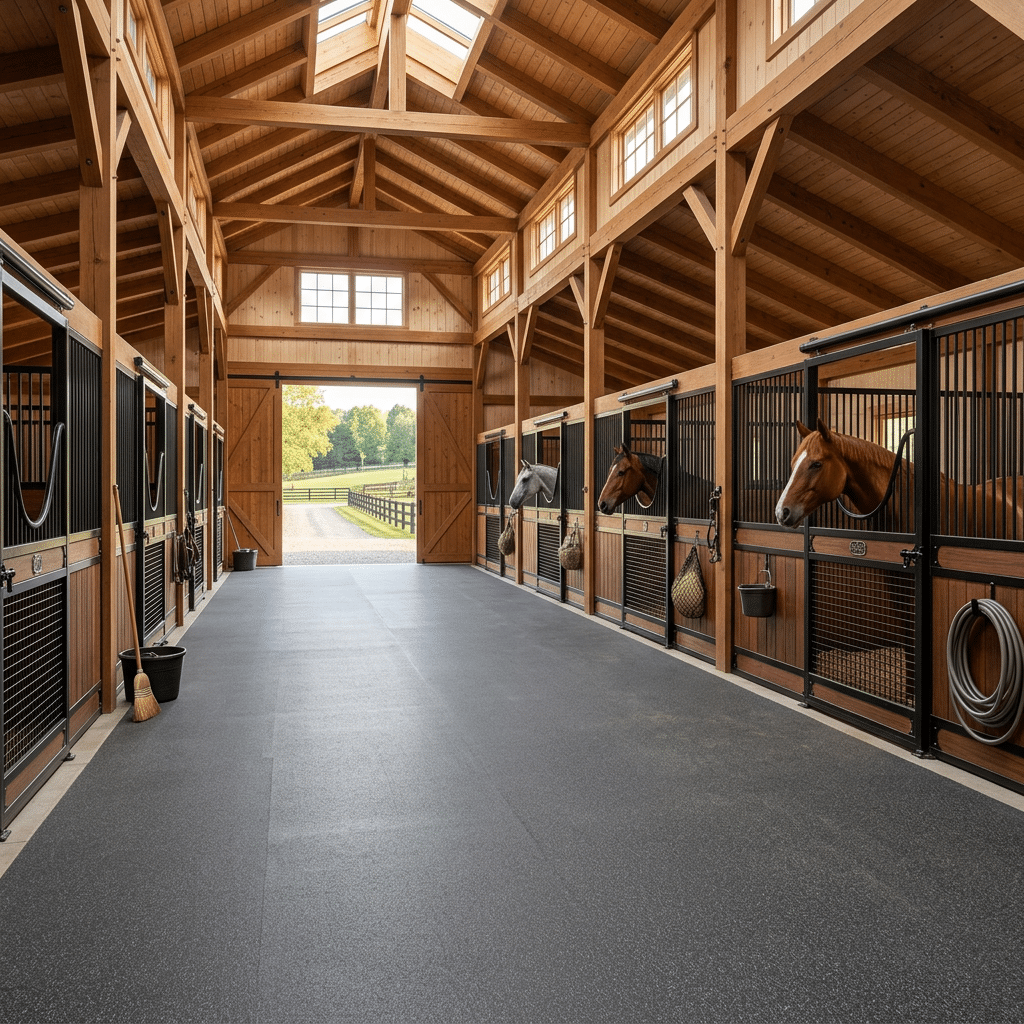
Fabric guards replace solid doors to maximize airflow via the stack effect and allow unobstructed supervision, essential for respiratory health and operational efficiency in professional stables.
Maximizing Ventilación por efecto chimenea
In high-performance stables, static air is a primary health risk. Solid doors often create dead zones where dust and ammonia settle at the horse’s breathing level. Fabric stall guards function as a permeable barrier, removing these obstructions to allow continuous air exchange. This setup is critical for facilitating “Stack Effect Ventilation,” a process where warm, stale air rises to roof vents and draws cool, fresh air in through the stall front.
- Removes Obstructions: Replaces solid wood or steel barriers to open the stall front completely during daytime hours.
- Ammonia Reduction: Significantly lowers odor accumulation and airborne particulates compared to closed doors.
- Respiratory Defense: Maintains a fresher environment essential for preventing heaves and inflammatory airway disease in training centers.
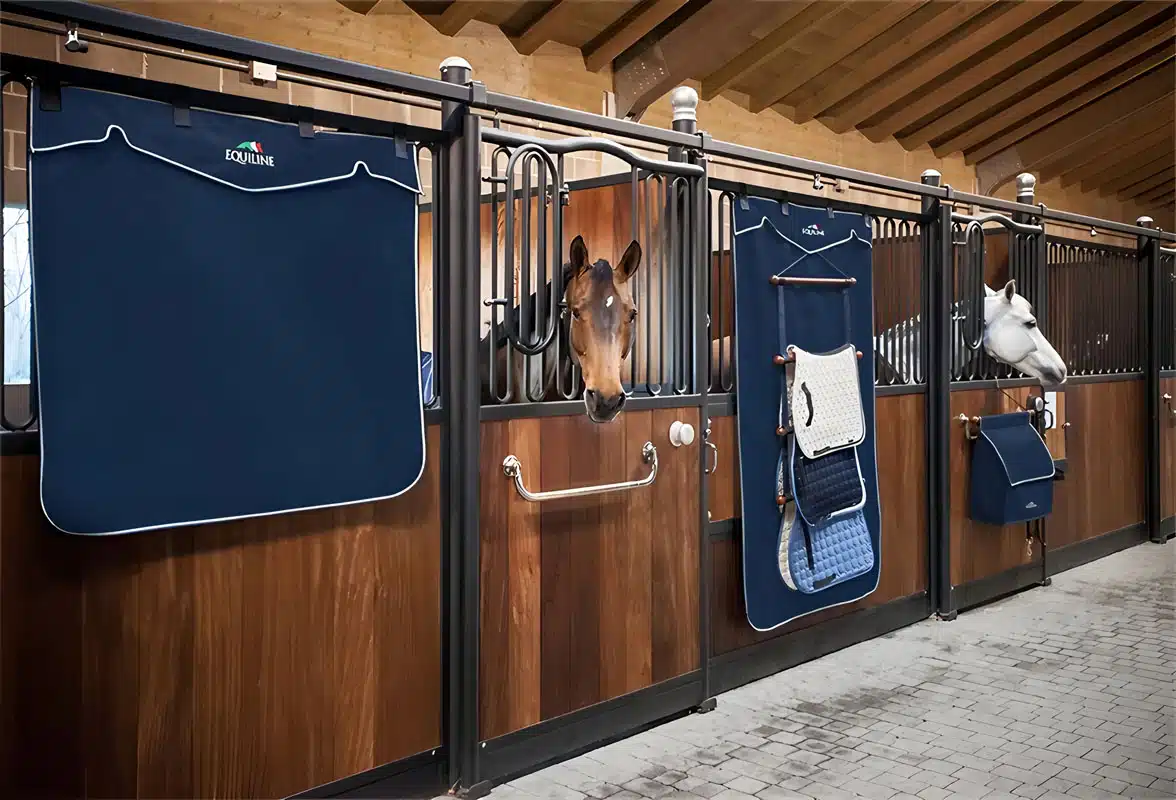
Visual Monitoring and Social Interaction
Visibility directly impacts safety and operational speed. Solid doors hide distress signals until the situation becomes critical. Installing stall guards creates clear sightlines, allowing barn staff to supervise the herd peripherally while working in the aisle. This layout also supports the horse’s psychological needs by reducing isolation.
- Early Detection: Staff can spot signs of colic, casting, or distress instantly without physically opening the stall.
- Herd Socialization: Allows horses to interact visually and smell neighbors, which drastically reduces stable vices like weaving or stall walking.
- Operational Efficiency: Enables rapid visual checks of multiple horses simultaneously during busy feeding or cleaning shifts.
- Safe Acclimation: Permits safe interaction during feeding times, protecting staff while horses acclimate to routine human contact.
The Pull-Out Danger of Screw-In Eye Hooks
Screw-in eye hooks fail when thread depth is insufficient to resist tensile stress. In stables, dynamic horse impact strips threads from thin-walled tubing, causing sudden barrier separation.
Mechanics of Thread Stripping and Load Separation
Standard screw-in hardware relies entirely on friction and thread depth to hold a load. This works for static shelving but fails catastrophically in equine environ
ments where loads are dynamic and unpredictable. When a horse leans into a stall guard, the force is not just weight—it is kinetic energy transferring directly to the anchor point.
- Thread Engagement Definition: Secure holding power requires an embedment depth of at least 1.5 times the shank length. Most stall fronts do not provide deep enough solid material for this ratio.
- Tensile Stress Failure: Unlike bolts that snap under pressure, pull-out failure involves the hardware separating intact. The threads of the receiving material (wood or thin metal) shear off, allowing the hook to slide out.
- Hidden Vulnerability: A screw-in hook often looks secure right up until the moment it fails. The structural weakness—stripped internal threads—is invisible during routine visual inspections.
Incompatibility with Galvanized RHS Profiles
Using screw-in eye hooks on engineered steel stall fronts compromises the integridad estructural of the unit. Our manufacturing process focuses on sealed, welded durability, which retrofitted screw hardware actively undermines.
- Thin-Wall Limitation: Screwing directly into 50mm x 50mm RHS posts is mechanically unsound. The 2.0mm – 2.5mm wall thickness provides only one or two threads of grip, which is insufficient for heavy containment loads.
- Corrosion Trigger: Drilling into the frame to install eye hooks destroys the Galvanizado en caliente coating (avg. >70 microns). This breaks the zinc seal and creates an immediate entry point for rust within the steel framework.
- Dynamic Loosening: Horses kick and rub against the Q235B Structural Steel frame creates vibration. Without the counter-torque of a locking nut, threaded fasteners gradually back out, leading to loose hardware in the aisle.
Engineered For Durability In Any Climate
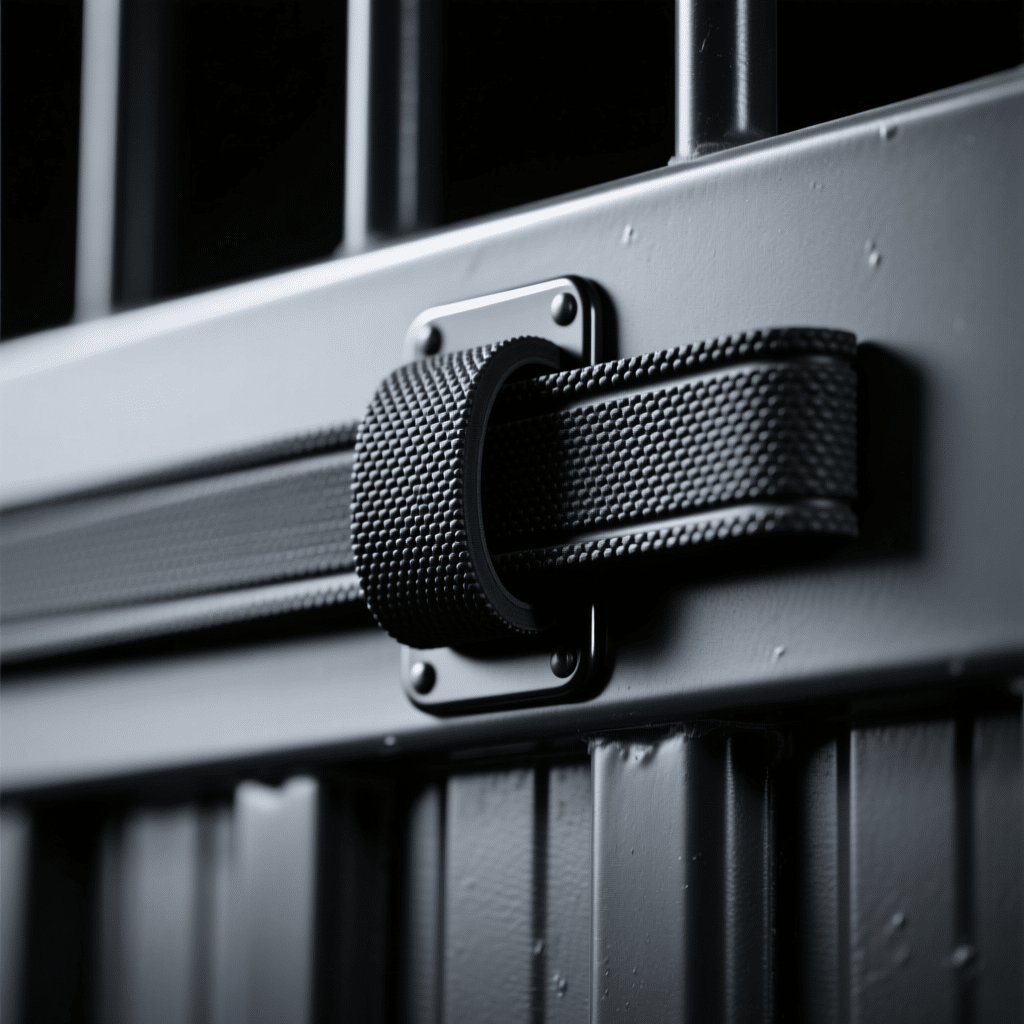
Factory-Welded 304 SS D-Rings on Door Frames
Factory-welded hardware eliminates the “pull-out” failure mode common with screw-in eyes, creating a zero-maintenance anchor point that withstands heavy stall guard tension.
| Característica | DB Stable Factory-Welded | Retrofit Screw-In Eyes |
|---|---|---|
| Connection Method | Fusion Welded to Frame | Threaded into Material |
| Failure Risk | Near Zero (Structural) | High (Stripped Threads/Rot) |
| Load Capacity | Consistent / High Tensile | Variable / Low |
| Material | 304 Stainless Steel | Zinc Plated / Galv Steel |
Structural Permanence: The Benefits of Factory Welding
Reliability in a commercial stable hinges on hardware that stays put. Screw-in eye hooks are the weak link in most stall guard setups. Over time, the constant tension from a leaning horse, combined with the vibration of door usage, causes threads to widen the pilot hole. Once that friction fit is compromised, the hardware pulls out, creating a safety hazard and a maintenance ticket. We bypass this failure mode entirely by integrating the anchor point during fabrication.
- Eliminates Strip-Out Risk: The D-ring is fused to the steel frame, removing reliance on wood density or thread depth.
- Consistent Load Bearing: Supports the full weight of heavy canvas or webbing guards without sagging or loosening.
- Safety First Design: Removes the sharp, threaded shanks of DIY hardware that can injure horses if they back into the door frame.
- Kick-Proof Integrity: The welded bond withstands direct impact better than any mechanical fastener.
Material Specification: 304 Stainless Steel vs. Standard Zinc
A strong weld is useless if the material rusts. Standard zinc-plated hardware degrades quickly in the ammonia-rich, humid environment of a stable. When zinc plating fails, red rust bleeds onto the expensive fabric of the stall guard, ruining its appearance and weakening the snap hooks. In alignment with our Installation Kit standards, we strictly use 304 Stainless Steel for these integrated points.
- Standard Compliance: Matches the DB Stable “Hardware Kit” specification (All 304 Stainless Steel).
- Corrosion Resistance: Withstands daily exposure to moisture and cleaning chemicals better than galvanized alternatives.
- Fabric Protection: Eliminates rust transfer that permanently stains custom-embroidered stall guards.
- Universal Compatibility: The 304 SS finish prevents galvanic corrosion when paired with brass or stainless steel snap hooks.
Proper Height Placement for Chest Chains and Webbing
Stall guards must sit 45 to 48 inches (approx. 1150mm) off the floor to prevent horses from vaulting over while minimizing entrapment risks during rolling.
The 1150mm (45-Inch) Vertical Standard
For most warmbloods and thoroughbreds, the industry standard places the top edge of the webbing or chain between 45 and 48 inches (115cm to 122cm) from the ground. This specific height range is not arbitrary; it balances two critical safety factors: containment and entrapment prevention.
If you mount the guard lower than 45 inches, you invite athletic horses to attempt a jump, which often results in rotational falls or chest injuries. Conversely, mounting it above 48 inches creates a gap underneath large enough for a cast horse to slide under or get a leg caught if they roll near the doorway. We engineer our stall fronts to accommodate brackets at this exact height to ensure the barrier effectively blocks the animal’s path without becoming a hazard itself.
Aligning with the Point of Shoulder
Biomechanics dictate the effectiveness of any flexible barrier. The center of t
he webbing or chain must align with the junction of the horse’s neck and chest, specifically the point of the shoulder. This alignment ensures that if a horse leans its full weight against the guard, the pressure distributes across the dense muscle mass of the chest rather than the windpipe or knees.
- Comfortable Visibility: This height allows the horse to look over the guard naturally without straining its neck or resting its throat on the hardware.
- Maximum Resistance: A barrier hitting the chest center leverages the horse’s own center of gravity to discourage pushing, whereas a lower barrier acts as a tripwire.
Reflexiones finales
Retrofitting screw-in hardware into galvanized steel compromises the protective coating and introduces a critical failure point for your clients. By standardizing on our factory-welded 304 Stainless Steel D-rings, you eliminate liability risks associated with pull-out failure and rust bleed. This engineered approach protects your reputation as a provider of safe, professional-grade equine infrastructure.
Do not leave safety to chance with aftermarket modifications; integrate our fully welded, hot-dip galvanized fronts into your next project specification. Contact our engineering team today to request technical drawings or a physical sample of our heavy-duty connections. We are ready to align our manufacturing precision with your distribution requirements.

 Spanish
  English
  French
  Arabic
  German
0 comentarios