


Deploying timber stables across Australia creates a massive maintenance liability for facility managers. In 40°C heat, standard softwood splits and invites termite infestation, turning a capital asset into a recurring expense. Neglecting material science here leads to rapid depreciation and severe injury risks that threaten commercial viability.
This analysis contrasts traditional timber against the 28mm-32mm UV-Stabilized HDPE standard. By eliminating organic failure points and utilizing Galvanización en caliente después de la fabricación (ISO 1461), operators secure a Zero Maintenance asset. We examine how shifting to impact-absorbing synthetics protects your bottom line against the inevitability of rot and fracture.
The Harsh Australian Climate: Wood Splitting and Termites
Australia’s extreme UV and humidity destroy softwood, causing warping and termite infestation. DB Stable counters this with Strand Woven Bamboo (>3000 lbf hardness) and UV-stabilized HDPE.
The Vulnerability of Standard Timber to Cracking and Pests
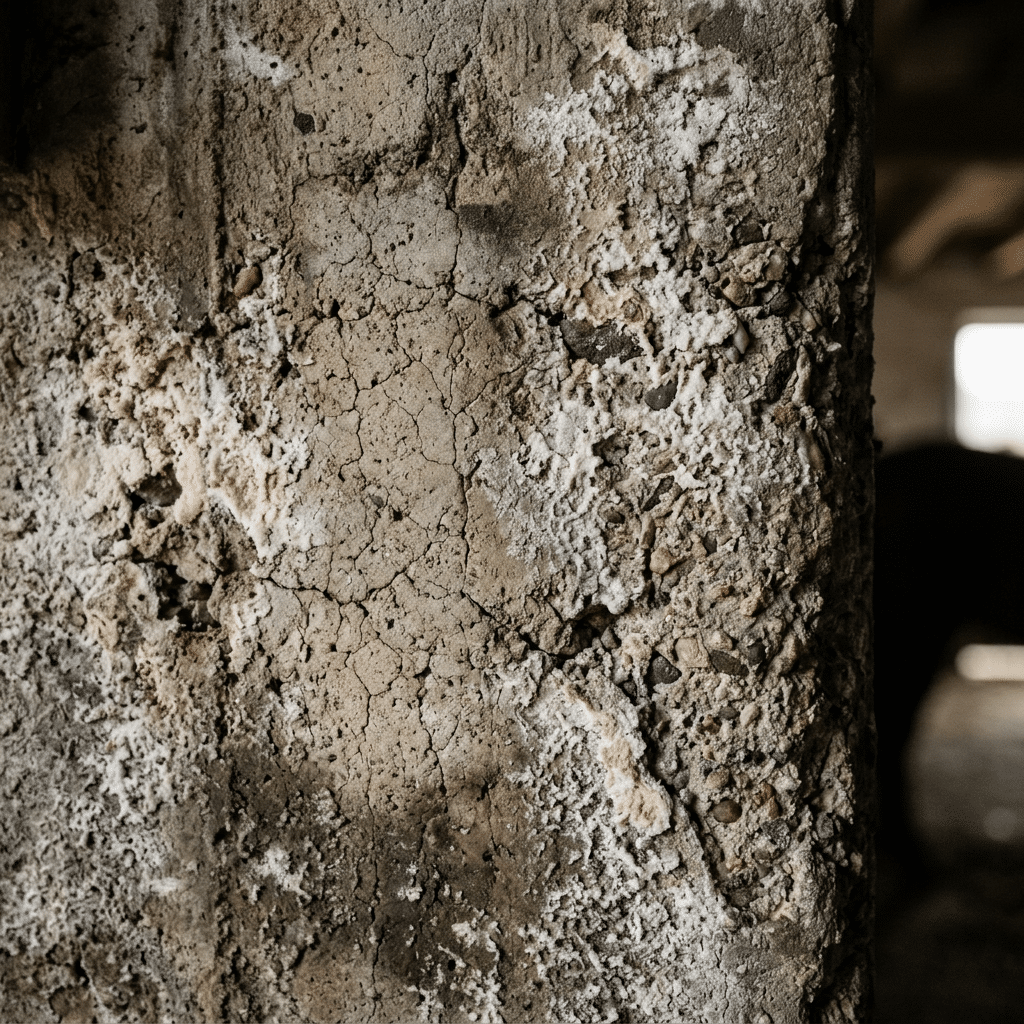
Standard timber stables rarely survive the Australian climate without significant maintenance. The environment here is hostile to natural softwood. When temperatures exceed 40°C, moisture evaporates from standard pine rapidly. This aggressive drying process causes wood fibers to shrink and tear apart, resulting in severe splitting and warping. These structural failures create sharp splinters that injure horses and deep cracks that trap bacteria, compromising the hygiene of the facility.
Termites present an even greater structural risk. Softwood stables in rural Australia essentially act as feeding grounds for pests. Once termites compromise the integrity of a kickboard or post, the stable becomes a liability. For distributors and facility managers, relying on treated pine often means dealing with continuous replacement costs and safety hazards that engineered materials simply do not have.
Engineered Solutions: Strand Woven Bamboo and UV-Stabilized HDPE
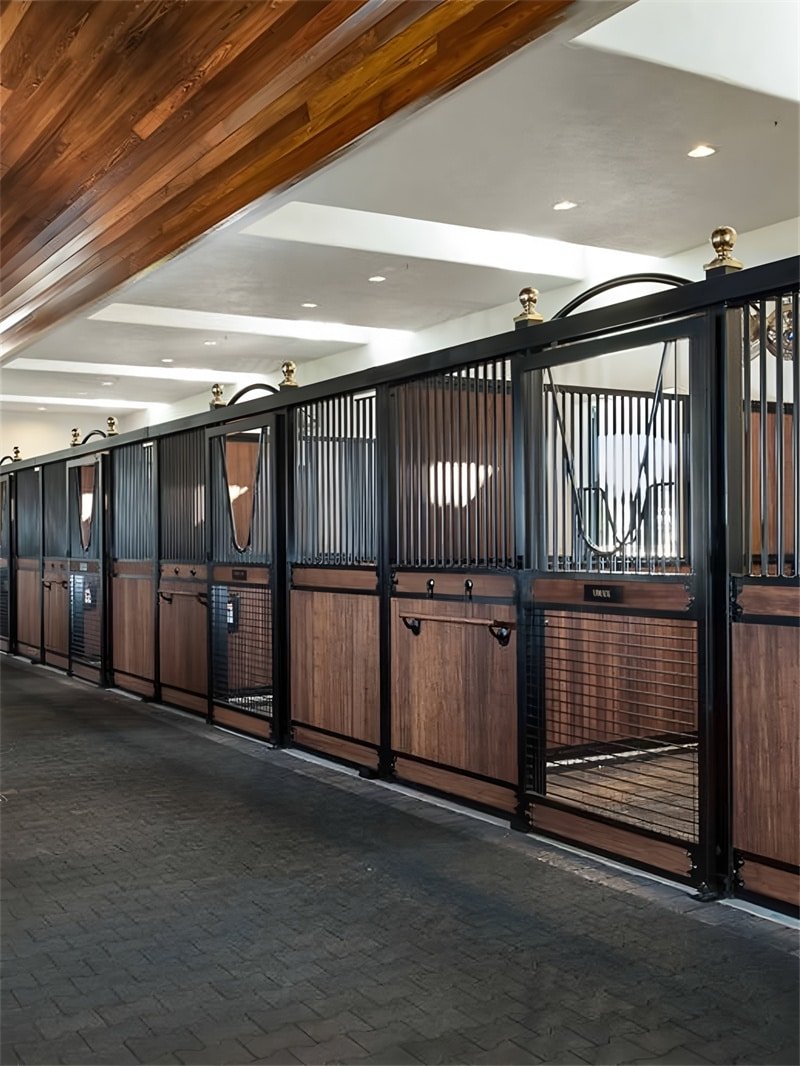
DB Stable eliminates these maintenance liabilities by replacing vulnerable timber with industrial-grade materials specifically tested for harsh environments. We ignore traditional softwood in favor of high-density alternatives that resist both biological and environmental attacks.
- Strand Woven Bamboo: We use high-density bamboo with a Janka Hardness rating greater than 3000 lbf (three times harder than oak). The material is too dense for termites to bore into, and our high-pressure compression process prevents the warping common in natural timber.
- UV-Stabilized HDPE: Our 28mm-32mm High-Density Polyethylene infills offer a “Zero Maintenance” solution. Unlike standard plastics that become brittle under UV exposure, our HDPE is chemically stabilized to resist degradation. It cannot rot, splinter, or absorb moisture, effectively lasting decades without treatment.
What is HDPE? The Ultimate Horse Stall Material
HDPE is a synthetic resin engineered to absorb heavy impact without splintering. Unlike wood, it is impervious to moisture and bacteria, making it the safest, zero-maintenance option for modern stables.
| Característica | DB Stable HDPE Infill | |
|---|---|---|
| Moisture Resistance | Absorbs urine/water; rots over time. | Impermeable; zero absorption. |
| Impact Safety | Rigid; splinters or snaps under force. | Flexible; absorbs energy without breaking. |
| Higiene | Porous surface harbors bacteria and odors. | Sanitizable; resistant to acids and bacteria. |
| Mantenimiento | Requires regular staining and painting. | Zero maintenance; wash with water. |
The Engineering Behind HDPE Material
High-Density Polyethylene (HDPE) solves the fundamental flaws of using organic materials in a stable environment. Wood is porous. When exposed to a stable environment, it acts like a sponge, absorbing urine, water, and bacteria. This absorption leads to rot, structural weakness, and a persistent ammonia smell that you cannot wash away. HDPE is chemically engineered to be completely impervious to liquids.
Beyond hygiene, the structural composition of HDPE prevents catastrophic failure during an accident. If a horse kicks a wooden board, the wood often snaps or splinters, creating sharp edges that cause severe lacerations. HDPE possesses high tensile strength and flexibility. Instead of shattering, it absorbs the kinetic energy of the kick and rebounds. This specific material behavior drastically reduces the risk of leg injuries in high-anxiety situations.
- Impervious to Fluids: Blocks urine and water absorption, eliminating rot and odors.
- Absorción de impactos: Flexible composition prevents shattering and splintering upon impact.
- Veterinary Grade Hygiene: Resistant to bacteria and easy to sanitize with standard cleaners.
The DB Specification: 28mm-32mm UV-Stabilized Infill
Many manufacturers cut costs by using thin, hollow, or recycled plastic composites that warp in the sun or crack in the cold. We adhere to a strict material standard derived from our Product Bible. We use solid, high-density profiles ranging from 28mm to 32mm in thickness. This density provides the structural integrity required to secure our “Kick-Proof Guarantee.”
For clients in regions with high solar exposure, such as Australia, standard plastic degrades quickly. It chalks, fades, and becomes brittle. We formulate our HDPE with specific UV stabilizers to withstand harsh sunlight without losing structural properties. This engineering allows us to offer a true “Zero Maintenance” solution—you will never need to paint, stain, or treat these boards.
- Structural Thickness: Uses 28mm-32mm thickness for maximum integrity.
- UV Stabilization: Engineered to withstand harsh sun exposure without fading or brittleness.
- Kick-Proof Guarantee: Impact-absorbing design ensures safety during aggressive behavior.
- Zero Maintenance: Requires no painting, staining, or chemical treatments.
Precision-Engineered Stables Built for 20-Year Durability

UV Resistance: Preventing Fading in 40°C Summers
In Australia’s 40°C summers, UV-stabilized materials use chemical blockers to prevent molecular breakdown, ensuring structural integrity and color retention without constant maintenance.
Material Degradation in High UV Environments
Solar radiation aggressively attacks the molecular bonds found in untreated timber and standard plastics. This process, known as photodegradation, weakens the material at a microscopic level long before visible cracks appear. In an equine environment, this invisible weakness turns a protective barrier into a safety hazard.
Heat accelerates this process. When ambient temperatures hit 40°C, the thermal stress compounds the UV damage. This combination causes standard materials to become brittle, lose their impact resistance, and suffer from rapid color fading. A board that was flexible in the factory becomes liable to shatter under a horse’s kick after just one Australian summer.
The Advantage of UV-Stabilized HDPE Infill
To counter this, DB Stable utilizes 28mm-32mm HDPE specifically formulated with industrial-grade UV inhibitors. We integrate these chemical blockers directly into the polymer matrix during extrusion, rather than applying them as a superficial coating. This ensures the protection runs through the entire thickness of the board.
- Impact Strength Retention: The technology preserves the material’s natural flexibility, allowing it to absorb heavy impacts without snapping, even after years of sun exposure.
- Zero Maintenance Spec: Unlike timber that demands regular oiling or painting to fight the sun, our UV-stabilized HDPE maintains its appearance and structural integrity without any painting or sealing.
The Drop-Pin System for Portable Horse Stables
The drop-pin system uses gravity-fed steel pins to secure panels without tools, ensuring rapid assembly and a flush, kick-proof connection that prevents injury and withstands equine impact.
Mechanics of Tool-Free Assembly
Operational efficiency drives the design of the drop-pin connection. Unlike permanent stables that require bolting or welding, this gravity-fed locking mechanism eliminates the need for drills and complex hardware. A single handler can assemble a full yard by simply aligning the panel brackets and inserting the steel pin. This speed is critical for commercial operators or event organizers who need to deploy or strike layouts rapidly.
The system also addresses the reality of imperfect terrain. Rigid bolt connections often fail or stress the frame when installed on uneven ground. The drop-pin design allows for slight articulation between panels, accommodating ground undulations without compromising structural integrity. This flexibility prevents the frame t
orque that often leads to cracked welds in rigid systems.
Galvanized Protection and Safety Specifications
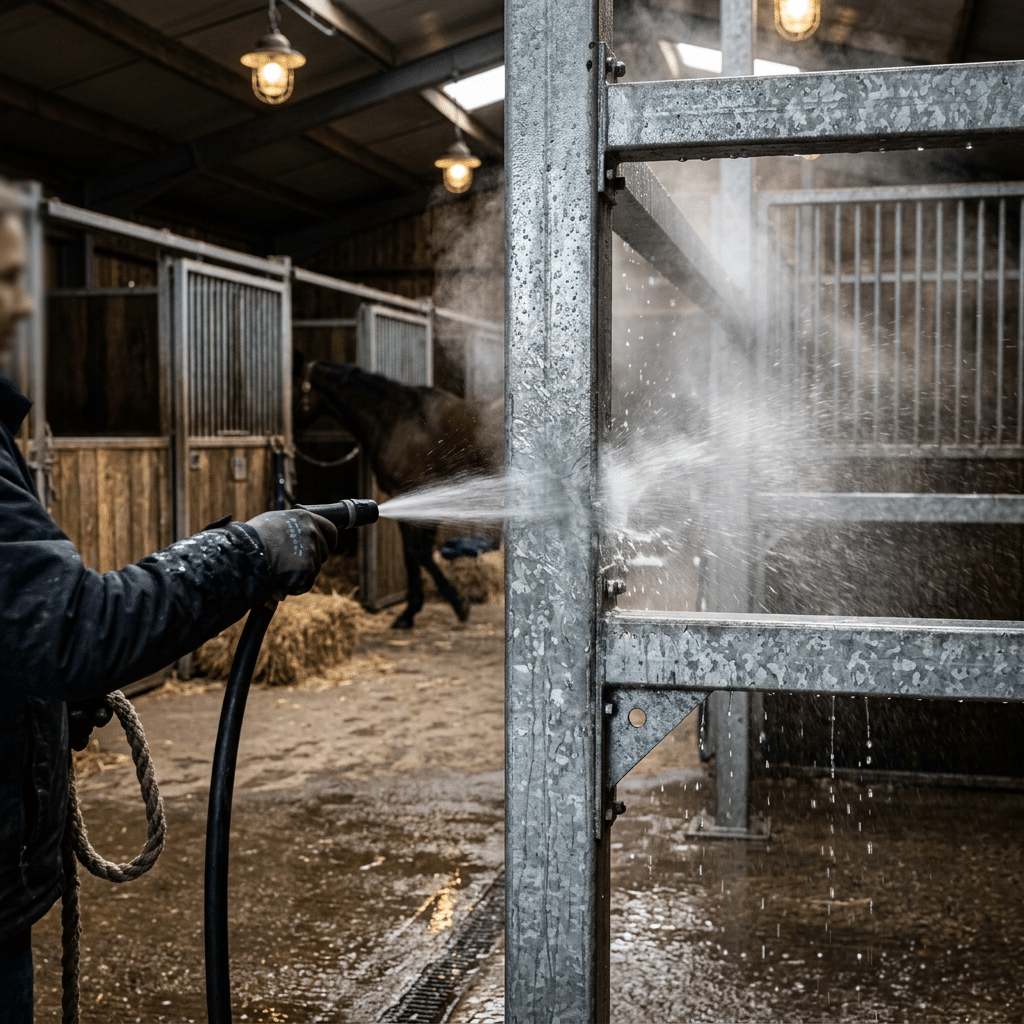
Durability in a drop-pin system depends entirely on rust prevention. If a pin rusts, it seizes, making the stable impossible to disassemble. We prevent this by utilizing Galvanización en caliente después de la fabricación (ISO 1461). While many competitors rely on thinner coatings, our process ensures a zinc thickness exceeding 70 micras en tubos y 85 microns on structural parts. This heavy-duty coating guarantees the pin remains smooth and operational for decades, even in coastal or high-humidity environments.
Safety engineering dictates the physical profile of the connection. We design the pins to sit flush with the panel brackets, removing the risk of protruding bolt heads or sharp edges that could lacerate a horse rubbing against the stall. The pins fit tightly within our 50mm x 50mm RHS posts, a specification chosen to minimize rattling and prevent curious horses from dislodging the hardware, while still allowing handlers to remove them without tools.
Anchoring Free-Standing Stalls in the Outback
Resumen ejecutivo: Standard hammer-in pegs fail in Australian extremes. Secure 450kg frames using heavy-duty screw-in anchor systems installed with impact drivers.
Adapting to Hard-Packed Clay and Red Dirt
If you attempt to secure a stable in the Outback using standard tent stakes, you will fail. The ground conditions in remote Australia—ranging from rock-hard baked clay to loose red dust—destroy conventional anchoring hardware. Standard steel stakes simply bend upon impact with the clay or pull straight out of the sand under wind load.
Professional installation in these environments requires a different approach to ground penetration. For the clay pans common in NSW and Queensland, installers must pre-drill pilot holes using 12mm masonry bits. This prepares the ground to accept a threaded anchor without snapping the hardware. Conversely, in loose sandy soil, friction alone is insufficient; you need anchors with aggressive, wide threading to grip the substrate and maintain tension against the substantial wind loads typical of open plains.
The Screw-In Anchor System
Our factory hardware kits include 304 Stainless Steel anchor bolts designed for concrete slabs. However, for dirt applications, the industry standard has shifted to tapered screw-in peg systems, often referred to as “Big Dog” style anchors. You drive these into the ground using a portable impact driver rather than a sledgehammer. This method utilizes torque to bite into the soil, creating a hold that resists vertical pull-out forces far better than a smooth peg.
This anchoring method works in tandem with the structural mass of the stable itself. A standard DB Stable panel set weighs between 250kg and 450kg depending on the infill (HDPE or Bamboo). This deadweight provides the primary stability against animal impact. The screw-in anchors serve a specific secondary purpose: they prevent the frame from shifting or “walking” during high-wind events or when a horse leans heavily against the walls.
Preguntas frecuentes
Will HDPE stable infills fade under the intense Australian sun?
Technically, all plastics interact with UV radiation eventually. But there is a massive difference between cheap plastic that chalks and cracks within two years and engineered HDPE. We use high-quality HDPE fortified with hindered amine light stabilisers (HALS) and carbon black. This allows the material to withstand Australia’s extreme UV index (often exceeding 200 kilolangleys) without becoming brittle or losing structural integrity. You might see a slight matte effect after a decade, but the board will not fail.
Are these portable horse stables termite-proof?
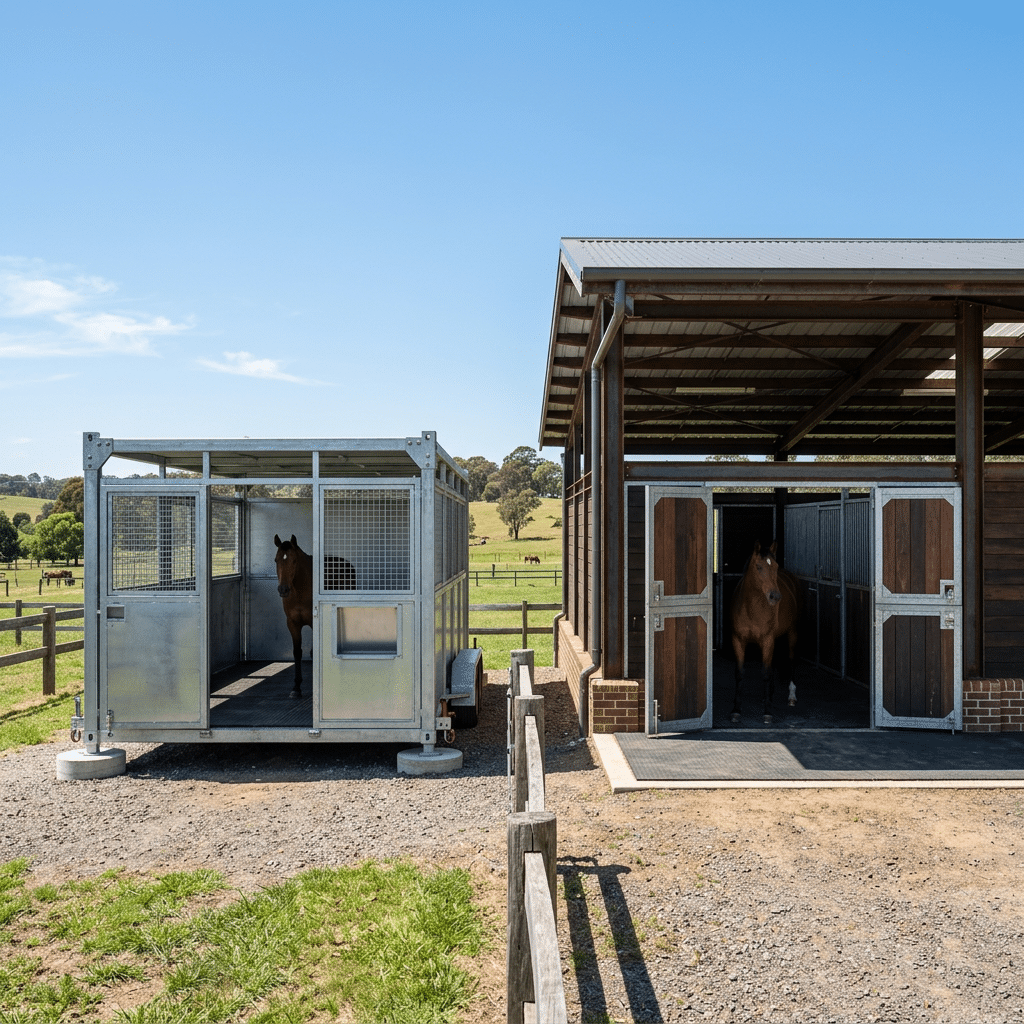
Yes. The entire structural framework is hot-dip galvanized steel, which is inorganic and impossible for termites to eat. For the infill, both our recycled HDPE and strand-woven bamboo options are impervious to insect damage and fungal decay. This is a distinct advantage over traditional treated pine, which requires repeated chemical applications to keep termites at bay in the Outback.
Do I need a concrete slab to install a portable stable?
Not necessarily. A concrete slab offers the best sanitation and level surface, but the portable design works on compacted earth, crushed rock, or road base. If you skip the concrete, you must anchor the frame properly to prevent wind uplift. We recommend using heavy-duty earth anchors or screw anchors (like GroundGrabba) rather than relying on the stable’s weight alone.
How does HDPE compare to Australian timber for stall longevity?
Timber has a classic look but comes with significant maintenance debt: cribbing (chewing), rot, and moisture absorption. HDPE is a “zero maintenance” alternative. It is shock-absorbent (kick-proof), completely waterproof, and easy to sanitize with a pressure washer. For commercial facilities or humid coastal areas, HDPE eliminates the labor costs of staining, repairing, and replacing rotted wood.
What is the difference between hot-dip galvanized and pre-galvanized steel?
This is the most critical specification for rust prevention. “Pre-galvanized” steel is made from tubes coated antes de fabrication. When these tubes are cut and welded, the zinc coating is burned off, leaving the weld seams exposed to rust immediately. Our process is “Hot-Dip After Fabrication” (ISO 1461). We weld the black steel frame first, then submerge the entire finished unit into molten zinc. This ensures every weld joint and interior surface is sealed with over 70 microns of zinc.
Reflexiones finales
Importing timber stables into Australia’s harsh climate is a commercial liability that guarantees warranty claims for warping and termite damage. Switching to DB Stable’s ISO 1461 Hot-Dip Galvanized frames and UV-stabilized HDPE ensures your inventory withstands 40°C heat without degrading. This “Zero Maintenance” standard protects your dealership’s reputation by eliminating the structural failures common in traditional softwood alternatives.
Maximize your margins by leveraging our logística de paquetes planos, which allow for 30-45 sets per 40HQ container compared to the industry average of 15. We invite you to request a technical specification sheet or a sample component to verify our zinc thickness and HDPE density firsthand. Contact our engineering team today to configure a trial order that meets your specific regional requirements.

 Spanish
  English
  French
  Arabic
  German
0 comentarios