


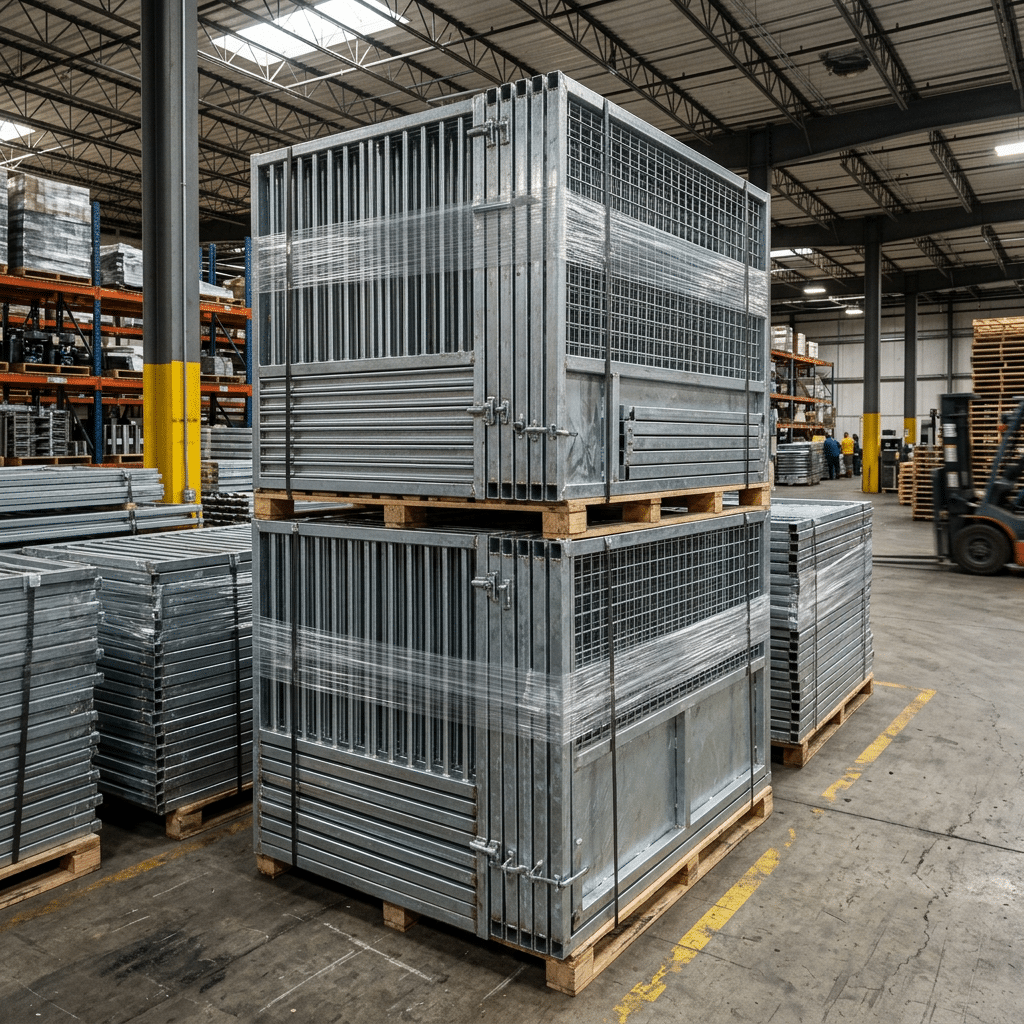
Sourcing stable equipment for Poland demands infrastructure capable of withstanding the brutal freeze-thaw cycles of Central Europe. Standard sliding door systems often fail when ground tracks freeze solid, turning a functional barn into a maintenance nightmare. While generic steel options save capital upfront, they risk catastrophic brittle fracture at sub-zero temperatures, creating safety liabilities that far outweigh the initial savings.
We engineer our systems specifically for these conditions using Q345B Acero de baja aleación y alta resistencia and elevated swing door mechanisms that bypass floor-level ice. By adhering to BS EN ISO 1461 galvanización en caliente standards after fabrication, we ensure every welded joint resists the corrosive slurry of road salt and ammonia common in Polish winters.
The Polish Equestrian Boom and EU Welfare Laws
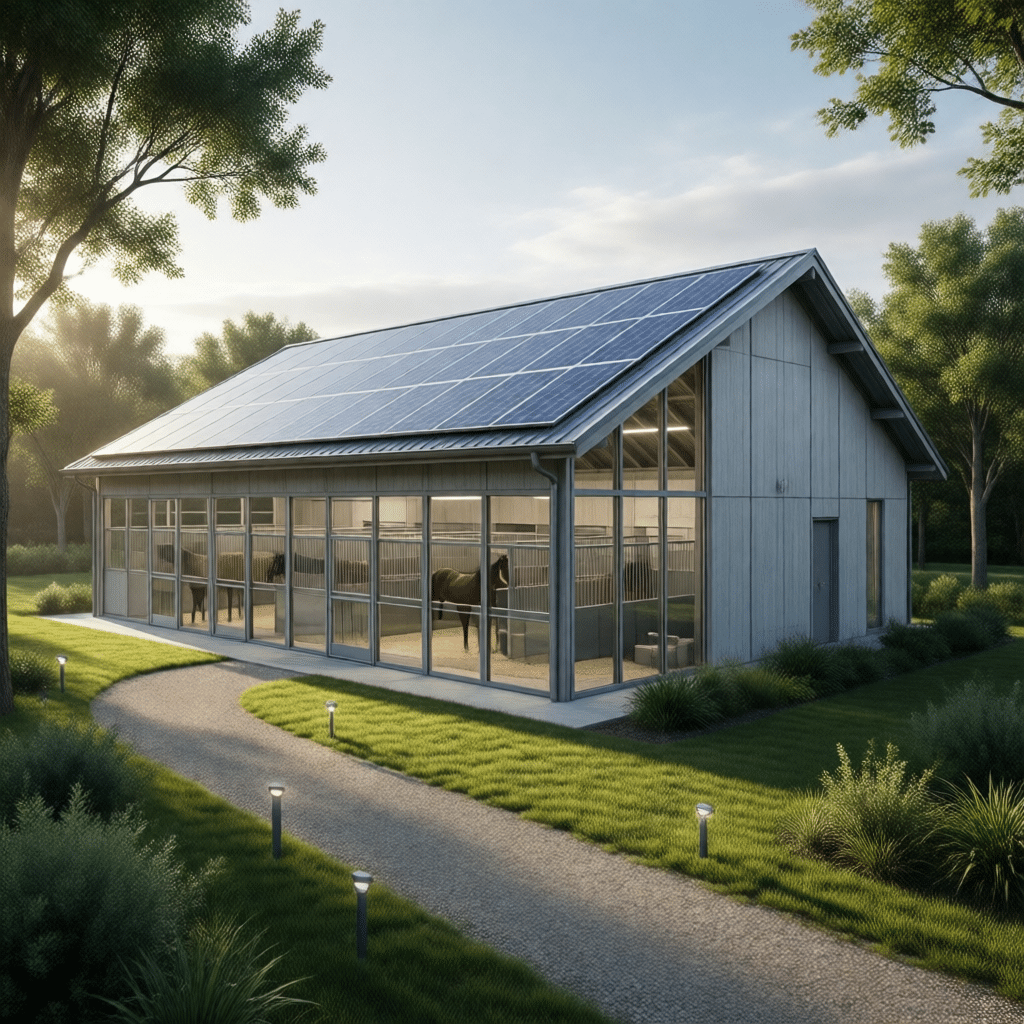
Poland’s equestrian market is racing toward USD 8.2 billion. This surge drives demand for commercial-grade stabling that meets strict EU welfare directives and withstands harsh Central European winters.
Poland’s Expanding Equestrian Infrastructure
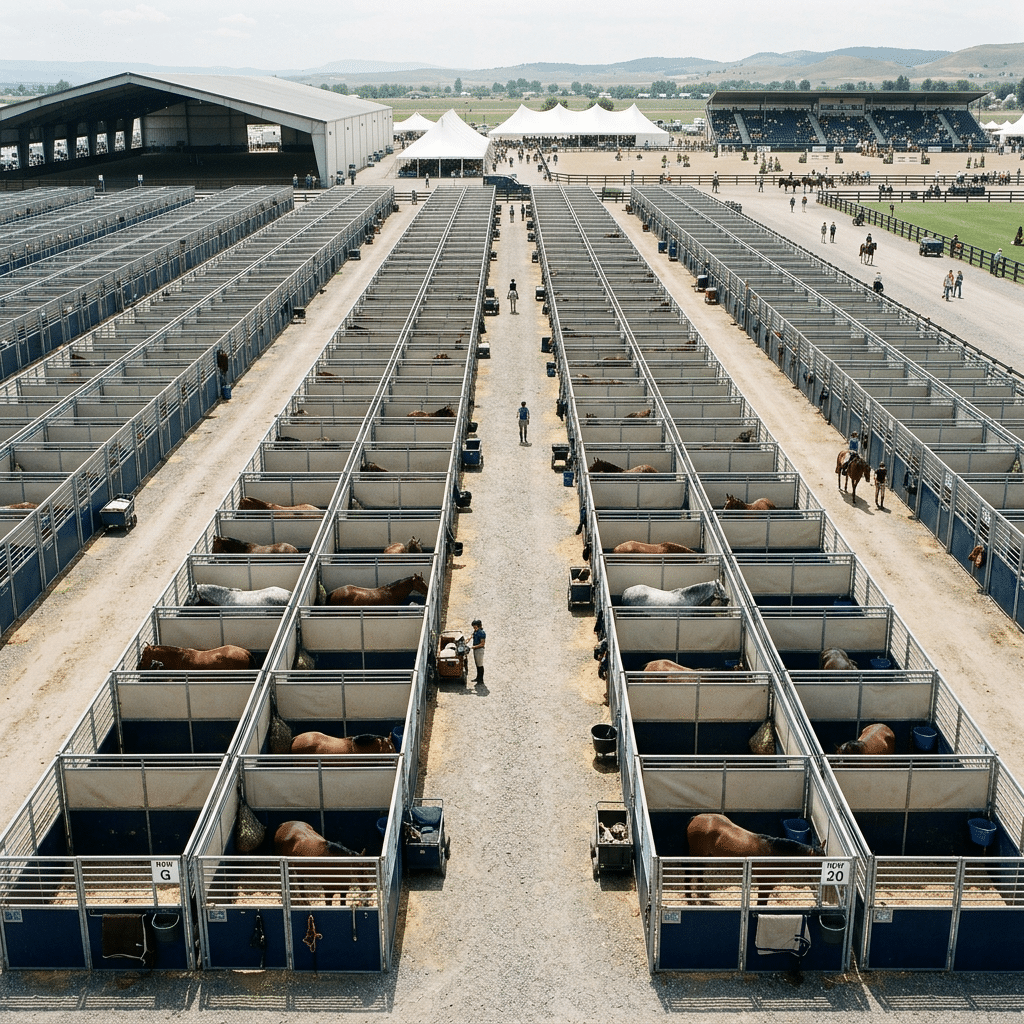
The Polish market is shifting gears, moving from a USD 4.8 billion valuation toward a projected USD 8.2 billion by 2033. This isn’t just rural hobby growth; capital is pouring into professional hubs like Warsaw, Wrocław, and Poznań. The Polish Equestrian Federation now oversees more than 469 licensed clubs, signaling a transition from backyard barns to high-capacity commercial centers.
Investors in these regions are abandoning traditional timber structures. The focus is now on steel infrastructure that offers lower long-term maintenance costs and compliance with modern safety audits. For B2B distributors, the opportunity lies in supplying standardized, modular systems that can scale with these rapidly expanding facilities.
Meeting EU Safety Standards with Galvanized Systems
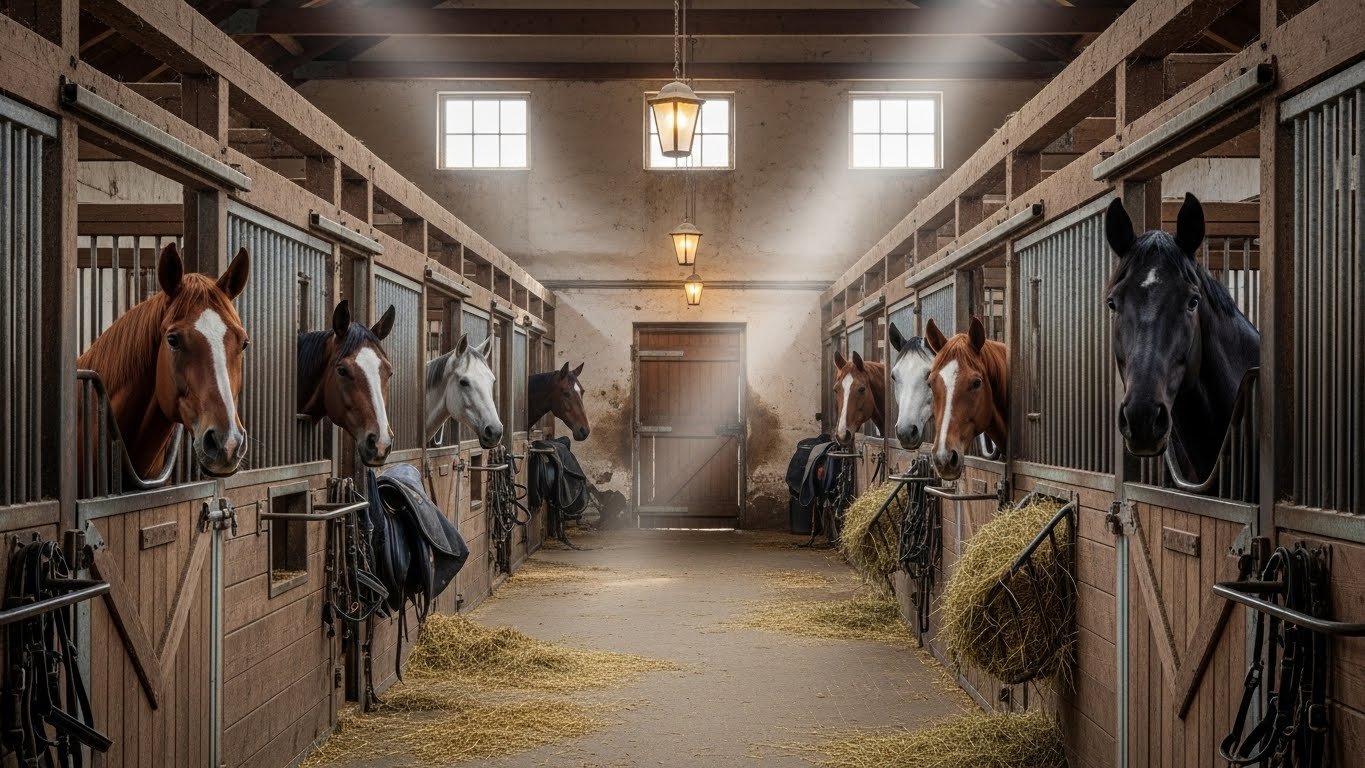
EU directives are reshaping stable design by mandating “social stabling” and rigorous injury prevention protocols. Old-fashioned isolated boxes are failing inspections. Modern facilities must prove they provide social contact and physical safety for high-value Warmbloods.
At DB Stable, we align our manufacturing specs directly with these regulatory demands:
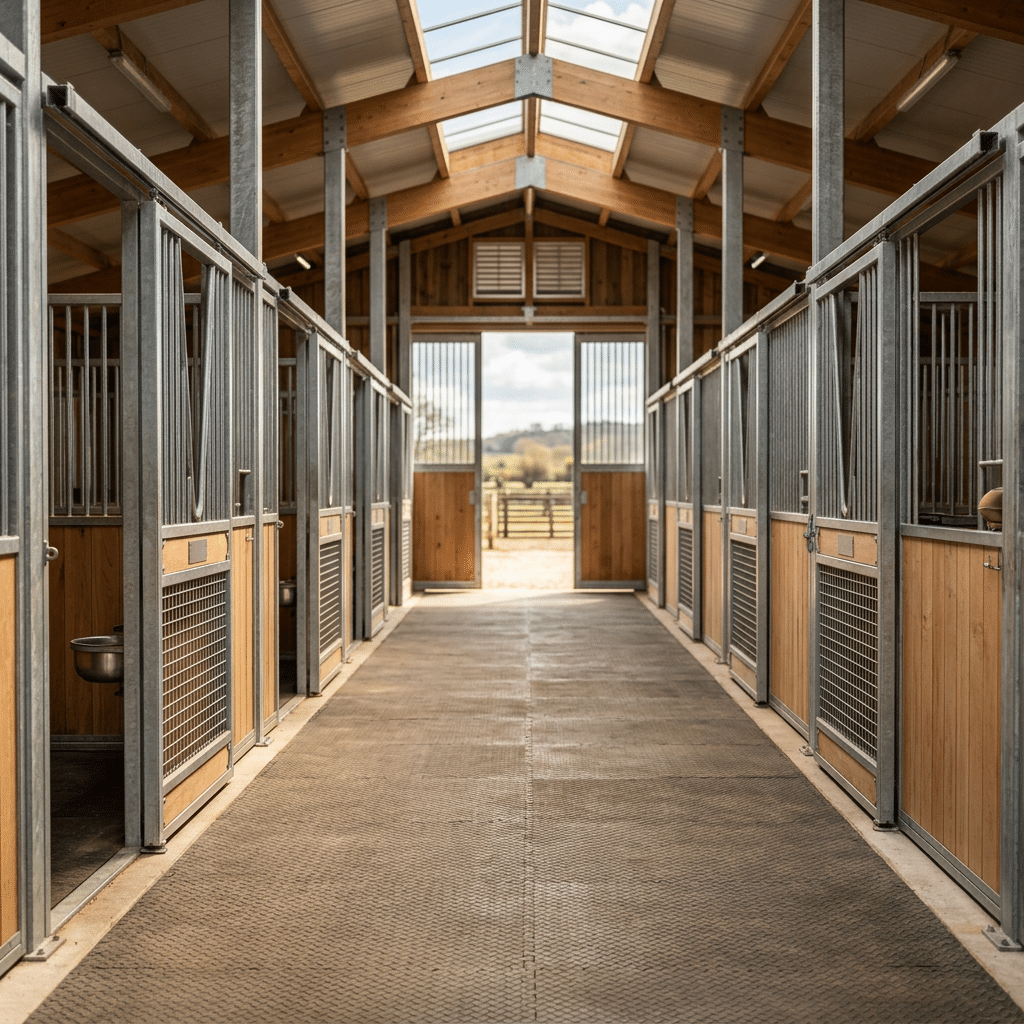
- Social Welfare Compliance: Our designs feature open top grill partitions. This satisfies EU mandates for visual and physical contact between horses, reducing behavioral stress.
- Cast-Proof Safety: We engineer a strict 50mm bottom gap on all fronts and partitions. This prevents a rolling horse from trapping a leg under the door, a critical requirement for injury prevention.
- Cold Climate Steel (Q345B): Poland freezes. Standard steel can become brittle and fracture under impact at -20°C. We use Q345B Acero de baja aleación y alta resistencia (equivalent to ASTM Grade 50) for these regions to ensure kick-proof resilience even in deep winter.
- Corrosion Defense: We utilize Hot-Dip Galvanization after fabrication, adhering to BS EN ISO 1461 standards with an average coating thickness above 85 microns. This provides the necessary armor against the moisture and salt common in Poland’s freeze-thaw cycles.
Swing Doors vs Sliding Doors in Freezing Environments
Swing doors offer superior sealing and mechanical reliability in freezing conditions, while sliding door tracks frequently jam due to ice accumulation and compacted bedding.
| Característica | Swing Doors (Hinged) | Sliding Doors |
|---|---|---|
| Freezing Risk | Low (Elevated hinges) | High (Ground tracks trap ice) |
| Sealing Efficiency | High (Compression gaskets) | Moderate (Brush seals) |
| Winter Maintenance | Minimal (Hinge lubrication) | Daily (Clearing frozen tracks) |
| Eficiencia espacial | Requires swing radius | Excellent (Zero footprint) |
Mechanical Reliability: Track Freezing vs. Hinge Operation
The primary failure point for sliding doors in cold climates is the bottom guide track. These tracks inevitably act as gutters, collecting a mixture of bedding, mud, and snow. When temperatures drop, this slurry freezes into a solid obstruction that immobilizes the rollers. Stable staff often waste valuable time chipping ice out of tracks just to open a stall, or worse, they force the door and derail the mechanism.
Swing doors bypass this issue entirely. By utilizing hinges located well above ground level, the operating mechanism remains isolated from floor-level ice accumulation. Even if bedding freezes to the floor, the door itself usually remains functional.
Thermal sealing also differs significantly between the two systems. Sliding doors typically rely on brush seals to reduce friction, but these allow air infiltration. Swing doors utilize compression gasket seals, creating a tighter thermal barrier. This difference is critical for preventing draft-induced illnesses in unheated barns during severe cold snaps.
Material Specification: Q345B Steel for Low-Temperature Toughness
Standard carbon steel (like Q235B or ASTM A36) often becomes brittle in sub-zero temperatures. In this state, a high-impact kick from a horse—which might only dent a door in summer—can cause catastrophic structural fracture in winter. To address this, we mandate specific material upgrades for our cold-climate clients.
- Q345B Low Alloy High Strength Steel: We replace standard steel with Q345B (equivalent to ASTM Grade 50) for all structural frames. This alloy maintains ductility at low temperatures, ensuring the steel absorbs impact energy rather than shattering.
- Hot-Dip Galvanization (>85 microns): Winter environments in stables create a corrosive slurry of melting snow, road salts, and ammonia. We galvanize después de fabrication to a thickness exceeding 85 microns, ensuring no welded joints are left exposed to rust.
- 304 Stainless Steel Hardware: Thermal contraction can shear standard bolts. Our installation kits exclusively use heavy-duty 304 stainless steel fasteners to withstand thermal stress cycles without failure.
Premium Custom Stables With 20-Year Durability

The Heavy-Duty Hinge: 304 Stainless vs. Rust
Coated steel hinges fail when friction exposes raw metal. 304 stainless steel uses a self-healing chromium oxide layer to prevent rust and seizure in damp stable environments.
The Vulnerability of High-Friction Zones
Standard steel hinges rely on surface coatings like paint or thin zinc for protection, but these fail where it matters most: the pivot point. Daily operation creates friction between the barrel and pin, physically stripping away these protective layers. Once this barrier breaches, the damp, ammonia-rich stable environment attacks the exposed raw steel.
- Mechanical Stripping: Friction from daily use grinds away protective paints or zinc layers within weeks.
- Rapid Oxidation: Moisture immediately corrodes the exposed steel, creating expansive red rust (iron oxide).
- Operational Seizure: Corroded hinges lock up, preventing doors from opening quickly during emergencies.
The Chemical Advantage of 304 Grade Stainless Steel
We strictly specify 304 grade stainless steel for all hardware, connectors, and anchor bolts because its protection is intrinsic, not superficial. Unlike coated steel, 304 stainless relies on chromium to form a passive, self-healing oxide barrier. If a hinge is scratched or worn down by friction, the exposed material reacts with oxygen to instantly reform this protective layer.
- Self-Healing Mechanism: The chromium-rich oxide layer regenerates automatically when surface wear occurs, preventing rust from taking hold.
- Through-Thickness Defense: Corrosion resistance exists throughout the entire metal, not just on the outside skin.
- Chemical Resilience: It specifically resists the corrosive effects of ammonia and moisture inherent to equine facilities.
- Critical Reliability: Ensures hardware remains operable for decades, eliminating the risk of seized doors in high-stakes environments.
Hot-Dip Galvanized Stall Panels for Snow and Slush
Resumen ejecutivo: We utilize Hot-Dip Galvanization After Fabrication (ISO 1461), coating the entire welded structure to exceed 85 microns. This seals the steel against the corrosive mix of road salt, ammonia, and melting snow.
The Corrosive Synergy of Snow, Slush, and Ammonia
Standard steel panels do not fail simply because of low temperatures; they fail due to the chemical cocktail that accumulates at the floor level during winter. In active stables, tractors and boots track in road salt (chlorides) from the outside, which mixes with urine-soaked bedding (ammonia). This creates a highly saline, acidic slush that piles up against the bottom channel of the stall fronts, creating a constant moisture trap.
This environment exposes the critical flaw in “Pre-Galvanized” equipment. Many manufacturers weld pre-coated tubes together, but the welding heat burns off the zinc protection at the joints. When saline slush contacts these exposed welds, rust begins immediately. Once the structural integrity of the bottom channel is compromised, the entire panel becomes a safety hazard.
ISO 1461 Compliance: The ̶
0;Hot-Dip After Fabrication” Standard
To eliminate the risk of weld corrosion, we strictly adhere to a “Hot-Dip After Fabrication” process. We weld the raw black steel frames first, and then submerge the entire completed chassis into a molten zinc bath. This ensures that every millimeter of the steel—including the welds and the interior of the tubes—is coated in a thick, protective layer of zinc.
- Manufacturing Standard: BS EN ISO 1461 (Hot-Dip Galvanizing).
- Structural Coating Thickness: > 85 microns (μm).
- Tubing Coating Thickness: > 70 microns (μm).
- Corrosion Testing: ASTM B117 Salt Spray Test > 96 Hours (Zero Red Rust).
This method creates a metallurgical bond between the zinc and the steel, providing a sacrificial layer that protects the base metal even if the surface sustains minor scratches from hooves or tools. For facilities in regions with heavy snowfall or high salt usage, this specification is not optional—it is the baseline for longevity.
Group Stabling: Using Modular Panels for Open Barns
Modular steel panels convert open barns into flexible social spaces. This system supports natural herd dynamics while using heavy-duty, kick-proof materials to ensure safety during dominance interactions.
Designing Flexible Layouts for Herd Socialization
Open-span structures—whether repurposed agricultural warehouses or new clear-span steel buildings—often lack the internal infrastructure required for safe equine housing. We solve this by dropping in prefabricated modular partitions. Unlike permanent masonry builds, these panels bolt together, effectively zoning a large hall into functional group housing without altering the building’s structural shell.
This layout strategy directly addresses herd mental health. By using partitions with open grill upper sections (typically 50mm spacing), horses maintain visual and tactile contact with neighbors. This reduces the isolation stress common in walled-off boxes and mimics a natural herd environment while keeping aggressive individuals physically separated.
- Adaptive Zoning: Modular connectors allow facility managers to expand or shrink stall sizes rapidly based on current demographics.
- Seasonal Reconfiguration: You can merge two standard 3.5m stalls into a large foaling box or a communal weaning pen in under an hour.
- Ventilación por efecto chimenea: The open top design promotes vertical airflow, preventing ammonia buildup at the floor level.
Ensuring Safety with Q345B Kick-Proof Partitions
Group environments introduce dominance hierarchies, making kicking interactions inevitable. Standard structural steel (Q235B/A36) often dents or buckles under the repeated impact of a draft horse or warmblood establishing pecking order. For group housing, we upgrade the specification to Q345B Acero de baja aleación y alta resistencia. This material offers superior impact toughness, particularly in cold climates where standard steel becomes brittle and prone to fracture.
Durability extends to the coating. Open barns expose steel to wind, rain, and humidity. Paint and powder coats fail here. We rely exclusively on Hot-Dip Galvanization (BS EN ISO 1461) applied después de fabrication. This bonds zinc to the steel at a metallurgical level, providing a self-healing barrier against rust that lasts decades, even in aggressive open-air conditions.
- Material Spec: Q345B steel withstands higher impact loads than standard market options.
- Shock Absorption: We integrate 28mm-32mm HDPE infill which flexes upon impact, dissipating energy to protect both the partition and the horse’s legs.
- Injury Prevention: Unlike wood, HDPE does not splinter or crack when kicked, eliminating the risk of puncture wounds.
Preguntas frecuentes
Are hinged horse stall doors suitable for the Polish climate?
Yes, hinged systems work well in Poland, but only if they are manufactured to EN 1090-1 standards. The critical factor for the local climate is hot-dip galvanized steel (ISO 1461), which is essential to resist rust caused by snow and wet seasons. We also recommend heavy-duty adjustable hinges. Timber frames often expand or contract during freezing winters, and adjustable hinges allow you to realign the door for smooth operation without reinstalling the hardware.
Which stable door material performs best in freezing weather?
Composite materials, specifically HDPE (High-Density Polyethylene) or foam-insulated cores, vastly outperform traditional wood in freezing conditions. Wood absorbs moisture and warps when it freezes, which jams doors. HDPE remains dimensionally stable. For split ‘Dutch’ doors, you must install high-quality weatherstripping at the center seam to prevent cold drafts from cutting through the barn.
What is the difference between pre-galvanized and hot-dip galvanized after fabrication?
The difference is the lifespan of your weld seams. Pre-galvanized steel is coated before the manufacturer cuts and welds it, which burns the zinc off the joints and leaves welds vulnerable to immediate rust. Hot-dip galvanization after fabrication involves dipping the completely finished door into molten zinc (ISO 1461). This coats every weld, edge, and crevice with over 70 microns of zinc, ensuring a 20+ year rust-free lifespan.
Why are adjustable hinges recommended for heavy stable doors?
Barn foundations settle over time and seasonal temperatures fluctuate, causing door frames to shift slightly. Fixed hinges cannot compensate for this. Heavy-duty adjustable hinges allow you to realign the door precisely with a simple tool adjustment, eliminating the need to re-hang the door. This ensures smooth operation and guarantees that safety latches always align perfectly.
Can modular panels be used to create group housing in open barns?
Yes, modular partition panels are the standard solution for converting open barns into group housing. These systems typically use standard 2.30m high panels with safe 50mm tube spacing to prevent hooves from getting stuck. The primary benefit is flexibility; you can reconfigure the layout instantly as your herd management needs change, without permanent construction.
Reflexiones finales
Standard steel creates liability in Poland’s freezing winters, where brittle fractures and rusted welds lead to costly warranty claims. Investing in our Q345B Low Alloy Steel y ISO 1461 Hot-Dip Galvanization ensures your inventory withstands heavy impact and corrosive slush. This heavy-duty specification protects your reputation as a supplier of permanent, safety-compliant infrastructure.
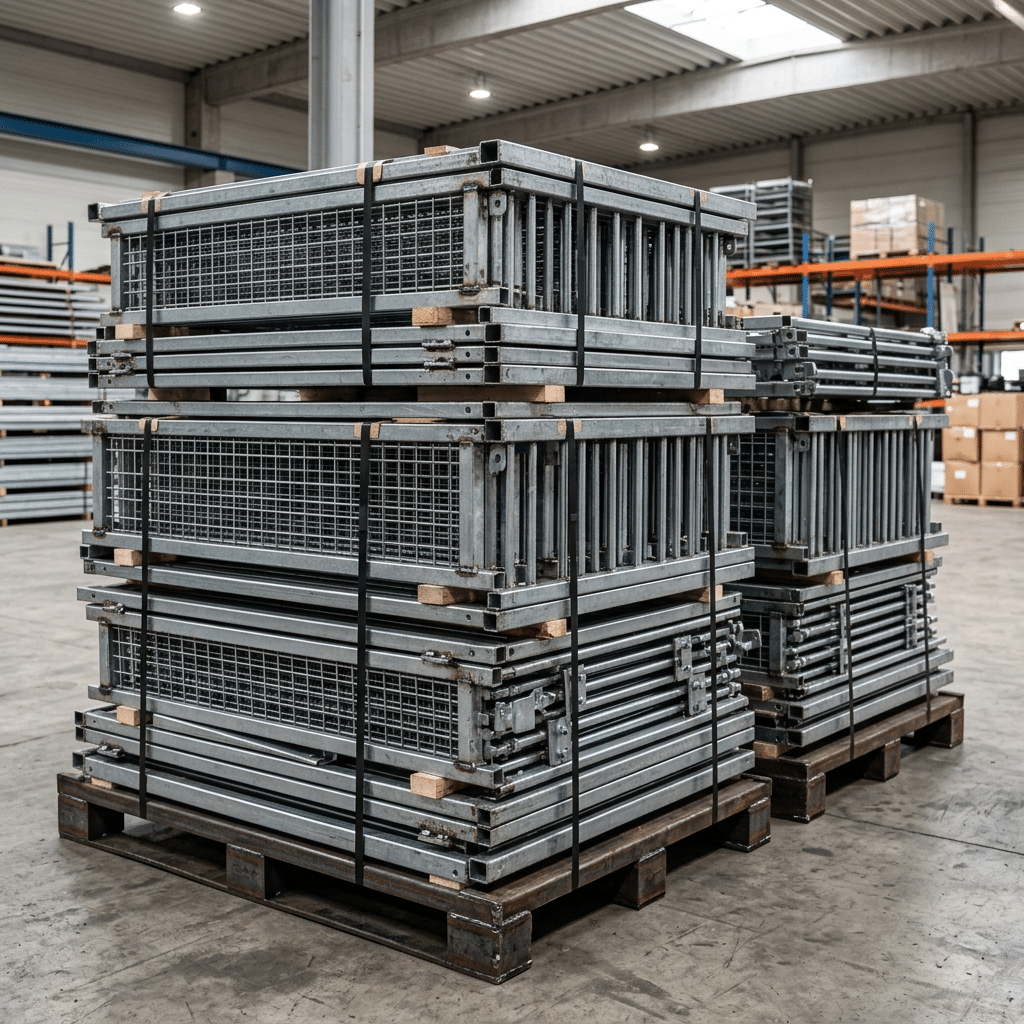
Secure your supply chain before the season peaks by requesting our detailed Dealer Catalog and 40HQ Pricing Matrix. We encourage you to start with a Trial Order (LCL) to verify our galvanization thickness and weld quality firsthand. Contact our engineering team today to configure a modular system that fits your specific market requirements.

 Spanish
  English
  French
  Arabic
  German
0 comentarios