


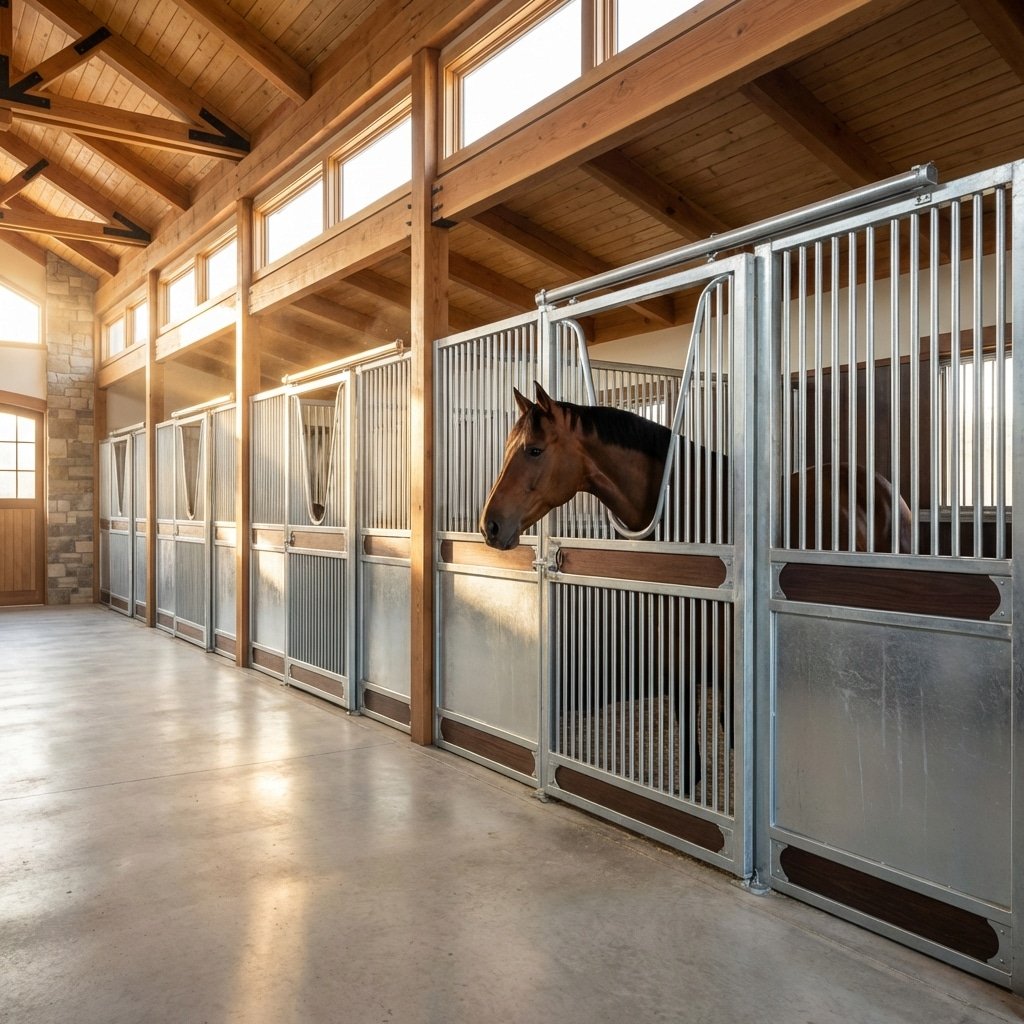
Cross-Renting temporary stabling inventory is the only viable strategy to eliminate seasonal asset depreciation. Restricting your rental fleet to single-species equine events leaves capital sitting idle during lucrative cattle or alpaca shows. Expanding into multi-species applications maximizes fleet utilization rates and secures year-round cash flow regardless of specific seasonal equestrian calendars.
This guide benchmarks the technical specifications required for a universal rental fleet, specifically the 50mm Universal Safety grill spacing essential for mixed-stock safety. We examine how Hot-Dip Galvanized After Fabrication durability and stackable flat-pack logistics allow you to service diverse agricultural sectors while protecting your profit margins against transport damage and corrosion.
The Rise of ESG (Environmental, Social, Governance) in Construction
By 2026, construction moves from voluntary ESG goals to mandatory Scope 3 reporting. DB Stable aligns with these mandates by using BS EN ISO 1461 galvanization to maximize asset lifespan and reduce w
hole-life carbon.
The Transition to Whole-Life Carbon and Scope 3 Metrics
The era of voluntary green-washing is ending. By 2026, the construction sector faces a hard pivot to mandatory Scope 3 emission disclosures. Regulators are moving the goalposts from simple operational energy metrics to a rigorous “whole-life carbon assessment.” This means you are no longer just responsible for the emissions on your immediate job site; you are now accountable for the carbon footprint of every beam, bolt, and stable panel you install.
For project managers and distributors, this shift fundamentally changes procurement. Suppliers must now provide verifiable data on material longevity and supply chain sustainability. If a product requires replacement every three years due to poor manufacturing, it becomes a liability in your carbon audit.
- Mandatory Reporting: The market is shifting from optional ESG goals to legally required carbon tracking for all major projects.
- Scope 3 Accountability: Builders must now report emissions generated by their upstream suppliers and downstream product lifecycles.
- Financial Penalties: Non-compliance with 2026 mandates will directly impact project funding, insurance premiums, and bidding eligibility.
- Lifecycle Focus: Narrow direct emission metrics are being replaced by comprehensive lifecycle analysis (LCA), penalizing “disposable” construction materials.
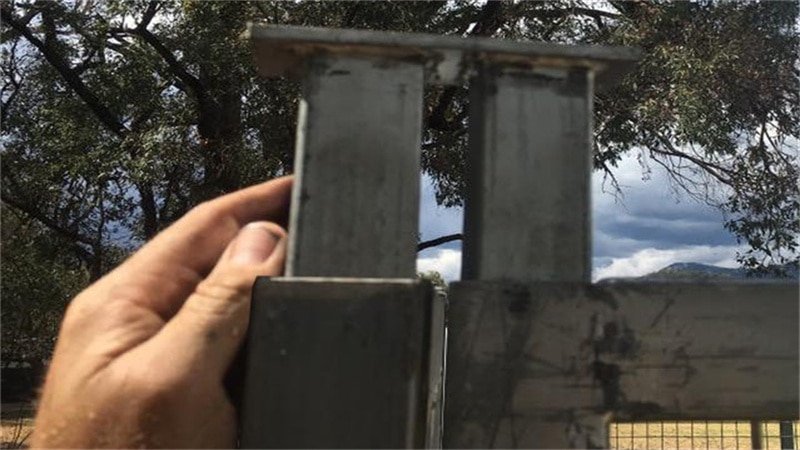
Extending Asset Lifespan with BS EN ISO 1461 Galvanization
In the context of ESG, durability is the most effective form of sustainability. Replacing a rusted stable front after three years doubles its embodied carbon footprint. At DB Stable, we engineer our products to align with strict 2026 durability mandates through specific manufacturing protocols that prioritize longevity over low initial cost.
We utilize Hot-Dip Galvanization After Fabrication, strictly adhering to BS EN ISO 1461 standards. Unlike competitors using pre-galvanized black tubes with thin coatings that fail at the weld points, we dip the entire welded structure. This results in a zinc coating average exceeding 85 microns for structural parts and 70 microns for tubing. This process ensures a lifespan of over 10 years, even in high-ammonia environments, drastically reducing the replacement cycle and associated material waste.
- BS EN ISO 1461 Compliance: We adhere to global standards for hot-dip galvanizing, ensuring a verifiable protection layer that withstands >96 hours of ASTM B117 salt spray testing.
- Material Integrity: Utilizamos Q235B structural steel as standard, and Q345B for cold climates to prevent brittle fracture, ensuring the asset does not fail prematurely.
- Waste Reduction: By eliminating the need for frequent replacements common with painted or pre-galv alternatives, we lower the long-term embodied carbon of the facility.
- Supply Chain Verification: Our controlled ISO 9001 factory processes provide the transparency required for rigorous Scope 3 ESG audits.
Moving Away from Old-Growth Timber (Oak/Pine)
Regulations and maintenance liabilities are retiring old-growth timber. We replace it with High-Density Strand Woven Bamboo—3x harder than oak and impervious to cribbing.
Environmental and Maintenance Challenges of Heritage Timber
Sourcing quality heritage timber has become a logistical nightmare. Increasing forestry regulations and old-growth deferrals have choked the global supply of mature Oak and Pine. This scarcity drives prices up while the quality of available lumber trends down, making reliance on slow-growing hardwood a risky commercial strategy for large-scale projects.
Beyond supply chain volatility, natural wood fails the functional test in modern high-traffic stables. Pine and Oak differ in density, yet both naturally absorb moisture. In a stable environment characterized by high humidity, ammonia, and frequent wash-downs, this porosity creates a breeding ground for bacteria and mold that biosecurity protocols cannot easily address.
- Cribbing Risks: Softwoods like Pine are vulnerable to cribbers. Horses chew through them rapidly, creating splinter hazards and necessitating frequent board replacement.
- Maintenance Costs: Natural wood demands annual stripping, varnishing, and sealing to remain viable. For a facility with 50+ stalls, these labor costs destroy operating budgets.
- Sanitation Failures: Once wood splinters or cracks, it harbors pathogens. You cannot effectively sanitize a damaged oak board, posing a risk to animal health.
Strand Woven Bamboo: The 3000+ Janka Hardness Standard
DB Stable employs a specific engineered solution to bypass the wood crisis: Strand Woven Bamboo. This material is not the hollow bamboo stems found in gardens; it is crushed, resin-infused, and compressed under extreme pressure to create a plank with a density exceeding 900 kg/m³. We use this to set a technical benchmark that natural timber cannot match.
Our specification requires a Janka Hardness rating of > 3000 lbf. This standard ensures the infills are effectively “kick-proof” and resistant to the aggressive wear typical of equestrian facilities.
- Superior Impact Resistance: Testing confirms this material is 3x harder than Red Oak. A kick that would split a pine board typically leaves strand woven bamboo undamaged.
- Moisture and Rot Defense: The high-pressure resin process seals the fibers, rendering the boards resistant to rot, mold, and insect damage even in humid climates.
- Sustainable Scalability: Bamboo matures in 3-5 years, compared to decades for hardwoods. This allows for rapid renewal without the environmental baggage of depleting old-growth forests.
Premium Galvanized Stables With 20-Year Durability

Top Factories Embracing Sustainable Materials
Global leaders like Siemens and Lego prove that zero-waste is the new manufacturing standard. DB Stable aligns with this by utilizing 100% recyclable steel and renewable bamboo to maximize product longevity.
Sustainability in manufacturing has shifted from a marketing buzzword to a quantifiable operational requirement. Top-tier factories are no longer just reducing emissions; they are re-engineering their entire supply chains to eliminate waste and extend product lifecycles. We analyze the global benchmarks set by industry giants and detail how we apply these rigorous standards to equestrian infrastructure.
Global Benchmarks in Sustainable Manufacturing
The bar for “green manufacturing” is set by specific operational metrics rather than vague promises. Leading multi-national corporations have established the following benchmarks that serve as the model for modern industrial production:
- e=”margin-bottom: 10px; line-height: 1.8;”>Siemens Electronics Works (China): Utilizes “Digital Twin” technology to simulate production lines before physical operation, reducing energy consumption by 24% through optimized process planning.
- Lego Factory (Vietnam): Operates on a carbon-neutral basis by implementing rooftop solar panels and battery storage systems to achieve 100% clean energy usage for daily operations.
- Nestlé & Procter & Gamble: Both entities have successfully implemented “Zero Waste to Landfill” protocols in specific regions (Serbia and China respectively), proving that circular economy models are scalable in heavy industry.

DB Stable’s Eco-Friendly Material Standards
At DB Stable, we translate these global macro-trends into specific material specifications for horse stables. Our focus is on longevity as the primary driver of sustainability—a product that lasts 20 years creates significantly less waste than one replaced every five years. We strictly adhere to the following material standards:
- Bamboo Infill (High-Density Strand Woven): We utilize strand woven bamboo with a Janka Hardness rating > 3000 lbf. This material matures in 3-5 years (compared to 50+ years for oak), absorbs carbon during growth, and provides a mold-resistant, kick-proof alternative to slow-growth hardwoods.
- Hot-Dip Galvanization (ISO 1461): Our steel frameworks (Q235B/Q345B) undergo hot-dip galvanization after fabrication. This ensures a zinc coating of >70-85 microns, providing “lifetime” rust protection. By preventing corrosion, we extend the asset’s life and eliminate the need for replacement manufacturing.
- HDPE Infill (Zero-Maintenance): We use UV-stabilized High-Density Polyethylene. Unlike wood, which requires annual chemical treatments (paints, varnishes, creosote) that leach into the soil, HDPE requires no chemical upkeep and is 100% recyclable at the end of its lifecycle.
| Sustainability Factor | Standard Industry Practice | DB Estable Estándar |
|---|---|---|
| Steel Protection | Pre-galvanized or Painted (Rusts in 3-5 years) | Hot-Dip Galvanized (ISO 1461) (20+ Year Lifecycle) |
| Wood Source | Old-growth Hardwood (Slow regeneration) | Renewable Bamboo (3-5 Year Maturity) |
| Chemical Maintenance | Annual painting/staining required | Zero Maintenance (HDPE & Galvanized Steel) |
Strand-Woven Bamboo: A High-Yield Carbon Sink
Executive Summary: Strand-woven bamboo matures in just 3-5 years while sequestering up to three times more CO₂ than timber. High-density manufacturing locks this carbon away for decades, creating a negative lifecycle footprint.
Rapid Regrowth and Sequestration Efficiency
The biological advantage of bamboo lies in its speed. While traditional hardwoods like oak or maple require 30 to 40 years to reach harvestable maturity, Moso bamboo is ready in just 3 to 5 years. This rapid turnover allows the plant to sequester approximately three times more CO₂ than an equivalent area of timber forest over the same period.
Harvesting mechanics also play a critical role in soil carbon retention. Unlike timber logging, which often kills the tree and disturbs the soil, bamboo harvesting leaves the rhizome root system intact. The plant regenerates from the same root ball, preventing soil erosion and ensuring that the carbon stored below ground remains undisturbed.
Durability as Storage: The Janka 3000+ Standard
Carbon sequestration only works if the carbon remains locked in the product for a long time. Soft bamboo products that rot or break release their carbon back into the atmosphere too quickly. To maximize the carbon storage period, we utilize high-density strand woven bamboo with a Janka Hardness rating exceeding 3000 lbf.
This density—significantly harder than Red Oak (1290 lbf) or Hard Maple (1450 lbf)—creates a “durable products pool.” The material resists horse kicks, moisture, and rot, extending the stable’s operational lifespan. By reducing the frequency of replacements, we minimize the manufacturing emissions associated with producing new materials, keeping the original embodied carbon sequestered for decades.
Preguntas frecuentes
How to build an ESG compliant equestrian center?
Building an ESG-compliant facility requires a structured approach across environmental, social, and governance pillars rather than just installing solar panels. You need to establish a baseline for energy and water usage, then implement specific reductions.
- Energy & Emissions: Transition to renewable sources (solar/geothermal) and create an inventory of operational emissions to track year-over-year reductions.
- Water Management: Aim for self-sufficiency through rainwater harvesting and closed-loop purification systems for wash bays.
- Social Responsibility: Document safety risks, implement fair labor practices, and ensure staff wellness facilities are on par with animal welfare standards.
- Governance: Create a formal strategy with board-level oversight and publish data-backed reports rather than vague sustainability claims.
Is bamboo a sustainable building material?
Yes, but with a caveat regarding processing. Bamboo is highly sustainable agriculturally because it grows to maturity in 3-5 years (vs. 30-50 for wood), regenerates without replanting, and requires no pesticides. It also produces 35% more oxygen than tree forests.
However, raw bamboo has poor durability and will rot quickly. For construction, it must be engineered into strand-woven bamboo (compressing fibers with resin). This process creates a material with the density of steel and compressive strength matching concrete, making it a viable, long-lasting carbon sink.
Environmental impact of steel vs wood barns?
The choice depends on whether you prioritize initial embodied carbon or long-term circularity. Wood typically has lower initial production emissions because trees grow naturally, whereas steel requires energy-intensive mining and smelting.
However, steel (specifically Q235B/Q345B) is 100% recyclable without loss of quality and has a recovery rate exceeding 90%. Steel structures also offer longer lifespans, are fire-resistant, and do not require the chemical treatments often applied to wood to prevent rot. Over a 50-year cycle, the durability and recyclability of steel can offset its higher initial carbon cost.
Green certifications for horse stables?
There is no specific “Green Stable” certification in the global market. Instead, facilities adapt broader commercial standards like LEED (Leadership in Energy & Environmental Design) or regional codes like CalGreen.
To align with these standards without official certification, builders focus on site planning (stormwater management, bioswales), natural ventilation (stack effect), and the use of recycled materials. Large-scale commercial equestrian centers may pursue LEED certification by classifying the project as a commercial agricultural facility, focusing on credits for water efficiency and sustainable material sourcing.
Eco-friendly horse barn manufacturers?
The market defines “eco-friendly” through two main approaches: sustainable timber sourcing and modular steel efficiency. Manufacturers like DC Structures and MD Barnmaster are often cited for integrating these principles into their designs.
- Mass Timber Specialists: Focus on Cross-Laminated Timber (CLT) and responsibly harvested heavy timber from the Pacific Northwest, prioritizing renewable organic materials.
- Modular Steel Fabricators: Companies like DB Stable and others utilize prefabrication to reduce construction waste. By manufacturing components in a controlled factory environment (using recyclable steel and bamboo), these systems minimize on-site debris and transportation emissions compared to traditional stick-built construction.
Q235B Steel: The 100% Recyclable Framework
Q235B structural steel retains 100% of its mechanical properties after re-smelting, offering a 95% recovery rate that preserves asset value indefinitely unlike degrading organic materials.
Preserving Mechanical Properties Through Re-Smelting
The primary distinction between steel and organic alternatives like wood or composites lies in the molecular degradation during recycling. When wood is repurposed, it typically gets downcycled into particleboard or mulch because its fibers shorten and weaken. Plastics and composites suffer similar polymer degradation, limiting their lifecycle to one or two iterations before becoming landfill waste.
Q235B steel behaves differently. The metallurgical process of re-smelting allows the material to be stripped of impurities and re-alloyed to exact specifications. Whether the steel is virgin or on its tenth lifecycle, the atomic structure remains identical once processed. This capability allows manufacturers to use scrap steel to produce new structural components—beams, posts, and connectors—that meet the exact tensile and yield strength requirements of the original ASTM A36 or GB/T 1591 standards.
- Chemical Restoration: Re-smelting resets the carbon and manganese levels to optimal ratios.
- No Downcycling: A recycled steel beam has the same load-bearing capacity as a virgin one.
- Infinite Loop: The material supports a closed-loop industrial cycle without loss of volume or strength.
Q235B as a High-Value Green Building Material
Classifying Q235B as a green building material goes beyond environmental optics; it is a financial strategy for asset owners. Steel structures achieve end-of-life recovery rates as high as 95%. When a facility is decommissioned or renovated, the steel framework does not become a disposal cost. Instead, it creates a revenue stream through the scrap metal market.
From an emissions standpoint, producing steel from scrap requires significantly less energy than refining iron ore. Modern electric arc furnaces (EAF) utilize this scrap supply chain to lower the embodied carbon of new construction projects. For developers and facility owners, using Q235B ensures the building holds residual value in its raw materials, hedging against future material scarcity while meeting increasingly strict environmental construction codes.
Preguntas frecuentes
How to build an ESG compliant equestrian center?
Building an ESG-compliant facility requires a three-pronged approach focusing on tangible resource management and social safety protocols rather than just “green” branding.
- Environmental: Focus on energy autonomy and water loops. Leading facilities generate up to 80% of their electricity via on-site solar and utilize closed-loop water systems that harvest rainwater for wash bays and irrigation.
- Social: Prioritize safety and labor standards. This includes documented risk assessments, safe machinery protocols, and ensuring fair wages and work-life balance for veterinary and stable staff.
- Governance: Establish a formal strategy with board-level oversight. Monitor data on waste diversion and carbon reduction year-over-year to validate claims.
Is bamboo a sustainable building material?
Yes, but the grade of bamboo matters. High-density strand-woven bamboo is a legitimate sustainable alternative to hardwood. It matures in 3-5 years compared to the decades required for oak or pine, and the root systems regenerate naturally after harvest, preventing soil erosion.
For construction, raw bamboo is insufficient due to pest vulnerability. However, processed strand-woven bamboo (compressed with resin) achieves extreme density—often 3x harder than oak—making it viable for high-impact areas like stable infills while acting as a carbon sink.
Environmental impact of steel vs wood barns?
The comparison depends on the timeline. Wood has lower embodied carbon at the production stage because trees naturally sequester carbon while growing, whereas steel production is energy-intensive.
However, steel dominates in long-term lifecycle analysis. Steel is 100% recyclable without degradation, resists warping, rot, and pests, and often outlasts multiple generations of wooden structures. While wood may end up in a landfill releasing methane as it decays, steel enters the scrap market to become new steel, supporting a circular economy.
Green certifications for horse stables?
There is no specific “Green Stable” certification globally. However, facilities often adapt commercial standards like LEED (Leadership in Energy & Environmental Design) or adhere to regional codes like California’s CalGreen.
To align with these frameworks without official certification, builders focus on site-planning (stormwater management), material selection (recycled steel, sustainable timber), and operational efficiency (natural ventilation, graywater systems). Compliance is usually driven by local agricultural or commercial building codes rather than a niche equestrian label.
Eco-friendly horse barn manufacturers?
Several manufacturers have integrated sustainability into their production models, ranging from timber specialists to modular steel fabricators.
- DC Structures: Focuses on heavy timber sourced from the Pacific Northwest, emphasizing responsible forestry.
- MD Barnmaster: A long-standing player in prefab construction, utilizing modular designs that reduce on-site waste.
- WYO Custom Builders & Coffman Barns: Specialize in metal barns which leverage the high recyclability and durability of steel to minimize long-term environmental impact.
For B2B buyers and large projects, working directly with source factories that utilize hot-dip galvanized steel (like DB Stable) ensures the longest product lifespan, which is the most critical factor in reducing the carbon footprint of industrial-scale facilities.
Preguntas frecuentes
How does Hot-Dip Galvanization After Fabrication differ from pre-galvanized tubing?
Most cheap alternatives use pre-galvanized tubing, where the steel is coated before being cut and welded. This leaves the weld seams exposed, guaranteeing rust will start there within months. We take a different approach: we weld the entire black steel frame first, then dip the finished structure into a molten zinc bath (ISO 1461 standard). This seals every joint and weld seam with a zinc coating averaging over 70 microns, creating a complete barrier against corrosion that pre-galvanized steel simply cannot match.
Can these stables be disassembled and moved for seasonal events?
Yes. The DB Stable system uses a pin-connector design specifically for modularity, allowing for rapid assembly and disassembly without cutting or welding. Unlike fully welded units that are expensive to transport, our components ship on stackable steel pallets. This makes them ideal for rental fleets and temporary fairgrounds, as you can pack, move, and store the equipment repeatedly without damaging the finish or structural integrity.
Why is the 50mm grill spacing important for mixed-stock safety?
Standard 100mm (4-inch) spacings are a liability because they can trap the hooves of foals or allow smaller livestock like sheep to squeeze through. We use a tighter 50mm (2-inch) ‘Universal Safety’ grill. This prevents entrapment and ensures the stable can securely contain a wider variety of animals, reducing injury risks and liability for facility operators.
What is the advantage of HDPE infill over traditional wood?
It comes down to maintenance and safety. Wood absorbs moisture, rots, and splinters under kick impact, creating sharp hazards for the horse. HDPE (High-Density Polyethylene) offers a true ‘Zero Maintenance’ solution. It is UV-stabilized, waterproof, and absorbs shock rather than shattering. You can sanitize it with pressure washers, and it retains its appearance for years without the staining or sealing required by timber.
What is the production lead time for a full container order?
Standard production runs 35 to 45 days. This timeline is non-negotiable because we schedule strictly with the galvanizing plant to ensure the zinc coating meets ISO 1461 standards. It accounts for raw steel fabrication, the dipping process, quality control checks, and the flat-pack loading process required to secure the cargo for export.
Reflexiones finales
Rental margins evaporate when you constantly repair rusted welds or replace splintered wood. DB Stable’s adherence to BS EN ISO 1461 and use of Q235B steel ensures your fleet survives decades of transport and power-washing without degrading. Investing in verifiable durability converts your equipment from a disposable expense into a long-term revenue asset.
Scale your inventory efficiently with our flat-pack system, loading up to 45 sets per 40HQ container to slash freight costs. Validate our build quality yourself by requesting a sample kit or a trial order of 3-5 units before committing to a full fleet. Contact our engineering team today to configure a modular system that fits your specific rental market needs.

 Spanish
  English
  French
  Arabic
  German
0 comentarios