


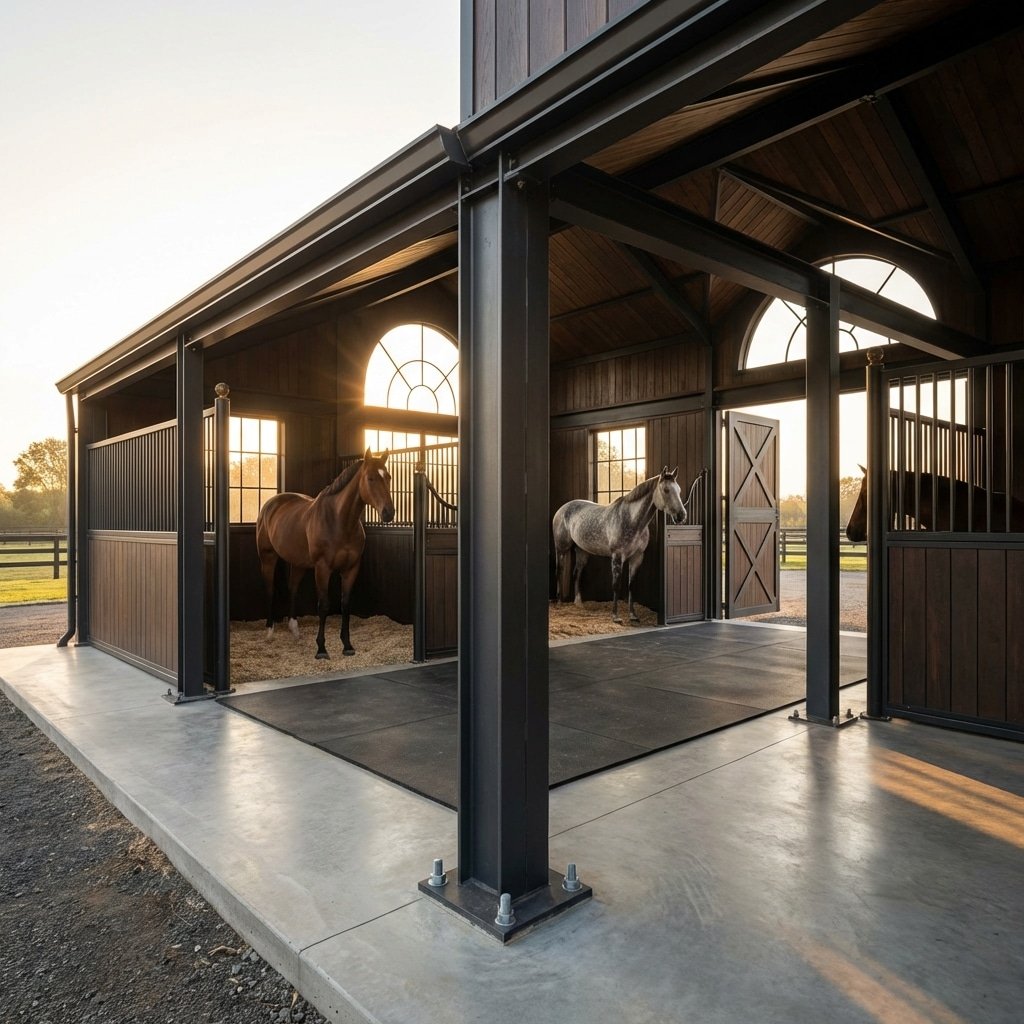
Building Permits represent the single largest variable in farm development timelines, often freezing capital in undefined regulatory queues. When local jurisdictions classify a barn as a permanent real estate improvement, developers face commercial-grade zoning reviews that inflate engineering fees and demand invasive soil testing.
We examine how engineering specifications can reclassify your facility as movable agricultural equipment to bypass this bureaucratic friction. By utilizing surface-mounted 304 Stainless Steel Anchor Bolts and a modular Q345B steel framework, DB Stables align with the legal definition of chattel, eliminating the requirement for deep concrete footings and accelerating project turnover.
The Bureaucratic Nightmare of Pouring Concrete Barns
Building a permanent concrete barn triggers a cascade of regulatory requirements, including mandatory feasibility assessments, engineered blueprints, and strict environmental complian
ce like continuous exterior insulation.
Mandatory Site Plans and Environmental Feasibility
Before you even schedule a cement truck, local jurisdictions often demand a rigorous paper trail that treats a simple barn like a commercial complex. You cannot simply clear a patch of land and start framing. Planning departments require engineered site plans that prove your project complies with every layer of local zoning laws.
- Zoning Verification & Easements: You must validate that the specific agricultural zone allows permanent foundations and document all utility or access easements on the property.
- Environmental Mitigation: If your land is near water or sloped, you face mandatory wetland mitigation reports and erosion control plans.
- Subgrade Validation: Approvals often hinge on inspecting the subgrade preparation and aggregate subbase layers before any concrete is poured.
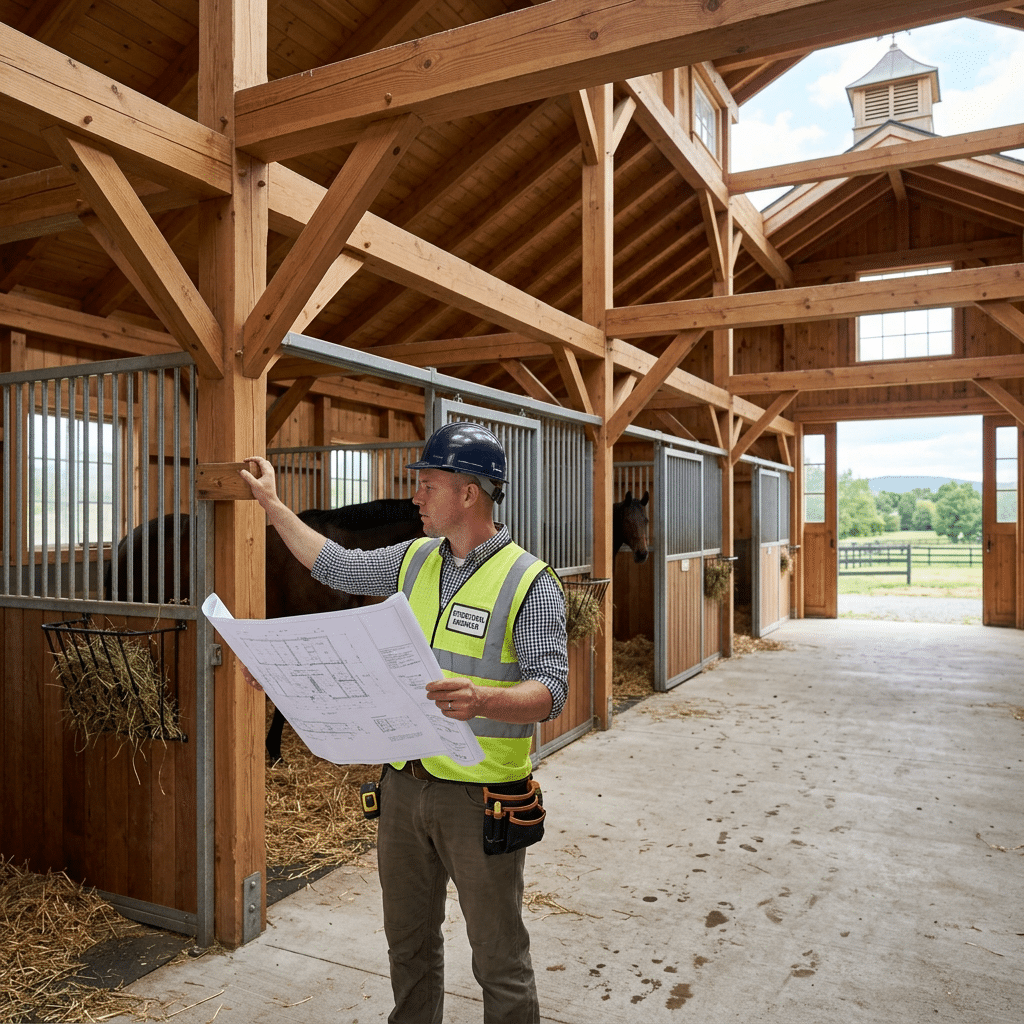
The Burden of Modern Energy Codes and Structural Standards
The physical construction standards for permanent concrete structures have tightened significantly, driving up both material costs and engineering fees. When a structure is classified as permanent rather than agricultural equipment, it loses many exemptions and must meet strict “conditioned space” criteria if you plan to heat any part of it.
- Continuous Exterior Insulation: Recent updates, such as those in Washington State, enforce continuous insulation layers between framing and siding for compliance.
- Concrete Thickness Standards: Code dictates a minimum of 5 inches for livestock areas (to handle manure storage) and 6 inches for heavy equipment zones.
- Engineered Blueprints: Unlike simple storage sheds, these structures require full architectural drawings stamped by a licensed engineer to verify load paths and structural integrity.
Defining “Permanent Structure” vs “Agricultural Equipment”
Resumen ejecutivo: Permanent structures require concrete footings and permits. DB Stables use surface-mounted bolts and flat-pack designs to classify as movable agricultural equipment, often bypassing complex zoning codes.
Zoning boards and tax assessors look at one specific variable when classifying your facility: immovability. A “permanent structure” is legally defined by its attachment to the ground—specifically, the use of embedded concrete footings intended for placement exceeding 180 days. Once you pour concrete around a post, that asset becomes real estate. In contrast, “agricultural equipment” is defined as movable machinery or tools essential for farming operations. This distinction is the difference between a simple installation and a six-month permitting battle.
The Regulatory Threshold: Foundations and Intended Permanence
Most jurisdictions operate on a “permanence test.” If the structure relies on fixed concrete footings or piers sunk below the frost line, it triggers standard building codes. These codes assume the building will remain indefinitely, necessitating engineered snow load ratings, seismic compliance, and wind shear calculations identical to a residential home.
Agricultural equipment operates under a different framework. Because it is considered a tool for farming rather than a habitation, it often falls under “Use Classification” exemptions. For example, many rural codes exempt detached structures under a specific square footage (often 200 sq. ft.) or classify larger modular systems as “chattel” (personal property) rather than “improvements to real property.” This classification hinges entirely on the ability to disassemble and relocate the asset without destroying it or the land beneath it.
Design Compliance: Why DB Modular Stables Are Classified as Equipment
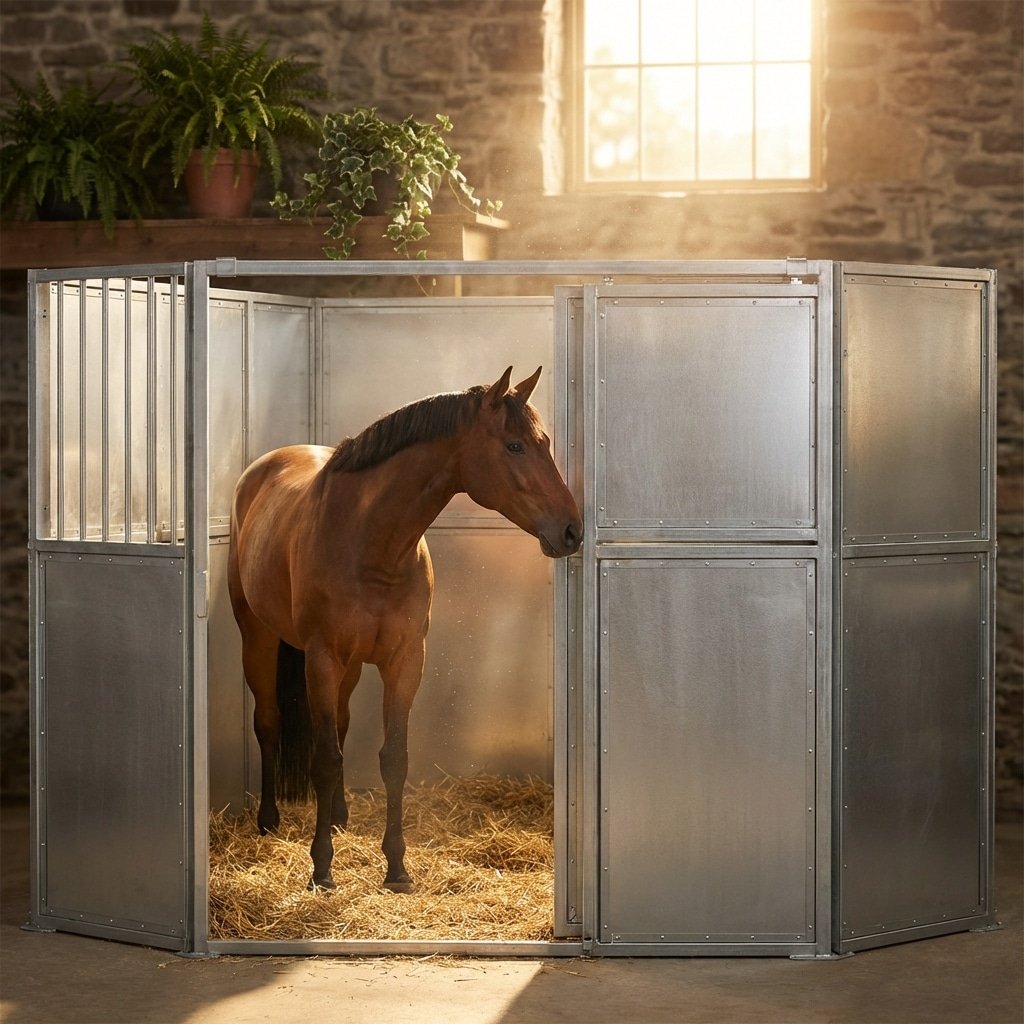
We engineer DB Stables specifically to meet the legal definition of movable equipment. By avoiding permanent foundation requirements, our B2B partners and distributors can offer solutions that bypass the heavy regulatory burden of traditional pole barn construction.
- Surface-Mounted Anchorage: We do not set posts in concrete. Our system uses 304 Stainless Steel Anchor Bolts to secure flanged posts to an existing slab. If you unbolt the system, the slab remains a slab, and the stable remains a stable. This lack of permanent adhesion is the primary legal argument for “temporary” status.
- The Portability Standard: Courts often look at how an asset is delivered to determine its permanence. DB Stables ship via our Steel Pallet Flat-Pack system. This proves the structure is designed for disassembly and relocation, fitting the definition of movable chattel rather than fixed real estate.
- Correct Regulatory Coding: We file our products under HS Code 7308.90 (Structures of Iron/Steel). This distinguishes our modular fronts and partitions from “Prefabricated Buildings.” This coding aligns with “parts and structures” rather than “habitable edifices,” reinforcing the equipment classification in regulatory filings.
Precision-Engineered Stables Built For Any Climate
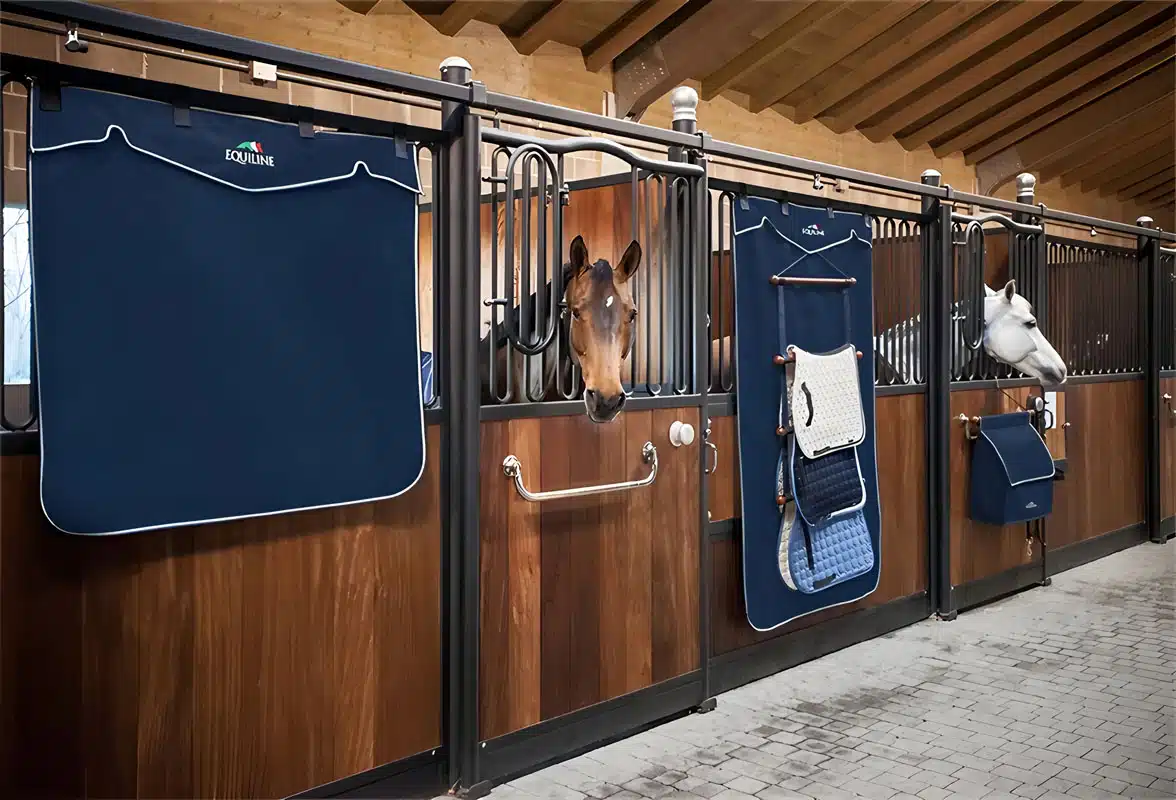
How Bolt-Together Modular Systems Exploit the Exemption
Bolt-together systems often qualify as “temporary agricultural equipment” because they utilize demountable connections and surface anchors, legally defining them as movable chattels rather than permanent real estate improvements.
| Regulatory Criteria | Permanent Structure (Building) | Bolt-Together System (Equipment) |
|---|---|---|
| Foundation Type | Deep poured-in-place footings | Surface-mounted anchors (Slab/Piers) |
| Connection Method | Demountable bolts & mechanical joints | |
| Asset Classification | Real Estate Improvement | Tangible Personal Property (Chattel) |
| Import/Tax Code | Prefabricated Building | HS 7308.90 (Structures of Iron/Steel) |
The Mechanics of Temporary Classification
Zoning codes and tax assessors differentiate between “buildings” and “equipment” based largely on the method of attachment to the ground. A structure becomes real estate when its removal would damage the land or the structure itself. Bolt-together systems exploit this definition by maintaining complete “demountability.”
- Tools vs. Demolition: If a crew can dismantle the structure using simple hand tools (wrenches) without heavy demolition equipment, authorities view it as a temporary assembly.
- Preservation of Site: The removal process must leave the underlying site essentially unchanged. This separates these systems from pole barns that require digging out concrete-encased posts.
- Asset Class Argument: Owners argue the stable is a movable asset, legally similar to a tractor or heavy farm machinery, rather than a taxable property improvement.
DB Stable’s Flat-Pack Design & Surface Anchoring
We engineer our systems to align specifically with the “movable chattel” argument. This starts with our logistics and continues through to the installation method, ensuring the product remains distinct from permanent construction in the eyes of regulators.
- HS Code 7308.90 Strategy: We ship under HS Code 7308.90, defining the product as “Structures of Iron/Steel” (parts) rather than a “Prefabricated Building.” This reinforces the classification of the stable as an assembly of components rather than a building entity.
- Surface-Mount Installation: Our Installation Kit uses 304 Stainless Steel Anchor Bolts that attach directly to an existing slab or concrete piers. This eliminates the need for deep, poured-in-place footings that trigger permanent building permits.
- True Modularity: The steel pallet flat-pack design ensures every panel is independent. You can unbolt the entire structure and relocate it to a new paddock, fulfilling the “portability” requirement often needed for agricultural exemptions.
Providing DB Engineering CADs to the Zoning Board
Zoning boards require proof of structural integrity. DB Stable’s CADs detail Q345B steel, wind-load capabilities, and bolt-together connections to prove compliance and portable classification.
The Role of Structural Schematics in Zoning Reviews
Zoning officials do not accept verbal assurances; they operate strictly on documented risk mitigation. When you submit a permit application, the board needs technical validation that the structure can withstand local environmental stresses, specifically snow loads and high wind shear. Without engineered drawings, your project is often categorized as a high-risk DIY build, triggering excessive scrutiny.
Detailed CAD drawings are your primary tool for classification defense. These documents clarify the method of attachment—specifically the use of stainless steel anchor bolts rather than permanent concrete foundations. This distinction helps zoning officers classify the unit as removable agricultural equipment rather than a permanent building, which often bypasses complex building codes and property tax increases.
Safety validation extends to the internal framework. The schematics visualize internal reinforcement, such as the strict 14-gauge (2.0mm minimum) tubing thickness. This proves to the board that the facility meets the necessary safety standards for housing large animals, distinguishing professional equestrian infrastructure from light-duty storage sheds.
Leveraging DB Stable’s ISO-Certified Design Specifications
To secure approval, your permit application must leverage the specific engineering data provided in DB Stable’s technical package. These specifications prevent local engineers from over-designing the requirements based on generic steel data.
- Material Strength (Q345B): Submit drawings specifying the use of Q345B Low Alloy High Strength Steel (ASTM Grade 50 equivalent). This demonstrates superior impact toughness for winter climates, exceeding the standard A36 steel often assumed by local codes.
- Resistencia a la corrosión (ISO 1461): Include the ISO 1461 Hot-Dip Galvanization data (>85 microns). This proves the structure’s resistance to ground-level corrosion without the need for permanent concrete footings, supporting the “temporary structure” argument.
- Modular Assembly: Highlight the “Flat-Pack” assembly details in the CADs. Visualizing the bolt-together connections confirms the modular nature of the installation, which directly supports the argument for temporary agricultural zoning exemptions.
Preguntas frecuentes
Are modular horse stalls considered permanent structures?
Typically, no. Zoning authorities usually distinguish permanent structures by their foundation type, such as poured concrete with rebar. Because modular stalls are designed for disassembly and often use temporary anchoring methods, they are frequently classified as “temporary agricultural equipment” or “chattel.” This distinction is critical, as temporary structures often bypass the strict building codes and tax assessments applied to permanent real estate.
Do I need a building permit to install a portable horse shelter?
It depends on your local zoning and the structure’s size. Many agricultural zones offer exemptions for structures under a specific square footage (often 200–250 sq. ft.) that lack utility connections and have no permanent foundation. Yet, residential zones generally require permits for any accessory structure. We recommend confirming your property’s “agricultural” designation before installation.
What documentation do I need if my town requires a permit?
If your local planning office requires a permit, you will typically need to submit a site plan, proof of insurance, and structural specifications. To support this process, we provide detailed engineering CAD drawings of our Hot-Dip Galvanized systems. These documents verify the structural integrity and wind-load resistance of the steel framework, helping you satisfy local safety requirements.
Reflexiones finales
Committing to a permanent concrete build locks your capital into months of zoning battles and permanent tax assessments. DB Stable’s modular system delivers the legal flexibility of agricultural equipment without sacrificing structural integrity. Our Q345B steel framework and ISO 1461 hot-dip galvanization ensure your asset remains liquid, portable, and corrosion-resistant for decades.
Secure your project’s approval by submitting our detailed engineering CADs and HS Code 7308.90 specifications directly to your local planning board. We equip our B2B partners with the technical documentation needed to validate the “movable chattel” classification. Contact our engineering team today to request your project-specific data package and finalize your dealer pricing.

 Spanish
  English
  French
  Arabic
  German
0 comentarios