


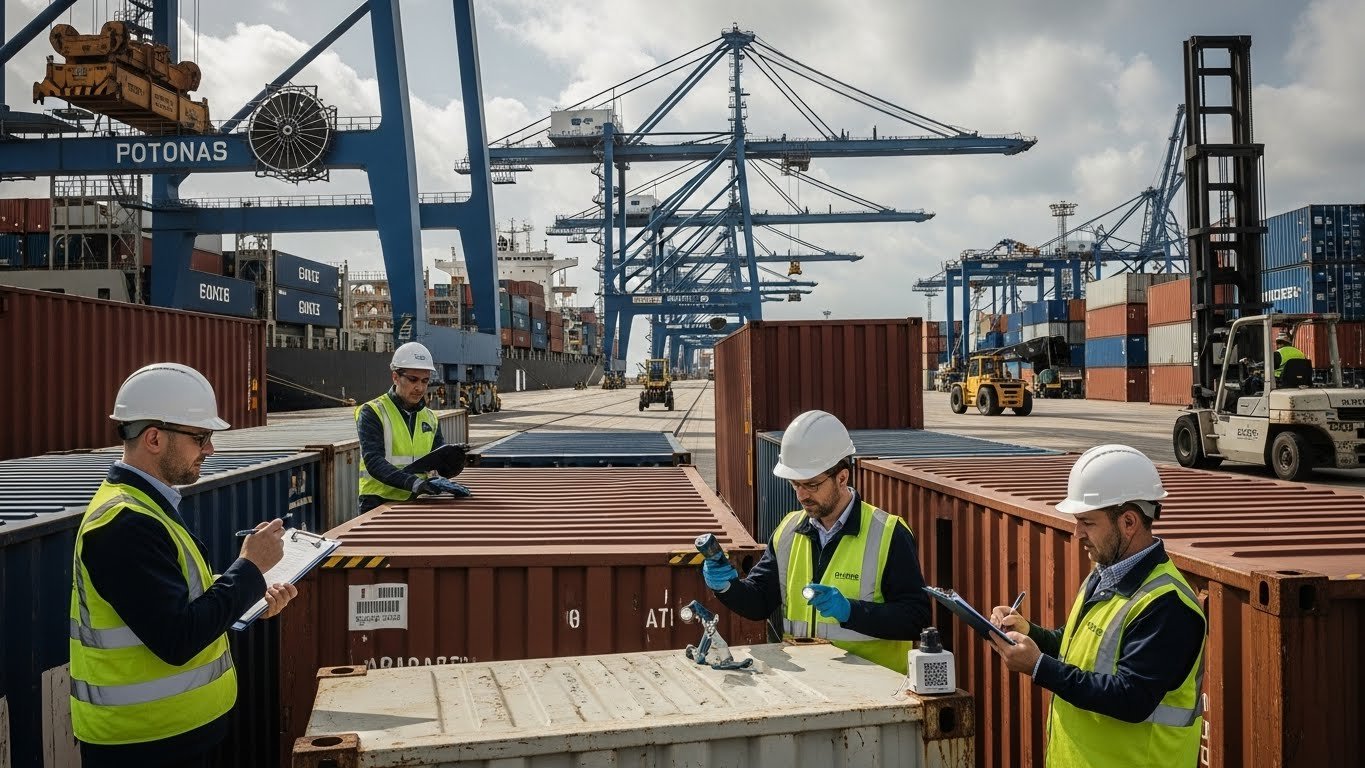
Shipping large, pre-assembled structures is inefficient. You pay for a container’s volume, not just its weight, which is why a single welded stall often occupies an entire 40-foot shipment. When you need to scale up an order, this approach multiplies your freight costs and complicates delivery logistics. We developed a flat-pack system to solve this by focusing completely on loading optimization.
Este guide details our flat-pack logistics, from the principles of chargeable weight to the on-site requirements for unloading. We’ll explain how we fit up to 8 units in a container, why a 12-foot stall can ship in a container that is only 7.8 feet wide, and the packing methods used to prevent damage during ocean transit.
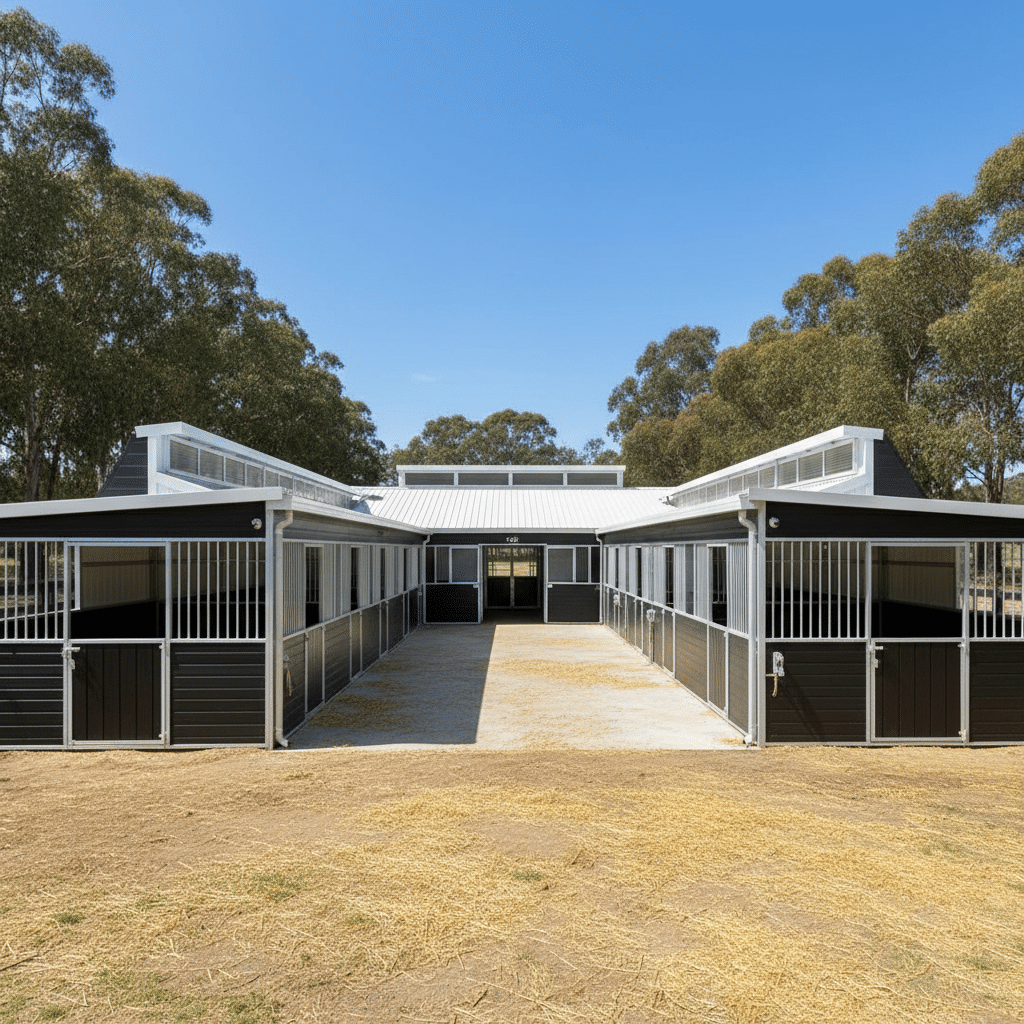
Why Is “Volume” More Expensive Than “Weight” in Shipping?
In shipping, space is a finite and valuable resource. Carriers use “volumetric weight” to convert a package’s dimensions into a billable weight. They then charge for whichever is higher—the package’s actual weight or its volumetric weight—ensuring they are compensated for the space it occupies, which is why volume can cost more.
The Principle of Chargeable Weight
Carriers determine shipping costs using a metric called “chargeable weight.” This is simply the greater value between a shipment’s actual physical weight (gross weight) and its calculated volumetric weight. This system exists because the space inside a truck, airplane, or shipping container is a fixed, limited resource. An aircraft can run out of physical space long before it hits its maximum weight limit.
This pricing model ensures carriers get paid fairly for shipments that are large but light. A shipment of foam packaging, for example, might fill an entire pallet space but weigh very little. By billing for the space it consumes, the carrier avoids losing revenue on low-density cargo that prevents them from loading heavier, more compact goods.
How Volumetric Weight is Calculated
The formula for volumetric weight is straightforward: a package’s dimensions (Length × Width × Height) are divided by a specific number known as a dimensional factor. This factor varies by shipping mode and carrier, effectively converting volume into a weight equivalent.
Different sectors of the logistics industry use distinct factors. For international air freight, the IATA standard uses a dimensional factor of 6000, which means one cubic meter of space is billed as a minimum of 167 kg. Express parcel carriers like DHL often use a factor of 5000 for packages measured in centimeters. In road freight, a carrier might apply a minimum density rule. For instance, a pallet occupying 100 cubic feet might be billed as 1,000 pounds if the carrier’s minimum density is 10 lb/ft³, even if the pallet only weighs 500 pounds.
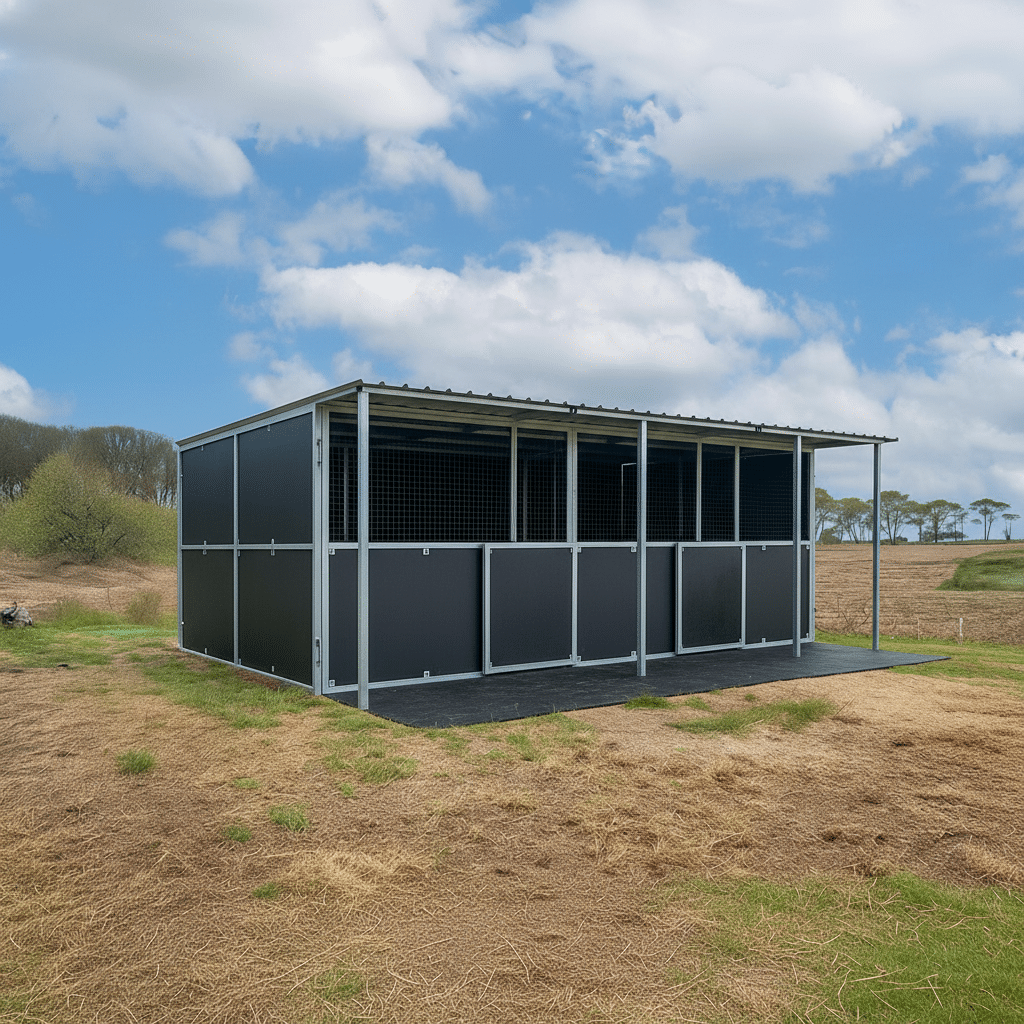
How Does Flat-Pack Design Differ from Welded Panel Shipping?
Flat-pack designs maximize shipping efficiency by fitting 6–8 units per container, but require on-site assembly. Welded panel units ship fully assembled and ready for immediate use, but only one fits per shipment, making them less cost-effective for large orders.
| Especificación | Flat-Pack Design | Welded Panel Unit |
|---|---|---|
| Shipping Density (40′ Container) | 6–8 units | 1 unit |
| On-Site Assembly | Required (walls & columns) | None (ready on arrival) |
| Wall Insulation | 100mm Glass Wool | 40mm EPS Foam |
| Thermal Conductivity (K-Value) | 0.039 W/mK | 0.15 W/mK |
| Permitted Floor Load | 2.50 kN/m² | 200 kg/m² (approx. 1.96 kN/m²) |
| Minimum Design Life | 20 años | No especificado |
Shipping Density vs. On-Site Assembly
The primary trade-off between the two methods is logistical efficiency versus on-site labor. Flat-pack systems dramatically increase shipping density, allowing 6 to 8 units to fit inside a single 40-foot container. This efficiency comes at the cost of on-site work, as a crew must use a crane or forklift to install wall panels and columns onto the pre-welded roof and floor frames. In contrast, welded panel units are shipped fully constructed. Only one unit fits per shipment, but they arrive ready for immediate deployment without any assembly required.
Structural and Thermal Performance Comparison
Flat-pack units are often engineered for higher performance specifications. They typically feature superior thermal insulation with 100mm glass wool (K = 0.039 W/mK), a significant improvement over the 40mm EPS foam (K = 0.15 W/mK) common in standard welded units. Structurally, the floor in a flat-pack design is rated for a permitted load of 2.50 kN/m², exceeding the 200 kg/m² (approx. 1.96 kN/m²) capacity of a typical welded container floor. The flat-pack marcos de acero are built with 3mm–3.5mm thick Q235A steel, providing a minimum design life of 20 years and ensuring robust, long-term integrity.
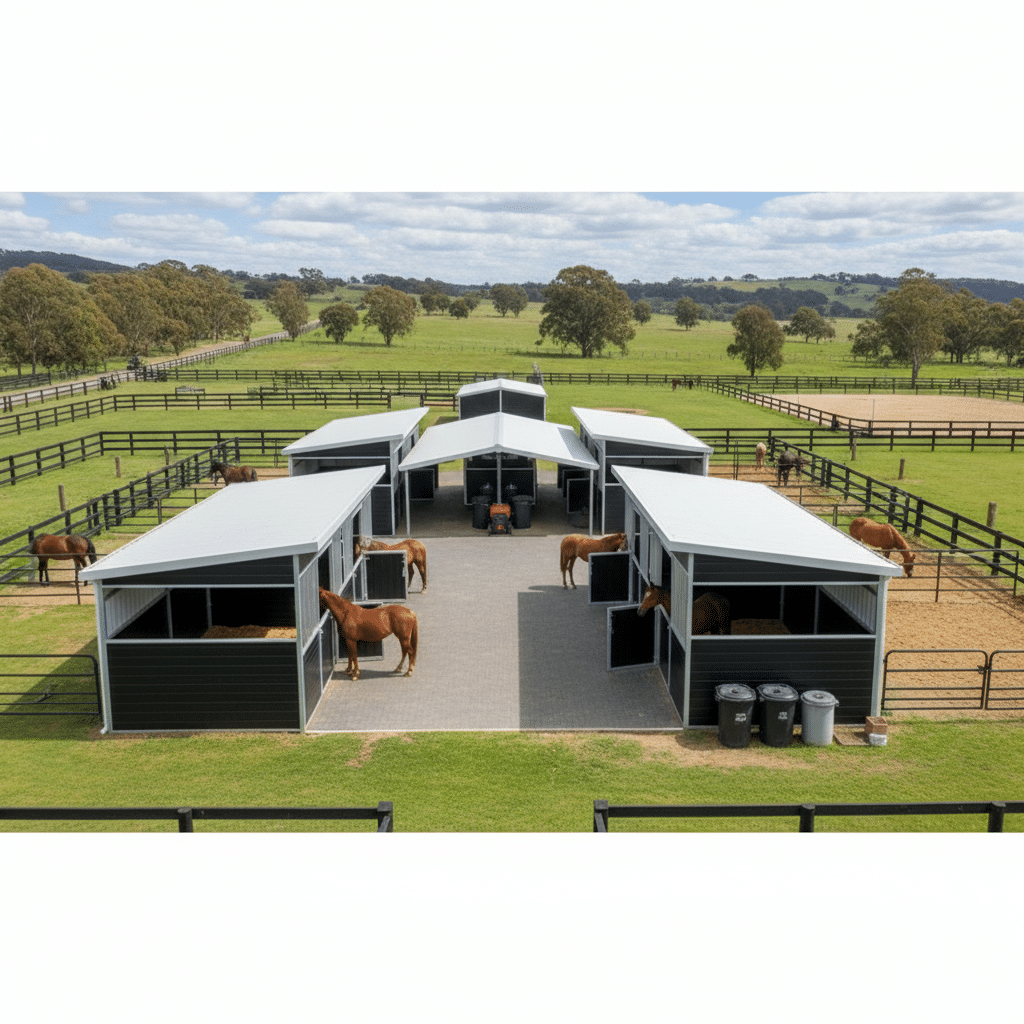
Can You Unload a 40HQ Container Without a Loading Dock?
Yes, a 40HQ container can be unloaded without a dock using two main strategies. The first involves keeping the container on its chassis and using a portable yard ramp or telescopic conveyor to bridge the 1.2-1.4m height gap. The second involves placing the container on the ground using equipment like side-loaders or lifting jacks for direct access.
Two Primary Methods: Bridging vs. Grounding
Unloading a container without a dock involves one of two operational strategies. The first method is to keep the container on its chassis and use equipment to bridge the typical 1.2–1.4 m height difference from the ground. The alternative is to lift the container off the chassis and place it directly on the ground. This second approach allows for direct, grade-level unloading with smaller equipment like pallet jacks, eliminating the need for a ramp.
Equipment and Technical Requirements
Each method requires specific equipment. To bridge the height gap, a portable yard ramp allows a forklift to drive directly into the container. These ramps must support the forklift and its payload, with capacities often ranging from 10,000 to 30,000 lbs. For loose-loaded cargo, a telescopic conveyor can extend up to 12.19 m to reach the full depth of the container, moving items at speeds of 10–40 m/min.
To place the container on the ground, you need heavy-duty equipment such as container lifting jacks, side-loaders, or large forklifts. This machinery must be capable of handling the container’s tare weight of 3,700–3,900 kg in addition to the weight of its cargo. Once grounded, cargo can be removed safely at ground level.
Horse Stables Engineered for Any Climate
How Do We Prevent Scratches During Ocean Transit?
Preventing scratches during ocean transit relies on eliminating cargo movement. This is achieved by following international packing standards like the CTU Code and applying practical methods like using corner protectors, shrink-wrap, and filling empty spaces with dunnage to ensure items cannot shift or rub against each other.
Governing Standards for Cargo Securement
International standards primarily focus on preventing cargo movement, which is the root cause of surface scratches. The main guideline is the CTU Code (Code of Practice for Packing of Cargo Transport Units), which details the correct methods for blocking, bracing, and securing goods inside a container to prevent any significant motion. At the regulatory level, SOLAS Chapter VI holds shippers legally responsible for stowing cargo correctly to avoid contact damage during the voyage. These rules provide a clear framework for ensuring cargo remains static.
Container security also plays a critical role. ISO standards, including ISO 3874:2017 and ISO 1161, dictate how containers are secured to the ship. By standardizing corner fittings and lashing systems, these regulations minimize the forces transferred from the vessel to the cargo, which reduces the potential for internal shifting and abrasion.
Practical In-Container Protection Methods
Several physical techniques directly protect product surfaces during loading and transit. Using shrink-wrap and strapping to bundle items tightly prevents them from rubbing against one another. Corner protectors are placed on pallet edges and other contact points to shield them from strap abrasion. To create a solid, unmovable block of cargo, all voids and empty spaces are filled with dunnage or inflatable air bags, making it impossible for items to shift and scrape against container walls.
Before any cargo is loaded, it is standard practice to inspect the container’s interior. The floor and walls are checked for any protrusions, rust flakes, or other damage that could scratch surfaces. This simple step ensures the container itself does not pose a risk to the goods.
What Is the Maximum Weight Limit for US vs. EU Roads?
The standard federal maximum weight for commercial trucks on US Interstates is 80,000 lbs (about 36.3 tonnes). In the EU, the standard limit is higher, typically 40 to 44 tonnes (about 88,000 to 97,000 lbs), depending on the truck’s axle configuration. This difference is critical for planning international container shipments.
United States: The 80,000 lb Federal Standard
In the United States, federal law establishes a clear baseline for freight moving on the Interstate Highway System. The Gross Vehicle Weight (GVW) for a standard commercial truck cannot exceed 80,000 pounds (approximately 36.3 tonnes). These rules, found in 23 U.S.C. §127, also manage weight distribution to protect infrastructure. A single axle is limited to 20,000 pounds, and a tandem axle group is capped at 34,000 pounds. While states can issue special permits for heavier loads, the 80,000-pound limit is the baseline for planning most nationwide freight.
European Union: Higher Limits Based on Axle Configuration
The European Union generally permits higher truck weights, with rules harmonized across member states under Council Directive 96/53/EC. A standard five-axle articulated truck is typically limited to 40 tonnes (about 88,000 pounds) for international traffic. For intermodal transport, such as moving ocean containers, combinations with six axles are often allowed up to 44 tonnes (about 97,000 pounds). This difference creates a key logistical challenge. A container loaded to the 44-tonne EU limit would be significantly overweight for US roads and would need to be adjusted before it could begin transit.

How Many 12×12 Stalls Fit in a 20ft vs. 40ft Container?
A 20ft container fits the components for one 12×12 stall, and a 40ft container fits two. While the floor area supports this ratio, a stall’s 12-foot span is wider than the container’s ~7.8-foot internal width, which means components must be shipped flat-packed.
| Especificación | 20ft Container | 40ft Container |
|---|---|---|
| Internal Floor Area | ~150 ft² | ~305 ft² |
| 12×12 Stall Kit Capacity | 1 Kit | 2 Kits |
| Internal Width Constraint | ~7.8 feet | ~7.8 feet |
Capacity by Floor Area: 1 Stall vs. 2 Stalls
The loading capacity of a shipping container can be estimated by its floor area. A standard 20ft container has about 150 square feet of floor space, which is just enough to accommodate the 144-square-foot footprint of one 12×12 stall kit. A 40ft container provides around 305 square feet, offering sufficient room for the components of two 12×12 stalls.
The Width Limitation: Why Flat-Packing Is Essential
Although the floor area calculation works, a critical physical constraint prevents shipping assembled stalls. Both 20ft and 40ft containers share a standard internal width of approximately 7.8 feet (93 inches), a limit set by global ISO 668 standards. A 12-foot stall panel, measuring 144 inches, is far too wide to fit. For this reason, all stall components must be shipped disassembled in a flat-packed kit to fit within the container’s dimensions.
Do You Need a Forklift with 8-Foot Forks?
No, most operations do not need 8-foot forks. Standard 42-48 inch forks are sufficient for over 99% of pallet configurations. 8-foot forks are a specialized tool for high-capacity forklifts (rated 15,000+ lbs) handling exceptionally deep or heavy loads.
Why Standard Forks Are Sufficient for Most Loads
The majority of warehouse forklifts are equipped with 42-inch or 48-inch forks. This standard length is engineered to handle almost all pallet configurations found in typical logistics and shipping environments. These forks are designed for Class II and Class III forklifts, the most common machines available at delivery sites, and provide more than enough capacity to unload crated materials safely and efficiently.
Technical Requirements for 8-Foot Forks
Using 8-foot (96-inch) forks requires a specific and powerful equipment setup. These forks are only compatible with high-capacity industrial forklifts rated for 15,000 pounds or more. Such a setup also demands a Class IV carriage system to manage the extreme weight and leverage exerted by long forks. This equipment is intended for specialized applications, like lifting exceptionally deep loads or moving heavy construction materials, not for unloading standard freight from a container.
What Happens If the Container Is Flagged for X-Ray?
If a container is flagged, it first undergoes a rapid, high-energy X-ray scan while still on its truck. If inspectors see anomalies on the digital images, the container is moved to a secondary area where it is opened, unloaded, and manually inspected, causing significant shipping delays.
The Initial Drive-Through Scan
A truck carrying a flagged container passes through a large gantry system. This machine uses high-energy X-rays, often up to 9 MeV, to penetrate even densely packed cargo. Inspectors analyze dual-view images, both vertical and horizontal, on a screen to spot anomalies without opening the container. The entire process is built for high throughput, allowing facilities to scan about 20 containers per hour.
Secondary Inspection and Manual Unloading
If the initial scan reveals suspicious content—such as unexpected densities, hidden compartments, or voids—the container is sent to a secondary inspection area. Here, customs officials open the container and perform a ‘full strip-out,’ where all cargo is physically unloaded for a manual check. This intensive second stage creates significant delays and introduces new costs for the labor needed to unload and reload the freight.
Reflexiones finales
Shipping large structures like horse stalls comes down to mastering logistics, and the most critical factor is space. The flat-pack method works because it treats a shipping container not just as a box, but as a limited resource to be maximized. By breaking down stalls into compact components, we can load a container based on its maximum weight capacity instead of running out of room first. This approach makes large orders possible by turning a logistical bottleneck into a simple, repeatable process.
Understanding these details, from volumetric weight to road regulations, changes how you plan a project. It’s not just about getting a product from one point to another. It’s about ensuring every step is efficient, from the initial packing plan to the final assembly on-site. When you manage the entire supply chain with this level of detail, you reduce unexpected costs and delays, making ambitious projects much more predictable and affordable.

Preguntas frecuentes
How many horse stalls fit in a 40ft container?
A standard 40ft container can typically fit 3 to 4 full-size horse stalls. The final number depends on the specific stall system and any required aisle space, as a 40ft container provides about 300 ft² of internal floor area.
How do you unload a shipping container without a loading dock?
To unload a container without a dock, you can use a portable yard ramp to create a bridge for a forklift. Another option is to use a crane or reach stacker to place the container on the ground for direct unloading.
What size forklift is needed for stable pallets?
For a standard 48″ x 40″ pallet, a counterbalance forklift with a 3,500–5,000 lbs capacity is generally sufficient. Stable operation also requires an aisle width of at least 11–14 feet and forks that support 75% or more of the pallet’s depth.
How much weight can a 40HQ container hold?
A 40-foot high cube (40HQ) container has a maximum payload capacity of around 26 to 28.6 metric tons, which is approximately 63,000 pounds.
How can I track my container from China?
You can track a container using a GPS tracker with cellular connectivity for real-time location updates. During ocean transit where GPS signals are unavailable, tracking relies on carrier data feeds or satellite systems to maintain visibility.
Can I ship other items in the same container as my horse stalls?
Yes, you can combine other items with stalls in the same container. You just need to ensure the total weight does not exceed the container’s payload limit and that all cargo is properly secured to prevent shifting during transit.


 Spanish
  English
  French
  Arabic
  German
0 comentarios