


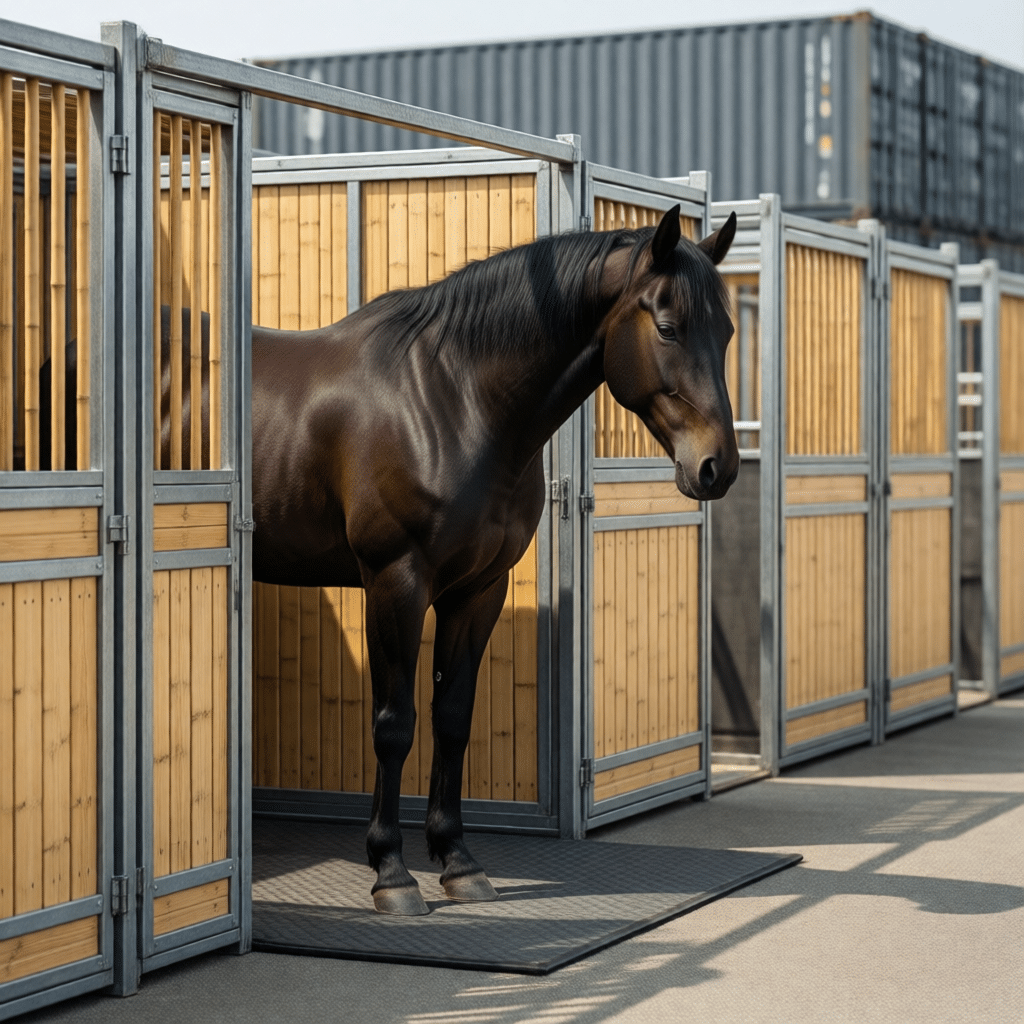
Efficient Touring Show Logistics optimization determines the operating margin of international equestrian circuits. Relying on traditional welded frames wastes over 60% of the freight budget by essentially shipping air. A standard 40HQ container caps out at just 12 assembled units, turning essential infrastructure transport into a financial liability for large-scale productions like the FEI World Cup.
This report analyzes the DB Stable flat-pack system, engineered to load 30 to 45 sets per container unlike standard options. We evaluate the Q235B structural steel framework and ISO 1461 hot-dip galvanization standards that ensure durability through repeated assembly cycles. This modular approach allows organizers to drastically reduce freight costs while maintaining strict safety compliance.
The Rise of ESG (Environmental, Social, Governance) in Construction
By 2026, ESG has shifted from a corporate buzzword to a strategic necessity. For stable owners, this means prioritizing durable, low-maintenance materials like hot-dip galvanized steel and renewable bamboo to minimize lifecycle waste.
The construction sector is responsible for approximately 34% of global CO2 emissions, a statistic that is forcing regulators to impose stricter carbon budgets on new projects. It is no longer enough to simply build; developers must now account for the environmental cost of their materials from extraction to demolition.
Investors and facility owners are shifting capital toward designs that demonstrate lifecycle sustainability. The old model of “build cheap, replace often” is becoming a financial liability. A facility requiring major renovations every decade due to rot or rust generates significantly more carbon waste than one built right the first time. The industry is moving toward circular economy principles, prioritizing materials that offer longevity and recyclability over disposable, short-term solutions.
Sustainable Specs: Bamboo Infill and ISO 1461 Galvanization
Translating global ESG goals into a physical barn requires looking at the specific technical specifications of your materials. We focus on three core areas to align with modern environmental standards:
- Renewable Bamboo: We utilize High Density Strand Woven Bamboo with a Janka Hardness exceeding 3000 lbf. Unlike slow-growing hardwoods that take decades to mature, bamboo regenerates in 3–5 years, acting as a rapid carbon sink while providing superior impact resistance.
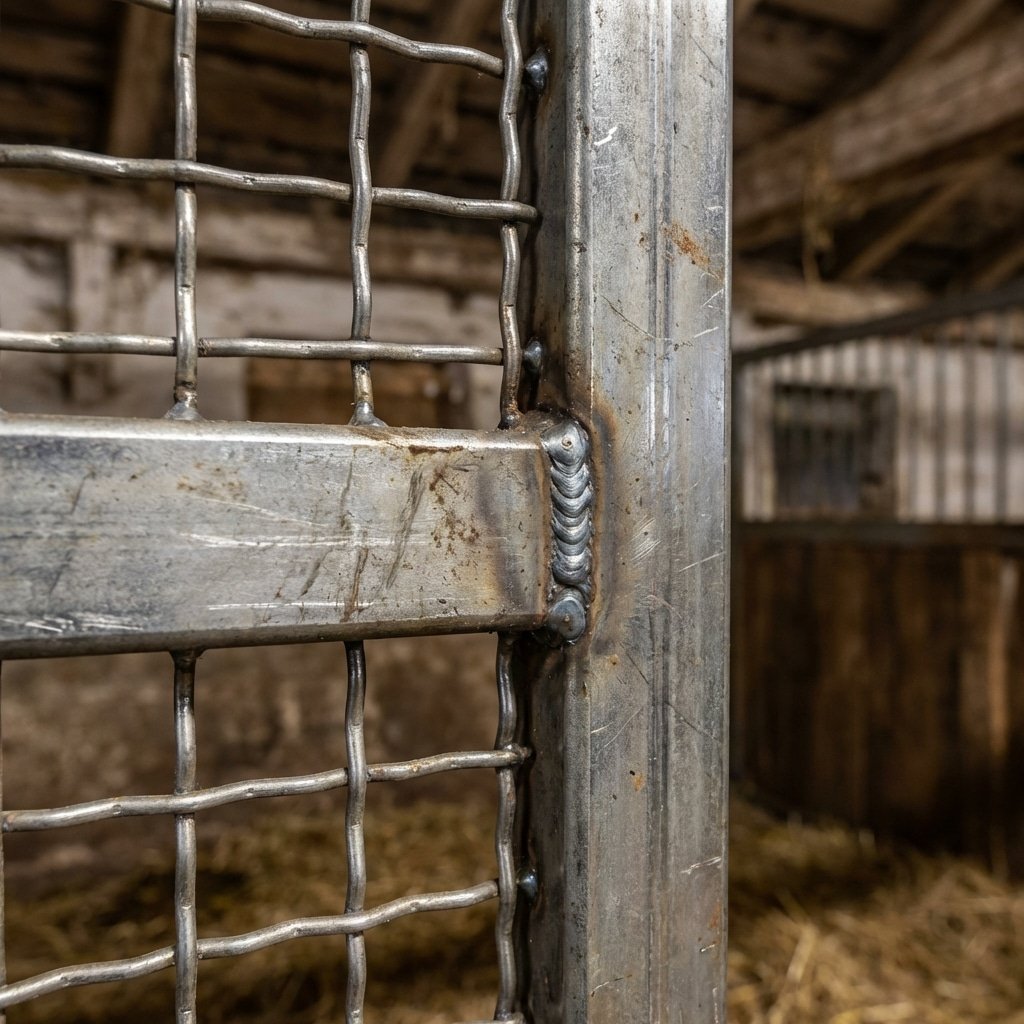
- Extended Lifecycle via ISO 1461: Steel sustainability depends entirely on its lifespan. We strictly adhere to BS EN ISO 1461 standards, applying Hot-Dip Galvanization with a coating thickness exceeding 85 microns. This prevents rust for decades, eliminating the carbon-heavy need for frequent structural replacements.
- Chemical Reduction: Traditional wood stables require regular applications of paints, varnishes, and creosote to fight rot. Our UV-stabilized HDPE and rot-resistant bamboo options eliminate this maintenance loop, preventing toxic chemical runoff into the surrounding soil.
Preguntas frecuentes
How to build an ESG compliant equestrian center?
Building an ESG-compliant facility requires a structured approach across three pillars. Environmentally, you must prioritize renewable energy (solar) and water independence through rainwater harvesting. Socially, the focus shifts to employee safety, comprehensive training, and animal welfare protocols. Governance involves ethical business practices and transparency. The most effective method is to engage an ESG consultant during the planning phase to set measurable metrics for energy use and waste reduction before ground is broken.
Is bamboo a sustainable building material?
Yes. Bamboo is superior to traditional timber for sustainability due to its rapid regeneration cycle—maturing in 3 to 7 years versus 40+ years for hardwoods. It possesses a negative carbon footprint, absorbing significantly more CO2 than standing trees. Structurally, high-density bamboo (like the type we use with Janka > 3000 lbf) is stronger than steel by weight and requires no chemical pesticides to grow, minimizing environmental input.
Environmental impact of steel vs wood barns?
There is a trade-off between embodied carbon and lifecycle durability. Wood framing generally produces lower initial carbon emissions during manufacturing (approx. 84% less than steel). However, steel (specifically Q235B) is 100% recyclable and can be repurposed indefinitely without performance loss. For permanent infrastructure, steel’s durability often offsets its higher initial carbon cost by eliminating the need for replacement over a 50+ year lifespan, whereas wood often requires deforestation and eventually rots.
Green certifications for horse stables?
Standard LEED certification is often ill-suited for agricultural buildings. Instead, stable owners should look toward the CalGreen Code (mandatory in California) or specific sustainable agriculture recognitions. These standards focus on practical metrics relevant to barns, such as water conservation, recycled material usage, and construction waste reduction, rather than the office-centric criteria found in general commercial certifications.
Eco-friendly horse barn manufacturers?
Several manufacturers are leading the shift toward sustainability through modular and prefab construction, which significantly reduces on-site waste. Companies like MD Barnmaster and Coffman Barns utilize modular designs that allow for material efficiency. Others, like DC Structures, focus on mass timber. The key trait among eco-friendly manufacturers is the use of recyclable steel components and standardized production processes (like our own flat-pack systems) that lower logistics carbon footprints compared to traditional welding methods.
Moving Away from Old-Growth Timber (Oak/Pine)
Equestrian projects are ditching rot-prone Pine for High-Density Bamboo and HDPE. Engineered bamboo delivers three times the hardness of Oak with a sustainable 3-5 year growth cycle.
The Maintenance Burden of Traditional Softwood
For decades, Oak and Pine were the default choices for stable infills, but they are failing modern facility managers. Softwood options like Pine are inherently porous. They absorb moisture, urine, and cleaning agents, leading to rapid rot and bacterial growth. This forces maintenance teams to strip and treat the wood annually, a recurring operational cost that eats into profitability.
Durability is another major failure point. Softwoods are vulnerable to “cribbing,” where horses chew on the ledges and surfaces. Once the structural integrity is compromised by chewing, the wood splinters, creating sharp edges that risk injuring the animal. On the supply side, sourcing quality hardwood is becoming harder. Old-growth Oak takes up to 100 years to mature, making it an unsustainable and inconsistent material for large-scale commercial projects that require uniform aesthetics.
High-Density Bamboo and HDPE Infill Solutions
We moved our production to engineered alternatives to solve the longevity issue. DB Stable specifies materials that withstand the physical abuse of a working stable without requiring constant upkeep. Our focus is on density and impact resistance.
- Strand Woven Bamboo (28mm-38mm): This is not standard garden bamboo. It is compressed under extreme heat to achieve a Janka Hardness rating of > 3000 lbf. It is three times harder than Oak, making it effectively kick-proof and rot-resistant.
- Recycled HDPE (28mm-32mm): High-Density Polyethylene offers a “Zero Maintenance” solution. It is UV stabilized, impervious to moisture, and offers just enough flex to absorb impact without cracking.
- Rapid Regeneration: Unlike Oak’s century-long cycle, our bamboo matures in just 3-5 years. This ensures a consistent, eco-friendly supply chain for large distributors.
Premium Custom Stables Direct From Manufacturer

Top Factories Embracing Sustainable Materials
Global manufacturing leaders like Siemens and Lego are proving that sustainability is a profit center, cutting energy costs by over 20% through digital twins and on-site renewables.
ESG has shifted from a compliance headache to a strategic necessity. Major industrial players are no longer just buying carbon credits; they are re-engineering their entire production lines. The focus is on three tangible metrics: energy independence, zero-waste operations, and digital process optimization. Below are the facilities currently setting the global benchmark for sustainable manufacturing.
| Fabricante | Location | Primary Achievement | Key Technology |
|---|---|---|---|
| Siemens | Chengdu, China | 24% Energy Reduction | Digital Twin s & AI Analytics |
| Lego | Vietnam | Carbon Neutral Operation | Rooftop Solar & Battery Storage |
| Nestlé | Surčin, Serbia | Zero Waste to Landfill | Circular Material Recovery |
| Schneider Electric | Barcelona, Spain | Zero CO₂ Status | Integrated Microgrid |
The “Lighthouse” Standard: Digitalization as a Driver
Siemens Electronics Works in Chengdu and Schneider Electric represent the “World Economic Forum Lighthouses”—facilities that successfully scale Industry 4.0 technologies. Siemens didn’t just install better lightbulbs; they deployed digital twins to simulate production before a single machine runs. This allows them to predict energy spikes and optimize output. The result is a 24% drop in energy consumption per unit and a 48% reduction in waste, all while nearly doubling production volume.
Energy Independence and Infrastructure
Lego is making a massive pivot with its $1 billion investment in Vietnam. This facility aims for carbon neutrality not through offsets, but through direct infrastructure. The site will utilize 12,400 rooftop solar panels backed by a large-scale battery storage solution. This moves the factory off the volatility of the local grid and secures a fixed energy cost for decades. Similarly, IKEA has pushed 408 of its factories and suppliers to switch to 100% renewable electricity, effectively forcing their supply chain to modernize.
Zero Waste and Circular Economics
Nestlé’s Surčin facility and P&G’s Taicang plant prove that “zero waste” is an achievable operational standard. Through strict material separation and circular economy principles, these factories ensure no manufacturing byproduct ends up in a landfill. This requires a shift in procurement—moving toward materials like recyclable steel and packaging that can be reintroduced into the cycle.
- Cost Reduction: Renewable energy integration delivers roughly 20% energy cost savings.
- Market Value: Circular economy models unlock significant global value, projected at $1 trillion.
- Compliance: Proactive ESG adoption protects against rising carbon taxes and stricter EU regulations.
Strand-Woven Bamboo: A High-Yield Carbon Sink
Strand-woven bamboo creates a negative carbon footprint by storing 306 tonnes of carbon per hectare while delivering a density exceeding 1,200 kg/m³, making it harder than oak.
The Carbon Sequestration Mechanism
Bamboo acts as a rapid-response carbon sink due to its unique growth cycle. Unlike traditional timber logging where the entire tree is felled and the root dies, bamboo harvesting leaves the root system (rhizome) intact. This prevents soil disruption and allows the plant to regenerate immediately without the need for replanting. This continuous growth cycle maximizes carbon absorption rates compared to slower-growing hardwoods.
- Carbon Storage Capacity: A one-hectare plantation stores approximately 306 tonnes of carbon over a 60-year cycle.
- Comparative Performance: This significantly outperforms Chinese fir trees, which store roughly 178 tonnes in the same period.
- Net Impact: The material frequently achieves a negative carbon footprint, as the sequestration credits outweigh the emissions generated during harvest and production.
Janka Hardness > 3000 lbf: The Density Advantage
The environmental benefits of bamboo mean little in an equine facility if the material cannot withstand a kick. The strand-woven process involves shredding bamboo into fibers and compressing them under extreme pressure. This creates a board with a density between 1,080 and 1,200 kg/m³, effectively locking carbon into a rigid, impact-resistant structure. We specify this high-density material for our Professional Series to ensure it survives the stable environment.
- Janka Hardness: Rated > 3000 lbf, making the infill 3x harder than Oak and resistant to hoof impact.
- Tensile Strength: Reaches 28,000 kgf/in², which exceeds that of standard mild steel.
- Durability: The high density provides natural resistance to mold, rot, and splintering, offering a viable alternative to concrete.
Q235B Steel: The 100% Recyclable Framework
Q235B structural steel offers 100% recyclability and global ASTM A36 equivalence, ensuring high scrap value and zero material waste for circular logistics models.
The Circular Economy of Low-Carbon Steel
Most construction materials follow a linear lifespan: concrete turns to rubble, and wood degrades or burns. Q235B steel operates differently because it retains 100% of its structural properties during recycling. You can melt it down and re-forge it indefinitely without losing tensile strength or ductility. This capability is critical for sustainable touring logistics where temporary structures are assembled and disassembled frequently.
- Zero Material Degradation: Unlike down-cycled plastics, recycled Q235B returns as prime structural steel ready for heavy-duty load bearing.
- Total Asset Recovery: Touring shows often generate significant waste; steel frameworks allow for complete material recovery after the event lifecycle ends.
- Energy Efficiency: Q235B’s low-carbon composition requires significantly less energy to re-melt compared to high-alloy specialty alternatives.
ASTM A36 Equivalence & Global Reusability
We strictly utilize Q235B steel because it is chemically and structurally equivalent to the global ASTM A36 standard. This universality is a strategic asset for international logistics. It ensures that the steel holds consistent high scrap value in the US, Australia, and Europe at the end of its service life, acting as a recoverable commodity rather than a disposal cost.
- Global Standardization: Matches ASTM A36 yield strength requirements, ensuring compliance and value retention across international borders.
- Integridad estructural: We enforce a minimum 14-gauge (2.0mm+) profile thickness. This ensures the frame withstands repeated assembly and disassembly without warping, extending the reuse cycle significantly beyond industry averages.
- Liquid Asset: The standardized chemical profile allows for immediate liquidation at local scrap rates worldwide without specialized processing or hazardous waste fees.
Preguntas frecuentes
How does the flat-pack system reduce overall shipping costs compared to welded frames?
Shipping fully welded fronts is essentially shipping air. A standard 40HQ container caps out at just 12–15 welded sets due to their bulk. Our flat-pack engineering maximizes density, allowing us to stack 30–45 sets in that same container. This payload efficiency slashes your freight cost per unit by over 60%, protecting your margins before the product even lands.
How are the stables packaged to prevent damage during long-distance trucking?
We strictly prohibit loose-loading panels. Every component is strapped onto custom heavy-duty steel pallets designed to prevent shifting and metal-on-metal abrasion during transit. This ensures the hot-dip galvanized finish survives the ocean crossing and inland trucking intact. We also include a cold galvanizing spray kit with every order to handle any minor scuffs that might happen during your final installation.
What HS Code should we use for customs clearance?
Use Código SA 7308.90 (Structures of Iron/Steel). This classification correctly identifies the product as structural components rather than “Prefabricated Buildings.” Using this code helps you avoid unnecessary regulatory hurdles and often secures lower tariff rates in strict markets like Australia and the USA.
Is it possible to order a smaller trial shipment before committing to a full container?
Yes. While our pricing and logistics work best with full 40HQ distributor orders (30+ sets), we support LCL (Less than Container Load) trial orders of 3–5 stables. This gives you the chance to verify the assembly process, steel quality, and finish durability before scaling up to project-volume shipments.
Do I need special equipment to unload the delivery?
You will need mechanical assistance. Our steel pallets weigh between 250kg and 450kg depending on your infill choice (Bamboo or HDPE). A forklift with extended tines or a tractor with pallet forks is required at the delivery site. These are not loose-stacked items suitable for manual unloading.
Reflexiones finales
Shipping “air” with traditional welded frames is a financial leak that modern touring logistics cannot afford. The DB Stable flat-pack system maximizes container density to 45 sets, slashing freight costs while meeting strict ISO 1461 durability standards. This specific combination of Q235B structural steel and high-density bamboo aligns your operation with global ESG mandates without sacrificing profitability.
Efficiency on paper must hold up in the field. We advise securing a 3-stall trial LCL shipment to validate our assembly speed and hot-dip galvanized finish before your next tour dates are locked. Reach out to our engineering team today to configure a logistics-ready proposal tailored to your specific route.

 Spanish
  English
  French
  Arabic
  German
0 comentarios