


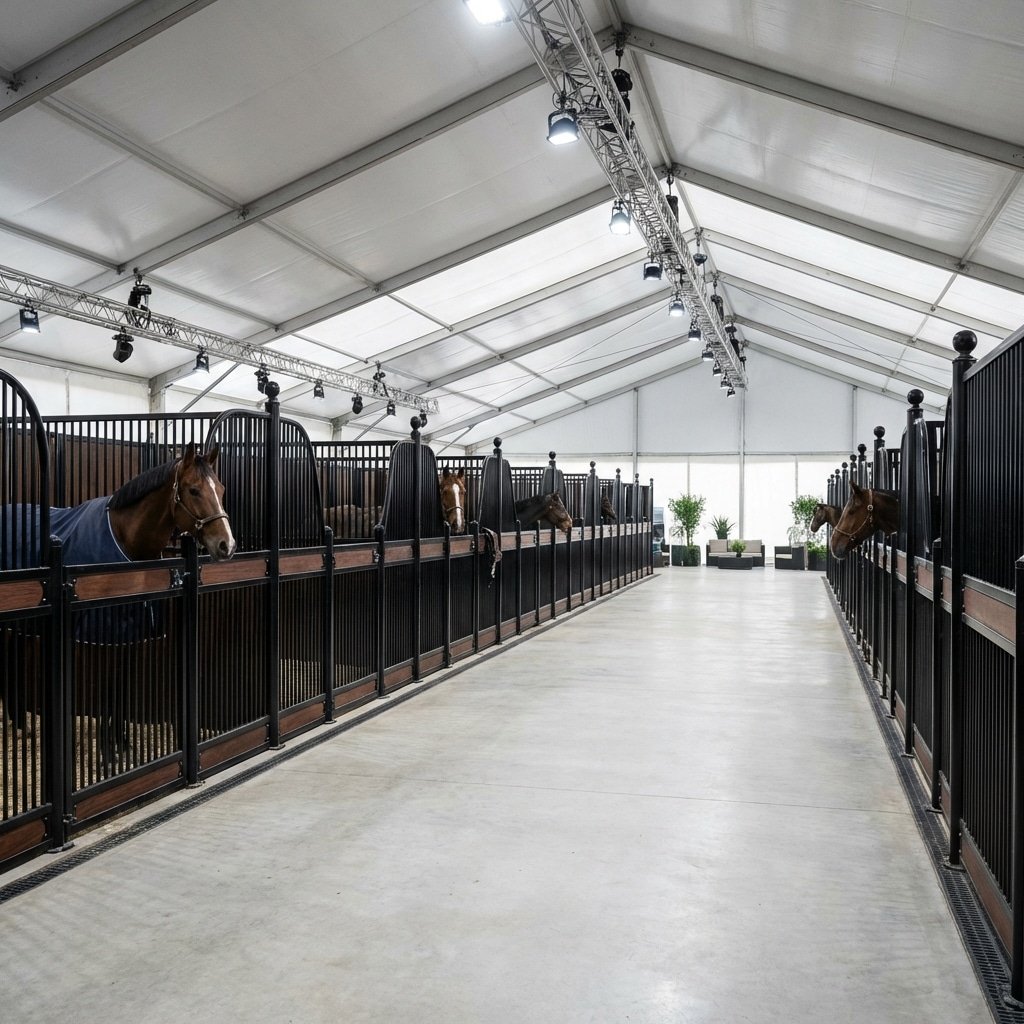
Efficient Tent Integration determines the profitability of clear-span expo projects, where logistics costs often outweigh rental fees. Standard welded stalls waste valuable container space and increase carbon footprints, a critical liability as 2026 ESG mandates enforce strict Scope 3 tracking. Planners relying on outdated infrastructure face compounding freight costs and compliance risks that threaten long-term contract viability.
We benchmark modular stabling systems against Q235B structural steel standards and ISO 1461 hot-dip galvanization protocols. By prioritizing flat-pack logistics that load 45 sets per container, this guide outlines anchoring strategies and aisle configurations that reduce setup time and secure high-volume temporary installations.
The Rise of ESG (Environmental, Social, Governance) in Construction
In 2026, ESG shifts from voluntary guidelines to mandatory compliance. Projects must now track Scope 3 emissions, prioritizing high-durability materials and optimized logistics to meet strict carbon st
andards.
From Voluntary to Mandatory: The 2026 Compliance Shift
The era of using sustainability reports as marketing collateral is over. By 2026, the construction sector faces a hard pivot to compliance-grade disclosure infrastructure. This shift moves beyond simple operational energy metrics; regulators and investors now demand transparency into whole-life carbon measurements. Construction projects that fail to provide audited data on their material impact will face higher capital costs and regulatory penalties.
For developers and facility managers, the new regulatory landscape enforces specific obligations:
- Scope 3 Tracking: Projects are now accountable for upstream supply chain emissions, forcing transparency in logistics and raw material sourcing.
- Investor Standardization: Capital access increasingly depends on adherence to TCFD and SASB frameworks rather than loose narrative reports.
- Whole-Life Carbon: The focus has expanded to include embodied carbon—the emissions generated during the manufacturing and transport of building materials.

Sustainable Lifecycle: Galvanization and Logistics Efficiency
Real sustainability in equestrian facilities relies on durability and transport efficiency. A product that rusts in five years doubles its carbon footprint when replaced. We align DB Stable’s manufacturing specifications directly with these Scope 3 reduction goals to ensure compliance for large-scale projects.
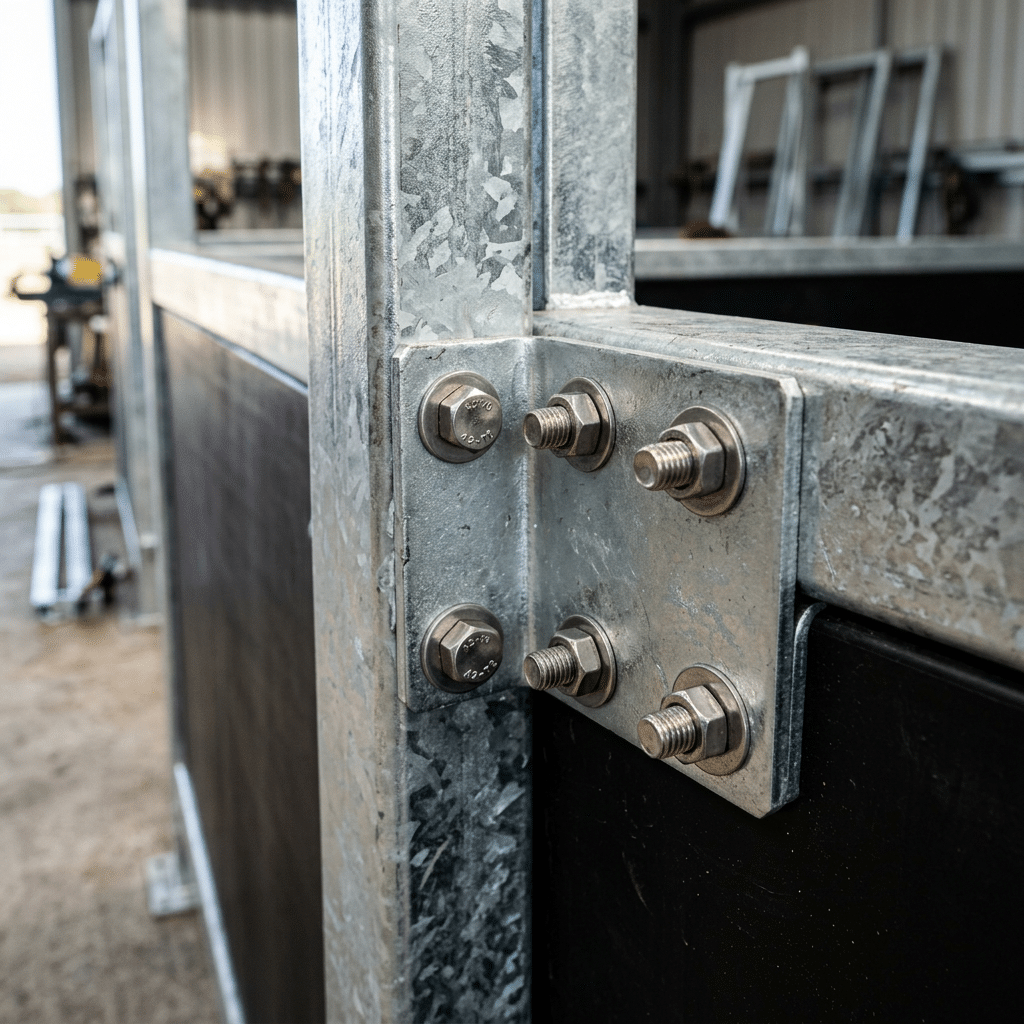
- Extended Lifecycle: We strictly adhere to BS EN ISO 1461 standards for hot-dip galvanization, applying a zinc coating exceeding 85 microns (μm) on structural parts. This prevents rust for decades, aligning with waste reduction mandates.
- Logistics Decarbonization: Our flat-pack steel pallet system allows us to load 30-45 sets per 40HQ container, compared to just 12 sets for traditional welded options. This density reduces freight carbon emissions per unit by over 60%.
- Material Sourcing: We utilize High Density Strand Woven Bamboo (Janka Hardness > 3000 lbf) as a renewable alternative to slow-growing hardwoods. Bamboo regenerates in 3-5 years, offering a sustainable supply chain without sacrificing durability.
- Certified Manufacturing: Production occurs in ISO 9001 and ISO 1461 certified factories, providing the traceable manufacturing standards required for rigorous investor reporting.
Moving Away from Old-Growth Timber (Oak/Pine)
The industry is shifting to High Density Strand Woven Bamboo and UV-stabilized HDPE because they offer superior impact resistance and sustainability without the maintenance headaches of natural timber.
The Ecological and Practical Limits of Traditional Hardwood
Relying on old-growth timber for horse stalls is becoming a liability. While Oak and Pine were the standard for decades, they present significant functional and environmental downsides in modern high-traffic facilities. Harvesting mature hardwoods depletes forests that take 30 to 50 years to regenerate, creating a supply chain bottleneck that drives up costs and conflicts with modern sustainability mandates.
- Maintenance Heavy: Traditional softwood requires frequent application of toxic preservatives to prevent rot and deter cribbing (chewing).
- Inconsistent Density: Natural timber varies in grain structure. A heavy kick to a knot or weak grain line can cause dangerous splintering, risking injury to the horse.
- Regeneration Lag: The long growth cycle of hardwoods makes them a poor choice for large-scale projects seeking LEED or eco-friendly certifications.
High-Density Bamboo and HDPE: The Modern Standard
We engineered our infill options to solve the durability issues inherent in wood. By switching to Strand Woven Bamboo and recycled synthetics, we eliminate the variance found in natural timber. These materials provide consistent structural integrity across every panel, ensuring that safety standards are met regardless of the batch.
- Superior Hardness: Our 28mm-38mm Strand Woven Bamboo boasts a Janka Hardness rating > 3000 lbf. This makes it 3x harder than Oak and effectively kick-proof.
- Rapid Renewability: Bamboo is a grass that matures in 3-5 years. It resists mold and rot naturally, outperforming pine in humid stable environments.
- Zero Maintenance HDPE: For maximum durability, we offer 28mm-32mm UV Stabilized HDPE. This material absorbs impact shock to protect the horse’s legs and requires absolutely no painting or varnishing.
Premium Galvanized Stables: Built To Last
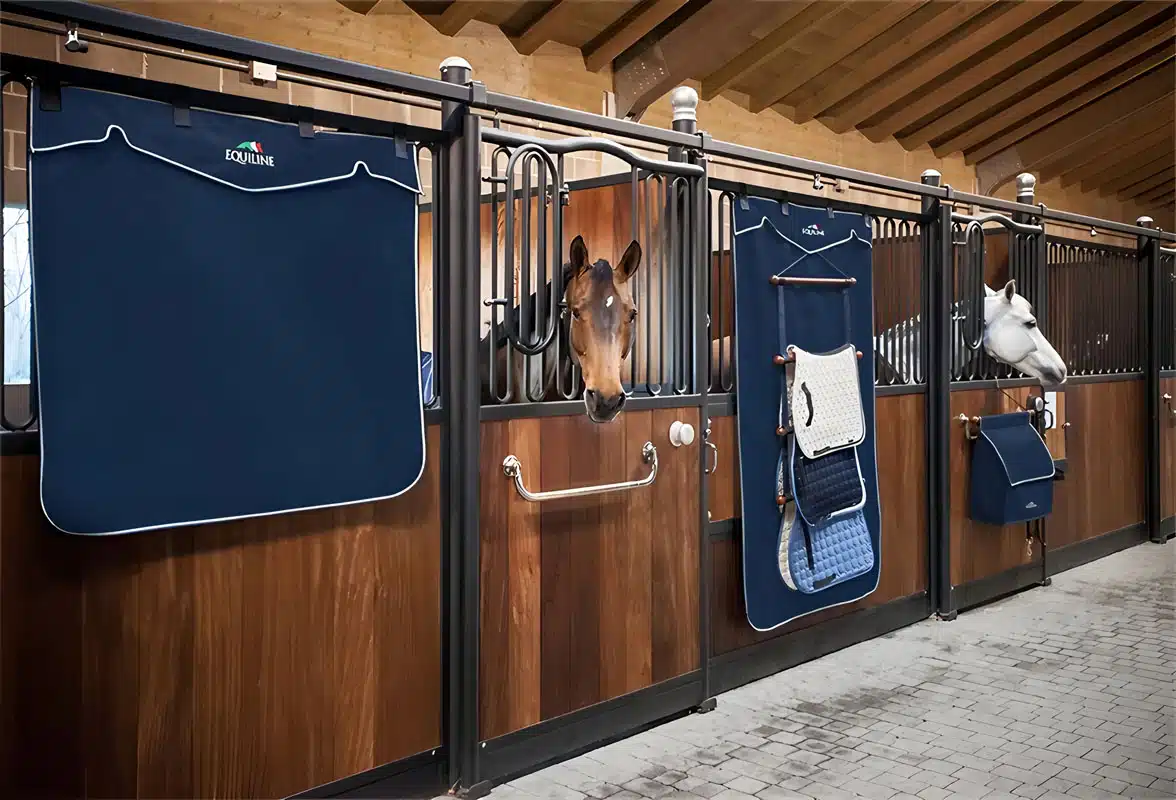
Top Factories Embracing Sustainable Materials
Global leaders like Tesla and Interface are normalizing closed-loop manufacturing. DB Stable aligns with this by using renewable High-Density Bamboo and fully recyclable HDPE to extend product lifecycles.
| Sustainability Vector | Traditional Manufacturing | DB Stable / Market Leaders |
|---|---|---|
| Timber Sourcing | Old-Growth Hardwoods (Oak/Pine) | High-Density Strand Woven Bamboo |
| Synthetic Infill | Virgin PVC (Mixed/Non-Recyclable) | UV Stabilized HDPE (100% Recyclable) |
| Pre-Galvanized or Painted | Hot-Dip Galvanized (BS EN ISO 1461) |
Benchmarks Set by Global Manufacturing Leaders
The definition of a “top factory” has shifted from production volume to resource efficiency. Major industrial players are proving that circular economy principles reduce long-term operating costs and insulate supply chains from volatility. Interface, a global flooring manufacturer, successfully implemented circular business models to virtually eliminate textile waste from their production lines. They treat carpet tiles not as disposable goods, but as materials to be reclaimed and reprocessed.
In the automotive sector, Tesla drives this standard through vertically integrated closed-loop battery recycling. They recover critical minerals on-site, reducing reliance on raw mining and lowering the carbon footprint of every unit produced. Similarly, emerging startups like MacroCycle are reshaping plastic upcycling, cutting energy consumption by 80% compared to traditional recycling methods. These benchmarks establish the new baseline: manufacturing must account for the end-of-life phase before production even begins.
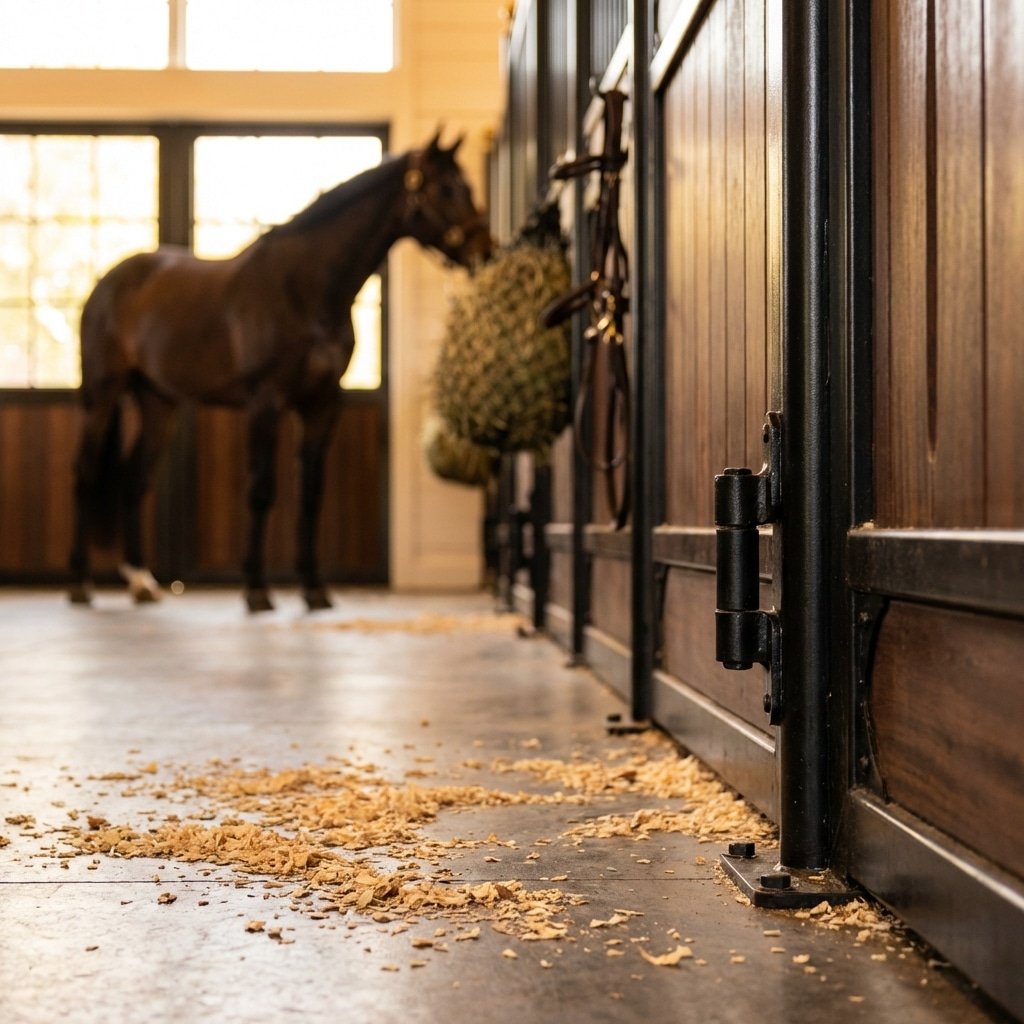
Sustainable Infill Specs: HDPE and High-Density Bamboo
At DB Stable, we engineer our stables to meet these evolving standards. Sustainability in equestrian infrastructure is useless if the product fails after five years. We prioritize materials that balance environmental responsibility with extreme durability, ensuring distributors sell products that stay installed, not products that end up in a landfill.
- High-Density Strand Woven Bamboo (28mm-38mm): We use bamboo that matures in 3-5 years, compared to decades for oak. It features a Janka Hardness > 3000 lbf, making it 3x harder than oak and naturally resistant to hoof impact.
- UV Stabilized HDPE (28mm-32mm): Our High-Density Polyethylene infill is fully recyclable and requires zero maintenance. Unlike wood, it does not rot, chew, or splinter, eliminating the need for chemical preservatives or frequent replacement.
- Hot-Dip Galvanization (BS EN ISO 1461): We galvanize después de fabrication to achieve a coating thickness > 85 microns on structural parts. This extends the service life to 30+ years, significantly reducing the environmental cost associated with manufacturing replacement steel.
Strand-Woven Bamboo: A High-Yield Carbon Sink
Strand-woven bamboo acts as a massive carbon sink, sequestering up to 12 tons of carbon per hectare annually and locking it into high-density structural boards.
Biomass Accumulation and Carbon Locking
Bamboo is often dismissed as simple grass, but its biological efficiency makes it a heavyweight in carbon capture. Moso bamboo plantations sequester approximately 12 tons of carbon per hectare every year. This rate significantly outperforms traditional timber forests, which take decades to reach similar biomass levels.
The harvest cycle supports this efficiency. Unlike logging, which often kills the tree and releases soil carbon, harvesting mature bamboo poles leaves the root system intact. This prevents soil erosion and allows for immediate regeneration without replanting. The real engineering value comes during manufacturing. We take these fibers and compress them under extreme pressure. This strand-woven process permanently traps the absorbed carbon within the board, effectively “locking” it away for the lifespan of the stable.
The 3,000 lbf Janka Hardness Standard
Carbon data looks good on paper, but in a stable, durability is the only metric that keeps horses safe. DB Stable utilizes bamboo compressed to a density of 1,080 kg/m³. This creates a material with a Janka Hardness rating exceeding 3,000 lbf.
- Kick-Proof Resilience: This rating is approximately 3x harder than Oak. When a horse kicks a pine board, it splinters. When it kicks strand-woven bamboo, the board remains intact, preventing leg injuries.
- Stable-Ready Specs: We supply these boards in 28mm, 32mm, and 38mm thicknesses.
- Moisture Resistance: The extreme density leaves almost no air pockets for moisture to enter. Unlike softwood that acts like a sponge in humid stables, this material naturally resists mold and rot.
Preguntas frecuentes
How to build an ESG compliant equestrian center?
Building an ESG-compliant facility requires a three-pronged approach focusing on tangible reductions rather than marketing fluff. For Environmental impact, prioritize renewable energy and water circularity. Leading facilities like Equitom Equine Hospital generate 80% of their electricity via on-site solar and use closed-loop water systems to purify and reuse groundwater.
For Social y Governance factors, you need documented safety protocols and transparent labor practices. This includes installing gym facilities for staff physical health, enforcing strict work-life balance policies to reduce veterinary burnout, and establishing a board-level oversight committee to track these metrics year-over-year.
Is bamboo a sustainable building material?
Yes, but the type of bamboo matters. Biologically, bamboo is superior to timber because it reaches maturity in 3-5 years versus 30-50 years for hardwoods like oak. It self-regenerates after harvest and absorbs significantly more CO2 than equivalent tree stands.
However, raw bamboo has poor durability and rots quickly. To be a truly sustainable building material, it must be processed (like Strand-Woven Bamboo) to resist insects and decay. This processing extends the product’s lifespan to match or exceed traditional hardwoods, justifying the carbon footprint of manufacturing.
Environmental impact of steel vs wood barns?
This is a trade-off between Embodied Carbon (Production) and Lifecycle Carbon (Longevity). Wood wins on production; it grows naturally and requires less energy to process, resulting in lower initial emissions.
Steel, specifically Q235B structural steel, wins on longevity and circularity. Steel is 100% recyclable without strength loss. A steel barn lasts 30-50+ years with proper galvanization, resists warping, and is fireproof. If you prioritize a zero-waste lifecycle and long-term asset protection, steel is the superior choice. If you prioritize low initial carbon footprint, wood is preferable.
Green certifications for horse stables?
There is currently no dedicated global certification specifically for “Horse Stables.” However, high-end facilities often adapt LEED (Leadership in Energy & Environmental Design) standards or adhere to regional codes like California’s CalGreen.
To align with these standards without a formal certificate, focus on stormwater management (bioswales, permeable pavers), site planning that minimizes soil disturbance, and using materials with Environmental Product Declarations (EPDs). Many commercial stables apply for LEED credits by treating the barn as a commercial agricultural structure.
Eco-friendly horse barn manufacturers?
Several manufacturers have carved out a niche in sustainable design. Estructuras de CC is known for using responsibly sourced heavy timbers from the Pacific Northwest. MD Barnmaster y Coffman Barns utilize modular pre-fabrication, which significantly reduces construction waste compared to stick-built barns. WYO Custom Builders focuses on steel structures that offer high recyclability and durability against pests.
For the internal hardware and stall fronts, OEMs like DB Stable provide the necessary hot-dip galvanized components (ISO 1461 certified) that allow these builders to guarantee long lifespans without frequent replacements.
Q235B Steel: The 100% Recyclable Framework
Q235B structural steel delivers ASTM A36 equivalent strength and 100% recyclability, ensuring a 50-year lifecycle when protected by ISO 1461 hot-dip galvanization.
Mechanical Properties and ASTM A36 Equivalence
Q235B is the industrial backbone for heavy-duty livestock containment. It delivers a Yield Strength of 235 MPa and a Tensile Strength between 370–500 MPa. These metrics make it chemically and mechanically equivalent to the American ASTM A36 standard. This compliance is critical because a horse kick generates massive localized force; lower-grade steels deform or snap upon impact, while Q235B absorbs the energy and maintains structural integrity.
We apply this material specifically in 50mm x 50mm RHS (Square Hollow Section) profiles. In the current market, many manufacturers quietly reduce wall thickness to 1.5mm or 1.6mm to cut raw material costs. We reject this practice. Our engineering standard mandates a strict 2.0mm to 2.5mm wall thickness. This additional mass provides the necessary rigidity to prevent buckling under stress and ensures the welds hold during heavy use.
Circular Economy and Sustainable Lifecycle
Steel frames function as a recoverable asset rather than a consumable product. Unlike treated timber, which often becomes hazardous landfill waste due to chemical preservatives like arsenic or copper, Q235B steel is 100% recyclable. At the end of its service life, the material can be reclaimed and re-smelted indefinitely without any loss of structural properties, aligning perfectly with circular economy principles.
- Extended Lifecycle: We protect the raw steel via ISO 1461 Hot-Dip Galvanization (dipping after fabrication), which bonds zinc to the steel at 450°C. This creates a barrier that resists corrosion for 30–50 years, significantly outlasting painted or pre-galvanized alternatives.
- Cold Climate Adaptation: For regions with extreme winters, we upgrade the specification to Q345B (equivalent to ASTM Grade 50). This low-alloy option maintains high impact toughness at sub-zero temperatures, preventing the brittle fractures that standard carbon steels suffer during freezing conditions.
Preguntas frecuentes
Is bamboo a durable and sustainable material for horse stalls?
Yes. Bamboo regenerates in just 3-5 years, unlike the decades required for traditional hardwood. Structurally, we use high-density strand woven bamboo specifically treated to resist mold and rot. It boasts a Janka hardness rating over 3000 lbf—making it 3x harder than Oak. This density resists hoof impact and cribbing significantly better than standard timber.
Which material is more eco-friendly: Steel or Wood?
Wood captures carbon initially but often requires chemical preservatives to stop rot and contributes to deforestation. Steel—specifically our hot-dip galvanized Q235B and Q345B options—is 100% recyclable and offers a “lifetime” service life. The zinc coating (avg > 85 microns) prevents rust for decades, eliminating the cycle of replacement and waste associated with treated timber.
How does the flat-pack design contribute to sustainability?
Logistics drive a massive portion of a project’s carbon footprint. Traditional fully welded stables waste air space, limiting a 40HQ container to just 12-15 sets. Our modular flat-pack design allows us to load 30-45 sets into that same container. This density reduces shipping emissions by over 60% per unit while protecting distributor margins on freight costs.
Can stable design help achieve ESG compliance?
Absolutely. An ESG-compliant facility hits three marks: Environmental efficiency (using renewable bamboo or recyclable steel), Social responsibility (ensuring horse and handler safety with kick-proof designs), and Governance (adhering to ISO 9001 and ISO 1461 manufacturing standards). Specific engineering choices, like our “Cast-Proof” bottom gaps and “Stack Effect” ventilation grills, directly support high animal welfare standards required by modern investors.
Does the HDPE infill require chemical maintenance?
No. Unlike wood, which demands regular staining, painting, or varnishing (often releasing VOCs), our UV-stabilized HDPE infill is strictly “Zero Maintenance.” It cleans with water alone and is impervious to moisture, bacteria, and rot. This eliminates the need for harmful chemical treatments throughout the product’s lifecycle.
Reflexiones finales
Investors will penalize projects that fail Scope 3 emission standards by 2026. Choosing ISO 1461 hot-dip galvanized steel and renewable bamboo protects your bottom line against replacement costs and potential carbon taxes. You cannot afford temporary infrastructure that fails a lifecycle audit after just five years.
Verify our logistics efficiency firsthand; our flat-pack system cuts freight emissions by over 60% compared to welded alternatives. Contact our engineering team today to secure a sample kit or discuss OEM specifications for your next expo. Future-proof your rental inventory now before strict compliance becomes mandatory.


 Spanish
  English
  French
  Arabic
  German
0 comentarios