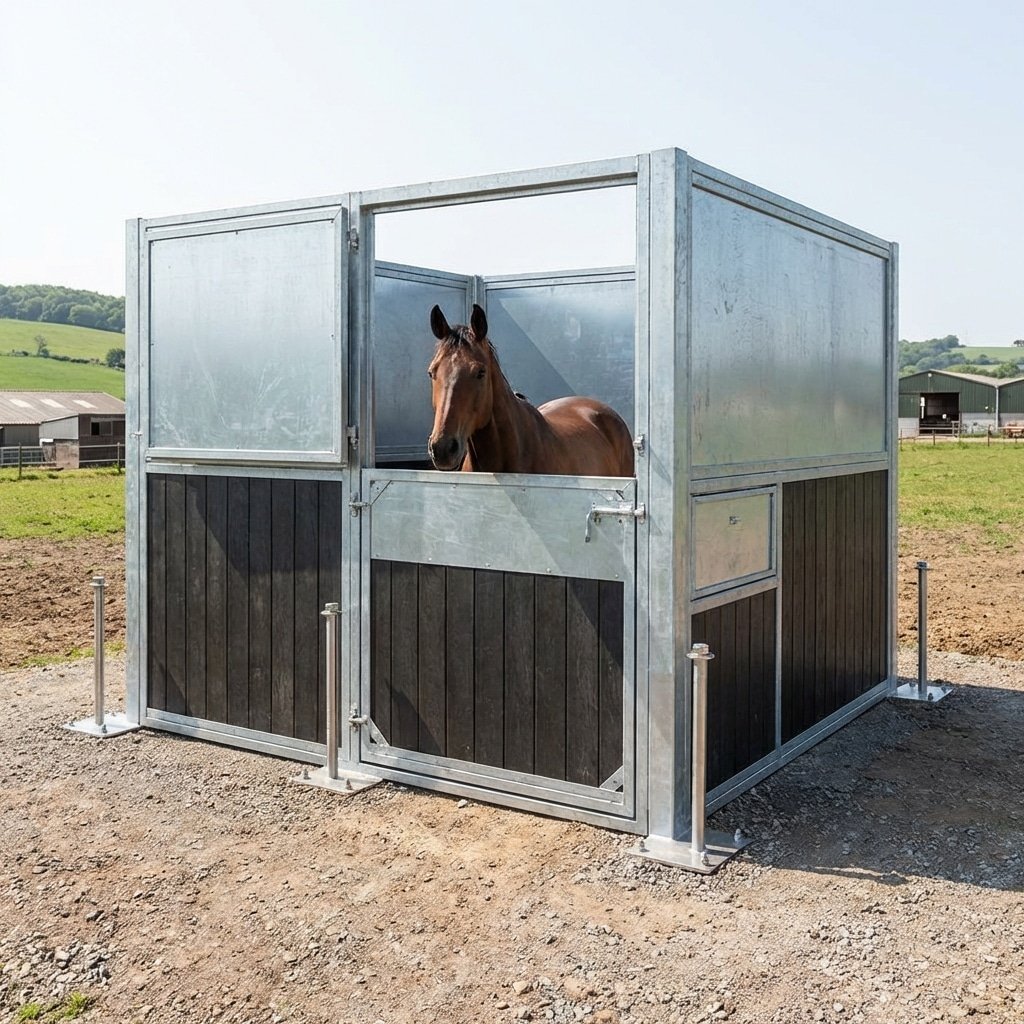
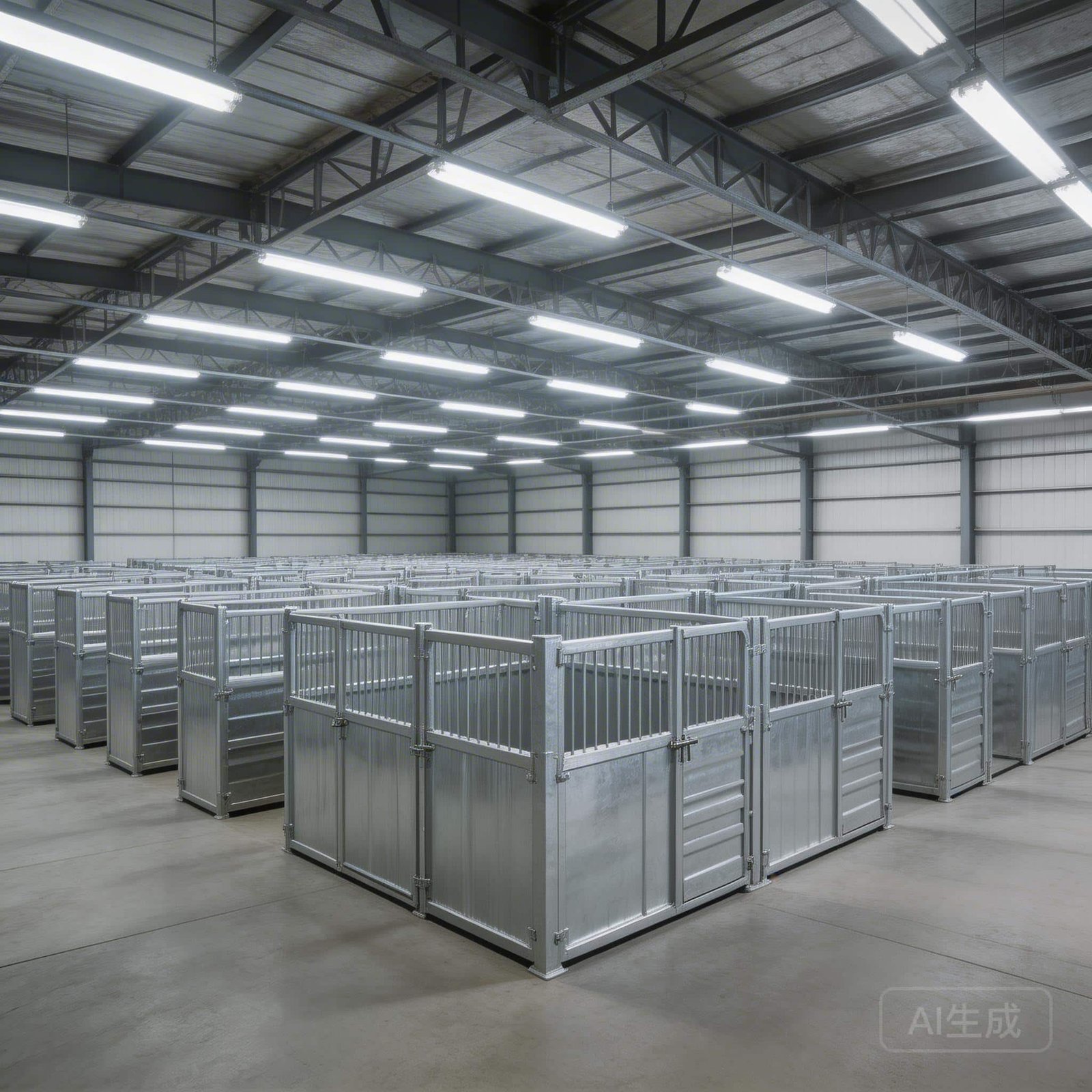
Portable vs permanent horse stalls is a total-cost question, not a purchase-price question. The permanent barn wins the first invoice line and loses the next decade: foundation work, fixed services, timber maintenance and zero relocation value. The portable system...
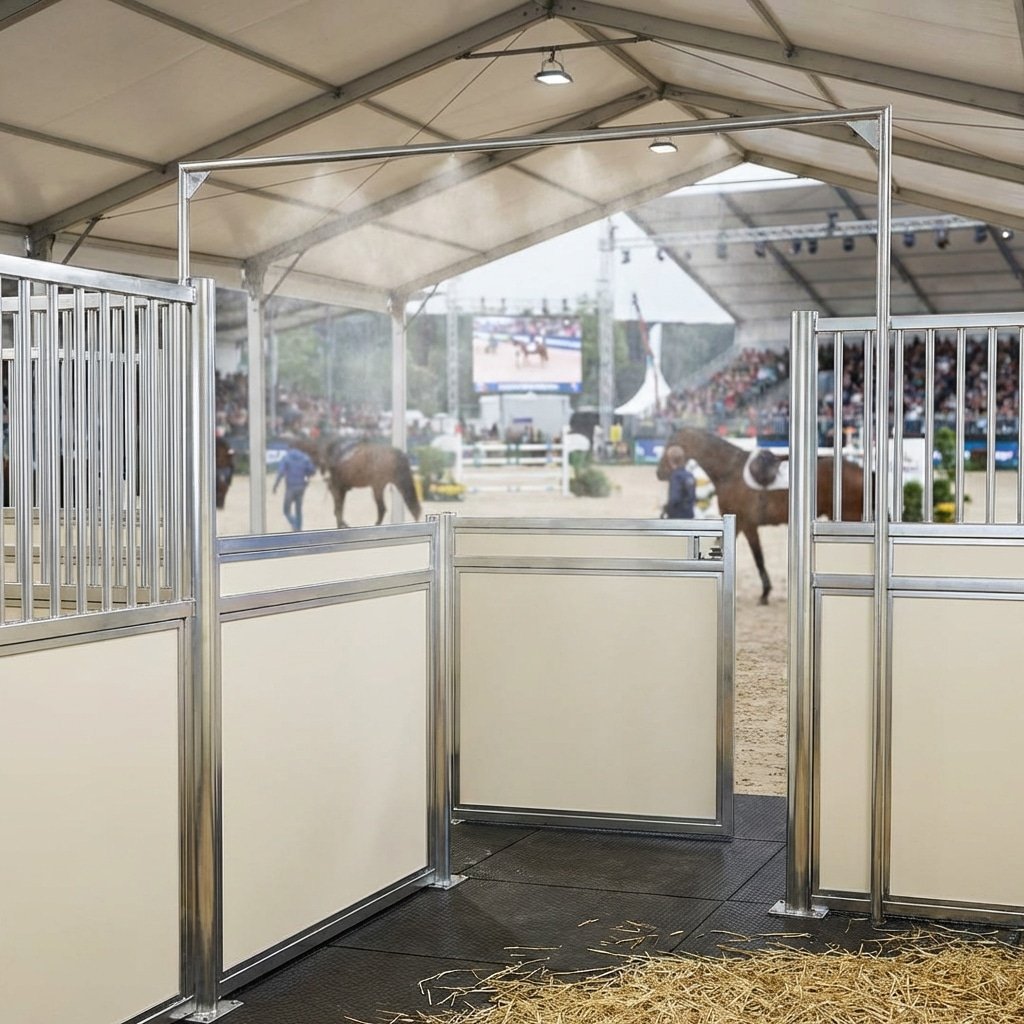
Portable horse stalls at a showground are bought twice: once as steel and panels, and again as a slot in a venue’s schedule. The second purchase is the question nobody puts in writing: how fast a crew gets a bank standing on turf that turns to mud, and how fast...
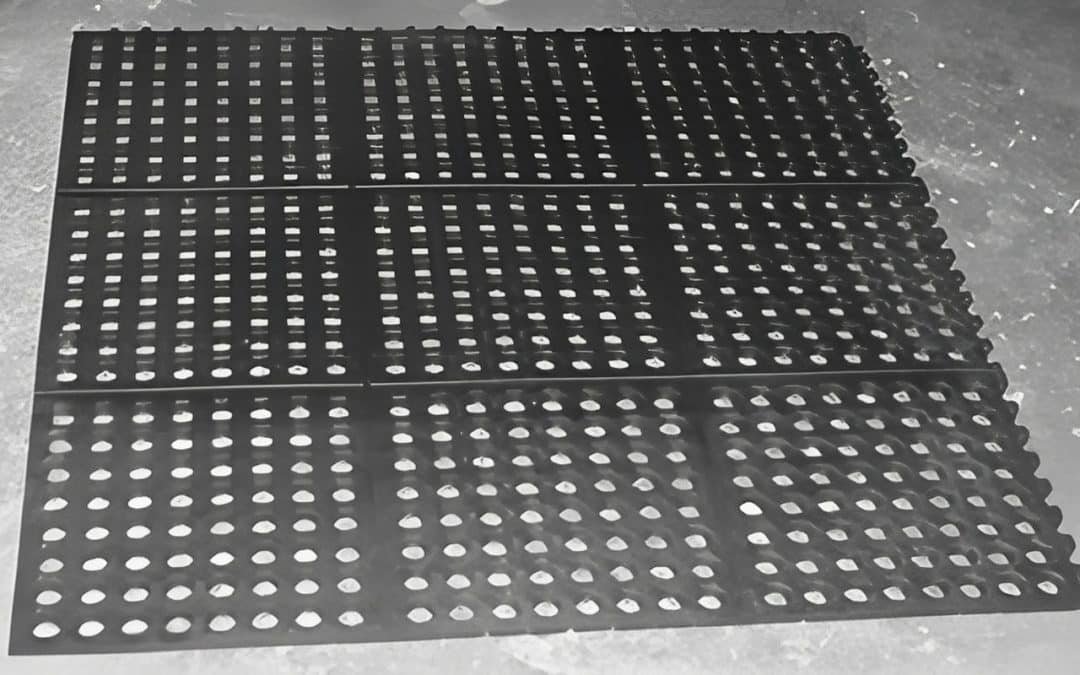
Rubber stable mats come in two formats, and the choice between them is not about quality — interlocking and sheet mats are both available in heavy, non-slip grades suitable for stalls and arenas. The choice is about geometry: how the floor assembles, how many seams it...
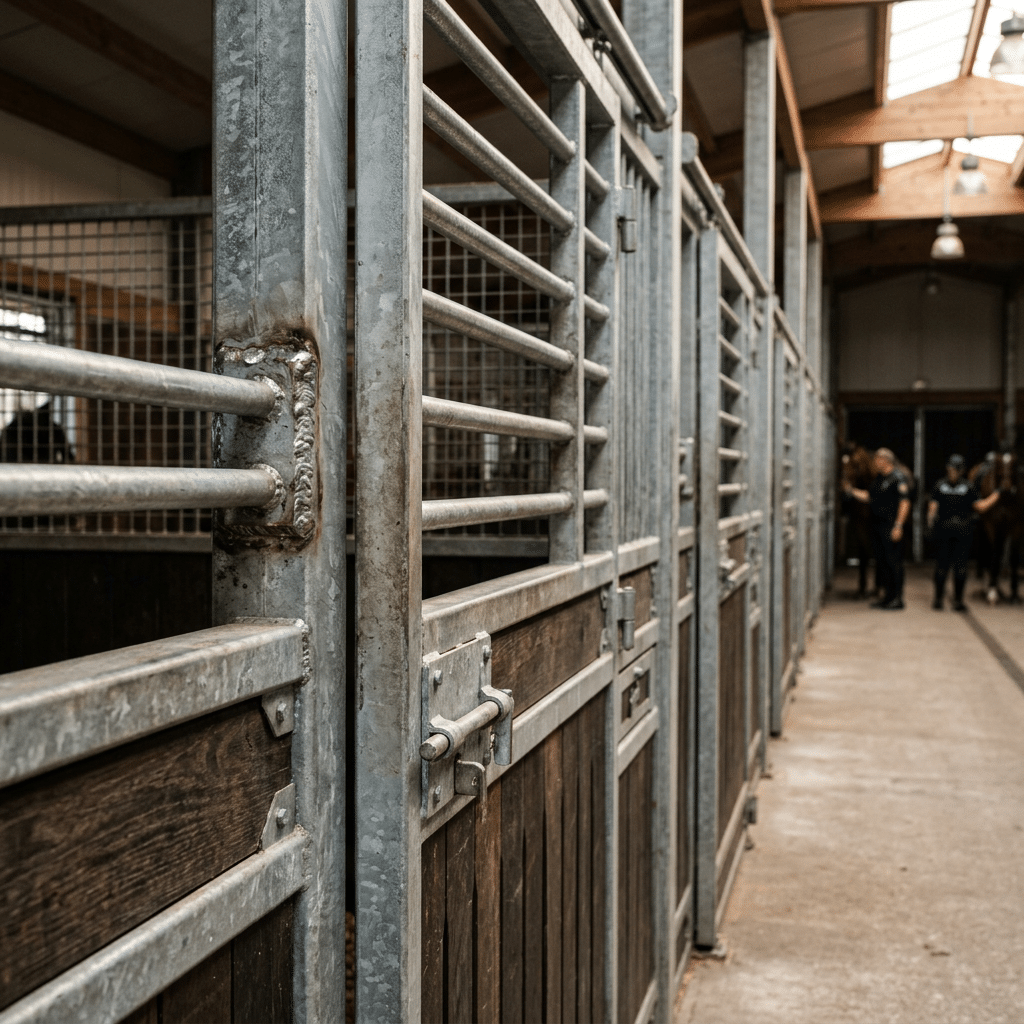
Indoor horse stall systems live or die by the plan that precedes them. The stall itself is the visible product — galvanized steel frames, your choice of bamboo, HDPE or pine lining, doors and grilles in a modular system — but what makes an indoor facility work is the...
Most horse stable lighting is designed for the person holding the pitchfork, not the horse in the stall. The result shows up as behavior: horses that hesitate at a bright doorway, spook at the aisle’s shift from shadow to glare, or pace under a fixture buzzing...
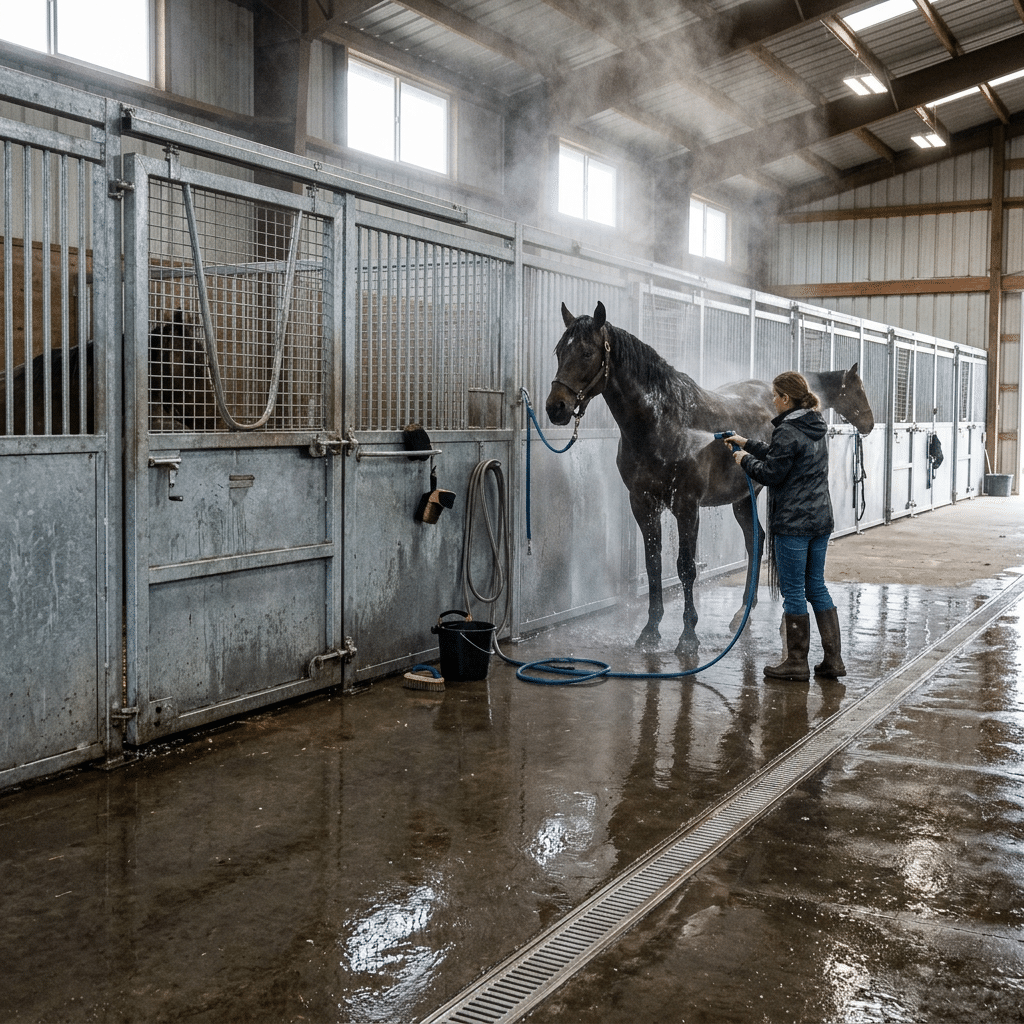
Horse stable drainage is a planning decision before it is a product decision. By the time urine pools against a stall wall and bedding stays wet three days after rain, the cause sits in choices made months earlier: where the block was sited, which way the rows run,...

 Spanish
 English
 French
 Arabic
 German