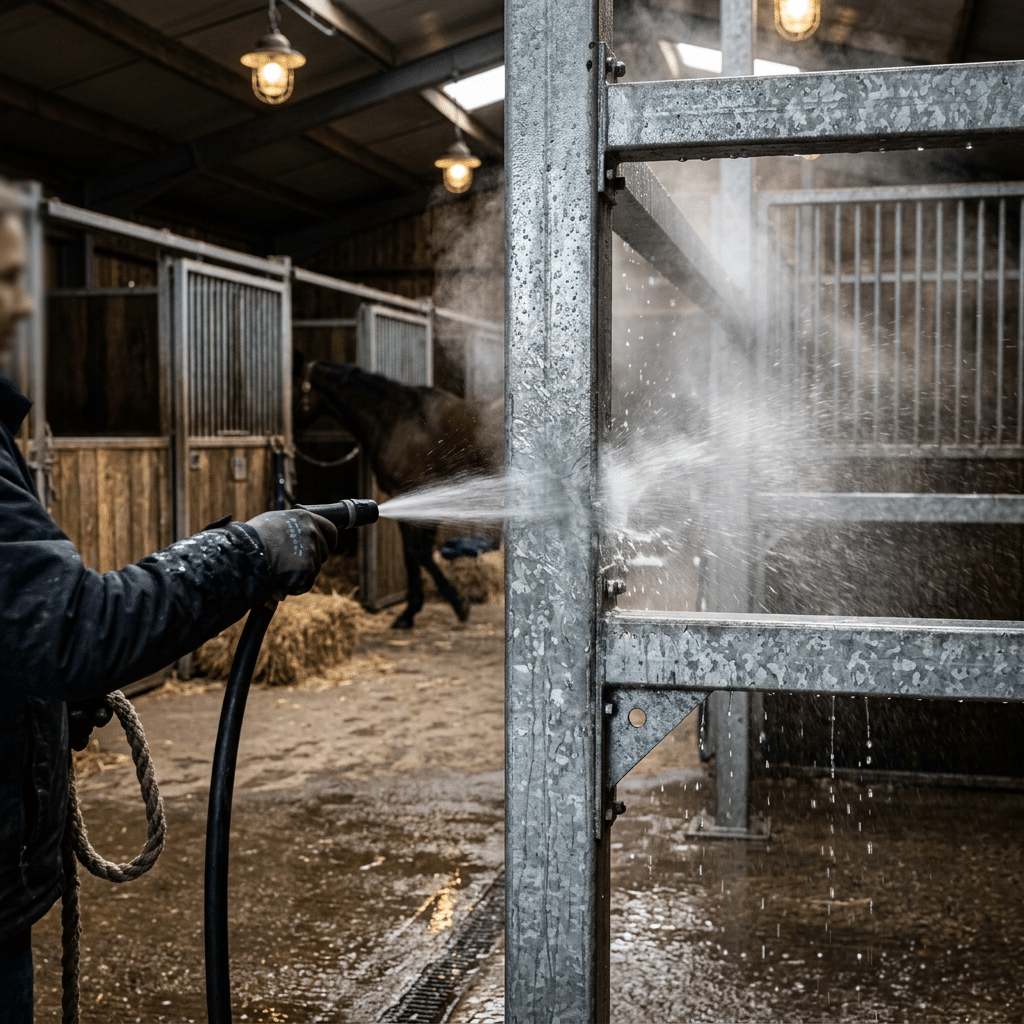
A disease outbreak triggers aggressive disinfection protocols that often destroy the barn itself. Chemical agents degrade porous wood and corrode unprotected steel, forcing expensive replacements and creating a constant biosecurity risk. This cycle of damage...
A documented maintenance schedule is the only operational defense against preventable structural failures in an equestrian facility. Small oversights, such as ignoring bolt relaxation or track debris, accumulate over time, leading to expensive emergency repairs and...
Board replacement in a fully welded stable frame is a costly, destructive process. It requires cutting the structural steel, which voids the factory’s rust protection and creates hours of labor for a repair that permanently weakens the asset and invites...
An Upgrading Series without standardized engineering is a long-term financial risk. Many stable systems use inconsistent bolt patterns, locking owners into an obsolete product line where future repairs or facelifts require a complete teardown. This turns a simple...
Airflow audits reveal the direct link between stagnant stall air and chronic respiratory conditions like heaves. A persistent cough or a visible heave line is not just a health issue; it is a clear symptom of poor facility design, frequently caused by solid partitions...
The debate over scrapping vs reusing a structure defines its true lifetime cost and ESG rating. A traditional timber barn often becomes a demolition liability, costing thousands while creating hazardous waste risks from treated wood. This turns a sunk cost into a...



 Spanish
  English
  French
  Arabic
  German