Aggressive horses are a facility liability that transforms standard stall partitions into sources of costly veterinary claims. When boarding barns rely on open-bar designs, they invite fence-line battles that damage infrastructure and erode profit margins through...
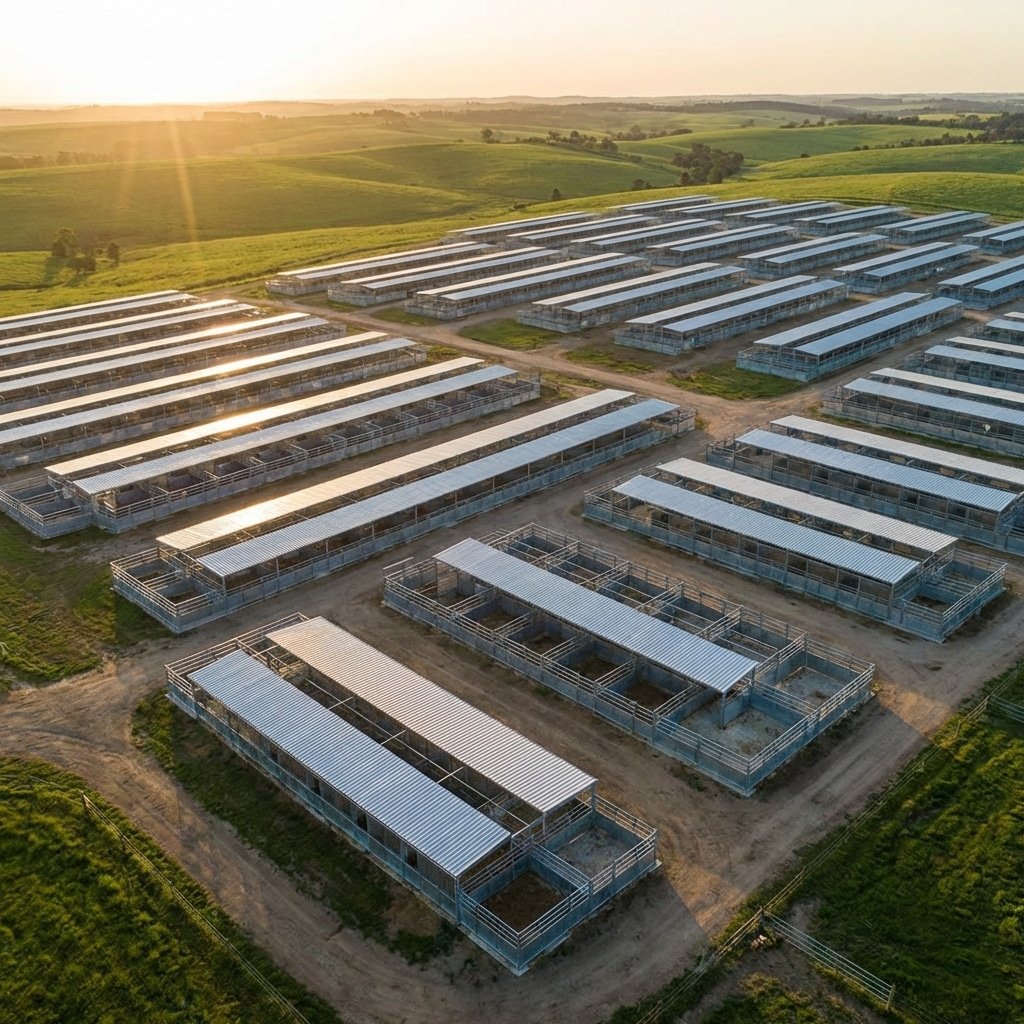
Fleet Financing for high-volume rental inventories is a precise balance of capital preservation and asset longevity. Securing funding for a 500-stall deployment fails if the underlying asset depreciates faster than the loan term due to corrosion or structural failure....
Sourcing the right horse stall kits is essential to prevent costly client callbacks from premature rust and structural damage. Kits using inferior, pre-galvanized steel often fail in high-ammonia barn conditions, forcing expensive repairs that destroy a...
Floor Tracks Rust inevitably when exposed to the ammonia-rich slurry found in active horse stables. Installing bottom U-channels creates a drainage failure point that accelerates corrosion and seizes door mechanisms. For contractors, this design error guarantees...
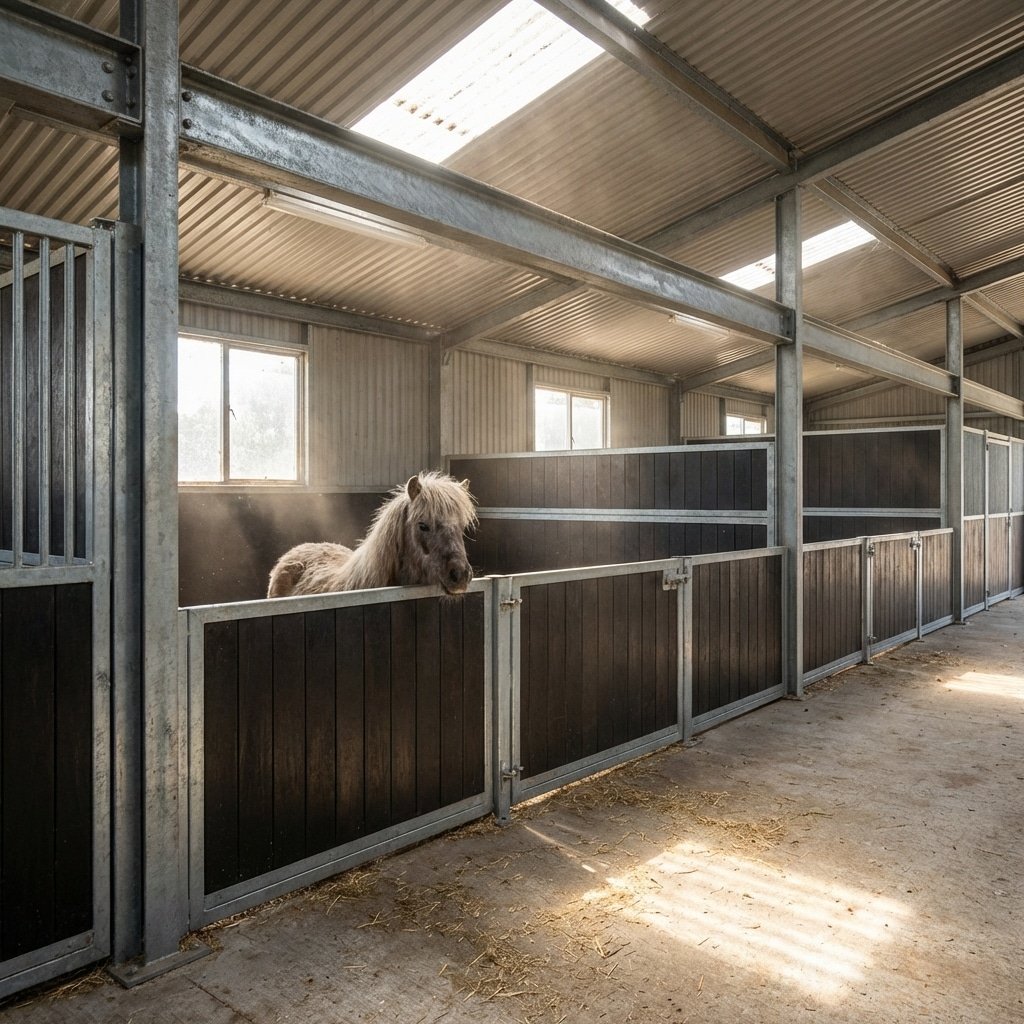
Stabling Miniature Horses in standard equine infrastructure creates an immediate liability for commercial breeders and facility managers. Standard 3-inch grill spacing often traps small hooves, while high solid walls block sightlines, triggering stress-induced vices...
Fleet financing for a 500-stall rental inventory determines whether your deployment is a scalable asset or a rusting liability. Lenders increasingly scrutinize asset durability, meaning standard painted frames often fail to meet the depreciation schedules required for...



 Spanish
  English
  French
  Arabic
  German