Confinement stress leads to destructive behaviors like pawing and weaving that cause cumulative damage to standard horse stalls. These repetitive impacts create material fatigue, resulting in bent bars and broken welds that become a recurring maintenance cost and a...
Flood recovery success is determined by material choices made long before the storm. When saltwater or standing water hits, traditional wood stalls swell and rot, while common steel corrodes at the welds. This material failure turns a recoverable event into a...
Jammed barn doors are a primary source of post-installation complaints and warranty claims for stable outfitters. Standard exposed track systems inevitably clog with hay and dust, causing operational failures that damage a distributor’s reputation for supplying...
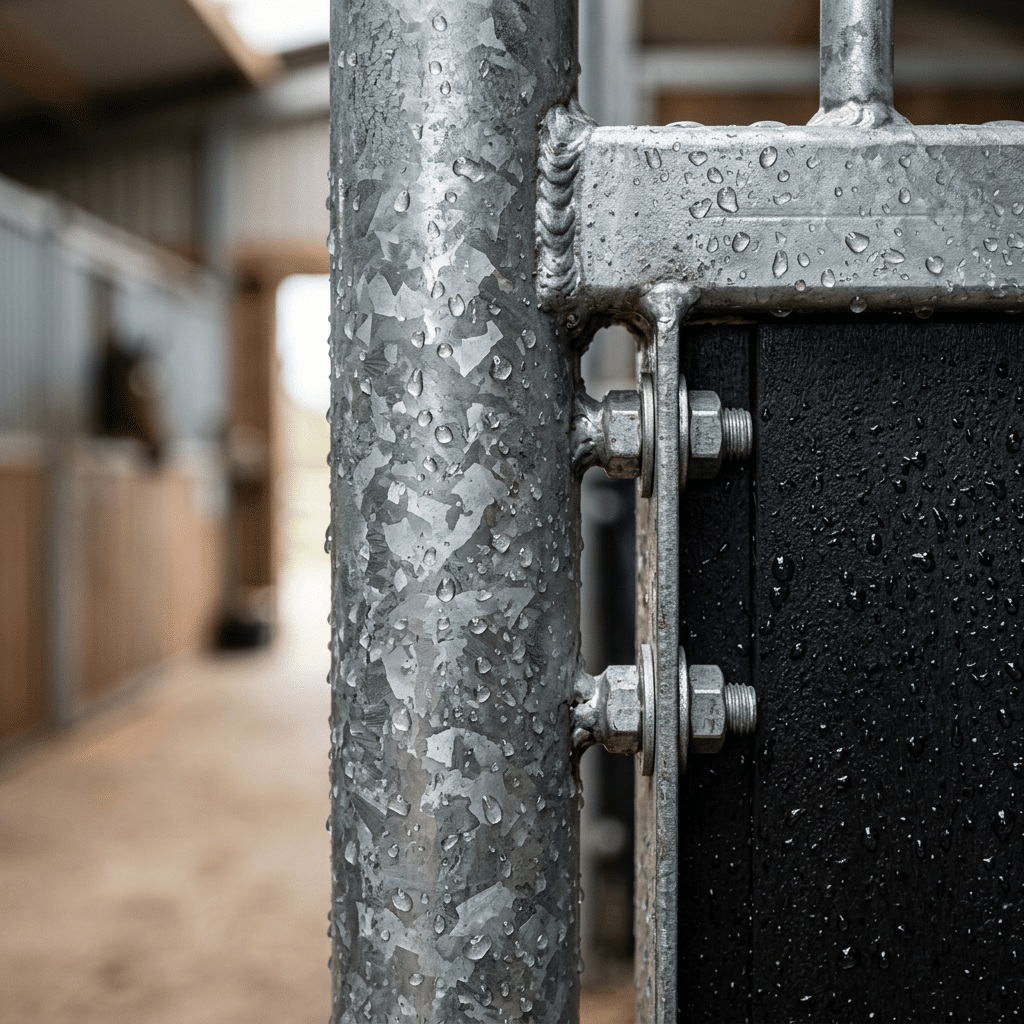
The annual pressure washing of stables shouldn’t trigger immediate rust, yet many operators see it bloom on welds. This defect isn’t a maintenance issue; it’s a manufacturing shortcut using pre-galvanized steel that directly leads to warranty claims...
Splinter colic is a preventable emergency directly linked to cheap pine boards in horse stalls. This single material choice can escalate a simple chewing habit into a $10,000 surgical procedure, a catastrophic cost that often exceeds standard insurance limits and...
The reliance on stall fans for airflow is a critical liability issue for barn builders and facility managers. Standard fans create a severe fire hazard from dust-clogged motors and circulate airborne particles that damage equine respiratory health. This approach turns...



 Spanish
  English
  French
  Arabic
  German