


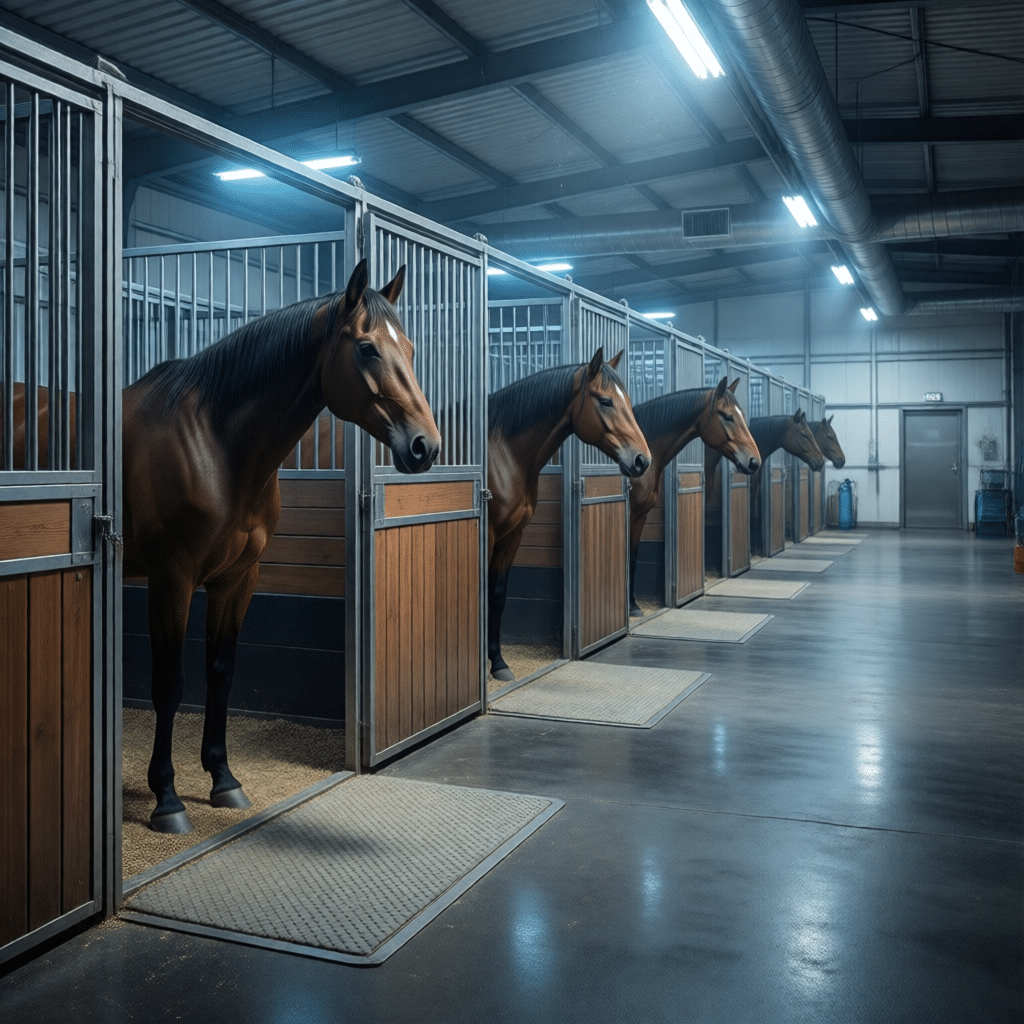
Show Biosecurity compliance is the critical operational safeguard for event organizers facing the catastrophic liability of equine disease outbreaks. Relying on traditional plywood stabling creates a porous breeding ground for pathogens that defies effective sanitation, exposing management to quarantine-induced cancellations. A single biosecurity failure due to inadequate infrastructure can dismantle the profitability and reputation of a competition series overnight.
This guide evaluates temporary stabling solutions based on the ISO 1461 hot-dip galvanization standard for resistance to harsh phenolic disinfectants. We benchmark the efficacy of UV-stabilized HDPE infills for rapid sterilization and analyze how high-density flat-pack systems allow organizers to deploy medical-grade infrastructure at scale without inflating logistics costs.
The Rise of ESG (Environmental, Social, Governance) in Construction
In 2026, ESG is a strategic necessity. Projects now prioritize suppliers who minimize embodied carbon through efficient logistics and circular economy materials like bamboo and recycled steel.
The Strategic Necessity of Net-Zero Compliance
Sustainability has shifted from a marketing optionality to a license to operate. Regulatory bodies now enforce strict operational energy standards and embodied carbon limits for
new infrastructure projects. Investors and clients increasingly require explicit carbon budgets, making ESG performance a definitive factor in winning tenders.
The industry is moving toward a circular economy, prioritizing materials that offer longevity and recyclability to minimize construction waste. This shift forces developers to look beyond initial material costs and evaluate the total environmental lifecycle of their supply chain.
Reducing Scope 3 Emissions with High-Density Flat-Pack Logistics
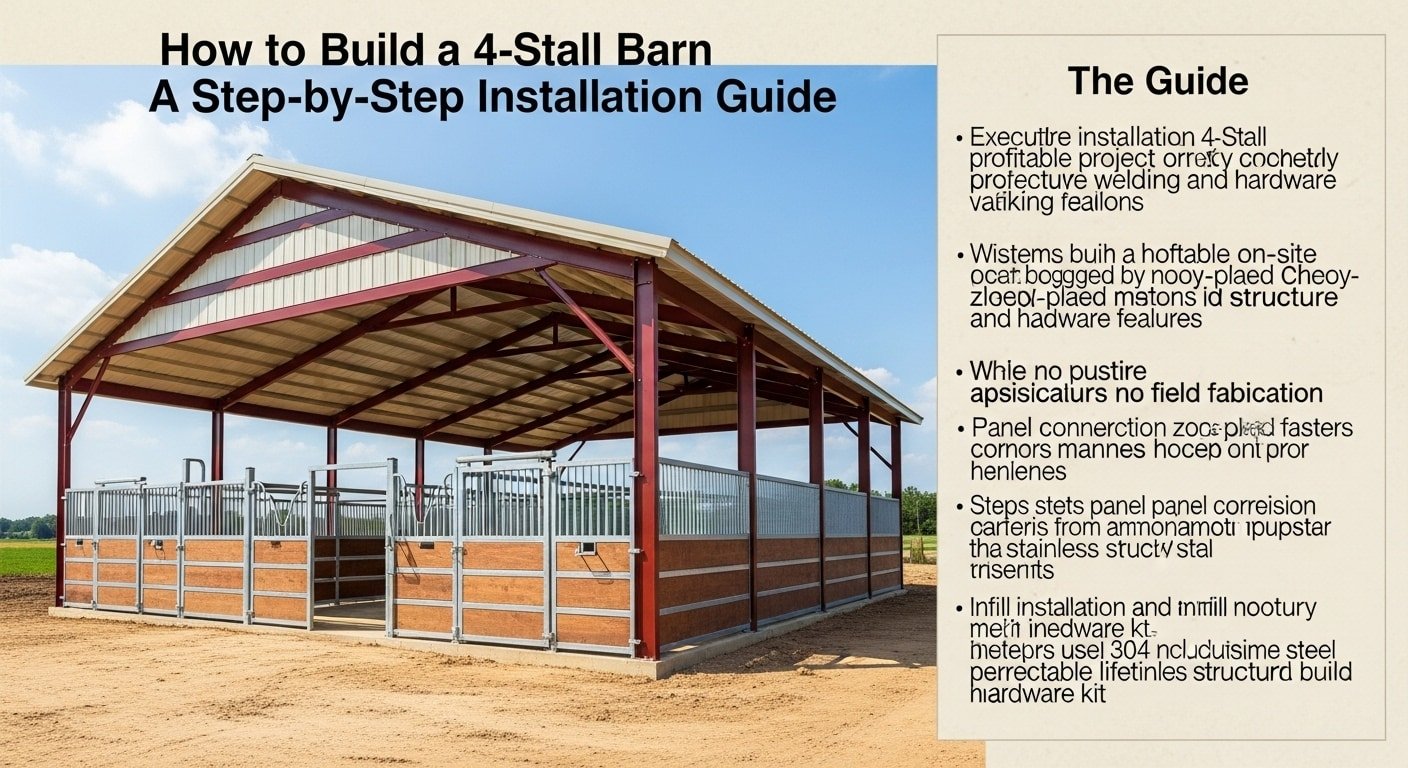
For B2B distributors and large-scale projects, the most significant carbon reduction opportunity lies in logistics (Scope 3 emissions). Shipping air is both expensive and environmentally damaging. We engineer our systems to maximize freight efficiency and product longevity.
- High-Density Logistics: DB Stable’s flat-pack technology increases container capacity to 30-45 sets per 40HQ (compared to 12-15 for welded units), reducing freight-related carbon emissions by over 60%.
- Extended Lifecycle: Utilizing Hot-Dip Galvanization (ISO 1461) significantly extends the product lifecycle. This aligns with waste reduction goals by preventing the premature replacement common with pre-galvanized alternatives.
- Sustainable Materials: The use of fast-growing Bamboo infill and recyclable Q235B/Q345B steel supports sustainable material sourcing requirements without compromising structural integrity.
Preguntas frecuentes
How to build an ESG compliant equestrian center?
Building an ESG-compliant facility requires a structured approach across three pillars. Environmentally, focus on energy independence through solar integration and water self-sufficiency via rainwater harvesting. Socially, prioritize employee welfare and strict safety protocols for both staff and animals. Governance requires ethical business practices and clear data transparency. Start with a comprehensive audit of current practices to identify high-impact areas for carbon reduction and biodiversity improvement.
Is bamboo a sustainable building material?
Yes. Bamboo is a rapidly renewable resource that matures in 3-5 years, compared to decades for traditional hardwoods. It possesses a negative carbon footprint, absorbing significantly more CO₂ than many tree species. When processed into high-density strand woven boards, it offers durability exceeding oak while resisting mold and rot, making it an ideal eco-friendly alternative for stable infills.
Environmental impact of steel vs wood barns?
Wood framing generally has lower embodied carbon during the manufacturing phase. However, steel—specifically Q235B/Q345B used in our structures—is 100% recyclable and offers superior longevity. A steel structure can last decades longer than wood with proper hot-dip galvanization, reducing the environmental cost of replacement and repairs over the facility’s lifetime. Steel avoids the deforestation issues associated with non-certified timber.
Green certifications for horse stables?
LEED (Leadership in Energy and Environmental Design) is the global standard, though it is often tailored to commercial urban buildings. For agricultural facilities, regional codes like California’s CalGreen provide mandatory frameworks for water conservation and waste reduction. Facility owners can also pursue sustainable agriculture recognitions by conducting energy audits and demonstrating a commitment to reduced carbon footprints in their operations.
Eco-friendly horse barn manufacturers?
Leading manufacturers prioritize materials like recycled steel and bamboo to minimize environmental impact. Companies like DB Stable focus heavily on logistics efficiency—using flat-pack designs to drastically cut shipping emissions—and employ hot-dip galvanization (ISO 1461) to ensure products last a lifetime, reducing the waste cycle associated with cheaper, short-term solutions.
Moving Away from Old-Growth Timber (Oak/Pine)
Traditional hardwoods take decades to regenerate. We pivoted to High-Density Bamboo because it matures in 5 years and delivers three times the hardness of Oak.
The Sustainability Deficit of Traditional Hardwoods
Oak and Pine have served the equine industry for generations, but the math no longer adds up. An Oak tree requires decades—often up to a century—to reach harvestable maturity. Relying on old-growth timber depletes natural carbon sinks faster than they can regenerate, creating a fundamental mismatch between resource consumption and nature’s ability to replenish it.
This scarcity drives supply chain volatility. As environmental regulations tighten and old-growth supply shrinks, traditional hardwood is becoming a luxury item with unpredictable pricing. For large projects and distributors, this instability is a risk we refuse to pass on to the client.
High-Density Bamboo: The 3x Harder Alternative
We replaced traditional hardwood with High-Density Strand Woven Bamboo in our Professional and Royal series. This is not the hollow decorative cane found in gardens; it is an engineered material compressed under extreme pressure to outlast steel-framed pine stalls.
- Rapid Maturity: Harvestable in just 3-5 years, ensuring a strictly renewable supply chain.
- Extreme Hardness: Achieves a Janka Hardness rating > 3000 lbf, making it 3x harder than Oak.
- Resistencia al impacto: The high density prevents “cribbing” (chewing) and withstands heavy kicks that would splinter soft pine.
- Moisture Resilience: Naturally resistant to mold and rot, critical for wash bays and humid stable environments.
The result is a board thickness of 28mm to 38mm that acts like a dense hardwood but regenerates like a grass. It solves the durability issues of soft pine without the ecological debt of slow-growing timber.
Precision-Engineered Stables With 20-Year Rust Resistance
Top Factories Embracing Sustainable Materials
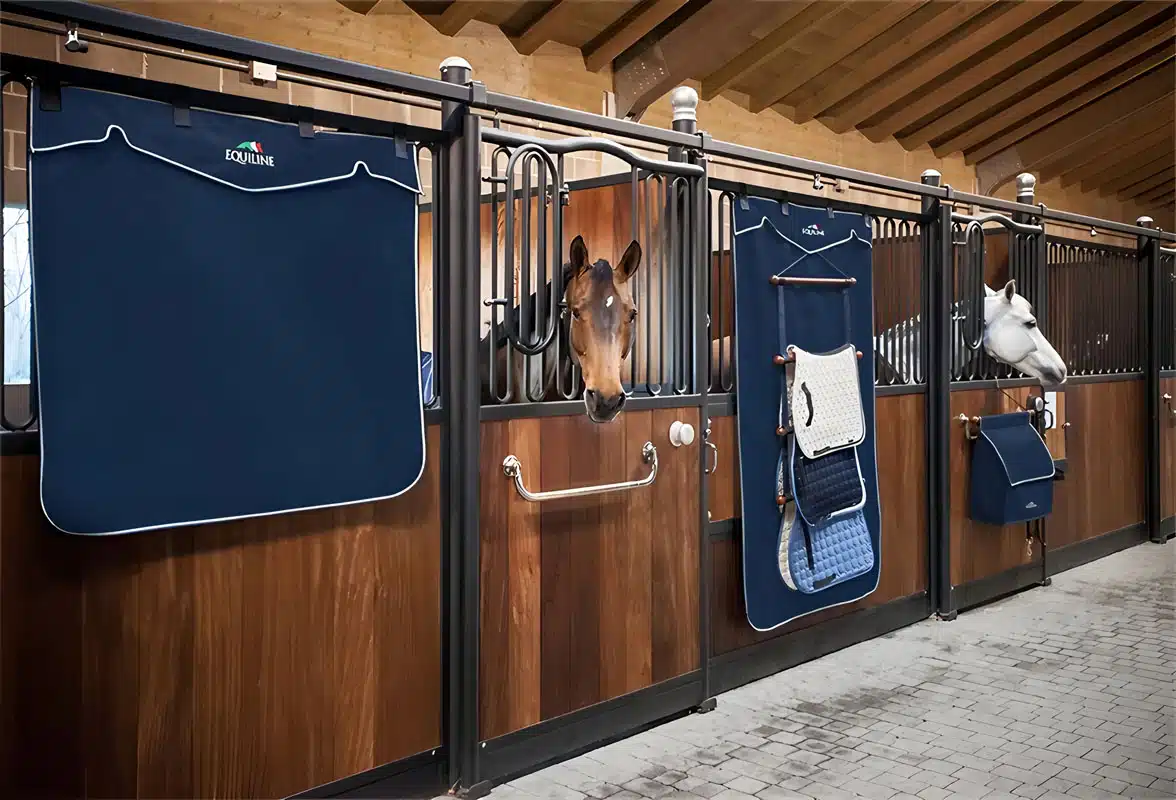
Modern factories prioritize “Lifetime” durability over disposable softwoods, utilizing high-density Strand Woven Bamboo and UV-stabilized HDPE to reduce waste and eliminate chemical maintenance.
| Componente | Traditional Material Issues | Sustainable Factory Standard |
|---|---|---|
| Structural Infill | Softwood (Pine); rots quickly, requires chemical treatment. | Bambú tejido (Janka > 3000 lbf). |
| Steel Protection | Black steel or pre-galv; rusts within 3-5 years. | ISO 1461 Hot-Dip Galvanization (Lifecycle > 20 years). |
| Synthetic Options | Generic plastic; cracks under UV exposure. | Recycled HDPE (UV Stabilized & Impact Absorbing). |
The Transition to Eco-Friendly Structural Components
Sustainability in industrial manufacturing often gets confused with marketing buzzwords, but for B2B equestrian manufacturers, it comes down to a simple equation: durability equals sustainability. We see a definitive shift away from the “replace every 5 years” model. Factories are now engineering components that withstand decades of abuse, significantly reducing the carbon footprint associated with manufacturing replacement parts and shipping heavy steel repeatedly.
- Waste Reduction via ISO 1461: By adhering to the BS EN ISO 1461 standard for hot-dip galvanization después de fabrication, we ensure zinc coatings exceed 85 microns on structural parts. This extends the product lifecycle to 20+ years, preventing the premature scrapping of rusted steel common in pre-galvanized alternatives.
- Eliminating Toxic Treatments: Traditional softwoods require frequent application of creosote or chemical varnishes to prevent rot. Modern manufacturing replaces these with naturally resistant materials, eliminating runoff that can contaminate local soil and groundwater.
- Longevity as a Metric: A stable that lasts 25 years consumes 80% less raw material over a 25-year period than a stable requiring replacement every 5 years. This durability is the single most effective “green” strategy in heavy manufacturing.

High-Density Bamboo and HDPE Specifications
At DB Stable, we do not use softwoods like Pine or Spruce in our Professional or Royal series. These woods lack the density to withstand equine impact and require harvesting mature trees. Instead, we utilize materials that offer rapid regeneration or recycling capabilities without sacrificing structural integrity. The industry has moved toward specific, measurable standards for these eco-friendly alternatives.
- High Density Strand Woven Bamboo: We specify bamboo with a Janka Hardness Rating > 3000 lbf. This makes it 3x harder than Oak. Unlike timber which takes decades to mature, bamboo regenerates in 3-5 years and our strand-woven process utilizes the entire stalk, minimizing was
te.
- UV-Stabilized HDPE (High-Density Polyethylene): Nuestro 28mm-32mm HDPE infills are manufactured from recycled plastics and engineered for impact absorption. They are impervious to water, urine, and bacteria.
- Zero Maintenance Requirement: These materials require no staining, painting, or sealing. This “Zero Maintenance” benefit reduces the facility’s long-term chemical consumption and labor costs, aligning operational efficiency with environmental responsibility.
Strand-Woven Bamboo: A High-Yield Carbon Sink
Strand-woven bamboo acts as a massive carbon sink, sequestering up to 2 tons of CO2 in just 7 years—far outpacing traditional hardwoods.
Rapid Carbon Capture vs. Traditional Hardwoods
Traditional timber is inefficient when looking strictly at carbon metrics. Hardwoods like oak require up to 40 years to sequester a significant amount of carbon, while bamboo achieves double that volume—approximately 2 tons of CO2—in just seven years. This biological speed creates a massive differential in environmental impact per acre.
A single hectare of bamboo forest absorbs 57 times more carbon than an equivalent area of traditional woodland. Because the root system (rhizome) remains intact during harvesting, the plant regenerates immediately without the soil disturbance or deforestation associated with logging old-growth timber. This allows for continuous, high-yield carbon capture cycles that standard forestry cannot match.
High-Density Strand Woven Technology: 3,000 lbf Durability
Carbon capture only matters if the carbon remains stored. If a material rots or breaks within a few years, that captured CO2 releases back into the atmosphere. We utilize a high-density manufacturing process that compresses bamboo fibers into a uniform, rock-hard material, effectively locking the carbon away for the lifespan of the stable.
- Material Specs: We use 28mm-38mm High Density Strand Woven bamboo for our Professional Series.
- Janka Hardness: The compression process achieves a rating > 3,000 lbf, making it 3x harder than Oak.
- Longevidad: The density prevents mold, rot, and hoof damage, ensuring the carbon remains sequestered in the structure for decades.
Q235B Steel: The 100% Recyclable Framework
Q235B steel acts as a fully recyclable, ASTM A36 equivalent asset that retains scrap value, unlike treated timber which often ends up as hazardous landfill waste.
The Circular Economy of Carbon Steel
Most facility owners view construction materials as a sunk cost, but steel framing operates differently. We strictly utilize Q235B carbon steel because it functions as a permanent material resource rather than a disposable commodity. Unlike pressure-treated wood, which absorbs chemical preservatives and often becomes hazardous waste at the end of its life, carbon steel re-enters the supply chain cleanly.
- 100% Recyclability: Q235B can be re-melted indefinitely without any degradation to its structural properties or tensile strength.
- Zero Waste Cycle: Scrap steel from decommissioned stables bypasses landfills entirely, feeding directly back into the production of new steel products.
- Reduced Extraction: Every ton of recycled steel scrap used in production significantly lowers the demand for virgin iron ore extraction.
ASTM A36 Equivalence and End-of-Life Value
Technical standards directly impact economic value. Q235B is the chemical and physical equivalent of ASTM A36, the global benchmark for structural steel. This equivalence ensures that the material meets rigorous load-bearing requirements during its operational life and retains recognized market value when the facility is eventually upgraded or decommissioned.
- Global Compliance: As an ASTM A36 equivalent, Q235B satisfies structural engineering codes worldwide, simplifying compliance for large-scale projects.
- Asset Recovery: A steel framework is a recoverable asset. Owners can recoup a portion of their initial investment through scrap metal markets, a financial return impossible with wood or plastic.
- Clean Separation: Our Hot-Dip Galvanization (BS EN ISO 1461) protects the steel for decades. During the recycling smelting process, these zinc layers separate easily from the steel, ensuring neither material is wasted.
Preguntas frecuentes
How does HDPE infill improve biosecurity compared to plywood?
HDPE (High-Density Polyethylene) acts as a biological firewall. Unlike plywood, which traps pathogens in its grain and eventually delaminates under heavy washing, HDPE is 100% non-porous and chemically inert. It allows for complete surface sterilization using industrial disinfectants without absorbing moisture, effectively eliminating the risk of cross-contamination between horses.
Can hot-dip galvanized steel withstand harsh viral disinfectants?
Yes. We hot-dip galvanize every frame después de fabrication to BS EN ISO 1461 standards, achieving a zinc coating thickness averaging over 85 microns. This metallurgical bond is impervious to the aggressive phenolic and quaternary ammonium compounds used in quarantine zones. In contrast, painted or pre-galvanized steel rapidly peels and corrodes under this frequent chemical exposure.
What makes flat-pack systems logistically superior for large events?
Flat-pack engineering protects your logistics margins. We can fit approximately 30-45 sets in a single 40HQ container, whereas fully welded traditional stables cap out at 12-15 sets. This reduces freight costs by over 60% and allows event organizers to rapidly deploy or relocate large-scale temporary stabling villages using standard forklifts rather than heavy cranes.
Are temporary event stables safe for high-value competition horses?
Absolutely, provided they meet strict engineering specs. We utilize Q345B low-alloy high-strength steel (equivalent to ASTM Grade 50) to resist high-impact kicks without brittle fracture. Additionally, our “cast-proof” design strictly limits the bottom gap to approximately 50mm, preventing horses from getting their legs trapped if they roll—a critical safety standard for high-stress show environments.
How fast can these stables be sanitized between competitors?
The combination of smooth HDPE boards and open-drainage steel framing supports a “5-minute turnaround” protocol. Maintenance crews can pressure wash the entire unit rapidly without worrying about water damage or prolonged drying times. This ensures the stall is biologically secure and ready for the next occupant immediately.
Reflexiones finales
Choosing generic, welded stalls drains your budget through inefficient freight and inevitable rust claims. DB Stable’s flat-pack engineering loads up to 45 sets per container, slashing logistics costs while providing a hot-dip galvanized framework that withstands aggressive sterilization. This reliability turns necessary infrastructure into a recoverable asset rather than a disposable liability.
Do not risk event cancellations due to biosecurity failures or equipment breakdown. Contact our engineering team today to review our ISO 1461 galvanization reports and customize a layout that maximizes your venue’s capacity. We suggest starting with a trial installation to validate our assembly speed and material durability firsthand.

 Spanish
  English
  French
  Arabic
  German
0 comentarios