


Effective Border Quarantine infrastructure is the critical defense preventing catastrophic national herd shutdowns and frozen logistics revenue. Facility operators often underestimate the risks of standard stabling materials, which fail USDA porosity tests and harbor pathogens like EHV-1 deep within the grain. A single biosecurity breach results in immediate entry denials and expensive repatriation delays that destroy project viability.
We evaluate manufacturers against the strict zero-permeability standards required for federal isolation wards. This analysis prioritizes suppliers delivering Hot-Dip Galvanized frameworks to BS EN ISO 1461 specifications and non-porous HDPE infill. By securing inventory that withstands aggressive virucidal washdowns without corrosion, you protect your facility’s operational status and eliminate the maintenance cycles that drain profit margins.
The High Stakes of International Equine Border Quarantine
Comparación rápida
| Factor | Domain | Key Objectives | Significance |
|---|---|---|---|
| Biosecurity and Disease Control | Health Safety | Disease Prevention, Herd Protection | Importing horses without proper quarantine protocols risks introducing communicable diseases to destination countries, potentially triggering cascading health crises. |
| Economic and Trade Stability | Economic Impact | Market Continuity, Financial Security | Proper quarantine measures prevent disease outbreaks that could otherwise cause significant economic losses and severe movement restrictions within the industry. |
| Operational Logistics and Planning | Logística | Timeline Management, Cost Control | For breeders and logistics providers, compliance dictates timelines and costs; failure to plan for specific quarantine durations can result in travel delays or entry denials. |
| Regulatory Compliance and Certification | Legal Framework | USDA Protocols, Veterinary Certificates | Exporters must navigate stringent health protocols, such as USDA mandates and OIE standards, which vary significantly based on the origin country’s risk profile. |
Biosecurity and Disease Control
**Preventing cascading health crises** is the priority here, acting as the primary firewall against importing foreign diseases.
Importing horses without proper quarantine protocols risks introducing communicable diseases to destination countries. This fundamental layer of defense is critical for maintaining national biosecurity and protecting existing equine infrastructures.
Without these controls, a single oversight can trigger severe health emergencies. The process relies on strict isolation measures to neutralize potential biological threats before they can affect the local population.
📊 At a Glance:
- 📍 Location: Health Safety
- 🏭 Core Strength: Disease Prevention, Herd Protection
- 🌍 Key Markets: Global
Why We Picked Them:
| ✅ The Wins | ⚠️ Trade-offs |
|---|---|
|
|
Economic and Trade Stability
Effective quarantine protocols are the essential firewall that secures **market continuity** against the financial devastation of disease outbreaks.
Disease outbreaks do more than threaten animal health; they have the power to paralyze entire sectors of the equine industry. Quarantine acts as a critical economic shield, preventing the introduction of pathogens that could trigger severe movement restrictions and immediate export embargoes.
For an industry built on international competition and breeding, the financial stakes of non-compliance are astronomical. Rigorous adherence to sanitary standards ensures that trade routes remain open, protecting the substantial investments made by breeders, owners, and logistics providers globally.
📊 At a Glance:
- 📍 Category: Economic Impact
- 🏭 Core Benefits: Market Continuity, Financial Security
- 🌍 Scope: International Trade
Why It Matters:
| ✅ The Wins | ⚠️ Trade-offs |
|---|---|
|
|
Operational Logistics and Planning
**Strategic planning** is the critical factor in preventing costly travel delays and ensuring predictable cross-border entry.
Compliance dictates every aspect of timelines and costs for breeders and logistics providers. It functions as the operational framework that keeps international equine movement viable and financially sustainable.
Failure to account for specific quarantine durations risks severe travel interruptions or outright entry denials. Success relies on precise coordination to navigate these regulatory requirements without encountering logistical bottlenecks.
📊 At a Glance:
- 📍 Category: Logística
- 🏭 Core Focus: Timeline Management, Cost Control
- 🌍 Key Sectors: Transport Sector
Why We Picked It:
| ✅ The Wins | ⚠️ Trade-offs |
|---|---|
|
|
Regulatory Compliance and Certification
Strict adherence to **USDA and OIE protocols** is the non-negotiable gateway for legal international equine transport.
Exporters must navigate a complex web of health protocols, including specific USDA mandates and OIE standards. These rules are not static; they fluctuate heavily based on the disease risk profile of the horse’s country of origin.
This certification process forms the legal backbone of the industry. Accurate documentation prevents costly border rejections and ensures animals meet the distinct entry requirements of destination nations.
📊 At a Glance:
- 📍 Scope: Legal Framework
- 🏭 Key Elements: USDA Protocols, Veterinary Certificates
- 🌍 Authorities: Government Agencies
Why It Matters:
| ✅ The Wins | ⚠️ Trade-offs |
|---|---|
|
|
Premium Custom Stables Engineered for 20-Year Durability

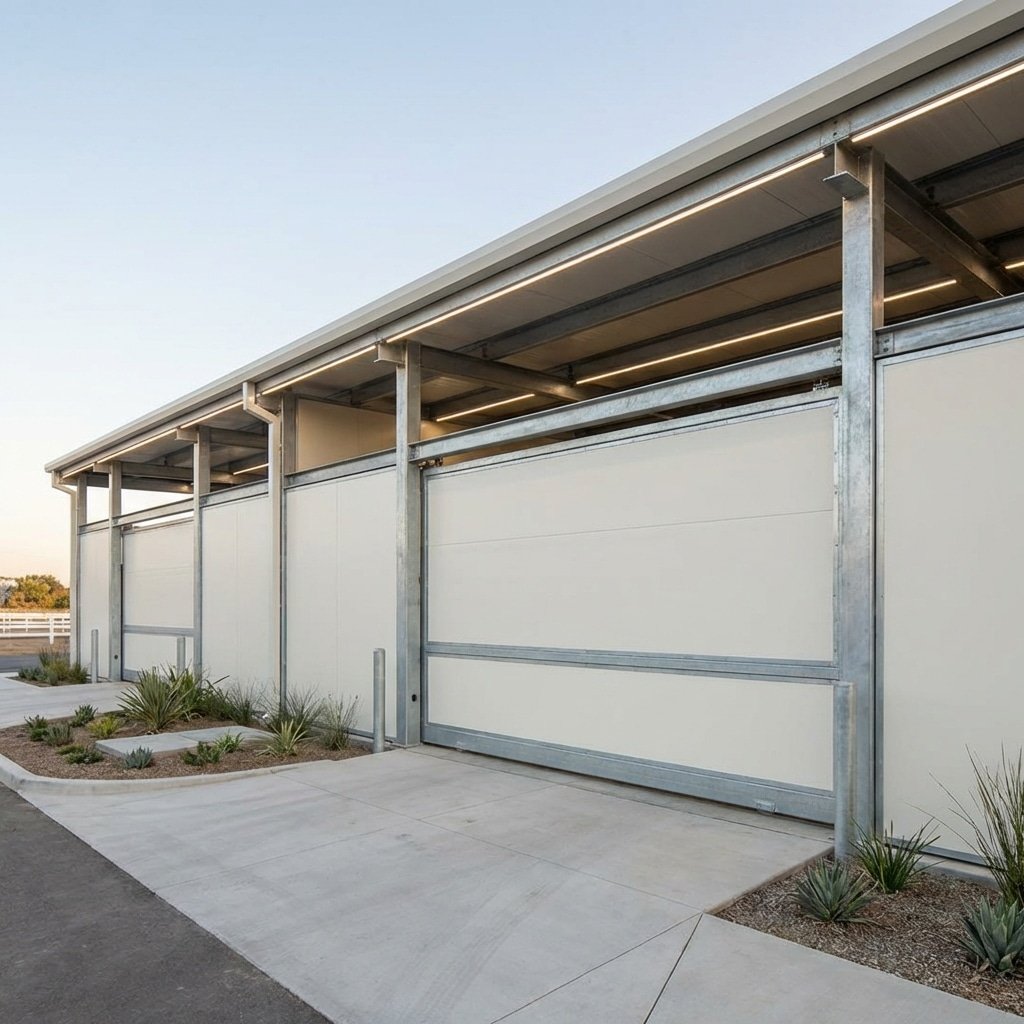
The High Stakes of International Equine Border Quarantine
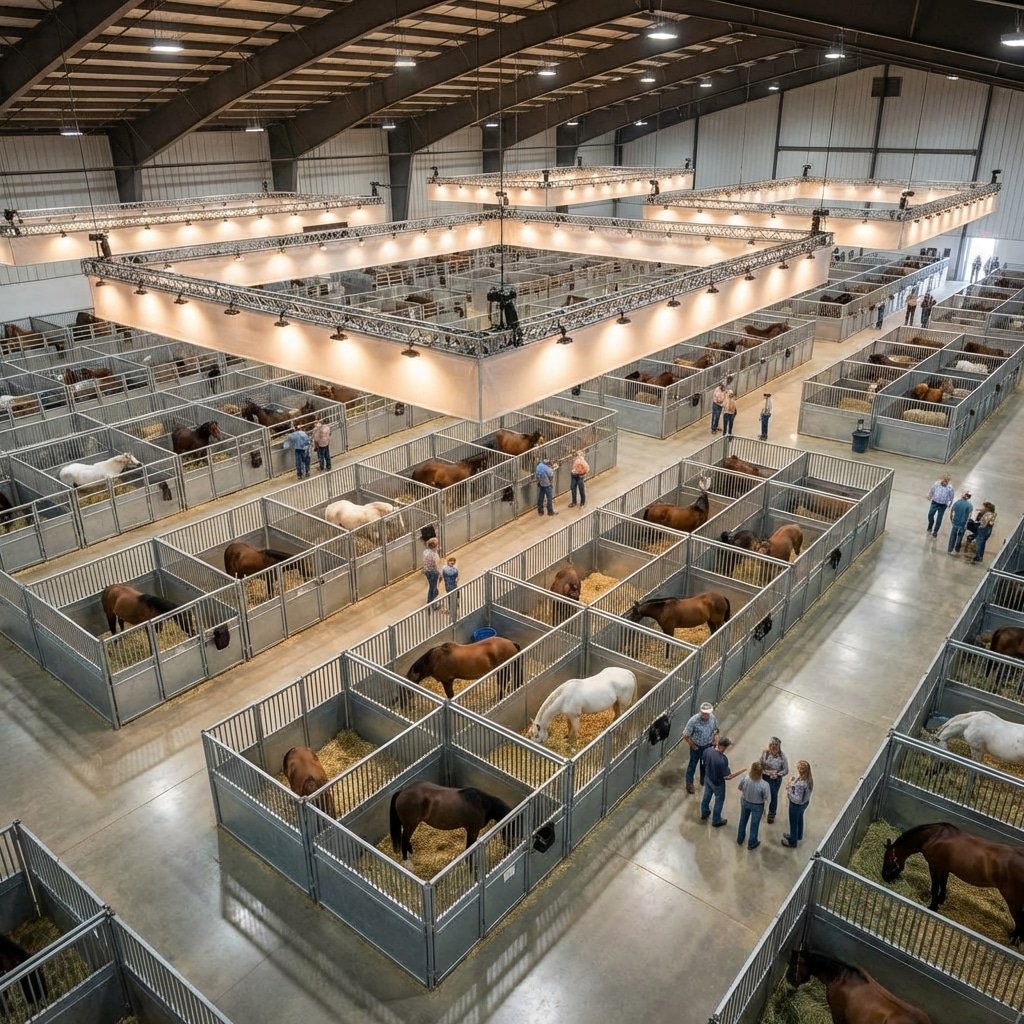
Biosecurity breaches at international borders can trigger catastrophic economic losses, halting equestrian competitions and freezing trade. For facility operators, the margin for error is non-existent; infrastructure must withstand aggressive daily disinfection protocols and meet rigid USDA and EU mandates to prevent entry denial or animal confiscation.
Regulatory Triggers and Economic Risks
Importing horses is a high-stakes logistical operation where a single lapse in protocol can endanger an entire national herd. Diseases like African Horse Sickness and Equine Infectious Anemia pose severe threats to domestic populations. Consequently, regulatory bodies like the USDA enforce zero-tolerance testing policies. Non-compliance results in immediate entry denial, expensive repatriation delays, or in extreme cases, the euthanasia of the animal.
The financial implications extend beyond the individual importer. A recognized biosecurity breach can trigger national movement restrictions, effectively shutting down revenue streams for breeders, event organizers, and logistics companies. For project developers building quarantine stations, adherence to these strict federal standards is not optional—it is the baseline for operational viability.
Infrastructure Requirements for Biosecurity Compliance
Quarantine facilities operate under conditions that destroy standard stabling materials. To prevent cross-contamination, isolation wards undergo rigorous daily washdowns using strong virucidal agents and phenolic-based disinfectants. Standard painted steel or powder-coated alternatives often fail in this environment, leading to corrosion that harbors pathogens and compromises structural integrity.
Inspectors frequently reject porous materials like wood because they trap bacteria and cannot be fully sterilized. Federal guidelines favor surfaces that are 100% impervious to moisture. This drives the industry standard toward HDPE infill, which offers a sterile, non-absorbent surface that meets “Zero Maintenance” criteria while satisfying inspection protocols.
We engineer our systems to exceed these specific demands. Our steel framework undergoes Hot-Dip Galvanization After Fabrication according to BS EN ISO 1461 standards, ensuring a metallurgical bond that resists aggressive chemical cleaning. Paired with our impact-absorbing HDPE infill, this creates a “Cast-Proof” and sterile environment capable of passing the most stringent veterinary inspections.
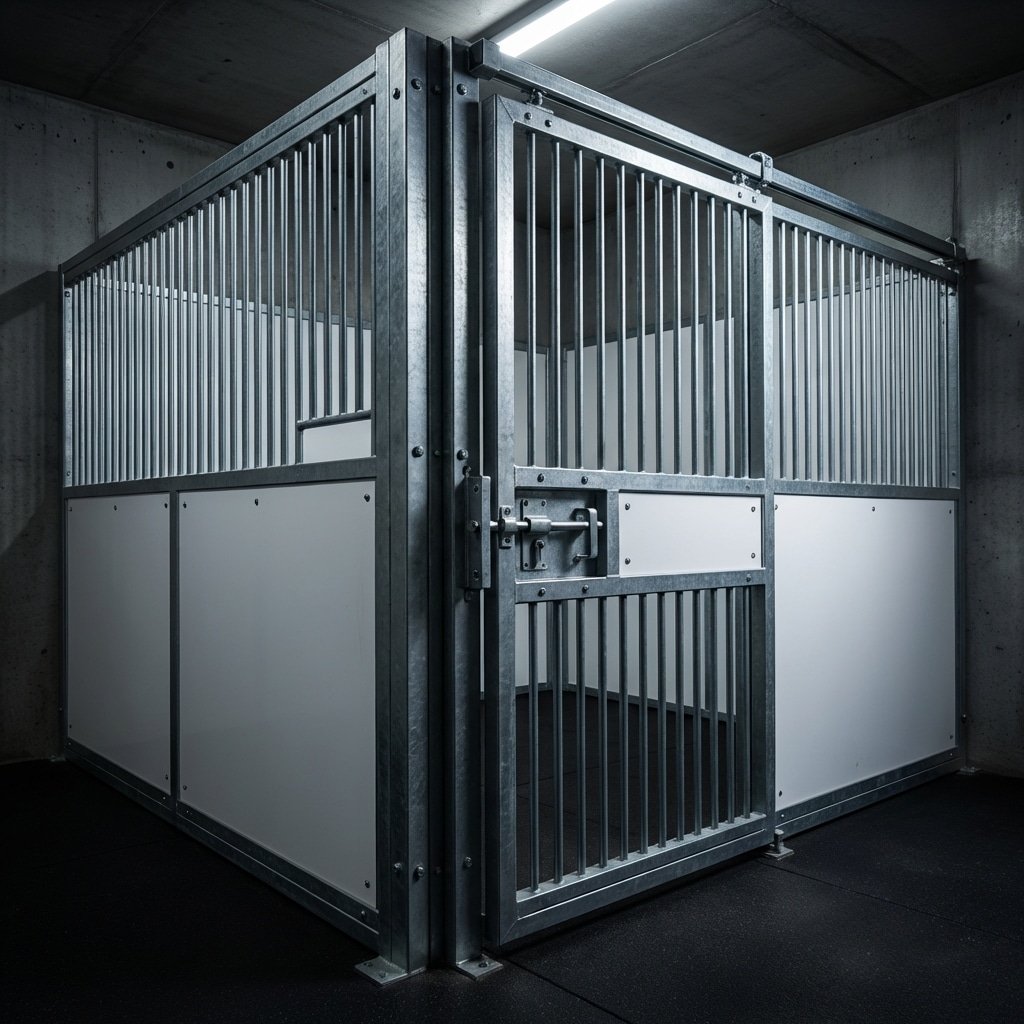
Why USDA/EU Inspectors Reject Wood and Porous Materials
Inspectors routinely reject organic building materials because they act as reservoirs for biological contaminants. Unlike our hot-dip galvanized steel and HDPE systems, porous wood fails to meet the strict “impervious to moisture” standards required for international biosecurity, leading to costly project delays and immediate quarantine failures.
Biological Risks: Pathogen Retention and Surface Porosity
Wood naturally acts as a sponge, absorbing organic fluids including urine, blood, and washdown water. This absorption creates deep reservoirs for pathogens that surface disinfectants simply cannot reach. We see projects fail inspection because standard chemical agents evaporate from the surface long before they penetrate the grain where bacteria and viruses survive.
Inspectors specifically target these porous materials because they harbor harmful organisms. Data indicates that even chemically treated wood often retains pests and microbial life deep within the cellular structure. Once a material is compromised by organic intake, it becomes a permanent biosecurity risk that cannot be sterilized without destroying the structural integrity of the stall.
In equine isolation zones, this porosity constitutes a critical biosecurity failure. This reality motivates the industry shift toward our impermeable HDPE infills. By using a material that rejects moisture and viruses completely, facility managers ensure that washdowns actually remove pathogens rather than driving them deeper into the wall structure.
The Compliance Trap: ISPM-15 Fraud and Processing Failures
Authorities frequently reject wood consignments due to unreliable certification. Studies show that approximately 97.5% of contaminated wood consignments carried valid-looking but fraudulent ISPM-15 markings. This prevalence of fraud has led inspectors to treat wood documentation with extreme skepticism, resulting in rigorous physical checks that delay clearance.
Beyond fraud, physical processing standards create another hurdle. Inspectors strictly enforce debarking standards and often reject lumber that shows insufficient sapwood removal or bark remnants exceeding 3 cm tolerances. A single piece of non-compliant lumber can cause an entire container to be held, fumigated at your expense, or returned to the port of origin.
Facilities relying on wood face immediate operational risks if inspections reveal non-compliance. In contrast, our hot-dip galvanized steel and synthetic HDPE systems bypass these phytosanitary checkpoints entirely. By eliminating organic material from the framework, we protect your logistics timeline and remove the variable of biological inspection from your import process.
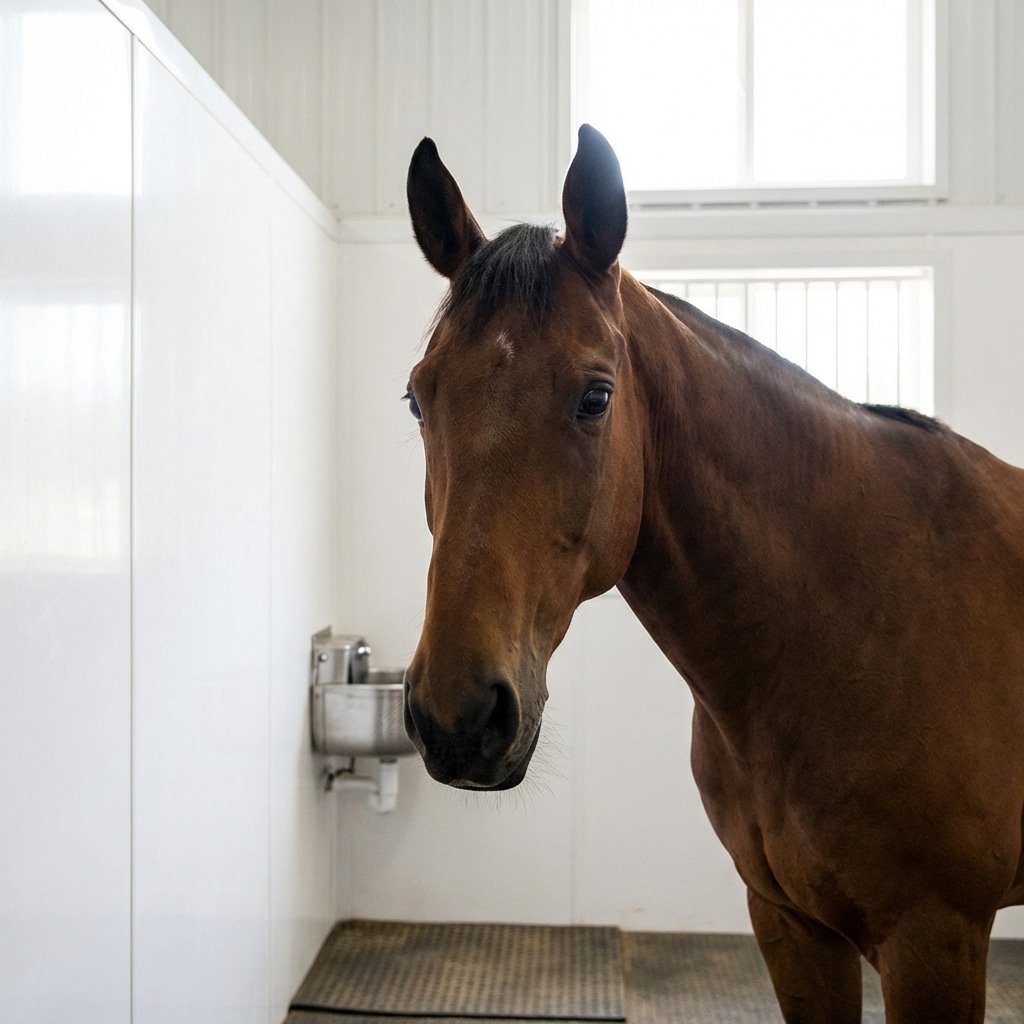
The 100% HDPE Requirement for Federal Isolation Wards
Federal veterinary protocols mandate that isolation facility surfaces must be impervious to moisture to eliminate pathogen reservoirs. We engineer our isolation stalls with 28mm-32mm High-Density Polyethylene (HDPE) infill, creating a hermetically sealed barrier that withstands aggressive virucidal protocols without the degradation risks associated with porous timber.
Zero-Permeability Standards for Bio-Security
Federal veterinary protocols frequently disqualify porous materials like traditional wood because pathogens such as EHV-1 and Strangles can survive deep within the grain. Once biological matter penetrates the cellular structure of timber, it becomes nearly impossible to sterilize, turning the stable itself into a vector for disease transmission.
We utilize 100% recycled HDPE boards to provide a completely sealed surface. This ensures that viruses and bacteria remain on the exterior where disinfectants can effectively neutralize them. Our 28mm-32mm HDPE infill creates a seamless barrier that eliminates the risk of cross-contamination between rotating horses in high-turnover quarantine zones, fulfilling the “impervious to moisture” standard required by USDA and APHIS guidelines.
Withstanding Aggressive Chemical Decontamination
Isolation wards require frequent, high-pressure washdowns using harsh virucidal agents, phenolic disinfectants, and bleach solutions. These chemicals rapidly rot organic timber and corrode unprotected metal, leading to structural failure and expensive repairs.
Our HDPE system remains chemically inert, maintaining its structural integrity and “Kick-Proof” strength even after years of exposure to industrial-grade sanitizers. When paired with our hot-dip galvanized steel framework—processed to BS EN ISO 1461 standards—the entire system resists corrosion from chemical exposure. This durability significantly reduces long-term maintenance costs, as facility managers avoid the cycle of replacing warped or degraded boards caused by moisture absorption.
Reflexiones finales
Strict veterinary inspections punish facilities that rely on porous materials, turning minor maintenance issues into expensive operational shutdowns. Our Hot-Dip Galvanized steel and impermeable HDPE infill deliver the specific “Zero Maintenance” sterility required to satisfy rigid USDA and EU mandates. Investing in this “Cast-Proof” infrastructure guarantees your quarantine center withstands daily virucidal washdowns without the risk of corrosion or pathogen retention.
Do not leave your facility’s compliance to chance or generic fabrication. We recommend requesting our technical specification kit to validate our BS EN ISO 1461 galvanization standards against your local import requirements. Contact our engineering team directly to configure a biosecure layout that ensures immediate operational clearance.
Preguntas frecuentes
What are the requirements for an equine quarantine facility?
Quarantine facilities must prevent pathogen transfer between horses. We strictly recommend non-porous materials like our 28mm-32mm UV Stabilized HDPE infill and Hot-Dip Galvanized steel (BS EN ISO 1461). These materials withstand rigorous daily sanitation and prevent the absorption of fluids, meeting the high biosecurity standards required for federal isolation wards.
What are the USDA approved materials for horse stalls?
While regulations vary, inspectors consistently reject porous organic materials like untreated wood. We manufacture our quarantine stalls using non-porous HDPE boards and heavy-duty steel hot-dip galvanized after fabrication (>85 microns). This combination creates a sealed, washable surface that aligns with USDA and EU guidelines for disease control.
What is the best stall material to prevent EHV-1 spread?
Controlling EHV-1 requires surfaces that you can sterilize aggressively. Our ‘Economy Series’ features plastic (HDPE) lumber and fully galvanized frames that survive harsh virucidal washdowns. Unlike wood, which can trap the virus in cracks, our non-porous system facilitates complete disinfection between occupants.
Are HDPE stable boards chemical resistant?
Yes, our high-density polyethylene (HDPE) boards are engineered for ‘Zero Maintenance’ in chemical environments. They resist damage from ammonia, urea, and industrial disinfectants used in quarantine protocols. We test our materials to ensure they do not degrade, crack, or fade even with frequent chemical cleaning.
What are the considerations for building an airport equine holding center?
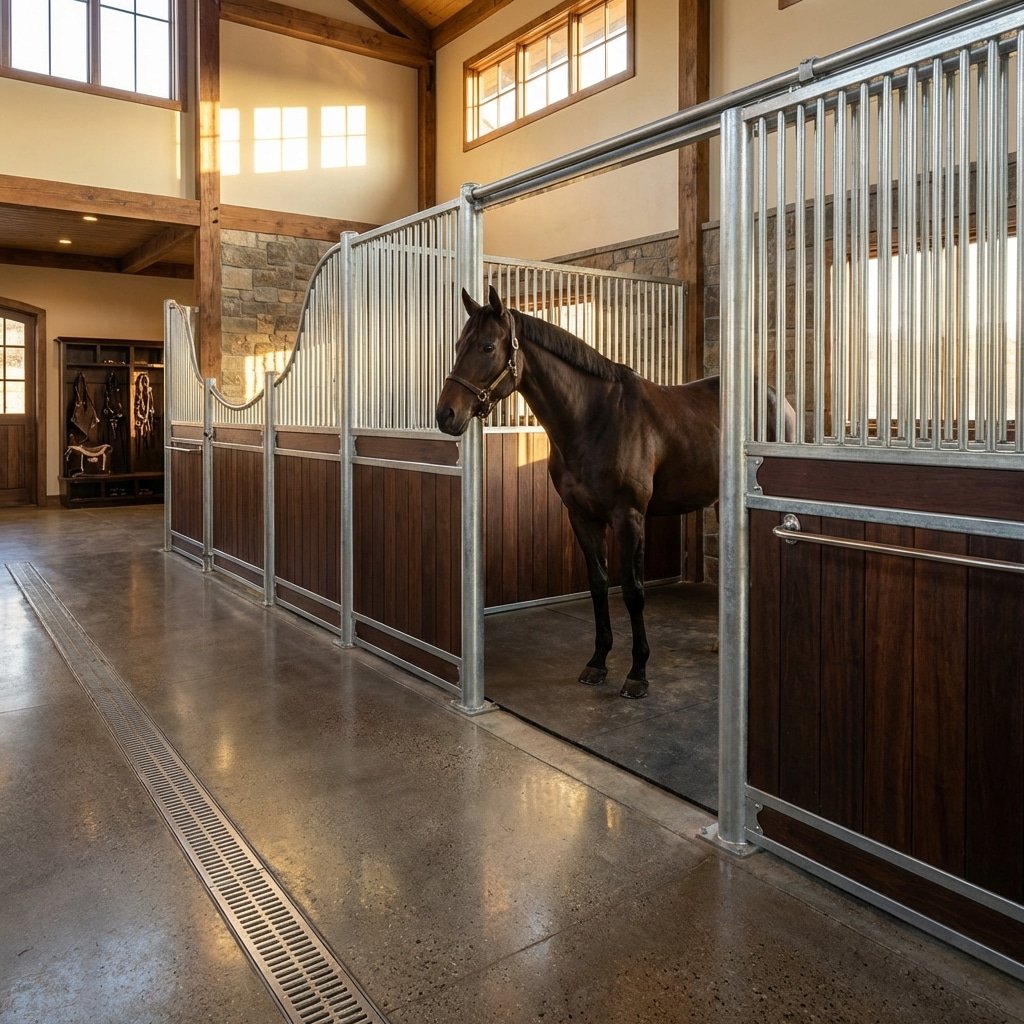
Airport facilities require rapid turnover and maximum safety. We recommend our heavy-duty stalls with ‘Cast-Proof’ bottom gaps and open grill tops to promote ‘Stack Effect Ventilation.’ For large projects, our flat-pack logistics allow us to ship 30-45 sets per container, streamlining deployment for transit hubs.


 Spanish
  English
  French
  Arabic
  German
0 comentarios