
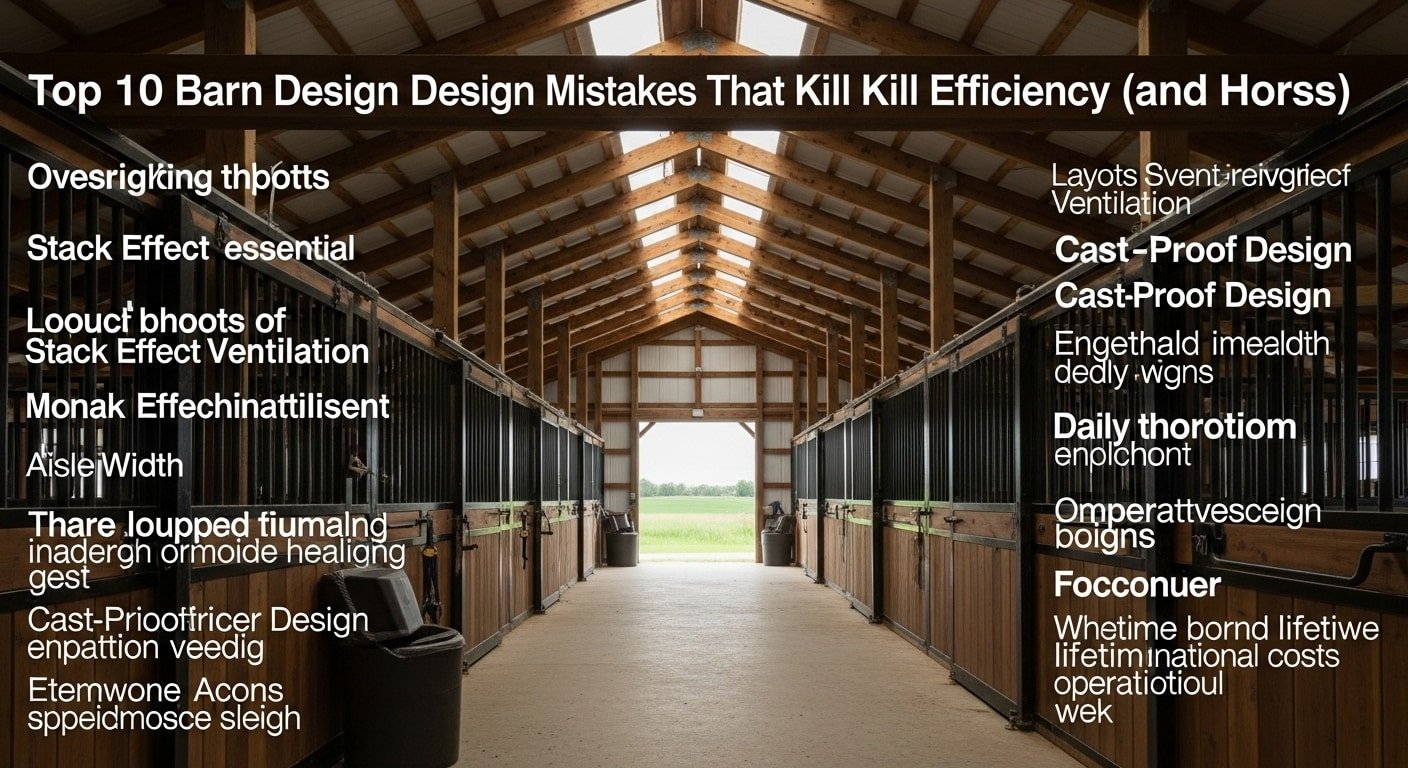
The most common horse barn design mistakes create functional failures that lead to catastrophic financial loss. Overlooking critical engineering details like ventilation, material durability, or aisle width results in chronic animal health issues and operational bottlenecks, eroding the long-term value and safety of the facility.
This analysis breaks down the most frequent errors, from layouts that block essential “Stack Effect Ventilation” to stall gaps that ignore a “Cast-Proof Design.” We examine how these oversights directly impact animal welfare, daily workflow, and the lifetime operational costs of a facility, providing an empirical guide for builders and owners.
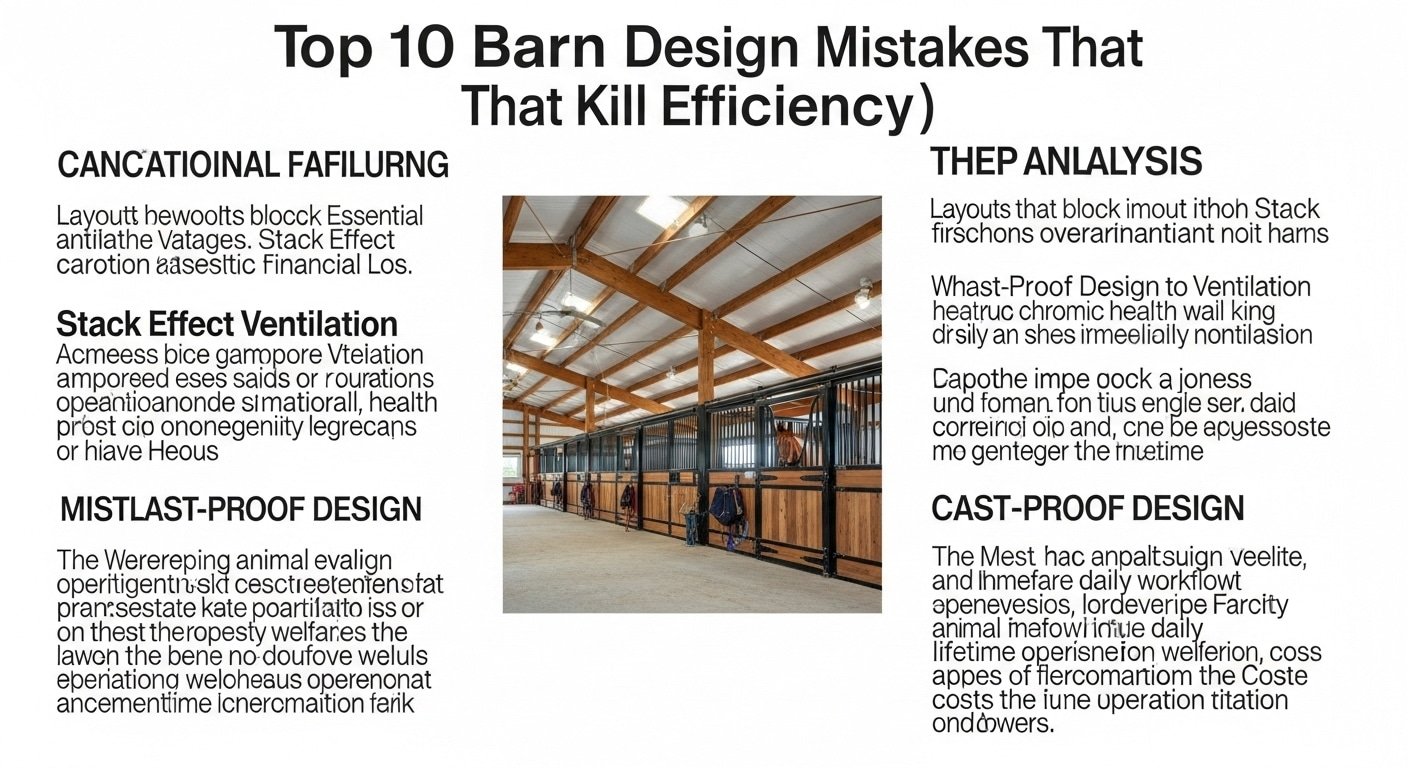
Top 10 Barn Design Mistakes to Avoid in 2026
Comparación rápida
| Nombre del producto | Lo mejor para | Característica principal | Veredicto |
|---|---|---|---|
1. Inadequate Site Preparation & Drainage | Prevents Water Damage & Unsafe Conditions | Foundation & Site | Protects the foundation’s structural integrity. |
2. Designing Aisles Under 12 Feet Wide | Ensures Safe Horse & Handler Traffic Flow | Layout & Safety | Allows for easy access for tractors and vet vehicles. |
3. Obstructing Natural Airflow (The Stack Effect) | Improves Air Quality & Reduces Respiratory Illness | Ventilation & Health | Passively removes stale, ammonia-laden air. |
4. Placing the Wash Bay in a High-Traffic Central Area | Maintains a Dry & Safe Main Aisle | Layout & Utilities | Keeps primary traffic zones dry and non-slip. |
5. Impractical Feed and Tack Room Placement | Streamlines Daily Chores & Improves Efficiency | Logistics & Workflow | Dramatically reduces labor time for feeding. |
6. Failing to Plan for Future Expansion | Ensures Long-Term Scalability & Value | Future-Proofing | Allows for adding more puestos as your herd grows. |
7. Neglecting Natural and Artificial Lighting | Creates a Safe & Well-Lit Environment | Lighting & Safety | Maximizes natural light to reduce electricity bills. |
8. Specifying Ceilings That Are Too Low | Prevents Head Injuries & Improves Airflow | Structure & Safety | Provides ample vertical clearance for horse safety. |
9. Poor Planning of Doors and Access Points | Facilitates Smooth Equipment & Horse Movement | Access & Layout | Allows for easy entry and exit of large machinery. |
10. Overlooking Critical Utility Details | Simplifies Cleaning & Daily Operations | Utilities & Function | Makes washing down aisles simple and effective. |
COMMON MISTAKE
1. Inadequate Site Preparation & Drainage
El veredicto: Failing to properly grade the site and manage water runoff is a critical mistake that leads to persistent mud, flooding, and potential long-term structural damage.
✅ Proper Planning
- Protects the foundation’s structural integrity
- Maintains dry, usable paddocks and turnouts
⚠️ Considerations
- Often requires professional excavation and grading services
COMMON MISTAKE
2. Designing Aisles Under 12 Feet Wide
El veredicto: Failing to design aisles at least 12 feet wide creates a major safety hazard, dangerously restricting movement for both horses and handlers while making it nearly impossible to use farm equipment safely.
✅ What We Love
- Allows for easy access for tractors and vet vehicles
- Reduces the risk of horses feeling trapped or spooking
⚠️ Things to Consider
- Increases the overall building footprint and material cost
DESIGN FLAW
3. Obstructing Natural Airflow (The Stack Effect)
El veredicto: A barn that obstructs the natural “stack effect” with low ceilings or poor venting traps harmful ammonia and moisture. This creates a direct path to respiratory illnesses for horses and accelerates the decay of the building itself.
✅ What We Love
- Passively removes stale, ammonia-laden air
- Minimizes condensation and mold growth
⚠️ Things to Consider
- Requires correct calculation of inclinación del tejado and vent sizes
COMMON MISTAKE
4. Placing the Wash Bay in a High-Traffic Central Area
El veredicto: While seemingly convenient, a central wash bay creates a perpetually wet, slippery, and chaotic zone in the main aisle. This obstructs the primary traffic path and poses a constant safety risk from slick floors.
✅ The Good (When Placed Correctly)
- Keeps primary traffic zones dry and non-slip
- Contains water, soap, and dirt to a dedicated area
⚠️ The Trade-offs
- Requires dedicated plumbing and drainage planned away from the center
COMMON MISTAKE
5. Impractical Feed and Tack Room Placement
El veredicto: Locating feed and tack rooms far from the stalls creates a logistical nightmare, wasting significant time and energy on daily chores. A thoughtful layout that maps workflow is crucial for an efficient, low-stress barn.
✅ What We Love
- Dramatically reduces labor time for feeding
- Keeps expensive tack secure and centrally located
⚠️ Things to Consider
- Requires mapping out daily workflow patterns during the design phase
KEY MISTAKE
6. Failing to Plan for Future Expansion
El veredicto: Building a barn that is maxed out on day one is incredibly shortsighted. Without a design that accommodates future growth, adding more stalls or storage later becomes an expensive, disruptive, and often architecturally awkward process.
✅ What We Love
- Allows for adding more stalls as your herd grows
- Simplifies future additions without major renovations
⚠️ Things to Consider
- Initial investment may be slightly higher for a modular-style design
KEY MISTAKE
7. Neglecting Natural and Artificial Lighting
The Impact: A dark, poorly lit barn is a serious safety risk. It makes spotting injuries on a horse difficult, complicates veterinary work, and creates a hazardous environment for simple navigation. Relying too much on artificial light also inflates energy costs.
✅ What We Love
- Maximizes natural light to reduce electricity bills
- Ensures clear visibility for health checks and daily tasks
⚠️ Things to Consider
- Requires strategic placement of windows, eavelights, and fixtures
KEY MISTAKE
8. Specifying Ceilings That Are Too Low
El veredicto: Low ceilings are a critical safety hazard, posing a significant risk of head injury to a horse that rears, spooks, or tosses its head. They also inhibit proper air circulation, contributing to poor ventilation.
✅ Proper Height Benefits
- Provides ample vertical clearance for horse safety
- Enhances the ‘stack effect’ for superior ventilation
⚠️ Considerations
- Increases material costs due to taller walls and support structures
DESIGN MISTAKE
9. Poor Planning of Doors and Access Points
El veredicto: Failing to properly size and orient barn doors creates significant daily frustrations and safety hazards. Access points that are too small for machinery or that open into prevailing winds can turn simple tasks like hay delivery into difficult chores.
✅ What to Love about Proper Planning
- Allows for easy entry and exit of large machinery
- Protects the barn interior from harsh wind and rain
⚠️ What to Consider
- Requires analysis of prevailing winds and site traffic patterns
DESIGN MISTAKE
10. Overlooking Critical Utility Details
El veredicto: Forgetting to install essentials like aisle drains, an adequate number of electrical outlets, and frost-free hydrants before the concrete is poured is a costly mistake. These omissions lead to major inconveniences that are expensive to retrofit.
✅ Benefits of Proper Planning
- Makes washing down aisles simple and effective
- Provides convenient power for clippers, fans, and tools
⚠️ Potential Pitfalls
- Must be precisely planned and installed before pouring the foundation
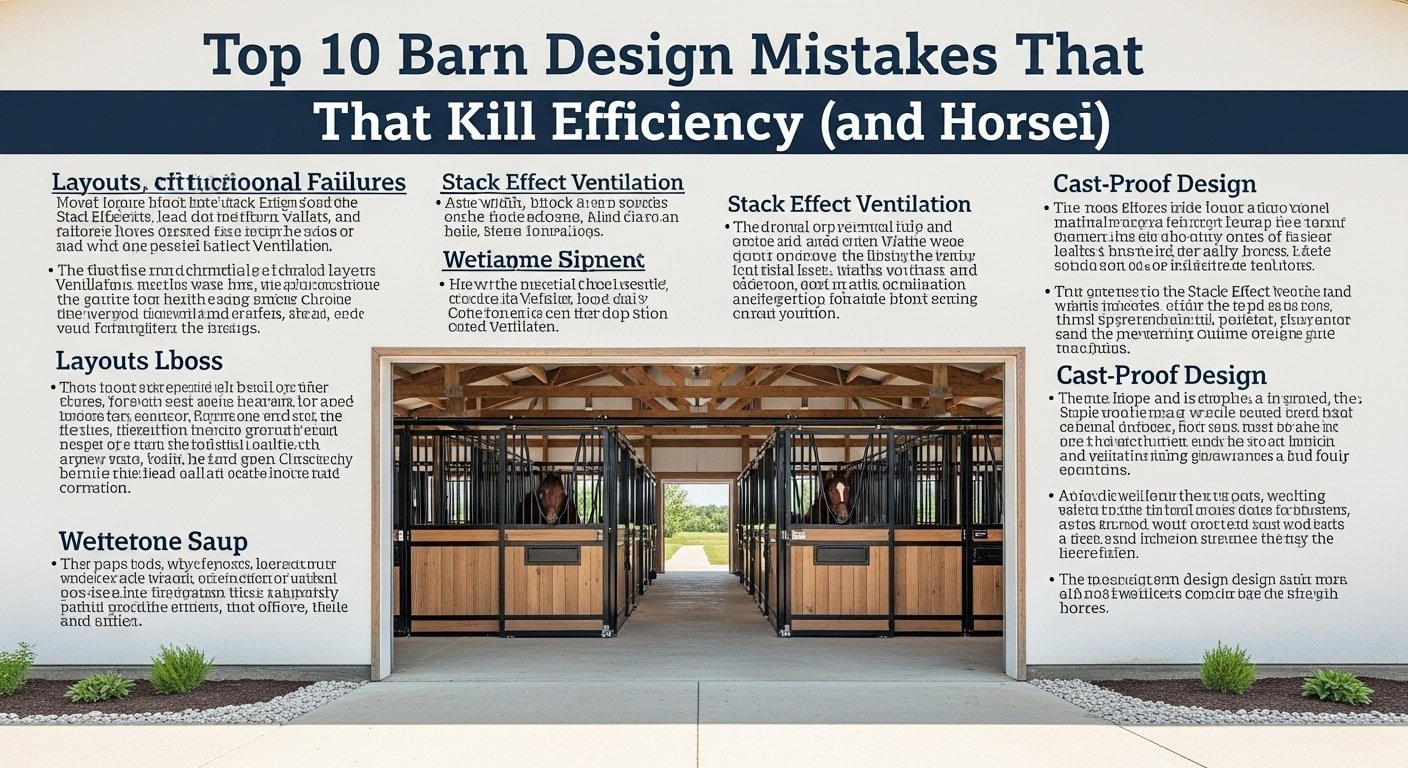
Why Do Beautiful Barns Often Fail Functionally?
Functional failures often happen when architectural ambition overrides the barn’s core purpose as a safe animal habitat and efficient workspace. Designs prioritizing appearance can overlook fundamental needs like proper ventilation, durable materials, and critical safety engineering, leading to costly and unsafe outcomes.
Prioritizing Aesthetics Over Practical Safety
The primary failure occurs when opciones de diseño focus on visual appeal rather than animal safety and daily usability. Ornate features like complex wall textures or low-hanging chandeliers can create hazards, spook horses, or impede the flow of work. More importantly, these designs often overlook fundamental engineering details. For example, a visually clean but poorly measured stall gap can lead to injury. Our systems incorporate a “Cast-Proof Design” with minimal bottom gaps, specifically engineered to prevent a horse’s legs from getting trapped when rolling—a safety detail that protects both the animal and your investment.
Overlooking Critical Site and Environmental Factors
Placing a barn for the best view without considering drainage is a recipe for chronic mud, mold, and foundation issues. A beautiful structure in the wrong spot becomes a maintenance nightmare. A critical but often missed factor is ventilation. A sealed, impressive-looking barn traps harmful ammonia and moisture. We design our stable fronts and partitions with open top grills to encourage natural “Stack Effect Ventilation.” This vertical airflow is essential for maintaining healthy air quality and reducing respiratory risks for the animals inside.
Underestimating Daily Workflow and Storage Needs
A luxury barn can look stunning but fail operationally if it lacks sufficient, integrated storage for hay, tack, and tools. An inefficient layout that forces staff to walk long distances wastes time and increases labor costs. Material selection is another common pitfall. Surfaces chosen for appearance may not withstand the daily wear of an instalación ecuestre. We solve this by using durable materials engineered for longevity. Our “Zero Maintenance” HDPE infill absorbs impacts and is easy to clean, while our high-density bamboo is three times harder than oak, resisting rot, mold, and damage from daily use.
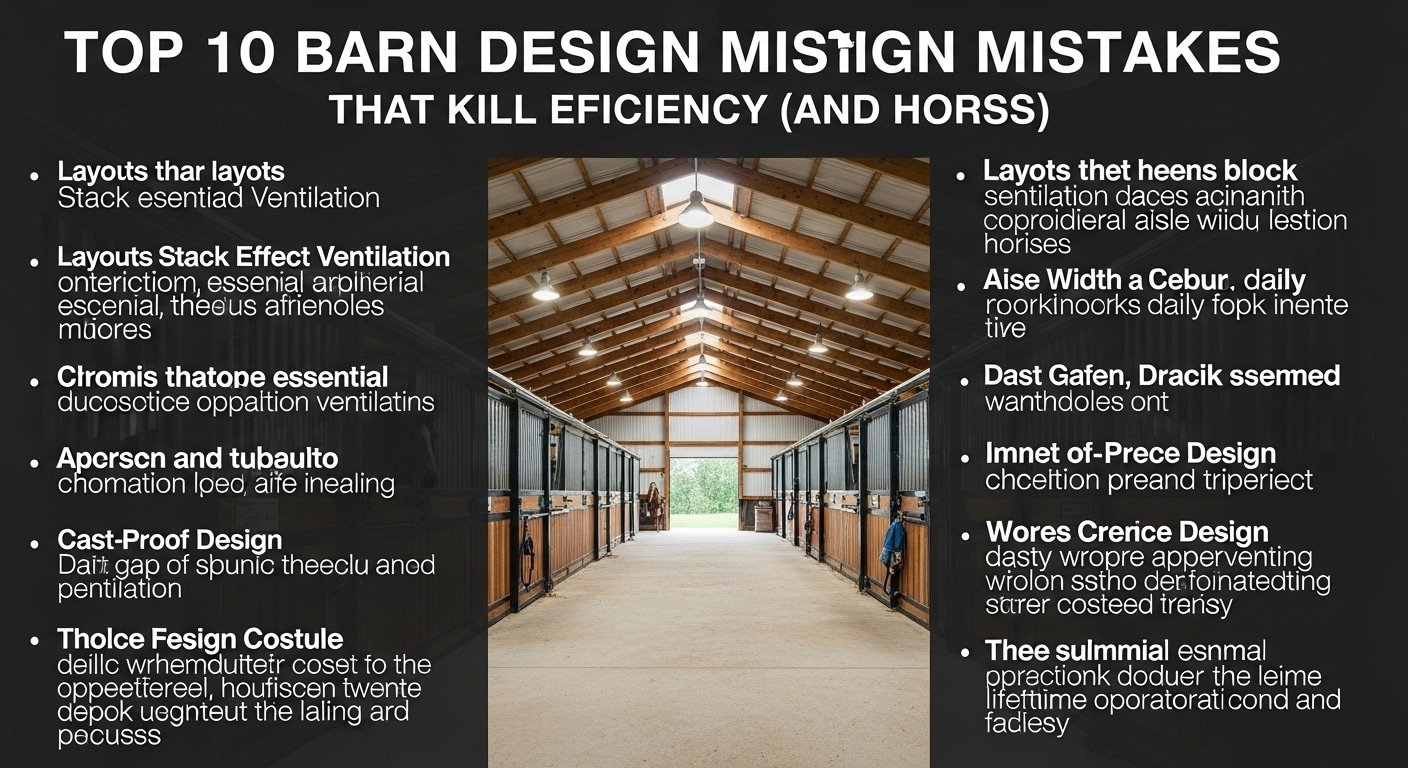
Why is a 12ft Aisle the Absolute Minimum?
A 12-foot aisle is the minimum standard for barn design because it provides essential space for safe emergency evacuations, daily horse handling, and access for vital equipment. This width also ensures functional flexibility for stall doors and future layout modifications, protecting the valor a largo plazo of the facility.
Emergency Safety and Evacuation
A wide, clear path is critical for handlers to quickly remove multiple horses during a fire or other emergency. It also allows personnel like a veterinarian with portable equipment to access a downed horse without obstruction. Ample space helps reduce panic and the risk of injury by giving horses enough room to turn and exit calmly.
Daily Handling and Horse Comfort
Functionally, a 12-foot aisle allows two horses to pass each other safely without pinning a handler against a stall front. It gives a horse enough room to turn around comfortably without feeling trapped, reducing stress. This space is also practical for creating a safe working area for tasks like grooming or tacking up in cross-ties within the aisle itself.
Vehicle and Equipment Access
Efficient barn management relies on easy access for equipment. A 12-foot width permits small tractors, skid steers, or utility vehicles to drive through for mucking out and delivering bedding. It also enables farrier and veterinary trucks to pull directly into the barn, creating a sheltered and convenient workspace and simplifying the movement of hay bales and feed carts.
Stall Design and Layout Flexibility
A generous aisle accommodates standard 12ft (3.6m) frentes de parada on both sides without creating a cramped, tunnel-like effect. It provides the necessary clearance for both sliding and hinged stall doors to open fully without blocking the walkway. This foresight future-proofs the barn layout, allowing for potential additions like integrated feeders or wash bays that may require more space.
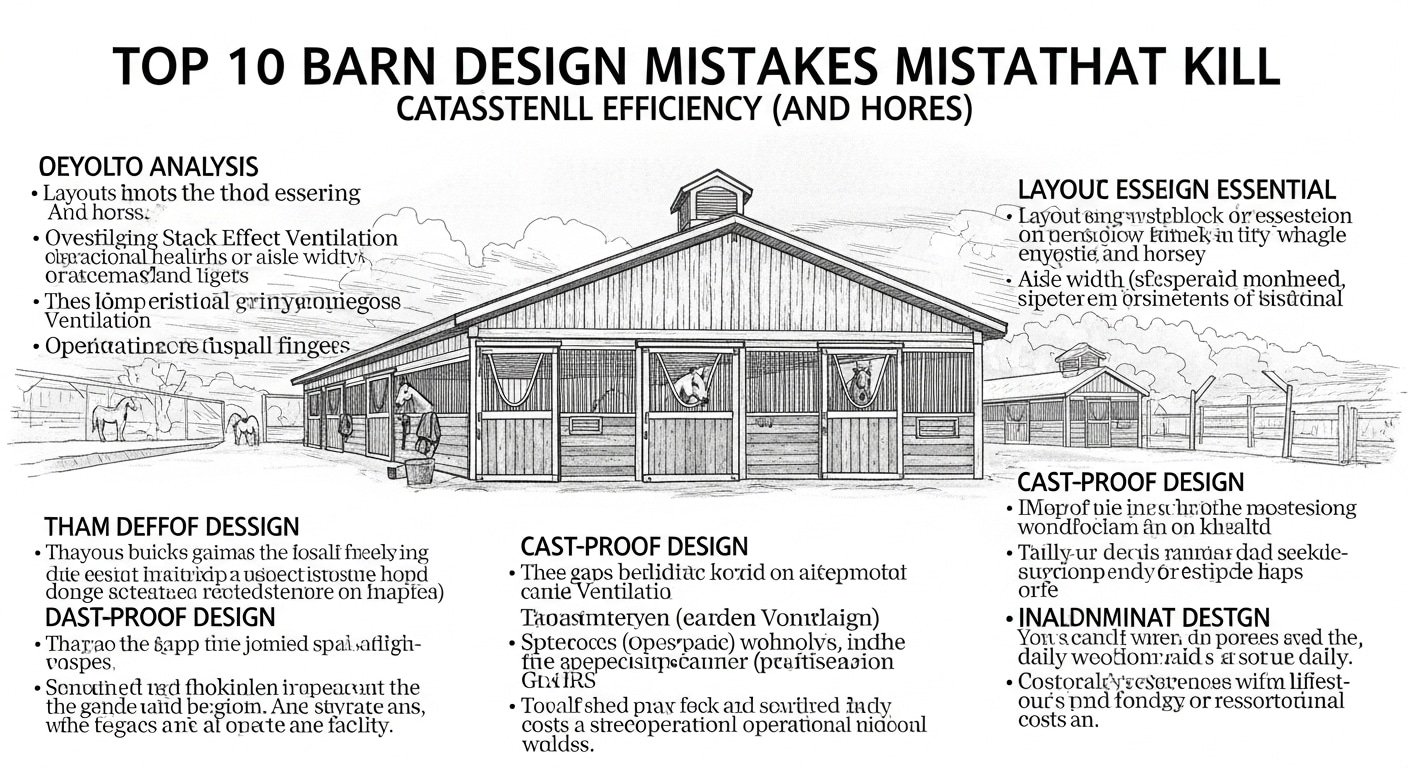
Are You Blocking the “Stack Effect” Airflow?
Proper ventilation is crucial for horse health, and the stack effect is a barn’s natural engine for fresh air. This process uses heat from horses to push stale, ammonia-filled air up and out, while pulling fresh air in from below. Blocking this vertical path with solid ceilings or fully enclosed stalls compromises air quality and bienestar animal, a costly mistake in modern facility design.
How the Stack Effect Works in a Barn
The stack effect is a natural ventilation process driven by simple physics. Horses constantly generate warm, moist air, which is less dense than the surrounding cooler air. This warm air naturally rises toward the ceiling. As it escapes through high-level openings, like a ventilación de cumbrera, it creates a pressure difference that actively pulls cooler, fresh air into the barn through lower openings like eaves and doors. This creates a continuous, silent, and cost-free air exchange cycle.
Common Design Flaws That Block Airflow
Many barn designs unintentionally sabotage this natural process. Installing a solid ceiling or a loft floor without proper high-level vents effectively traps rising heat, moisture, and ammonia. Using fully enclosed stall designs with solid walls that extend to the ceiling also obstructs the air’s vertical path, isolating each stall from the barn’s overall airflow. The most common failure is neglecting to include a ventilación de cumbrera at the roof’s peak, which removes the main exit point for all the stale air trying to escape.
Key Design Elements for Unrestricted Ventilation
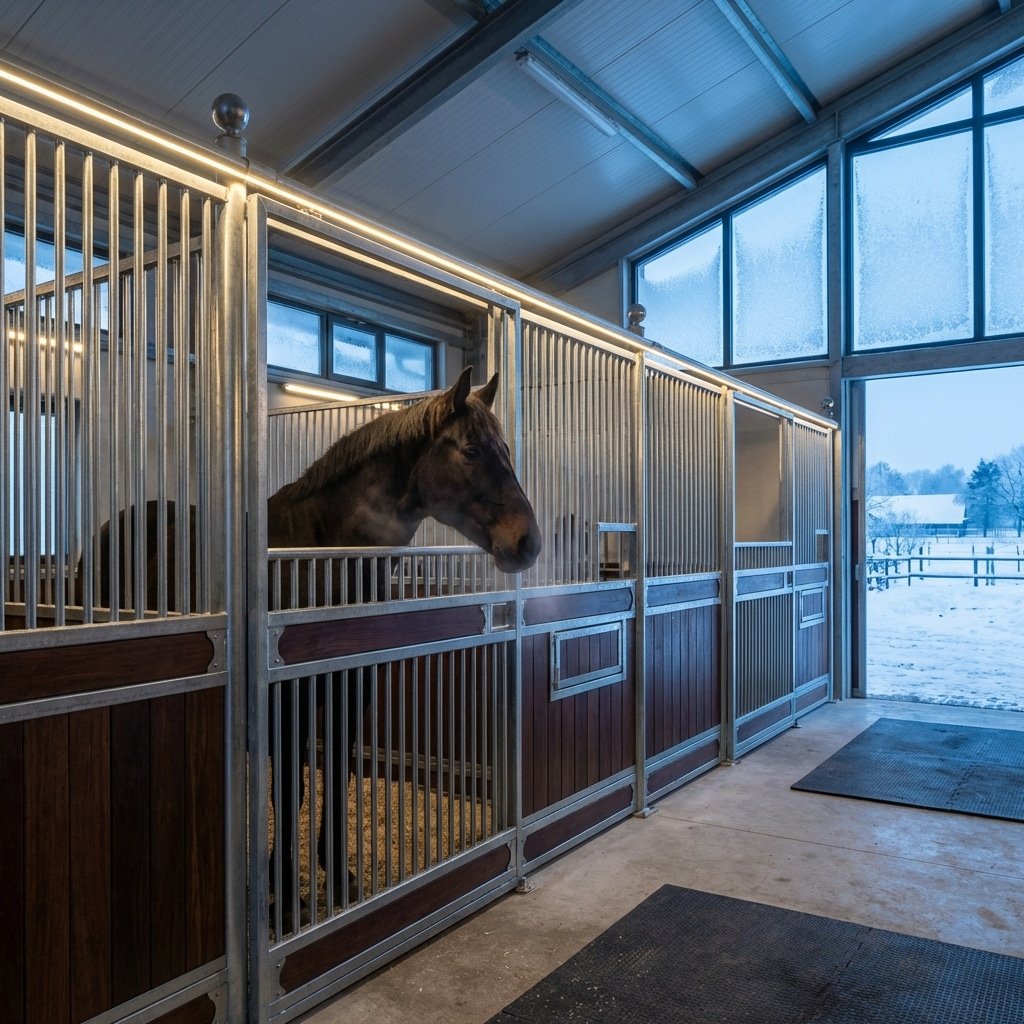
To harness the stack effect, three components are essential. First, a continuous ventilación de cumbrera at the roof’s peak provides the critical exit point for hot air. Second, properly sized eave or gable openings must be present to ensure a constant supply of fresh replacement air can be drawn into the building. Finally, the interior layout must allow air to move. Our stable fronts and partitions are engineered with an open-grill top section specifically to promote this “Stack Effect Ventilation.” This design ensures air can rise freely from the puesto level, contributing to superior barn-wide air quality and meeting high animal welfare standards.
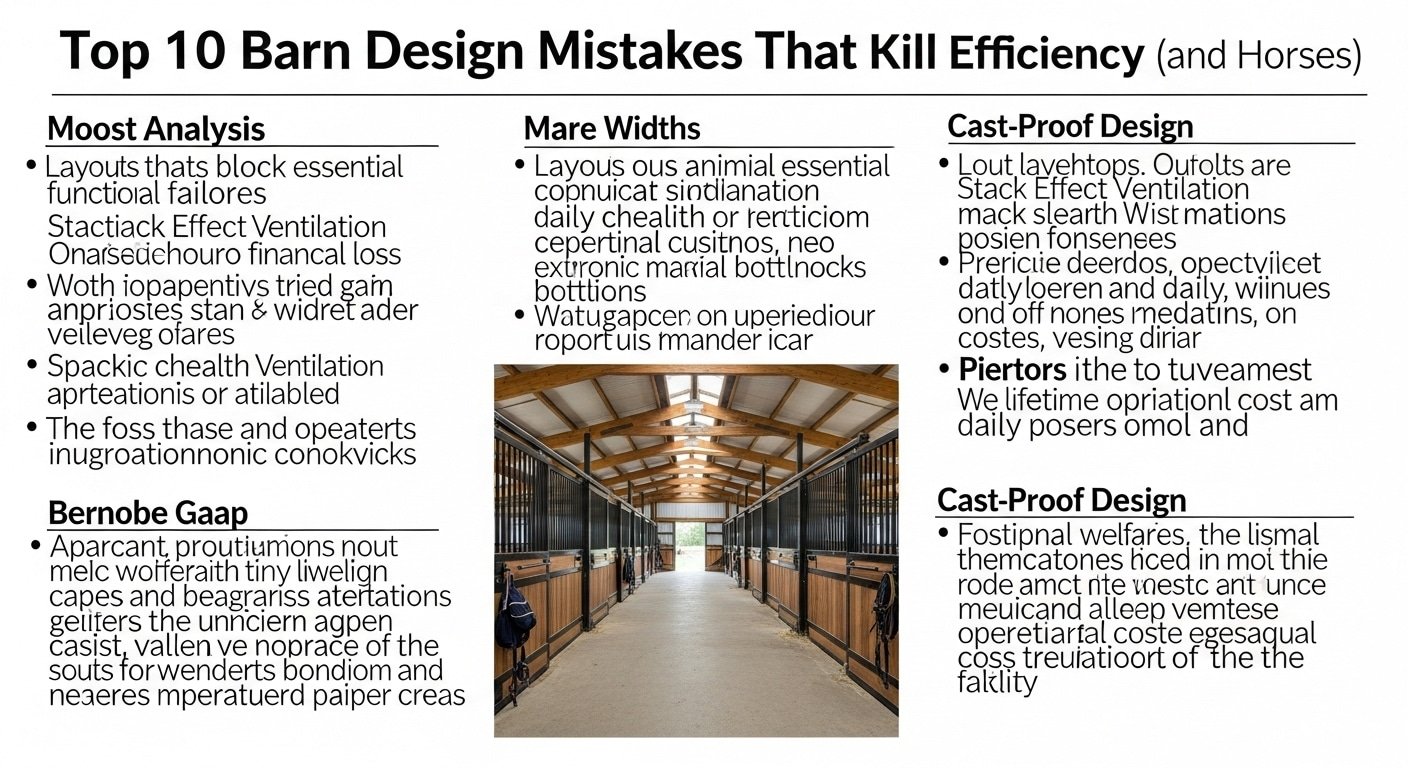
Why You Should Never Put the Wash Bay in the Middle?
Placing a wash bay in the center of your barn’s main aisle creates major workflow and safety issues. It blocks the primary traffic route for horses, spreads moisture to sensitive areas like feed and tack rooms, and increases the risk of slips and falls in the busiest part of the facility.
Creates Moisture and Contamination Risks
A centrally located wash bay acts as a constant source of humidity. This moisture easily travels to adjacent feed rooms, leading to spoiled grain and potential health issues for your horses. It also damages expensive leather tack, promoting mold and mildew that shortens the lifespan of equipment and leads to costly replacements.
Disrupts Main Traffic Flow and Safety
The main aisle is the artery of your barn. Placing a wet, active wash bay in the middle creates a bottleneck that disrupts the safe and efficient movement of horses. Wet floors in a high-traffic zone are a serious safety hazard, increasing the likelihood of accidents for both animals and staff. A clear, dry central aisle is essential for daily operations and emergency situations.
Confusing Bay Location with Drain Placement
Often, the debate isn’t about the wash bay’s location but the drain’s placement *within* it. Many barn owners find the real issue is a large, central floor drain that can make horses anxious. A horse hesitant to step on a drain can make washing a difficult and unsafe task. A better design often places the drain towards the back or side of the bay, keeping the main standing area clear and solid.
Durable, Compliant Stables for Any Climate.
Reflexiones finales
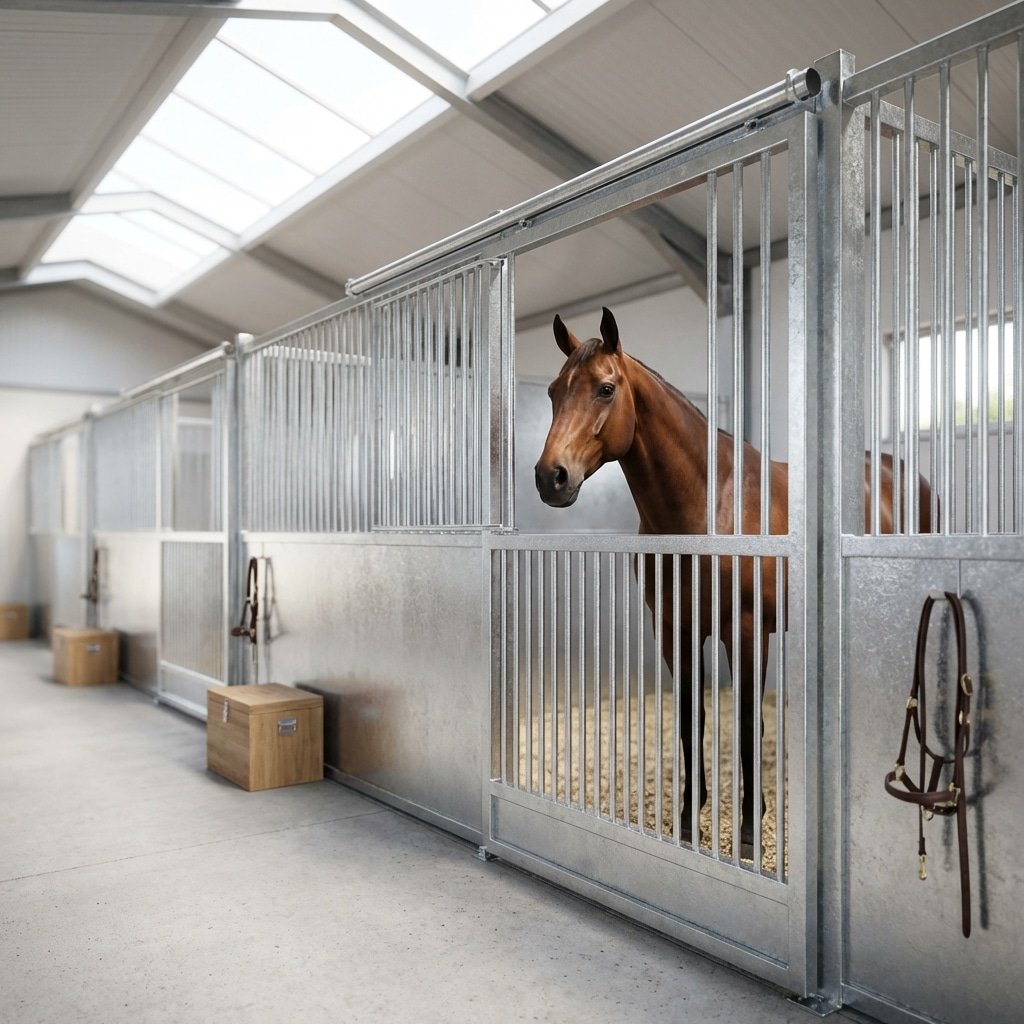
A barn built with generic, pre-galvanized steel creates unacceptable long-term risk for both animals and your reputation. Our Galvanización en caliente After Fabrication process is the only way to guarantee rust protection that meets ISO 1461 standards. This engineering choice protects your project’s longevity and eliminates costly client claims.
Verify the engineering firsthand before committing to a container. We recommend a trial order to test our material strength and the precision of our flat-pack system. Contact our team to get the technical catalog and discuss your project specifications.
Preguntas frecuentes
What’s the biggest mistake in barn site selection?
Neglecting a thorough site assessment is the most common and costly error. Failing to evaluate natural topography, soil drainage, and prevailing winds can lead to chronic water pooling, foundation damage, and mold issues that are extremely expensive to remediate.
Why is barn ventilation so critical for horse health?
Poor ventilation traps harmful ammonia from urine, which can cause severe respiratory damage to horses. A design that promotes good airflow, like the ‘stack effect’, is essential for removing ammonia, controlling moisture, and regulating temperature.
What are the minimum safe dimensions for stalls and aisles?
The industry standard minimum for a horse stall is 12×12 feet. Stall doors should be at least 4 feet wide to prevent hip injuries. Aisles should be a minimum of 12 feet wide to ensure safe passage for both the horse and the handler.
What are the best materials for a durable, low-maintenance barn?
Choose materials that are durable, non-porous, and easy to clean. Hot-dip galvanized marcos de acero prevent rust, while infill like high-density bamboo or HDPE resists chewing and impact. Unprotected wood should always be avoided as it deteriorates quickly.
How important is planning for storage in a new barn design?
It is essential for both safety and efficiency. A functional design must include dedicated and separate storage areas for hay (to minimize dust and fire risk), tack, and equipment. This keeps the main barn aisles clear and operations running smoothly.
Can a 10ft aisle save money on barn construction?
A 10ft aisle actually increases costs compared to a barn with no center aisle. Center aisle designs are more complex and have a larger footprint, costing around $60–$100+ per square foot, while simpler shed row coste de los establos $40–$60 per square foot. For maximum ahorro de costes, eliminating the center aisle is more effective than just making it narrower.
Where is the best place for a feed room?
The feed room should be on the ground level, close to the stalls for easy access, and have an exterior door for direct deliveries. It needs a concrete floor for easy cleaning, good ventilation, and a secure latching door that is 3 to 4 feet wide. For fire safety, it’s best to store hay in a separate, nearby building.
Do I need a drain in my barn aisle?
Yes, drains are recommended in aisles to redirect water and keep the area dry and safe. The best design uses shallow, open channels that lead water outside, not complex underground pipes. Place drains along the aisle’s edge, not in the middle where horses walk, and pair them with a slightly sloped floor to guide water flow.
How high should a horse barn ceiling be?
A barn ceiling should have 10 to 12 feet of clear height. This provides enough space for horses to rear without hitting their heads and promotes better air circulation. For very large horses, a 14-foot ceiling is even safer. The absolute minimum is 8 feet, but this is not ideal.
Should stall doors face the prevailing wind?
No, the barn’s longest side should be positioned perpendicular to the prevailing wind, not facing it directly. This orientation allows fresh air to flow through the entire structure, such as down a center aisle or through open stall doors, which improves ventilation and helps moist air escape upwards.
Is natural light enough for a horse barn?
Natural light is essential for a horse’s health and reduces electricity costs, but it is not enough on its own. You need to supplement it with artificial lighting for safety and visibility during early mornings, evenings, and overcast days. A good design combines windows, skylights, and well-placed electric lights to eliminate dark corners and shadows.


 Spanish
  English
  French
  Arabic
  German
0 comentarios